
Current Affairs
Stay updated with the latest national and international events.
15 September 2026
NPCI Introduces 0.4% MDR on Higher-Value UPI Merchant Payments
What’s the News?
The National Payments Corporation of India (NPCI) has introduced a Merchant Discount Rate (MDR) of 0.4% on specified Person-to-Merchant (P2M) UPI transactions above ₹2,000. The charge will be borne within the merchant-payment ecosystem and not by customers making UPI payments. Person-to-person transfers, low-value merchant payments and eligible small merchants remain outside the MDR framework.
The framework is intended to create a revenue stream for banks, payment service providers and UPI applications to support payment infrastructure, cybersecurity, innovation and expansion of the UPI network.
New MDR Framework
The revised framework will become effective from 15 October 2026.
| Transaction Category | MDR |
|---|---|
| P2M payment up to ₹2,000 | Zero |
| P2M payment above ₹2,000 | 0.4% |
| Transaction of ₹75,000 or more | Maximum ₹300 per transaction |
| Railways, telecom, insurance, fuel, agricultural inputs and specified essential services above ₹2,000 | Flat ₹5 |
| Capital-market payments such as mutual funds, securities, stockbrokers and dealers | 0.02%, capped at ₹300 |
| P2P transfers | Zero |
| Eligible P2PM small merchants | Zero |
| UPI AutoPay recurring mandates | Zero prescribed MDR |
([Press Information Bureau][1])
MDR (Merchant Discount Rate) is the fee charged to a merchant for accepting a digital payment. It is distributed among participants in the payment ecosystem rather than being collected as a tax by the Government or NPCI.
What Remains Free?
- Person-to-Person (P2P) transactions: Transfers between individuals remain completely free irrespective of transaction value.
- Merchant payments up to ₹2,000: No MDR applies.
- Small merchants: Vendors receiving up to ₹1 lakh per month through UPI QR codes under the P2PM category will continue with zero MDR.
- Consumers: UPI apps cannot impose platform or hidden transaction fees on individual users under the framework.
- Around 96% of P2M transactions are expected to remain unaffected by MDR.
Why Introduce MDR?
UPI merchant payments had operated under a zero-MDR regime since January 2020. The revised structure seeks to make the rapidly expanding payment ecosystem more financially sustainable while retaining free payments for individuals and most small-value merchant transactions.
Revenue from MDR is expected to support payment infrastructure, cybersecurity, fraud prevention, innovation and customer service. A dedicated fund for small merchants will also receive an amount equivalent to 5% of total MDR collections to promote wider UPI acceptance and usage.
UPI Transaction Scale
UPI processed around 24.51 billion transactions worth ₹29.9 lakh crore in August 2026. Of these, P2M transactions accounted for about 15.51 billion transactions, or roughly 63% of volume, but only around ₹8.95 lakh crore or 30% of transaction value.
P2P transactions account for about 70% of total UPI transaction value, which will remain entirely outside the MDR framework.
NPCI and UPI
- National Payments Corporation of India (NPCI)
- Incorporated in 2008.
- Umbrella organisation for operating India's retail payment and settlement systems.
- Established as an initiative of the Reserve Bank of India (RBI) and Indian Banks' Association (IBA) under the Payment and Settlement Systems Act, 2007.
- Unified Payments Interface (UPI)
- Launched in 2016.
- Enables real-time, interoperable bank-to-bank payments using mobile applications.
- Supports both P2P and P2M transactions.
Legal Background
Section 10A of the Payment and Settlement Systems Act, 2007 provides the statutory framework relating to charges on specified electronic payment modes.
The Taxation and Other Laws (Amendment) Act, 2026 amended Section 10A, replacing the earlier linkage with electronic payment modes prescribed under the Income-tax law with a provision allowing the Central Government to specify one or more electronic modes of payment through notification. This provides the legal basis for a differentiated charging framework for digital payment modes.
Sources
India’s SST-1 Gets New Gyrotron to Advance Fusion Research
What’s the News?
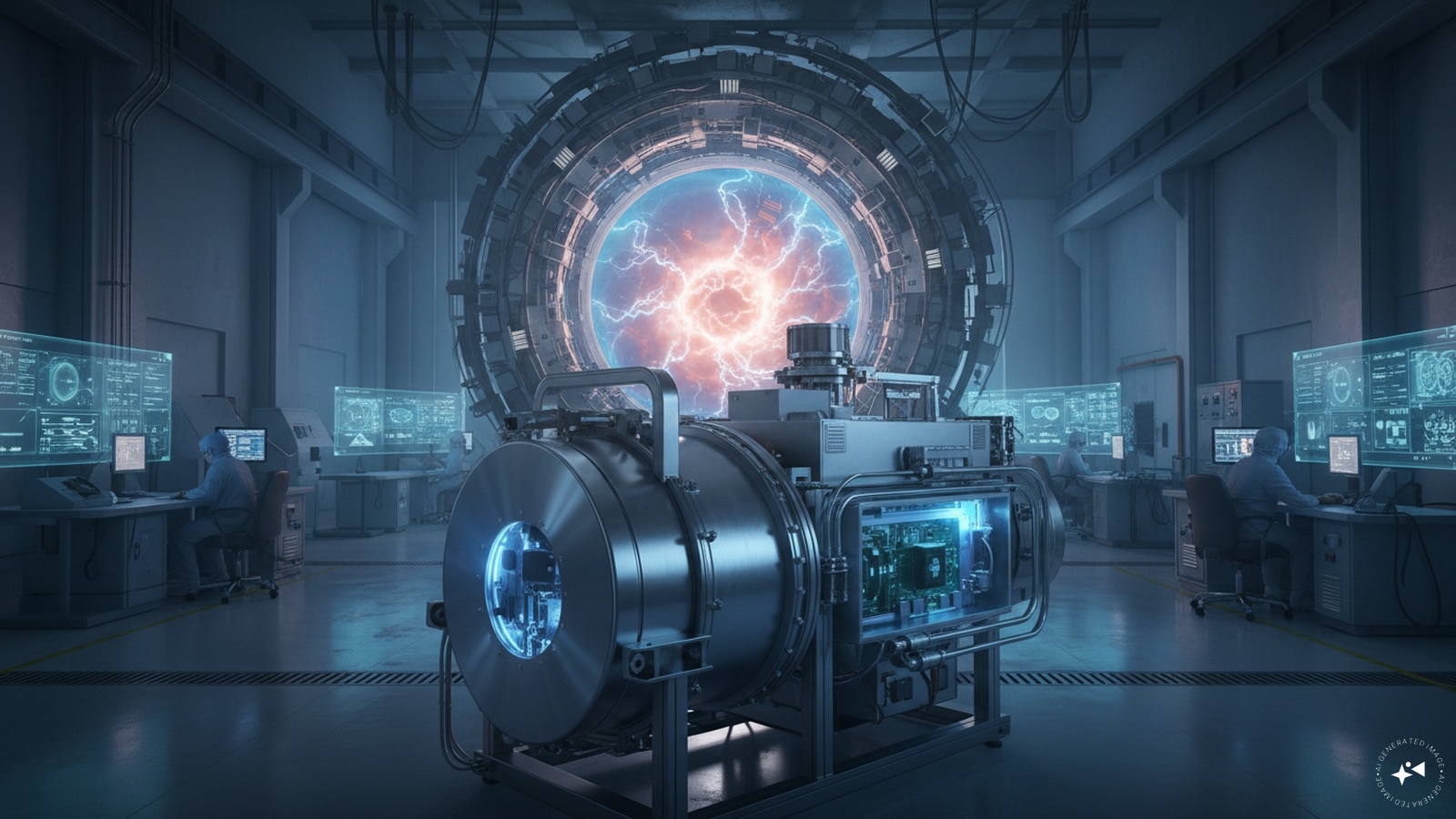
India has strengthened its nuclear fusion research programme by installing and commissioning an 82.6 GHz, 400 kW gyrotron on the Steady State Superconducting Tokamak-1 (SST-1) at the Institute for Plasma Research (IPR), Gandhinagar, Gujarat. The system provides high-frequency microwave energy to heat and control extremely hot plasma inside the tokamak.
The new system is an upgrade over the earlier 42 GHz Electron Cyclotron Resonance Heating (ECRH) system and expands India's capability to study long-duration, high-temperature plasma—an essential requirement for controlled nuclear fusion.
India’s ‘Artificial Sun’?
- Artificial Sun is an informal term used for experimental facilities that attempt to reproduce the nuclear fusion process that powers the Sun and other stars.
- It does not mean that SST-1 is a miniature Sun or a commercial fusion power plant.
- In fusion, two light nuclei combine to form a heavier nucleus, releasing energy because a small amount of mass is converted into energy according to E = mc².
- The most widely studied terrestrial fusion reaction combines the hydrogen isotopes deuterium and tritium, producing helium and a neutron.
- Fusion experiments on Earth require extremely high temperatures because they cannot reproduce the enormous gravitational pressure present inside stars. ITER is designed for plasma temperatures of about 150 million°C, roughly 10 times the Sun's core temperature.
What is a Gyrotron?
A gyrotron is a high-power microwave source used for plasma heating in magnetic-confinement fusion devices.
The newly commissioned system has:
- Frequency: 82.6 GHz
- Power: 400 kW
- Application: Electron Cyclotron Resonance Heating (ECRH)
- Facility: SST-1 at IPR, Gujarat
ECRH transfers microwave energy primarily to plasma electrons. It can assist in plasma start-up, heating, current control and management of plasma instabilities.
The higher-frequency system increases the range of magnetic-field and plasma conditions under which SST-1 experiments can be conducted.
What is SST-1?
SST-1 — Steady State Superconducting Tokamak-1 — is India's first superconducting tokamak and is operated by the Institute for Plasma Research.
- Location: Gandhinagar, Gujarat
- Purpose: Magnetic-confinement fusion and long-duration plasma research
- Uses superconducting toroidal and poloidal magnetic-field coils.
- Contains auxiliary heating systems including ECRH and Lower Hybrid Current Drive (LHCD).
- Its systems were conceived for plasma operations of up to about 1,000 seconds.
A tokamak is a toroidal or doughnut-shaped device in which powerful magnetic fields are used to confine electrically charged plasma without allowing the ultra-hot plasma to directly contact the reactor walls.
Why Superconducting Magnets?
Conventional copper electromagnets experience substantial electrical resistance and heating during prolonged operation.
Superconducting magnets have extremely low electrical resistance at cryogenic temperatures, allowing strong magnetic fields to be maintained for much longer periods. This makes them particularly important for research on steady-state or long-pulse fusion reactors.
Nuclear Fusion vs Nuclear Fission
| Nuclear Fusion | Nuclear Fission |
|---|---|
| Combines light nuclei | Splits heavy nuclei |
| Common fuels studied: Deuterium and Tritium | Common fuels: Uranium-235, Plutonium-239 |
| Powers stars such as the Sun | Used in existing nuclear power reactors |
| Requires extremely high temperatures | Initiated using neutron-induced reactions |
| Produces helium and neutrons in D-T fusion | Produces radioactive fission products |
| Commercial electricity generation remains under development | Commercial technology already established |
Institute for Plasma Research
- IPR is located at Gandhinagar, Gujarat.
- It functions as an aided/autonomous research institution under the Department of Atomic Energy (DAE), Government of India.
- Its major research areas include plasma physics, magnetic-confinement fusion and associated technologies.
- India's first indigenous tokamak, ADITYA, was commissioned at IPR in 1989.
- India's fusion programme subsequently developed ADITYA-U and SST-1.
India and ITER
India is also a full member of ITER (International Thermonuclear Experimental Reactor), the major international fusion project being built at Cadarache, France.
- ITER members are China, European Union, India, Japan, South Korea, Russia and the United States.
- India joined ITER as a full partner in 2005.
- India bears about 9.1% of ITER's construction contribution, largely through in-kind components and systems.
- Major Indian contributions include:
- Cryostat
- In-wall shielding
- Cryogenic systems
- Cooling-water systems
- Diagnostic Neutral Beam
- Plasma-heating and associated systems
- The ITER cryostat, manufactured with major Indian industrial involvement, weighs about 3,850 tonnes and is India's largest procurement package for the project.
- ITER is designed to demonstrate a fusion gain of Q ≥ 10—around 500 MW of fusion power from 50 MW of external heating power. It is an experimental facility and is not designed to supply electricity to the grid.
Sources
India Wins Record Eighth Women’s Asia Cup Title

What’s the News?
The Indian women’s cricket team, led by Harmanpreet Kaur, defeated Sri Lanka by 72 runs in the final of the Women’s T20 Asia Cup 2026 at the Dubai International Cricket Stadium, UAE, to win a record-extending eighth Women’s Asia Cup title. India also completed the tournament unbeaten.
The victory reclaimed the title from Sri Lanka, which had defeated India in the 2024 final.
Final Match
- India: 183/5 in 20 overs
- Sri Lanka: 111 all out in 19.4 overs
- Result: India won by 72 runs
- Shafali Verma: 68 runs off 39 balls
- Smriti Mandhana: 59 runs off 39 balls
- Shree Charani: 4 wickets
- Deepti Sharma: 3 wickets
- Player of the Match: Shafali Verma
Shafali Verma and Smriti Mandhana added 129 runs for the opening wicket, providing the foundation for India's total. Shafali reached her half-century in 24 balls, the fastest fifty in Women's Asia Cup history.
India’s Eighth Title
India has won 8 of the 10 editions of the Women's Asia Cup:
| Team | Titles | Winning Editions |
|---|---|---|
| India | 8 | 2004, 2005–06, 2006, 2008, 2012, 2016, 2022, 2026 |
| Bangladesh | 1 | 2018 |
| Sri Lanka | 1 | 2024 |
India's eight championships comprise four ODI-format titles and four T20I-format titles. India has also reached the final in all 10 editions of the tournament.
Shafali Verma’s Performance
Shafali Verma finished the tournament as its leading run-scorer, making:
- 236 runs in 5 innings
- 3 half-centuries
- Strike rate: 171.01
- 2 wickets
Her 68 in the final followed by India's victory capped a strong all-round tournament.
Women’s Asia Cup
- The Women's Asia Cup is the continental cricket championship for women's national teams in Asia.
- It is organised by the Asian Cricket Council (ACC).
- First edition: 2004
- The tournament was initially played in the ODI format.
- It switched to the T20I format in 2012.
- The 2026 edition was played in the United Arab Emirates.
Additional Info
- Asian Cricket Council (ACC)
- Regional governing body responsible for promoting and developing cricket in Asia.
- Organises competitions including the Men's Asia Cup, Women's Asia Cup and age-group Asian tournaments.
- Previous two editions
- 2022: India defeated Sri Lanka to win the title.
- 2024: Sri Lanka defeated India by 8 wickets for its first Women's Asia Cup title.
- 2026: India defeated Sri Lanka by 72 runs to regain the championship.
Sources
National Engineers’ Day 2026: Honouring Sir M. Visvesvaraya
What’s the News?
India observed National Engineers’ Day on 15 September 2026, marking the 165th birth anniversary of Bharat Ratna Sir Mokshagundam Visvesvaraya and recognising the contribution of engineers to infrastructure, technology, industry and nation-building. The 2026 observance is the 59th Engineers’ Day.
The theme for the 59th Engineers’ Day is “Engineering Excellence for a Sustainable and Technologically Sovereign India.” It highlights sustainable development, indigenous technological capability and engineering innovation.
Why September 15?
15 September is the birth anniversary of Sir Mokshagundam Visvesvaraya, born in 1861 at Muddenahalli in present-day Karnataka. He was a civil engineer, administrator and statesman noted particularly for his work in irrigation, water management, flood control and industrial development.
Sir M. Visvesvaraya
- Full name: Mokshagundam Visvesvaraya
- Born: 15 September 1861, Muddenahalli, Karnataka
- Profession: Civil engineer, administrator and statesman
- Diwan of Mysore: 1912–1918
- Bharat Ratna: 1955
- He died in 1962, aged 100.
Major Contributions
- Developed and patented automatic water-control floodgates, first installed at the Khadakvasla Reservoir near Pune in 1903.
- Played an important role in developing the Krishna Raja Sagara (KRS) Dam across the Cauvery River in Karnataka.
- Advised Hyderabad on flood-control measures following the devastating Musi floods.
- As Diwan of Mysore, promoted industrialisation, technical education and economic development.
- Associated with the development of institutions and industries including the Mysore Iron and Steel Works and Mysore Soap Factory.
- His writings included Reconstructing India and Planned Economy for India, advocating industrialisation and planned economic development.
Engineers’ Day 2026 Theme
Theme: Engineering Excellence for a Sustainable and Technologically Sovereign India
The theme focuses on two major areas:
- Sustainable engineering: Resource-efficient infrastructure, clean energy, climate resilience and environmentally responsible technologies.
- Technological sovereignty: Strengthening India's domestic capabilities in strategic and emerging technologies and reducing critical technological dependence.
Additional Info
- National Engineers’ Day: 15 September — associated with Sir M. Visvesvaraya.
- World Engineering Day for Sustainable Development: 4 March — proclaimed by UNESCO.
- The 2026 World Engineering Day theme was “Smart Engineering for a Sustainable Future.”
- The two observances are different; the World Engineering Day theme should not be confused with India's National Engineers’ Day theme.
Sources
Modi–Xi Talks Focus on Border Peace, Trade and India–China Relations
What’s the News?
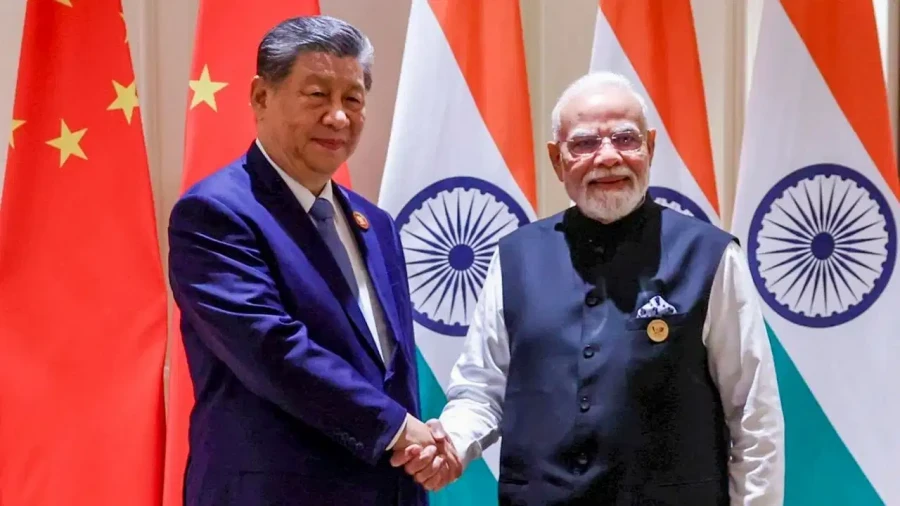
Prime Minister Narendra Modi and Chinese President Xi Jinping held bilateral talks on the sidelines of the 18th BRICS Summit in New Delhi, focusing on the boundary question, trade and economic concerns, people-to-people exchanges and broader bilateral relations. It was their first bilateral meeting in India in seven years.
Both leaders reiterated that India and China should take a strategic and long-term perspective of their relationship and that differences should not become disputes. Importantly, the meeting did not announce a final settlement of the boundary dispute; the two sides instead committed to continuing negotiations towards a fair, reasonable and mutually acceptable resolution.
Border Peace and Boundary Question
- India reiterated that peace and tranquillity in border areas are an essential basis for continued development of bilateral relations.
- Both sides agreed on the need to observe existing agreements and understandings concerning the border.
- The leaders committed to pursuing a political settlement of the boundary question considering the overall bilateral relationship and long-term interests of both countries.
- Prime Minister Modi identified “three mutuals” as guiding principles:
- Mutual respect
- Mutual sensitivity
- Mutual interest
- The Chinese readout described India and China as “partners rather than rivals”, reflecting Beijing's stated approach to the relationship.
Trade and Economic Relations
The two leaders discussed the structural trade imbalance, supply-chain concerns and market-access issues. They called for meaningful and predictable market access while strengthening business linkages between the two economies.
They also supported greater cultural exchanges, mobility and people-to-people contacts and agreed to expand areas of cooperation on regional and global issues.
India–China Border Mechanisms
The latest leaders' meeting follows continued diplomatic and military negotiations over the Line of Actual Control (LAC).
- Special Representatives Mechanism
- Established in 2003 to pursue a political framework for resolving the boundary question.
- India's Special Representative is the National Security Adviser.
- China's Special Representative is currently Wang Yi.
- 2005 Agreement
- India and China concluded the Agreement on Political Parameters and Guiding Principles for the Settlement of the India-China Boundary Question.
- It provides principles for pursuing a fair, reasonable and mutually acceptable boundary settlement.
- Working Mechanism for Consultation and Coordination (WMCC)
- Created in 2012 for consultation and coordination on India-China border affairs.
- It functions alongside military commander-level mechanisms.
Recent Border Developments
The 25th round of Special Representatives' talks between NSA Ajit Doval and Wang Yi produced an eight-point set of outcomes covering boundary negotiations and border management.
Key measures included:
- Advancing discussions on an “early and substantial harvest” of boundary delimitation in appropriate areas.
- Establishing two additional military meeting points.
- Creating two additional border military hotlines in the Eastern and Middle Sectors.
- Continuing diplomatic and military mechanisms to prevent misunderstanding and miscalculation along the LAC.
- Continuing cooperation concerning trans-border rivers, pilgrimage and border trade.
- Holding the 26th Special Representatives' talks in India in 2027.
Additional Info
- Line of Actual Control (LAC): De facto line separating Indian- and Chinese-controlled territories; it is not a mutually demarcated international boundary.
- Broadly divided into:
- Western Sector: Ladakh
- Middle Sector: Himachal Pradesh and Uttarakhand
- Eastern Sector: Sikkim and Arunachal Pradesh
- Following the military standoff that began in 2020, the two sides reached a patrolling arrangement concerning Depsang and Demchok in 2024, followed by disengagement.
- BRICS 2026: India hosted the 18th BRICS Summit in New Delhi and held the grouping's chairship for the year.
Sources
US Russia Sanctions Bill Could Expose Major Russian Energy Buyers to Up to 100% Tariffs

What’s the News?
A proposed amendment to the US Lindsey O. Graham Sanctioning Russia and Iran Act of 2026 sought to explicitly name India and nine other countries as potentially subject to tariffs of up to 100% for purchasing Russian-origin energy or facilitating sanctions evasion. The amendment was introduced by Democratic Congressman Steny Hoyer, with Marcy Kaptur.
However, in the latest legislative development, the US House Rules Committee rejected, by 3–7, the motion to allow Hoyer's country-naming amendment to be considered on the House floor. Thus, India is not explicitly named in the version currently moving through the House, although it could still fall within the broader criteria covering major buyers of Russian energy. The bill has not yet become law.
What Does the Bill Propose?
The legislation seeks to strengthen US economic pressure on Russia over the Russia–Ukraine war through sanctions on Russian entities, energy revenues and sanctions-evasion networks.
Its Section 113 provides that, if enacted, the US President would be required to impose an additional tariff of up to 100% ad valorem on all goods imported into the US from certain countries linked to Russian energy purchases or oil-sanctions evasion.
A country may come within the provision if it:
- continues making new purchases of Russian-origin crude oil or natural gas after the Act takes effect and is among the five largest importers by volume during the relevant 12-month period; or
- is among the five leading countries facilitating Russian oil-sanctions evasion.
The US Trade Representative would reassess the major Russian energy-importing countries at 180-day intervals.
India Amendment
Hoyer's proposed amendment sought to explicitly identify ten countries as initially eligible for tariffs of up to 100%:
- China
- India
- Türkiye
- Azerbaijan
- Hungary
- Slovak Republic
- United Arab Emirates
- Singapore
- Kazakhstan
- Kyrgyz Republic
The Senate-passed text itself does not name India or these countries individually. Instead, it uses objective categories such as the five largest importers of Russian-origin crude oil or natural gas.
Latest Status
- The US Senate passed the legislation by 86–11.
- Steny Hoyer's proposal to explicitly name India and nine other countries was submitted in the House.
- The House Rules Committee subsequently voted 3–7 against making that amendment eligible for floor consideration.
- A separate amendment by Democrat Gregory Meeks, which sought to remove the secondary-tariff provision in Section 113 altogether, was also rejected 3–7.
- The House approved the procedural rule for considering the Senate amendments by 214–211.
- A final House vote on concurrence in the Senate amendments remains necessary before the measure can proceed for presidential action.
Why is India Relevant?
India substantially increased imports of discounted Russian crude oil after 2022, making Russia one of India's major crude suppliers. Consequently, even without India being expressly named, India could potentially fall within Section 113 if it satisfies the legislation's top-five importer criteria when the required determination is made.
Importantly, the proposal does not mean that a 100% US tariff on India is currently in force. It is a legislative proposal, and the tariff rate under Section 113 could be set anywhere above zero and up to 100%, subject to the statutory process.
Secondary Sanctions and Secondary Tariffs
Primary sanctions directly restrict dealings with the targeted country, entity or individual.
Secondary sanctions target third-country persons or entities that continue specified transactions with the primary sanctioned party.
In this bill, the proposed secondary tariff mechanism goes further by permitting additional US import duties on goods from countries that meet the Russian-energy or sanctions-evasion criteria. The tariff would be additional to other applicable US duties.
Other Major Provisions
- Russian imports: The bill authorises tariffs of up to 500% on goods imported directly from Russia.
- Russian energy and finance: It provides for sanctions relating to Russia's energy revenues, financial institutions and persons supporting the Russian government.
- Shadow fleet: The legislation targets networks and vessels used to circumvent restrictions on Russian oil exports.
- Rosatom: It provides for measures relating to officials and senior figures associated with Russia's state nuclear corporation.
- Presidential waiver: The President may waive sanctions or duties after certifying to Congress that doing so is in the national interest of the United States.
- Iran: The wider legislation also contains measures concerning restrictions on Iran's energy and weapons-related financing.
Additional Info
- Ad valorem tariff
- A customs duty calculated as a percentage of the value of the imported product.
- Thus, “up to 100% ad valorem” means the tariff could reach an amount equal to the assessed value of the imported goods.
- US legislative process
- A bill normally requires approval of both the House of Representatives and Senate in identical form.
- It then goes to the President for signature or veto.
- Therefore, passage by the Senate or advancement through a House procedural vote does not itself make the measure law.
- House Rules Committee
- Determines many of the procedural conditions under which legislation is debated in the House.
- It may decide which proposed amendments are made “in order” for floor consideration.
- In this case, the committee did not make Hoyer's India-naming amendment in order.
Sources
September 2026
Archive
October 2026
- 27 October 2026
- 26 October 2026
- 24 October 2026
- 23 October 2026
- 22 October 2026
- 21 October 2026
- 20 October 2026
- 19 October 2026
- 17 October 2026
- 16 October 2026
- 15 October 2026
- 14 October 2026
- 13 October 2026
- 12 October 2026
- 10 October 2026
- 09 October 2026
- 08 October 2026
- 07 October 2026
- 06 October 2026
- 05 October 2026
- 03 October 2026
- 02 October 2026
- 01 October 2026
September 2026
- 30 September 2026
- 29 September 2026
- 28 September 2026
- 26 September 2026
- 25 September 2026
- 24 September 2026
- 23 September 2026
- 22 September 2026
- 21 September 2026
- 19 September 2026
- 18 September 2026
- 17 September 2026
- 16 September 2026
- 15 September 2026
- 12 September 2026
- 11 September 2026
- 10 September 2026
- 09 September 2026
- 08 September 2026
- 07 September 2026
- 05 September 2026
- 04 September 2026
- 03 September 2026
- 02 September 2026
- 01 September 2026
August 2026
- 31 August 2026
- 29 August 2026
- 27 August 2026
- 26 August 2026
- 25 August 2026
- 24 August 2026
- 22 August 2026
- 21 August 2026
- 20 August 2026
- 19 August 2026
- 18 August 2026
- 17 August 2026
- 14 August 2026
- 13 August 2026
- 12 August 2026
- 11 August 2026
- 10 August 2026
- 08 August 2026
- 07 August 2026
- 06 August 2026
- 05 August 2026
- 04 August 2026
- 03 August 2026
- 01 August 2026
July 2026
- 31 July 2026
- 30 July 2026
- 29 July 2026
- 28 July 2026
- 27 July 2026
- 25 July 2026
- 23 July 2026
- 22 July 2026
- 21 July 2026
- 20 July 2026
- 18 July 2026
- 17 July 2026
- 15 July 2026
- 14 July 2026
- 13 July 2026
- 11 July 2026
- 10 July 2026
- 09 July 2026
- 08 July 2026
- 07 July 2026
- 06 July 2026
- 04 July 2026
- 03 July 2026
- 02 July 2026
- 01 July 2026
June 2026
May 2026
April 2026
March 2026
- 31 March 2026
- 30 March 2026
- 28 March 2026
- 27 March 2026
- 26 March 2026
- 25 March 2026
- 24 March 2026
- 23 March 2026
- 21 March 2026
- 20 March 2026
- 19 March 2026
- 18 March 2026
- 17 March 2026
- 16 March 2026
- 14 March 2026
- 13 March 2026
- 12 March 2026
- 11 March 2026
- 10 March 2026
- 09 March 2026
- 07 March 2026
- 06 March 2026
- 05 March 2026
- 03 March 2026
- 02 March 2026
February 2026
- 28 February 2026
- 27 February 2026
- 26 February 2026
- 25 February 2026
- 24 February 2026
- 23 February 2026
- 21 February 2026
- 20 February 2026
- 19 February 2026
- 18 February 2026
- 17 February 2026
- 16 February 2026
- 13 February 2026
- 12 February 2026
- 11 February 2026
- 10 February 2026
- 09 February 2026
- 07 February 2026
- 06 February 2026
- 05 February 2026
- 04 February 2026
- 03 February 2026
- 02 February 2026
January 2026
- 31 January 2026
- 30 January 2026
- 29 January 2026
- 28 January 2026
- 27 January 2026
- 26 January 2026
- 24 January 2026
- 23 January 2026
- 22 January 2026
- 21 January 2026
- 20 January 2026
- 19 January 2026
- 16 January 2026
- 15 January 2026
- 14 January 2026
- 13 January 2026
- 12 January 2026
- 10 January 2026
- 09 January 2026
- 08 January 2026
- 07 January 2026
- 06 January 2026
- 05 January 2026
- 03 January 2026
- 02 January 2026
- 01 January 2026
December 2025
- 31 December 2025
- 30 December 2025
- 29 December 2025
- 27 December 2025
- 26 December 2025
- 24 December 2025
- 23 December 2025
- 22 December 2025
- 20 December 2025
- 19 December 2025
- 18 December 2025
- 17 December 2025
- 16 December 2025
- 15 December 2025
- 13 December 2025
- 12 December 2025
- 11 December 2025
- 10 December 2025
- 09 December 2025
- 08 December 2025
- 05 December 2025
- 04 December 2025
- 03 December 2025
- 02 December 2025
November 2025
- 29 November 2025
- 28 November 2025
- 27 November 2025
- 26 November 2025
- 25 November 2025
- 24 November 2025
- 22 November 2025
- 21 November 2025
- 20 November 2025
- 19 November 2025
- 18 November 2025
- 17 November 2025
- 15 November 2025
- 14 November 2025
- 13 November 2025
- 12 November 2025
- 11 November 2025
- 10 November 2025
- 08 November 2025
- 07 November 2025
- 06 November 2025
- 05 November 2025
- 04 November 2025
- 03 November 2025
- 01 November 2025
October 2025
- 31 October 2025
- 30 October 2025
- 29 October 2025
- 28 October 2025
- 27 October 2025
- 25 October 2025
- 24 October 2025
- 23 October 2025
- 22 October 2025
- 21 October 2025
- 20 October 2025
- 18 October 2025
- 17 October 2025
- 16 October 2025
- 15 October 2025
- 14 October 2025
- 13 October 2025
- 11 October 2025
- 10 October 2025
- 09 October 2025
- 08 October 2025
- 07 October 2025
- 06 October 2025
- 04 October 2025
- 03 October 2025
- 02 October 2025
- 01 October 2025
September 2025
- 30 September 2025
- 29 September 2025
- 27 September 2025
- 26 September 2025
- 25 September 2025
- 24 September 2025
- 23 September 2025
- 22 September 2025
- 20 September 2025
- 19 September 2025
- 18 September 2025
- 17 September 2025
- 16 September 2025
- 15 September 2025
- 13 September 2025
- 12 September 2025
- 11 September 2025
- 10 September 2025
- 09 September 2025
- 08 September 2025
- 06 September 2025
- 05 September 2025
- 04 September 2025
- 03 September 2025
- 02 September 2025
- 01 September 2025
August 2025
- 30 August 2025
- 29 August 2025
- 28 August 2025
- 27 August 2025
- 26 August 2025
- 25 August 2025
- 23 August 2025
- 22 August 2025
- 21 August 2025
- 20 August 2025
- 19 August 2025
- 18 August 2025
- 16 August 2025
- 14 August 2025
- 13 August 2025
- 12 August 2025
- 11 August 2025
- 08 August 2025
- 07 August 2025
- 06 August 2025
- 05 August 2025
- 04 August 2025
- 02 August 2025
- 01 August 2025
July 2025
- 31 July 2025
- 30 July 2025
- 29 July 2025
- 28 July 2025
- 26 July 2025
- 25 July 2025
- 24 July 2025
- 23 July 2025
- 22 July 2025
- 21 July 2025
- 19 July 2025
- 18 July 2025
- 17 July 2025
- 16 July 2025
- 15 July 2025
- 12 July 2025
- 11 July 2025
- 10 July 2025
- 09 July 2025
- 07 July 2025
- 05 July 2025
- 04 July 2025
- 03 July 2025
- 02 July 2025
- 01 July 2025
June 2025
- 30 June 2025
- 28 June 2025
- 27 June 2025
- 26 June 2025
- 25 June 2025
- 24 June 2025
- 23 June 2025
- 21 June 2025
- 20 June 2025
- 19 June 2025
- 18 June 2025
- 17 June 2025
- 16 June 2025
- 14 June 2025
- 13 June 2025
- 12 June 2025
- 11 June 2025
- 10 June 2025
- 09 June 2025
- 07 June 2025
- 06 June 2025
- 05 June 2025
- 04 June 2025
- 03 June 2025
- 02 June 2025
May 2025
April 2025
- 30 April 2025
- 29 April 2025
- 28 April 2025
- 26 April 2025
- 25 April 2025
- 24 April 2025
- 23 April 2025
- 22 April 2025
- 21 April 2025
- 19 April 2025
- 18 April 2025
- 17 April 2025
- 16 April 2025
- 15 April 2025
- 14 April 2025
- 12 April 2025
- 11 April 2025
- 10 April 2025
- 09 April 2025
- 08 April 2025
- 07 April 2025
- 05 April 2025
- 04 April 2025
- 03 April 2025
- 02 April 2025
- 01 April 2025
March 2025
- 31 March 2025
- 29 March 2025
- 28 March 2025
- 27 March 2025
- 26 March 2025
- 25 March 2025
- 24 March 2025
- 22 March 2025
- 21 March 2025
- 20 March 2025
- 19 March 2025
- 18 March 2025
- 17 March 2025
- 15 March 2025
- 13 March 2025
- 12 March 2025
- 11 March 2025
- 10 March 2025
- 08 March 2025
- 07 March 2025
- 06 March 2025
- 05 March 2025
- 04 March 2025
- 03 March 2025
- 01 March 2025
February 2025
- 28 February 2025
- 27 February 2025
- 26 February 2025
- 25 February 2025
- 24 February 2025
- 22 February 2025
- 21 February 2025
- 20 February 2025
- 19 February 2025
- 18 February 2025
- 17 February 2025
- 15 February 2025
- 14 February 2025
- 13 February 2025
- 12 February 2025
- 11 February 2025
- 10 February 2025
- 08 February 2025
- 07 February 2025
- 06 February 2025
- 05 February 2025
- 04 February 2025
- 03 February 2025
- 01 February 2025
January 2025
- 31 January 2025
- 30 January 2025
- 29 January 2025
- 28 January 2025
- 27 January 2025
- 25 January 2025
- 24 January 2025
- 23 January 2025
- 22 January 2025
- 21 January 2025
- 20 January 2025
- 18 January 2025
- 17 January 2025
- 16 January 2025
- 15 January 2025
- 14 January 2025
- 13 January 2025
- 11 January 2025
- 10 January 2025
- 09 January 2025
- 08 January 2025
- 07 January 2025
- 06 January 2025
- 04 January 2025
- 03 January 2025
- 02 January 2025
- 01 January 2025