
Current Affairs
Stay updated with the latest national and international events.
15 September 2025
Engineers' Day 2025: Honouring the Legacy of Sir M. Visvesvaraya

What’s the News?
- India celebrates National Engineers' Day annually on September 15 to commemorate the birth anniversary of Sir Mokshagundam Visvesvaraya, a distinguished civil engineer, statesman, and Bharat Ratna awardee.
- The day recognizes the vital role of engineers in nation-building, innovation, and infrastructure development.
- The theme for Engineers' Day 2025 is "Deep Tech & Engineering Excellence: Driving India's Techade," emphasizing the role of cutting-edge technologies in India's progress.
Sir M. Visvesvaraya: The Architect of Modern India
Sir M. Visvesvaraya, born in 1861, is widely regarded as one of India's most visionary engineers. His contributions were pivotal in the fields of water management, industrialization, and education. A few of his notable contributions include:
- Krishna Raja Sagara (KRS) Dam: As Chief Engineer of Mysore, he was instrumental in building this dam on the Kaveri River, which was a marvel of engineering for its time and transformed the agricultural landscape of Mandya.
- Automatic Weir Floodgates: He designed and patented a system of automatic sluice gates to control the flow of water in dams, first installed at the Khadakwasla Dam near Pune. This innovation helped in efficient water management and flood control.
- Hyderabad Flood Protection System: Following the devastating 1908 Musi River floods, he was a key figure in designing a comprehensive flood protection system for the city.
- Dewan of Mysore: He served as the Dewan (Chief Minister) of the princely state of Mysore from 1912 to 1918, where he pioneered industrial and educational reforms. He was instrumental in establishing institutions like the Mysore Soap Factory, the Bhadravati Iron and Steel Works, and the University Visvesvaraya College of Engineering (UVCE) in Bengaluru.
- Honours and Awards:
- Knighted as a Knight Commander of the British Indian Empire (KCIE) by King George V in 1915.
- Awarded India’s highest civilian honour, the Bharat Ratna, in 1955.
Key Engineers & Their Contributions
| Engineer | Contribution |
|---|---|
| Sir M. Visvesvaraya | Major civil engineering works; modern methodology in infrastructure. |
| Dr A. P. J. Abdul Kalam | Indigenous satellite launch vehicles; missile technology; served as President. |
| Satish Dhawan | Led ISRO; advanced space research and fluid dynamics. |
| Verghese Kurien | Launched and scaled the “White Revolution”; cooperatives; rural technology intervention. |
| Dr Homi Jehangir Bhabha | Founder of nuclear research infrastructure and policymaking in atomic energy. |
| E. Sreedharan | Known as “Metro Man”; enhanced public transit via Delhi Metro etc. |
Additional Info
- National Education Policy 2020 (NEP 2020): This policy recommends the establishment of a regulatory body for engineers to ensure consistent standards, similar to other professional fields.
- Government Initiatives for Engineers:
- Skill India Digital Hub: Equips engineers with practical, industry-ready skills.
- Atal Innovation Mission (AIM): Promotes a culture of innovation and entrepreneurship through initiatives like Atal Incubation Centres (AICs).
- Multidisciplinary Education and Research Improvement in Technical Education (MERITE) Scheme: Aims to transform technical education and align it with the policy's vision for skill development and innovation. This scheme, with an outlay of ₹4,200 crore, will be implemented in 275 technical institutions.
- Startup India Initiative: Provides avenues for engineers to transform technological ideas into scalable enterprises.
- World Engineering Day: The UNESCO-recognised World Engineering Day for Sustainable Development is celebrated globally on March 4 to highlight the role of engineers in achieving the UN Sustainable Development Goals.
Sources
Defence Procurement Manual (DPM) 2025

What’s the News?
- Defence Minister Rajnath Singh approved the Defence Procurement Manual (DPM) 2025, to govern revenue procurement for the Armed Forces.
- It replaces a manual last updated in 2009.
- Purpose is to make procurement for spares, ammunition and sustainment — under “Operations & Sustenance” — faster, more responsive, and more indigenous.
DPM 2025: Key Reforms & Objectives
- Streamlined Procurement:
- Covers revenue procurements valued at ₹1 lakh crore annually for operations, sustenance, and maintenance.
- Introduces collegiate decision-making and empowers Competent Financial Authorities (CFAs) at lower levels to approve extensions and bids without higher-level referrals.
- Industry-Friendly Measures:
- Relaxed Penalties: No liquidity damages (LD) during development phase; post-prototype LD reduced to 0.1% (capped at 5–10% for extreme delays).
- Assured Orders: Guaranteed quantity orders for up to 5 years (extendable to 10 years in special cases) to ensure stability for suppliers.
- Handholding Support: Technical know-how and equipment sharing by armed forces for prototype development .
- Self-Reliance Focus:
- New chapter on innovation and indigenization to foster collaboration with private industry, MSMEs, startups, academia (e.g., IITs, IISc).
- No Objection Certificate (NOC) requirement from Defence Public Sector Undertakings (DPSUs) removed for open bidding, ensuring a level playing field.
- Operational Efficiency:
- 15% upfront growth provision for repair/maintenance of aerial and naval platforms to reduce downtime.
- Limited tendering allowed for procurements up to ₹50 lakh (and beyond in exceptional cases) for specialized goods.
Additional Info
- Defence Acquisition Procedure (DAP): The DPM governs revenue procurement, which covers day-to-day operational needs and maintenance. In contrast, the Defence Acquisition Procedure (DAP), last updated in 2020, governs capital procurement, which involves the acquisition of new platforms, equipment, and systems.
- Defence Acquisition Council (DAC):
- The DAC is the highest decision-making body in the Ministry of Defence for capital acquisitions, headed by the Defence Minister.
- It was formed in 2001 to ensure timely and efficient procurement for the Indian Armed Forces.
- Its key functions include according Acceptance of Necessity (AoN) for proposals and categorising them under 'Buy', 'Buy & Make', and 'Make' categories.
- Major Indigenisation Initiatives:
- "Aatmanirbhar Bharat" and "Make in India": The DPM is a step towards achieving the goals of these missions by creating a robust defence manufacturing ecosystem.
- Positive Indigenisation Lists: The government has issued multiple lists of defence items whose import is banned, creating guaranteed domestic orders.
- Innovations for Defence Excellence (iDEX): A program launched in 2018 to engage startups and MSMEs in defence R&D.
- SRIJAN Portal: An online platform that facilitates indigenisation by providing access to items that were previously imported.
- Defence Industrial Corridors: Two corridors in Uttar Pradesh and Tamil Nadu have been established to boost defence production by attracting investments.
Sources
Kharif Sowing in India: Progress and Trends
What’s the News?
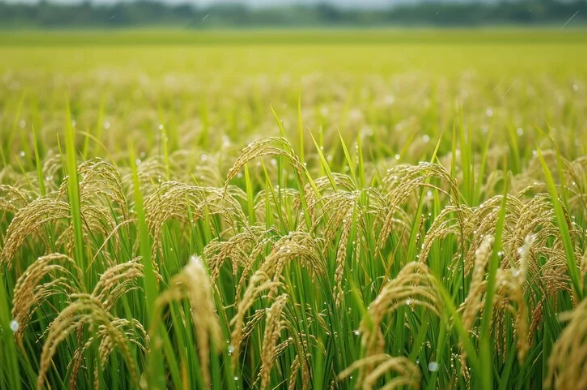
- The total area under Kharif sowing in India has surpassed 1,110 lakh hectares, increasing by about 15 lakh hectares compared to the same period last year.
- Growth is seen in paddy, pulses, and coarse cereals sowing. Oilseeds show a lag relative to last year.
Key Crop-wise Trends
- Paddy: ~438.5 lakh hectares sown (↑ ~2% over last year).
- Pulses: Slight increase to ~118 lakh hectares.
- Coarse cereals: ~192-193 lakh hectares. Moderate growth.
- Oilseeds: Decline to ~188-189 lakh hectares from ~194 lakh last year.
- Cash crops (e.g. cotton): Lower sowing area compared to previous year.
Additional Info
- Kharif Crops:
- Sowing Season: Grown with the onset of the south-west monsoon, typically from June to July.
- Harvesting Season: Harvested in September-October.
- Climatic Requirements: Require warm and humid conditions and a substantial amount of rainfall.
- Examples: Major Kharif crops include rice, maize, jowar, bajra, tur (arhar), moong, urad, cotton, jute, and groundnut.
- Rabi Crops:
- Sowing Season: Sown after the monsoon, from October to December.
- Harvesting Season: Harvested from April to June.
- Climatic Requirements: Require a cool and dry climate for growth and are often dependent on irrigation.
- Examples: Wheat, barley, gram, mustard, and peas.
- Government Initiatives to Support Agriculture:
- Minimum Support Price (MSP): The Cabinet Committee on Economic Affairs (CCEA), chaired by the Prime Minister, has approved a hike in MSP for 14 Kharif crops for the marketing season to ensure remunerative prices for farmers.
- Pradhan Mantri Fasal Bima Yojana (PMFBY): A crop insurance scheme that provides financial support to farmers suffering crop loss or damage due to natural calamities.
- Pradhan Mantri Kisan Samman Nidhi (PM-KISAN): A central sector scheme providing a financial benefit of ₹6,000 per year in three equal installments to eligible farmer families.
- National Food Security Mission (NFSM): Launched to increase the production of rice, wheat, pulses, coarse cereals, and commercial crops through area expansion and productivity enhancement.
Sources
CSC Crosses ₹3,000 Crore in Loan Disbursals

What’s the News?
- CSC e-Governance Services India Ltd (CSC SPV) has disbursed over ₹3,000 crore in loans since July 2023 under its partnership with Piramal Finance.
- Beneficiaries so far: nearly 70,000 people, many first-time borrowers from unbanked or underserved rural segments.
Key Data & Significance
| Financial Year | Loan Disbursals (through CSC SPV) | Comments |
|---|---|---|
| FY 2023-24 | ~ ₹86 crore | Inception phase of the loan push. |
| FY 2024-25 | ~ ₹1,631 crore | Major ramp up in disbursal volumes. |
| FY 2025-26 (till August)** | ~ ₹1,300 crore | Continuing strong growth. |
- CSC uses a network of over 5.8 lakh Village Level Entrepreneurs (VLEs) to reach remote/rural communities.
- Loans are lower cost than many local informal credit sources. Designed to reduce exploitative practices.
Additional Info
- Common Services Centres (CSCs):
- A flagship project under the Digital India programme, initiated by the Ministry of Electronics & Information Technology (MeitY).
- They are front-end service delivery points at the village level, providing ICT-enabled services to rural citizens.
- Services include government-to-citizen (G2C), business-to-citizen (B2C), and other services such as banking, insurance, education, and healthcare.
- The CSCs operate on a Public-Private Partnership (PPP) model.
- Digital India Initiative:
- Launched in 2015, this flagship programme aims to transform India into a digitally empowered society and a knowledge economy.
- It has three key vision areas: Digital Infrastructure as a core utility, Governance and services on demand, and Digital empowerment of citizens.
- Major components include BharatNet, e-Kranti, and Digital Locker.
- Financial Inclusion Initiatives:
- Pradhan Mantri Jan Dhan Yojana (PMJDY): A national mission for financial inclusion launched in 2014, aiming to provide universal access to banking facilities and a basic savings bank account for every unbanked household.
- Direct Benefit Transfer (DBT): A programme that aims to transfer subsidies and social benefits directly to the bank accounts of beneficiaries, facilitated by the Jan Dhan-Aadhaar-Mobile (JAM) trinity.
- Pradhan Mantri Mudra Yojana: A scheme launched in 2015 to provide loans of up to ₹10 lakh to non-corporate, non-farm small/micro enterprises.
Sources
National Agriculture Conference — Rabi Abhiyan 2025
What’s the News?
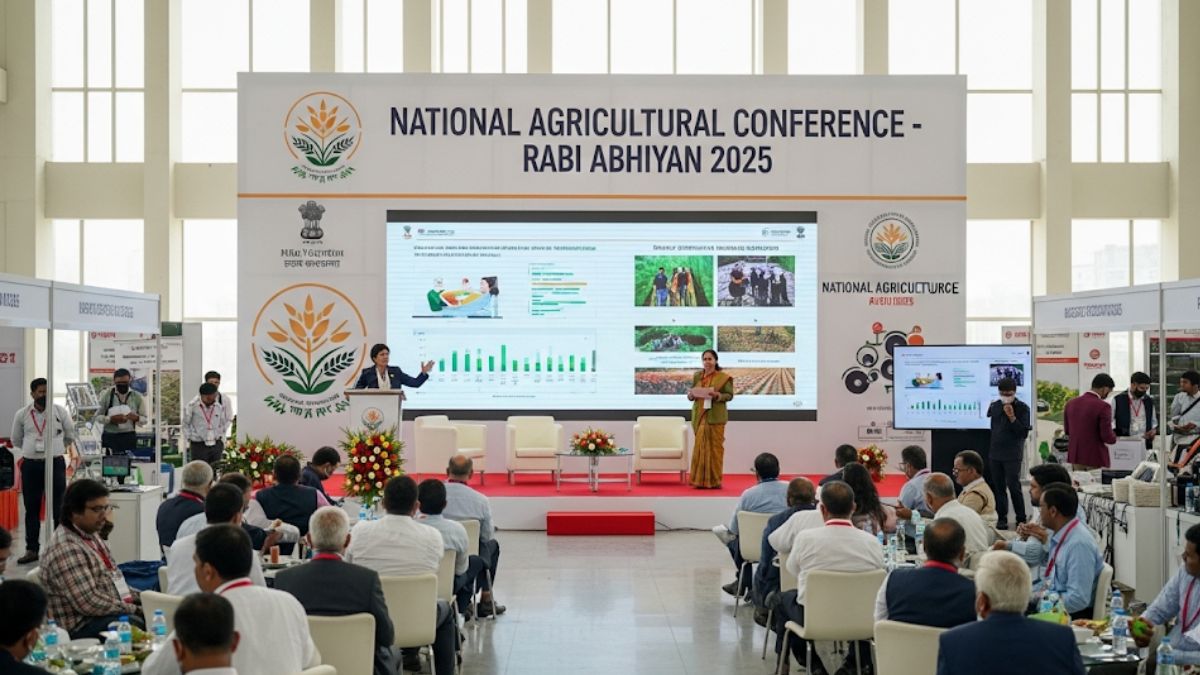
- The Union Ministry of Agriculture & Farmers’ Welfare is holding a two-day National Agriculture Conference – Rabi Abhiyan 2025 in New Delhi (15-16 September).
- Purpose is to plan strategy, set production targets, and chart action for the upcoming Rabi sowing season 2025-26.
- The event is the second phase of the Viksit Krishi Sankalp Abhiyan, following its earlier Kharif campaign.
Key Highlights of the Conference
- Objective: To formulate an agricultural roadmap for the Rabi season, addressing challenges and developing strategies to ensure national food security and boost farmers' income.
- Leadership: Chaired by Union Agriculture and Farmers' Welfare Minister Shivraj Singh Chouhan.
- New Initiative: For the first time, scientists from Krishi Vigyan Kendras (agricultural science centers) were invited to provide regional insights and contribute to the planning process.
- Focus Areas: The discussions are centered on ensuring farmers have access to improved seed varieties, modern farming techniques, and new technologies. The conference also focuses on promoting climate-resilient farming, improving input efficiency, strengthening farmer advisory systems, and integrating technology.
- Alignment with National Goals: The conference is part of the second phase of the Viksit Krishi Sankalp Abhiyan, a mission aimed at modernizing Indian agriculture to support the vision of a "Viksit Bharat" (Developed India).
Viksit Krishi Sankalp Abhiyan
- First phase focused on Kharif crops.
- In first phase, ~2,170 teams of scientists visited villages.
Sources
Indian Navy Inducts ASW Ship Androth
What’s the News?
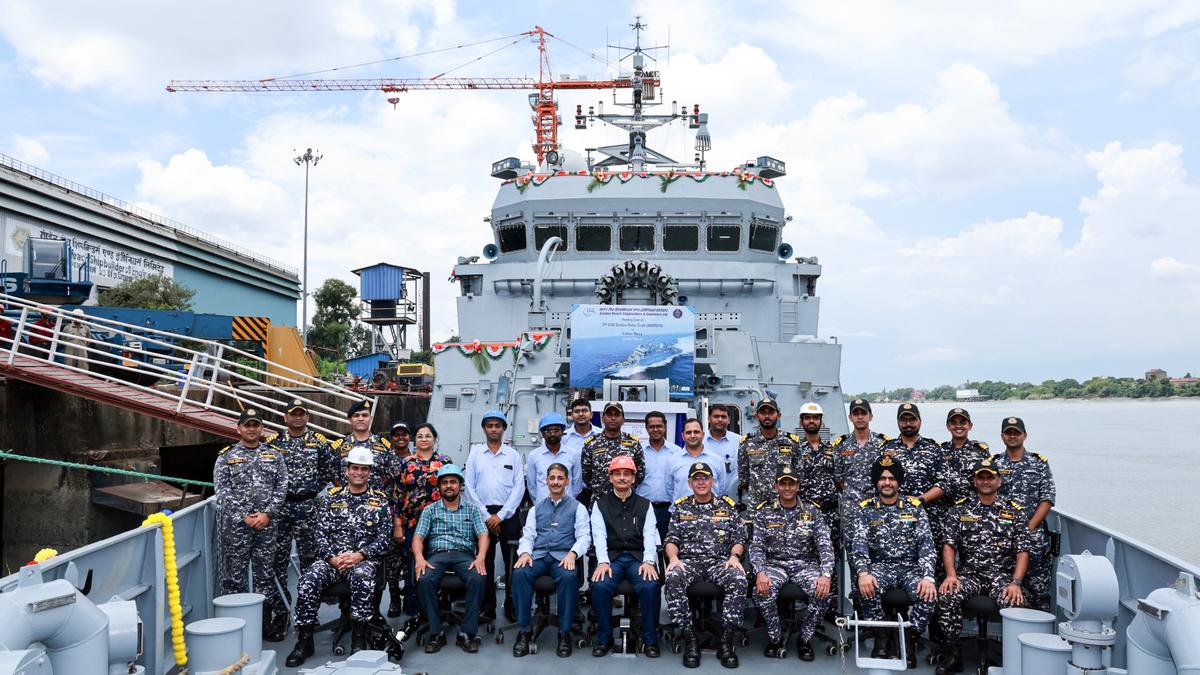
- The Indian Navy has received Androth, the second indigenously built Anti-Submarine Warfare Shallow Water Craft (ASW-SWC) under the eight-ship series.
- Built by Garden Reach Shipbuilders & Engineers (GRSE), Kolkata, this ship enhances naval capabilities in shallow littoral zones—especially anti-submarine surveillance, coastal monitoring, and mine-laying.
ASW-SWC Fleet: Design and Capabilities
- Primary Roles:
- Detect and engage enemy submarines in littoral (shallow) waters.
- Conduct mine-laying operations, search-and-rescue (SAR), and low-intensity maritime operations (LIMO).
- Key Features:
- Dimensions: Length of 77.6 meters, displacement of 900–1,490 tons, and endurance of 1,800 nautical miles.
- Propulsion: Diesel engine-waterjet combination (first in Indian Navy warships), enabling speeds up to 25 knots and enhanced agility in shallow waters.
- Stealth Technology: Reduced radar cross-section, low acoustic signature, and infrared suppression for covert operations.
- Armament and Sensors:
- Anti-submarine weapons: RBU-6000 rocket launchers, lightweight torpedo tubes (e.g., Advanced Light Weight Torpedo), and mine-laying rails.
- Guns: 30mm naval surface gun and 12.7mm stabilized remote-controlled guns for surface threats.
- Sensors: Hull-mounted sonar and low-frequency variable-depth sonar (LFVDS) for submarine detection.
- Indigenization: Over 80% indigenous content, with contributions from Bharat Electronics (BEL), Larsen & Toubro, Mahindra Defence, and 55+ MSMEs.
Additional Info
- 'Aatmanirbhar Bharat' Initiative in Defence:
- The government has been consistently promoting self-reliance in the defense sector to reduce dependency on imports.
- Key policies include the Defence Acquisition Procedure (DAP) 2020, which prioritizes 'Buy Indian' and 'Make in India' categories.
- Positive Indigenisation Lists have been released, banning the import of various defense items and creating assured demand for domestic manufacturers.
- Anti-Submarine Warfare (ASW):
- ASW is a branch of naval warfare that involves finding, tracking, and neutralizing enemy submarines.
- It is a critical capability for any navy to protect its coastline, trade routes, and naval fleet from underwater threats.
- India's ASW assets include specialized ships, submarines, and maritime patrol aircraft like the P-8I Poseidon.
- Garden Reach Shipbuilders and Engineers (GRSE):
- A public sector undertaking based in Kolkata, it's one of India's leading shipyards.
- GRSE has a history of building a wide range of vessels for the Indian Navy, including frigates, corvettes, and patrol vessels.
- The construction of the ASW-SWC class of ships is part of a larger contract between the Ministry of Defence and GRSE for eight such vessels.
Sources
PM Modi Inaugurates India's First Bamboo-Based Ethanol Plant in Assam
What’s the News?
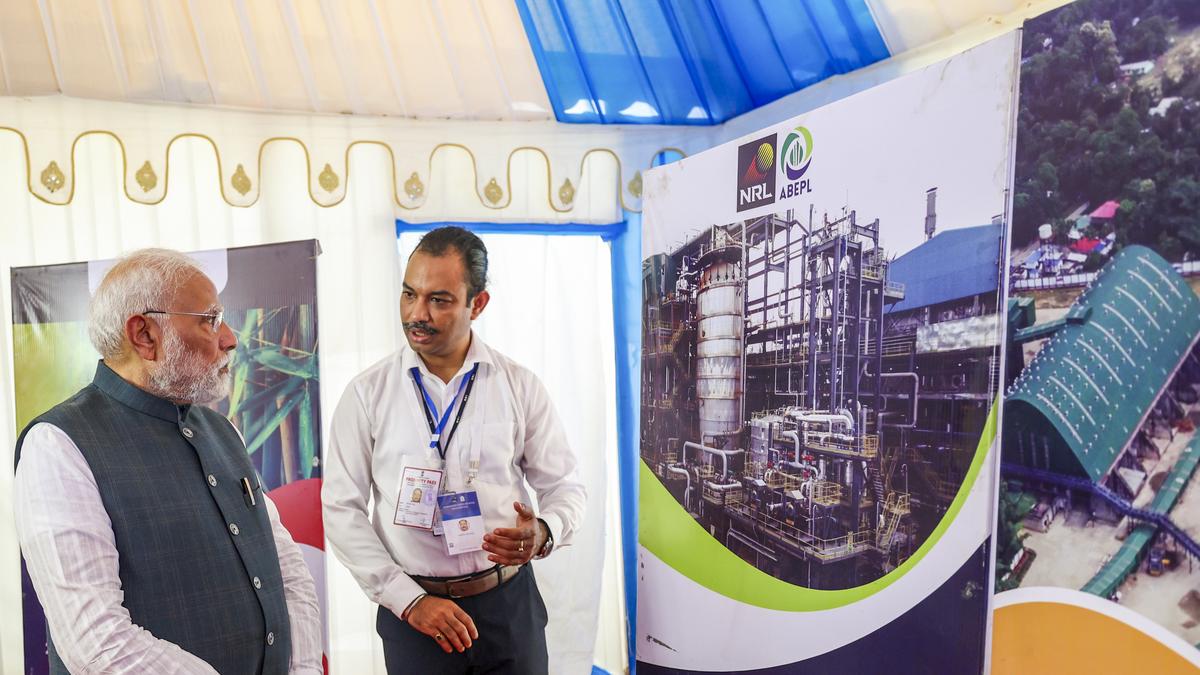
- Prime Minister Narendra Modi has inaugurated India's first-of-its-kind, second-generation (2G) bioethanol plant at Numaligarh Refinery Limited (NRL) in the Golaghat district of Assam.
- The plant, built at a cost of approximately ₹5,000 crore, utilizes bamboo as its primary feedstock to produce fuel-grade ethanol.
- This is a landmark project aimed at reducing India’s dependence on imported crude oil, promoting green energy, and creating a sustainable bamboo-based economy in the Northeast. The plant's annual rated production capacity is 48,900 tonnes of ethanol.
Plant Overview & Significance
- Feedstock & Output:
- Annual bamboo requirement: 5 lakh metric tonnes (sourced locally).
- Annual production: 50 TMT ethanol, 19 TMT furfural (used in pharmaceuticals), 11 TMT acetic acid, and food-grade CO₂.
- Generates 25 MW green electricity through zero-waste processes.
- Strategic Impact:
- Advances Aatmanirbhar Bharat in energy by diversifying ethanol feedstock beyond sugarcane/molasses.
- Supports tribal farmers through bamboo cultivation and procurement (annual expenditure: ₹200 crore).
- Aligns with National Biofuels Policy 2018 (amended 2022), which accelerated E20 target to 2025–26.
- Economic & Environmental Benefits:
- Foreign exchange savings: Estimated $85 million/year from polypropylene plant.
- Carbon reduction: Ethanol blending has already cut 69.8 million tonnes CO₂ emissions (since 2014) and saved ₹1.36 trillion in oil imports.
Additional Info
- Ethanol Blending Programme (EBP):
- The EBP is a government initiative under the Ministry of Petroleum and Natural Gas to blend ethanol with petrol.
- The key objective is to reduce crude oil imports, save foreign exchange, and lower carbon emissions.
- The initial target of 20% ethanol blending (E20) by 2030 was advanced to 2025-26 as part of the National Biofuels Policy, 2018.
- National Biofuels Policy, 2018:
- The policy categorizes biofuels into First Generation (1G) (from food crops like sugarcane, wheat, etc.), Second Generation (2G) (from non-food sources like agricultural residues and bamboo), and Third Generation (3G) (from microalgae).
- It provides a framework for the promotion of advanced biofuels and offers financial incentives for 2G ethanol bio-refineries.
- Bamboo:
- Botanically, bamboo is a grass, not a tree. This distinction is crucial as it led to a policy change.
- The Indian Forest Act, 1927, categorized bamboo as a tree, which restricted its felling and transport. This was amended in 2017, removing bamboo grown in non-forest areas from the definition of a "tree," thereby boosting the bamboo economy.
Sources
Hindi Diwas: Celebrating India's Official Language
What’s the News?
- India observed National Hindi Diwas on September 14, a day dedicated to celebrating the Hindi language and its significance as a unifying force in the country.
- The day commemorates the historic decision by the Constituent Assembly of India to adopt Hindi, written in the Devanagari script, as the official language of the Union on this date in 1949.
The Constitutional and Cultural Significance
The celebration of Hindi Diwas is rooted in both constitutional provisions and the language's cultural role in binding a multilingual nation.
- Constitutional Adoption: On September 14, 1949, Hindi was adopted as the official language, a decision later enshrined in Part XVII of the Constitution of India in Article 343. This decision was part of a compromise known as the Munshi-Ayyangar formula, which also allowed English to continue as an associate official language for a period of 15 years.
- National Pride: Hindi is the third most spoken language globally, with over 615 million speakers. The celebration fosters a sense of linguistic pride and encourages citizens to use Hindi in their daily lives, as well as in official and technical domains. It is a reminder that while India celebrates its linguistic diversity, Hindi serves as a bridge between different states and communities.
- Global Recognition: Hindi is gaining recognition on the world stage, with events like the World Hindi Conference and the establishment of the World Hindi Secretariat in Mauritius aimed at promoting it globally.
Additional Info
- Key Constitutional Articles:
- Article 343: Declares Hindi in Devanagari script as the official language of the Union. It also states that English shall continue to be used for all official purposes.
- Article 351: Gives the Union the responsibility to promote the spread of the Hindi language and to develop it so that it may serve as a medium of expression for India's composite culture.
- Official vs. National Language:
- The Constitution of India does not designate a "National Language." It recognizes Hindi and English as the official languages of the Union.
- The Constitution's Eighth Schedule lists 22 official languages, including Hindi.
- Difference between Hindi Diwas and World Hindi Day:
- National Hindi Diwas is celebrated on September 14 to mark the adoption of Hindi as the official language of India.
- World Hindi Day is celebrated on January 10 to commemorate the anniversary of the First World Hindi Conference held in 1975 in Nagpur. The aim is to promote Hindi on a global stage.
Sources
September 2025
30 September 202529 September 202527 September 202526 September 202525 September 202524 September 202523 September 202522 September 202520 September 202519 September 202518 September 202517 September 202516 September 202515 September 202513 September 202512 September 202511 September 202510 September 202509 September 202508 September 202506 September 202505 September 202504 September 202503 September 202502 September 202501 September 2025
Archive
October 2026
- 27 October 2026
- 26 October 2026
- 24 October 2026
- 23 October 2026
- 22 October 2026
- 21 October 2026
- 20 October 2026
- 19 October 2026
- 17 October 2026
- 16 October 2026
- 15 October 2026
- 14 October 2026
- 13 October 2026
- 12 October 2026
- 10 October 2026
- 09 October 2026
- 08 October 2026
- 07 October 2026
- 06 October 2026
- 05 October 2026
- 03 October 2026
- 02 October 2026
- 01 October 2026
September 2026
- 30 September 2026
- 29 September 2026
- 28 September 2026
- 26 September 2026
- 25 September 2026
- 24 September 2026
- 23 September 2026
- 22 September 2026
- 21 September 2026
- 19 September 2026
- 18 September 2026
- 17 September 2026
- 16 September 2026
- 15 September 2026
- 12 September 2026
- 11 September 2026
- 10 September 2026
- 09 September 2026
- 08 September 2026
- 07 September 2026
- 05 September 2026
- 04 September 2026
- 03 September 2026
- 02 September 2026
- 01 September 2026
August 2026
- 31 August 2026
- 29 August 2026
- 27 August 2026
- 26 August 2026
- 25 August 2026
- 24 August 2026
- 22 August 2026
- 21 August 2026
- 20 August 2026
- 19 August 2026
- 18 August 2026
- 17 August 2026
- 14 August 2026
- 13 August 2026
- 12 August 2026
- 11 August 2026
- 10 August 2026
- 08 August 2026
- 07 August 2026
- 06 August 2026
- 05 August 2026
- 04 August 2026
- 03 August 2026
- 01 August 2026
July 2026
- 31 July 2026
- 30 July 2026
- 29 July 2026
- 28 July 2026
- 27 July 2026
- 25 July 2026
- 23 July 2026
- 22 July 2026
- 21 July 2026
- 20 July 2026
- 18 July 2026
- 17 July 2026
- 15 July 2026
- 14 July 2026
- 13 July 2026
- 11 July 2026
- 10 July 2026
- 09 July 2026
- 08 July 2026
- 07 July 2026
- 06 July 2026
- 04 July 2026
- 03 July 2026
- 02 July 2026
- 01 July 2026
June 2026
May 2026
April 2026
March 2026
- 31 March 2026
- 30 March 2026
- 28 March 2026
- 27 March 2026
- 26 March 2026
- 25 March 2026
- 24 March 2026
- 23 March 2026
- 21 March 2026
- 20 March 2026
- 19 March 2026
- 18 March 2026
- 17 March 2026
- 16 March 2026
- 14 March 2026
- 13 March 2026
- 12 March 2026
- 11 March 2026
- 10 March 2026
- 09 March 2026
- 07 March 2026
- 06 March 2026
- 05 March 2026
- 03 March 2026
- 02 March 2026
February 2026
- 28 February 2026
- 27 February 2026
- 26 February 2026
- 25 February 2026
- 24 February 2026
- 23 February 2026
- 21 February 2026
- 20 February 2026
- 19 February 2026
- 18 February 2026
- 17 February 2026
- 16 February 2026
- 13 February 2026
- 12 February 2026
- 11 February 2026
- 10 February 2026
- 09 February 2026
- 07 February 2026
- 06 February 2026
- 05 February 2026
- 04 February 2026
- 03 February 2026
- 02 February 2026
January 2026
- 31 January 2026
- 30 January 2026
- 29 January 2026
- 28 January 2026
- 27 January 2026
- 26 January 2026
- 24 January 2026
- 23 January 2026
- 22 January 2026
- 21 January 2026
- 20 January 2026
- 19 January 2026
- 16 January 2026
- 15 January 2026
- 14 January 2026
- 13 January 2026
- 12 January 2026
- 10 January 2026
- 09 January 2026
- 08 January 2026
- 07 January 2026
- 06 January 2026
- 05 January 2026
- 03 January 2026
- 02 January 2026
- 01 January 2026
December 2025
- 31 December 2025
- 30 December 2025
- 29 December 2025
- 27 December 2025
- 26 December 2025
- 24 December 2025
- 23 December 2025
- 22 December 2025
- 20 December 2025
- 19 December 2025
- 18 December 2025
- 17 December 2025
- 16 December 2025
- 15 December 2025
- 13 December 2025
- 12 December 2025
- 11 December 2025
- 10 December 2025
- 09 December 2025
- 08 December 2025
- 05 December 2025
- 04 December 2025
- 03 December 2025
- 02 December 2025
November 2025
- 29 November 2025
- 28 November 2025
- 27 November 2025
- 26 November 2025
- 25 November 2025
- 24 November 2025
- 22 November 2025
- 21 November 2025
- 20 November 2025
- 19 November 2025
- 18 November 2025
- 17 November 2025
- 15 November 2025
- 14 November 2025
- 13 November 2025
- 12 November 2025
- 11 November 2025
- 10 November 2025
- 08 November 2025
- 07 November 2025
- 06 November 2025
- 05 November 2025
- 04 November 2025
- 03 November 2025
- 01 November 2025
October 2025
- 31 October 2025
- 30 October 2025
- 29 October 2025
- 28 October 2025
- 27 October 2025
- 25 October 2025
- 24 October 2025
- 23 October 2025
- 22 October 2025
- 21 October 2025
- 20 October 2025
- 18 October 2025
- 17 October 2025
- 16 October 2025
- 15 October 2025
- 14 October 2025
- 13 October 2025
- 11 October 2025
- 10 October 2025
- 09 October 2025
- 08 October 2025
- 07 October 2025
- 06 October 2025
- 04 October 2025
- 03 October 2025
- 02 October 2025
- 01 October 2025
September 2025
- 30 September 2025
- 29 September 2025
- 27 September 2025
- 26 September 2025
- 25 September 2025
- 24 September 2025
- 23 September 2025
- 22 September 2025
- 20 September 2025
- 19 September 2025
- 18 September 2025
- 17 September 2025
- 16 September 2025
- 15 September 2025
- 13 September 2025
- 12 September 2025
- 11 September 2025
- 10 September 2025
- 09 September 2025
- 08 September 2025
- 06 September 2025
- 05 September 2025
- 04 September 2025
- 03 September 2025
- 02 September 2025
- 01 September 2025
August 2025
- 30 August 2025
- 29 August 2025
- 28 August 2025
- 27 August 2025
- 26 August 2025
- 25 August 2025
- 23 August 2025
- 22 August 2025
- 21 August 2025
- 20 August 2025
- 19 August 2025
- 18 August 2025
- 16 August 2025
- 14 August 2025
- 13 August 2025
- 12 August 2025
- 11 August 2025
- 08 August 2025
- 07 August 2025
- 06 August 2025
- 05 August 2025
- 04 August 2025
- 02 August 2025
- 01 August 2025
July 2025
- 31 July 2025
- 30 July 2025
- 29 July 2025
- 28 July 2025
- 26 July 2025
- 25 July 2025
- 24 July 2025
- 23 July 2025
- 22 July 2025
- 21 July 2025
- 19 July 2025
- 18 July 2025
- 17 July 2025
- 16 July 2025
- 15 July 2025
- 12 July 2025
- 11 July 2025
- 10 July 2025
- 09 July 2025
- 07 July 2025
- 05 July 2025
- 04 July 2025
- 03 July 2025
- 02 July 2025
- 01 July 2025
June 2025
- 30 June 2025
- 28 June 2025
- 27 June 2025
- 26 June 2025
- 25 June 2025
- 24 June 2025
- 23 June 2025
- 21 June 2025
- 20 June 2025
- 19 June 2025
- 18 June 2025
- 17 June 2025
- 16 June 2025
- 14 June 2025
- 13 June 2025
- 12 June 2025
- 11 June 2025
- 10 June 2025
- 09 June 2025
- 07 June 2025
- 06 June 2025
- 05 June 2025
- 04 June 2025
- 03 June 2025
- 02 June 2025
May 2025
April 2025
- 30 April 2025
- 29 April 2025
- 28 April 2025
- 26 April 2025
- 25 April 2025
- 24 April 2025
- 23 April 2025
- 22 April 2025
- 21 April 2025
- 19 April 2025
- 18 April 2025
- 17 April 2025
- 16 April 2025
- 15 April 2025
- 14 April 2025
- 12 April 2025
- 11 April 2025
- 10 April 2025
- 09 April 2025
- 08 April 2025
- 07 April 2025
- 05 April 2025
- 04 April 2025
- 03 April 2025
- 02 April 2025
- 01 April 2025
March 2025
- 31 March 2025
- 29 March 2025
- 28 March 2025
- 27 March 2025
- 26 March 2025
- 25 March 2025
- 24 March 2025
- 22 March 2025
- 21 March 2025
- 20 March 2025
- 19 March 2025
- 18 March 2025
- 17 March 2025
- 15 March 2025
- 13 March 2025
- 12 March 2025
- 11 March 2025
- 10 March 2025
- 08 March 2025
- 07 March 2025
- 06 March 2025
- 05 March 2025
- 04 March 2025
- 03 March 2025
- 01 March 2025
February 2025
- 28 February 2025
- 27 February 2025
- 26 February 2025
- 25 February 2025
- 24 February 2025
- 22 February 2025
- 21 February 2025
- 20 February 2025
- 19 February 2025
- 18 February 2025
- 17 February 2025
- 15 February 2025
- 14 February 2025
- 13 February 2025
- 12 February 2025
- 11 February 2025
- 10 February 2025
- 08 February 2025
- 07 February 2025
- 06 February 2025
- 05 February 2025
- 04 February 2025
- 03 February 2025
- 01 February 2025
January 2025
- 31 January 2025
- 30 January 2025
- 29 January 2025
- 28 January 2025
- 27 January 2025
- 25 January 2025
- 24 January 2025
- 23 January 2025
- 22 January 2025
- 21 January 2025
- 20 January 2025
- 18 January 2025
- 17 January 2025
- 16 January 2025
- 15 January 2025
- 14 January 2025
- 13 January 2025
- 11 January 2025
- 10 January 2025
- 09 January 2025
- 08 January 2025
- 07 January 2025
- 06 January 2025
- 04 January 2025
- 03 January 2025
- 02 January 2025
- 01 January 2025