
Current Affairs
Stay updated with the latest national and international events.
15 October 2026
World Bank Group Mobilises $36 Billion in Private Capital for India

What’s the News?
The World Bank Group (WBG) has helped mobilise $36 billion in private capital for development in India over four years, including approximately $9.6 billion for Micro, Small and Medium Enterprises (MSMEs).
- Annual mobilisation increased from about $3 billion in FY22 to $14.5 billion in FY26, nearly a fivefold rise.
- Manuel Reyes-Retana, IFC’s Division Director for South Asia, highlighted growing investor participation and the role of guarantees in attracting capital.
- The financing supports development across sectors, including small businesses, infrastructure, energy transition, housing and cities.
What Does Mobilisation Mean?
Private capital mobilisation means attracting money from private lenders and investors into development activities alongside public or multilateral resources.
- Financing partnerships: Development institutions invest alongside commercial financiers.
- Guarantees and risk sharing: Cover specified risks, making investments more attractive to lenders and institutional investors.
- Market reforms: Improve the conditions under which businesses can borrow and investors can participate.
The $36 billion is a cumulative mobilisation figure. It should be distinguished from a single World Bank loan, grant or payment to the Indian government. Similarly, the $14.5 billion annual figure is different from the four-year total.
Institutional investors manage large pools of money, such as pension, insurance and investment funds. Familiarity with the Group’s underwriting and governance practices can encourage their participation in development-linked investments.
MSME Financing and Invoice Discounting
The Raising and Accelerating MSME Performance (RAMP) programme supports reforms to strengthen MSME performance and access to finance, markets and services.
One area is the Trade Receivables Discounting System (TReDS), an RBI-regulated electronic platform for financing MSMEs’ unpaid trade invoices.
- An MSME supplies goods or services and raises an invoice.
- The buyer accepts the invoice on the platform.
- Financiers bid to provide early payment at a discount.
- The selected financier pays the MSME; the buyer pays the financier when the invoice falls due.
This converts a payment expected later into working capital available sooner. TReDS transactions are without recourse to the MSME seller.
- The reported reforms helped more than 2.5 lakh MSMEs access capital faster.
- 30 non-banking financial companies (NBFCs) joined the platform, widening lender participation.
- Faster receipt of invoice payments can help small firms meet wages, purchase inputs and fulfil new orders.
Inclusive and Green Finance
- Women-owned businesses: Their share of credit guarantees rose from 14% to 18% over two years, helping mobilise more than $1 billion.
- Green MSME Guarantee Fund: Introduced to support green and circular-economy investment, with approximately $40 million in investments and over 4,000 MSMEs expected to benefit.
- These initiatives address both access to credit and the kinds of activities that finance supports.
Globally, the Group’s private capital mobilisation rose from $35 billion in FY22 to $112 billion in FY26. This is a separate worldwide measure from the India figures.
Additional Info
Five World Bank Group Institutions
| Institution | Main role |
|---|---|
| IBRD: International Bank for Reconstruction and Development | Financing for middle-income and creditworthy low-income countries |
| IDA: International Development Association | Concessional credits and grants for the poorest countries |
| IFC: International Finance Corporation | Private-sector investment and advisory services |
| MIGA: Multilateral Investment Guarantee Agency | Political-risk insurance and credit enhancement |
| ICSID: International Centre for Settlement of Investment Disputes | Investment-dispute conciliation and arbitration |
IBRD and IDA together form the World Bank; the World Bank Group includes all five institutions.
India’s MSME Classification
The revised classification introduced in 2025 uses investment in plant and machinery or equipment and annual turnover.
| Category | Maximum investment | Maximum annual turnover |
|---|---|---|
| Micro | ₹2.5 crore | ₹10 crore |
| Small | ₹25 crore | ₹100 crore |
| Medium | ₹125 crore | ₹500 crore |
Both limits apply under this composite classification.
Sources
Vice-President Inaugurates KAUMARACON-2026 and AIIA Digital Initiatives
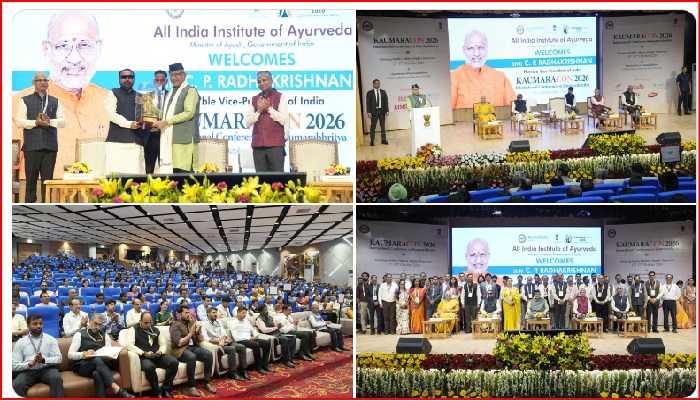
What’s the News?
Vice-President C. P. Radhakrishnan inaugurated KAUMARACON-2026, the third international conference on Kaumarabhritya, at the All India Institute of Ayurveda (AIIA), New Delhi.
- The three-day conference focuses on Ayurvedic paediatrics, research and clinical practice.
- The event also marked AIIA’s 10th Foundation Day.
- Five digital initiatives were introduced, covering start-up support, innovation and applications associated with clinical practice.
- An international Memorandum of Understanding between AIIA and Maharishi International University, USA, was exchanged in his presence.
Conference Theme and Child Health
The theme is “Shaping the Future of Child Health: Global Perspectives, Research Innovations, and Clinical Frontiers in Kaumarabhritya.”
Kaumarabhritya is one of Ayurveda’s eight traditional branches, concerned with children’s health, including early development and paediatric care.
The discussions bring together researchers and practitioners around:
- Nutrition and physical growth.
- Child development and disease prevention.
- Emotional well-being.
- Research and clinical approaches in Ayurvedic paediatrics.
The Vice-President linked attention to children’s health with the development of human capital and India’s Viksit Bharat 2047 vision.
Five Digital Initiatives
| Initiative | Area of focus |
|---|---|
| AYUSH Start-up Portal | Start-ups and entrepreneurship in the Ayush sector |
| AIIA–iCAINE website | Online interface for AIIA’s innovation and entrepreneurship incubation centre |
| AyuDIVA | Ayurveda Digital Innovation and Venture Acceleration Facility |
| Vamana App | Application associated with the Ayurvedic Vamana procedure |
| Panchakarma Assessment App | Application associated with Panchakarma assessment |
What is iCAINE?
iCAINE stands for Incubation Centre for Ayurveda Innovation and Entrepreneurship.
- AIIA established the centre to help translate Ayurveda-related knowledge and research into entrepreneurial ventures.
- Its incubation model provides concept-to-market support for suitable ideas and start-ups.
- Relevant areas include health technology, biotechnology, information and communications technology, agribusiness and clean technology connected with Ayurveda.
The new website is a digital initiative associated with this existing incubation centre.
Research and Scientific Validation
The Vice-President called for stronger research to establish the scientific basis, efficacy and credibility of traditional healthcare practices.
- Scientific validation was presented as necessary for improving patient confidence and international acceptance.
- Interdisciplinary collaboration links the Ministry of Ayush with institutions including:
- Indian Council of Medical Research (ICMR).
- Council of Scientific and Industrial Research (CSIR).
- Department of Biotechnology (DBT).
- Department of Science and Technology (DST).
- All India Institute of Medical Sciences (AIIMS).
Additional Info
All India Institute of Ayurveda
- An autonomous organisation under the Ministry of Ayush.
- Located at Sarita Vihar, New Delhi.
- Combines medical education, research and healthcare services in Ayurveda.
- Its hospital facilities and Dhanwantari Vatika, containing medicinal plants and related displays, formed part of the Vice-President’s visit.
WHO Global Centre for Traditional Medicine
- Established through cooperation between WHO and the Government of India in 2022.
- Located in Jamnagar, Gujarat.
- Focuses on building evidence, data and standards, alongside innovation and sustainability in traditional medicine.
Sources
Solar Defence Delivers 450 Nagastra-1R Loitering Munitions to the Army
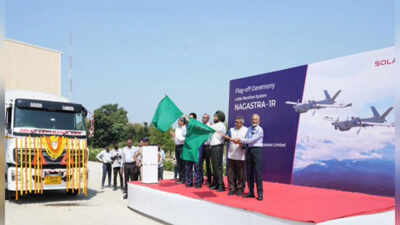
What’s the News?
Solar Defence and Aerospace Limited (SDAL) has delivered 450 Nagastra-1R loitering munitions to the Indian Army, completing an approximately ₹158-crore emergency-procurement contract.
- SDAL is a subsidiary of Nagpur-based Solar Industries India.
- The company describes the consignment as the largest single-batch supply of such systems to the Army by a manufacturer.
- The Nagastra-1R is configured for short-range precision-strike operations and provides an abort-and-recovery option.
What is a Loitering Munition?
A loitering munition is an unmanned aerial weapon that can remain airborne over an area while awaiting or identifying a suitable target, then strike using its onboard warhead.
- It combines aerial observation and target engagement in one system.
- The time spent in the air can support identification or confirmation before an engagement decision.
- The term “kamikaze drone” refers to the attack mode in which the munition is expended when it strikes.
This differs from a surveillance-only drone, which gathers information without necessarily carrying an integral attack warhead. Recovery before an attack is also distinct from reusing a munition after it has detonated.
Reported Nagastra-1R Features
| Feature | Reported capability |
|---|---|
| Portability | Man-portable system for short-range operations |
| Indigenous content | More than 80% |
| Warhead | Approximately 1.5-kg high-explosive fragmentation warhead |
| Endurance | Up to 60 minutes |
| Targeting accuracy | Reported precision within about a two-metre radius |
| Surveillance and navigation | Day-and-night observation capability and GPS-guided navigation |
| Launch infrastructure | Reusable launcher systems |
Abort and Recovery
- An operator can discontinue the attack if the mission is cancelled or the target cannot be confirmed.
- The system can then be recovered rather than expended unnecessarily.
- This option provides flexibility between observing a potential target, continuing the mission and calling off an attack.
Procurement and Trials
- The Army placed the order in June 2025 through its emergency procurement process.
- Technical trials preceded the order, followed by assessments through multiple live trials.
- Four companies participated; SDAL stated that it was the only one to demonstrate all prescribed operational parameters.
- Target-hit accuracy formed part of the evaluation.
Emergency procurement allows the armed forces to acquire urgently needed equipment through accelerated procedures and delegated powers.
Earlier Nagastra Supply
- Solar Industries previously supplied 480 Nagastra-1 loitering munitions, completing that contract by December 2024.
- The earlier Nagastra-1 had stated indigenous content of more than 75%.
- The subsequent Nagastra-1R raises the stated indigenous share to more than 80%.
Why the Delivery Matters
- Precision-strike capacity: Adds portable systems for short-range tactical requirements.
- Domestic manufacturing: Demonstrates the ability of a private Indian manufacturer to complete a substantial military order.
- Supply-chain capability: Local production can support maintenance, adaptation and reduced dependence on imported systems.
- Operational flexibility: Observation and an abort option allow decisions to be revised before a strike.
Sources
Ministry Mandates MSCARO 2026 Audit Framework for Multi-State Cooperatives
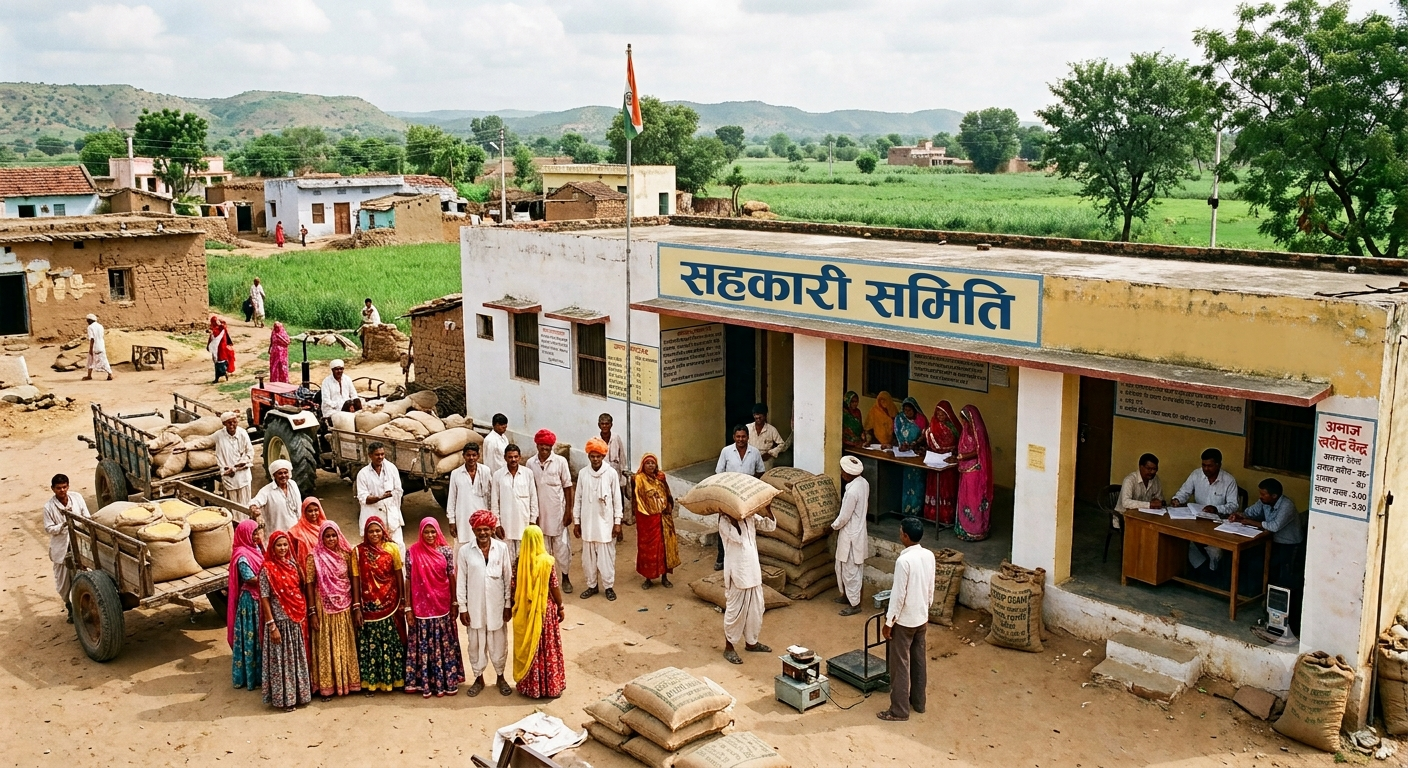
What’s the News?
The Ministry of Cooperation has mandated the Multi-State Co-operative Societies (Auditor’s Report) Order, 2026 (MSCARO 2026) to strengthen financial discipline, transparency and governance.
- It introduces uniform, structured and risk-based statutory audit reporting for covered Multi-State Cooperative Societies (MSCS).
- Auditors must provide Yes/No responses and relevant remarks in the prescribed Form X.
- The aim is to identify financial stress and governance failures early and protect members’ funds.
- The framework draws on inputs from RBI, ICAI, CAG and multi-state cooperatives and is modelled on the corporate sector’s Companies (Auditor’s Report) Order (CARO).
Legal Basis and Filing Requirement
Section 73(6) of the Multi-State Co-operative Societies Act, 2002, inserted through the 2023 amendment, allows the Central Government to determine auditing and accounting standards for these societies.
- Covered societies must have the relevant accounts and activities audited.
- The duly signed and verified Form X report accompanies the audited financial statements.
- It is furnished to the Central Registrar of Cooperative Societies (CRCS) as part of the annual return under Section 120.
The report adds structured compliance information to the audited accounts, making it easier to compare institutions and identify matters requiring regulatory attention.
Phased Coverage
| Reporting year | Financial threshold and reference period |
|---|---|
| 2027–28 | Any prescribed measure exceeding ₹1,000 crore in 2026–27 |
| 2028–29 and every year thereafter | Any prescribed measure exceeding ₹50 crore in the immediately preceding financial year |
The threshold applies if any one of these tests is met:
- Gross receipts exceed the relevant amount.
- Aggregate deposits and borrowings, at any time during the reference year, exceed it.
- Loans and advances, at any time during that year, exceed it.
The phased approach starts with larger institutions and gives other societies time to strengthen records, controls and reporting systems. The ₹50-crore threshold applies from 2028–29 under the order.
What Will Auditors Examine?
Financial Health and Members’ Funds
- Non-performing assets (NPAs), overdue loans and repayment defaults.
- Liquidity, deposits, advances and borrowings.
- Investments and utilisation of funds.
- Share capital, membership records and statutory approvals.
These checks help reveal deteriorating loan recovery, pressure on available cash and irregular use of cooperative resources. Liquidity concerns an institution’s ability to meet payment obligations when due.
Management and Governance
- Composition of the Board of Directors, including required representation.
- Directors’ eligibility and disqualification.
- Timely Annual General Meetings and properly conducted Board meetings.
- Constitution and functioning of statutory committees.
- Compliance in related-party transactions, where a transaction involves persons or entities connected with the society’s management.
Cybersecurity and Anti-Money Laundering
The framework provides for audit-level verification where the relevant requirements apply, including:
- Cybersecurity safeguards and information-system controls.
- Customer-identification requirements.
- Suspicious-transaction reporting.
- Designated Directors and Principal Officers under the Prevention of Money Laundering Act.
Risk-Based Supervision
Standardised audit information is intended to be integrated with the CRCS Portal to support:
- Automated scrutiny and regulatory dashboards.
- Risk scoring and identification of compliance gaps.
- Potential AI-based analytics.
- Focused inspections, inquiries and timely corrective action.
Risk-based supervision directs more regulatory attention towards societies showing greater financial or governance risk. The proposed technology functions support this process; an audit report remains dependent on accurate records and independent examination.
Additional Info
Multi-State Versus State Cooperatives
- Societies whose objects extend beyond one state are governed by the central MSCS Act, 2002.
- Societies confined to one state are governed by the respective state cooperative law.
- The Central Registrar, appointed under Section 4, handles registration and statutory administration of multi-state societies.
- Cooperative banks also have applicable RBI accounting and auditing requirements; the Act expressly recognises this distinction.
Sources
Cabinet Extends NSAP and Revises Disability Pension Eligibility

What’s the News?
The Union Cabinet has approved continuation of the National Social Assistance Programme (NSAP) for 2026–27 to 2030–31, with a total five-year outlay of ₹53,428 crore.
- The umbrella programme will be renamed Pradhan Mantri Samajik Sahayata Yojana.
- Disability pension eligibility expands through a lower disability threshold and removal of the minimum age requirement.
- Monthly central assistance under the disability component increases.
- The approval is expected to benefit 3.20 crore people across all 36 states and Union Territories.
Changes to Disability Pension
| Parameter | Earlier provision | Approved revision |
|---|---|---|
| Minimum qualifying disability | 80% | 40% |
| Minimum age | 18 years | From birth |
| Monthly central assistance below age 80 | ₹300 for the earlier eligible age group | ₹375 for ages 0–79 |
| Monthly central assistance from age 80 | ₹500 | ₹625 |
- The rate rises by 25% in both age bands: ₹300 to ₹375 and ₹500 to ₹625.
- Lowering the disability threshold brings the component into line with the benchmark-disability framework of the Rights of Persons with Disabilities Act, 2016.
- Removing the age floor extends eligibility to qualifying children, subject to the scheme’s other conditions.
These are central assistance rates. State or UT additions can make the amount received by a beneficiary higher. A 40% disability alone does not establish universal pension entitlement irrespective of income or other eligibility requirements.
Approved Names
| Existing programme or component | Approved name |
|---|---|
| National Social Assistance Programme | Pradhan Mantri Samajik Sahayata Yojana |
| Indira Gandhi National Old Age Pension Scheme | Pradhan Mantri Vridhavastha Pension Yojana |
| Indira Gandhi National Widow Pension Scheme | Pradhan Mantri Vidhawa Pension Yojana |
| Indira Gandhi National Disability Pension Scheme | Pradhan Mantri Divyangjan Pension Yojana |
| National Family Benefit Scheme | Pradhan Mantri Parivar Labh Yojana |
What Continues in Its Existing Form?
The Cabinet retained the existing old-age pension, widow pension and family-benefit arrangements, alongside their approved new names.
- Old-age pension: Supports eligible poor older persons.
- Existing central rates are ₹200 per month at ages 60–79 and ₹500 from age 80.
- Widow pension: Supports eligible poor widows.
- Existing central rates are ₹300 per month at ages 40–79 and ₹500 from age 80.
- Family benefit: Provides one-time assistance of ₹20,000 to an eligible poor household after the death of its primary breadwinner aged 18–59.
The disability rate revision should therefore be distinguished from a general increase in every NSAP pension.
Implementation
The government will issue and implement revised guidelines covering eligibility, beneficiary numbers and disability-pension assistance rates within three months of the approval.
- States and UTs play a role in identifying eligible beneficiaries and delivering assistance.
- The approval sets out the policy change and financing period; it does not establish that every revised payment has already been made.
- ₹53,428 crore is the approved outlay for the full continuation period, rather than an annual allocation or a payment to each beneficiary.
Additional Info
NSAP’s Purpose
- Launched in 1995 and administered by the Ministry of Rural Development.
- Provides basic social assistance to poor households, including older persons, widows, persons with disabilities and bereaved families.
- The prescribed central assistance is fully funded by the Centre, while states may supplement benefits from their own resources.
Constitutional and Disability-Rights Context
- Article 41, a Directive Principle of State Policy, calls for public assistance in cases including old age, sickness, disability and unemployment, within the State’s economic capacity and development.
- Section 24 of the Rights of Persons with Disabilities Act, 2016 addresses social security.
- It includes provision for disability pensions subject to a notified income ceiling.
- Assistance under covered disability-related schemes must be at least 25% higher than similar schemes for other categories, within the statutory framework.
Sources
Scientists Identify Giant Fungus Dianjunus rex in Yunnan
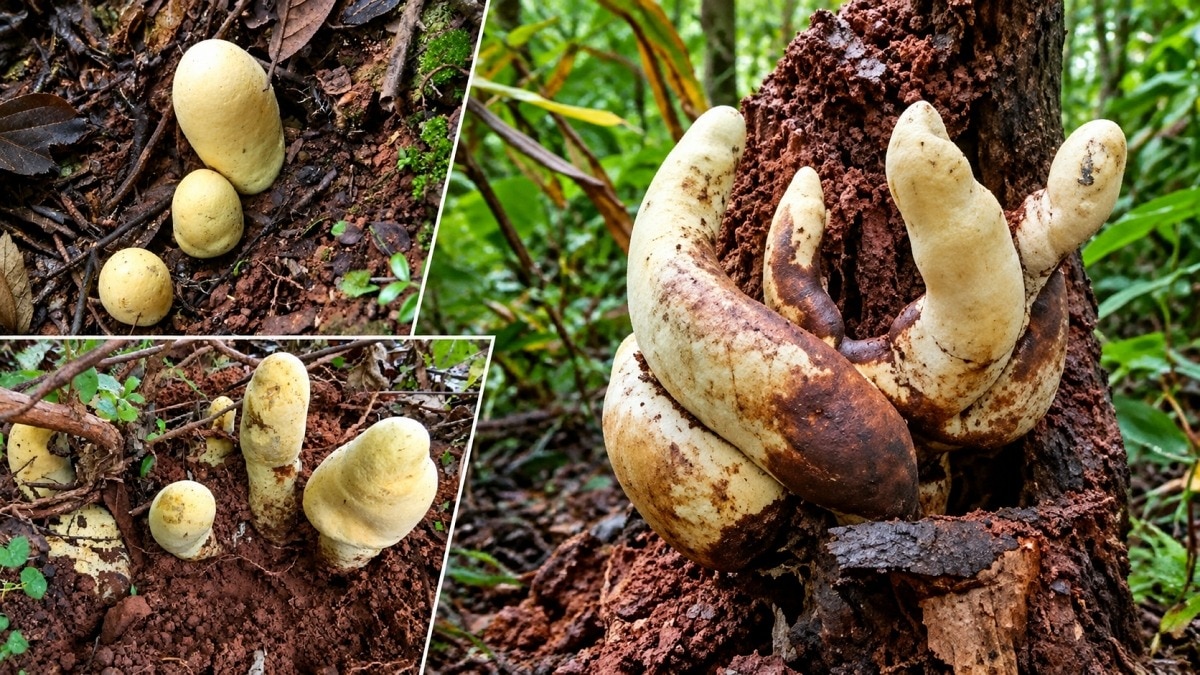
What’s the News?
Scientists have described Dianjunus rex, nicknamed “D-rex”, a giant fungus from Yunnan Province in southwestern China, establishing a new species, genus and family.
- Its upright reproductive structures can reach 50 cm in height and 2.2 kg in weight.
- The study describes them as the largest documented fruiting structures within Ascomycota, the sac-fungi group.
- Molecular analysis estimates that its family lineage originated approximately 65 million years ago.
- The findings were published in Frontiers in Fungal Biology, with researchers from China and international collaborators, including Thailand and Mexico.
Appearance and Habitat
Specimens were collected in 2024–25 from Yunnan’s varied forests, including areas near Damaidi, Yipinglang and Nanbang.
- Structures are generally 20–50 cm tall.
- Most specimens weighed about 250–600 grams, while an unusually large specimen reached 2.2 kg.
- They have thick, upright forms, with rounded tops and, in some specimens, finger-like branches.
- They grow around woody roots and surrounding soil, including roots associated with Chinese cork oak, Quercus variabilis.
What is a Stroma?
The visible structures are called stromata; the singular is stroma. A stroma is a compact mass of fungal tissue that can bear spore-producing structures.
The record concerns these reproductive structures within Ascomycota.
A New Branch in Fungal Classification
| Rank | Classification |
|---|---|
| Kingdom | Fungi |
| Phylum | Ascomycota |
| Order | Xylariales |
| Family | Dianjunaceae, newly established |
| Genus | Dianjunus, newly established |
| Species | Dianjunus rex |
The name combines a reference to Yunnan’s ancient Dian kingdom, the Chinese word for fungus, and rex, Latin for “king,” reflecting its large form.
Researchers combined physical and microscopic characteristics, DNA sequences and genome-scale comparisons to distinguish the fungus from previously recognised groups.
What Does “65 Million Years” Mean?
A molecular clock estimates when lineages separated by comparing genetic changes and calibrating them against other evidence about evolutionary time.
- The estimated origin of Dianjunaceae is around 65 million years ago, in the early Paleocene.
- The study gives a broader estimated range of approximately 50–80 million years, reflecting uncertainty.
- The central estimate is close to the Cretaceous–Paleogene mass extinction, about 66 million years ago.
Ecological Questions
- Height and dispersal: Researchers suggest that tall stromata may release spores above surrounding vegetation and debris, improving wind dispersal. This is a proposed explanation for the unusual size.
- Wood-associated life: The fungus’s association with roots and woody material creates opportunities to investigate how it obtains nutrients and interacts with trees.
- Evolution after disturbance: Forest changes and dead plant material following the mass extinction may have created ecological opportunities for decomposing fungi. The proposed connection is an evolutionary hypothesis.
Additional Info
Ascomycota
- Commonly called sac fungi because their sexual spores form in microscopic sacs called asci.
- Includes familiar groups such as yeasts, morels and truffles.
- Members perform varied roles, including decomposition, nutrient cycling, symbiosis and plant disease.
Sources
World Students’ Day 2026 Marks A.P.J. Abdul Kalam’s 95th Birth Anniversary
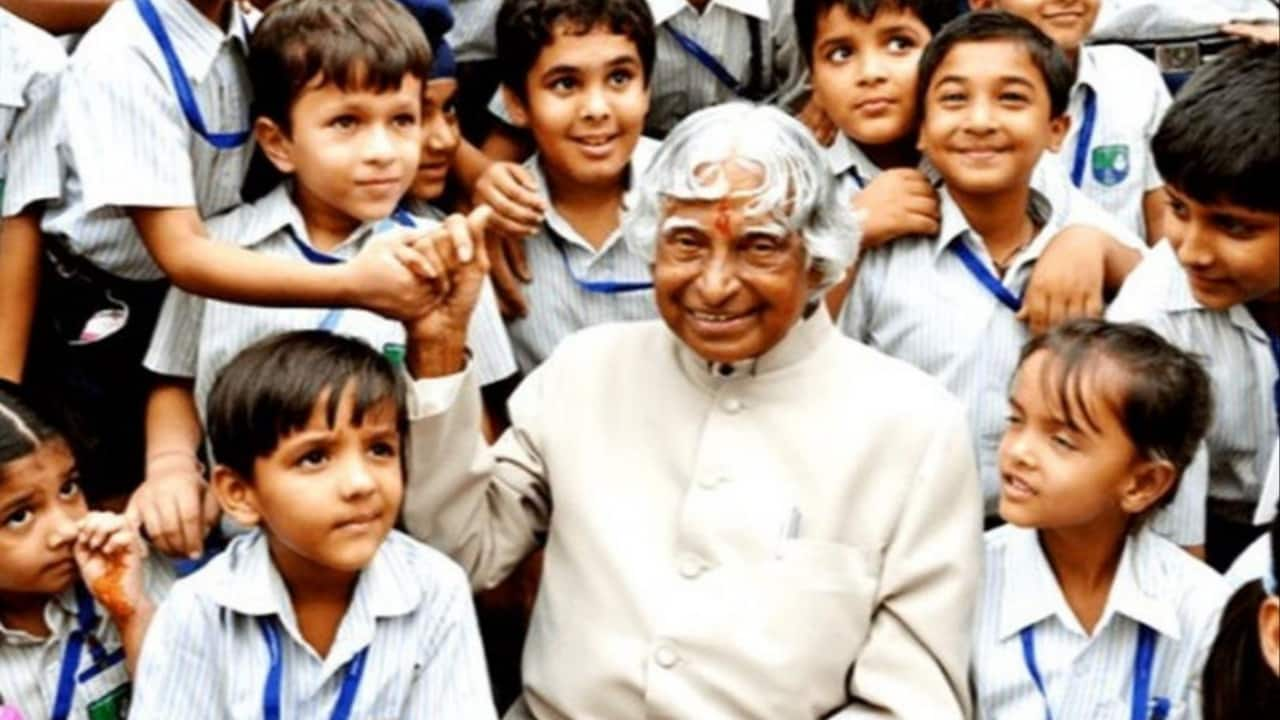
What’s the News?
World Students’ Day is marked on 15 October, the birth anniversary of Dr. A.P.J. Abdul Kalam, India’s 11th President, scientist and teacher. The 2026 observance marks his 95th birth anniversary.
- It honours his engagement with students and commitment to education, scientific thinking and innovation.
- Educational institutions use the occasion to encourage curiosity, creativity, leadership and lifelong learning.
- No official theme has been announced for 2026; the educational focus centres on Kalam’s legacy and opportunities for young learners.
Status of the Observance
World Students’ Day is widely marked in India, but it is not an officially designated United Nations international day.
- The UN-designated observance on 15 October is the International Day of Rural Women.
- That day was established through UN General Assembly Resolution 62/136 in 2007.
Kalam’s Life and Public Service
| Feature | Details |
|---|---|
| Full name | Avul Pakir Jainulabdeen Abdul Kalam |
| Birth | 15 October 1931, Rameswaram, Tamil Nadu |
| Technical education | Aeronautical engineering at the Madras Institute of Technology |
| Presidency | 11th President of India, 2002–2007 |
| Major civilian awards | Padma Bhushan, 1981; Padma Vibhushan, 1990; Bharat Ratna, 1997 |
Space and Defence Contributions
- SLV-III: As Project Director, Kalam contributed to India’s first indigenous Satellite Launch Vehicle, which placed the Rohini satellite into near-Earth orbit in 1980.
- IGMDP: He led the Integrated Guided Missile Development Programme at DRDO and contributed to the development of Agni and Prithvi.
- Pokhran-II: He held important scientific and coordination responsibilities in the 1998 nuclear tests, working with the Department of Atomic Energy.
- These contributions are associated with his popular description as the “Missile Man of India.”
Teacher and Author
Kalam maintained close contact with students, encouraging them to connect knowledge with practical problems and national development. He continued teaching after his presidency and died in 2015 while delivering a lecture at IIM Shillong.
His well-known books include Wings of Fire, India 2020: A Vision for the New Millennium and Ignited Minds.
Educational Significance
- Scientific curiosity: Encourage questions, observation, experimentation and evidence-based reasoning.
- Innovation: Connect classroom learning with problem-solving, research and useful technologies.
- Inclusive opportunities: Address barriers arising from income, location, disability and unequal access to digital resources.
- Values and responsibility: Develop integrity, discipline, cooperation and civic participation alongside academic knowledge.
India’s School Education: Scale and Priorities
UDISE+ 2024–25 records approximately:
- 24.69 crore students.
- 14.71 lakh schools.
- More than 1.01 crore teachers.
These figures refer to the 2024–25 reporting year.
Additional Info
- Article 21A: Provides for free and compulsory education for children aged 6–14 years, in the manner determined by law.
- Article 51A(h): Makes development of scientific temper, humanism and the spirit of inquiry and reform a fundamental duty.
Sources
October 2026
Archive
October 2026
- 27 October 2026
- 26 October 2026
- 24 October 2026
- 23 October 2026
- 22 October 2026
- 21 October 2026
- 20 October 2026
- 19 October 2026
- 17 October 2026
- 16 October 2026
- 15 October 2026
- 14 October 2026
- 13 October 2026
- 12 October 2026
- 10 October 2026
- 09 October 2026
- 08 October 2026
- 07 October 2026
- 06 October 2026
- 05 October 2026
- 03 October 2026
- 02 October 2026
- 01 October 2026
September 2026
- 30 September 2026
- 29 September 2026
- 28 September 2026
- 26 September 2026
- 25 September 2026
- 24 September 2026
- 23 September 2026
- 22 September 2026
- 21 September 2026
- 19 September 2026
- 18 September 2026
- 17 September 2026
- 16 September 2026
- 15 September 2026
- 12 September 2026
- 11 September 2026
- 10 September 2026
- 09 September 2026
- 08 September 2026
- 07 September 2026
- 05 September 2026
- 04 September 2026
- 03 September 2026
- 02 September 2026
- 01 September 2026
August 2026
- 31 August 2026
- 29 August 2026
- 27 August 2026
- 26 August 2026
- 25 August 2026
- 24 August 2026
- 22 August 2026
- 21 August 2026
- 20 August 2026
- 19 August 2026
- 18 August 2026
- 17 August 2026
- 14 August 2026
- 13 August 2026
- 12 August 2026
- 11 August 2026
- 10 August 2026
- 08 August 2026
- 07 August 2026
- 06 August 2026
- 05 August 2026
- 04 August 2026
- 03 August 2026
- 01 August 2026
July 2026
- 31 July 2026
- 30 July 2026
- 29 July 2026
- 28 July 2026
- 27 July 2026
- 25 July 2026
- 23 July 2026
- 22 July 2026
- 21 July 2026
- 20 July 2026
- 18 July 2026
- 17 July 2026
- 15 July 2026
- 14 July 2026
- 13 July 2026
- 11 July 2026
- 10 July 2026
- 09 July 2026
- 08 July 2026
- 07 July 2026
- 06 July 2026
- 04 July 2026
- 03 July 2026
- 02 July 2026
- 01 July 2026
June 2026
May 2026
April 2026
March 2026
- 31 March 2026
- 30 March 2026
- 28 March 2026
- 27 March 2026
- 26 March 2026
- 25 March 2026
- 24 March 2026
- 23 March 2026
- 21 March 2026
- 20 March 2026
- 19 March 2026
- 18 March 2026
- 17 March 2026
- 16 March 2026
- 14 March 2026
- 13 March 2026
- 12 March 2026
- 11 March 2026
- 10 March 2026
- 09 March 2026
- 07 March 2026
- 06 March 2026
- 05 March 2026
- 03 March 2026
- 02 March 2026
February 2026
- 28 February 2026
- 27 February 2026
- 26 February 2026
- 25 February 2026
- 24 February 2026
- 23 February 2026
- 21 February 2026
- 20 February 2026
- 19 February 2026
- 18 February 2026
- 17 February 2026
- 16 February 2026
- 13 February 2026
- 12 February 2026
- 11 February 2026
- 10 February 2026
- 09 February 2026
- 07 February 2026
- 06 February 2026
- 05 February 2026
- 04 February 2026
- 03 February 2026
- 02 February 2026
January 2026
- 31 January 2026
- 30 January 2026
- 29 January 2026
- 28 January 2026
- 27 January 2026
- 26 January 2026
- 24 January 2026
- 23 January 2026
- 22 January 2026
- 21 January 2026
- 20 January 2026
- 19 January 2026
- 16 January 2026
- 15 January 2026
- 14 January 2026
- 13 January 2026
- 12 January 2026
- 10 January 2026
- 09 January 2026
- 08 January 2026
- 07 January 2026
- 06 January 2026
- 05 January 2026
- 03 January 2026
- 02 January 2026
- 01 January 2026
December 2025
- 31 December 2025
- 30 December 2025
- 29 December 2025
- 27 December 2025
- 26 December 2025
- 24 December 2025
- 23 December 2025
- 22 December 2025
- 20 December 2025
- 19 December 2025
- 18 December 2025
- 17 December 2025
- 16 December 2025
- 15 December 2025
- 13 December 2025
- 12 December 2025
- 11 December 2025
- 10 December 2025
- 09 December 2025
- 08 December 2025
- 05 December 2025
- 04 December 2025
- 03 December 2025
- 02 December 2025
November 2025
- 29 November 2025
- 28 November 2025
- 27 November 2025
- 26 November 2025
- 25 November 2025
- 24 November 2025
- 22 November 2025
- 21 November 2025
- 20 November 2025
- 19 November 2025
- 18 November 2025
- 17 November 2025
- 15 November 2025
- 14 November 2025
- 13 November 2025
- 12 November 2025
- 11 November 2025
- 10 November 2025
- 08 November 2025
- 07 November 2025
- 06 November 2025
- 05 November 2025
- 04 November 2025
- 03 November 2025
- 01 November 2025
October 2025
- 31 October 2025
- 30 October 2025
- 29 October 2025
- 28 October 2025
- 27 October 2025
- 25 October 2025
- 24 October 2025
- 23 October 2025
- 22 October 2025
- 21 October 2025
- 20 October 2025
- 18 October 2025
- 17 October 2025
- 16 October 2025
- 15 October 2025
- 14 October 2025
- 13 October 2025
- 11 October 2025
- 10 October 2025
- 09 October 2025
- 08 October 2025
- 07 October 2025
- 06 October 2025
- 04 October 2025
- 03 October 2025
- 02 October 2025
- 01 October 2025
September 2025
- 30 September 2025
- 29 September 2025
- 27 September 2025
- 26 September 2025
- 25 September 2025
- 24 September 2025
- 23 September 2025
- 22 September 2025
- 20 September 2025
- 19 September 2025
- 18 September 2025
- 17 September 2025
- 16 September 2025
- 15 September 2025
- 13 September 2025
- 12 September 2025
- 11 September 2025
- 10 September 2025
- 09 September 2025
- 08 September 2025
- 06 September 2025
- 05 September 2025
- 04 September 2025
- 03 September 2025
- 02 September 2025
- 01 September 2025
August 2025
- 30 August 2025
- 29 August 2025
- 28 August 2025
- 27 August 2025
- 26 August 2025
- 25 August 2025
- 23 August 2025
- 22 August 2025
- 21 August 2025
- 20 August 2025
- 19 August 2025
- 18 August 2025
- 16 August 2025
- 14 August 2025
- 13 August 2025
- 12 August 2025
- 11 August 2025
- 08 August 2025
- 07 August 2025
- 06 August 2025
- 05 August 2025
- 04 August 2025
- 02 August 2025
- 01 August 2025
July 2025
- 31 July 2025
- 30 July 2025
- 29 July 2025
- 28 July 2025
- 26 July 2025
- 25 July 2025
- 24 July 2025
- 23 July 2025
- 22 July 2025
- 21 July 2025
- 19 July 2025
- 18 July 2025
- 17 July 2025
- 16 July 2025
- 15 July 2025
- 12 July 2025
- 11 July 2025
- 10 July 2025
- 09 July 2025
- 07 July 2025
- 05 July 2025
- 04 July 2025
- 03 July 2025
- 02 July 2025
- 01 July 2025
June 2025
- 30 June 2025
- 28 June 2025
- 27 June 2025
- 26 June 2025
- 25 June 2025
- 24 June 2025
- 23 June 2025
- 21 June 2025
- 20 June 2025
- 19 June 2025
- 18 June 2025
- 17 June 2025
- 16 June 2025
- 14 June 2025
- 13 June 2025
- 12 June 2025
- 11 June 2025
- 10 June 2025
- 09 June 2025
- 07 June 2025
- 06 June 2025
- 05 June 2025
- 04 June 2025
- 03 June 2025
- 02 June 2025
May 2025
April 2025
- 30 April 2025
- 29 April 2025
- 28 April 2025
- 26 April 2025
- 25 April 2025
- 24 April 2025
- 23 April 2025
- 22 April 2025
- 21 April 2025
- 19 April 2025
- 18 April 2025
- 17 April 2025
- 16 April 2025
- 15 April 2025
- 14 April 2025
- 12 April 2025
- 11 April 2025
- 10 April 2025
- 09 April 2025
- 08 April 2025
- 07 April 2025
- 05 April 2025
- 04 April 2025
- 03 April 2025
- 02 April 2025
- 01 April 2025
March 2025
- 31 March 2025
- 29 March 2025
- 28 March 2025
- 27 March 2025
- 26 March 2025
- 25 March 2025
- 24 March 2025
- 22 March 2025
- 21 March 2025
- 20 March 2025
- 19 March 2025
- 18 March 2025
- 17 March 2025
- 15 March 2025
- 13 March 2025
- 12 March 2025
- 11 March 2025
- 10 March 2025
- 08 March 2025
- 07 March 2025
- 06 March 2025
- 05 March 2025
- 04 March 2025
- 03 March 2025
- 01 March 2025
February 2025
- 28 February 2025
- 27 February 2025
- 26 February 2025
- 25 February 2025
- 24 February 2025
- 22 February 2025
- 21 February 2025
- 20 February 2025
- 19 February 2025
- 18 February 2025
- 17 February 2025
- 15 February 2025
- 14 February 2025
- 13 February 2025
- 12 February 2025
- 11 February 2025
- 10 February 2025
- 08 February 2025
- 07 February 2025
- 06 February 2025
- 05 February 2025
- 04 February 2025
- 03 February 2025
- 01 February 2025
January 2025
- 31 January 2025
- 30 January 2025
- 29 January 2025
- 28 January 2025
- 27 January 2025
- 25 January 2025
- 24 January 2025
- 23 January 2025
- 22 January 2025
- 21 January 2025
- 20 January 2025
- 18 January 2025
- 17 January 2025
- 16 January 2025
- 15 January 2025
- 14 January 2025
- 13 January 2025
- 11 January 2025
- 10 January 2025
- 09 January 2025
- 08 January 2025
- 07 January 2025
- 06 January 2025
- 04 January 2025
- 03 January 2025
- 02 January 2025
- 01 January 2025