
Current Affairs
Stay updated with the latest national and international events.
15 June 2026
India Targets 155 GW Wind Energy Capacity by 2035
What’s the News?
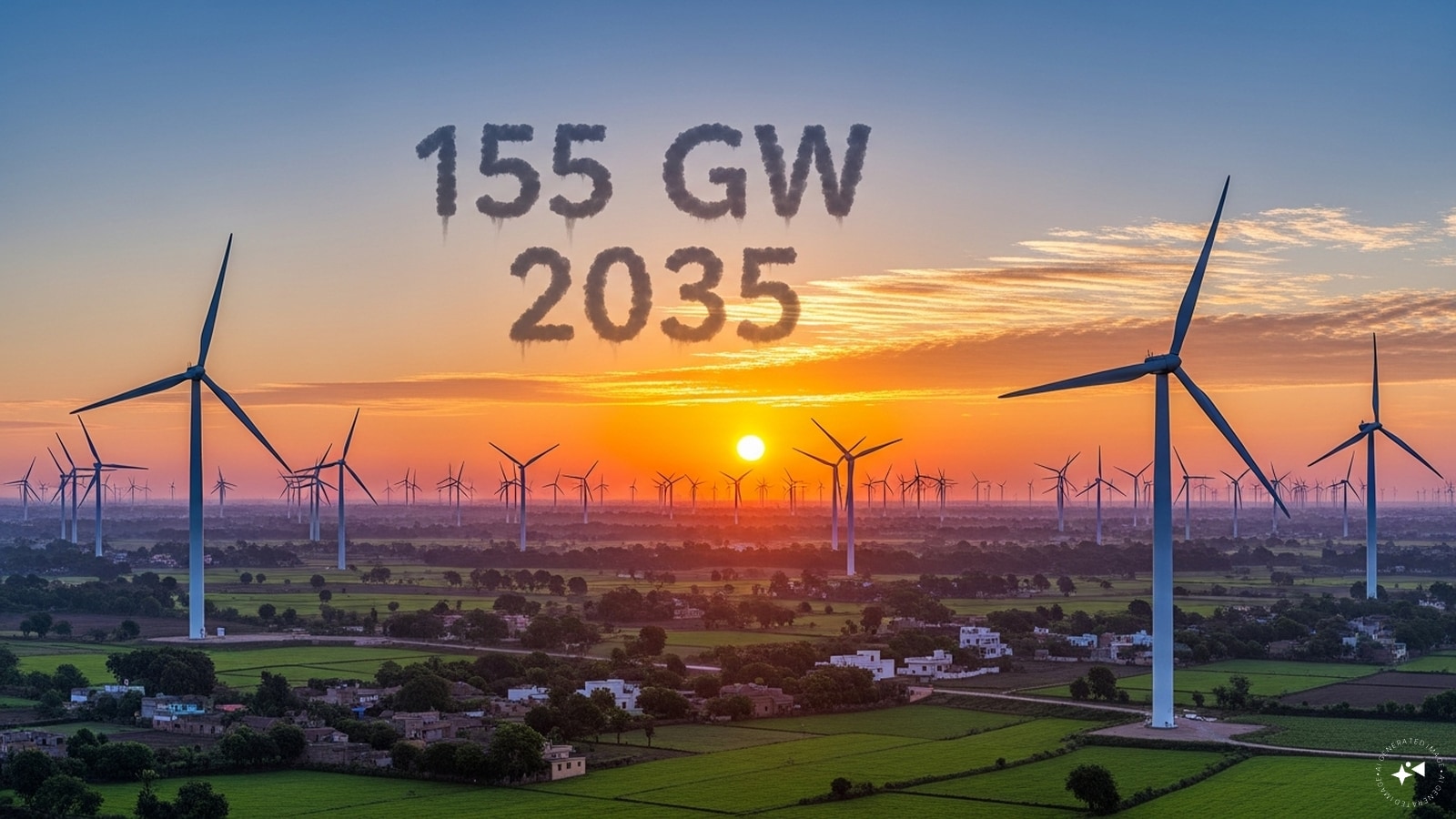
India has announced an ambitious target to increase its installed wind energy capacity to 100 GW by 2030 and 155 GW by 2035, up from the current installed capacity of over 56 GW. Union Minister for New and Renewable Energy Pralhad Joshi highlighted the target while emphasizing the need to strengthen domestic manufacturing, improve supply chains, and accelerate renewable energy deployment. A new digital platform, WT-MARUT, has also been launched to support the wind turbine ecosystem and enhance India's competitiveness in the global wind sector.
Wind Energy Expansion Targets
Key Targets
| Year | Installed Wind Capacity Target |
|---|---|
| Current | 56+ GW |
| 2030 | 100 GW |
| 2035 | 155 GW |
Significance
- Wind energy is a critical pillar of India's clean energy transition.
- The target supports India's goal of achieving 500 GW of non-fossil fuel-based installed electricity capacity by 2030.
- Increased wind deployment will help improve energy security, reduce dependence on fossil fuels, and contribute to climate commitments.
WT-MARUT Digital Platform
What is WT-MARUT?
WT-MARUT (Wind Turbine – Materials, Resources, and Utilization Tracking) is a digital platform launched to strengthen the wind energy manufacturing ecosystem.
Objectives
- Improve transparency in the wind turbine supply chain.
- Support domestic manufacturing.
- Enhance availability of critical components.
- Promote self-reliance under the Make in India initiative.
- Increase India's competitiveness in global wind equipment markets.
India's Wind Energy Sector
Current Status
- Installed wind power capacity has grown from 21.04 GW in 2014 to over 56 GW.
- India is among the world's leading wind energy producers.
- Wind power capacity additions reached a record 6.05 GW in FY 2025-26.
Major Wind Power States
- Tamil Nadu
- Gujarat
- Karnataka
- Maharashtra
- Rajasthan
- Andhra Pradesh
Wind Resource Potential
- More than 900 wind-monitoring stations have been installed across the country.
- Wind resource maps have been developed at multiple hub heights (50 m to 150 m) for project planning and site identification.
Role in India's Energy Transition
National Climate and Energy Goals
- 500 GW non-fossil fuel capacity by 2030
- Net Zero emissions by 2070
- Reduction in emissions intensity under India's Nationally Determined Contributions (NDCs)
Why Wind Energy Matters
- Complements solar power generation.
- Helps stabilize renewable energy supply.
- Reduces greenhouse gas emissions.
- Supports green industrial growth and job creation.
Additional Info
Ministry of New and Renewable Energy (MNRE)
- Nodal ministry for renewable energy development in India.
- Establishment: Started as the Department of Non-Conventional Energy Sources (DNES) in 1982; rechristened as a full-fledged ministry in October 2006.
- Key Exam Schemes: Implements flagship government programs like PM-KUSUM (solarizing agriculture pumps) and the National Green Hydrogen Mission.
- Responsible for policies related to solar, wind, bioenergy, small hydro, and energy storage.
National Institute of Wind Energy (NIWE)
- Autonomous R&D institution under MNRE.
- Headquarters: Chennai, Tamil Nadu.
- Establishment: Founded in 1998 (formerly known as the Centre for Wind Energy Technology - CWET).
- Conducts wind resource assessment, testing, certification, and research.
- Exam Fact: Serves as the nodal agency for offshore wind energy resource assessment in India.
Global Wind Energy Council (GWEC)
- International industry body promoting wind power worldwide.
- Headquarters: Brussels, Belgium.
- Publishes the annual Global Wind Report and country-specific outlooks.
- India's Global Rank: According to GWEC, India ranks 4th globally in total installed wind power capacity (behind China, the US, and Germany).
Sources
ISRO Developing Lunar Lander for 200-Day Moon Missions

What’s the News?
The Indian Space Research Organisation (ISRO) is collaborating with the Department of Atomic Energy (DAE) to develop technologies that could enable future lunar landers to survive and operate on the Moon for up to 200 Earth days. The project focuses on overcoming the extreme cold of the lunar night through advanced artificial heating systems, significantly extending mission life beyond the approximately 14-day operational period achieved by the Chandrayaan-3 Vikram lander.
200-Day Lunar Lander Mission
Objective
- Develop a lunar lander capable of functioning through multiple lunar day-night cycles.
- Increase operational life from about 14 Earth days to 100–200 Earth days.
- Enable long-duration scientific experiments and sustained lunar surface operations.
Why is it Needed?
The Moon experiences extreme environmental conditions:
| Parameter | Details |
|---|---|
| Lunar Day | ~14 Earth days |
| Lunar Night | ~14 Earth days |
| Night Temperature | Can fall below -180°C |
| Major Challenge | Survival of electronics, batteries and instruments |
Current solar-powered landers generally cease operations during the prolonged and extremely cold lunar night.
Artificial Heating Technology
ISRO–DAE Collaboration
- ISRO and DAE are jointly developing artificial heating systems.
- The system aims to maintain survivable temperatures for:
- Batteries
- Electronic circuits
- Scientific payloads
- Communication systems
Chandrayaan Missions and Future Lunar Plans
Chandrayaan-3
- Successfully achieved a soft landing near the Moon's south polar region.
- Vikram lander and Pragyan rover operated for approximately one lunar day (~14 Earth days).
- Demonstrated India's capability for precision lunar landing.
Upcoming Missions
Chandrayaan-4
- Planned lunar sample return mission.
- Aims to collect lunar material and bring it back to Earth for scientific analysis.
Chandrayaan-5 (LUPEX)
- Planned joint mission involving India and Japan.
- Expected to carry a larger rover and enhanced scientific payloads.
- Designed for longer surface operations compared to previous missions.
Additional Info
Department of Atomic Energy (DAE)
- Established in 1954.
- Functions directly under the Prime Minister.
- Responsible for:
- Nuclear energy development.
- Atomic research.
- Strategic technologies.
- Major institutions:
- Bhabha Atomic Research Centre (BARC)
- Indira Gandhi Centre for Atomic Research (IGCAR)
- Nuclear Power Corporation of India Ltd. (NPCIL)
Indian Space Research Organisation (ISRO)
- Established: 1969
- Parent Ministry: Department of Space
- Headquarters: Bengaluru
- Chairman: V. Narayanan
- Key Lunar Achievements:
- Chandrayaan-1: Discovery of water molecules on the Moon.
- Chandrayaan-2: Orbiter remains operational.
- Chandrayaan-3: Successful soft landing near the lunar south pole.
Lunar Night Challenge
- One of the most difficult aspects of lunar exploration.
- Extreme cold can:
- Freeze batteries.
- Damage electronics.
- Disable communication systems.
- Only a few missions globally have survived multiple lunar nights through specialized thermal management systems.
Sources
DRDO Successfully Tests Long-Range Land Attack Cruise Missile

What’s the News?
India successfully conducted the flight-test of its indigenously developed Long-Range Land Attack Cruise Missile (LRLACM) from Dr APJ Abdul Kalam Island off the Odisha coast. Developed by the Defence Research and Development Organisation (DRDO), the missile met all mission objectives and demonstrated India's growing capability in long-range precision strike systems. The test was monitored through tracking systems deployed by the Integrated Test Range (ITR), Chandipur.
Long-Range Land Attack Cruise Missile (LRLACM)
Features
- Indigenous long-range cruise missile developed by DRDO.
- Designed for precision strikes against strategic land targets.
- Capable of flying at low altitudes to evade enemy radar detection.
- Suitable for deployment by multiple armed forces platforms.
- Equipped with advanced navigation and guidance systems for high accuracy.
Development
- Developed with contributions from multiple DRDO laboratories and Indian industry partners.
- Aeronautical Development Establishment (ADE), Bengaluru serves as the nodal laboratory.
- The test was witnessed by representatives of the Indian Navy and Indian Air Force, indicating potential tri-service utility.
Cruise Missile vs Ballistic Missile
| Feature | Cruise Missile | Ballistic Missile |
|---|---|---|
| Flight Path | Guided throughout flight | Follows a ballistic trajectory after boost phase |
| Altitude | Low altitude | High altitude |
| Maneuverability | High | Limited |
| Detection | Difficult due to terrain-hugging flight | Easier to track during flight |
| Primary Role | Precision strike | Strategic deterrence and heavy payload delivery |
India's Indigenous Missile Ecosystem
Major Cruise Missiles
- BrahMos – Supersonic cruise missile developed jointly by India and Russia.
- Nirbhay – Long-range subsonic cruise missile programme.
- LRLACM – Indigenous next-generation land attack cruise missile.
Major Ballistic Missiles
- Agni Series – Strategic ballistic missiles.
- Prithvi Series – Surface-to-surface ballistic missiles.
- Pralay – Conventional tactical ballistic missile.
Additional Info
Defence Research and Development Organisation (DRDO)
- Established: 1958
- Ministry: Ministry of Defence
- Headquarters: New Delhi
- Mandate:
- Defence technologies research and development.
- Missile systems.
- Electronic warfare systems.
- Combat vehicles and aerospace technologies.
Integrated Test Range (ITR), Chandipur
- Located in Balasore district, Odisha.
- Premier missile testing facility of DRDO.
- Supports testing of:
- Ballistic missiles
- Cruise missiles
- Air defence systems
- Naval missile systems
Cruise Missile
- A guided missile that remains powered throughout most of its flight.
- Designed for high-precision attacks against land or sea targets.
- Can carry conventional or strategic payloads.
Sources
Government Releases Producer Price Index (PPI) Data

What’s the News?
The Government of India has released experimental Producer Price Index (PPI) data for goods and services, marking a significant step toward replacing the existing Wholesale Price Index (WPI) as the primary measure of producer-level inflation. The Ministry of Statistics and Programme Implementation (MoSPI) plans a gradual transition, with PPI expected to replace WPI over the next five years after methodological refinement and stakeholder consultations.
Producer Price Index (PPI)
What is PPI?
The Producer Price Index (PPI) measures the average change over time in the prices received by producers for goods and services before they reach consumers.
Characteristics
- Measures inflation from the producer's perspective.
- Covers both goods and services.
- Captures price changes at different stages of production.
- Provides a more comprehensive picture of inflationary pressures in the economy.
Coverage of New Experimental PPI
- Includes manufacturing, mining, electricity, and services sectors.
- Uses a broader database than WPI.
- Aligned more closely with international statistical standards.
Why Replace WPI?
Limitations of WPI
- Measures only wholesale prices of goods.
- Excludes the services sector, which contributes more than 50% of India's GDP.
- Does not fully capture modern economic activity.
- Limited usefulness in a service-driven economy.
Advantages of PPI
| Feature | WPI | PPI |
|---|---|---|
| Coverage | Goods only | Goods and Services |
| Price Level | Wholesale prices | Producer prices |
| Services Included | No | Yes |
| International Practice | Limited use | Widely used globally |
| Inflation Tracking | Partial | More comprehensive |
International Practice
Countries Using PPI
Many advanced and emerging economies publish PPI data, including:
- United States
- United Kingdom
- Canada
- Australia
- Japan
- European Union member states
Global Statistical Standards
The development of India's PPI aligns with recommendations of:
- International Monetary Fund (IMF)
- World Bank
- Organisation for Economic Co-operation and Development (OECD)
- United Nations Statistical Commission
Inflation Indices in India
Consumer Price Index (CPI)
- Measures retail inflation faced by consumers.
- Released by MoSPI.
- Used by the Reserve Bank of India (RBI) for inflation targeting.
- RBI's inflation target: 4% ± 2%.
Wholesale Price Index (WPI)
- Measures changes in wholesale prices of goods.
- Released by the Office of Economic Adviser (OEA) under the Ministry of Commerce and Industry.
- Base Year: 2011–12.
Producer Price Index (PPI)
- Measures prices received by producers.
- Covers both goods and services.
- Intended to eventually replace WPI.
Additional Info
Ministry of Statistics and Programme Implementation (MoSPI)
- Nodal ministry for official statistics in India.
- Responsible for:
- National accounts statistics.
- Consumer Price Index (CPI).
- Industrial statistics.
- Periodic Labour Force Survey (PLFS).
Office of Economic Adviser (OEA)
- Functions under the Department for Promotion of Industry and Internal Trade (DPIIT).
- Responsible for compilation and publication of WPI.
Difference Between CPI and PPI
| Aspect | CPI | PPI |
|---|---|---|
| Measures | Prices paid by consumers | Prices received by producers |
| Perspective | Demand side | Supply side |
| Includes Taxes | Yes | Generally excludes indirect taxes |
| Policy Use | Inflation targeting | Inflation monitoring and forecasting |
Sources
Indian Army Clears Indigenous Production of Mepro X6 Sights for Negev Machine Guns

What’s the News?
The Indian Army has approved the Mepro X6 telescopic sight as the dedicated daytime sighting system for its in-service Negev Light Machine Guns (LMGs). Following successful evaluations, indigenous production of the sight will be undertaken in India by Bharat Electronics Limited (BEL) through technology transfer and local manufacturing arrangements. The move strengthens combat effectiveness while advancing defence indigenisation under the Atmanirbhar Bharat initiative.
Mepro X6 Telescopic Sight
What is Mepro X6?
- A high-performance optical sight designed for machine guns and infantry weapons.
- Provides enhanced target acquisition and engagement capability during daytime operations.
- Specifically selected for integration with the Army's Negev LMG fleet.
Features
- Fixed magnification optical system.
- Improved accuracy and target identification.
- Rugged design suitable for harsh battlefield conditions.
- Enhanced situational awareness for infantry soldiers.
- Designed to withstand recoil and adverse environmental conditions.
Integration with Negev Light Machine Gun
About the Negev LMG
- Manufactured by Israel Weapon Industries (IWI).
- Chambered in:
- 5.56×45 mm NATO
- 7.62×51 mm NATO variants
- Used for infantry fire support and suppression roles.
Operational Benefits
- Improves first-round hit probability.
- Enables accurate engagement at longer ranges.
- Enhances effectiveness during counter-insurgency and conventional operations.
- Increases lethality and battlefield survivability of infantry units.
Indigenous Production by BEL
Role of Bharat Electronics Limited (BEL)
- Selected to lead indigenous manufacturing of the Mepro X6 sight.
- Production will support:
- Technology absorption.
- Local supply chains.
- Reduced dependence on imports.
- Lifecycle maintenance within India.
Significance
- Strengthens India's defence manufacturing ecosystem.
- Promotes self-reliance in critical soldier systems.
- Supports long-term sustainment and modernization of infantry equipment.
Additional Info
Bharat Electronics Limited (BEL)
- Established: 1954
- Ministry: Ministry of Defence
- Headquarters: Bengaluru
- Navratna Defence PSU.
- Major products:
- Radars
- Electronic warfare systems
- Communication systems
- Electro-optical devices
- Missile support systems
Light Machine Gun (LMG)
- Automatic weapon providing sustained suppressive fire.
- Operated by infantry sections and platoons.
- Bridges the gap between assault rifles and medium machine guns.
Defence Acquisition Procedure (DAP) 2020
Key objectives:
- Promote indigenous procurement.
- Encourage domestic design and development.
- Simplify defence acquisition processes.
- Increase participation of Indian industry.
Innovations for Defence Excellence (iDEX)
- Launched by the Ministry of Defence.
- Supports startups, MSMEs, innovators, and academia in developing defence technologies.
Sources
Global Wind Day 2026: Accelerating the Global Clean Energy Transition
What’s the News?
Global Wind Day is observed every year on 15 June to raise awareness about the importance of wind energy in achieving sustainable development, energy security, and climate goals. The 2026 observance gained significance as India reaffirmed its commitment to expanding wind power capacity, targeting 100 GW by 2030 and 155 GW by 2035, positioning wind energy as a key pillar of the country's renewable energy strategy.
Global Wind Day
About the Day
- Annual global event dedicated to promoting wind energy.
- Celebrates the role of wind power in providing clean, affordable, and sustainable electricity.
- Encourages public awareness, industry collaboration, and policy support for renewable energy.
Organised By
- Global Wind Energy Council (GWEC)
- WindEurope
- National governments, industry associations, and renewable energy stakeholders worldwide.
Objectives
- Promote renewable energy adoption.
- Reduce dependence on fossil fuels.
- Address climate change and greenhouse gas emissions.
- Encourage investments in wind energy infrastructure.
- Create awareness about technological advancements in the wind sector.
Wind Energy in India
Current Status
- Installed wind energy capacity exceeds 56 GW.
- India is among the world's leading wind power producers.
- Wind energy is the second-largest renewable energy source after solar power.
National Targets
| Target Year | Wind Capacity Goal |
|---|---|
| 2030 | 100 GW |
| 2035 | 155 GW |
Key Wind Power States
- Tamil Nadu
- Gujarat
- Karnataka
- Rajasthan
- Maharashtra
- Andhra Pradesh
Importance of Wind Energy
Environmental Benefits
- Zero fuel consumption during operation.
- Minimal greenhouse gas emissions.
- Reduces dependence on coal and other fossil fuels.
- Supports climate mitigation efforts.
Economic Benefits
- Generates employment in manufacturing, installation, and maintenance.
- Attracts investments in renewable energy infrastructure.
- Reduces long-term electricity generation costs.
Energy Security
- Diversifies India's energy mix.
- Reduces dependence on imported fuels.
- Enhances resilience of the power sector.
India's Renewable Energy Roadmap
National Commitments
- 500 GW non-fossil fuel electricity capacity by 2030.
- Net Zero emissions by 2070.
- Fulfilment of India's Nationally Determined Contributions (NDCs) under the Paris Agreement.
Supporting Initiatives
National Wind-Solar Hybrid Policy (2018)
- Promotes integration of wind and solar energy projects.
- Improves grid stability and land-use efficiency.
Green Energy Corridor Project
- Strengthens transmission infrastructure for renewable energy evacuation.
Offshore Wind Energy Policy (2015)
- Facilitates development of offshore wind projects along India's coastline.
Renewable Purchase Obligation (RPO)
- Mandates electricity distribution companies and certain consumers to procure a specified share of power from renewable sources.
Global Wind Energy Scenario
Leading Wind Energy Countries
- China
- United States
- Germany
- India
- Spain
Emerging Trends
- Offshore wind energy expansion.
- Larger and more efficient wind turbines.
- Hybrid renewable energy parks.
- Integration with energy storage systems.
- Green hydrogen production using renewable electricity.
Additional Info
Global Wind Energy Council (GWEC)
- International industry organisation representing the global wind energy sector.
- Headquarters: Lisbon, Portugal.
- Publishes annual Global Wind Report.
National Institute of Wind Energy (NIWE)
- Autonomous institution under the Ministry of New and Renewable Energy (MNRE).
- Headquarters: Chennai.
- Responsible for:
- Wind resource assessment.
- Wind turbine testing and certification.
- Research and development in wind technologies.
Ministry of New and Renewable Energy (MNRE)
- Nodal ministry for renewable energy development in India.
- Oversees policies relating to:
- Solar energy
- Wind energy
- Bioenergy
- Green hydrogen
- Small hydro power
FSSAI Cracks Down on Misleading “Healthy”, “Organic” and “Zero Maida” Food Claims

What’s the News?
The Food Safety and Standards Authority of India (FSSAI) has issued notices to several food brands over potentially misleading claims such as “healthy”, “organic”, “zero maida”, “natural”, and similar labels on food products. The regulator has directed companies to substantiate such claims with scientific evidence and ensure compliance with food labelling regulations. The move aims to protect consumers from deceptive marketing practices and improve transparency in food advertising.
FSSAI's Regulatory Action
Developments
- Notices issued to multiple food brands for questionable health and nutrition claims.
- Companies asked to provide scientific justification and supporting documentation.
- Scrutiny focused on labels and advertisements that may mislead consumers regarding nutritional value or ingredient composition.
- Part of FSSAI's broader effort to strengthen food safety and consumer awareness.
Why the Action?
- Growing use of marketing terms without clear regulatory backing.
- Rising consumer preference for healthy and organic foods.
- Risk of consumers making purchasing decisions based on unverified claims.
Food Claims Under Scrutiny
“Healthy” Claims
Products marketed as "healthy" must satisfy prescribed nutritional standards and should not mislead consumers regarding their health benefits.
“Organic” Claims
- Only products complying with approved organic certification systems can use the term "organic".
- Claims must be backed by valid certification and traceability mechanisms.
“Zero Maida” Claims
- Products advertised as "zero maida" must accurately reflect ingredient composition.
- Labels should not create a false impression about nutritional superiority without evidence.
Other Claims
Regulators are also examining claims such as:
- Natural
- Pure
- Nutritious
- High-protein
- Immunity-boosting
- Preservative-free
Food Labelling Regulations in India
Food Safety and Standards (Advertising and Claims) Regulations, 2018
The regulations aim to ensure that:
- Claims are truthful and scientifically substantiated.
- Advertisements do not mislead consumers.
- Comparative claims are fair and verifiable.
- Nutritional and health claims follow prescribed standards.
Key Principles
- No false or exaggerated claims.
- Scientific evidence must support health-related statements.
- Labels should provide clear and accurate information.
- Consumer interests must be protected.
Why Accurate Food Labelling Matters
Consumer Protection
- Enables informed purchasing decisions.
- Prevents deceptive marketing.
- Reduces misinformation regarding nutrition and health benefits.
Public Health
- Encourages transparency in the food industry.
- Helps consumers manage dietary requirements.
- Supports efforts to combat lifestyle diseases linked to unhealthy diets.
Market Fairness
- Creates a level playing field for manufacturers.
- Rewards genuinely compliant and certified products.
- Promotes responsible advertising practices.
Organic Food Certification in India
Participatory Guarantee System (PGS-India)
- Quality assurance initiative for organic products.
- Operated under the Ministry of Agriculture and Farmers Welfare.
- Suitable primarily for small and marginal farmers.
National Programme for Organic Production (NPOP)
- Implemented by the Agricultural and Processed Food Products Export Development Authority (APEDA).
- Provides standards and certification for organic products.
- Facilitates domestic and export market recognition.
Additional Info
Food Safety and Standards Authority of India (FSSAI)
- Established under the Food Safety and Standards Act, 2006.
- Functions under the Ministry of Health and Family Welfare.
- Headquarters: New Delhi.
Functions of FSSAI
- Formulate food safety standards.
- Regulate manufacture, storage, distribution, sale, and import of food.
- Monitor food quality and safety.
- Promote consumer awareness regarding food safety and nutrition.
Food Safety and Standards Act, 2006
Key objectives:
- Consolidate food-related laws.
- Establish a single food regulatory authority.
- Ensure availability of safe and wholesome food.
- Protect consumer interests.
Eat Right India Initiative
- Flagship movement launched by FSSAI.
- Promotes:
- Safe food
- Healthy diets
- Sustainable food practices
Sources
June 2026
Archive
October 2026
- 27 October 2026
- 26 October 2026
- 24 October 2026
- 23 October 2026
- 22 October 2026
- 21 October 2026
- 20 October 2026
- 19 October 2026
- 17 October 2026
- 16 October 2026
- 15 October 2026
- 14 October 2026
- 13 October 2026
- 12 October 2026
- 10 October 2026
- 09 October 2026
- 08 October 2026
- 07 October 2026
- 06 October 2026
- 05 October 2026
- 03 October 2026
- 02 October 2026
- 01 October 2026
September 2026
- 30 September 2026
- 29 September 2026
- 28 September 2026
- 26 September 2026
- 25 September 2026
- 24 September 2026
- 23 September 2026
- 22 September 2026
- 21 September 2026
- 19 September 2026
- 18 September 2026
- 17 September 2026
- 16 September 2026
- 15 September 2026
- 12 September 2026
- 11 September 2026
- 10 September 2026
- 09 September 2026
- 08 September 2026
- 07 September 2026
- 05 September 2026
- 04 September 2026
- 03 September 2026
- 02 September 2026
- 01 September 2026
August 2026
- 31 August 2026
- 29 August 2026
- 27 August 2026
- 26 August 2026
- 25 August 2026
- 24 August 2026
- 22 August 2026
- 21 August 2026
- 20 August 2026
- 19 August 2026
- 18 August 2026
- 17 August 2026
- 14 August 2026
- 13 August 2026
- 12 August 2026
- 11 August 2026
- 10 August 2026
- 08 August 2026
- 07 August 2026
- 06 August 2026
- 05 August 2026
- 04 August 2026
- 03 August 2026
- 01 August 2026
July 2026
- 31 July 2026
- 30 July 2026
- 29 July 2026
- 28 July 2026
- 27 July 2026
- 25 July 2026
- 23 July 2026
- 22 July 2026
- 21 July 2026
- 20 July 2026
- 18 July 2026
- 17 July 2026
- 15 July 2026
- 14 July 2026
- 13 July 2026
- 11 July 2026
- 10 July 2026
- 09 July 2026
- 08 July 2026
- 07 July 2026
- 06 July 2026
- 04 July 2026
- 03 July 2026
- 02 July 2026
- 01 July 2026
June 2026
May 2026
April 2026
March 2026
- 31 March 2026
- 30 March 2026
- 28 March 2026
- 27 March 2026
- 26 March 2026
- 25 March 2026
- 24 March 2026
- 23 March 2026
- 21 March 2026
- 20 March 2026
- 19 March 2026
- 18 March 2026
- 17 March 2026
- 16 March 2026
- 14 March 2026
- 13 March 2026
- 12 March 2026
- 11 March 2026
- 10 March 2026
- 09 March 2026
- 07 March 2026
- 06 March 2026
- 05 March 2026
- 03 March 2026
- 02 March 2026
February 2026
- 28 February 2026
- 27 February 2026
- 26 February 2026
- 25 February 2026
- 24 February 2026
- 23 February 2026
- 21 February 2026
- 20 February 2026
- 19 February 2026
- 18 February 2026
- 17 February 2026
- 16 February 2026
- 13 February 2026
- 12 February 2026
- 11 February 2026
- 10 February 2026
- 09 February 2026
- 07 February 2026
- 06 February 2026
- 05 February 2026
- 04 February 2026
- 03 February 2026
- 02 February 2026
January 2026
- 31 January 2026
- 30 January 2026
- 29 January 2026
- 28 January 2026
- 27 January 2026
- 26 January 2026
- 24 January 2026
- 23 January 2026
- 22 January 2026
- 21 January 2026
- 20 January 2026
- 19 January 2026
- 16 January 2026
- 15 January 2026
- 14 January 2026
- 13 January 2026
- 12 January 2026
- 10 January 2026
- 09 January 2026
- 08 January 2026
- 07 January 2026
- 06 January 2026
- 05 January 2026
- 03 January 2026
- 02 January 2026
- 01 January 2026
December 2025
- 31 December 2025
- 30 December 2025
- 29 December 2025
- 27 December 2025
- 26 December 2025
- 24 December 2025
- 23 December 2025
- 22 December 2025
- 20 December 2025
- 19 December 2025
- 18 December 2025
- 17 December 2025
- 16 December 2025
- 15 December 2025
- 13 December 2025
- 12 December 2025
- 11 December 2025
- 10 December 2025
- 09 December 2025
- 08 December 2025
- 05 December 2025
- 04 December 2025
- 03 December 2025
- 02 December 2025
November 2025
- 29 November 2025
- 28 November 2025
- 27 November 2025
- 26 November 2025
- 25 November 2025
- 24 November 2025
- 22 November 2025
- 21 November 2025
- 20 November 2025
- 19 November 2025
- 18 November 2025
- 17 November 2025
- 15 November 2025
- 14 November 2025
- 13 November 2025
- 12 November 2025
- 11 November 2025
- 10 November 2025
- 08 November 2025
- 07 November 2025
- 06 November 2025
- 05 November 2025
- 04 November 2025
- 03 November 2025
- 01 November 2025
October 2025
- 31 October 2025
- 30 October 2025
- 29 October 2025
- 28 October 2025
- 27 October 2025
- 25 October 2025
- 24 October 2025
- 23 October 2025
- 22 October 2025
- 21 October 2025
- 20 October 2025
- 18 October 2025
- 17 October 2025
- 16 October 2025
- 15 October 2025
- 14 October 2025
- 13 October 2025
- 11 October 2025
- 10 October 2025
- 09 October 2025
- 08 October 2025
- 07 October 2025
- 06 October 2025
- 04 October 2025
- 03 October 2025
- 02 October 2025
- 01 October 2025
September 2025
- 30 September 2025
- 29 September 2025
- 27 September 2025
- 26 September 2025
- 25 September 2025
- 24 September 2025
- 23 September 2025
- 22 September 2025
- 20 September 2025
- 19 September 2025
- 18 September 2025
- 17 September 2025
- 16 September 2025
- 15 September 2025
- 13 September 2025
- 12 September 2025
- 11 September 2025
- 10 September 2025
- 09 September 2025
- 08 September 2025
- 06 September 2025
- 05 September 2025
- 04 September 2025
- 03 September 2025
- 02 September 2025
- 01 September 2025
August 2025
- 30 August 2025
- 29 August 2025
- 28 August 2025
- 27 August 2025
- 26 August 2025
- 25 August 2025
- 23 August 2025
- 22 August 2025
- 21 August 2025
- 20 August 2025
- 19 August 2025
- 18 August 2025
- 16 August 2025
- 14 August 2025
- 13 August 2025
- 12 August 2025
- 11 August 2025
- 08 August 2025
- 07 August 2025
- 06 August 2025
- 05 August 2025
- 04 August 2025
- 02 August 2025
- 01 August 2025
July 2025
- 31 July 2025
- 30 July 2025
- 29 July 2025
- 28 July 2025
- 26 July 2025
- 25 July 2025
- 24 July 2025
- 23 July 2025
- 22 July 2025
- 21 July 2025
- 19 July 2025
- 18 July 2025
- 17 July 2025
- 16 July 2025
- 15 July 2025
- 12 July 2025
- 11 July 2025
- 10 July 2025
- 09 July 2025
- 07 July 2025
- 05 July 2025
- 04 July 2025
- 03 July 2025
- 02 July 2025
- 01 July 2025
June 2025
- 30 June 2025
- 28 June 2025
- 27 June 2025
- 26 June 2025
- 25 June 2025
- 24 June 2025
- 23 June 2025
- 21 June 2025
- 20 June 2025
- 19 June 2025
- 18 June 2025
- 17 June 2025
- 16 June 2025
- 14 June 2025
- 13 June 2025
- 12 June 2025
- 11 June 2025
- 10 June 2025
- 09 June 2025
- 07 June 2025
- 06 June 2025
- 05 June 2025
- 04 June 2025
- 03 June 2025
- 02 June 2025
May 2025
April 2025
- 30 April 2025
- 29 April 2025
- 28 April 2025
- 26 April 2025
- 25 April 2025
- 24 April 2025
- 23 April 2025
- 22 April 2025
- 21 April 2025
- 19 April 2025
- 18 April 2025
- 17 April 2025
- 16 April 2025
- 15 April 2025
- 14 April 2025
- 12 April 2025
- 11 April 2025
- 10 April 2025
- 09 April 2025
- 08 April 2025
- 07 April 2025
- 05 April 2025
- 04 April 2025
- 03 April 2025
- 02 April 2025
- 01 April 2025
March 2025
- 31 March 2025
- 29 March 2025
- 28 March 2025
- 27 March 2025
- 26 March 2025
- 25 March 2025
- 24 March 2025
- 22 March 2025
- 21 March 2025
- 20 March 2025
- 19 March 2025
- 18 March 2025
- 17 March 2025
- 15 March 2025
- 13 March 2025
- 12 March 2025
- 11 March 2025
- 10 March 2025
- 08 March 2025
- 07 March 2025
- 06 March 2025
- 05 March 2025
- 04 March 2025
- 03 March 2025
- 01 March 2025
February 2025
- 28 February 2025
- 27 February 2025
- 26 February 2025
- 25 February 2025
- 24 February 2025
- 22 February 2025
- 21 February 2025
- 20 February 2025
- 19 February 2025
- 18 February 2025
- 17 February 2025
- 15 February 2025
- 14 February 2025
- 13 February 2025
- 12 February 2025
- 11 February 2025
- 10 February 2025
- 08 February 2025
- 07 February 2025
- 06 February 2025
- 05 February 2025
- 04 February 2025
- 03 February 2025
- 01 February 2025
January 2025
- 31 January 2025
- 30 January 2025
- 29 January 2025
- 28 January 2025
- 27 January 2025
- 25 January 2025
- 24 January 2025
- 23 January 2025
- 22 January 2025
- 21 January 2025
- 20 January 2025
- 18 January 2025
- 17 January 2025
- 16 January 2025
- 15 January 2025
- 14 January 2025
- 13 January 2025
- 11 January 2025
- 10 January 2025
- 09 January 2025
- 08 January 2025
- 07 January 2025
- 06 January 2025
- 04 January 2025
- 03 January 2025
- 02 January 2025
- 01 January 2025