
Current Affairs
Stay updated with the latest national and international events.
15 April 2026
Constitution (131st Amendment) Bill, 2026

What's the News?
- The Union Government has proposed The Constitution (131st Amendment) Bill, 2026, seeking to increase Lok Sabha strength from 543 to 850 members and amend delimitation rules to enable immediate implementation of one-third women's reservation in Parliament and State Assemblies.
- The Bill targets Articles 81, 82, and 334A of the Constitution and is accompanied by the Delimitation Bill, 2026, which replaces the Delimitation Act, 2002.
Provisions of the 131st Amendment Bill
- Composition of Lok Sabha (Amendment to Article 81):
- The new maximum strength of the Lok Sabha shall be 850 members.
- 815 members will be chosen by direct election from territorial constituencies in the States.
- 35 members will represent the Union Territories.
- Delimitation Exercise (Amendment to Article 82):
- Removes the mandatory link between delimitation and the first Census conducted after the year 2026.
- Allows the Delimitation Commission to redraw constituencies based on the latest published Census figures (effectively the 2011 Census data).
- The stated objective is to expedite the implementation of women's reservation without waiting for the completion and publication of the next Census.
- Women's Reservation (Amendment to Article 334A):
- Amends the provisions of the 106th Constitutional Amendment Act, 2023 (Nari Shakti Vandan Adhiniyam).
- Allows the one-third reservation for women to be operationalised immediately after the upcoming delimitation exercise, rather than waiting for a post-2026 Census delimitation.
Accompanying Delimitation Bill, 2026
- Objective: To replace the Delimitation Act, 2002 and provide a legal framework for the redrawing of constituencies.
- Delimitation Commission:
- Composition: To be chaired by a sitting or former Supreme Court Judge. Members include the Chief Election Commissioner (or an Election Commissioner nominee) and the State Election Commissioner of the relevant state.
- Associate Members: Ten members from each state (5 MPs and 5 MLAs) will be nominated to assist the Commission but will not have voting rights.
- Criteria for Delimitation: Constituencies shall be drawn to be geographically compact areas, taking into account administrative boundaries, communication facilities, and public convenience.
- Legal Standing: Orders of the Delimitation Commission, upon publication in the Official Gazette, shall have the force of law and cannot be challenged in any court of law.
Additional Info
- Constitutional Provisions:
- Article 81: Defines the composition of the Lok Sabha. Currently, it mandates that the House shall consist of not more than 550 elected members.
- Article 82: Provides for the readjustment of seats in the Lok Sabha and the division of each State into territorial constituencies after each census.
- 84th Amendment Act, 2001: Placed a freeze on the number of seats in the Lok Sabha and State Assemblies until the first census taken after the year 2026.
- Delimitation Commission:
- A high-level body established under the Delimitation Commission Act.
- It is responsible for redrawing the boundaries of various assembly and Lok Sabha constituencies based on a recent census.
- The orders of the Commission have the force of law and cannot be challenged in any court.
- Historical Context:
- The last major change in seat numbers occurred in 1973 (based on the 1971 census) via the 31st Amendment Act, which increased seats from 525 to 545.
Sources
India's Cocoa Self-Sufficiency Roadmap: Targeting 2040 for Aatmanirbhar Bharat
What's the News?
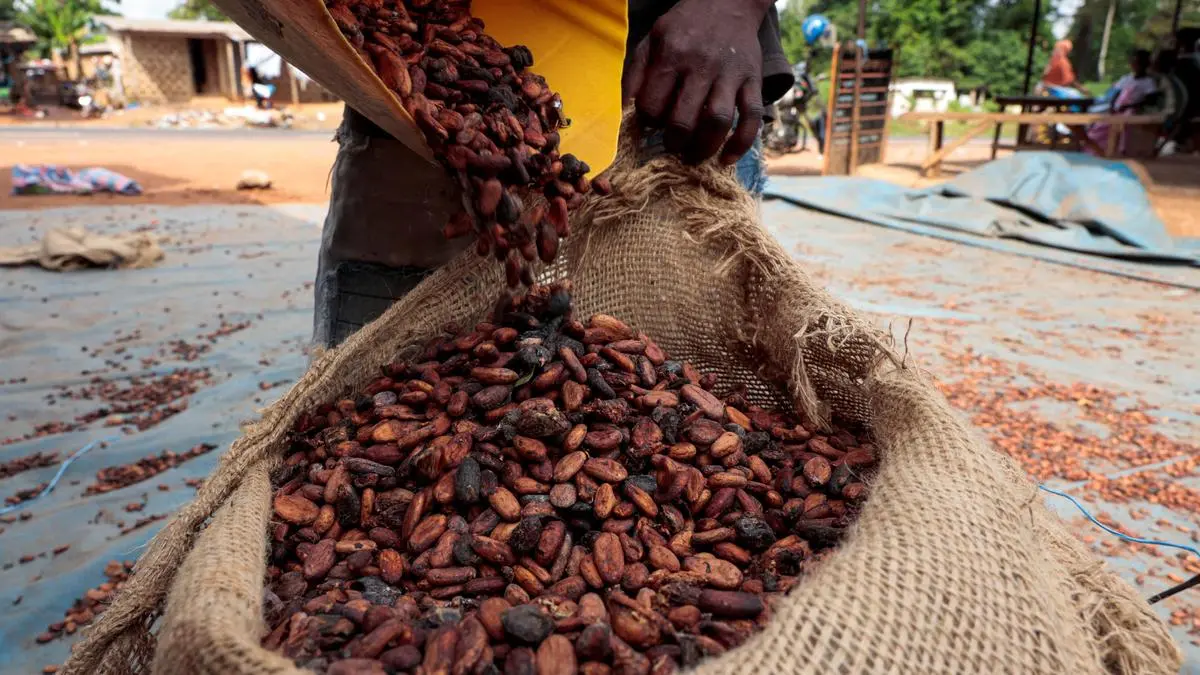
- India has unveiled a strategic roadmap to achieve cocoa self-sufficiency by 2040, aiming to reduce import dependence and position the country as a global cocoa processing hub.
- A knowledge paper by Grant Thornton Bharat in collaboration with FICCI, released at the Cocoa Roundtable, outlines a phased approach to boost domestic production, currently meeting only 20-30% of national demand.
- Annual cocoa imports exceed $866 million, highlighting a critical supply-demand gap; the roadmap aligns with the Aatmanirbhar Bharat vision to strengthen agri-value chains and farmer incomes.
The 2040 Cocoa Roadmap: A Phased Strategy
The proposed strategy is structured across four distinct phases with specific targets and interventions:
- Phase 1 (2026-2028) - Foundation & Institutional Strengthening:
- Launch of a dedicated National Mission on Cocoa.
- Establishment of a Centre of Excellence (CoE) for cocoa research and development.
- Development of 250 hectares of polyclonal seed gardens across key growing regions to ensure access to quality planting material.
- Phase 2 (2028-2030) - Capacity Building & Farmer Empowerment:
- Focus on training approximately 1 lakh farmers in improved agronomic practices.
- Establishment of regional CoE hubs for decentralized support.
- Distribution of an estimated 25 million high-yielding cocoa seedlings.
- Introduction of a pilot digital farmer registry and traceability system to enhance value chain transparency.
- Phase 3 (2030-2035) - Scaling Production & Infrastructure:
- Expansion of the total area under cocoa cultivation to 1 lakh hectares.
- Intensification of R&D activities and promotion of domestic cocoa processing infrastructure.
- Target to meet at least 50% of domestic demand through indigenous production.
- *Phase 4 (2035-2040) - Self-Sufficiency & Global Integration:
- Achievement of full self-sufficiency in cocoa bean production.
- Positioning India as a global cocoa processing hub and transitioning toward a net exporter of cocoa products.
- Implementation of 100% digital traceability across the supply chain.
- Significant improvement in farmer incomes through value addition and market linkages.
Structural Challenges in Cocoa Sector?
- Supply-Side Constraints:
- Limited access to high-yielding, disease-resistant planting material.
- Long gestation period (3-4 years) and high initial investment deter smallholders.
- Fragmented extension services and region-specific R&D gaps.
- Policy & Market Gaps:
- Inverted duty structure: Lower tariffs on finished cocoa products vs. raw beans discourage domestic processing.
- Weak traceability systems affect quality certification and export competitiveness.
- Underutilised processing capacity despite growing domestic demand.
- Demand Projection:
- Domestic consumption expected to grow at 5.5% CAGR, reaching 4.67 lakh tonnes by 2040.
Additional Info
- Major Producing States:
- Andhra Pradesh: Leading producer in India, particularly known for large-scale cocoa cultivation in oil palm plantations.
- Kerala, Karnataka, and Tamil Nadu: Traditional hubs where cocoa is integrated into coconut and arecanut gardens.
- Cultivation Requirements:
- Climate: Requires a tropical climate with temperatures between 15°C and 35°C and high humidity.
- Rainfall: Thrives in areas with well-distributed annual rainfall of 1500mm to 2000mm.
- Global Market Context:
- West Africa accounts for nearly 60% of the world's cocoa supply. India's move toward self-reliance is a strategic response to the increasing frequency of climate-induced crop failures in that region.
Sources
China Emerges as India’s Largest Trading Partner in FY26

What’s the News?
- China has overtaken the United States to become India's largest trading partner in the financial year 2025-26.
- Bilateral trade between India and China reached a total of USD 151.1 billion, reflecting India's continued reliance on Chinese industrial inputs.
- While India's exports to China saw a significant percentage increase, the overall trade deficit has widened to a record high, surpassing the USD 112 billion mark.
Trade Metrics for FY26
- India-China Bilateral Trade:
- Total Trade: USD 151.1 billion.
- Exports to China: USD 19.47 billion (an increase of 36.66%).
- Imports from China: USD 131.63 billion (an increase of 16%).
- Trade Deficit: USD 112.16 billion (widened from USD 99.2 billion in FY25).
- India-US Bilateral Trade:
- Total Trade: USD 140.2 billion.
- Exports to US: USD 87.3 billion (marginal growth of 0.92%).
- Imports from US: USD 52.9 billion (an increase of 15.95%).
- Trade Surplus for India: USD 34.4 billion (declined from USD 40.89 billion in FY25).
Analysis of Shifting Trade Dynamics
- China's Position:
- This marks a return to the top position for China, which was previously India's largest trading partner from 2013-14 to 2017-18, and again in 2020-21.
- The surge in total trade is primarily import-driven, reflecting India's continued reliance on Chinese goods, particularly in sectors like electronics, machinery, chemicals, and active pharmaceutical ingredients (APIs) .
- The 36.66% growth in exports to China is a notable positive indicator, though it remains overshadowed by the massive volume of imports.
- US Position:
- The US had held the position of India's top trading partner for four consecutive years (FY22 to FY25).
- The marginal growth in exports to the US (0.92%) and a sharp rise in imports (15.95%) led to a contraction in India's trade surplus with the US.
Additional Info
- Historical Context:
- China previously held the position of India’s top trading partner between 2013-14 and 2017-18, and again in 2020-21.
- The US emerged as the top partner in 2021-22 and maintained that status until 2024-25.
- Major Commodities:
- Imports from China: Dominated by telecom instruments, computer hardware, electric machinery, organic chemicals, and plastics.
- Exports to China: Primarily consist of iron ore, slag and ash, organic chemicals, mineral fuels, and marine products.
Sources
India Advocates for UNSC Reform with Veto Power for New Permanent Members
What’s the News?
- India has firmly called for a comprehensive expansion of the United Nations Security Council (UNSC), emphasizing that "real reform" requires new permanent members to be granted veto power.
- Speaking at the Inter-Governmental Negotiations (IGN), India's representatives highlighted that maintaining a distinction between old and new permanent members would only perpetuate existing inequities.
Arguments Presented by India
- Core Principles of Reform: India identified membership and the veto power as the two fundamental aspects causing an imbalanced structure and lack of legitimacy in the UNSC.
- Rejection of New Categories: India cautioned against creating intermediate or new categories of membership (e.g., longer-term elected seats without veto), stating it would complicate negotiations and preserve the relative advantage of the current Permanent Five (P5) members.
- Historical Analysis of Power Ratios: The 1960s reform, which only expanded non-permanent seats, shifted the permanent-to-non-permanent ratio from 5:6 to 5:10, inadvertently increasing the relative power of the veto-wielding P5. India argued that a similar reform today would worsen this imbalance.
- Failure of Existing Veto Restraints: India noted that the 2022 UN General Assembly resolution mandating a debate after a veto has been ineffective as a deterrent. Since its adoption, 24 vetoes have been cast on 20 draft resolutions, with 7 vetoes cast in 2024 alone—the highest since 1986.
- Issue of 'Effective Veto': India highlighted the practice of "effective veto," where both elected and non-elected members block outcomes like Presidential Statements or Sanctions Committee decisions to serve narrow national interests.
- Alignment with Africa: India reiterated its support for the African Common Position (Ezulwini Consensus) , which demands at least two permanent seats with veto power for Africa.
Need for UNSC Reform and Challenges Ahead
- Why Reform is Necessary:
- Crisis of Legitimacy: The P5-centric model reflects the geopolitical realities of 1945, ignoring the rise of major economies and democracies from Asia, Africa, and Latin America.
- Representation Deficit: Entire continents, including Africa and Latin America, lack permanent representation.
- Functional Paralysis: Frequent use of veto on critical global conflicts (e.g., Ukraine, Middle East) has rendered the Council ineffective in its primary mandate of maintaining international peace and security.
- Challenges to Comprehensive Reform:
- The Veto Paradox: Any amendment to the UN Charter to expand or limit the veto requires the consent of the current P5, who are unlikely to dilute their own exclusive authority.
- P5 Resistance: While some P5 members support India's candidacy in principle, there is no consensus on granting veto power to new permanent members.
- Opposition from UfC Group: The Uniting for Consensus (UfC) group, which includes Italy, Pakistan, and South Korea, opposes the addition of new permanent members and instead advocates for more non-permanent seats.
- Fragmented Negotiations: The IGN process lacks a single, consolidated negotiating text, leading to repetitive and circular discussions without tangible outcomes.
Additional Info
- Current UNSC Composition:
- P5 (Permanent Five): China, France, Russia, the UK, and the USA. These members hold the power to veto any substantive resolution.
- E10 (Elected Ten): Non-permanent members elected for two-year terms by the General Assembly.
- G4 Bloc:
- Comprising India, Brazil, Germany, and Japan, this group works collectively to reform the UNSC and secure permanent seats for each member.
- L.69 Grouping:
- A cross-regional group of 42 developing countries advocating for broad expansion in both permanent and non-permanent categories to represent the developing world.
- The Veto Mechanism:
- Under Article 27 of the UN Charter, a "no" vote by any of the P5 prevents the adoption of a resolution, regardless of overall international support.
Sources
TIME100 2026: Indian Personalities Recognised for Global Influence

What's the News?
- TIME magazine has released its 2026 list of the 100 most influential people, featuring three Indian-origin personalities across technology, entertainment, and culinary arts.
- Sundar Pichai (CEO, Google/Alphabet), Ranbir Kapoor (actor), and Vikas Khanna (chef-restaurateur) have been recognised for their contributions to global innovation, cultural storytelling, and culinary diplomacy.
- The inclusion underscores India's expanding soft power and the growing international resonance of Indian talent across diverse sectors.
Indian Representatives on TIME100?
- Sundar Pichai – Technology Leadership
- Recognised for steering Google's AI innovation and expanding access to digital ecosystems globally.
- Key focus: Responsible AI development, bridging the digital divide, and advancing India's tech ecosystem through investments in startups and skilling initiatives.
- Ranbir Kapoor – Cinematic Storytelling
- Highlighted for nuanced performances that prioritise artistic depth over commercial metrics.
- Tribute by Ayushmann Khurrana notes Kapoor's role as a "cultural bridge", helping global audiences engage with Indian narratives beyond stereotypes.
- Vikas Khanna – Culinary Diplomacy
- Celebrated for promoting Indian culinary heritage globally through storytelling, philanthropy, and cross-cultural collaborations.
- Recognised alongside international visionaries in fashion, arts, and gastronomy.
Additional Info
- Other Indian-Origin Leaders on the List:
- Neal Mohan (CEO of YouTube): Featured in the Innovators category, his inclusion further cements the significant influence of the Indian diaspora in steering global digital and tech platforms.
- Zohran Mamdani (New York City Assemblyman/Mayoral Candidate): Listed among world leaders, highlighting the rising political influence of the Indian diaspora in key Western democracies.
- About TIME100:
- The TIME100 is an annual list published by TIME Magazine that recognizes the world's most influential individuals across various sectors, including politics, business, science, arts, and activism.
- Being named to the list is considered a marker of significant global impact and thought leadership, reflecting not just individual achievement but broader societal influence.
Sources
April 2026
Archive
October 2026
- 28 October 2026
- 27 October 2026
- 26 October 2026
- 24 October 2026
- 23 October 2026
- 22 October 2026
- 21 October 2026
- 20 October 2026
- 19 October 2026
- 17 October 2026
- 16 October 2026
- 15 October 2026
- 14 October 2026
- 13 October 2026
- 12 October 2026
- 10 October 2026
- 09 October 2026
- 08 October 2026
- 07 October 2026
- 06 October 2026
- 05 October 2026
- 03 October 2026
- 02 October 2026
- 01 October 2026
September 2026
- 30 September 2026
- 29 September 2026
- 28 September 2026
- 26 September 2026
- 25 September 2026
- 24 September 2026
- 23 September 2026
- 22 September 2026
- 21 September 2026
- 19 September 2026
- 18 September 2026
- 17 September 2026
- 16 September 2026
- 15 September 2026
- 12 September 2026
- 11 September 2026
- 10 September 2026
- 09 September 2026
- 08 September 2026
- 07 September 2026
- 05 September 2026
- 04 September 2026
- 03 September 2026
- 02 September 2026
- 01 September 2026
August 2026
- 31 August 2026
- 29 August 2026
- 27 August 2026
- 26 August 2026
- 25 August 2026
- 24 August 2026
- 22 August 2026
- 21 August 2026
- 20 August 2026
- 19 August 2026
- 18 August 2026
- 17 August 2026
- 14 August 2026
- 13 August 2026
- 12 August 2026
- 11 August 2026
- 10 August 2026
- 08 August 2026
- 07 August 2026
- 06 August 2026
- 05 August 2026
- 04 August 2026
- 03 August 2026
- 01 August 2026
July 2026
- 31 July 2026
- 30 July 2026
- 29 July 2026
- 28 July 2026
- 27 July 2026
- 25 July 2026
- 23 July 2026
- 22 July 2026
- 21 July 2026
- 20 July 2026
- 18 July 2026
- 17 July 2026
- 15 July 2026
- 14 July 2026
- 13 July 2026
- 11 July 2026
- 10 July 2026
- 09 July 2026
- 08 July 2026
- 07 July 2026
- 06 July 2026
- 04 July 2026
- 03 July 2026
- 02 July 2026
- 01 July 2026
June 2026
May 2026
April 2026
March 2026
- 31 March 2026
- 30 March 2026
- 28 March 2026
- 27 March 2026
- 26 March 2026
- 25 March 2026
- 24 March 2026
- 23 March 2026
- 21 March 2026
- 20 March 2026
- 19 March 2026
- 18 March 2026
- 17 March 2026
- 16 March 2026
- 14 March 2026
- 13 March 2026
- 12 March 2026
- 11 March 2026
- 10 March 2026
- 09 March 2026
- 07 March 2026
- 06 March 2026
- 05 March 2026
- 03 March 2026
- 02 March 2026
February 2026
- 28 February 2026
- 27 February 2026
- 26 February 2026
- 25 February 2026
- 24 February 2026
- 23 February 2026
- 21 February 2026
- 20 February 2026
- 19 February 2026
- 18 February 2026
- 17 February 2026
- 16 February 2026
- 13 February 2026
- 12 February 2026
- 11 February 2026
- 10 February 2026
- 09 February 2026
- 07 February 2026
- 06 February 2026
- 05 February 2026
- 04 February 2026
- 03 February 2026
- 02 February 2026
January 2026
- 31 January 2026
- 30 January 2026
- 29 January 2026
- 28 January 2026
- 27 January 2026
- 26 January 2026
- 24 January 2026
- 23 January 2026
- 22 January 2026
- 21 January 2026
- 20 January 2026
- 19 January 2026
- 16 January 2026
- 15 January 2026
- 14 January 2026
- 13 January 2026
- 12 January 2026
- 10 January 2026
- 09 January 2026
- 08 January 2026
- 07 January 2026
- 06 January 2026
- 05 January 2026
- 03 January 2026
- 02 January 2026
- 01 January 2026
December 2025
- 31 December 2025
- 30 December 2025
- 29 December 2025
- 27 December 2025
- 26 December 2025
- 24 December 2025
- 23 December 2025
- 22 December 2025
- 20 December 2025
- 19 December 2025
- 18 December 2025
- 17 December 2025
- 16 December 2025
- 15 December 2025
- 13 December 2025
- 12 December 2025
- 11 December 2025
- 10 December 2025
- 09 December 2025
- 08 December 2025
- 05 December 2025
- 04 December 2025
- 03 December 2025
- 02 December 2025
November 2025
- 29 November 2025
- 28 November 2025
- 27 November 2025
- 26 November 2025
- 25 November 2025
- 24 November 2025
- 22 November 2025
- 21 November 2025
- 20 November 2025
- 19 November 2025
- 18 November 2025
- 17 November 2025
- 15 November 2025
- 14 November 2025
- 13 November 2025
- 12 November 2025
- 11 November 2025
- 10 November 2025
- 08 November 2025
- 07 November 2025
- 06 November 2025
- 05 November 2025
- 04 November 2025
- 03 November 2025
- 01 November 2025
October 2025
- 31 October 2025
- 30 October 2025
- 29 October 2025
- 28 October 2025
- 27 October 2025
- 25 October 2025
- 24 October 2025
- 23 October 2025
- 22 October 2025
- 21 October 2025
- 20 October 2025
- 18 October 2025
- 17 October 2025
- 16 October 2025
- 15 October 2025
- 14 October 2025
- 13 October 2025
- 11 October 2025
- 10 October 2025
- 09 October 2025
- 08 October 2025
- 07 October 2025
- 06 October 2025
- 04 October 2025
- 03 October 2025
- 02 October 2025
- 01 October 2025
September 2025
- 30 September 2025
- 29 September 2025
- 27 September 2025
- 26 September 2025
- 25 September 2025
- 24 September 2025
- 23 September 2025
- 22 September 2025
- 20 September 2025
- 19 September 2025
- 18 September 2025
- 17 September 2025
- 16 September 2025
- 15 September 2025
- 13 September 2025
- 12 September 2025
- 11 September 2025
- 10 September 2025
- 09 September 2025
- 08 September 2025
- 06 September 2025
- 05 September 2025
- 04 September 2025
- 03 September 2025
- 02 September 2025
- 01 September 2025
August 2025
- 30 August 2025
- 29 August 2025
- 28 August 2025
- 27 August 2025
- 26 August 2025
- 25 August 2025
- 23 August 2025
- 22 August 2025
- 21 August 2025
- 20 August 2025
- 19 August 2025
- 18 August 2025
- 16 August 2025
- 14 August 2025
- 13 August 2025
- 12 August 2025
- 11 August 2025
- 08 August 2025
- 07 August 2025
- 06 August 2025
- 05 August 2025
- 04 August 2025
- 02 August 2025
- 01 August 2025
July 2025
- 31 July 2025
- 30 July 2025
- 29 July 2025
- 28 July 2025
- 26 July 2025
- 25 July 2025
- 24 July 2025
- 23 July 2025
- 22 July 2025
- 21 July 2025
- 19 July 2025
- 18 July 2025
- 17 July 2025
- 16 July 2025
- 15 July 2025
- 12 July 2025
- 11 July 2025
- 10 July 2025
- 09 July 2025
- 07 July 2025
- 05 July 2025
- 04 July 2025
- 03 July 2025
- 02 July 2025
- 01 July 2025
June 2025
- 30 June 2025
- 28 June 2025
- 27 June 2025
- 26 June 2025
- 25 June 2025
- 24 June 2025
- 23 June 2025
- 21 June 2025
- 20 June 2025
- 19 June 2025
- 18 June 2025
- 17 June 2025
- 16 June 2025
- 14 June 2025
- 13 June 2025
- 12 June 2025
- 11 June 2025
- 10 June 2025
- 09 June 2025
- 07 June 2025
- 06 June 2025
- 05 June 2025
- 04 June 2025
- 03 June 2025
- 02 June 2025
May 2025
April 2025
- 30 April 2025
- 29 April 2025
- 28 April 2025
- 26 April 2025
- 25 April 2025
- 24 April 2025
- 23 April 2025
- 22 April 2025
- 21 April 2025
- 19 April 2025
- 18 April 2025
- 17 April 2025
- 16 April 2025
- 15 April 2025
- 14 April 2025
- 12 April 2025
- 11 April 2025
- 10 April 2025
- 09 April 2025
- 08 April 2025
- 07 April 2025
- 05 April 2025
- 04 April 2025
- 03 April 2025
- 02 April 2025
- 01 April 2025
March 2025
- 31 March 2025
- 29 March 2025
- 28 March 2025
- 27 March 2025
- 26 March 2025
- 25 March 2025
- 24 March 2025
- 22 March 2025
- 21 March 2025
- 20 March 2025
- 19 March 2025
- 18 March 2025
- 17 March 2025
- 15 March 2025
- 13 March 2025
- 12 March 2025
- 11 March 2025
- 10 March 2025
- 08 March 2025
- 07 March 2025
- 06 March 2025
- 05 March 2025
- 04 March 2025
- 03 March 2025
- 01 March 2025
February 2025
- 28 February 2025
- 27 February 2025
- 26 February 2025
- 25 February 2025
- 24 February 2025
- 22 February 2025
- 21 February 2025
- 20 February 2025
- 19 February 2025
- 18 February 2025
- 17 February 2025
- 15 February 2025
- 14 February 2025
- 13 February 2025
- 12 February 2025
- 11 February 2025
- 10 February 2025
- 08 February 2025
- 07 February 2025
- 06 February 2025
- 05 February 2025
- 04 February 2025
- 03 February 2025
- 01 February 2025
January 2025
- 31 January 2025
- 30 January 2025
- 29 January 2025
- 28 January 2025
- 27 January 2025
- 25 January 2025
- 24 January 2025
- 23 January 2025
- 22 January 2025
- 21 January 2025
- 20 January 2025
- 18 January 2025
- 17 January 2025
- 16 January 2025
- 15 January 2025
- 14 January 2025
- 13 January 2025
- 11 January 2025
- 10 January 2025
- 09 January 2025
- 08 January 2025
- 07 January 2025
- 06 January 2025
- 04 January 2025
- 03 January 2025
- 02 January 2025
- 01 January 2025