Current Affairs
Stay updated with the latest national and international events.
14 November 2026
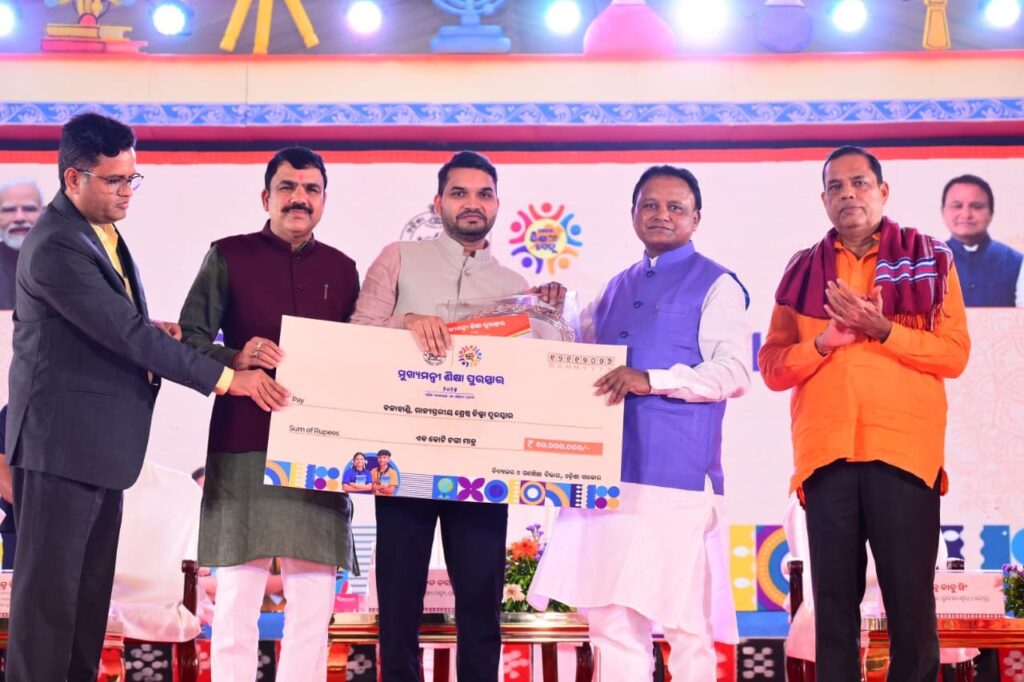
Odisha Launches NIPUN App and Robotics Labs in 807 Government Schools
What’s the News?
- Odisha Chief Minister Mohan Charan Majhi launched the NIPUN App to strengthen foundational learning and inaugurated robotics laboratories in 807 government schools, at a cost of ₹164.33 crore.
- The initiatives were unveiled during the three-day state-level children's festival Suravi-2026 in Bhubaneswar, organised under the theme “Samruddha Bhasha, Samruddha Odisha” (Prosperous Language, Prosperous Odisha).
- The initiatives aim to improve foundational literacy and numeracy and promote technology-based education among school students.
NIPUN App?
- Platform: A free Android-based educational application developed to support the NIPUN Odisha Mission.
- Objective: Ensure that every child acquires foundational reading, writing and numeracy skills by the end of Class III.
- Features:
- Classroom monitoring and individual learning assessments.
- Tracking students' academic progress and learning outcomes.
- Strengthening foundational learning among primary school students.
Robotics Laboratories?
- Coverage: 807 government schools across Odisha.
- Investment: ₹164.33 crore.
- Beneficiaries: Students of Classes VI to X.
- Infrastructure: Each laboratory is equipped with four robots, robotics kits, computers and 3D printing facilities.
- Training Areas: Robotics, coding, Artificial Intelligence (AI), Machine Learning (ML) and 3D printing.
- Objective: Promote practical learning, technical skills and digital inclusion, particularly in rural schools.
Education Awards and Scholarships
- Mukhyamantri Shiksha Puraskar:
- 375 individuals and institutions honoured for their contributions to education.
- Approximately ₹139 crore provisioned for incentives from block to state levels.
- Mukhyamantri Odia Bhasha Brutti:
- 7,350 meritorious students to receive an annual scholarship of ₹7,500 each for excellence in Odia language studies.
- Additionally, 10 outstanding students and four Council of Higher Secondary Education (CHSE) toppers were felicitated.
Additional Info
- NIPUN Bharat Mission:
- Full Form: National Initiative for Proficiency in Reading with Understanding and Numeracy.
- Launched: 2021 by the Ministry of Education.
- Implemented under: Samagra Shiksha, aligned with the National Education Policy (NEP) 2020.
- Objective: Achieve universal foundational literacy and numeracy among children in the early grades of schooling.
- Foundational Literacy and Numeracy (FLN):
- Refers to basic reading, writing, comprehension and mathematical skills essential for further learning.
Sources
MeitY Launches Consent Manager Registration Portal Under DPDP Act, 2023

What’s the News?
- The Ministry of Electronics and Information Technology (MeitY) has launched an online portal for registering Consent Managers under the Digital Personal Data Protection (DPDP) Act, 2023.
- S. Krishnan, Secretary of MeitY, launched the portal dpbi.gov.in, enabling eligible Indian companies to apply for registration with the Data Protection Board of India (DPBI).
- The initiative aims to give individuals greater control over their personal data and strengthen transparency and accountability in India's digital ecosystem.
Consent Manager?
- Definition: An entity registered with the Data Protection Board of India that enables individuals to give, manage, review and withdraw consent for processing their personal data.
- Functions:
- Provide an accessible, transparent and interoperable digital platform for consent management.
- Allow individuals to monitor and withdraw consent for personal data processing.
- Act as an accountable intermediary between Data Principals and Data Fiduciaries.
Registration Framework?
- Eligibility Criteria:
- Must be a company incorporated in India.
- Minimum net worth of ₹2 crore.
- Adequate technical, operational and financial capacity.
- Compliance with prescribed data protection and security standards.
- Registration Authority: Data Protection Board of India (DPBI).
- Process: Applications are submitted through dpbi.gov.in, examined by the Board, and approved upon meeting the prescribed requirements.
- The list of registered Consent Managers will be published on the Board's website.
Digital Personal Data Protection (DPDP) Act, 2023?
- Objective: Establish a legal framework for protecting digital personal data while permitting its lawful processing.
- Nodal Ministry: Ministry of Electronics and Information Technology (MeitY).
- Provisions:
- Requires valid consent for personal data processing, except in specified legally permitted circumstances.
- Provides individuals with rights to access information, correct or erase personal data, withdraw consent and seek grievance redressal.
- Mandates reasonable security safeguards and reporting of personal data breaches.
- Provides penalties of up to ₹250 crore for certain violations.
- Implementation: The DPDP Rules, 2025 provide for phased enforcement, with major provisions relating to individual rights, Data Fiduciary obligations and penalties scheduled to take effect in May 2027.
Additional Info
- Data Principal: An individual to whom the personal data relates.
- Data Fiduciary: An entity that determines the purpose and means of processing personal data.
- Data Protection Board of India (DPBI):
- Established under the DPDP Act, 2023.
- Responsible for enforcing specified provisions of the Act, examining personal data breach matters and imposing penalties.
- Article 21 of the Constitution:
- Protects the right to life and personal liberty.
- The Supreme Court recognised the Right to Privacy as a Fundamental Right under Article 21 and Part III of the Constitution in the K.S. Puttaswamy v. Union of India (2017) judgment.
Sources
India’s First Indigenous Insecticide Molecule – Pioxaniliprole
What’s the News?
- PI Industries Ltd has launched Pioxaniliprole, India's first indigenously discovered insecticide molecule, under the trade name Pioxazon.
- The Central Insecticides Board and Registration Committee (CIBRC) approved the molecule and formally recognised it as India's first domestically discovered insecticide active ingredient at its 476th meeting.
- Developed through more than a decade of research, the insecticide aims to protect major crops against destructive pests and strengthen India's indigenous agrochemical research capabilities.
Pioxaniliprole?
- Developer: PI Industries Ltd.
- Trade Name: Pioxazon.
- Chemical Class: Anthranilic diamide insecticide.
- Formulation: Pioxaniliprole 20% w/v Suspension Concentrate (SC).
- Major Target Pests: Yellow stem borer, leaf folder, fall armyworm, tobacco caterpillar, fruit borer and pod borer.
- Approved Crop Uses:
- Rice: Yellow stem borer and leaf folder.
- Chilli: Fall armyworm, fruit borer and tobacco caterpillar.
- Tomato: Fruit borer.
- Bengal gram (Chana): Pod borer.
Mechanism of Action?
- Pioxaniliprole targets ryanodine receptors (RyRs) in insect muscle cells.
- These receptors regulate the release of calcium ions, which are essential for muscle contraction and relaxation.
- The insecticide causes uncontrolled calcium release, resulting in:
- Cessation of feeding.
- Muscle dysfunction and paralysis.
- Eventually, death of the insect.
- Classification: Group 28 under the Insecticide Resistance Action Committee (IRAC) mode-of-action classification.
Significance?
- Represents India's first domestically discovered insecticidal active ingredient to receive regulatory registration.
- Supports indigenous agricultural research, innovation and intellectual property development.
- PI Industries has invested approximately ₹2,000 crore in overall research and development since 2014.
- The company is exploring international markets, including the United States, Mexico and Brazil.
Additional Info
- Central Insecticides Board and Registration Committee (CIBRC):
- Nodal Ministry: Ministry of Agriculture and Farmers Welfare.
- Legal Basis: Insecticides Act, 1968.
- Central Insecticides Board (Section 4): Advises the Central and State Governments on technical matters relating to insecticides and their safe use.
- Registration Committee (Section 5): Evaluates and registers insecticides based on efficacy and safety.
- Insecticides Act, 1968:
- Regulates the import, manufacture, sale, transport, distribution and use of insecticides in India.
- Section 9: Deals with the registration of insecticides.
- Insecticides Rules, 1971: Provide detailed regulatory procedures under the Act.
Sources
India and Sri Lanka Begin 12th Joint Military Exercise MITRA SHAKTI 2026

What’s the News?
- India and Sri Lanka have commenced the 12th edition of the bilateral military exercise MITRA SHAKTI 2026 at the Army Training School, Maduru Oya, Sri Lanka.
- A 170-member Indian Defence Forces contingent, primarily comprising personnel from the Rajputana Rifles, is participating in the 14-day exercise.
- The exercise aims to strengthen joint counter-terrorism capabilities, operational coordination and military cooperation between the two countries.
Exercise MITRA SHAKTI 2026?
- Edition: 12th.
- Participating Countries: India and Sri Lanka.
- Host Country: Sri Lanka.
- Venue: Army Training School, Maduru Oya.
- Duration: 14 days.
- Indian Contingent: 170 personnel, mainly from the Rajputana Rifles, along with troops from other arms and services and the Indian Air Force.
- Objective: Enhance interoperability and joint operational capabilities for counter-terrorism operations in semi-urban environments under a United Nations mandate.
Training Activities?
- Joint Operational Planning: Coordinated planning and execution of military operations.
- Counter-Terrorism Drills: Urban patrolling, roadblock operations and crowd dispersal.
- Combat Training: Vehicle convoy protection, area ambushes and combined-arms operations against fortified positions.
- Joint Validation Exercise: Final assessment of jointly practised tactics, techniques and procedures.
Additional Info
- Exercise MITRA SHAKTI:
- Initiated: 2012.
- Type: Annual bilateral military exercise.
- Venue Rotation: Conducted alternately in India and Sri Lanka.
- Purpose: Strengthen military interoperability, exchange operational experiences and improve counter-terrorism cooperation.
- Previous Edition: 11th edition hosted by India.
- Rajputana Rifles:
- One of the oldest infantry regiments of the Indian Army, with a history spanning over 250 years.
- Has participated in previous editions of Exercise MITRA SHAKTI.
- India's Neighbourhood First Policy:
- Prioritises cooperation with neighbouring countries, including Sri Lanka.
- Focuses on connectivity, development partnerships, security and regional stability.
Sources
World Diabetes Day 2026 Observed on 14 November
What’s the News?
- World Diabetes Day 2026 was observed globally on 14 November under the theme “Early Action on Diabetes”, highlighting the importance of early diagnosis, prevention, timely treatment and reducing diabetes-related stigma.
- The observance is jointly led by the World Health Organization (WHO) and the International Diabetes Federation (IDF).
- The campaign emphasises improving access to affordable healthcare, particularly as over 40% of people living with diabetes worldwide remain undiagnosed.
World Diabetes Day?
- Observed: 14 November annually.
- Theme (2026–2027): Early Action on Diabetes.
- Established: 1991 by IDF and WHO.
- UN Recognition: 2006, through UN General Assembly Resolution 61/225.
- Significance: Commemorates the birth anniversary of Sir Frederick Banting, who co-discovered insulin with Charles Best in 1921.
- Objective: Raise awareness about diabetes prevention, early detection, treatment and long-term management.
Global Diabetes Burden?
According to the IDF Diabetes Atlas, 11th Edition (2025):
- 589 million adults (aged 20–79 years) were living with diabetes worldwide in 2024.
- Approximately 252 million adults (43%) remained undiagnosed.
- Around 81% of adults with diabetes lived in low- and middle-income countries.
- The number of adults with diabetes is projected to reach 853 million by 2050.
WHO South-East Asia Region?
- Approximately 254 million adults are living with diabetes in the region.
- Nearly two-thirds are not receiving glucose-lowering treatment.
- Under the SEAHEARTS initiative, countries have committed to:
- Providing protocol-based diabetes management to 70 million people by 2030.
- Achieving good blood glucose control in 50% of them.
- As of June 2026, more than 43.5 million people had been reached through over 1.8 lakh healthcare facilities across nine countries.
Additional Info
Diabetes:
- A chronic metabolic disease characterised by elevated blood glucose levels due to insufficient insulin production or ineffective insulin utilisation.
- Types: Type 1, Type 2 and gestational diabetes.
- Major Complications: Cardiovascular disease, kidney failure, vision loss and nerve damage.
Diabetes in India:
- ICMR-INDIAB Study (2023): Estimated 101 million people with diabetes and 136 million with prediabetes.
- IDF Estimates (2024): Approximately 89.8 million adults aged 20–79 years with diabetes.
WHO Global Diabetes Compact:
- Launched: 2021.
- 2030 Targets:
- 80% of people with diabetes diagnosed.
- 80% of diagnosed individuals achieving good blood glucose control.
- 80% achieving good blood pressure control.
- 60% of people with diabetes aged 40 years or above receiving statins.
- 100% of people with Type 1 diabetes accessing affordable insulin and blood glucose self-monitoring.
Indian Government Initiatives:
- NP-NCD: National Programme for Prevention and Control of Non-Communicable Diseases, providing screening and management of diabetes, including population-based screening for people aged 30 years and above.
- Ayushman Arogya Mandirs: Provide diabetes screening, treatment, referral and follow-up through comprehensive primary healthcare.
Sources
Children’s Day 2026 Observed on 14 November in India
What’s the News?
- Children’s Day 2026 (Bal Diwas) was observed across India on 14 November, commemorating the 137th birth anniversary of Jawaharlal Nehru, India's first Prime Minister.
- The day highlights the importance of children's rights, education, healthcare, protection and overall development.
- Schools and educational institutions organised cultural programmes, competitions, sports activities and awareness campaigns promoting child welfare.
Children’s Day?
- Observed: 14 November annually in India.
- Also Known As: Bal Diwas.
- Commemorates: Birth anniversary of Jawaharlal Nehru (14 November 1889).
- Objective: Promote children's rights, quality education, health, safety and equal opportunities.
- Historical Background:
- Jawaharlal Nehru, popularly known as Chacha Nehru, emphasised children's education and welfare.
- Children's Day was celebrated on 14 November during Nehru's lifetime, with records dating back to 1957.
- The observance continued after his death in 1964.
World Children’s Day?
- Observed: 20 November annually.
- Theme (2026): “My Day, My Rights, My Future”, highlighting children's voices, participation and rights.
- Established: 1954 through UN General Assembly Resolution 836 (IX).
- Significance:
- 1959: UN Declaration of the Rights of the Child adopted.
- 1989: UN Convention on the Rights of the Child (UNCRC) adopted.
- UNCRC: Defines a child as a person below 18 years, unless majority is attained earlier under applicable law.
- India ratified the UNCRC in 1992.
Additional Info
Constitutional Provisions for Children:
- Article 21A: Free and compulsory education for children aged 6–14 years.
- Article 24: Prohibits employment of children below 14 years in factories, mines and hazardous employment.
- Article 39(e) & (f): Protection of children against exploitation and promotion of healthy development.
- Article 45: Early childhood care and education for children below six years.
Major Government Initiatives:
- Right to Education (RTE) Act, 2009: Guarantees free and compulsory elementary education for children aged 6–14 years.
- PM POSHAN: Provides nutritional support through school meals.
- Mission Vatsalya: Strengthens child protection and welfare services.
- Beti Bachao Beti Padhao: Promotes the protection, survival and education of girls.
Sources
Janjatiya Gaurav Diwas 2026 Marks 151st Birth Anniversary of Birsa Munda
What’s the News?
- Janjatiya Gaurav Diwas 2026 is being observed across India on 15 November, commemorating the 151st birth anniversary of Dharti Aaba Bhagwan Birsa Munda, the prominent tribal freedom fighter.
- The Ministry of Tribal Affairs organised Janjatiya Gaurav Pakhwada from 1 to 15 November 2026, focusing on tribal heritage, education, healthcare, livelihoods and welfare delivery.
- The celebrations include over 300 development projects, two national digital platforms and various initiatives promoting tribal empowerment.
Janjatiya Gaurav Diwas?
- Observed: 15 November annually.
- First Declared: 2021 by the Government of India.
- Commemorates: Birth anniversary of Bhagwan Birsa Munda.
- Nodal Ministry: Ministry of Tribal Affairs.
- Objective: Honour tribal freedom fighters, preserve indigenous culture and promote the socio-economic development of tribal communities.
- Janjatiya Gaurav Varsh (2024–25):
- Marked Birsa Munda's 150th birth anniversary.
- Over 28 national-level events and 2 lakh activities were organised, involving more than 3.8 crore participants.
Bhagwan Birsa Munda?
- Born: 15 November 1875, Ulihatu village, present-day Jharkhand.
- Died: 9 June 1900, in British custody at Ranchi.
- Community: Munda tribal community.
- Popularly Known As: Dharti Aaba (Father of the Earth).
- Major Contribution:
- Led the Ulgulan Movement (1899–1900) against British colonial rule, exploitative landlords and tribal land alienation.
- Fought for tribal land rights, cultural identity and social reforms.
- His movement contributed to reforms that culminated in the Chotanagpur Tenancy Act, 1908, protecting tribal land rights.
Janjatiya Gaurav Pakhwada 2026?
- Duration: 1–15 November 2026.
- Major Activities:
- EMRS Students' Interaction: Approximately 200 Eklavya Model Residential School students participated in an interaction programme with the President.
- National Tribal Literary Festival: Organised in New Delhi to promote tribal languages, literature and oral traditions.
- Rani Durgavati Adivasi Mahila Sammelan: Brought together 500 tribal women entrepreneurs from 30 States/UTs.
- Tribal Healers Conclave: Training for approximately 1,500 traditional healers from nine States/UTs.
- Scholarship Access Camps: Organised across 73 districts to support tribal students.
Major Projects and Digital Initiatives?
- Development Projects: More than 300 projects were planned nationwide, including 228 inaugurations and 74 foundation stone ceremonies.
- Prime Minister's Programme: 246 projects worth approximately ₹3,000 crore were scheduled for inauguration or foundation stone laying, including 38 EMRS and 100 PM-JANMAN Multi-Purpose Centres.
Jan-HIT Portal:
- Full Form: Janjatiya Health Intelligence and Technology.
- Developed with the Indian Council of Medical Research (ICMR).
- India's first tribe-disaggregated health data platform, covering 20 States.
- Supports evidence-based tribal healthcare planning.
National FRA Digital Platform:
- Digitises forest rights claims under the Forest Rights Act, 2006.
- Covers the process from Gram Sabha submission to the issuance of digitally signed forest rights titles.
Additional Info
PM-JANMAN:
- Full Form: Pradhan Mantri Janjati Adivasi Nyaya Maha Abhiyan.
- Launched: 2023.
- Beneficiaries: 75 Particularly Vulnerable Tribal Groups (PVTGs).
- Objective: Improve housing, healthcare, education, drinking water, connectivity and livelihoods.
Dharti Aaba Janjatiya Gram Utkarsh Abhiyan:
- Launched: 2024.
- Objective: Address critical gaps in infrastructure and essential services in tribal-majority villages.
Constitutional Provisions:
- Article 46: Promotion of educational and economic interests of Scheduled Tribes and other weaker sections.
- Article 244: Administration of Scheduled Areas and Tribal Areas.
- Article 342: Specification of Scheduled Tribes.
- Fifth Schedule: Administration and control of Scheduled Areas and Scheduled Tribes in applicable states.
- Sixth Schedule: Administration of tribal areas in Assam, Meghalaya, Tripura and Mizoram.
Sources
November 2026
27 November 202626 November 202625 November 202624 November 202623 November 202621 November 202620 November 202619 November 202618 November 202617 November 202616 November 202614 November 202613 November 202612 November 202611 November 202610 November 202609 November 202606 November 202605 November 202604 November 202603 November 202602 November 2026
Archive
November 2026
- 27 November 2026
- 26 November 2026
- 25 November 2026
- 24 November 2026
- 23 November 2026
- 21 November 2026
- 20 November 2026
- 19 November 2026
- 18 November 2026
- 17 November 2026
- 16 November 2026
- 14 November 2026
- 13 November 2026
- 12 November 2026
- 11 November 2026
- 10 November 2026
- 09 November 2026
- 06 November 2026
- 05 November 2026
- 04 November 2026
- 03 November 2026
- 02 November 2026
October 2026
- 31 October 2026
- 30 October 2026
- 29 October 2026
- 28 October 2026
- 27 October 2026
- 26 October 2026
- 24 October 2026
- 23 October 2026
- 22 October 2026
- 21 October 2026
- 20 October 2026
- 19 October 2026
- 17 October 2026
- 16 October 2026
- 15 October 2026
- 14 October 2026
- 13 October 2026
- 12 October 2026
- 10 October 2026
- 09 October 2026
- 08 October 2026
- 07 October 2026
- 06 October 2026
- 05 October 2026
- 03 October 2026
- 02 October 2026
- 01 October 2026
September 2026
- 30 September 2026
- 29 September 2026
- 28 September 2026
- 26 September 2026
- 25 September 2026
- 24 September 2026
- 23 September 2026
- 22 September 2026
- 21 September 2026
- 19 September 2026
- 18 September 2026
- 17 September 2026
- 16 September 2026
- 15 September 2026
- 12 September 2026
- 11 September 2026
- 10 September 2026
- 09 September 2026
- 08 September 2026
- 07 September 2026
- 05 September 2026
- 04 September 2026
- 03 September 2026
- 02 September 2026
- 01 September 2026
August 2026
- 31 August 2026
- 29 August 2026
- 27 August 2026
- 26 August 2026
- 25 August 2026
- 24 August 2026
- 22 August 2026
- 21 August 2026
- 20 August 2026
- 19 August 2026
- 18 August 2026
- 17 August 2026
- 14 August 2026
- 13 August 2026
- 12 August 2026
- 11 August 2026
- 10 August 2026
- 08 August 2026
- 07 August 2026
- 06 August 2026
- 05 August 2026
- 04 August 2026
- 03 August 2026
- 01 August 2026
July 2026
- 31 July 2026
- 30 July 2026
- 29 July 2026
- 28 July 2026
- 27 July 2026
- 25 July 2026
- 23 July 2026
- 22 July 2026
- 21 July 2026
- 20 July 2026
- 18 July 2026
- 17 July 2026
- 15 July 2026
- 14 July 2026
- 13 July 2026
- 11 July 2026
- 10 July 2026
- 09 July 2026
- 08 July 2026
- 07 July 2026
- 06 July 2026
- 04 July 2026
- 03 July 2026
- 02 July 2026
- 01 July 2026
June 2026
May 2026
April 2026
March 2026
- 31 March 2026
- 30 March 2026
- 28 March 2026
- 27 March 2026
- 26 March 2026
- 25 March 2026
- 24 March 2026
- 23 March 2026
- 21 March 2026
- 20 March 2026
- 19 March 2026
- 18 March 2026
- 17 March 2026
- 16 March 2026
- 14 March 2026
- 13 March 2026
- 12 March 2026
- 11 March 2026
- 10 March 2026
- 09 March 2026
- 07 March 2026
- 06 March 2026
- 05 March 2026
- 03 March 2026
- 02 March 2026
February 2026
- 28 February 2026
- 27 February 2026
- 26 February 2026
- 25 February 2026
- 24 February 2026
- 23 February 2026
- 21 February 2026
- 20 February 2026
- 19 February 2026
- 18 February 2026
- 17 February 2026
- 16 February 2026
- 13 February 2026
- 12 February 2026
- 11 February 2026
- 10 February 2026
- 09 February 2026
- 07 February 2026
- 06 February 2026
- 05 February 2026
- 04 February 2026
- 03 February 2026
- 02 February 2026
January 2026
- 31 January 2026
- 30 January 2026
- 29 January 2026
- 28 January 2026
- 27 January 2026
- 26 January 2026
- 24 January 2026
- 23 January 2026
- 22 January 2026
- 21 January 2026
- 20 January 2026
- 19 January 2026
- 16 January 2026
- 15 January 2026
- 14 January 2026
- 13 January 2026
- 12 January 2026
- 10 January 2026
- 09 January 2026
- 08 January 2026
- 07 January 2026
- 06 January 2026
- 05 January 2026
- 03 January 2026
- 02 January 2026
- 01 January 2026
December 2025
- 31 December 2025
- 30 December 2025
- 29 December 2025
- 27 December 2025
- 26 December 2025
- 24 December 2025
- 23 December 2025
- 22 December 2025
- 20 December 2025
- 19 December 2025
- 18 December 2025
- 17 December 2025
- 16 December 2025
- 15 December 2025
- 13 December 2025
- 12 December 2025
- 11 December 2025
- 10 December 2025
- 09 December 2025
- 08 December 2025
- 05 December 2025
- 04 December 2025
- 03 December 2025
- 02 December 2025
November 2025
- 29 November 2025
- 28 November 2025
- 27 November 2025
- 26 November 2025
- 25 November 2025
- 24 November 2025
- 22 November 2025
- 21 November 2025
- 20 November 2025
- 19 November 2025
- 18 November 2025
- 17 November 2025
- 15 November 2025
- 14 November 2025
- 13 November 2025
- 12 November 2025
- 11 November 2025
- 10 November 2025
- 08 November 2025
- 07 November 2025
- 06 November 2025
- 05 November 2025
- 04 November 2025
- 03 November 2025
- 01 November 2025
October 2025
- 31 October 2025
- 30 October 2025
- 29 October 2025
- 28 October 2025
- 27 October 2025
- 25 October 2025
- 24 October 2025
- 23 October 2025
- 22 October 2025
- 21 October 2025
- 20 October 2025
- 18 October 2025
- 17 October 2025
- 16 October 2025
- 15 October 2025
- 14 October 2025
- 13 October 2025
- 11 October 2025
- 10 October 2025
- 09 October 2025
- 08 October 2025
- 07 October 2025
- 06 October 2025
- 04 October 2025
- 03 October 2025
- 02 October 2025
- 01 October 2025
September 2025
- 30 September 2025
- 29 September 2025
- 27 September 2025
- 26 September 2025
- 25 September 2025
- 24 September 2025
- 23 September 2025
- 22 September 2025
- 20 September 2025
- 19 September 2025
- 18 September 2025
- 17 September 2025
- 16 September 2025
- 15 September 2025
- 13 September 2025
- 12 September 2025
- 11 September 2025
- 10 September 2025
- 09 September 2025
- 08 September 2025
- 06 September 2025
- 05 September 2025
- 04 September 2025
- 03 September 2025
- 02 September 2025
- 01 September 2025
August 2025
- 30 August 2025
- 29 August 2025
- 28 August 2025
- 27 August 2025
- 26 August 2025
- 25 August 2025
- 23 August 2025
- 22 August 2025
- 21 August 2025
- 20 August 2025
- 19 August 2025
- 18 August 2025
- 16 August 2025
- 14 August 2025
- 13 August 2025
- 12 August 2025
- 11 August 2025
- 08 August 2025
- 07 August 2025
- 06 August 2025
- 05 August 2025
- 04 August 2025
- 02 August 2025
- 01 August 2025
July 2025
- 31 July 2025
- 30 July 2025
- 29 July 2025
- 28 July 2025
- 26 July 2025
- 25 July 2025
- 24 July 2025
- 23 July 2025
- 22 July 2025
- 21 July 2025
- 19 July 2025
- 18 July 2025
- 17 July 2025
- 16 July 2025
- 15 July 2025
- 12 July 2025
- 11 July 2025
- 10 July 2025
- 09 July 2025
- 07 July 2025
- 05 July 2025
- 04 July 2025
- 03 July 2025
- 02 July 2025
- 01 July 2025
June 2025
- 30 June 2025
- 28 June 2025
- 27 June 2025
- 26 June 2025
- 25 June 2025
- 24 June 2025
- 23 June 2025
- 21 June 2025
- 20 June 2025
- 19 June 2025
- 18 June 2025
- 17 June 2025
- 16 June 2025
- 14 June 2025
- 13 June 2025
- 12 June 2025
- 11 June 2025
- 10 June 2025
- 09 June 2025
- 07 June 2025
- 06 June 2025
- 05 June 2025
- 04 June 2025
- 03 June 2025
- 02 June 2025
May 2025
April 2025
- 30 April 2025
- 29 April 2025
- 28 April 2025
- 26 April 2025
- 25 April 2025
- 24 April 2025
- 23 April 2025
- 22 April 2025
- 21 April 2025
- 19 April 2025
- 18 April 2025
- 17 April 2025
- 16 April 2025
- 15 April 2025
- 14 April 2025
- 12 April 2025
- 11 April 2025
- 10 April 2025
- 09 April 2025
- 08 April 2025
- 07 April 2025
- 05 April 2025
- 04 April 2025
- 03 April 2025
- 02 April 2025
- 01 April 2025
March 2025
- 31 March 2025
- 29 March 2025
- 28 March 2025
- 27 March 2025
- 26 March 2025
- 25 March 2025
- 24 March 2025
- 22 March 2025
- 21 March 2025
- 20 March 2025
- 19 March 2025
- 18 March 2025
- 17 March 2025
- 15 March 2025
- 13 March 2025
- 12 March 2025
- 11 March 2025
- 10 March 2025
- 08 March 2025
- 07 March 2025
- 06 March 2025
- 05 March 2025
- 04 March 2025
- 03 March 2025
- 01 March 2025
February 2025
- 28 February 2025
- 27 February 2025
- 26 February 2025
- 25 February 2025
- 24 February 2025
- 22 February 2025
- 21 February 2025
- 20 February 2025
- 19 February 2025
- 18 February 2025
- 17 February 2025
- 15 February 2025
- 14 February 2025
- 13 February 2025
- 12 February 2025
- 11 February 2025
- 10 February 2025
- 08 February 2025
- 07 February 2025
- 06 February 2025
- 05 February 2025
- 04 February 2025
- 03 February 2025
- 01 February 2025
January 2025
- 31 January 2025
- 30 January 2025
- 29 January 2025
- 28 January 2025
- 27 January 2025
- 25 January 2025
- 24 January 2025
- 23 January 2025
- 22 January 2025
- 21 January 2025
- 20 January 2025
- 18 January 2025
- 17 January 2025
- 16 January 2025
- 15 January 2025
- 14 January 2025
- 13 January 2025
- 11 January 2025
- 10 January 2025
- 09 January 2025
- 08 January 2025
- 07 January 2025
- 06 January 2025
- 04 January 2025
- 03 January 2025
- 02 January 2025
- 01 January 2025