
Current Affairs
Stay updated with the latest national and international events.
13 September 2025
World Food India 2025: Boosting India’s Global Food Processing Reach

What’s the News?
- The Government of India will host the 4th edition of World Food India (WFI) 2025, an international mega-event for food processing. Venue: Bharat Mandapam, New Delhi.
- It is designed to project India as a global hub for food innovation, investment, and sustainability.
- Expected participation: over 90 countries, 2,000+ exhibitors, tens of thousands of stakeholders across the food value chain.
Significance of World Food India
- Objectives:
- Attract foreign and domestic investment in food processing.
- Encourage technology adoption, innovation, clean/sustainable practices.
- Strengthen market linkages (buyer-seller meets, CEO round tables) for both producers and consumers.
- Context & Significance:
- Builds on earlier editions.
- Aligned with India’s Atmanirbhar Bharat mission and the long-term Vision 2047 goals.
- MoFPI sees significant contribution of food processing to national Gross Value Addition (GVA), especially in sectors like milk, millets, pulses.
- Components / Features:
- Thematic technology showcases.
- Dedicated country + state pavilions.
- Exhibitions across value chain: post-harvest tech, packaging, cold chains, etc.
- Buyer-seller meets & CEO round tables to promote collaborations.
Additional Info
- Food Processing Sector in India:
- The sector is a key contributor to India's economy, with an average annual growth rate of 5.35% from 2015-16 to 2022-23.
- It accounts for a significant share of employment and has seen its contribution to Gross Value Added (GVA) increase.
- India is the largest producer of milk, pulses, and spices, and the second-largest producer of fruits, vegetables, and cereals.
- Government Initiatives for the Food Processing Sector:
- Pradhan Mantri Kisan SAMPADA Yojana (PMKSY): A comprehensive package aimed at creating modern infrastructure with efficient supply chain management from farm gate to retail.
- PM Formalisation of Micro Food Processing Enterprises (PMFME) Scheme: Provides financial, technical, and business support to micro food processing units to formalize and upgrade their operations.
- Production Linked Incentive (PLI) Scheme for Food Processing Industry: Aims to support the creation of global food manufacturing champions and promote Indian food brands in international markets.
- Operation Greens: A scheme to promote integrated value chain development for key crops like tomato, onion, and potato (TOP).
Sources
Over 68,000 Ponds Created Under Amrit Sarovar Mission
What’s the News?
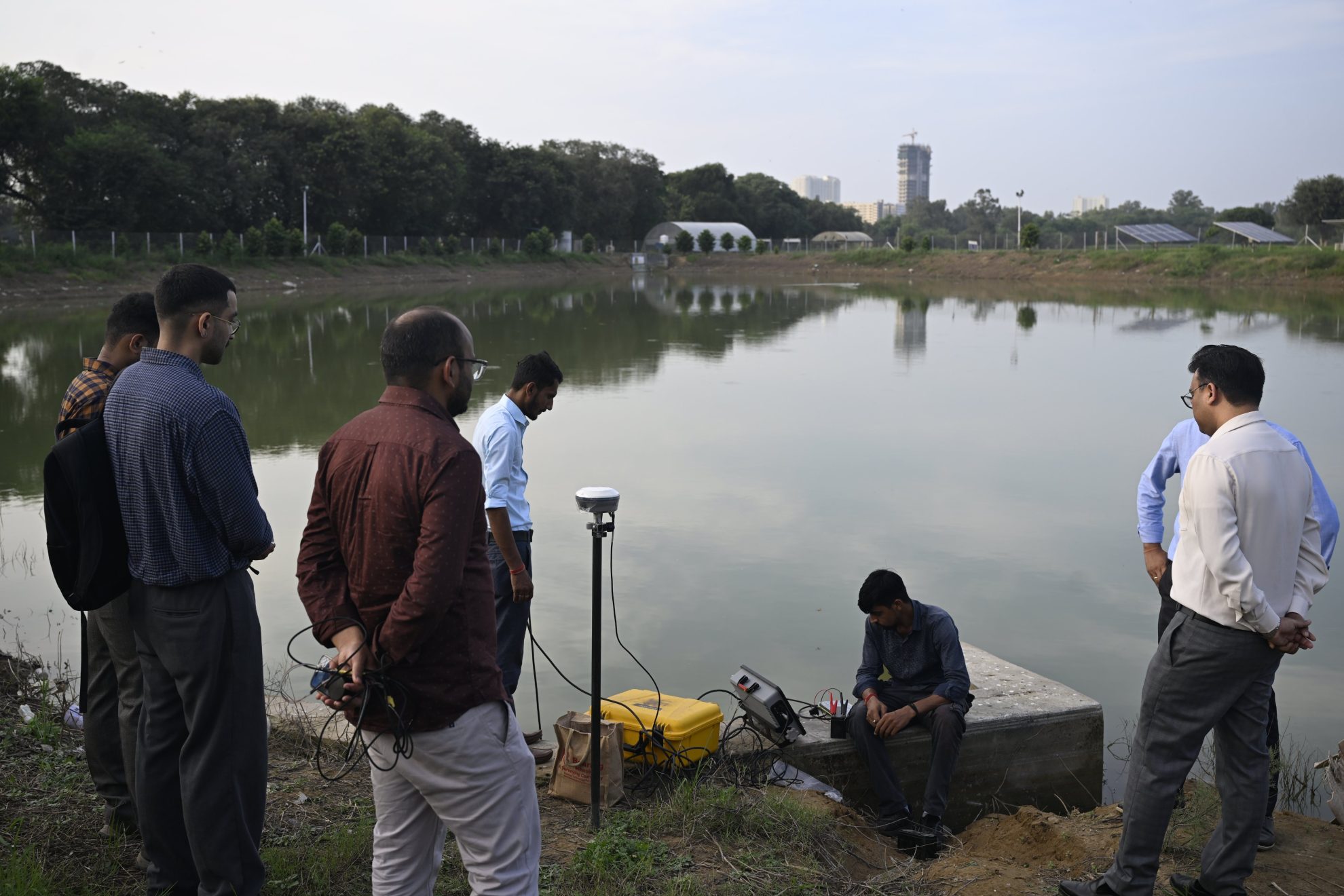
- The government has announced that over 68,000 ponds have been constructed or rejuvenated under the Mission Amrit Sarovar.
- The mission was launched in April 2022 with the initial goal of developing 75 ponds in each district of the country, totaling 50,000, as part of the Azadi Ka Amrit Mahotsav celebrations.
- A national workshop was recently held by the Ministry of Rural Development to discuss the second phase of the mission, focusing on enhancing technical capacity and fostering community participation.
Mission Amrit Sarovar: A Status Update
- Target Exceeded: The mission has surpassed its original target of 50,000 Amrit Sarovars, with over 68,000 now completed.
- Key States: Uttar Pradesh leads in the number of completed ponds with 16,630, followed by Madhya Pradesh with 5,839 and Karnataka with 4,056.
- Phase II: The mission's second phase will continue with a focus on Jan Bhagidari (people's participation) and technical innovations, including the use of volumetric measurement technologies like SONAR to assess water holding capacity.
Mission Amrit Sarovar:
- Launch Date: April 24, 2022.
- Objective: To develop and rejuvenate at least 75 water bodies in every district of the country.
- Nodal Ministry: Ministry of Rural Development. It is implemented with a "Whole of Government" approach, involving other ministries like the Ministry of Jal Shakti, Ministry of Panchayati Raj, and Ministry of Environment, Forest & Climate Change.
- Technical Partner: The Bhaskaracharya National Institute for Space Application and Geo-informatics (BISAG-N) provides technical support and has developed a dedicated portal and mobile app for monitoring progress.
- Funding: There is no separate financial allocation for the mission. It converges with existing schemes such as the Mahatma Gandhi National Rural Employment Guarantee Scheme (MGNREGS) and the 15th Finance Commission Grants.
- Pond Specifications: Each Amrit Sarovar is designed to have a minimum area of 1 acre and a water holding capacity of approximately 10,000 cubic meters.
Sources
SEBI Mutual Fund Reforms: Investor Protection & Inclusion Enhanced

What’s the News?
- SEBI approved three major reforms in its recent board meeting to boost investor protection and financial inclusion in mutual funds.
- Key changes:
- Maximum exit load for mutual funds reduced.
- Distributor incentives overhauled, especially for smaller cities (B-30) and new investors.
- Special measures introduced to increase participation by women investors.
Details of the Reforms
- Exit Load Reduction
- Cap brought down from 5% to 3%.
- Seeks to align regulation with typical industry practice (many schemes charge ~1-2%).
- Distributor Incentives (B-30 & New Investor Focus)
- Only inflows from new individual investors (with new PAN) in B-30 cities will earn distributor incentives.
- The incentive will be 1% of the amount invested (lumpsum) or total investments in first year (in case of SIP), up to a maximum of ₹2,000.
- Gender Inclusion Measures
- Additional commission for distributors who bring in new women investors (with new PAN).
- Payment of commission structured similarly to B-30 incentive.
- REITs Classification Change
- Real Estate Investment Trusts (REITs) reclassified as equity instruments for mutual fund investment rules.
- Infrastructure Investment Trusts (InvITs) retain a hybrid classification.
- Consequences: REITs now count within equity allocation limits. Eligible for inclusion in equity indices.
Additional Info
- Securities and Exchange Board of India (SEBI):
- Statutory body established on April 12, 1988, and given statutory powers by the SEBI Act, 1992.
- It serves as the primary regulator of the securities and commodity market in India.
- Its main functions include protecting the interests of investors, promoting the development of the securities market, and regulating the market.
- SEBI is headquartered in Mumbai and is overseen by the Ministry of Finance.
- Mutual Funds:
- A mutual fund is a type of investment vehicle made up of a pool of money collected from many investors to invest in securities like stocks, bonds, money market instruments, and other assets.
- Mutual funds are regulated by SEBI (Mutual Funds) Regulations, 1996.
- The Association of Mutual Funds in India (AMFI) is the industry body that works closely with SEBI on various policy matters.
- Real Estate Investment Trusts (REITs) & Infrastructure Investment Trusts (InvITs):
- REITs: Investment instruments that own, operate, or finance income-generating real estate. They allow individuals to invest in real estate assets without direct property ownership.
- InvITs: Similar to REITs but focus on infrastructure projects such as roads, power plants, and transmission lines.
- Both REITs and InvITs were introduced to facilitate investment in large-scale, income-generating assets and are regulated by SEBI.
Sources
India Wins Presidency of Coast Guard Global Summit 2027

What’s the News?
- India participated in the 4th Coast Guard Global Summit (CGGS) in Rome, engaging with global coast guard forces on maritime safety, pollution response, and transnational crimes.
- India has been unanimously selected to host the 5th CGGS in 2027, which it will hold in Chennai.
India’s Role and Contribution at the Summit
- Expert Lecture: The Indian delegation delivered a lecture titled "Guardians Against the Blaze: ICG's Tactical Response to Fire Emergencies," highlighting India's expertise in handling maritime fire incidents.
- Key Themes: The summit focused on critical issues of maritime safety, marine environment protection, emergency response, and countering transnational maritime crimes such as smuggling and piracy.
- Maritime Diplomacy: Hosting the next summit is a significant step in India's maritime diplomacy, aligning with the country's "blue economy" strategies and its vision of being a responsible security partner in the Indian Ocean Region (IOR).
Additional Info
- Indian Coast Guard (ICG):
- Established in 1977 and formally constituted by the Coast Guard Act, 1978.
- It is a multi-mission armed force under the Ministry of Defence.
- The ICG is responsible for:
- Protecting India's Maritime Zones (Territorial Waters, Contiguous Zone, and Exclusive Economic Zone).
- Search and Rescue (SAR) operations.
- Marine environment protection, including oil spill response.
- Anti-smuggling and anti-piracy operations.
- Coastal security in coordination with other agencies.
- Its motto is "Vayam Rakshamah" (We Protect).
- It is a key force in India's 'Security and Growth for All in the Region' (SAGAR) and 'Neighbourhood First' policies.
- United Nations Convention on the Law of the Sea (UNCLOS):
- Also known as the Law of the Sea Treaty, it is an international agreement that sets the legal framework for all marine and maritime activities.
- It defines various maritime zones, including:
- Territorial Sea: A 12-nautical-mile zone from the baseline where a country has full sovereignty.
- Contiguous Zone: An additional 12-nautical-mile zone where a coastal state can enforce laws related to customs, taxation, immigration, and pollution.
- Exclusive Economic Zone (EEZ): Extending 200 nautical miles from the baseline, giving coastal states sovereign rights to explore and manage all natural resources.
- Continental Shelf: The seabed and subsoil of the submarine areas that extend beyond the territorial sea.
Sources
Nepal Appoints First Woman Interim PM, Prepares for Elections

What’s the News?
- Nepal’s President Ram Chandra Poudel dissolved parliament. Fresh elections are scheduled for March 5, 2026.
- Sushila Karki, former Chief Justice of Nepal, has been appointed as interim Prime Minister. She is the country’s first woman to hold this office.
- The move follows week-long protests led by younger generations (“Gen Z”), triggered by a social media ban and wider discontent over corruption and elite dominance. At least 51 deaths and over 1,300 injuries were reported.
The Interim Government and Political Turmoil
- Background: The political crisis erupted after a government-imposed social media ban triggered a wave of nationwide protests. The unrest quickly evolved into a broader anti-graft and anti-establishment movement, culminating in the resignation of the incumbent government.
- Interim Leadership: Sushila Karki, a respected anti-corruption figure, was chosen to lead the caretaker government. Her primary mandate is to restore law and order and conduct free and fair elections.
- Challenges: The new interim government faces the dual challenge of stabilizing the country after widespread violence and preparing for elections. The dissolution of Parliament has drawn criticism from major political parties who have termed the move "unconstitutional."
Additional Info
- Nepal's Constitution:
- The current Constitution of Nepal was adopted in 2015, following a decade of political transition from a monarchy to a federal democratic republic.
- The constitution establishes a bicameral federal parliament and outlines a structure for provincial and local governments.
- The President of Nepal is the head of state, while the Prime Minister serves as the head of government.
- Nepal-India Relations:
- Open Border: India and Nepal share a long, porous border, facilitating close ties in trade, culture, and people-to-people exchange.
- Treaty of Peace and Friendship (1950): This treaty forms the bedrock of the special relationship between the two countries, allowing for the free movement of people and goods across the border.
- Hydropower: Nepal's vast water resources present significant potential for hydropower, with many joint projects and agreements with India.
Sources
UN Endorses Two-State Solution for Palestine, Condemns Hamas

- The United Nations General Assembly (UNGA) adopted a resolution endorsing the New York Declaration, which calls for concrete, time-bound, irreversible steps toward a two-state solution between Israel and Palestine.
- The declaration explicitly condemns the October 7, 2023 Hamas attack on Israeli civilians, and also condemns Israeli attacks in Gaza that have led to a major humanitarian crisis.
- Voting outcome: 142 in favour, 10 against, 12 abstentions. India voted in favour.
Implications & Key Details
- Diplomacy & Governance
- The resolution is non-binding but represents strong international consensus.
- Declares support for a temporary international stabilization mission in Gaza and demands an immediate end to war.
- India’s Role & Positioning
- By voting in favour, India reiterated its support for a peaceful resolution through diplomacy and endorsed the idea of a sovereign Palestinian state alongside Israel.
- India’s votes on Palestine-related resolutions have alternated in recent years between support and abstention; this marks another instance of active support.
- Key Provisions of the Resolution:
- The declaration condemns the attacks perpetrated by Hamas against civilians.
- It calls for Hamas to release all hostages and cease its control over the Gaza Strip, urging it to hand over its weapons to the Palestinian Authority.
- The resolution also condemns Israel's actions that have led to a humanitarian crisis in Gaza and calls for a unified Palestinian state encompassing both the West Bank and Gaza.
- It urges countries to formally recognize the state of Palestine as an "essential and indispensable component" of achieving a two-state solution.
- Significance of the Vote:
- The resolution is seen as a significant diplomatic event, as it marks one of the sharpest condemnations of Hamas ever endorsed by the UN.
- The support from a large number of nations, including some Arab countries, is seen as a move to isolate both Hamas and Israel in their opposition to a two-state solution.
Sources
September 2025
30 September 202529 September 202527 September 202526 September 202525 September 202524 September 202523 September 202522 September 202520 September 202519 September 202518 September 202517 September 202516 September 202515 September 202513 September 202512 September 202511 September 202510 September 202509 September 202508 September 202506 September 202505 September 202504 September 202503 September 202502 September 202501 September 2025
Archive
October 2026
- 27 October 2026
- 26 October 2026
- 24 October 2026
- 23 October 2026
- 22 October 2026
- 21 October 2026
- 20 October 2026
- 19 October 2026
- 17 October 2026
- 16 October 2026
- 15 October 2026
- 14 October 2026
- 13 October 2026
- 12 October 2026
- 10 October 2026
- 09 October 2026
- 08 October 2026
- 07 October 2026
- 06 October 2026
- 05 October 2026
- 03 October 2026
- 02 October 2026
- 01 October 2026
September 2026
- 30 September 2026
- 29 September 2026
- 28 September 2026
- 26 September 2026
- 25 September 2026
- 24 September 2026
- 23 September 2026
- 22 September 2026
- 21 September 2026
- 19 September 2026
- 18 September 2026
- 17 September 2026
- 16 September 2026
- 15 September 2026
- 12 September 2026
- 11 September 2026
- 10 September 2026
- 09 September 2026
- 08 September 2026
- 07 September 2026
- 05 September 2026
- 04 September 2026
- 03 September 2026
- 02 September 2026
- 01 September 2026
August 2026
- 31 August 2026
- 29 August 2026
- 27 August 2026
- 26 August 2026
- 25 August 2026
- 24 August 2026
- 22 August 2026
- 21 August 2026
- 20 August 2026
- 19 August 2026
- 18 August 2026
- 17 August 2026
- 14 August 2026
- 13 August 2026
- 12 August 2026
- 11 August 2026
- 10 August 2026
- 08 August 2026
- 07 August 2026
- 06 August 2026
- 05 August 2026
- 04 August 2026
- 03 August 2026
- 01 August 2026
July 2026
- 31 July 2026
- 30 July 2026
- 29 July 2026
- 28 July 2026
- 27 July 2026
- 25 July 2026
- 23 July 2026
- 22 July 2026
- 21 July 2026
- 20 July 2026
- 18 July 2026
- 17 July 2026
- 15 July 2026
- 14 July 2026
- 13 July 2026
- 11 July 2026
- 10 July 2026
- 09 July 2026
- 08 July 2026
- 07 July 2026
- 06 July 2026
- 04 July 2026
- 03 July 2026
- 02 July 2026
- 01 July 2026
June 2026
May 2026
April 2026
March 2026
- 31 March 2026
- 30 March 2026
- 28 March 2026
- 27 March 2026
- 26 March 2026
- 25 March 2026
- 24 March 2026
- 23 March 2026
- 21 March 2026
- 20 March 2026
- 19 March 2026
- 18 March 2026
- 17 March 2026
- 16 March 2026
- 14 March 2026
- 13 March 2026
- 12 March 2026
- 11 March 2026
- 10 March 2026
- 09 March 2026
- 07 March 2026
- 06 March 2026
- 05 March 2026
- 03 March 2026
- 02 March 2026
February 2026
- 28 February 2026
- 27 February 2026
- 26 February 2026
- 25 February 2026
- 24 February 2026
- 23 February 2026
- 21 February 2026
- 20 February 2026
- 19 February 2026
- 18 February 2026
- 17 February 2026
- 16 February 2026
- 13 February 2026
- 12 February 2026
- 11 February 2026
- 10 February 2026
- 09 February 2026
- 07 February 2026
- 06 February 2026
- 05 February 2026
- 04 February 2026
- 03 February 2026
- 02 February 2026
January 2026
- 31 January 2026
- 30 January 2026
- 29 January 2026
- 28 January 2026
- 27 January 2026
- 26 January 2026
- 24 January 2026
- 23 January 2026
- 22 January 2026
- 21 January 2026
- 20 January 2026
- 19 January 2026
- 16 January 2026
- 15 January 2026
- 14 January 2026
- 13 January 2026
- 12 January 2026
- 10 January 2026
- 09 January 2026
- 08 January 2026
- 07 January 2026
- 06 January 2026
- 05 January 2026
- 03 January 2026
- 02 January 2026
- 01 January 2026
December 2025
- 31 December 2025
- 30 December 2025
- 29 December 2025
- 27 December 2025
- 26 December 2025
- 24 December 2025
- 23 December 2025
- 22 December 2025
- 20 December 2025
- 19 December 2025
- 18 December 2025
- 17 December 2025
- 16 December 2025
- 15 December 2025
- 13 December 2025
- 12 December 2025
- 11 December 2025
- 10 December 2025
- 09 December 2025
- 08 December 2025
- 05 December 2025
- 04 December 2025
- 03 December 2025
- 02 December 2025
November 2025
- 29 November 2025
- 28 November 2025
- 27 November 2025
- 26 November 2025
- 25 November 2025
- 24 November 2025
- 22 November 2025
- 21 November 2025
- 20 November 2025
- 19 November 2025
- 18 November 2025
- 17 November 2025
- 15 November 2025
- 14 November 2025
- 13 November 2025
- 12 November 2025
- 11 November 2025
- 10 November 2025
- 08 November 2025
- 07 November 2025
- 06 November 2025
- 05 November 2025
- 04 November 2025
- 03 November 2025
- 01 November 2025
October 2025
- 31 October 2025
- 30 October 2025
- 29 October 2025
- 28 October 2025
- 27 October 2025
- 25 October 2025
- 24 October 2025
- 23 October 2025
- 22 October 2025
- 21 October 2025
- 20 October 2025
- 18 October 2025
- 17 October 2025
- 16 October 2025
- 15 October 2025
- 14 October 2025
- 13 October 2025
- 11 October 2025
- 10 October 2025
- 09 October 2025
- 08 October 2025
- 07 October 2025
- 06 October 2025
- 04 October 2025
- 03 October 2025
- 02 October 2025
- 01 October 2025
September 2025
- 30 September 2025
- 29 September 2025
- 27 September 2025
- 26 September 2025
- 25 September 2025
- 24 September 2025
- 23 September 2025
- 22 September 2025
- 20 September 2025
- 19 September 2025
- 18 September 2025
- 17 September 2025
- 16 September 2025
- 15 September 2025
- 13 September 2025
- 12 September 2025
- 11 September 2025
- 10 September 2025
- 09 September 2025
- 08 September 2025
- 06 September 2025
- 05 September 2025
- 04 September 2025
- 03 September 2025
- 02 September 2025
- 01 September 2025
August 2025
- 30 August 2025
- 29 August 2025
- 28 August 2025
- 27 August 2025
- 26 August 2025
- 25 August 2025
- 23 August 2025
- 22 August 2025
- 21 August 2025
- 20 August 2025
- 19 August 2025
- 18 August 2025
- 16 August 2025
- 14 August 2025
- 13 August 2025
- 12 August 2025
- 11 August 2025
- 08 August 2025
- 07 August 2025
- 06 August 2025
- 05 August 2025
- 04 August 2025
- 02 August 2025
- 01 August 2025
July 2025
- 31 July 2025
- 30 July 2025
- 29 July 2025
- 28 July 2025
- 26 July 2025
- 25 July 2025
- 24 July 2025
- 23 July 2025
- 22 July 2025
- 21 July 2025
- 19 July 2025
- 18 July 2025
- 17 July 2025
- 16 July 2025
- 15 July 2025
- 12 July 2025
- 11 July 2025
- 10 July 2025
- 09 July 2025
- 07 July 2025
- 05 July 2025
- 04 July 2025
- 03 July 2025
- 02 July 2025
- 01 July 2025
June 2025
- 30 June 2025
- 28 June 2025
- 27 June 2025
- 26 June 2025
- 25 June 2025
- 24 June 2025
- 23 June 2025
- 21 June 2025
- 20 June 2025
- 19 June 2025
- 18 June 2025
- 17 June 2025
- 16 June 2025
- 14 June 2025
- 13 June 2025
- 12 June 2025
- 11 June 2025
- 10 June 2025
- 09 June 2025
- 07 June 2025
- 06 June 2025
- 05 June 2025
- 04 June 2025
- 03 June 2025
- 02 June 2025
May 2025
April 2025
- 30 April 2025
- 29 April 2025
- 28 April 2025
- 26 April 2025
- 25 April 2025
- 24 April 2025
- 23 April 2025
- 22 April 2025
- 21 April 2025
- 19 April 2025
- 18 April 2025
- 17 April 2025
- 16 April 2025
- 15 April 2025
- 14 April 2025
- 12 April 2025
- 11 April 2025
- 10 April 2025
- 09 April 2025
- 08 April 2025
- 07 April 2025
- 05 April 2025
- 04 April 2025
- 03 April 2025
- 02 April 2025
- 01 April 2025
March 2025
- 31 March 2025
- 29 March 2025
- 28 March 2025
- 27 March 2025
- 26 March 2025
- 25 March 2025
- 24 March 2025
- 22 March 2025
- 21 March 2025
- 20 March 2025
- 19 March 2025
- 18 March 2025
- 17 March 2025
- 15 March 2025
- 13 March 2025
- 12 March 2025
- 11 March 2025
- 10 March 2025
- 08 March 2025
- 07 March 2025
- 06 March 2025
- 05 March 2025
- 04 March 2025
- 03 March 2025
- 01 March 2025
February 2025
- 28 February 2025
- 27 February 2025
- 26 February 2025
- 25 February 2025
- 24 February 2025
- 22 February 2025
- 21 February 2025
- 20 February 2025
- 19 February 2025
- 18 February 2025
- 17 February 2025
- 15 February 2025
- 14 February 2025
- 13 February 2025
- 12 February 2025
- 11 February 2025
- 10 February 2025
- 08 February 2025
- 07 February 2025
- 06 February 2025
- 05 February 2025
- 04 February 2025
- 03 February 2025
- 01 February 2025
January 2025
- 31 January 2025
- 30 January 2025
- 29 January 2025
- 28 January 2025
- 27 January 2025
- 25 January 2025
- 24 January 2025
- 23 January 2025
- 22 January 2025
- 21 January 2025
- 20 January 2025
- 18 January 2025
- 17 January 2025
- 16 January 2025
- 15 January 2025
- 14 January 2025
- 13 January 2025
- 11 January 2025
- 10 January 2025
- 09 January 2025
- 08 January 2025
- 07 January 2025
- 06 January 2025
- 04 January 2025
- 03 January 2025
- 02 January 2025
- 01 January 2025