
Current Affairs
Stay updated with the latest national and international events.
13 October 2025
RBI Launches Unified Markets Interface for Asset Tokenisation Using Wholesale CBDC
What’s the News?
- The Reserve Bank of India (RBI) has launched the Unified Markets Interface (UMI), a next-generation financial market infrastructure designed to tokenize financial assets and enable their settlement using wholesale Central Bank Digital Currency (CBDC).
- Announced by RBI Governor Sanjay Malhotra at the Global Fintech Fest 2025, the initiative aims to enhance market efficiency, transparency, and financial inclusion through digital innovation.
- Early pilot results indicate improved settlement speeds and operational efficiency, with the platform leveraging blockchain technology to convert real-world assets into tradable digital tokens.
Unified Markets Interface (UMI): Key Features & Objectives
- Core Function: Enables tokenisation of financial assets—such as bonds, securities, and receivables—and facilitates their instant settlement using wholesale CBDC, a digital form of central bank money used by regulated financial institutions.
- Technology Backbone: Built on distributed ledger technology (DLT), supporting smart contracts for fractional ownership, automated compliance, and 24/7 market access.
- Integration with Existing Frameworks:
- Complements the Account Aggregator (AA) ecosystem, which already connects 17 AAs, 650 Financial Information Users (FIUs), 150 Financial Information Providers (FIPs), and over 160 million active accounts.
- Aligns with RBI’s broader digital public infrastructure (DPI) vision for secure, consent-based data sharing and interoperable financial services.
Additional Info
- Wholesale CBDC vs Retail CBDC:
- Wholesale CBDC: Issued only to banks and financial institutions for interbank settlements and market operations. UMI uses this variant for institutional asset trading.
- Retail CBDC (e₹-R): Designed for public use, similar to digital cash. RBI has separately launched a retail CBDC sandbox for fintechs to test use cases.
- Asset Tokenisation:
- Involves converting ownership rights of physical or financial assets into digital tokens on a blockchain.
- Benefits include liquidity enhancement, lower transaction costs, global accessibility, and programmable compliance.
- Related RBI Fintech Initiatives (launched alongside UMI):
- AI-powered UPI HELP: For grievance redressal.
- IoT Payments with UPI: Enabling payments via smart devices.
- Banking Connect: Streamlining bank-customer onboarding.
- UPI Reserve Pay: For merchant cash management.
2025 Nobel Prize in Economics Awarded for Innovation-Driven Growth Theories
What’s the News?
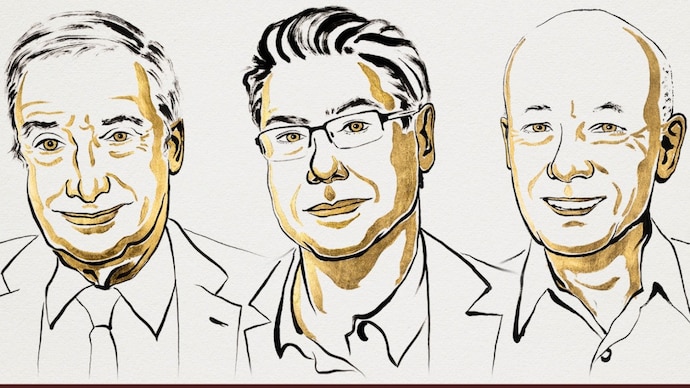
- The Royal Swedish Academy of Sciences awarded the 2025 Sveriges Riksbank Prize in Economic Sciences (commonly called the Nobel Prize in Economics) to Joel Mokyr, Philippe Aghion, and Peter Howitt “for having explained innovation-driven economic growth”.
- Joel Mokyr received one half of the prize for identifying the prerequisites for sustained growth through technological progress, while Aghion and Howitt jointly received the other half for developing the theory of sustained growth through creative destruction.
- The award recognizes their complementary contributions in explaining how economies transitioned from centuries of stagnation to over 200 years of continuous growth through technological innovation, scientific understanding, and market-driven renewal.
Core Contributions of the Laureates
Joel Mokyr: The Role of “Useful Knowledge” and Open Societies
- Argued that sustained growth requires a continuous flow of “useful knowledge”, comprising:
- Propositional knowledge: Understanding why things work (scientific principles).
- Prescriptive knowledge: Knowing how to build or implement (technical instructions).
- Showed that pre-Industrial Revolution societies lacked integration between the two, limiting innovation.
- Emphasized that openness to change, scientific culture, and skilled artisans were critical for turning ideas into scalable innovations.
Aghion & Howitt: Formalizing “Creative Destruction”
- Developed a mathematical model (1992) of creative destruction—a concept originally proposed by Joseph Schumpeter.
- Demonstrated how new innovations displace older technologies, creating:
- Winners: Firms with breakthrough products gain monopoly profits temporarily.
- Losers: Incumbents lose market share, leading to resistance.
- Highlighted a policy dilemma:
- Under-investment: Social benefits of R&D often exceed private returns → calls for subsidies.
- Over-investment: Incremental innovations may yield disproportionate private profits → risk of excessive R&D.
Sources
Government Launches Employees’ Enrolment Campaign 2025 to Expand EPFO Coverage

What’s the News?
- The Ministry of Labour and Employment has launched the Employees’ Enrolment Campaign 2025 (EEC 2025) to bring a large number of workers under the Employees’ Provident Fund Organisation (EPFO) social security net.
- The campaign will run from November 1, 2025, to April 30, 2026, offering employers a one-time opportunity to regularise past non-compliance with minimal penalties.
- It targets employees who joined establishments between July 1, 2017, and October 31, 2025, but were not enrolled in EPFO for any reason, provided they are currently employed and alive.
Key Features of EEC 2025
- Waiver of Employee Contribution: The employee’s share of provident fund contributions for the past period (2017–2025) will be waived entirely, if not already deducted from wages.
- Employer Liability: Employers must pay only their own share of PF contributions for the eligible period.
- Nominal Penalty: A flat penalty of ₹100 (lump sum) replaces standard punitive damages, significantly reducing compliance burden.
- Universal Eligibility: All establishments—including those under inquiry under Section 7A of the EPF Act or related pension schemes—can participate.
- No Retrospective Action: EPFO will not initiate suo motu compliance actions against employers for employees who left before the declaration date.
Linkage with Other Schemes
- Employers enrolling under EEC 2025 will be eligible for benefits under the Pradhan Mantri-Viksit Bharat Rojgar Yojana, subject to its terms and conditions.
- Declarations must be submitted online via EPFO’s portal, linked to the Electronic Challan-cum-Return (ECR) with a Temporary Return Reference Number.
Legal Framework:
- Governed under the Employees’ Provident Funds and Miscellaneous Provisions Act, 1952.
- Builds on the success of the 2017 enrolment campaign, which covered left-out employees from 2009–2016.
Sources
International Day for Disaster Risk Reduction 2025: “Fund Resilience, Not Disasters”

What’s the News?
- The International Day for Disaster Risk Reduction (IDDRR) was observed globally on October 13, 2025, with the theme “Fund Resilience, Not Disasters”.
- The day, established by the United Nations General Assembly (UNGA) in 1989, aims to promote a global culture of risk awareness and disaster preparedness.
- The 2025 theme underscores an urgent call to shift financial priorities from post-disaster relief to pre-emptive investments in resilience, especially for vulnerable and marginalized communities.
Why “Fund Resilience, Not Disasters”?
- Rising Disaster Costs: Direct annual disaster losses are estimated at $202 billion, but the true economic cost—including indirect impacts on health, education, and livelihoods—is nearly $2.3 trillion, over 11 times higher.
- Risk-Blind Development: Poorly planned infrastructure, urbanization, and climate-uninformed investments are increasing exposure and deepening vulnerabilities, especially in low-income regions.
- Financing Gap: Despite evidence that every $1 invested in disaster risk reduction (DRR) saves $6–$15 in future losses, DRR remains underfunded in both national budgets and international aid.
Key Global & Indian Relevance
- UNDRR Leadership: The campaign is led by the UN Office for Disaster Risk Reduction (UNDRR), with Kamal Kishore (India’s former NDMA member) serving as UN Secretary-General’s Special Representative for DRR.
- Link to SDGs: Effective DRR is critical for achieving Sustainable Development Goals (SDGs), particularly SDG 1 (No Poverty), SDG 11 (Sustainable Cities), and SDG 13 (Climate Action).
- India’s Context:
- India faces multi-hazard risks—floods, cyclones, heatwaves, earthquakes—with over 75% of districts classified as disaster-prone.
- The National Disaster Management Authority (NDMA) and State Disaster Response Funds (SDRF) are key institutional mechanisms, but local-level DRR financing remains inadequate.
Additional Info
- Sendai Framework for Disaster Risk Reduction (2015–2030):
- A global agreement adopted by 187 UN member states, including India.
- Contains 4 Priorities:
- Understanding disaster risk
- Strengthening governance
- Investing in DRR for resilience
- Enhancing preparedness for response and “Build Back Better”
- 7 Global Targets, including Target E: Substantially increase the number of countries with national and local DRR strategies by 2020 (achieved by 123 countries, including India).
- Constitutional & Policy Links:
- Disaster Management Act, 2005: Established NDMA, NIDM, and institutionalized DRR in India.
- 15th Finance Commission: Recommended 10% of SDRF be used for local-level mitigation projects.
- National Disaster Risk Reduction Strategy (draft): Aims to integrate DRR into all sectoral planning.
Sources
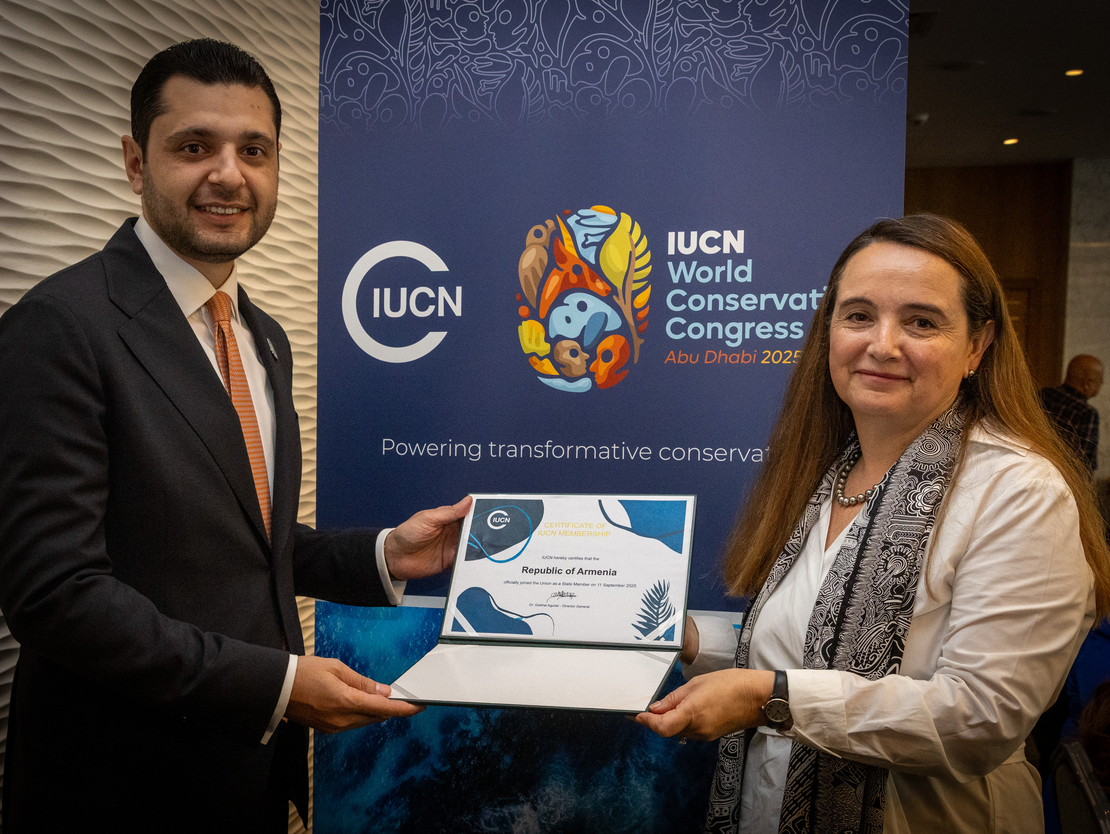
Armenia Joins IUCN as Newest State Member Ahead of CBD COP17
What’s the News?
- Armenia has officially become the newest State Member of the International Union for Conservation of Nature (IUCN), with the announcement made during the IUCN World Conservation Congress 2025 in Abu Dhabi.
- The Ministry of Environment of Armenia will serve as the national liaison to the IUCN Secretariat, reinforcing the country’s commitment to biodiversity conservation, green transition, and sustainable development.
- This move aligns with Armenia’s preparations to host the 17th Conference of the Parties (COP17) to the Convention on Biological Diversity (CBD) in 2026, positioning it as a regional leader in environmental governance.
Strategic Significance of IUCN Membership
- Armenia’s IUCN membership grants access to key science-based tools like the IUCN Red List, Green List, and Nature-based Solutions Standard, enhancing its conservation planning and implementation.
- The country aims to restore forests on 12.9% of its land by 2030, protect Critically Endangered species (e.g., Caucasian leopard, Sevan trout), and safeguard vital ecosystems like Lake Sevan.
- Membership enables Armenia to tap into international funding (e.g., GEF, GBFF) and address challenges like weak biodiversity monitoring, legal gaps, and financing shortages.
- Located in the biodiverse South Caucasus (avg. elevation: 1,800 m), Armenia already has national frameworks like the NBSAP and Red Book, but needs stronger enforcement and institutional capacity.
Additional Info
- About IUCN:
- Founded in 1948, headquartered in Gland, Switzerland.
- Unique membership union of over 1,400 government and civil society organisations and 17,000+ experts.
- Global authority on species conservation status, protected area management, and nature-based solutions.
- CBD COP17 (2026):
- First CBD COP to be hosted in the South Caucasus.
- Will focus on implementation of the Kunming-Montreal Global Biodiversity Framework (GBF), including 30x30 target (protect 30% of land and sea by 2030).
- India’s IUCN Engagement:
- India has been an IUCN State Member since 1969.
- Hosts IUCN India Country Office in New Delhi; actively participates in Asian Elephant Specialist Group, Snow Leopard Network, and Protected Area Management initiatives.
Sources
India–Australia Joint Military Exercise AUSTRAHIND 2025 Begins in Perth

What’s the News?
- The fourth edition of the India–Australia Joint Military Exercise AUSTRAHIND 2025 commenced on October 13, 2025, at Irwin Barracks, Perth, Australia.
- The two-week exercise (October 13–26) focuses on joint company-level operations in urban and semi-urban terrain, aimed at enhancing interoperability, tactical coordination, and combat readiness between the Indian and Australian armies.
- The exercise follows Defence Minister Rajnath Singh’s recent visit to Australia, underscoring the deepening defence partnership and shared vision for a secure Indo-Pacific.
Key Features of AUSTRAHIND 2025
- Operational Focus:
- Conducting counter-terrorism drills, raids on hostile targets, and combat casualty care.
- Practicing joint command structures and real-time decision-making in complex urban environments.
- Strategic Significance:
- Reflects growing military-to-military ties under the Comprehensive Strategic Partnership (elevated in 2020).
- Supports Quad-aligned security cooperation, with both nations committed to a free, open, and rules-based Indo-Pacific.
- Cultural & Institutional Engagement:
- Includes social interactions and visits to historic sites (e.g., Sinhagad Fort in past editions).
- Australian contingent previously visited India’s National Defence Academy (NDA) during AUSTRAHIND 2024.
Evolution of India–Australia Defence Ties
- AUSTRAHIND Timeline:
- 2022: First edition held in Rajasthan, India.
- 2023: Conducted in Australia.
- 2024: Held in Pune, Maharashtra.
- 2025: Fourth edition in Perth—now an annual, alternating bilateral exercise.
- Broader Defence Framework:
- Mutual Logistics Support Agreement (MLSA): Signed in 2020, enables reciprocal access to military bases and supplies.
- 2+2 Ministerial Dialogue: Regular consultations between foreign and defence ministers.
- Joint Maritime Drills: Participation in Malabar Exercise (with U.S. and Japan) and trilateral engagements with Indonesia and France.
Sources
October 2025
31 October 202530 October 202529 October 202528 October 202527 October 202525 October 202524 October 202523 October 202522 October 202521 October 202520 October 202518 October 202517 October 202516 October 202515 October 202514 October 202513 October 202511 October 202510 October 202509 October 202508 October 202507 October 202506 October 202504 October 202503 October 202502 October 202501 October 2025
Archive
October 2026
- 27 October 2026
- 26 October 2026
- 24 October 2026
- 23 October 2026
- 22 October 2026
- 21 October 2026
- 20 October 2026
- 19 October 2026
- 17 October 2026
- 16 October 2026
- 15 October 2026
- 14 October 2026
- 13 October 2026
- 12 October 2026
- 10 October 2026
- 09 October 2026
- 08 October 2026
- 07 October 2026
- 06 October 2026
- 05 October 2026
- 03 October 2026
- 02 October 2026
- 01 October 2026
September 2026
- 30 September 2026
- 29 September 2026
- 28 September 2026
- 26 September 2026
- 25 September 2026
- 24 September 2026
- 23 September 2026
- 22 September 2026
- 21 September 2026
- 19 September 2026
- 18 September 2026
- 17 September 2026
- 16 September 2026
- 15 September 2026
- 12 September 2026
- 11 September 2026
- 10 September 2026
- 09 September 2026
- 08 September 2026
- 07 September 2026
- 05 September 2026
- 04 September 2026
- 03 September 2026
- 02 September 2026
- 01 September 2026
August 2026
- 31 August 2026
- 29 August 2026
- 27 August 2026
- 26 August 2026
- 25 August 2026
- 24 August 2026
- 22 August 2026
- 21 August 2026
- 20 August 2026
- 19 August 2026
- 18 August 2026
- 17 August 2026
- 14 August 2026
- 13 August 2026
- 12 August 2026
- 11 August 2026
- 10 August 2026
- 08 August 2026
- 07 August 2026
- 06 August 2026
- 05 August 2026
- 04 August 2026
- 03 August 2026
- 01 August 2026
July 2026
- 31 July 2026
- 30 July 2026
- 29 July 2026
- 28 July 2026
- 27 July 2026
- 25 July 2026
- 23 July 2026
- 22 July 2026
- 21 July 2026
- 20 July 2026
- 18 July 2026
- 17 July 2026
- 15 July 2026
- 14 July 2026
- 13 July 2026
- 11 July 2026
- 10 July 2026
- 09 July 2026
- 08 July 2026
- 07 July 2026
- 06 July 2026
- 04 July 2026
- 03 July 2026
- 02 July 2026
- 01 July 2026
June 2026
May 2026
April 2026
March 2026
- 31 March 2026
- 30 March 2026
- 28 March 2026
- 27 March 2026
- 26 March 2026
- 25 March 2026
- 24 March 2026
- 23 March 2026
- 21 March 2026
- 20 March 2026
- 19 March 2026
- 18 March 2026
- 17 March 2026
- 16 March 2026
- 14 March 2026
- 13 March 2026
- 12 March 2026
- 11 March 2026
- 10 March 2026
- 09 March 2026
- 07 March 2026
- 06 March 2026
- 05 March 2026
- 03 March 2026
- 02 March 2026
February 2026
- 28 February 2026
- 27 February 2026
- 26 February 2026
- 25 February 2026
- 24 February 2026
- 23 February 2026
- 21 February 2026
- 20 February 2026
- 19 February 2026
- 18 February 2026
- 17 February 2026
- 16 February 2026
- 13 February 2026
- 12 February 2026
- 11 February 2026
- 10 February 2026
- 09 February 2026
- 07 February 2026
- 06 February 2026
- 05 February 2026
- 04 February 2026
- 03 February 2026
- 02 February 2026
January 2026
- 31 January 2026
- 30 January 2026
- 29 January 2026
- 28 January 2026
- 27 January 2026
- 26 January 2026
- 24 January 2026
- 23 January 2026
- 22 January 2026
- 21 January 2026
- 20 January 2026
- 19 January 2026
- 16 January 2026
- 15 January 2026
- 14 January 2026
- 13 January 2026
- 12 January 2026
- 10 January 2026
- 09 January 2026
- 08 January 2026
- 07 January 2026
- 06 January 2026
- 05 January 2026
- 03 January 2026
- 02 January 2026
- 01 January 2026
December 2025
- 31 December 2025
- 30 December 2025
- 29 December 2025
- 27 December 2025
- 26 December 2025
- 24 December 2025
- 23 December 2025
- 22 December 2025
- 20 December 2025
- 19 December 2025
- 18 December 2025
- 17 December 2025
- 16 December 2025
- 15 December 2025
- 13 December 2025
- 12 December 2025
- 11 December 2025
- 10 December 2025
- 09 December 2025
- 08 December 2025
- 05 December 2025
- 04 December 2025
- 03 December 2025
- 02 December 2025
November 2025
- 29 November 2025
- 28 November 2025
- 27 November 2025
- 26 November 2025
- 25 November 2025
- 24 November 2025
- 22 November 2025
- 21 November 2025
- 20 November 2025
- 19 November 2025
- 18 November 2025
- 17 November 2025
- 15 November 2025
- 14 November 2025
- 13 November 2025
- 12 November 2025
- 11 November 2025
- 10 November 2025
- 08 November 2025
- 07 November 2025
- 06 November 2025
- 05 November 2025
- 04 November 2025
- 03 November 2025
- 01 November 2025
October 2025
- 31 October 2025
- 30 October 2025
- 29 October 2025
- 28 October 2025
- 27 October 2025
- 25 October 2025
- 24 October 2025
- 23 October 2025
- 22 October 2025
- 21 October 2025
- 20 October 2025
- 18 October 2025
- 17 October 2025
- 16 October 2025
- 15 October 2025
- 14 October 2025
- 13 October 2025
- 11 October 2025
- 10 October 2025
- 09 October 2025
- 08 October 2025
- 07 October 2025
- 06 October 2025
- 04 October 2025
- 03 October 2025
- 02 October 2025
- 01 October 2025
September 2025
- 30 September 2025
- 29 September 2025
- 27 September 2025
- 26 September 2025
- 25 September 2025
- 24 September 2025
- 23 September 2025
- 22 September 2025
- 20 September 2025
- 19 September 2025
- 18 September 2025
- 17 September 2025
- 16 September 2025
- 15 September 2025
- 13 September 2025
- 12 September 2025
- 11 September 2025
- 10 September 2025
- 09 September 2025
- 08 September 2025
- 06 September 2025
- 05 September 2025
- 04 September 2025
- 03 September 2025
- 02 September 2025
- 01 September 2025
August 2025
- 30 August 2025
- 29 August 2025
- 28 August 2025
- 27 August 2025
- 26 August 2025
- 25 August 2025
- 23 August 2025
- 22 August 2025
- 21 August 2025
- 20 August 2025
- 19 August 2025
- 18 August 2025
- 16 August 2025
- 14 August 2025
- 13 August 2025
- 12 August 2025
- 11 August 2025
- 08 August 2025
- 07 August 2025
- 06 August 2025
- 05 August 2025
- 04 August 2025
- 02 August 2025
- 01 August 2025
July 2025
- 31 July 2025
- 30 July 2025
- 29 July 2025
- 28 July 2025
- 26 July 2025
- 25 July 2025
- 24 July 2025
- 23 July 2025
- 22 July 2025
- 21 July 2025
- 19 July 2025
- 18 July 2025
- 17 July 2025
- 16 July 2025
- 15 July 2025
- 12 July 2025
- 11 July 2025
- 10 July 2025
- 09 July 2025
- 07 July 2025
- 05 July 2025
- 04 July 2025
- 03 July 2025
- 02 July 2025
- 01 July 2025
June 2025
- 30 June 2025
- 28 June 2025
- 27 June 2025
- 26 June 2025
- 25 June 2025
- 24 June 2025
- 23 June 2025
- 21 June 2025
- 20 June 2025
- 19 June 2025
- 18 June 2025
- 17 June 2025
- 16 June 2025
- 14 June 2025
- 13 June 2025
- 12 June 2025
- 11 June 2025
- 10 June 2025
- 09 June 2025
- 07 June 2025
- 06 June 2025
- 05 June 2025
- 04 June 2025
- 03 June 2025
- 02 June 2025
May 2025
April 2025
- 30 April 2025
- 29 April 2025
- 28 April 2025
- 26 April 2025
- 25 April 2025
- 24 April 2025
- 23 April 2025
- 22 April 2025
- 21 April 2025
- 19 April 2025
- 18 April 2025
- 17 April 2025
- 16 April 2025
- 15 April 2025
- 14 April 2025
- 12 April 2025
- 11 April 2025
- 10 April 2025
- 09 April 2025
- 08 April 2025
- 07 April 2025
- 05 April 2025
- 04 April 2025
- 03 April 2025
- 02 April 2025
- 01 April 2025
March 2025
- 31 March 2025
- 29 March 2025
- 28 March 2025
- 27 March 2025
- 26 March 2025
- 25 March 2025
- 24 March 2025
- 22 March 2025
- 21 March 2025
- 20 March 2025
- 19 March 2025
- 18 March 2025
- 17 March 2025
- 15 March 2025
- 13 March 2025
- 12 March 2025
- 11 March 2025
- 10 March 2025
- 08 March 2025
- 07 March 2025
- 06 March 2025
- 05 March 2025
- 04 March 2025
- 03 March 2025
- 01 March 2025
February 2025
- 28 February 2025
- 27 February 2025
- 26 February 2025
- 25 February 2025
- 24 February 2025
- 22 February 2025
- 21 February 2025
- 20 February 2025
- 19 February 2025
- 18 February 2025
- 17 February 2025
- 15 February 2025
- 14 February 2025
- 13 February 2025
- 12 February 2025
- 11 February 2025
- 10 February 2025
- 08 February 2025
- 07 February 2025
- 06 February 2025
- 05 February 2025
- 04 February 2025
- 03 February 2025
- 01 February 2025
January 2025
- 31 January 2025
- 30 January 2025
- 29 January 2025
- 28 January 2025
- 27 January 2025
- 25 January 2025
- 24 January 2025
- 23 January 2025
- 22 January 2025
- 21 January 2025
- 20 January 2025
- 18 January 2025
- 17 January 2025
- 16 January 2025
- 15 January 2025
- 14 January 2025
- 13 January 2025
- 11 January 2025
- 10 January 2025
- 09 January 2025
- 08 January 2025
- 07 January 2025
- 06 January 2025
- 04 January 2025
- 03 January 2025
- 02 January 2025
- 01 January 2025