
Current Affairs
Stay updated with the latest national and international events.
12 September 2025
India Launches SAJEX 2025 in Jeddah to Strengthen Jewellery Trade

What’s the News?
- India has inaugurated the Saudi Arabia Jewellery Exposition (SAJEX 2025) in Jeddah.
- The event is a B2B jewellery fair organised by the Gem & Jewellery Export Promotion Council (GJEPC) with backing from Saudi institutions.
- It aims to leverage Saudi Arabia’s growing luxury and jewellery market and strengthen bilateral trade ties.
SAJEX 2025 Overview
- Objective: To position India as a key supplier to Saudi Arabia’s jewellery market, projected to grow from $4.56 billion (2024) to $8.34 billion by 2030 (CAGR 10.6%).
- Key Offerings: Exhibits include diamond and gemstone jewellery, bridal collections, gold jewellery (18K-22K), lab-grown diamonds, and jewellery technology.
- Significance: India exported $32 billion worth of gems and jewellery in FY 2024-25, accounting for 65% of global diamond value and 92% by volume. The sector saw a 315% surge in FDI in FY 2024-25.
- Bilateral Context: Saudi Arabia is India’s 5th largest trading partner with bilateral trade at $42.98 billion (2023-24). Gems and jewellery contribute $890 million to this trade.
Additional Info
- Gem & Jewellery Export Promotion Council (GJEPC):
- Established in 1966, it is an apex body of the gems and jewellery industry in India.
- It is sponsored by the Ministry of Commerce & Industry, Government of India.
- Its primary objective is to promote Indian gems and jewellery products in international markets.
- India-Saudi Arabia Relations:
- Saudi Arabia is a key strategic partner for India, with the two nations forming a Strategic Partnership Council in 2019.
- This council has two sub-committees focusing on Political, Security, Social, and Cultural Cooperation, and Economy & Investments.
- Saudi Arabia is India's 5th largest trade partner, while India is Saudi Arabia's 2nd largest trade partner.
- Major Indian exports to Saudi Arabia include engineering goods, rice, and textiles, along with gems and jewellery.
- Saudi Vision 2030:
- A strategic framework to reduce Saudi Arabia's dependence on oil and diversify its economy.
- It aims to develop public service sectors such as health, education, infrastructure, recreation, and tourism.
Sources
Fast Track Immigration-Trusted Traveller Programme (FTI-TTP) Expansion

What’s the News?
- The Fast Track Immigration – Trusted Traveller Programme (FTI-TTP) has been extended to five additional international airports: Lucknow, Thiruvananthapuram, Kozhikode, Tiruchirappalli, Amritsar.
- This rollout brings the total number of airports under FTI-TTP to 13.
- The scheme is intended for Indian nationals and OCI cardholders who pre-register biometric data. Registered users can use e-gates for immigration, bypassing manual counters. The process claims to reduce immigration clearance time to ~30 seconds.
FTI-TTP Program Overview
- Objective: To streamline immigration clearance for pre-verified, low-risk travellers through biometric authentication and e-gates, aligning with Prime Minister Narendra Modi’s vision of "speed, scale, and scope" in governance.
- Eligibility: Indian citizens and OCI cardholders who undergo online registration and biometric verification.
- Process:
- Applicants register online at ftittp.mha.gov.in and submit documents.
- Biometrics (fingerprints and facial image) are collected at Foreigners Regional Registration Offices (FRROs) or designated airports.
- At airports, travellers scan their boarding pass and passport at e-gates for instant biometric verification and clearance.
- Validity: Registration is valid for five years or until passport expiry, whichever comes first.
- Future Expansion: The program will be extended to 21 airports, including upcoming airports in Navi Mumbai and Jewar.
Additional Info
- Implementing Agency: The Bureau of Immigration (BOI) under the Ministry of Home Affairs is the nodal agency for implementing the programme.
- Eligibility & Validity:
- The programme is currently free of cost.
- It is open to Indian nationals and OCI cardholders.
- Registration is valid for five years or until the passport expires, whichever is earlier.
- Expansion Timeline:
- The programme was first launched at Delhi's IGI Airport in June 2024.
- It was later expanded to seven more airports, including Mumbai, Chennai, Kolkata, Bengaluru, Hyderabad, Kochi, and Ahmedabad.
- With the latest addition, the total number of operational airports is now 13.
Sources
AIDIS & SAS 2026-27 Surveys Announced by MoSPI
What’s the News?
- The Ministry of Statistics & Programme Implementation (MoSPI) has scheduled two flagship surveys: the All India Debt & Investment Survey (AIDIS) and the Situation Assessment Survey (SAS) of Agricultural Households, for the period July 2026 to June 2027.
- These surveys are nationally representative and cover both rural & urban households.
- Draft concept notes and schedules have been released. Stakeholders have been invited to give feedback by 30 September 2025.
What Are AIDIS & SAS?
- All India Debt & Investment Survey (AIDIS)
- Focuses on household finance: debts, assets, investments across rural & urban India.
- Helps assess asset inequality, credit markets, informs policy for financial inclusion, helps with national accounts.
- Last conducted in 2019 in NSS 77th round on request from RBI.
- Situation Assessment Survey (SAS) of Agricultural Households
- Assesses economic conditions of farming households (including those without land).
- Covers: income & expenditure, debt & access to credit, land & livestock ownership, agricultural & livestock production, adoption of technology, access to government schemes and crop insurance.
- SAS has been part of NSS earlier rounds (launched 2003, expanded in 2013, strengthened in 2019).
Additional Info
- History of AIDIS:
- The survey's origins trace back to the All India Rural Credit Survey (1951-52) conducted by the RBI.
- It was expanded in 1961-62 to include both debt and investment, and its scope was extended to urban areas from the 1971-72 round.
- The last AIDIS was conducted in 2019 as part of the 77th Round of the National Sample Survey (NSS).
- History of SAS:
- The first SAS of Agricultural Households was conducted in 2003.
- It was expanded in 2013 and strengthened in the 2019 round to provide more comprehensive insights.
- National Statistical Office (NSO):
- Formed by the merger of the Central Statistical Office (CSO) and the National Sample Survey Office (NSSO) in 2019.
- It is the nodal agency for the planned development of the statistical system in the country.
- Its key functions include:
- Compiling and releasing macro-economic data like GDP, Index of Industrial Production (IIP).
- Conducting large-scale surveys on socio-economic aspects.
- Coordinating statistical work among different government ministries.
Sources
Development, Not Just Climate Change, Pushing Himalayas to the Edge
What’s the News?
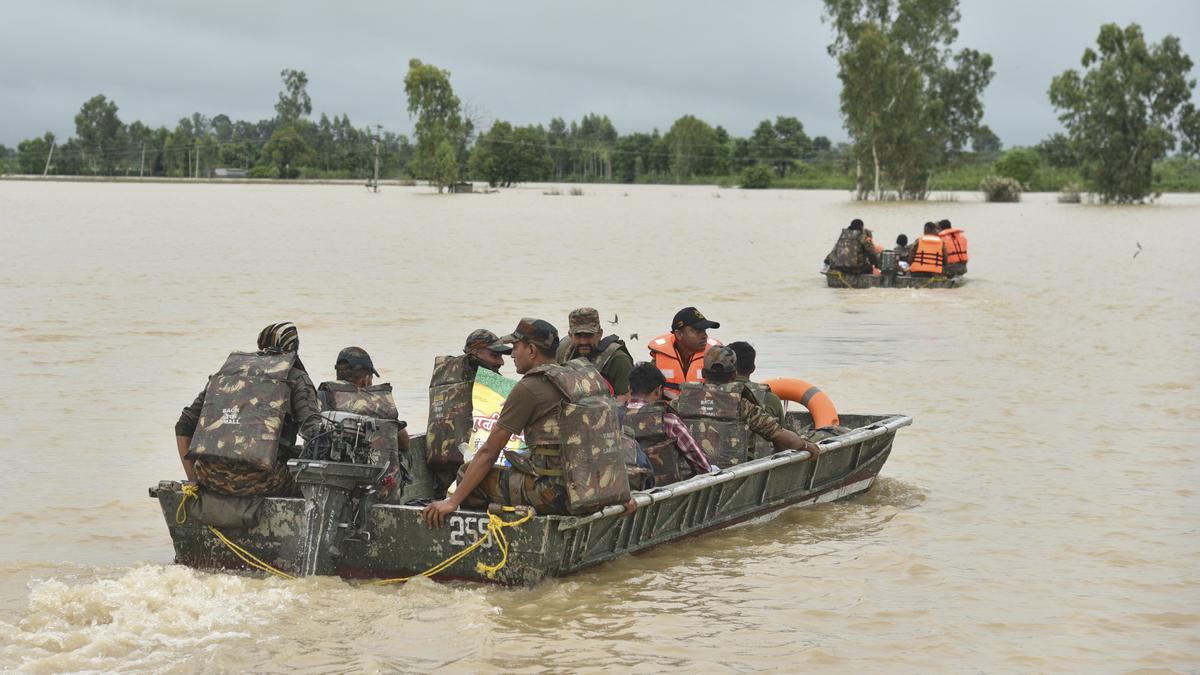
- Analysis indicates that human-driven development is becoming a stronger factor than climate change in pushing the Himalayas towards environmental and disaster risk thresholds.
- Himalayan states such as Uttarakhand, Himachal Pradesh, and Jammu & Kashmir are seeing increasing incidents of landslides, flash floods, slope failures.
- Infrastructure expansion (roads, hydropower, tunnels), unplanned urbanisation and deforestation are worsening geological fragility.
Key Drivers and Impacts
-
Infrastructure Projects:
- Hydropower Expansion: Himachal Pradesh has 180 operational hydropower plants with hundreds more planned, while Uttarakhand has 40 operational and 87 under construction. These projects involve blasting, tunneling, and slope cutting, destabilizing mountains and altering river ecosystems.
- Highways and Tunnels: Projects like the Chandigarh–Manali highway and Char Dham highway (889 km, ₹12,000 crore) use vertical cutting techniques, creating near-vertical slopes prone to collapse during heavy rainfall. The Supreme Court noted these tunnels became "death traps" during monsoons.
-
Deforestation and Tourism Pressure:
- Native trees like deodar, which bind soil, are cleared for hotels, roads, and urban expansion. This accelerates soil erosion and reduces natural drainage, increasing flood risks.
- Tourism-driven construction (e.g., in Dharali) encroaches on riverbeds and debris-flow fans, ignoring historical flood patterns. The 2025 Dharali disaster buried the market under 12–18 meters of sediment.
-
Climate Change Amplification:
- The Himalayas are warming faster than the global average, leading to glacial retreat and erratic rainfall. Over 25,000 glacial lakes pose GLOF risks, with events like the 2023 Teesta dam collapse in Sikkim (₹1,200 crore loss) highlighting these threats.
- Flash floods and landslides killed 705 people in Uttarakhand (2015–2025), with 389 deaths from flash floods alone.
-
Additional Info
-
Geological Vulnerability: The Himalayas are part of a high-seismic zone, with major fault lines. Their formation from the collision of the Indian Plate and the Eurasian Plate makes them inherently unstable.
-
Judicial Intervention: The Supreme Court has repeatedly intervened, forming committees to assess the environmental impact of projects like the Char Dham highway. It has stated that "revenue cannot be earned at the cost of the environment and ecology."
-
Government Initiatives:
- Indian Himalayan Climate Adaptation Programme (IHCAP): Supports community-based climate resilience and water management.
- SECURE Himalaya Project: A joint initiative with the United Nations Development Programme (UNDP) aimed at protecting high-altitude biodiversity and reducing threats to local ecosystems.
- National Mission for Sustaining the Himalayan Ecosystem (NMSHE): One of the eight missions under the National Action Plan on Climate Change (NAPCC), focusing on research and policy measures for the Himalayan region.
-
Case Studies:
- The Joshimath land subsidence crisis was directly linked to unsustainable infrastructure and urban development.
- The Kedarnath tragedy of 2013 and the Chamoli disaster of 2021 are widely cited as prime examples where development activities acted as "disaster multipliers," turning natural events into large-scale calamities.
Sources
Dr. Manmohan Singh Honoured Posthumously with P.V. Narasimha Rao Memorial Award

What’s the News?
- Former Prime Minister Dr. Manmohan Singh has been posthumously honoured with the P. V. Narasimha Rao Memorial Award for Economics.
- The award was received by his wife, Gursharan Kaur, on his behalf at a ceremony in New Delhi.
Award Significance and Historical Context
- P.V. Narasimha Rao Memorial Award:
- Instituted by the P.V. Narasimha Rao Memorial Foundation (PVNMF), based in Hyderabad, to honor outstanding contributions in economics, public policy, and governance.
- Previous recipients include Ratan Tata (for philanthropy) and the Dalai Lama (for peace and compassion).
- Dr. Manmohan Singh’s Legacy:
- As Finance Minister (1991–1996) under Prime Minister P.V. Narasimha Rao, he spearheaded reforms including de-licensing, reduction of import tariffs, market-driven exchange rates, and encouragement of foreign direct investment (FDI).
- As Prime Minister (2004–2014), he introduced transformative laws such as the Mahatma Gandhi National Rural Employment Guarantee Act (MGNREGA), Right to Information (RTI) Act, Right to Education (RTE) Act, and the Food Security Act.
- His policies lifted 270 million people out of multidimensional poverty and shielded India from the 2008 global financial crisis.
Additional Info
- 1991 Economic Crisis: India faced an unprecedented financial crisis in 1991, with foreign exchange reserves depleted to just a few weeks of import coverage. The country was on the verge of defaulting on its international loans.
- The LPG Reforms: The reforms were a significant ideological shift from the state-controlled, socialist model of the economy towards a more market-oriented system.
- P.V. Narasimha Rao:
- Served as Prime Minister of India (1991–1996) and is widely regarded as the "Father of Indian Economic Reforms".
- He was posthumously awarded the Bharat Ratna in 2024.
Sources
Russia-China Energy Deal: Power of Siberia 2 & Supply Expansion

What’s the News?
- Russia and China have signed a binding memorandum to build the Power of Siberia 2 pipeline, sending Russian natural gas through Mongolia to China.
- They also agreed to increase gas supply volumes via existing pipelines: Power of Siberia capacity rising from 38 to 44 billion cubic metres/year; Far Eastern route from 10 to 12 bcm/year.
Power of Siberia 2: Strategic Implications
- Geopolitical Significance:
- PoS2 is viewed as a strategic response to Western sanctions and a signal of Russia’s "pivot to Asia." It aligns with efforts by Russia, China, and India to challenge the Western-dominated global order.
- The timing coincides with U.S. efforts to broker peace in Ukraine and ongoing U.S.-China trade tensions, highlighting its role as a geopolitical tool.
- Economic and Market Impact:
- If completed, PoS2 could reduce China’s reliance on liquefied natural gas (LNG) imports, particularly from the U.S. and Australia, potentially destabilizing global LNG markets.
- However, China’s leverage in negotiations may force Russia to accept steep discounts and unfavorable terms, limiting Russia’s financial gains.
Additional Info
- Power of Siberia 1:
- An existing gas pipeline connecting eastern Siberian fields to China.
- It became operational in 2019 and currently has a capacity of 38 bcm per year.
- The new Power of Siberia 2 pipeline will supplement this existing route, creating a vast network for Russian gas exports to China.
- Pipeline Route:
- The new pipeline will transport gas from the Yamal Peninsula in western Siberia, a region that previously supplied Europe.
- The route will pass through Mongolia before reaching northern China. This is a key detail, as it gives Mongolia a strategic role and potential for transit fees.
Sources:
September 2025
30 September 202529 September 202527 September 202526 September 202525 September 202524 September 202523 September 202522 September 202520 September 202519 September 202518 September 202517 September 202516 September 202515 September 202513 September 202512 September 202511 September 202510 September 202509 September 202508 September 202506 September 202505 September 202504 September 202503 September 202502 September 202501 September 2025
Archive
October 2026
- 28 October 2026
- 27 October 2026
- 26 October 2026
- 24 October 2026
- 23 October 2026
- 22 October 2026
- 21 October 2026
- 20 October 2026
- 19 October 2026
- 17 October 2026
- 16 October 2026
- 15 October 2026
- 14 October 2026
- 13 October 2026
- 12 October 2026
- 10 October 2026
- 09 October 2026
- 08 October 2026
- 07 October 2026
- 06 October 2026
- 05 October 2026
- 03 October 2026
- 02 October 2026
- 01 October 2026
September 2026
- 30 September 2026
- 29 September 2026
- 28 September 2026
- 26 September 2026
- 25 September 2026
- 24 September 2026
- 23 September 2026
- 22 September 2026
- 21 September 2026
- 19 September 2026
- 18 September 2026
- 17 September 2026
- 16 September 2026
- 15 September 2026
- 12 September 2026
- 11 September 2026
- 10 September 2026
- 09 September 2026
- 08 September 2026
- 07 September 2026
- 05 September 2026
- 04 September 2026
- 03 September 2026
- 02 September 2026
- 01 September 2026
August 2026
- 31 August 2026
- 29 August 2026
- 27 August 2026
- 26 August 2026
- 25 August 2026
- 24 August 2026
- 22 August 2026
- 21 August 2026
- 20 August 2026
- 19 August 2026
- 18 August 2026
- 17 August 2026
- 14 August 2026
- 13 August 2026
- 12 August 2026
- 11 August 2026
- 10 August 2026
- 08 August 2026
- 07 August 2026
- 06 August 2026
- 05 August 2026
- 04 August 2026
- 03 August 2026
- 01 August 2026
July 2026
- 31 July 2026
- 30 July 2026
- 29 July 2026
- 28 July 2026
- 27 July 2026
- 25 July 2026
- 23 July 2026
- 22 July 2026
- 21 July 2026
- 20 July 2026
- 18 July 2026
- 17 July 2026
- 15 July 2026
- 14 July 2026
- 13 July 2026
- 11 July 2026
- 10 July 2026
- 09 July 2026
- 08 July 2026
- 07 July 2026
- 06 July 2026
- 04 July 2026
- 03 July 2026
- 02 July 2026
- 01 July 2026
June 2026
May 2026
April 2026
March 2026
- 31 March 2026
- 30 March 2026
- 28 March 2026
- 27 March 2026
- 26 March 2026
- 25 March 2026
- 24 March 2026
- 23 March 2026
- 21 March 2026
- 20 March 2026
- 19 March 2026
- 18 March 2026
- 17 March 2026
- 16 March 2026
- 14 March 2026
- 13 March 2026
- 12 March 2026
- 11 March 2026
- 10 March 2026
- 09 March 2026
- 07 March 2026
- 06 March 2026
- 05 March 2026
- 03 March 2026
- 02 March 2026
February 2026
- 28 February 2026
- 27 February 2026
- 26 February 2026
- 25 February 2026
- 24 February 2026
- 23 February 2026
- 21 February 2026
- 20 February 2026
- 19 February 2026
- 18 February 2026
- 17 February 2026
- 16 February 2026
- 13 February 2026
- 12 February 2026
- 11 February 2026
- 10 February 2026
- 09 February 2026
- 07 February 2026
- 06 February 2026
- 05 February 2026
- 04 February 2026
- 03 February 2026
- 02 February 2026
January 2026
- 31 January 2026
- 30 January 2026
- 29 January 2026
- 28 January 2026
- 27 January 2026
- 26 January 2026
- 24 January 2026
- 23 January 2026
- 22 January 2026
- 21 January 2026
- 20 January 2026
- 19 January 2026
- 16 January 2026
- 15 January 2026
- 14 January 2026
- 13 January 2026
- 12 January 2026
- 10 January 2026
- 09 January 2026
- 08 January 2026
- 07 January 2026
- 06 January 2026
- 05 January 2026
- 03 January 2026
- 02 January 2026
- 01 January 2026
December 2025
- 31 December 2025
- 30 December 2025
- 29 December 2025
- 27 December 2025
- 26 December 2025
- 24 December 2025
- 23 December 2025
- 22 December 2025
- 20 December 2025
- 19 December 2025
- 18 December 2025
- 17 December 2025
- 16 December 2025
- 15 December 2025
- 13 December 2025
- 12 December 2025
- 11 December 2025
- 10 December 2025
- 09 December 2025
- 08 December 2025
- 05 December 2025
- 04 December 2025
- 03 December 2025
- 02 December 2025
November 2025
- 29 November 2025
- 28 November 2025
- 27 November 2025
- 26 November 2025
- 25 November 2025
- 24 November 2025
- 22 November 2025
- 21 November 2025
- 20 November 2025
- 19 November 2025
- 18 November 2025
- 17 November 2025
- 15 November 2025
- 14 November 2025
- 13 November 2025
- 12 November 2025
- 11 November 2025
- 10 November 2025
- 08 November 2025
- 07 November 2025
- 06 November 2025
- 05 November 2025
- 04 November 2025
- 03 November 2025
- 01 November 2025
October 2025
- 31 October 2025
- 30 October 2025
- 29 October 2025
- 28 October 2025
- 27 October 2025
- 25 October 2025
- 24 October 2025
- 23 October 2025
- 22 October 2025
- 21 October 2025
- 20 October 2025
- 18 October 2025
- 17 October 2025
- 16 October 2025
- 15 October 2025
- 14 October 2025
- 13 October 2025
- 11 October 2025
- 10 October 2025
- 09 October 2025
- 08 October 2025
- 07 October 2025
- 06 October 2025
- 04 October 2025
- 03 October 2025
- 02 October 2025
- 01 October 2025
September 2025
- 30 September 2025
- 29 September 2025
- 27 September 2025
- 26 September 2025
- 25 September 2025
- 24 September 2025
- 23 September 2025
- 22 September 2025
- 20 September 2025
- 19 September 2025
- 18 September 2025
- 17 September 2025
- 16 September 2025
- 15 September 2025
- 13 September 2025
- 12 September 2025
- 11 September 2025
- 10 September 2025
- 09 September 2025
- 08 September 2025
- 06 September 2025
- 05 September 2025
- 04 September 2025
- 03 September 2025
- 02 September 2025
- 01 September 2025
August 2025
- 30 August 2025
- 29 August 2025
- 28 August 2025
- 27 August 2025
- 26 August 2025
- 25 August 2025
- 23 August 2025
- 22 August 2025
- 21 August 2025
- 20 August 2025
- 19 August 2025
- 18 August 2025
- 16 August 2025
- 14 August 2025
- 13 August 2025
- 12 August 2025
- 11 August 2025
- 08 August 2025
- 07 August 2025
- 06 August 2025
- 05 August 2025
- 04 August 2025
- 02 August 2025
- 01 August 2025
July 2025
- 31 July 2025
- 30 July 2025
- 29 July 2025
- 28 July 2025
- 26 July 2025
- 25 July 2025
- 24 July 2025
- 23 July 2025
- 22 July 2025
- 21 July 2025
- 19 July 2025
- 18 July 2025
- 17 July 2025
- 16 July 2025
- 15 July 2025
- 12 July 2025
- 11 July 2025
- 10 July 2025
- 09 July 2025
- 07 July 2025
- 05 July 2025
- 04 July 2025
- 03 July 2025
- 02 July 2025
- 01 July 2025
June 2025
- 30 June 2025
- 28 June 2025
- 27 June 2025
- 26 June 2025
- 25 June 2025
- 24 June 2025
- 23 June 2025
- 21 June 2025
- 20 June 2025
- 19 June 2025
- 18 June 2025
- 17 June 2025
- 16 June 2025
- 14 June 2025
- 13 June 2025
- 12 June 2025
- 11 June 2025
- 10 June 2025
- 09 June 2025
- 07 June 2025
- 06 June 2025
- 05 June 2025
- 04 June 2025
- 03 June 2025
- 02 June 2025
May 2025
April 2025
- 30 April 2025
- 29 April 2025
- 28 April 2025
- 26 April 2025
- 25 April 2025
- 24 April 2025
- 23 April 2025
- 22 April 2025
- 21 April 2025
- 19 April 2025
- 18 April 2025
- 17 April 2025
- 16 April 2025
- 15 April 2025
- 14 April 2025
- 12 April 2025
- 11 April 2025
- 10 April 2025
- 09 April 2025
- 08 April 2025
- 07 April 2025
- 05 April 2025
- 04 April 2025
- 03 April 2025
- 02 April 2025
- 01 April 2025
March 2025
- 31 March 2025
- 29 March 2025
- 28 March 2025
- 27 March 2025
- 26 March 2025
- 25 March 2025
- 24 March 2025
- 22 March 2025
- 21 March 2025
- 20 March 2025
- 19 March 2025
- 18 March 2025
- 17 March 2025
- 15 March 2025
- 13 March 2025
- 12 March 2025
- 11 March 2025
- 10 March 2025
- 08 March 2025
- 07 March 2025
- 06 March 2025
- 05 March 2025
- 04 March 2025
- 03 March 2025
- 01 March 2025
February 2025
- 28 February 2025
- 27 February 2025
- 26 February 2025
- 25 February 2025
- 24 February 2025
- 22 February 2025
- 21 February 2025
- 20 February 2025
- 19 February 2025
- 18 February 2025
- 17 February 2025
- 15 February 2025
- 14 February 2025
- 13 February 2025
- 12 February 2025
- 11 February 2025
- 10 February 2025
- 08 February 2025
- 07 February 2025
- 06 February 2025
- 05 February 2025
- 04 February 2025
- 03 February 2025
- 01 February 2025
January 2025
- 31 January 2025
- 30 January 2025
- 29 January 2025
- 28 January 2025
- 27 January 2025
- 25 January 2025
- 24 January 2025
- 23 January 2025
- 22 January 2025
- 21 January 2025
- 20 January 2025
- 18 January 2025
- 17 January 2025
- 16 January 2025
- 15 January 2025
- 14 January 2025
- 13 January 2025
- 11 January 2025
- 10 January 2025
- 09 January 2025
- 08 January 2025
- 07 January 2025
- 06 January 2025
- 04 January 2025
- 03 January 2025
- 02 January 2025
- 01 January 2025