
Current Affairs
Stay updated with the latest national and international events.
12 March 2026
Cabinet Approves Extension of Jal Jeevan Mission Until 2028
What’s the News?
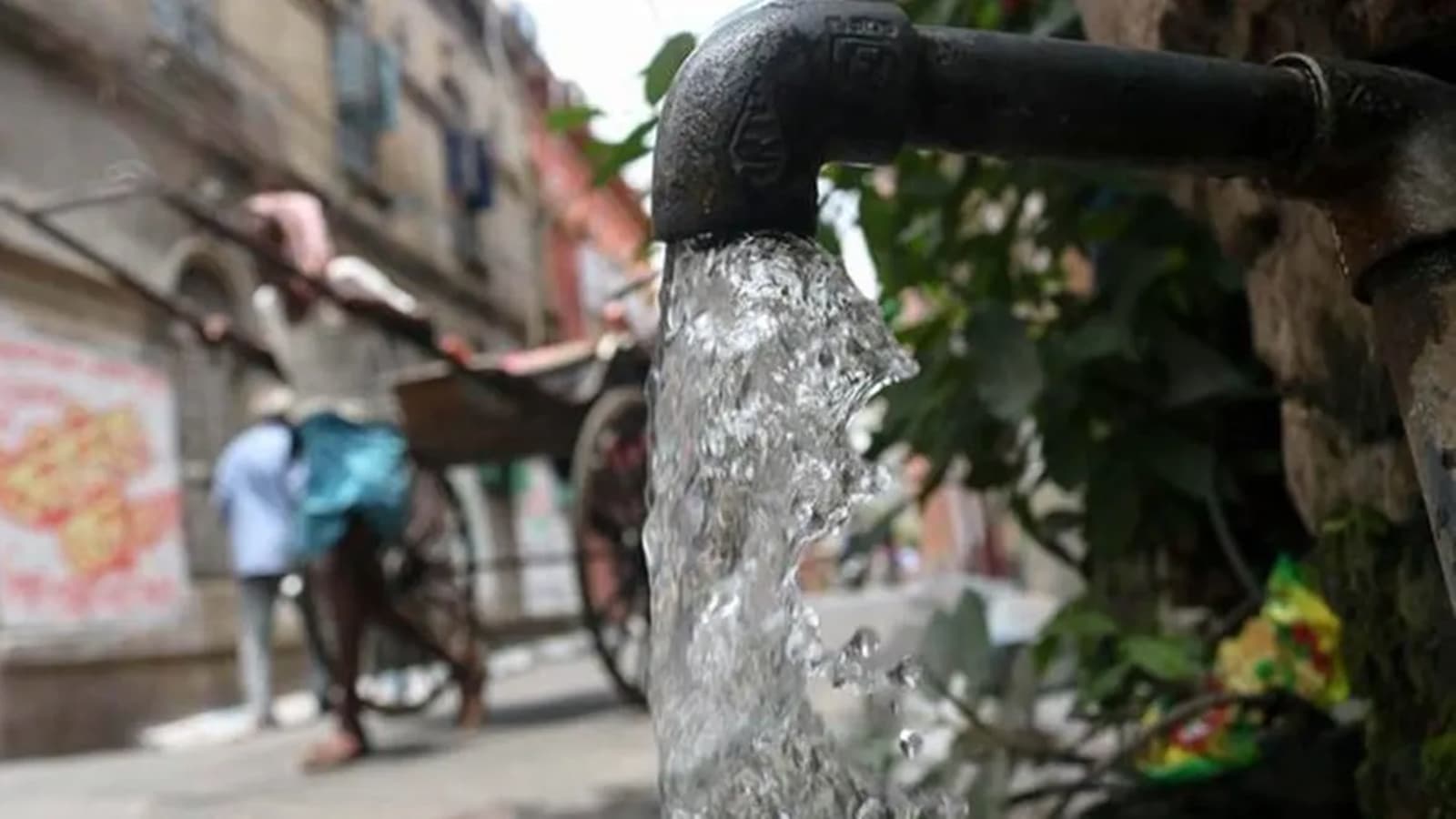
- The Union Cabinet, chaired by the Prime Minister, has approved the extension of the Jal Jeevan Mission (JJM) to ensure the completion of the "Har Ghar Jal" targets.
- The mission, which aims to provide safe and adequate drinking water through individual household tap connections, will now continue until December 2028.
- This extension is supported by an additional financial outlay of ₹1.51 lakh crore to cover pending works and difficult geographical terrains.
- The restructured programme, termed JJM 2.0, will focus on structural reforms in rural drinking water supply.
- As of March 2026, over 12.58 crore rural households have been provided functional household tap connections under the mission.
JJM 2.0
- Objective: Ensure Har Ghar Jal (tap water connection to every rural household) covering approximately 19.36 crore rural households.
- Implementation Period: Extended from original 2019-24 timeline to December 2028.
- Financial Outlay:
- Original outlay: ₹3.60 lakh crore (Central share: ₹2.08 lakh crore)
- Revised outlay: ₹8.69 lakh crore
- Budget 2026-27 allocation: ₹67,670 crore
- Coverage Progress: Approximately 81.57% of rural households now have functional tap water connections.
Current Progress and Impact
- Coverage Growth:
- Since the mission's inception in 2019, tap water coverage has increased from 16.6% (3.23 crore households) to over 78% (more than 15.22 crore households).
- Health and Socio-Economic Benefits:
- Disease Prevention: According to WHO estimates, providing safe water through JJM can prevent approximately 4 lakh deaths caused by diarrheal diseases and avoid 14 million DALYs (Disability Adjusted Life Years).
- Women Empowerment: Significant reduction in the "drudgery" of rural women who previously traveled long distances to fetch water, allowing more time for education and income-generating activities.
- Certified States: Several states and Union Territories, including Goa, Gujarat, Haryana, and Puducherry, have already achieved 100% Har Ghar Jal certification.
Additional Information
- Launch: Jal Jeevan Mission was launched in August 2019 under the Ministry of Jal Shakti.
- Nodal Ministry: Ministry of Jal Shakti oversees implementation.
- Key Metrics:
- Total rural households targeted: 19.36 crore
- Households covered till March 2026: 12.58 crore
- Percentage coverage: ~81.57%
Sources
NITI Aayog Releases Fiscal Health Index 2026 for Indian States
What's the News?
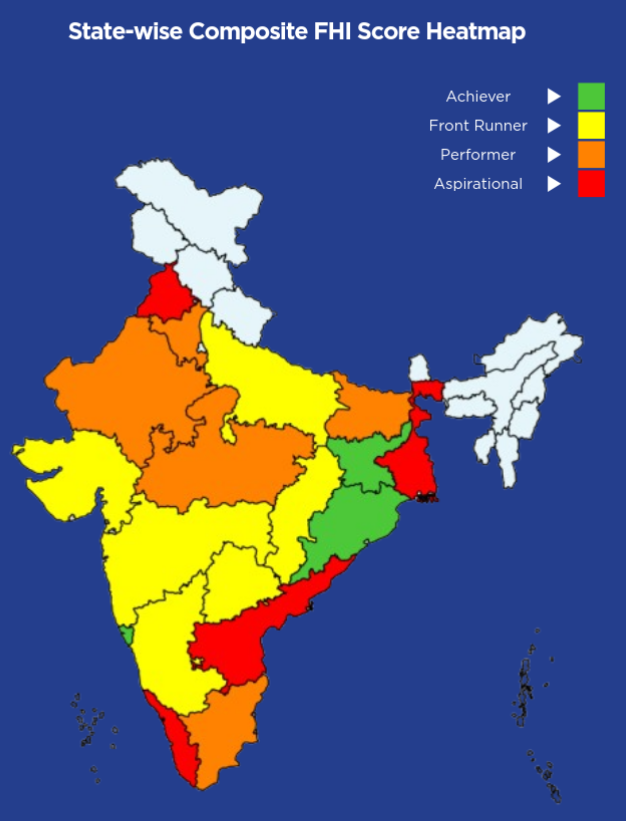
- NITI Aayog has released the second edition of Fiscal Health Index (FHI) 2026 to assess fiscal performance of Indian states.
- The index was released by Shri Suman Bery, Vice Chairman, NITI Aayog on 11 March 2026 in New Delhi.
- Odisha retains the top position among Achiever category states, followed by Goa and Jharkhand.
- The index evaluates states across five key pillars of fiscal health using verified data.
- North-East and Himalayan States are assessed and ranked separately due to structural differences.
Fiscal Health Index 2026
- Objective: Benchmark financial performance and identify structural fiscal challenges across Indian states.
- Coverage: Assesses 18 major states along with separate ranking for NE-Himalayan states.
- Five Key Pillars:
- Quality of Expenditure: Evaluates efficiency and effectiveness of public spending.
- Revenue Mobilisation: Measures own-tax and non-tax revenue collection capacity.
- Fiscal Prudence: Assesses deficit management and fiscal discipline.
- Debt Index: Tracks debt levels and debt servicing capacity.
- Debt Sustainability: Evaluates long-term debt repayment ability.
- Data Source: Utilizes verified data on revenues, expenditures, and debt management.
Findings & Rankings
- Top Performers (Achiever Category):
- Odisha: Retains No.1 position with controlled deficits and strong debt management.
- Goa: Second position with improved fiscal score.
- Jharkhand: Third position among achievers.
- NE-Himalayan States:
- Arunachal Pradesh: Tops among North-East and Himalayan states.
- Low Performers:
- Manipur: Scored -0.363 (lowest).
- Delhi: Scored -0.289.
- Uttarakhand: Scored -0.277.
- Variation: Report highlights considerable variation in fiscal performance across states.
Sources
Supreme Court Invokes Passive Euthanasia Framework for the First Time
What’s the News?
- The Supreme Court of India has applied the legal framework for passive euthanasia for the first time since its landmark 2018 guidelines.
- The Court allowed the withdrawal of life support for a 30-year-old man, Harish Chand, who had been in a Permanent Vegetative State (PVS) for over 11 years following a head injury.
- This decision marks the first practical implementation of the "right to die with dignity" by the highest court, moving beyond theoretical legal principles to actual clinical application.
The Judicial Decision?
- Case Background: The patient’s parents approached the court stating there was no hope of recovery and the family was under extreme financial and emotional distress.
- Medical Board Report: A specialized medical board constituted by AIIMS confirmed that the patient’s condition was irreversible and that he was sustained only by mechanical feeding and nursing care.
- Court’s Reasoning: The Bench emphasized that under Article 21, the "Right to Life" includes the "Right to die with dignity," and prolonging a vegetative existence against the family's wishes constitutes a violation of that dignity.
Passive Euthanasia Framework?
- Definition: Passive euthanasia involves the withdrawal or withholding of medical treatment (like ventilators or feeding tubes) that allows a terminally ill patient to die in the natural course.
- Legal Status: It was legalized in India through the Common Cause vs. Union of India (2018) judgment.
- Procedural Guidelines (Modified 2023):
- Medical Boards: Two boards are required—a Primary Medical Board (at the hospital) and a Secondary Medical Board (including a doctor nominated by the District Chief Medical Officer).
- Judicial Oversight: The 2023 amendment removed the mandatory requirement of a Judicial Magistrate's presence, making the process faster; the hospital now informs the local Judicial Magistrate First Class (JMFC) after the boards' decision.
- Living Will: Individuals can now record an "advance medical directive" (Living Will) to state in advance that they do not wish to be kept on life support if they reach an irreversible state.
Additional Info
- Active vs. Passive Euthanasia:
- Active Euthanasia: Involves a deliberate act to end a life (e.g., lethal injection). It remains illegal in India.
- Passive Euthanasia: Involves "omission" of treatment. It is legal under strict judicial and medical supervision.
- Constitutional Basis:
- Article 21: Interpreted by the SC to mean that the sanctity of life is not just about "breathing" but living with a minimum standard of dignity.
- Aruna Shanbaug Case (2011): The starting point for the euthanasia debate in India, where the SC first allowed passive euthanasia under "exceptional circumstances" following a petition for a nurse who was in a PVS for 42 years.
Sources
SC Rules Parental Salary Alone Cannot Define OBC Creamy Layer Status
What’s the News?
- The Supreme Court of India has ruled that the "Creamy Layer" status for Other Backward Classes (OBC) candidates cannot be determined solely on the basis of parental salary or income.
- The Court clarified that the exclusion of the "Creamy Layer" must be based on a combination of social, educational, and economic factors, rather than a singular economic yardstick.
- This judgment reinforces that salary and income from agriculture are generally excluded when calculating the income ceiling for the children of government employees, unless they fall under specific rank-based exclusions.
The Judicial Ruling?
- The Verdict: The Bench stated that any government notification identifying the "Creamy Layer" purely on an income basis—without considering social and educational backwardness—is a violation of the Indra Sawhney (1992) judgment.
- Salary vs. Income: The Court reiterated that "salary" is distinct from "income from other sources" (such as business, trade, or profession). For those in government service, the exclusion is determined by the rank/post held by the parents.
- Legal Consistency: The ruling quashed attempts to simplify the criteria into a flat income-based model, ensuring that the benefit of reservation reaches the "Non-Creamy Layer" (those who are genuinely socially and educationally backward).
Understanding the Creamy Layer Criteria?
- The Income Threshold: Currently, the ceiling is set at ₹8 lakh per annum. This applies to families whose income from sources other than salary and agricultural land exceeds this limit for three consecutive years.
- Exclusion by Rank (Government Employees):
- Category I: Children of persons holding constitutional posts (e.g., President, Judges of SC/HC).
- Category II: Children where both or either parent is a Class I/Group A officer, or both parents are Class II/Group B officers.
- Non-Government Employees: For those in the private sector or self-employed, the ₹8 lakh limit applies to their total annual income.
- Key Distinction for Exams: For a candidate whose parents are in government service but do not hold Class I or II posts, their high salary (even if it exceeds ₹8 lakh) does not automatically place them in the Creamy Layer, provided they have no other major sources of income.
Additional Info
- Indra Sawhney vs. Union of India (1992):
- The "Mandal Case" where the SC upheld 27% reservation for OBCs in central government jobs.
- It mandated the exclusion of the "Creamy Layer" to ensure that the most advanced members of a backward class do not monopolize reservation benefits.
- Constitutional Provisions:
- Article 16(4): Empowers the State to make provisions for reservation in appointments for any backward class which is not adequately represented in the services.
- Article 340: Provides for the appointment of a Commission to investigate the conditions of backward classes.
- 102nd Amendment Act: Granted constitutional status to the National Commission for Backward Classes (NCBC) under Article 338B.
- Governance: The Department of Personnel and Training (DoPT) issues the Office Memorandums (OM) that define the technical specifications for Creamy Layer identification.
Sources
Toxic "Black Rain" Phenomenon Observed in Tehran Following Infrastructure Strikes
What’s the News?
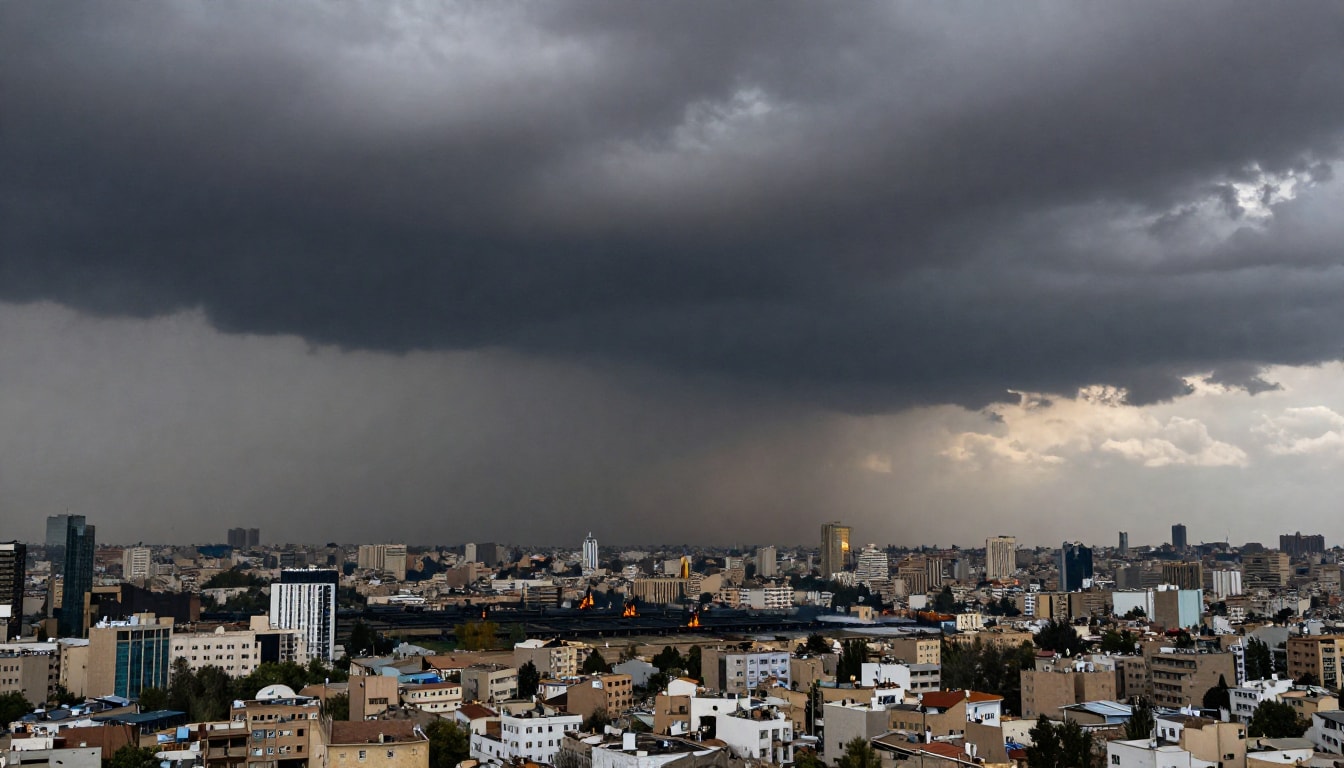
- The city of Tehran and surrounding provinces in Iran have experienced a rare atmospheric phenomenon known as "Black Rain" following military strikes on oil and energy infrastructure.
- Explosions at multiple oil storage facilities and refineries released massive plumes of thick, black smoke and soot into the atmosphere.
- The World Health Organization (WHO) and the Iranian Red Crescent have issued health alerts, warning that the precipitation is highly toxic and poses immediate risks to the population.
What is Black Rain?
- Scientific Mechanism: Known as atmospheric scavenging, the process occurs when raindrops fall through air saturated with high concentrations of pollutants like soot, ash, and oily particulates.
- Formation:
- Large-scale fires from oil depots release unburnt hydrocarbons and carbon particles into the sky.
- When these particles meet a weather system (such as the low-pressure storm currently over northern Iran), they act as condensation nuclei or get trapped by falling rain.
- Composition: The rain contains a "toxic cocktail" of chemicals, including Benzene (a known carcinogen), Sulfur Oxides (SOx), Nitrogen Oxides (NOx), and heavy metals.
Environmental and Health Impact
- Health Risks:
- Respiratory Distress: Inhaling toxic fumes and particulates can cause severe lung irritation, asthma exacerbation, and cardiovascular stress.
- Chemical Burns: The acidic and oily nature of the rain can cause skin rashes, eye irritation, and potential chemical burns upon direct contact.
- Vulnerable Groups: The WHO highlighted that children, the elderly, and those with pre-existing conditions are at the highest risk.
- Topographic Trap: Tehran’s geography, surrounded by mountains, creates a temperature inversion effect that traps pollutants near the ground, preventing them from dispersing.
- Ecological Damage:
- Soil and Water: The oily residue can contaminate groundwater and agricultural land, persisting for decades.
- Forever Chemicals: Firefighting foams used to combat the oil fires may release PFAS (Per- and Polyfluoroalkyl Substances) into the ecosystem, which do not degrade naturally.
Additional Information
- Historical Precedents:
- Hiroshima-Nagasaki (1945): Black rain reported after atomic bombings
- Kuwait Oil Fires (1991): Toxic rainfall during Gulf War
- Related Concepts:
- Acid Rain: Rainfall with acidic components from industrial emissions
- Toxic Fallout: Radioactive or chemical contamination from explosions
- PM2.5: Particulate matter 2.5 micrometers or smaller (air quality indicator)
Sources
March 2026
31 March 202630 March 202628 March 202627 March 202626 March 202625 March 202624 March 202623 March 202621 March 202620 March 202619 March 202618 March 202617 March 202616 March 202614 March 202613 March 202612 March 202611 March 202610 March 202609 March 202607 March 202606 March 202605 March 202603 March 202602 March 2026
Archive
October 2026
- 27 October 2026
- 26 October 2026
- 24 October 2026
- 23 October 2026
- 22 October 2026
- 21 October 2026
- 20 October 2026
- 19 October 2026
- 17 October 2026
- 16 October 2026
- 15 October 2026
- 14 October 2026
- 13 October 2026
- 12 October 2026
- 10 October 2026
- 09 October 2026
- 08 October 2026
- 07 October 2026
- 06 October 2026
- 05 October 2026
- 03 October 2026
- 02 October 2026
- 01 October 2026
September 2026
- 30 September 2026
- 29 September 2026
- 28 September 2026
- 26 September 2026
- 25 September 2026
- 24 September 2026
- 23 September 2026
- 22 September 2026
- 21 September 2026
- 19 September 2026
- 18 September 2026
- 17 September 2026
- 16 September 2026
- 15 September 2026
- 12 September 2026
- 11 September 2026
- 10 September 2026
- 09 September 2026
- 08 September 2026
- 07 September 2026
- 05 September 2026
- 04 September 2026
- 03 September 2026
- 02 September 2026
- 01 September 2026
August 2026
- 31 August 2026
- 29 August 2026
- 27 August 2026
- 26 August 2026
- 25 August 2026
- 24 August 2026
- 22 August 2026
- 21 August 2026
- 20 August 2026
- 19 August 2026
- 18 August 2026
- 17 August 2026
- 14 August 2026
- 13 August 2026
- 12 August 2026
- 11 August 2026
- 10 August 2026
- 08 August 2026
- 07 August 2026
- 06 August 2026
- 05 August 2026
- 04 August 2026
- 03 August 2026
- 01 August 2026
July 2026
- 31 July 2026
- 30 July 2026
- 29 July 2026
- 28 July 2026
- 27 July 2026
- 25 July 2026
- 23 July 2026
- 22 July 2026
- 21 July 2026
- 20 July 2026
- 18 July 2026
- 17 July 2026
- 15 July 2026
- 14 July 2026
- 13 July 2026
- 11 July 2026
- 10 July 2026
- 09 July 2026
- 08 July 2026
- 07 July 2026
- 06 July 2026
- 04 July 2026
- 03 July 2026
- 02 July 2026
- 01 July 2026
June 2026
May 2026
April 2026
March 2026
- 31 March 2026
- 30 March 2026
- 28 March 2026
- 27 March 2026
- 26 March 2026
- 25 March 2026
- 24 March 2026
- 23 March 2026
- 21 March 2026
- 20 March 2026
- 19 March 2026
- 18 March 2026
- 17 March 2026
- 16 March 2026
- 14 March 2026
- 13 March 2026
- 12 March 2026
- 11 March 2026
- 10 March 2026
- 09 March 2026
- 07 March 2026
- 06 March 2026
- 05 March 2026
- 03 March 2026
- 02 March 2026
February 2026
- 28 February 2026
- 27 February 2026
- 26 February 2026
- 25 February 2026
- 24 February 2026
- 23 February 2026
- 21 February 2026
- 20 February 2026
- 19 February 2026
- 18 February 2026
- 17 February 2026
- 16 February 2026
- 13 February 2026
- 12 February 2026
- 11 February 2026
- 10 February 2026
- 09 February 2026
- 07 February 2026
- 06 February 2026
- 05 February 2026
- 04 February 2026
- 03 February 2026
- 02 February 2026
January 2026
- 31 January 2026
- 30 January 2026
- 29 January 2026
- 28 January 2026
- 27 January 2026
- 26 January 2026
- 24 January 2026
- 23 January 2026
- 22 January 2026
- 21 January 2026
- 20 January 2026
- 19 January 2026
- 16 January 2026
- 15 January 2026
- 14 January 2026
- 13 January 2026
- 12 January 2026
- 10 January 2026
- 09 January 2026
- 08 January 2026
- 07 January 2026
- 06 January 2026
- 05 January 2026
- 03 January 2026
- 02 January 2026
- 01 January 2026
December 2025
- 31 December 2025
- 30 December 2025
- 29 December 2025
- 27 December 2025
- 26 December 2025
- 24 December 2025
- 23 December 2025
- 22 December 2025
- 20 December 2025
- 19 December 2025
- 18 December 2025
- 17 December 2025
- 16 December 2025
- 15 December 2025
- 13 December 2025
- 12 December 2025
- 11 December 2025
- 10 December 2025
- 09 December 2025
- 08 December 2025
- 05 December 2025
- 04 December 2025
- 03 December 2025
- 02 December 2025
November 2025
- 29 November 2025
- 28 November 2025
- 27 November 2025
- 26 November 2025
- 25 November 2025
- 24 November 2025
- 22 November 2025
- 21 November 2025
- 20 November 2025
- 19 November 2025
- 18 November 2025
- 17 November 2025
- 15 November 2025
- 14 November 2025
- 13 November 2025
- 12 November 2025
- 11 November 2025
- 10 November 2025
- 08 November 2025
- 07 November 2025
- 06 November 2025
- 05 November 2025
- 04 November 2025
- 03 November 2025
- 01 November 2025
October 2025
- 31 October 2025
- 30 October 2025
- 29 October 2025
- 28 October 2025
- 27 October 2025
- 25 October 2025
- 24 October 2025
- 23 October 2025
- 22 October 2025
- 21 October 2025
- 20 October 2025
- 18 October 2025
- 17 October 2025
- 16 October 2025
- 15 October 2025
- 14 October 2025
- 13 October 2025
- 11 October 2025
- 10 October 2025
- 09 October 2025
- 08 October 2025
- 07 October 2025
- 06 October 2025
- 04 October 2025
- 03 October 2025
- 02 October 2025
- 01 October 2025
September 2025
- 30 September 2025
- 29 September 2025
- 27 September 2025
- 26 September 2025
- 25 September 2025
- 24 September 2025
- 23 September 2025
- 22 September 2025
- 20 September 2025
- 19 September 2025
- 18 September 2025
- 17 September 2025
- 16 September 2025
- 15 September 2025
- 13 September 2025
- 12 September 2025
- 11 September 2025
- 10 September 2025
- 09 September 2025
- 08 September 2025
- 06 September 2025
- 05 September 2025
- 04 September 2025
- 03 September 2025
- 02 September 2025
- 01 September 2025
August 2025
- 30 August 2025
- 29 August 2025
- 28 August 2025
- 27 August 2025
- 26 August 2025
- 25 August 2025
- 23 August 2025
- 22 August 2025
- 21 August 2025
- 20 August 2025
- 19 August 2025
- 18 August 2025
- 16 August 2025
- 14 August 2025
- 13 August 2025
- 12 August 2025
- 11 August 2025
- 08 August 2025
- 07 August 2025
- 06 August 2025
- 05 August 2025
- 04 August 2025
- 02 August 2025
- 01 August 2025
July 2025
- 31 July 2025
- 30 July 2025
- 29 July 2025
- 28 July 2025
- 26 July 2025
- 25 July 2025
- 24 July 2025
- 23 July 2025
- 22 July 2025
- 21 July 2025
- 19 July 2025
- 18 July 2025
- 17 July 2025
- 16 July 2025
- 15 July 2025
- 12 July 2025
- 11 July 2025
- 10 July 2025
- 09 July 2025
- 07 July 2025
- 05 July 2025
- 04 July 2025
- 03 July 2025
- 02 July 2025
- 01 July 2025
June 2025
- 30 June 2025
- 28 June 2025
- 27 June 2025
- 26 June 2025
- 25 June 2025
- 24 June 2025
- 23 June 2025
- 21 June 2025
- 20 June 2025
- 19 June 2025
- 18 June 2025
- 17 June 2025
- 16 June 2025
- 14 June 2025
- 13 June 2025
- 12 June 2025
- 11 June 2025
- 10 June 2025
- 09 June 2025
- 07 June 2025
- 06 June 2025
- 05 June 2025
- 04 June 2025
- 03 June 2025
- 02 June 2025
May 2025
April 2025
- 30 April 2025
- 29 April 2025
- 28 April 2025
- 26 April 2025
- 25 April 2025
- 24 April 2025
- 23 April 2025
- 22 April 2025
- 21 April 2025
- 19 April 2025
- 18 April 2025
- 17 April 2025
- 16 April 2025
- 15 April 2025
- 14 April 2025
- 12 April 2025
- 11 April 2025
- 10 April 2025
- 09 April 2025
- 08 April 2025
- 07 April 2025
- 05 April 2025
- 04 April 2025
- 03 April 2025
- 02 April 2025
- 01 April 2025
March 2025
- 31 March 2025
- 29 March 2025
- 28 March 2025
- 27 March 2025
- 26 March 2025
- 25 March 2025
- 24 March 2025
- 22 March 2025
- 21 March 2025
- 20 March 2025
- 19 March 2025
- 18 March 2025
- 17 March 2025
- 15 March 2025
- 13 March 2025
- 12 March 2025
- 11 March 2025
- 10 March 2025
- 08 March 2025
- 07 March 2025
- 06 March 2025
- 05 March 2025
- 04 March 2025
- 03 March 2025
- 01 March 2025
February 2025
- 28 February 2025
- 27 February 2025
- 26 February 2025
- 25 February 2025
- 24 February 2025
- 22 February 2025
- 21 February 2025
- 20 February 2025
- 19 February 2025
- 18 February 2025
- 17 February 2025
- 15 February 2025
- 14 February 2025
- 13 February 2025
- 12 February 2025
- 11 February 2025
- 10 February 2025
- 08 February 2025
- 07 February 2025
- 06 February 2025
- 05 February 2025
- 04 February 2025
- 03 February 2025
- 01 February 2025
January 2025
- 31 January 2025
- 30 January 2025
- 29 January 2025
- 28 January 2025
- 27 January 2025
- 25 January 2025
- 24 January 2025
- 23 January 2025
- 22 January 2025
- 21 January 2025
- 20 January 2025
- 18 January 2025
- 17 January 2025
- 16 January 2025
- 15 January 2025
- 14 January 2025
- 13 January 2025
- 11 January 2025
- 10 January 2025
- 09 January 2025
- 08 January 2025
- 07 January 2025
- 06 January 2025
- 04 January 2025
- 03 January 2025
- 02 January 2025
- 01 January 2025