
Current Affairs
Stay updated with the latest national and international events.
12 December 2025
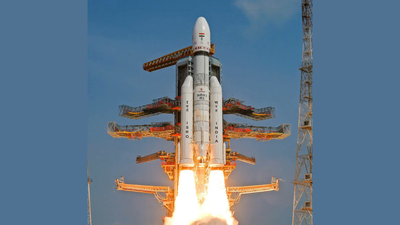
ISRO Set to Launch Heaviest US Commercial Satellite ‘BlueBird-6’ via LVM3
What’s the News?
- The Indian Space Research Organisation (ISRO) is scheduled to launch the BlueBird-6 satellite for the US-based company AST SpaceMobile.
- This mission will be executed using the Launch Vehicle Mark-3 (LVM3), marking a significant milestone in India’s commercial space sector.
- The launch is facilitated by NewSpace India Limited (NSIL), the commercial arm of the Department of Space, further solidifying India's position in the global heavy-lift launch market.
BlueBird-6: Mission & Capabilities
- Developed by AST SpaceMobile Inc., a Texas-based firm building a space-based cellular broadband network.
- Designed to enable direct-to-device mobile broadband allowing standard mobile phones to access internet in areas with weak or no terrestrial coverage, without specialised hardware.
- Key features:
- Largest commercial phased-array antenna in LEO: ~2,400 sq. ft., 3.5× larger than earlier BlueBird satellites.
- 10× higher data capacity vs. predecessors.
- 10,000 MHz bandwidth per satellite with up to 2,500 adjustable antenna beams for targeted coverage.
- Operates on licensed spectrum, partnering with existing telecom operators for seamless integration.
LVM3: India’s Heavy-Lift Workhorse
- Three-stage configuration:
- S200 solid strap-ons (204 tonnes propellant each)
- L110 liquid core stage (twin Vikas engines)
- C25 cryogenic upper stage (indigenous CE-20 engine)
- Capabilities:
- Payload: up to 8,000 kg to LEO, 4,000 kg to GTO
- Human-rated variant to be used for Gaganyaan, India’s first crewed mission (planned 2027).
- Previously launched CMS-03 (4.4 tonnes), making BlueBird-6 the heaviest commercial payload launched by ISRO.
Additional Info
- NewSpace India Limited (NSIL):
- Established in 2019 as a Central Public Sector Enterprise (CPSE) under the Department of Space.
- Mandate: To handle commercial launch services, satellite ownership, and technology transfer to the private industry.
- It successfully facilitated the OneWeb launches, earning significant foreign exchange.
- AST SpaceMobile:
- A US-based company building the first space-based cellular broadband network.
- Their technology targets the "dead zones" in connectivity, aiming to provide service to standard mobile devices globally.
- Direct-to-Device (D2D) Technology:
- A growing field in satellite communications where satellites act as "cell towers in space."
- Crucial for disaster management and providing connectivity in remote or maritime regions where building terrestrial towers is unfeasible.
Sources
Indian Navy to Commission First Indigenous Diving Support Craft ‘DSC A20’

What’s the News?
- The Indian Navy is set to commission DSC A20, the first vessel of the indigenously designed and constructed Diving Support Craft (DSC).
- The commissioning ceremony will take place at Kochi, under the aegis of the Southern Naval Command, with Vice Admiral Sameer Saxena (Flag Officer Commanding-in-Chief, Southern Naval Command) presiding over the event.
- This vessel is the first of five such crafts being built, marking a significant step in enhancing India's underwater support capabilities through domestic manufacturing.
DSC A20: Capabilities & Design
- Builder: Titagarh Rail Systems Limited (TRSL), Kolkata.
- Displacement: ~300 tonnes (medium-sized coastal craft).
- Hull Design: Catamaran hull form, offering:
- Superior stability and seakeeping in rough seas.
- Larger usable deck area for equipment handling.
- Specialised Systems:
- State-of-the-art diving systems, compliant with Indian Register of Shipping (IRS) Naval Rules & Regulations.
- Integrated recompression chamber, launch & recovery systems for divers/ROVs.
- Underwater inspection and light salvage tools.
- Validation: Underwent hydrodynamic analysis and model basin testing at the Naval Science and Technological Laboratory (NSTL), Visakhapatnam.
Operational Roles & Significance
- Primary Role: The DSC A20 is purpose-built for diving operations in coastal waters and harbours.
- Mission Profiles:
- Underwater repair and maintenance of ships and harbor infrastructure.
- Salvage assistance and recovery operations.
- Underwater inspection and patrol.
- Strategic Impact: The induction strengthens the Navy's ability to conduct sustained diving operations near the coast, reducing reliance on larger, blue-water assets for routine harbor tasks.
- Self-Reliance: It serves as a testament to the ‘Make in India’ initiative, showcasing successful collaboration between the Navy, private industry (TRSL), and research bodies (NSTL).
Additional Info
- Diving Support Craft (DSC) Project:
- The contract for five DSCs was signed between the Ministry of Defence and Titagarh Wagons Ltd (now TRSL) in February 2021.
- These vessels are intended to replace existing, aging diving support assets.
- Titagarh Rail Systems Limited (TRSL):
- Originally a major player in railway rolling stock (freight wagons, metro coaches).
- This project marks its successful entry and delivery in the warship building domain.
- Southern Naval Command:
- Headquartered in Kochi, Kerala.
- It is the Training Command of the Indian Navy, responsible for the training of officers and sailors.
Sources
Air Pollution Now India's Largest Health Threat: State of Global Air 2025
What’s the News?
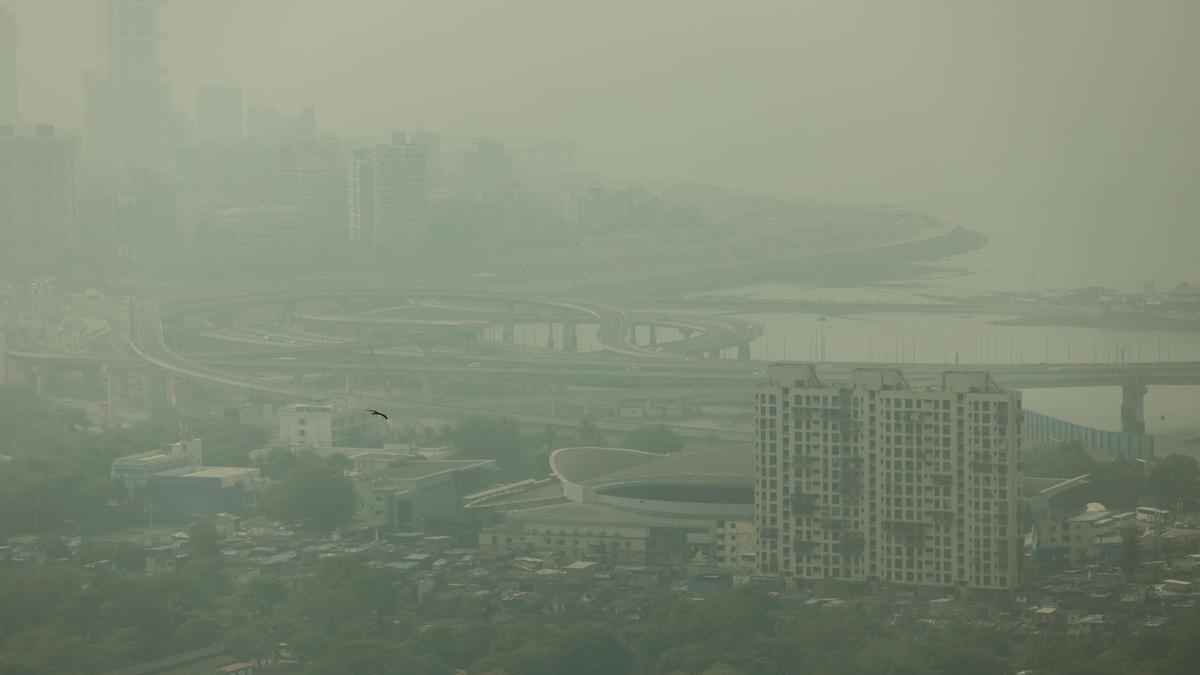
- According to the State of Global Air (SoGA) 2025 report, air pollution has emerged as India's largest health threat, contributing to approximately 2.1 million deaths in 2023.
- The report, released by the Health Effects Institute (HEI) and the Institute for Health Metrics and Evaluation (IHME), highlights a staggering 43% increase in pollution-linked deaths since 2000.
- The findings describe air pollution as an "invisible epidemic," now killing more people than major infectious diseases, with a significant shift towards Non-Communicable Diseases (NCDs).
Health Impacts: Multi-System Damage
- Cardiovascular System
- PM₂.₅ triggers systemic inflammation, raising annual mortality by 8% for every 10 µg/m³ increase in long-term exposure.
- Strongly linked to hypertension, atherosclerosis, heart attacks, and ischemic stroke.
- Respiratory System
- 6% of Indian children now suffer from asthma.
- A 10 µg/m³ increase in PM₂.₅ leads to 20–40% surge in paediatric ER visits and 10–15% reduction in lung capacity among exposed children.
- Neurological & Cognitive Effects
- PM₂.₅ crosses the blood–brain barrier → neuroinflammation, oxidative stress.
- Associated with 35–49% higher dementia risk per 10 µg/m³ increase, and reduced academic performance in schoolchildren.
- Maternal & Neonatal Health
- Elevated risks of preterm birth, low birth weight, stillbirths deepening intergenerational health inequities.
Structural Drivers & Data Gaps
- Top Sources (Year-Round):
- Vehicular emissions (~25–30% in urban centres)
- Industrial processes and coal combustion
- Construction/demolition dust (~10–20%, often unregulated)
- Household solid-fuel use (esp. in rural areas)
- Open municipal waste burning
- Monitoring Deficiencies:
- India’s Air Quality Index (AQI) caps readings at 500, though real pollution often exceeds 600–1,000 µg/m³ in winter.
- Only 106 cities had continuous real-time monitors as of 2025; 150 out of 256 monitored cities exceeded national PM₂.₅ limits.
Policy Response: NCAP & Gaps
- National Clean Air Programme (NCAP):
- Launched in 2019; targets 40% reduction in PM₁₀/PM₂.₅ by 2025–26 (base year: 2017) across 131 non-attainment cities.
- Funding: ₹11,211 crore allocated (2019–25), but only ₹7,594 crore utilised—low absorption reflects weak institutional capacity.
- Progress: As of mid-2025, only 1 in 5 cities met targets, highlighting implementation gaps.
- Complementary Measures:
- BS-VI fuel norms, GRAP in Delhi-NCR, EV incentives, smog towers.
- Judicial interventions (e.g., NGT orders on waste burning).
Additional Info
- State of Global Air (SoGA):
- An annual report that provides a comprehensive analysis of air quality and health impacts globally.
- 2025 Focus: Highlighted that PM2.5 and Ozone levels in India are among the highest globally, with 75% of the population exposed to levels exceeding WHO guidelines.
- PM2.5 Explained:
- Fine particulate matter less than 2.5 micrometers in diameter.
- Capable of penetrating deep into the lungs and entering the bloodstream, causing systemic inflammation and affecting organs beyond the respiratory system.
Sources
Childcare Shifts from Welfare Safety Net to National Growth Lever
What’s the News?
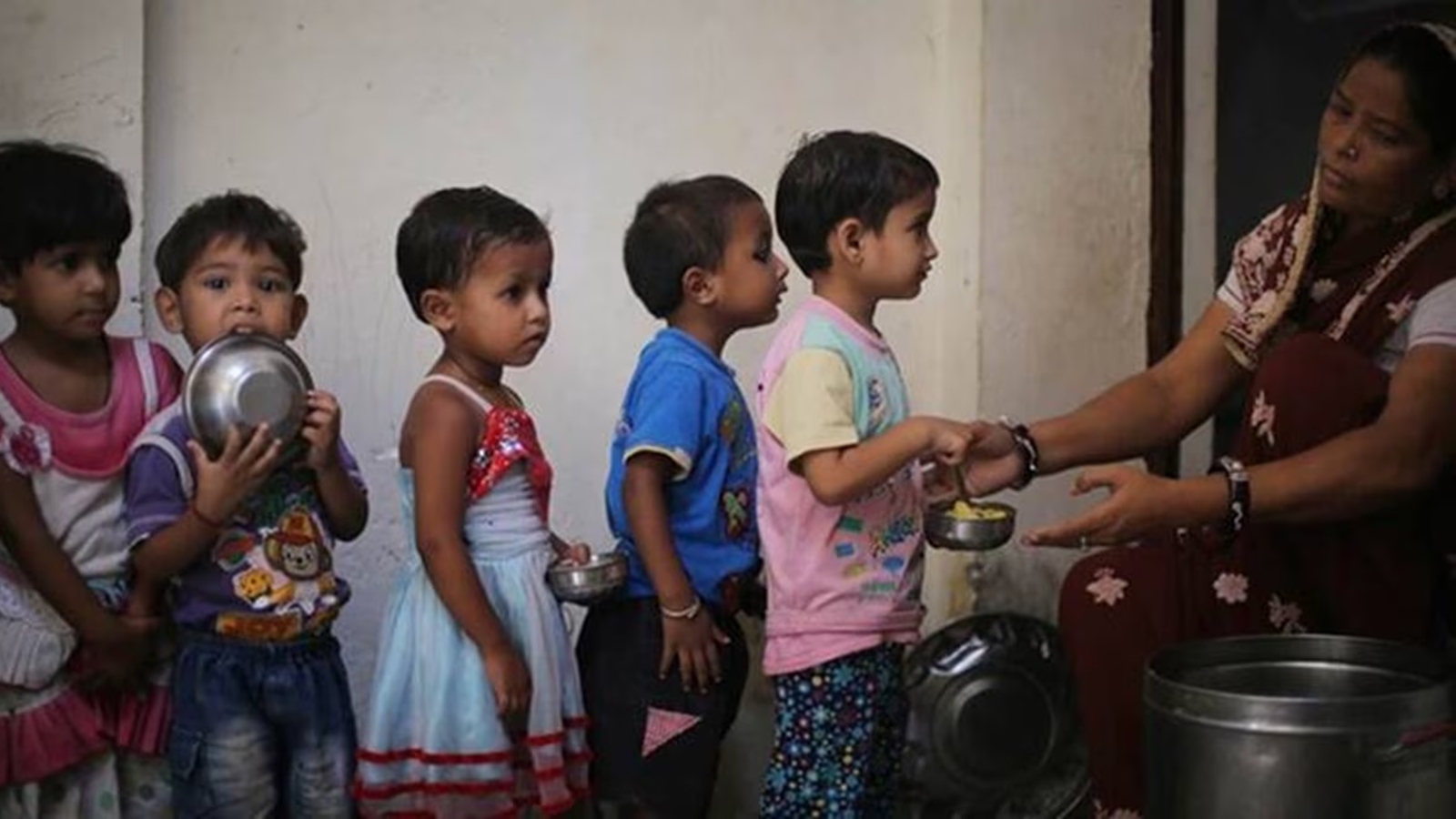
- Recent analyses underscore that childcare is no longer a peripheral social scheme, but a core economic infrastructure essential to achieving India’s 8–10% growth target, raising female labour force participation (FLFP), and securing human capital development.
- With only ~10% of Anganwadi centres operating fully in urban areas and women spending 426 minutes/day on unpaid care vs. 163 for men, the care deficit is now recognised as a major drag on productivity.
Why Childcare Is a Growth Multiplier
- FLFP Boost: Reliable childcare could enable millions of mothers to stay in or re-enter formal employment. In Rio de Janeiro slums, free daycare increased mothers’ working hours nearly hour-for-hour with facility hours.
- Human Capital ROI: 80% of brain development occurs in the first 1,000 days—early stimulation and nutrition determine lifelong learning outcomes.
- Sectoral Impact: Southern states (esp. Tamil Nadu, Karnataka) account for ¾ of women in manufacturing, partly due to better care infrastructure (hostels, transport, crèches).
Innovative State Models for Scalable Delivery
- Tamil Nadu: Introduced half-time preschool instructors to Anganwadis—doubling instructional time without compromising nutrition delivery.
- Telangana: Raised Anganwadi worker honorarium to extend hours, enabling low-cost conversion to full-day centres.
- Meghalaya & Chandigarh: Deploy para-professionals (SHG members, interns, youth fellows) to support Anganwadi workers, easing workload and improving service quality.
Initiatives & Gaps
- Existing Frameworks:
- ICDS (1975): Primary delivery platform (1.4 million centres), but focuses on nutrition; not full-day care.
- Palna Scheme (2023): Supports 26,000 workplace/day-care crèches for children of working parents.
- Poshan Tracker & National Framework for Early Childhood Stimulation (2024): Digital tools to guide caregivers in home-based early learning.
- Critical Gaps:
- Funding: Public spending on early childhood care is just 0.4% of GDP, far below the 1–1.5% in high-performing nations.
- Urban deficit: Rapid urbanisation and migration outpace childcare expansion.
- Workforce: Anganwadi workers earn ₹8,000–₹15,000/month with limited training or career progression.
Way Ahead: Institutionalising Care as Infrastructure
- National Mission on Early Childhood Care: Proposed cross-ministerial mission (WCD, Labour, Education, Health, Industry) to align policy, funding, and delivery recommended by experts to mainstream childcare as market-shaping infrastructure.
- Hybrid Service Model: Combine brick-and-mortar Anganwadi upgrades with digital nudges (e.g., WhatsApp-based peer groups for mothers) and community mobilisation.
- Targeted Expansion: Prioritise full-day centres in industrial belts, service hubs, and urban wards with high FLFP potential.
Constitutional & Policy Anchors
- Article 45 (DPSP): Mandates free and compulsory education for all children until age 6 interpreted to include ECCE.
- National ECCE Policy (2013): Commits to universal access to quality early childhood education for children <6 years.
- NEP 2020 & NCF 2023: Emphasise foundational learning and link ECCE with school readiness.
Sources
December 2025
31 December 202530 December 202529 December 202527 December 202526 December 202524 December 202523 December 202522 December 202520 December 202519 December 202518 December 202517 December 202516 December 202515 December 202513 December 202512 December 202511 December 202510 December 202509 December 202508 December 202505 December 202504 December 202503 December 202502 December 2025
Archive
October 2026
- 27 October 2026
- 26 October 2026
- 24 October 2026
- 23 October 2026
- 22 October 2026
- 21 October 2026
- 20 October 2026
- 19 October 2026
- 17 October 2026
- 16 October 2026
- 15 October 2026
- 14 October 2026
- 13 October 2026
- 12 October 2026
- 10 October 2026
- 09 October 2026
- 08 October 2026
- 07 October 2026
- 06 October 2026
- 05 October 2026
- 03 October 2026
- 02 October 2026
- 01 October 2026
September 2026
- 30 September 2026
- 29 September 2026
- 28 September 2026
- 26 September 2026
- 25 September 2026
- 24 September 2026
- 23 September 2026
- 22 September 2026
- 21 September 2026
- 19 September 2026
- 18 September 2026
- 17 September 2026
- 16 September 2026
- 15 September 2026
- 12 September 2026
- 11 September 2026
- 10 September 2026
- 09 September 2026
- 08 September 2026
- 07 September 2026
- 05 September 2026
- 04 September 2026
- 03 September 2026
- 02 September 2026
- 01 September 2026
August 2026
- 31 August 2026
- 29 August 2026
- 27 August 2026
- 26 August 2026
- 25 August 2026
- 24 August 2026
- 22 August 2026
- 21 August 2026
- 20 August 2026
- 19 August 2026
- 18 August 2026
- 17 August 2026
- 14 August 2026
- 13 August 2026
- 12 August 2026
- 11 August 2026
- 10 August 2026
- 08 August 2026
- 07 August 2026
- 06 August 2026
- 05 August 2026
- 04 August 2026
- 03 August 2026
- 01 August 2026
July 2026
- 31 July 2026
- 30 July 2026
- 29 July 2026
- 28 July 2026
- 27 July 2026
- 25 July 2026
- 23 July 2026
- 22 July 2026
- 21 July 2026
- 20 July 2026
- 18 July 2026
- 17 July 2026
- 15 July 2026
- 14 July 2026
- 13 July 2026
- 11 July 2026
- 10 July 2026
- 09 July 2026
- 08 July 2026
- 07 July 2026
- 06 July 2026
- 04 July 2026
- 03 July 2026
- 02 July 2026
- 01 July 2026
June 2026
May 2026
April 2026
March 2026
- 31 March 2026
- 30 March 2026
- 28 March 2026
- 27 March 2026
- 26 March 2026
- 25 March 2026
- 24 March 2026
- 23 March 2026
- 21 March 2026
- 20 March 2026
- 19 March 2026
- 18 March 2026
- 17 March 2026
- 16 March 2026
- 14 March 2026
- 13 March 2026
- 12 March 2026
- 11 March 2026
- 10 March 2026
- 09 March 2026
- 07 March 2026
- 06 March 2026
- 05 March 2026
- 03 March 2026
- 02 March 2026
February 2026
- 28 February 2026
- 27 February 2026
- 26 February 2026
- 25 February 2026
- 24 February 2026
- 23 February 2026
- 21 February 2026
- 20 February 2026
- 19 February 2026
- 18 February 2026
- 17 February 2026
- 16 February 2026
- 13 February 2026
- 12 February 2026
- 11 February 2026
- 10 February 2026
- 09 February 2026
- 07 February 2026
- 06 February 2026
- 05 February 2026
- 04 February 2026
- 03 February 2026
- 02 February 2026
January 2026
- 31 January 2026
- 30 January 2026
- 29 January 2026
- 28 January 2026
- 27 January 2026
- 26 January 2026
- 24 January 2026
- 23 January 2026
- 22 January 2026
- 21 January 2026
- 20 January 2026
- 19 January 2026
- 16 January 2026
- 15 January 2026
- 14 January 2026
- 13 January 2026
- 12 January 2026
- 10 January 2026
- 09 January 2026
- 08 January 2026
- 07 January 2026
- 06 January 2026
- 05 January 2026
- 03 January 2026
- 02 January 2026
- 01 January 2026
December 2025
- 31 December 2025
- 30 December 2025
- 29 December 2025
- 27 December 2025
- 26 December 2025
- 24 December 2025
- 23 December 2025
- 22 December 2025
- 20 December 2025
- 19 December 2025
- 18 December 2025
- 17 December 2025
- 16 December 2025
- 15 December 2025
- 13 December 2025
- 12 December 2025
- 11 December 2025
- 10 December 2025
- 09 December 2025
- 08 December 2025
- 05 December 2025
- 04 December 2025
- 03 December 2025
- 02 December 2025
November 2025
- 29 November 2025
- 28 November 2025
- 27 November 2025
- 26 November 2025
- 25 November 2025
- 24 November 2025
- 22 November 2025
- 21 November 2025
- 20 November 2025
- 19 November 2025
- 18 November 2025
- 17 November 2025
- 15 November 2025
- 14 November 2025
- 13 November 2025
- 12 November 2025
- 11 November 2025
- 10 November 2025
- 08 November 2025
- 07 November 2025
- 06 November 2025
- 05 November 2025
- 04 November 2025
- 03 November 2025
- 01 November 2025
October 2025
- 31 October 2025
- 30 October 2025
- 29 October 2025
- 28 October 2025
- 27 October 2025
- 25 October 2025
- 24 October 2025
- 23 October 2025
- 22 October 2025
- 21 October 2025
- 20 October 2025
- 18 October 2025
- 17 October 2025
- 16 October 2025
- 15 October 2025
- 14 October 2025
- 13 October 2025
- 11 October 2025
- 10 October 2025
- 09 October 2025
- 08 October 2025
- 07 October 2025
- 06 October 2025
- 04 October 2025
- 03 October 2025
- 02 October 2025
- 01 October 2025
September 2025
- 30 September 2025
- 29 September 2025
- 27 September 2025
- 26 September 2025
- 25 September 2025
- 24 September 2025
- 23 September 2025
- 22 September 2025
- 20 September 2025
- 19 September 2025
- 18 September 2025
- 17 September 2025
- 16 September 2025
- 15 September 2025
- 13 September 2025
- 12 September 2025
- 11 September 2025
- 10 September 2025
- 09 September 2025
- 08 September 2025
- 06 September 2025
- 05 September 2025
- 04 September 2025
- 03 September 2025
- 02 September 2025
- 01 September 2025
August 2025
- 30 August 2025
- 29 August 2025
- 28 August 2025
- 27 August 2025
- 26 August 2025
- 25 August 2025
- 23 August 2025
- 22 August 2025
- 21 August 2025
- 20 August 2025
- 19 August 2025
- 18 August 2025
- 16 August 2025
- 14 August 2025
- 13 August 2025
- 12 August 2025
- 11 August 2025
- 08 August 2025
- 07 August 2025
- 06 August 2025
- 05 August 2025
- 04 August 2025
- 02 August 2025
- 01 August 2025
July 2025
- 31 July 2025
- 30 July 2025
- 29 July 2025
- 28 July 2025
- 26 July 2025
- 25 July 2025
- 24 July 2025
- 23 July 2025
- 22 July 2025
- 21 July 2025
- 19 July 2025
- 18 July 2025
- 17 July 2025
- 16 July 2025
- 15 July 2025
- 12 July 2025
- 11 July 2025
- 10 July 2025
- 09 July 2025
- 07 July 2025
- 05 July 2025
- 04 July 2025
- 03 July 2025
- 02 July 2025
- 01 July 2025
June 2025
- 30 June 2025
- 28 June 2025
- 27 June 2025
- 26 June 2025
- 25 June 2025
- 24 June 2025
- 23 June 2025
- 21 June 2025
- 20 June 2025
- 19 June 2025
- 18 June 2025
- 17 June 2025
- 16 June 2025
- 14 June 2025
- 13 June 2025
- 12 June 2025
- 11 June 2025
- 10 June 2025
- 09 June 2025
- 07 June 2025
- 06 June 2025
- 05 June 2025
- 04 June 2025
- 03 June 2025
- 02 June 2025
May 2025
April 2025
- 30 April 2025
- 29 April 2025
- 28 April 2025
- 26 April 2025
- 25 April 2025
- 24 April 2025
- 23 April 2025
- 22 April 2025
- 21 April 2025
- 19 April 2025
- 18 April 2025
- 17 April 2025
- 16 April 2025
- 15 April 2025
- 14 April 2025
- 12 April 2025
- 11 April 2025
- 10 April 2025
- 09 April 2025
- 08 April 2025
- 07 April 2025
- 05 April 2025
- 04 April 2025
- 03 April 2025
- 02 April 2025
- 01 April 2025
March 2025
- 31 March 2025
- 29 March 2025
- 28 March 2025
- 27 March 2025
- 26 March 2025
- 25 March 2025
- 24 March 2025
- 22 March 2025
- 21 March 2025
- 20 March 2025
- 19 March 2025
- 18 March 2025
- 17 March 2025
- 15 March 2025
- 13 March 2025
- 12 March 2025
- 11 March 2025
- 10 March 2025
- 08 March 2025
- 07 March 2025
- 06 March 2025
- 05 March 2025
- 04 March 2025
- 03 March 2025
- 01 March 2025
February 2025
- 28 February 2025
- 27 February 2025
- 26 February 2025
- 25 February 2025
- 24 February 2025
- 22 February 2025
- 21 February 2025
- 20 February 2025
- 19 February 2025
- 18 February 2025
- 17 February 2025
- 15 February 2025
- 14 February 2025
- 13 February 2025
- 12 February 2025
- 11 February 2025
- 10 February 2025
- 08 February 2025
- 07 February 2025
- 06 February 2025
- 05 February 2025
- 04 February 2025
- 03 February 2025
- 01 February 2025
January 2025
- 31 January 2025
- 30 January 2025
- 29 January 2025
- 28 January 2025
- 27 January 2025
- 25 January 2025
- 24 January 2025
- 23 January 2025
- 22 January 2025
- 21 January 2025
- 20 January 2025
- 18 January 2025
- 17 January 2025
- 16 January 2025
- 15 January 2025
- 14 January 2025
- 13 January 2025
- 11 January 2025
- 10 January 2025
- 09 January 2025
- 08 January 2025
- 07 January 2025
- 06 January 2025
- 04 January 2025
- 03 January 2025
- 02 January 2025
- 01 January 2025