
Current Affairs
Stay updated with the latest national and international events.
12 April 2025
Odisha Launches Unified Health Insurance Scheme
Scheme Integration & Objective:
- Unified Health Insurance Scheme integrates the central Ayushman Bharat Pradhan Mantri Jan Arogya Yojana (AB-PMJAY) with the state-sponsored Gopabandhu Jan Arogya Yojana (GJAY).
- The aim is to provide seamless, quality healthcare and financial protection to vulnerable sections under a single umbrella.

Key Features & Coverage:
- Beneficiary Reach:
- Approximately 3.5 crore individuals from 1.03 crore families across Odisha will benefit.
- Financial Protection:
- Each family is eligible for an annual health coverage of Rs 5 lakh, with additional benefits—such as an extra Rs 5 lakh for women members.
- Special Provision for Senior Citizens:
- The scheme introduces the Ayushman Vay Vandana Card, ensuring free health coverage of Rs 5 lakh for all citizens aged 70 years and above, regardless of income.
- Families with a senior citizen member may get an increased overall cover of up to Rs 15 lakh.
- Expanded Network:
- Beneficiaries can avail cashless treatment at over 29,000 empanelled hospitals across the country, a significant jump from the earlier network under state schemes.
Government Initiatives & Budget Allocation:
- Beneficiaries can avail cashless treatment at over 29,000 empanelled hospitals across the country, a significant jump from the earlier network under state schemes.
- Inaugurated By:
- Union Health Minister JP Nadda officially launched the scheme at an event held at the Bali Jatra ground in Cuttack.
- Distinguished dignitaries including Odisha Chief Minister Mohan Charan Majhi, Deputy Chief Ministers KV Singh Deo, Pravati Parida, and State Health Minister Mukesh Mahaling were in attendance.
- Budgetary Support:
- The Odisha Cabinet has approved a substantial budget allocation of Rs 27,019 crore for a five-year period to ensure the smooth implementation and sustainability of the initiative.
Sources
Naval Commanders Conference 2025
Conference Overview:
- First Edition & Biannual Event:
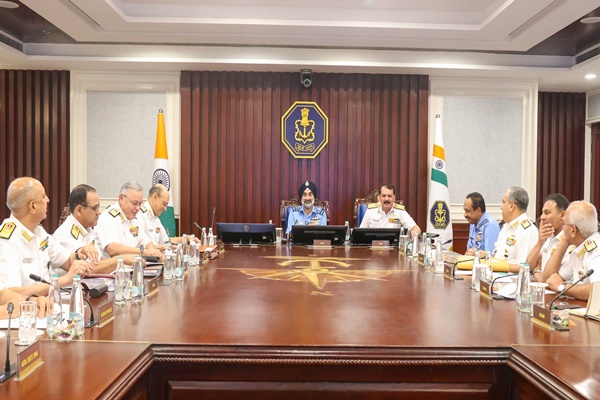
- The inaugural Naval Commanders Conference 2025 marked a major apex-level meeting, held in two phases at Karwar, Karnataka and New Delhi.
- Designed as a biannual event, it brings together top naval officials to review and enhance the operational preparedness of the Indian Navy.
- Purpose:
- To deliberate on contemporary security challenges in the maritime domain and to outline future strategies to maintain a safe, secure, and rules-based maritime environment.
Key Highlights:
- Operational Readiness & Modernisation:
- The conference reviewed the Navy’s readiness, focusing on new platforms, modern technologies, and infrastructure development.
- Discussions centered on transforming the Navy into a Combat Ready, Credible, Cohesive, and Future Ready Force.
- Strategic Initiatives:
- IOS Sagar Flag-Off: The event coincided with the launch of IOS Sagar, an initiative aimed at reinforcing India’s maritime cooperation.
- Project Seabird Developments: Inauguration of state-of-the-art marine piers, residential buildings, and critical utilities showcased the modernization drive.
Key Participants and Interactions:
- High-Level Leadership:
- Defence Minister Rajnath Singh presided over the inaugural session, underscoring the strategic importance of a robust maritime defence.
- Key military leaders, including Chief of Defence Staff General Anil Chauhan, Navy Chief Admiral Dinesh K Tripathi, and senior Ministry of Defence officials, actively participated.
- Tri-Service Synergy:
- The conference facilitated interactions with the Chiefs of the Army and Air Force, promoting cross-domain collaboration and a unified strategic approach.
- Engagement with Policy Experts:
- Officials such as Foreign Secretary Vikram Misri and G20 Sherpa Amitabh Kant offered insights into the shifting global order and India’s role as the Preferred Security Partner in the Indian Ocean Region.
Publications and Initiatives Unveiled:
- Officials such as Foreign Secretary Vikram Misri and G20 Sherpa Amitabh Kant offered insights into the shifting global order and India’s role as the Preferred Security Partner in the Indian Ocean Region.
- Strategic Documents:
- The event saw the release of key publications, including the Indian Navy’s Space Vision, Indian Naval Air Publication, and Operational Data Framework.
- A compendium for veterans titled Navy for Life and Beyond was also unveiled, reflecting the Navy's commitment to its legacy and future.
Sources
NITI Aayog’s Report on the Automotive Sector
Report Overview:
- Title & Objective:
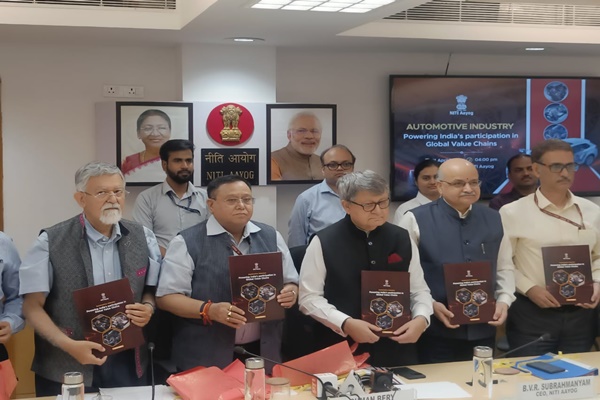
- The report, titled "Automotive Industry: Powering India’s Participation in Global Value Chains", outlines how India can bolster its position in the global automotive supply chain.
- It aims to identify opportunities and challenges, suggesting both fiscal and non-fiscal interventions to enhance global competitiveness.
Key Industry Insights:
- Global Position & Production:
- India has emerged as the fourth-largest automobile producer globally, with an annual production of nearly 6 million vehicles.
- Despite this, India’s share in the global automotive component trade is modest—around 3%—amounting to roughly $20 billion.
- Comparative Challenges:
- The report notes that India's automotive sector faces a cost disadvantage (around 10%) relative to top competitors like China, due to higher raw material costs, import duties, and freight expenses.
- Other challenges include higher depreciation rates and elevated costs of funds compared to global counterparts.
Strategic Imperatives Identified:
- Fiscal Interventions:
- Proposals include providing Opex support, developing robust clusters, incentivising research and development (R&D), and facilitating intellectual property (IP) transfers.
- Non-Fiscal Measures:
- Emphasis is placed on the adoption of Industry 4.0 technologies—such as AI, IoT, and robotics—to improve manufacturing efficiency.
- The report recommends streamlining regulatory processes, enhancing worker hour flexibility, and expanding international collaborations through free trade agreements (FTAs).
- Ambitious Production Targets:
- The vision is to boost domestic auto component production to $145 billion by 2030.
- Exports are targeted to triple from $20 billion to $60 billion, expanding India’s share in the global automotive value chain from 3% to 8%.
- Employment Impact: These measures are expected to generate an additional 2–2.5 million direct jobs, further lifting total sector employment.
Technological and Market Trends:
- Shift to Electric Vehicles (EVs):
- Rising global demand for sustainable mobility solutions and advancements in battery technology are transforming the industry.
- As key markets enlarge battery manufacturing hubs, India’s participation will depend on its ability to innovate and integrate new value chains.
- Industry 4.0 Integration:
- The infusion of digital technologies into production processes is critical—not only for boosting productivity and reducing costs but also for aligning with global manufacturing trends.
- This transition is vital for reaching high-precision segments like engine components, drive transmissions, and steering systems.
Policy Recommendations and Roadmap:
- Boosting Infrastructure and R&D:
- Developing advanced manufacturing infrastructure and fostering innovation through dedicated testing centres and R&D facilities are seen as catalysts for growth.
- Streamlined Trade and Regulatory Frameworks:
- Simplifying regulations and negotiating strategic FTAs are recommended to improve market access and enable smoother integration into global supply chains.
- Skill Development:
- Upgrading the workforce with new skills tailored to advanced manufacturing is critical for sustaining competitiveness in the evolving global automotive landscape.
Sources
National Critical Mineral Mission 2025
Overview & Launch Details:
- Mission Launch:
- Launched in 2025 by the Government of India under the Ministry of Mines.
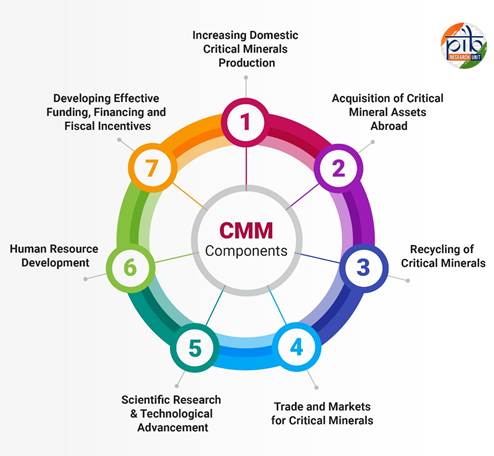
- Titled “National Critical Mineral Mission: Powering India’s Clean Energy Future”, the mission aims to establish a robust framework for self-reliance in the critical mineral sector.
- Strategic Importance:
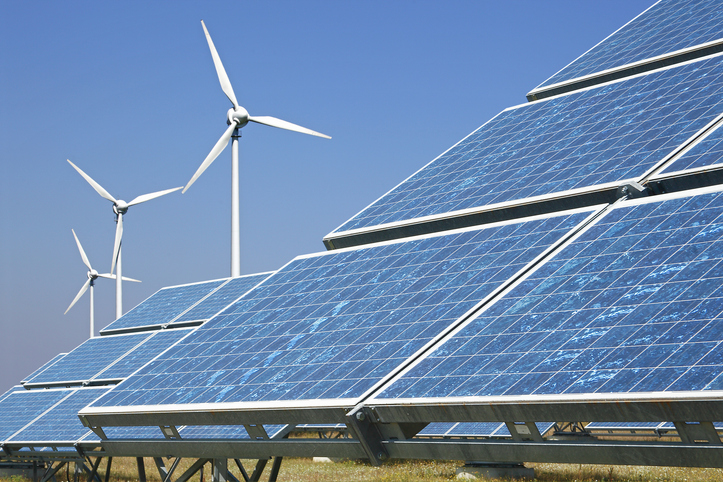
- Critical minerals are essential inputs for clean energy technologies such as solar panels, wind turbines, electric vehicles (EVs), and energy storage systems.
- These minerals play a vital role in bolstering both economic development and national security by reducing supply chain vulnerabilities.
Key Objectives & Strategic Framework:
- Self-Reliance in Critical Minerals:
- Ensure long-term availability and processing of crucial minerals for India's clean energy transition.
- Secure the national critical mineral supply chain from both domestic and foreign sources.
- Promotion of Exploration & Innovation:
- The Geological Survey of India (GSI) is tasked with conducting 1,200 exploration projects during the period 2024-25 to 2030-31 to identify and develop deposits.
- Establish a Centre of Excellence on Critical Minerals (CECM) to regularly update the critical mineral list and guide future strategy.
- Regulatory & Financial Ecosystem Enhancements:
- A committee formed in November 2022 identified 30 critical minerals, out of which 24 have been included in Part D of Schedule I of the Mines and Minerals Development and Regulation Act, 1957 (MMDR Act).
- Inclusion in Part D grants the Central Government exclusive authority to auction mining leases and composite licenses for these minerals, streamlining regulatory processes.
Key Features & Sectoral Impact:
- Essential Mineral Usage:
- Solar Energy: Minerals like silicon, tellurium, indium, and gallium are crucial for photovoltaic (PV) cells.
- Wind Energy: Rare earth elements such as dysprosium and neodymium are vital for wind turbine magnets.
- Electric Vehicles (EVs) & Energy Storage: Lithium, nickel, and cobalt are key for lithium-ion batteries.
- Economic and Strategic Objectives:
- Strengthen the global competitiveness of India’s mineral exploration, mining, beneficiation, processing, and recycling sectors.
- Enhance the value chain through improved infrastructure, technological advancements, R&D, and skill development.
- Foster innovation by integrating advanced digital tools and methodologies in mining operations.
Source
India Showcases BioE3 Policy and Integrated Biorefinery Initiatives at Mission Innovation Annual Gathering 2025
Event Overview:
- Held from April 9–11, 2025 in Seoul, South Korea, the Mission Innovation Annual Gathering brought together global leaders in clean energy innovation.
- The multilateral platform is part of Mission Innovation 2.0, an initiative aimed at accelerating clean energy technology investments and fostering international collaboration.
- The term “Mission Innovation” was coined by Prime Minister Narendra Modi during COP21 in collaboration with former French President François Hollande, underlining India’s commitment to global clean energy efforts.
Key Initiatives Showcased:
- BioE3 Policy:
- BioE3 stands for Biotechnology for Environment, Energy, and Economy.
- It is designed to promote sustainable, low-carbon manufacturing of fuels, chemicals, and materials by harnessing biotechnology.
- The policy aims to develop enabling technologies that foster an innovation-driven manufacturing ecosystem for a low-carbon future.
- Integrated Biorefinery Mission:
- India is actively advancing its Integrated Biorefinery initiatives to convert biomass into fuels, chemicals, and platform materials.
- Efforts include the integration of technologies such as Carbon Capture, Utilization, and Bioenergy (CCUB) to reduce overall carbon emissions during biomanufacturing.
- The approach supports the development of biomanufacturing pathways that could transform traditional production systems into greener, more sustainable processes.
- Institutional Framework and Collaborations:
- The Department of Biotechnology (DBT), under the Ministry of Science & Technology, has been a key driver behind these initiatives.
- India co-leads the Mission Integrated Biorefinery with the Netherlands, reflecting a model of international partnership within the Mission Innovation framework.
- The DBT played an active role at the gathering, engaging with global stakeholders through roundtable discussions, technical sessions, and field visits to clean energy facilities.
Environmental and Economic Significance:
- The initiatives highlighted at the gathering are significant for tackling climate challenges by:
- Ensuring the development of low-carbon technologies.
- Boosting domestic capacities in sustainable biomanufacturing.
- Strengthening India’s position in the global clean energy landscape.
- By fostering innovation in biotechnology and biomanufacturing, India is paving the way for a transition to greener industrial practices and enhanced energy security.
Source
Hadean Protocrust and Early Plate Tectonics: Rethinking Earth's Geological Origins
Definition & Background:
- Hadean Protocrust:
- Refers to Earth’s earliest crust formed during the Hadean Eon (approximately 4.6 to 4 billion years ago).
- This period, named after “Hades” due to its extreme, hellish conditions, featured a partially molten surface constantly bombarded by space rocks.
- Early Earth Environment:
- Characterized by intense volcanic activity, widespread magma oceans, and heavy meteoritic bombardment.
- As the magma ocean cooled, the first pieces of the crust began to solidify, forming a flaky protocrust that eventually consolidated into thicker segments—the precursors of the first continents.

Traditional Understanding of Plate Tectonics:
- The movement of thick continental plates—with processes like drifting, sliding, and subduction—has been mainly inferred by specific chemical signatures found in older rocks.
- These signatures, such as a negative niobium anomaly, were long thought to arise only from subduction-related processes, marking the onset of plate tectonics.
New Study Insights (Macquarie University-led Research):
- Key Finding:
- The study reveals that the chemical signatures traditionally associated with plate tectonics were already present in the Hadean protocrust—before the onset of actual plate movements and subduction.
- This challenges the long-held assumption that such geochemical fingerprints can only form during plate tectonic activity.
- Methodology:
- Researchers used a combination of mathematical models simulating early Earth conditions and laboratory studies to analyze the formation and evolution of Earth’s protocrust.
- Implications:
- Calls for a reassessment of the geological timeline regarding when plate tectonics began on Earth.
- Suggests that the formation of continental crust with modern chemical characteristics might have been an inherent process during the cooling of the early planet, rather than solely resulting from later tectonic activities.
Source
April 2025
30 April 202529 April 202528 April 202526 April 202525 April 202524 April 202523 April 202522 April 202521 April 202519 April 202518 April 202517 April 202516 April 202515 April 202514 April 202512 April 202511 April 202510 April 202509 April 202508 April 202507 April 202505 April 202504 April 202503 April 202502 April 202501 April 2025
Archive
October 2026
- 28 October 2026
- 27 October 2026
- 26 October 2026
- 24 October 2026
- 23 October 2026
- 22 October 2026
- 21 October 2026
- 20 October 2026
- 19 October 2026
- 17 October 2026
- 16 October 2026
- 15 October 2026
- 14 October 2026
- 13 October 2026
- 12 October 2026
- 10 October 2026
- 09 October 2026
- 08 October 2026
- 07 October 2026
- 06 October 2026
- 05 October 2026
- 03 October 2026
- 02 October 2026
- 01 October 2026
September 2026
- 30 September 2026
- 29 September 2026
- 28 September 2026
- 26 September 2026
- 25 September 2026
- 24 September 2026
- 23 September 2026
- 22 September 2026
- 21 September 2026
- 19 September 2026
- 18 September 2026
- 17 September 2026
- 16 September 2026
- 15 September 2026
- 12 September 2026
- 11 September 2026
- 10 September 2026
- 09 September 2026
- 08 September 2026
- 07 September 2026
- 05 September 2026
- 04 September 2026
- 03 September 2026
- 02 September 2026
- 01 September 2026
August 2026
- 31 August 2026
- 29 August 2026
- 27 August 2026
- 26 August 2026
- 25 August 2026
- 24 August 2026
- 22 August 2026
- 21 August 2026
- 20 August 2026
- 19 August 2026
- 18 August 2026
- 17 August 2026
- 14 August 2026
- 13 August 2026
- 12 August 2026
- 11 August 2026
- 10 August 2026
- 08 August 2026
- 07 August 2026
- 06 August 2026
- 05 August 2026
- 04 August 2026
- 03 August 2026
- 01 August 2026
July 2026
- 31 July 2026
- 30 July 2026
- 29 July 2026
- 28 July 2026
- 27 July 2026
- 25 July 2026
- 23 July 2026
- 22 July 2026
- 21 July 2026
- 20 July 2026
- 18 July 2026
- 17 July 2026
- 15 July 2026
- 14 July 2026
- 13 July 2026
- 11 July 2026
- 10 July 2026
- 09 July 2026
- 08 July 2026
- 07 July 2026
- 06 July 2026
- 04 July 2026
- 03 July 2026
- 02 July 2026
- 01 July 2026
June 2026
May 2026
April 2026
March 2026
- 31 March 2026
- 30 March 2026
- 28 March 2026
- 27 March 2026
- 26 March 2026
- 25 March 2026
- 24 March 2026
- 23 March 2026
- 21 March 2026
- 20 March 2026
- 19 March 2026
- 18 March 2026
- 17 March 2026
- 16 March 2026
- 14 March 2026
- 13 March 2026
- 12 March 2026
- 11 March 2026
- 10 March 2026
- 09 March 2026
- 07 March 2026
- 06 March 2026
- 05 March 2026
- 03 March 2026
- 02 March 2026
February 2026
- 28 February 2026
- 27 February 2026
- 26 February 2026
- 25 February 2026
- 24 February 2026
- 23 February 2026
- 21 February 2026
- 20 February 2026
- 19 February 2026
- 18 February 2026
- 17 February 2026
- 16 February 2026
- 13 February 2026
- 12 February 2026
- 11 February 2026
- 10 February 2026
- 09 February 2026
- 07 February 2026
- 06 February 2026
- 05 February 2026
- 04 February 2026
- 03 February 2026
- 02 February 2026
January 2026
- 31 January 2026
- 30 January 2026
- 29 January 2026
- 28 January 2026
- 27 January 2026
- 26 January 2026
- 24 January 2026
- 23 January 2026
- 22 January 2026
- 21 January 2026
- 20 January 2026
- 19 January 2026
- 16 January 2026
- 15 January 2026
- 14 January 2026
- 13 January 2026
- 12 January 2026
- 10 January 2026
- 09 January 2026
- 08 January 2026
- 07 January 2026
- 06 January 2026
- 05 January 2026
- 03 January 2026
- 02 January 2026
- 01 January 2026
December 2025
- 31 December 2025
- 30 December 2025
- 29 December 2025
- 27 December 2025
- 26 December 2025
- 24 December 2025
- 23 December 2025
- 22 December 2025
- 20 December 2025
- 19 December 2025
- 18 December 2025
- 17 December 2025
- 16 December 2025
- 15 December 2025
- 13 December 2025
- 12 December 2025
- 11 December 2025
- 10 December 2025
- 09 December 2025
- 08 December 2025
- 05 December 2025
- 04 December 2025
- 03 December 2025
- 02 December 2025
November 2025
- 29 November 2025
- 28 November 2025
- 27 November 2025
- 26 November 2025
- 25 November 2025
- 24 November 2025
- 22 November 2025
- 21 November 2025
- 20 November 2025
- 19 November 2025
- 18 November 2025
- 17 November 2025
- 15 November 2025
- 14 November 2025
- 13 November 2025
- 12 November 2025
- 11 November 2025
- 10 November 2025
- 08 November 2025
- 07 November 2025
- 06 November 2025
- 05 November 2025
- 04 November 2025
- 03 November 2025
- 01 November 2025
October 2025
- 31 October 2025
- 30 October 2025
- 29 October 2025
- 28 October 2025
- 27 October 2025
- 25 October 2025
- 24 October 2025
- 23 October 2025
- 22 October 2025
- 21 October 2025
- 20 October 2025
- 18 October 2025
- 17 October 2025
- 16 October 2025
- 15 October 2025
- 14 October 2025
- 13 October 2025
- 11 October 2025
- 10 October 2025
- 09 October 2025
- 08 October 2025
- 07 October 2025
- 06 October 2025
- 04 October 2025
- 03 October 2025
- 02 October 2025
- 01 October 2025
September 2025
- 30 September 2025
- 29 September 2025
- 27 September 2025
- 26 September 2025
- 25 September 2025
- 24 September 2025
- 23 September 2025
- 22 September 2025
- 20 September 2025
- 19 September 2025
- 18 September 2025
- 17 September 2025
- 16 September 2025
- 15 September 2025
- 13 September 2025
- 12 September 2025
- 11 September 2025
- 10 September 2025
- 09 September 2025
- 08 September 2025
- 06 September 2025
- 05 September 2025
- 04 September 2025
- 03 September 2025
- 02 September 2025
- 01 September 2025
August 2025
- 30 August 2025
- 29 August 2025
- 28 August 2025
- 27 August 2025
- 26 August 2025
- 25 August 2025
- 23 August 2025
- 22 August 2025
- 21 August 2025
- 20 August 2025
- 19 August 2025
- 18 August 2025
- 16 August 2025
- 14 August 2025
- 13 August 2025
- 12 August 2025
- 11 August 2025
- 08 August 2025
- 07 August 2025
- 06 August 2025
- 05 August 2025
- 04 August 2025
- 02 August 2025
- 01 August 2025
July 2025
- 31 July 2025
- 30 July 2025
- 29 July 2025
- 28 July 2025
- 26 July 2025
- 25 July 2025
- 24 July 2025
- 23 July 2025
- 22 July 2025
- 21 July 2025
- 19 July 2025
- 18 July 2025
- 17 July 2025
- 16 July 2025
- 15 July 2025
- 12 July 2025
- 11 July 2025
- 10 July 2025
- 09 July 2025
- 07 July 2025
- 05 July 2025
- 04 July 2025
- 03 July 2025
- 02 July 2025
- 01 July 2025
June 2025
- 30 June 2025
- 28 June 2025
- 27 June 2025
- 26 June 2025
- 25 June 2025
- 24 June 2025
- 23 June 2025
- 21 June 2025
- 20 June 2025
- 19 June 2025
- 18 June 2025
- 17 June 2025
- 16 June 2025
- 14 June 2025
- 13 June 2025
- 12 June 2025
- 11 June 2025
- 10 June 2025
- 09 June 2025
- 07 June 2025
- 06 June 2025
- 05 June 2025
- 04 June 2025
- 03 June 2025
- 02 June 2025
May 2025
April 2025
- 30 April 2025
- 29 April 2025
- 28 April 2025
- 26 April 2025
- 25 April 2025
- 24 April 2025
- 23 April 2025
- 22 April 2025
- 21 April 2025
- 19 April 2025
- 18 April 2025
- 17 April 2025
- 16 April 2025
- 15 April 2025
- 14 April 2025
- 12 April 2025
- 11 April 2025
- 10 April 2025
- 09 April 2025
- 08 April 2025
- 07 April 2025
- 05 April 2025
- 04 April 2025
- 03 April 2025
- 02 April 2025
- 01 April 2025
March 2025
- 31 March 2025
- 29 March 2025
- 28 March 2025
- 27 March 2025
- 26 March 2025
- 25 March 2025
- 24 March 2025
- 22 March 2025
- 21 March 2025
- 20 March 2025
- 19 March 2025
- 18 March 2025
- 17 March 2025
- 15 March 2025
- 13 March 2025
- 12 March 2025
- 11 March 2025
- 10 March 2025
- 08 March 2025
- 07 March 2025
- 06 March 2025
- 05 March 2025
- 04 March 2025
- 03 March 2025
- 01 March 2025
February 2025
- 28 February 2025
- 27 February 2025
- 26 February 2025
- 25 February 2025
- 24 February 2025
- 22 February 2025
- 21 February 2025
- 20 February 2025
- 19 February 2025
- 18 February 2025
- 17 February 2025
- 15 February 2025
- 14 February 2025
- 13 February 2025
- 12 February 2025
- 11 February 2025
- 10 February 2025
- 08 February 2025
- 07 February 2025
- 06 February 2025
- 05 February 2025
- 04 February 2025
- 03 February 2025
- 01 February 2025
January 2025
- 31 January 2025
- 30 January 2025
- 29 January 2025
- 28 January 2025
- 27 January 2025
- 25 January 2025
- 24 January 2025
- 23 January 2025
- 22 January 2025
- 21 January 2025
- 20 January 2025
- 18 January 2025
- 17 January 2025
- 16 January 2025
- 15 January 2025
- 14 January 2025
- 13 January 2025
- 11 January 2025
- 10 January 2025
- 09 January 2025
- 08 January 2025
- 07 January 2025
- 06 January 2025
- 04 January 2025
- 03 January 2025
- 02 January 2025
- 01 January 2025