
Current Affairs
Stay updated with the latest national and international events.
11 October 2025
Supreme Court Bars Retrospective Application of Age Limits in Surrogacy Law
What’s the News?
- The Supreme Court of India ruled that the age restrictions under the Surrogacy (Regulation) Act, 2021 cannot be applied retrospectively to couples who had initiated the surrogacy process before the law came into force.
- The Court held that imposing the age cap - 23–50 years for women and 26–55 years for men - on such couples would violate their right to reproductive autonomy.
- The judgment specifically protects couples who had already created and frozen embryos prior to the enactment of the law, stating that their right to use those embryos for surrogacy cannot be denied based on subsequent statutory age limits.
Key Aspects of the Judgment
- Personal Choice is Protected: The court said the right to decide about having children is a fundamental personal freedom under Article 21 of the Constitution.
- Past Actions Are Valid: For couples who had already taken steps like freezing embryos before the new law, the court protected their right to continue the surrogacy process, treating those actions as a solid commitment.
- New Rules Apply to the Future: The new age limits for surrogacy only apply to couples starting the process after the law began, not those who started earlier. Also, there are no age limits for getting pregnant naturally.
What is "Retrospective Application"?
- Simple meaning: A law has "retrospective application" when it affects actions, rights, or situations that happened before the law was passed.
- Example: If a new rule says “only people under 50 can apply for X,” and you applied at age 48 before the rule existed, applying that rule to you now would be retrospective.
- In this surrogacy case: The Supreme Court said the age limits in the 2021 Surrogacy Act cannot be applied to couples who had already started the surrogacy process (e.g., created frozen embryos) before the law came into force.
What is "Reproductive Autonomy"?
- Simple meaning: The right of a person to make free and informed decisions about their own body and whether or not to have children.
- Includes: Choosing to use assisted reproductive methods like surrogacy, IVF, or even choosing not to have children.
- Not just about women: While often discussed in the context of women’s rights, it applies to all individuals seeking to build a family.
Additional Info
- Surrogacy (Regulation) Act, 2021:
- Enacted to regulate altruistic surrogacy and prohibit commercial surrogacy in India.
- Key provisions include:
- Only Indian married couples (minimum 5 years of marriage) can avail surrogacy.
- Single women (widows/divorcees aged 35–45) are eligible; single men and LGBTQ+ individuals are excluded.
- Surrogate must be a close relative, married, with at least one child, and can act as surrogate only once.
- Constitutional Context:
- Article 21: Right to life and personal liberty includes reproductive rights (established in cases like Suchita Srivastava v. Chandigarh Admin, 2009).
- Article 14: The Court implicitly invoked equality by questioning differential treatment between natural and assisted reproduction.
- Judicial Precedents:
- Baby Manji Yamada v. Union of India (2008): Highlighted regulatory gaps in surrogacy, leading to legislative action.
- Janhit Abhiyan v. Union of India (2022): Upheld the constitutional validity of the 2021 Act but left room for interpretation on individual rights.
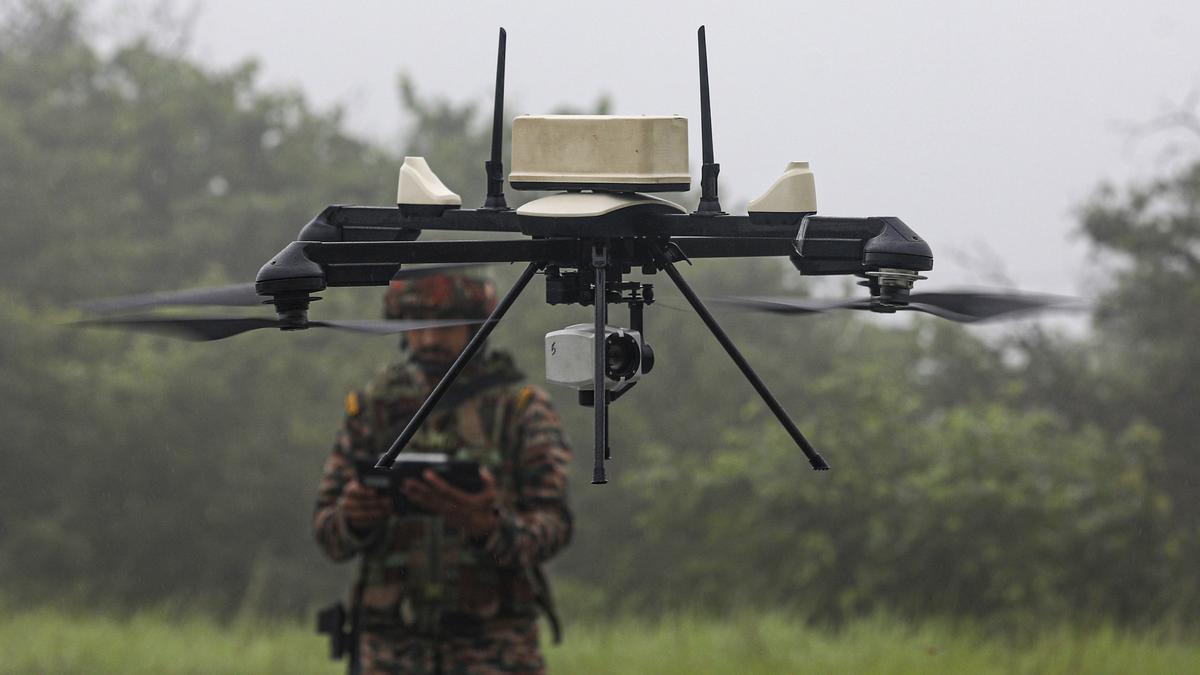
Indian Army Inducts Indigenous ‘Saksham’ Counter-UAS Grid System
What’s the News?
- New Drone Defense System: The Indian Army is buying and using a new, locally-made system called 'Saksham' to find, track, and stop enemy drones in real-time. This system uses AI to manage and protect the battlefield air space up to 3,000 meters high.
- Why It's Needed: This move, developed with BEL, is a direct response to recent incidents, like those during Operation Sindoor, which showed the army needed a better defense against dangerous drone attacks.
Saksham: Integrated C-UAS Grid System
- Full Form: Situational Awareness for Kinetic Soft and Hard Kill Assets Management.
- Core Functionality:
- Fuses inputs from radars, electro-optical sensors, RF detectors, and AI-enabled predictive analysis to generate a unified Recognised UAS Picture (RUASP).
- Integrates soft-kill (jamming, spoofing) and hard-kill (kinetic interception) capabilities under a single networked command backbone.
- Operational Scope:
- Secures the Air Littoral - the critical low-altitude airspace directly above ground troops.
- Enables 3D battlefield visualisation, automated decision support, and seamless interoperability with other systems like Akashteer for comprehensive airspace management.
- Deployment Strategy:
- Approved under the Fast Track Procurement (FTP) route for rapid fielding.
- Planned rollout to all field formations within one year.
Recent indigenous defence developments by the Indian Army
- The Army has started using three new fully Indian-made air defence systems that work together to protect against all kinds of aerial threats - from low-flying drones to high-altitude aircraft.
- It has inducted the indigenous Medium-Range Surface-to-Air Missile (MRSAM) system, which can detect and destroy enemy aircraft or missiles at medium distances, strengthening its overall air defence.
- The Akashteer system, an Indian-made automated air defence control system, is now being widely used. It brings together data from radars and other sensors to give a clear, real-time picture of the sky above the battlefield.
- The Army is preparing to buy the indigenous Quick Reaction Surface-to-Air Missile (QR-SAM) system, designed to respond within seconds to sudden aerial threats like fighter jets or cruise missiles.
PM Modi Launches ₹35,440 Crore Agri Schemes: PM Dhan Dhaanya Krishi Yojana & Mission for Aatmanirbharta in Pulses

What’s the News?
- Prime Minister Narendra Modi launched two major agricultural schemes: the Pradhan Mantri Dhan Dhaanya Krishi Yojana (PMDDKY) and the Mission for Aatmanirbharta in Pulses, with a combined outlay of ₹35,440 crore.
- Both schemes were approved by the Union Cabinet and will be implemented from the 2025–26 rabi season until 2030–31, targeting 100 low-productivity districts and aiming to make India self-reliant in pulse production.
- The launch coincided with broader agricultural infrastructure initiatives, including projects under the Agriculture Infrastructure Fund (AIF) and Pradhan Mantri Kisan Sampada Yojana.
Scheme Objectives & Key Components
Pradhan Mantri Dhan Dhaanya Krishi Yojana (PMDDKY)
- Outlay: ₹24,000 crore (converged from existing schemes).
- Target: 100 districts selected based on:
- Low agricultural productivity
- Moderate crop intensity
- Below-average access to credit.
- Key Focus Areas:
- Boosting crop diversification and sustainable farming
- Enhancing post-harvest storage at panchayat and block levels
- Improving irrigation access and credit availability
- Promoting modern technology, farmer training, and market linkages.
Mission for Aatmanirbharta in Pulses
- Outlay: ₹11,440 crore.
- Duration: 6-year plan (2025–26 to 2030–31).
- Targets by 2030–31:
- Expand cultivation area to 310 lakh hectares (increase of 35 lakh ha)
- Raise pulse production to 350 lakh tonnes
- Improve yield to 1,130 kg per hectare.
- Strategic Interventions:
- Develop and distribute high-yielding, climate-resilient seed varieties
- Strengthen the entire value chain - from procurement to processing
- Minimise post-harvest losses through better storage and logistics.
Constitutional Context
- The Prime Minister of India doesn’t launch schemes based on a single specific article of the Constitution - but the authority comes from how the Indian government is structured under the Constitution.
- The Constitution doesn’t give powers to the PM directly - it gives powers to the Union Council of Ministers, headed by the Prime Minister.
- Article 74(1) says there shall be a Council of Ministers to aid and advise the President, with the PM as its head. In practice, this means the PM leads the government’s decisions, including launching national schemes.
- Agriculture is on the State List (meaning states normally manage it), but Entry 33 of the Concurrent List allows the Central Government to act on matters like food production, distribution, and agricultural research - which covers schemes like PMDDKY and the Pulses Mission.
- The Union Cabinet (senior ministers led by the PM) must approve big schemes and spending. These two agri schemes were cleared by the Union Cabinet on October 1, 2025, before the PM launched them.
- The money for these schemes comes from the Consolidated Fund of India, which Parliament controls under Article 266 - so the government can only spend after budgetary approval.
- In short: The PM launches such schemes as head of the Central Government, using powers derived from Articles 74 and 266, and acting on agriculture-related issues allowed under the Concurrent List of the Constitution.
Sources
India Achieves Historic Milestone in THE World University Rankings 2026
What’s the News?
- In the Times Higher Education (THE) World University Rankings 2026, India has emerged as the country with the second-highest number of ranked institutions globally, surpassed only by the United States - a historic first for the nation.
- The University of Oxford (UK) retained its top position for the 10th consecutive year, followed by the Massachusetts Institute of Technology (MIT) and a tie between Princeton University and the University of Cambridge.
- This surge reflects India’s expanding higher education footprint, with a record number of Indian universities qualifying under THE’s rigorous global benchmarking framework.
India’s Performance & Global Context
- Representation: India now features more institutions in the THE rankings than ever before, securing the second spot in terms of country representation - a significant leap from previous years.
- Institutional Quality: While the focus has been on quantity, select Indian institutions are also gaining recognition for academic excellence. For instance, KIIT (Kalinga Institute of Industrial Technology) ranked 259th globally in the Academic Excellence parameter.
- Global Shifts:
- The U.S. and U.K. continue to dominate the top 10, but their overall dominance is showing signs of waning.
- China has five universities in the top 40, while Hong Kong saw six institutions enter the top 200, driven by improvements in teaching metrics.
Additional Info
- THE Ranking Methodology:
- Evaluates universities across five pillars:
- Teaching (29.5%)
- Research Environment (29%)
- Research Quality (30%)
- International Outlook (7.5%)
- Industry Impact (4%)
- Uses 18 performance indicators, including 157 million citations, 18 million publications, and surveys of over 93,000 scholars.
- Institutions must teach undergraduates and publish at least 1,000 research papers over five years to qualify.
- Evaluates universities across five pillars:
- Similar Rankings
- QS World University Rankings: Published annually by Quacquarelli Symonds (QS), a British company. It evaluates universities based on academic reputation, employer perception, faculty-student ratio, research citations, and international diversity.
- Academic Ranking of World Universities (ARWU): Also known as the Shanghai Ranking, it is released by ShanghaiRanking Consultancy. It focuses heavily on research output, including Nobel Prizes, highly cited researchers, and papers published in top journals like Nature and Science.
India and UK Launch Joint Connectivity and Innovation Centre for 6G and AI-Driven Telecom

What’s the News?
- India and the United Kingdom have jointly launched the India–UK Connectivity and Innovation Centre (CIC) with an initial investment of ₹282 crore (approximately £24 million) over four years.
- The Centre aims to accelerate 6G research, AI-native telecom networks, Non-Terrestrial Networks (NTNs), and telecom cybersecurity, fostering digital inclusion and resilient communication infrastructure.
- The initiative was announced during high-level bilateral engagements and reflects a strategic commitment to co-develop next-generation telecom technologies by leveraging complementary strengths of both nations.
Focus Areas & Strategic Objectives
- 6G and AI-Driven Networks:
- Develop AI-native architectures for future telecom systems to enable intelligent, self-optimising networks.
- Jointly shape global 6G standards through collaboration between Indian and UK research institutions and industry players.
- Non-Terrestrial Networks (NTNs):
- Integrate satellite and aerial platforms (e.g., drones, HAPS) into terrestrial networks to expand connectivity to remote and underserved regions.
- Telecom Cybersecurity:
- Build secure and resilient communication ecosystems, addressing emerging threats in 5G/6G transitions.
- Innovation Ecosystem:
- Serve as a joint R&D hub connecting academia, startups, and industry from both countries.
- Promote co-innovation, technology transfer, and capacity building in advanced connectivity domains.
India, UK Recent Relations
- India and the UK signed the Comprehensive Economic and Trade Agreement (CETA) on 24 July 2025, marking a major milestone in bilateral trade ties.
- Alongside CETA, both countries endorsed a long-term India–UK Vision 2035, aiming to deepen cooperation across sectors like technology, education, and green energy.
- A Social Security Agreement was also implemented in 2025 to ease labor mobility and reduce costs for businesses deploying workers across both countries.
Sources
Venezuelan Leader María Corina Machado Wins Nobel Peace Prize 2025

What’s the News?
- The Norwegian Nobel Committee has awarded the 2025 Nobel Peace Prize to María Corina Machado, a Venezuelan opposition leader.
- She has been recognized for her "tireless work promoting democratic rights" and her non-violent struggle for a peaceful transition from dictatorship to democracy in Venezuela.
- The committee highlighted her role as a unifying figure in a divided opposition and a symbol of civilian courage against an authoritarian regime.
A Non-Violent Struggle for Democracy
- María Corina Machado has been a prominent figure in Venezuelan politics for over two decades, consistently advocating for free and fair elections and defending human rights.
- She co-founded Súmate, a civil society group focused on electoral transparency, embodying her principle of choosing "ballots over bullets."
- Despite facing political persecution, including being barred from running for president, she successfully unified the opposition and mobilized hundreds of thousands of volunteers to monitor the 2024 elections, documenting results to counter official narratives.
Indian Nobel Peace Laureates:
- Mother Teresa (1979): Awarded for her humanitarian work with the poor and destitute in India through the Missionaries of Charity.
- Kailash Satyarthi (2014): Honored (jointly with Malala Yousafzai) for his struggle against the suppression of children and for the right of all children to education.
- The 14th Dalai Lama (1989): Though a Tibetan leader, he has resided in India since 1959 and received the prize for his non-violent struggle for the liberation of Tibet.
Russia Moves to Withdraw from U.S. Plutonium Disposal Pact
What’s the News?
- On October 8, 2025, Russia’s State Duma (lower house of parliament) approved the country’s formal withdrawal from the Plutonium Management and Disposition Agreement (PMDA) with the United States.
- The PMDA, originally signed in 2000 and enforced in 2011, obligated both nations to irreversibly dispose of 34 metric tonnes each of surplus weapons-grade plutonium - enough to produce nearly 17,000 nuclear warheads.
- Russia had suspended implementation in 2016, citing U.S. sanctions, NATO expansion, and alleged non-compliance by the U.S. in plutonium disposal methods.
Key Aspects of the Withdrawal
- Reasons Cited by Russia:
- The U.S. allegedly stored plutonium in liquid form, which Moscow claims remains reusable for weapons, deviating from the agreed method of converting it into mixed oxide (MOX) fuel for civilian reactors.
- Broader geopolitical tensions, including U.S. support for Ukraine and NATO’s eastward expansion, were highlighted as making the agreement “unworkable”.
- Legal Process:
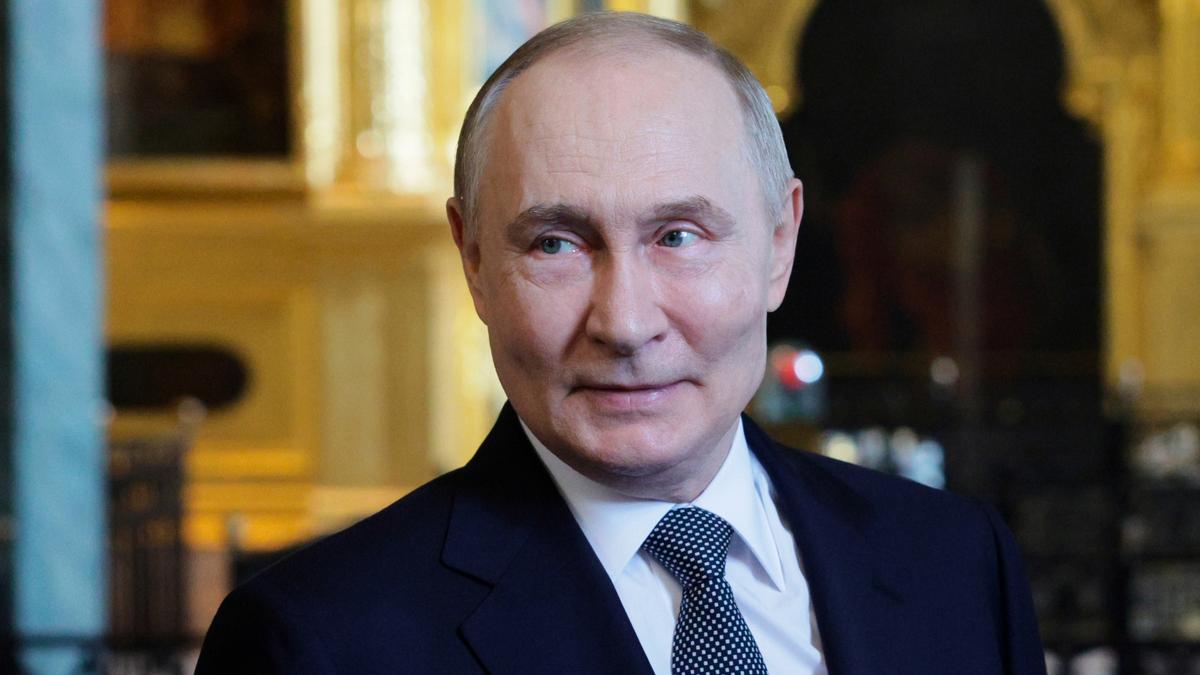
- The withdrawal requires ratification by the Federation Council (upper house) and final approval by President Vladimir Putin before becoming law.
- Strategic Implications:
- The move signals further erosion of U.S.–Russia nuclear arms control frameworks, following the collapse of treaties like INF and Open Skies.
- Despite the withdrawal, both nations still possess an estimated 8,000 nuclear warheads combined, down from Cold War peaks but still posing global strategic risks.
Additional Info
- Plutonium Management and Disposition Agreement (PMDA):
- Signed in 2000 under Presidents Bill Clinton and Vladimir Putin.
- Revised in 2010 to address implementation challenges; entered into force in 2011.
- Required both parties to render plutonium “unusable in nuclear weapons” through MOX fuel fabrication or immobilization.
- Current Nuclear Landscape:
- The U.S. abandoned its MOX facility in South Carolina in 2018 due to cost overruns, opting instead for dilution and disposal - a method Russia contested as non-compliant.
- No active bilateral nuclear arms control treaty remains in force between the U.S. and Russia since the New START Treaty lapsed without renewal discussions.
- Global Security Context:
- The withdrawal undermines non-proliferation norms and may encourage other nuclear-armed states to resist disarmament commitments.
- Contrasts with India’s consistent adherence to voluntary moratorium on nuclear testing and support for Fissile Material Cut-off Treaty (FMCT) negotiations.
October 2025
31 October 202530 October 202529 October 202528 October 202527 October 202525 October 202524 October 202523 October 202522 October 202521 October 202520 October 202518 October 202517 October 202516 October 202515 October 202514 October 202513 October 202511 October 202510 October 202509 October 202508 October 202507 October 202506 October 202504 October 202503 October 202502 October 202501 October 2025
Archive
October 2026
- 27 October 2026
- 26 October 2026
- 24 October 2026
- 23 October 2026
- 22 October 2026
- 21 October 2026
- 20 October 2026
- 19 October 2026
- 17 October 2026
- 16 October 2026
- 15 October 2026
- 14 October 2026
- 13 October 2026
- 12 October 2026
- 10 October 2026
- 09 October 2026
- 08 October 2026
- 07 October 2026
- 06 October 2026
- 05 October 2026
- 03 October 2026
- 02 October 2026
- 01 October 2026
September 2026
- 30 September 2026
- 29 September 2026
- 28 September 2026
- 26 September 2026
- 25 September 2026
- 24 September 2026
- 23 September 2026
- 22 September 2026
- 21 September 2026
- 19 September 2026
- 18 September 2026
- 17 September 2026
- 16 September 2026
- 15 September 2026
- 12 September 2026
- 11 September 2026
- 10 September 2026
- 09 September 2026
- 08 September 2026
- 07 September 2026
- 05 September 2026
- 04 September 2026
- 03 September 2026
- 02 September 2026
- 01 September 2026
August 2026
- 31 August 2026
- 29 August 2026
- 27 August 2026
- 26 August 2026
- 25 August 2026
- 24 August 2026
- 22 August 2026
- 21 August 2026
- 20 August 2026
- 19 August 2026
- 18 August 2026
- 17 August 2026
- 14 August 2026
- 13 August 2026
- 12 August 2026
- 11 August 2026
- 10 August 2026
- 08 August 2026
- 07 August 2026
- 06 August 2026
- 05 August 2026
- 04 August 2026
- 03 August 2026
- 01 August 2026
July 2026
- 31 July 2026
- 30 July 2026
- 29 July 2026
- 28 July 2026
- 27 July 2026
- 25 July 2026
- 23 July 2026
- 22 July 2026
- 21 July 2026
- 20 July 2026
- 18 July 2026
- 17 July 2026
- 15 July 2026
- 14 July 2026
- 13 July 2026
- 11 July 2026
- 10 July 2026
- 09 July 2026
- 08 July 2026
- 07 July 2026
- 06 July 2026
- 04 July 2026
- 03 July 2026
- 02 July 2026
- 01 July 2026
June 2026
May 2026
April 2026
March 2026
- 31 March 2026
- 30 March 2026
- 28 March 2026
- 27 March 2026
- 26 March 2026
- 25 March 2026
- 24 March 2026
- 23 March 2026
- 21 March 2026
- 20 March 2026
- 19 March 2026
- 18 March 2026
- 17 March 2026
- 16 March 2026
- 14 March 2026
- 13 March 2026
- 12 March 2026
- 11 March 2026
- 10 March 2026
- 09 March 2026
- 07 March 2026
- 06 March 2026
- 05 March 2026
- 03 March 2026
- 02 March 2026
February 2026
- 28 February 2026
- 27 February 2026
- 26 February 2026
- 25 February 2026
- 24 February 2026
- 23 February 2026
- 21 February 2026
- 20 February 2026
- 19 February 2026
- 18 February 2026
- 17 February 2026
- 16 February 2026
- 13 February 2026
- 12 February 2026
- 11 February 2026
- 10 February 2026
- 09 February 2026
- 07 February 2026
- 06 February 2026
- 05 February 2026
- 04 February 2026
- 03 February 2026
- 02 February 2026
January 2026
- 31 January 2026
- 30 January 2026
- 29 January 2026
- 28 January 2026
- 27 January 2026
- 26 January 2026
- 24 January 2026
- 23 January 2026
- 22 January 2026
- 21 January 2026
- 20 January 2026
- 19 January 2026
- 16 January 2026
- 15 January 2026
- 14 January 2026
- 13 January 2026
- 12 January 2026
- 10 January 2026
- 09 January 2026
- 08 January 2026
- 07 January 2026
- 06 January 2026
- 05 January 2026
- 03 January 2026
- 02 January 2026
- 01 January 2026
December 2025
- 31 December 2025
- 30 December 2025
- 29 December 2025
- 27 December 2025
- 26 December 2025
- 24 December 2025
- 23 December 2025
- 22 December 2025
- 20 December 2025
- 19 December 2025
- 18 December 2025
- 17 December 2025
- 16 December 2025
- 15 December 2025
- 13 December 2025
- 12 December 2025
- 11 December 2025
- 10 December 2025
- 09 December 2025
- 08 December 2025
- 05 December 2025
- 04 December 2025
- 03 December 2025
- 02 December 2025
November 2025
- 29 November 2025
- 28 November 2025
- 27 November 2025
- 26 November 2025
- 25 November 2025
- 24 November 2025
- 22 November 2025
- 21 November 2025
- 20 November 2025
- 19 November 2025
- 18 November 2025
- 17 November 2025
- 15 November 2025
- 14 November 2025
- 13 November 2025
- 12 November 2025
- 11 November 2025
- 10 November 2025
- 08 November 2025
- 07 November 2025
- 06 November 2025
- 05 November 2025
- 04 November 2025
- 03 November 2025
- 01 November 2025
October 2025
- 31 October 2025
- 30 October 2025
- 29 October 2025
- 28 October 2025
- 27 October 2025
- 25 October 2025
- 24 October 2025
- 23 October 2025
- 22 October 2025
- 21 October 2025
- 20 October 2025
- 18 October 2025
- 17 October 2025
- 16 October 2025
- 15 October 2025
- 14 October 2025
- 13 October 2025
- 11 October 2025
- 10 October 2025
- 09 October 2025
- 08 October 2025
- 07 October 2025
- 06 October 2025
- 04 October 2025
- 03 October 2025
- 02 October 2025
- 01 October 2025
September 2025
- 30 September 2025
- 29 September 2025
- 27 September 2025
- 26 September 2025
- 25 September 2025
- 24 September 2025
- 23 September 2025
- 22 September 2025
- 20 September 2025
- 19 September 2025
- 18 September 2025
- 17 September 2025
- 16 September 2025
- 15 September 2025
- 13 September 2025
- 12 September 2025
- 11 September 2025
- 10 September 2025
- 09 September 2025
- 08 September 2025
- 06 September 2025
- 05 September 2025
- 04 September 2025
- 03 September 2025
- 02 September 2025
- 01 September 2025
August 2025
- 30 August 2025
- 29 August 2025
- 28 August 2025
- 27 August 2025
- 26 August 2025
- 25 August 2025
- 23 August 2025
- 22 August 2025
- 21 August 2025
- 20 August 2025
- 19 August 2025
- 18 August 2025
- 16 August 2025
- 14 August 2025
- 13 August 2025
- 12 August 2025
- 11 August 2025
- 08 August 2025
- 07 August 2025
- 06 August 2025
- 05 August 2025
- 04 August 2025
- 02 August 2025
- 01 August 2025
July 2025
- 31 July 2025
- 30 July 2025
- 29 July 2025
- 28 July 2025
- 26 July 2025
- 25 July 2025
- 24 July 2025
- 23 July 2025
- 22 July 2025
- 21 July 2025
- 19 July 2025
- 18 July 2025
- 17 July 2025
- 16 July 2025
- 15 July 2025
- 12 July 2025
- 11 July 2025
- 10 July 2025
- 09 July 2025
- 07 July 2025
- 05 July 2025
- 04 July 2025
- 03 July 2025
- 02 July 2025
- 01 July 2025
June 2025
- 30 June 2025
- 28 June 2025
- 27 June 2025
- 26 June 2025
- 25 June 2025
- 24 June 2025
- 23 June 2025
- 21 June 2025
- 20 June 2025
- 19 June 2025
- 18 June 2025
- 17 June 2025
- 16 June 2025
- 14 June 2025
- 13 June 2025
- 12 June 2025
- 11 June 2025
- 10 June 2025
- 09 June 2025
- 07 June 2025
- 06 June 2025
- 05 June 2025
- 04 June 2025
- 03 June 2025
- 02 June 2025
May 2025
April 2025
- 30 April 2025
- 29 April 2025
- 28 April 2025
- 26 April 2025
- 25 April 2025
- 24 April 2025
- 23 April 2025
- 22 April 2025
- 21 April 2025
- 19 April 2025
- 18 April 2025
- 17 April 2025
- 16 April 2025
- 15 April 2025
- 14 April 2025
- 12 April 2025
- 11 April 2025
- 10 April 2025
- 09 April 2025
- 08 April 2025
- 07 April 2025
- 05 April 2025
- 04 April 2025
- 03 April 2025
- 02 April 2025
- 01 April 2025
March 2025
- 31 March 2025
- 29 March 2025
- 28 March 2025
- 27 March 2025
- 26 March 2025
- 25 March 2025
- 24 March 2025
- 22 March 2025
- 21 March 2025
- 20 March 2025
- 19 March 2025
- 18 March 2025
- 17 March 2025
- 15 March 2025
- 13 March 2025
- 12 March 2025
- 11 March 2025
- 10 March 2025
- 08 March 2025
- 07 March 2025
- 06 March 2025
- 05 March 2025
- 04 March 2025
- 03 March 2025
- 01 March 2025
February 2025
- 28 February 2025
- 27 February 2025
- 26 February 2025
- 25 February 2025
- 24 February 2025
- 22 February 2025
- 21 February 2025
- 20 February 2025
- 19 February 2025
- 18 February 2025
- 17 February 2025
- 15 February 2025
- 14 February 2025
- 13 February 2025
- 12 February 2025
- 11 February 2025
- 10 February 2025
- 08 February 2025
- 07 February 2025
- 06 February 2025
- 05 February 2025
- 04 February 2025
- 03 February 2025
- 01 February 2025
January 2025
- 31 January 2025
- 30 January 2025
- 29 January 2025
- 28 January 2025
- 27 January 2025
- 25 January 2025
- 24 January 2025
- 23 January 2025
- 22 January 2025
- 21 January 2025
- 20 January 2025
- 18 January 2025
- 17 January 2025
- 16 January 2025
- 15 January 2025
- 14 January 2025
- 13 January 2025
- 11 January 2025
- 10 January 2025
- 09 January 2025
- 08 January 2025
- 07 January 2025
- 06 January 2025
- 04 January 2025
- 03 January 2025
- 02 January 2025
- 01 January 2025