Current Affairs
Stay updated with the latest national and international events.
11 May 2026
National Technology Day 2026
What’s the News?
- India observes National Technology Day every year on 11 May to mark the anniversary of the 1998 Pokhran‑II nuclear tests, codenamed Operation Shakti.
- The day also honours Indian scientists, engineers, and technologists who have strengthened the country’s strategic and civilian technological capabilities.
- The 2026 theme is “Responsible Innovation for Inclusive Growth”, reflecting a focus on sustainable, equitable, and ethical technological progress.
- Prime Minister Narendra Modi, in a recent address, recalled the tests as a demonstration of India’s unwavering political will and scientific prowess, emphasizing that no external pressure could force India to compromise its national security.
Operation Shakti: The Nuclear Tests
- A series of five underground nuclear explosions conducted at the Pokhran Test Range in Rajasthan.
- Three devices were detonated on 11 May 1998:
- Shakti I – a two‑stage thermonuclear device (fusion bomb) with a controlled yield of 45 kilotons (kt).
- Shakti II – a 15 kt fission device, a weaponised version of the 1974 design.
- Shakti III – a 0.2 kt sub‑kiloton experimental device.
- Two additional sub‑kiloton tests (Shakti IV & V) were carried out on 13 May 1998 to gather data for computer‑simulated validation of advanced weapon concepts.
- Key scientific leaders:
- Dr. A. P. J. Abdul Kalam – Scientific Adviser to the Prime Minister and Chief Coordinator.
- Dr. R. Chidambaram – Chairman, Atomic Energy Commission; primary architect of the devices.
- Dr. Anil Kakodkar – Director, Bhabha Atomic Research Centre (BARC).
- K. Santhanam – Director, Test Site Preparations.
- The tests were conducted under total secrecy to evade foreign surveillance satellites and validated India’s ability to design nuclear weapons across a wide yield spectrum.
India’s Nuclear Triad: A Full‑Spectrum Deterrent
- Since 1998, India has built a complete nuclear triad — the capability to deliver nuclear weapons from land, air, and sea.
- Land‑based leg: Agni series of ballistic missiles.
- Agni‑I (700 km) to Agni‑5 (5,000 km+), with newer variants (Agni‑6) expected to have ranges beyond 10,000 km.
- Air‑based leg: Fighter aircraft of the Indian Air Force — Jaguar, Mirage‑2000, and Rafale — are certified for nuclear strike roles.
- Sea‑based leg: Nuclear‑powered ballistic missile submarines (SSBNs).
- INS Arihant (commissioned 2016)
- INS Arighat (commissioned 2024)
- INS Aridhaman (commissioned 2026) — can carry the K‑4 submarine‑launched ballistic missile with a 3,500 km range.
- According to the Arms Control Association, India possesses an estimated 172 nuclear warheads, all under the purview of the Strategic Forces Command.
- India’s No‑First‑Use (NFU) doctrine makes the sea‑based leg especially critical; submarines are the most survivable platform, ensuring credible second‑strike capability.
Additional Information
- Historical context:
- India’s nuclear programme began in the 1940s under Dr. Homi J. Bhabha.
- First nuclear test, Operation Smiling Buddha, was conducted on 18 May 1974 — a “peaceful nuclear explosion”.
- The 1998 tests were prompted by the security environment following China’s 1964 nuclear test and Pakistan’s covert nuclear programme.
- Nuclear doctrine & command structure:
- India’s nuclear policy is governed by Cabinet Committee on Security (CCS) decisions.
- Nuclear Command Authority (NCA) comprises the Political Council (chaired by PM) and the Executive Council (chaired by National Security Adviser).
- Strategic Forces Command (SFC) manages the nuclear arsenal.
- Key agencies involved:
- Department of Atomic Energy (DAE)
- Defence Research and Development Organisation (DRDO)
- Bhabha Atomic Research Centre (BARC)
- Atomic Energy Regulatory Board (AERB)
- Relevant constitutional & legal framework:
- India is not a signatory to the Nuclear Non‑Proliferation Treaty (NPT) but maintains a strong non‑proliferation record.
- The Atomic Energy Act, 1962 provides the statutory basis for all nuclear activities.
- India has entered into Civil Nuclear Cooperation Agreements with several countries (e.g., US, Russia, France) after the 2008 NSG waiver.
Sources
India Ranks 3rd Globally in Installed Renewable Energy Capacity
What’s the News?
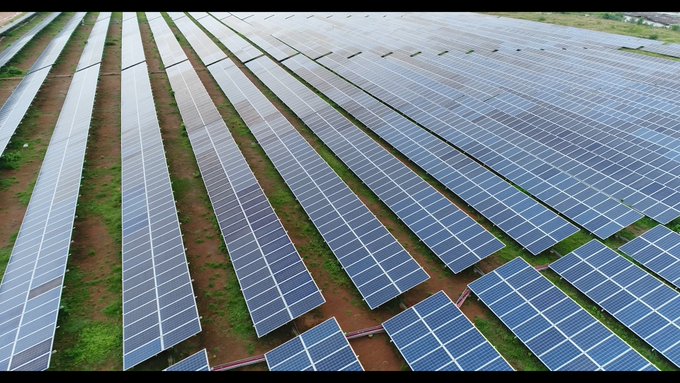
- India has become the world's third-largest country in terms of installed renewable energy capacity, moving ahead of Brazil.
- Key Data Point: As per the International Renewable Energy Agency (IRENA)'s Renewable Energy Statistics 2026, India's total renewable energy installed capacity stands at 250.52 GW, behind China (2,258.02 GW) and the United States (467.92 GW).
- This was announced by Union Minister for New and Renewable Energy, Pralhad Joshi, who also highlighted that India’s total non-fossil fuel capacity, including large hydro and nuclear, has reached 283.46 GW.
- The milestone was driven by a record 55.3 GW of non-fossil capacity addition during Financial Year (FY) 2025-26.
Global and Domestic Energy Landscape
- IRENA's Top 5 Ranking (as of Dec 2025):
- China: 2,258.02 GW
- United States: 467.92 GW
- India: 250.52 GW
- Brazil: 228.20 GW
- Germany: 199.92 GW
- India's Non-Fossil Fuel Capacity Mix (as of 31 March 2026): The total non-fossil fuel capacity of 283.46 GW is broken down as follows:
- Total Renewable Energy: 274.68 GW
- Solar Power: 150.26 GW (~53% of non-fossil capacity)
- Large Hydropower: 51.41 GW
- Wind Power: 56.09 GW
- Bioenergy: 11.75 GW
- Small Hydropower: 5.17 GW
- Nuclear Power: 8.78 GW
- Total Renewable Energy: 274.68 GW
- Record Generation: In July 2025, renewables met an all-time high of 51.5% of the country's total electricity demand.
Drivers and Challenges
- Key Growth Drivers:
- Record Solar Surge: India installed ~44.6 GW of new solar capacity in FY 2025-26, an 87.2% increase year-on-year, with ground-mounted solar installations alone growing 106%.
- Policy Support: The government's ambitious target of 500 GW of non-fossil fuel capacity by 2030, announced at COP26, is a major catalyst. A plethora of schemes have been launched to achieve this, including the Production Linked Incentive (PLI) Scheme for high-efficiency solar PV modules, with an outlay of ₹24,000 crore.
- Persistent Bottlenecks:
- Import Dependence: Despite domestic manufacturing growth, India still heavily relies on imports for upstream solar components like wafers and polysilicon. In FY 2024-25, India imported ~35 million solar modules worth $1.6 billion, with an estimated 60–80% sourced from China.
- Financing Gap: Achieving the 500 GW target by 2030 requires an estimated investment of $300 billion. While instruments like Sovereign Green Bonds (SGrBs) are being used, investor demand remains a challenge.
Additional Info
- Historical Context:
- 1970s: India began exploring renewable energy after the oil crisis, establishing a Commission for Additional Sources of Energy in 1981.
- 1992: The Ministry of Non-Conventional Energy Sources was formed, later renamed the Ministry of New and Renewable Energy (MNRE) in 2006.
- 2010: The Jawaharlal Nehru National Solar Mission (JNNSM) was launched under the National Action Plan on Climate Change (NAPCC), with an initial target of 20 GW solar by 2022, later revised to 100 GW.
- Key Initiatives & Policies:
- Production Linked Incentive (PLI) Scheme: Aims to build a domestic ecosystem for high-efficiency solar PV module manufacturing to reduce import dependence. It has attracted ₹48,120 crore in investment and created ~38,500 direct jobs.
- Sovereign Green Bonds (SGrBs): The Government of India issued its first tranche of SGrBs worth INR 80 billion in January 2023 to fund green infrastructure projects, including renewable energy.
- Green Energy Corridors: A scheme to facilitate the evacuation and integration of power from large-scale renewable energy projects into the national grid.
- Key Organizations:
- International Renewable Energy Agency (IRENA): An intergovernmental organization that publishes the authoritative annual
Renewable Energy Statistics. - Solar Energy Corporation of India (SECI): A CPSU implementing various schemes, including the PLI scheme, and responsible for solar park development.
- Ministry of New and Renewable Energy (MNRE): The nodal ministry for all renewable energy policy matters in India.
- Bureau of Energy Efficiency (BEE): A statutory body under the Ministry of Power, which handles programs related to energy conservation.
- International Renewable Energy Agency (IRENA): An intergovernmental organization that publishes the authoritative annual
- Constitutional & Legal Framework:
- Energy Transition and Renewable Capacity: A subject in the Concurrent List, allowing both the Centre and states to legislate.
- Electricity Act, 2003: Mandates state electricity regulatory commissions to promote renewable energy through specified purchase obligations (Renewable Purchase Obligations - RPOs).
- Energy Conservation Act, 2001: Provides a legal framework for energy efficiency and lays the basis for BEE star ratings and energy savings certificates.
Sources
India's Data Governance Crisis

What’s the News?
- A recent analysis has brought into sharp focus the crisis of data governance and data standardisation in India, highlighting how fragmented and non-standardised government databases are causing policy inefficiencies, significant fiscal leakages, and poor interoperability across ministries.
- The findings underscore that despite generating massive volumes of data, the lack of a common "grammar" for data is forcing Parliamentarians to ask basic questions (e.g., how many schools have functional toilets) because standardised, machine-readable public data is unavailable.
- The discourse has renewed attention on the proposed India Data Management Office (IDMO) under the National Data Governance Framework Policy (NDGFP) as the potential keystone for reform.
The Data Governance Crisis: Anatomy of the Problem
- Lack of Interoperability: Ministries and departments operate in data silos with no shared standards for common indicators. A NITI Aayog vision document noted that even basic attributes like time periods and regional definitions are inconsistent across departments.
- Duplication and Ghost Beneficiaries: Welfare databases often list the same individual multiple times due to a lack of unified schemas. This leads to fiscal leakages that inflate government spending by 4%–7% annually.
- Conflicting Official Estimates: In the health sector, childhood tuberculosis cases are recorded separately in the Health Management Information System (HMIS), disease surveillance networks, and immunisation registries, often resulting in the same patient being counted multiple times.
- Outdated Methodologies and Global Rankings: India’s performance in international indices suffers due to missing or outdated data. In the Global Innovation Index 2024, India had missing data for two indicators and outdated figures for eight others, with several relying on data over a year old.
- Accountability Gaps: A large share of questions asked during the 17th Lok Sabha (2019–24) sought basic administrative facts that should ideally exist in the public domain in a standardised, accessible format, reflecting weak public data infrastructure and transparency.
Impact and Economic Costs
- The Organisation for Economic Co‑operation and Development (OECD) estimates that improving public‑sector data availability and sharing could add 1.5% to India’s GDP, which rises to 2.5% if private‑sector data is included.
- Fiscal clean‑up exercises have demonstrated the scale of potential savings:
- Deleting 17.1 million ineligible names from the Pradhan Mantri Kisan Samman Nidhi (PM‑KISAN) scheme was expected to save ₹90 billion in FY2024.
- Removing 35 million bogus LPG connections could save ₹210 billion over two years.
- Eliminating 16 million fake ration cards may save around ₹100 billion annually.
- Beyond direct fiscal costs, poor data governance leads to uncertain decision‑making, with policymakers often disregarding conflicting data in favour of anecdote or political expediency, and stifles innovation as startups and researchers lose out when high‑quality public data is unavailable.
Government Initiatives
- National Data Governance Framework Policy (NDGFP): A draft policy released by the Ministry of Electronics and Information Technology (MeitY) aimed at transforming the data ecosystem, ensuring non‑personal data is accessible for research and innovation while safeguarding privacy.
- India Data Management Office (IDMO): Proposed as the central body under the NDGFP to develop and enforce common rules, standards, guidelines, and protocols for data across all Ministries and States. It would be set up under the Digital India Corporation and is expected to resolve inter‑ministerial methodological disputes and audit compliance.
- National Data and Analytics Platform (NDAP): A NITI Aayog initiative to make government datasets user‑friendly, interoperable, and easy to analyse.
- Data Governance Quality Index (DGQI): A tool developed by NITI Aayog to assess the data readiness and governance quality of various administrative Ministries and Departments.
- Digital Personal Data Protection (DPDP) Act, 2023: Provides the legal framework empowering citizens over their personal data, complementing the NDGFP’s focus on non‑personal data.
Global Best Practices
- Estonia’s X‑Road: A decentralised, interoperable data‑sharing layer that connects public and private sector databases, enabling seamless and secure digital governance.
- Singapore’s Smart Nation Initiative: Integrates data systems across urban planning, health, and transport to improve public service delivery and governance.
- United Kingdom’s Open Data Framework: Promotes standardised, machine‑readable, and publicly accessible government datasets to enhance transparency and innovation.
- European Union’s Data Governance Framework: Harmonises data‑sharing standards and rules across member states to ensure consistency and comparability.
Additional Info
- Data Standardisation in Governance: Refers to the process of collecting, storing, processing, and presenting information in a uniform format across institutions, ensuring common definitions, classification systems, and reporting methodologies.
- Related Constitutional/Policy Context:
- Data Governance: A subject that cuts across the Union List, State List, and Concurrent List, with IT and personal data protection under the Union List while public health and agriculture (key data domains) are in the State List.
- Right to Information (RTI) Act, 2005: Provides a legal basis for proactive disclosure of government data, though its effectiveness is undermined when data is not standardised or machine‑readable.
- National Data Sharing and Accessibility Policy (NDSAP), 2012: The earlier policy framework for open government data, now being subsumed under the NDGFP.
- Key Stakeholders & Organisations:
- Ministry of Electronics and Information Technology (MeitY): Nodal ministry for the NDGFP and IDMO.
- NITI Aayog: Drives the NDAP and DGQI.
- Ministry of Statistics and Programme Implementation (MoSPI): Responsible for statistical standards, conducting large‑scale surveys, and coordinating between statistical agencies.
- Digital India Corporation (DIC): The proposed hosting body for the IDMO.
- Data Generation vs. Usability: India generates massive volumes of data—with over 1.4 billion mobile subscribers and the world’s largest biometric ID system (Aadhaar)—but ranks low in global data usability indices due to the lack of standardisation and interoperability.
Sources
e-KYC Made Mandatory for Ration Purchase

What’s the News?
- The Department of Civil Supplies, Puducherry, has made e-KYC registration mandatory for Pradhan Mantri Garib Kalyan Anna Yojana (PMGKAY) beneficiaries to receive food subsidies through the newly launched Central Bank Digital Currency (CBDC) pilot project in the Union Territory. This replaces the earlier Direct Benefit Transfer (DBT)-Cash model.
- Beneficiaries who fail to complete the e-KYC will become ineligible to receive the digital currency (e₹) for purchasing subsidised foodgrains.
- The move aligns with the Targeted Public Distribution System (Control) Amendment Order, 2025, which mandates a nationwide e-KYC renewal for all ration card holders every five years.
CBDC-Based Food Subsidy Pilot: A Paradigm Shift in PDS
- Launch and Location: The pilot was inaugurated in Puducherry on February 26, 2026, by Union Minister Pralhad Joshi. It follows a similar pilot launched earlier in Ahmedabad, Gujarat.
- Mechanism: The Reserve Bank of India (RBI) generates programmable digital coupons (e₹) that are credited directly into a beneficiary’s CBDC wallet, bypassing conventional bank accounts.
- The digital currency is purpose-bound, meaning it can be redeemed only for foodgrains at designated Fair Price Shops (FPS) or authorised merchant outlets.
- The e-wallet is valid for three months from the date of issuance.
- Key Drivers:
- Leakage Prevention: The system is designed to address challenges related to biometric authentication failures and e-POS operational issues while ensuring secure, traceable, and real-time transactions.
- Entitlement Clarity: It operationalises the vision of “Every grain, Every rupee, Every entitlement” reaching the rightful beneficiary.
The Mandatory e-KYC Usage Requirement
- Process: PMGKAY beneficiaries in Puducherry who have not completed e-KYC must visit the nearest Common Service Centre (CSC) with their Aadhaar and ration cards. The e-KYC is completed free of cost.
- Eligibility Gate: Only beneficiaries who have completed e-KYC will be eligible to receive the digital currency. Special camps are being organised in each constituency to facilitate the process.
- Automatic Disqualification: Incomplete e-KYC blocks the flow of the digital subsidy, making it a critical compliance requirement for continued food security access.
Nationwide Context: TPDS (Control) Amendment Order, 2025
- Legal Backing: The Union Ministry of Consumer Affairs, Food and Public Distribution notified the TPDS (Control) Amendment Order, 2025, which came into force on July 22, 2025.
- Key Provisions:
- Mandatory e-KYC for all eligible ration card households every five years to keep records current.
- Ration cards unused for six months will be temporarily disabled, with a field-level verification conducted within three months to determine eligibility.
- Restricts issuance of separate ration cards to individuals below 18 years of age and requires Aadhaar capture for children below five years.
- Introduces a First-In-First-Out (FIFO) method for new ration card issuance and mandates states to publish real-time waiting lists.
Additional Info
- Terms & Definitions:
- Central Bank Digital Currency (CBDC): A digital form of sovereign currency issued by a central bank. In India, the digital currency is termed e₹ or the Digital Rupee and is distinct from private cryptocurrencies.
- Pradhan Mantri Garib Kalyan Anna Yojana (PMGKAY): A food security scheme providing free foodgrains to eligible beneficiaries under the National Food Security Act (NFSA). It was initially launched as a pandemic relief measure and later integrated with the regular NFSA provisions.
- Fair Price Shops (FPS): Licensed retail outlets under the PDS that distribute subsidised foodgrains and essential commodities to ration card holders.
- Common Service Centres (CSCs): Physical access points that deliver digital public services at the village and local level, forming a key pillar of the Digital India programme.
- Related Policy Framework:
- One Nation One Ration Card (ONORC): Enables nationwide portability of ration cards, allowing beneficiaries to lift their entitled foodgrains from any FPS in the country. The CBDC pilot builds on these existing digital PDS reforms.
- Direct Benefit Transfer (DBT): A governance mechanism to transfer subsidies directly into beneficiaries' accounts to eliminate leakages and middlemen.
- National Food Security Act (NFSA), 2013: Provides the legal entitlement for subsidised foodgrains to a specified percentage of the population.
Sources
India Activates 165-Lab ‘Viral Shield’ for Hantavirus Surveillance

What’s the News?
- The Union Health Ministry has activated the nationwide Viral Research and Diagnostic Laboratory (VRDL) Network—termed the ‘Viral Shield’—comprising 165 specialised laboratories to conduct surveillance for Hantavirus.
- The precautionary measure follows an outbreak of the Andes strain of Hantavirus aboard the Dutch-flagged cruise ship MV Hondius, which resulted in multiple cases and three fatalities. Two Indian nationals aboard the vessel were identified; both were asymptomatic and placed under observation as per international health protocols.
- The World Health Organization (WHO) has assessed the overall public health risk as low. India’s activation of the network is a proactive step to ensure that any potential imported cases are identified and isolated immediately.
The ‘Viral Shield’ Network and Surveillance Mechanism
- Network Composition: The 165 laboratories under the VRDL Network are equipped with RT-PCR (Real-Time Reverse Transcription-Polymerase Chain Reaction) technology specifically tailored to detect the genetic signature of the Andes virus.
- Operational Agencies:
- The surveillance is coordinated by the Union Health Ministry in collaboration with the World Health Organization (WHO), the National Centre for Disease Control (NCDC), and the Integrated Disease Surveillance Programme (IDSP).
- Diagnostic support is led by the Indian Council of Medical Research (ICMR) and its apex virology institute, the National Institute of Virology (NIV), Pune, headed by Dr. Naveen Kumar.
- Alert Criteria: All 165 labs have been instructed to maintain high vigilance for patients presenting with severe respiratory distress or sudden high fever, especially those with a recent history of international travel.
- Diagnostic Window: The ICMR protocol emphasises that the virus is most detectable in blood (viremia) during the early febrile phase, typically within the first five days of symptom onset, enabling a rapid turnaround time to prevent community transmission.
About Hantavirus and the Andes Strain
- Virus Family: Hantaviruses are RNA viruses belonging to the Hantaviridae family. They are zoonotic, with rodents serving as the primary reservoirs.
- Transmission: Human infection typically occurs through inhalation of aerosolised rodent excreta (urine, droppings, saliva) or contact with contaminated dust.
- Andes Strain Specifics:
- The strain involved in the MV Hondius outbreak is the Andes virus, which is one of the few Hantaviruses with documented limited human-to-human transmission through prolonged close contact.
- This characteristic distinguishes it from other Hantaviruses and necessitates stringent public health monitoring.
- Clinical Presentation:
- In Asia and Europe, Hantaviruses are commonly associated with Haemorrhagic Fever with Renal Syndrome (HFRS), which primarily affects the kidneys.
- The South American Andes strain, however, targets the lungs and can cause Hantavirus Pulmonary Syndrome (HPS). Early symptoms (high fever, muscle aches, abdominal distress) can mimic tropical diseases like dengue, requiring a careful differential diagnosis approach.
Sources
May 2026
Archive
October 2026
- 28 October 2026
- 27 October 2026
- 26 October 2026
- 24 October 2026
- 23 October 2026
- 22 October 2026
- 21 October 2026
- 20 October 2026
- 19 October 2026
- 17 October 2026
- 16 October 2026
- 15 October 2026
- 14 October 2026
- 13 October 2026
- 12 October 2026
- 10 October 2026
- 09 October 2026
- 08 October 2026
- 07 October 2026
- 06 October 2026
- 05 October 2026
- 03 October 2026
- 02 October 2026
- 01 October 2026
September 2026
- 30 September 2026
- 29 September 2026
- 28 September 2026
- 26 September 2026
- 25 September 2026
- 24 September 2026
- 23 September 2026
- 22 September 2026
- 21 September 2026
- 19 September 2026
- 18 September 2026
- 17 September 2026
- 16 September 2026
- 15 September 2026
- 12 September 2026
- 11 September 2026
- 10 September 2026
- 09 September 2026
- 08 September 2026
- 07 September 2026
- 05 September 2026
- 04 September 2026
- 03 September 2026
- 02 September 2026
- 01 September 2026
August 2026
- 31 August 2026
- 29 August 2026
- 27 August 2026
- 26 August 2026
- 25 August 2026
- 24 August 2026
- 22 August 2026
- 21 August 2026
- 20 August 2026
- 19 August 2026
- 18 August 2026
- 17 August 2026
- 14 August 2026
- 13 August 2026
- 12 August 2026
- 11 August 2026
- 10 August 2026
- 08 August 2026
- 07 August 2026
- 06 August 2026
- 05 August 2026
- 04 August 2026
- 03 August 2026
- 01 August 2026
July 2026
- 31 July 2026
- 30 July 2026
- 29 July 2026
- 28 July 2026
- 27 July 2026
- 25 July 2026
- 23 July 2026
- 22 July 2026
- 21 July 2026
- 20 July 2026
- 18 July 2026
- 17 July 2026
- 15 July 2026
- 14 July 2026
- 13 July 2026
- 11 July 2026
- 10 July 2026
- 09 July 2026
- 08 July 2026
- 07 July 2026
- 06 July 2026
- 04 July 2026
- 03 July 2026
- 02 July 2026
- 01 July 2026
June 2026
May 2026
April 2026
March 2026
- 31 March 2026
- 30 March 2026
- 28 March 2026
- 27 March 2026
- 26 March 2026
- 25 March 2026
- 24 March 2026
- 23 March 2026
- 21 March 2026
- 20 March 2026
- 19 March 2026
- 18 March 2026
- 17 March 2026
- 16 March 2026
- 14 March 2026
- 13 March 2026
- 12 March 2026
- 11 March 2026
- 10 March 2026
- 09 March 2026
- 07 March 2026
- 06 March 2026
- 05 March 2026
- 03 March 2026
- 02 March 2026
February 2026
- 28 February 2026
- 27 February 2026
- 26 February 2026
- 25 February 2026
- 24 February 2026
- 23 February 2026
- 21 February 2026
- 20 February 2026
- 19 February 2026
- 18 February 2026
- 17 February 2026
- 16 February 2026
- 13 February 2026
- 12 February 2026
- 11 February 2026
- 10 February 2026
- 09 February 2026
- 07 February 2026
- 06 February 2026
- 05 February 2026
- 04 February 2026
- 03 February 2026
- 02 February 2026
January 2026
- 31 January 2026
- 30 January 2026
- 29 January 2026
- 28 January 2026
- 27 January 2026
- 26 January 2026
- 24 January 2026
- 23 January 2026
- 22 January 2026
- 21 January 2026
- 20 January 2026
- 19 January 2026
- 16 January 2026
- 15 January 2026
- 14 January 2026
- 13 January 2026
- 12 January 2026
- 10 January 2026
- 09 January 2026
- 08 January 2026
- 07 January 2026
- 06 January 2026
- 05 January 2026
- 03 January 2026
- 02 January 2026
- 01 January 2026
December 2025
- 31 December 2025
- 30 December 2025
- 29 December 2025
- 27 December 2025
- 26 December 2025
- 24 December 2025
- 23 December 2025
- 22 December 2025
- 20 December 2025
- 19 December 2025
- 18 December 2025
- 17 December 2025
- 16 December 2025
- 15 December 2025
- 13 December 2025
- 12 December 2025
- 11 December 2025
- 10 December 2025
- 09 December 2025
- 08 December 2025
- 05 December 2025
- 04 December 2025
- 03 December 2025
- 02 December 2025
November 2025
- 29 November 2025
- 28 November 2025
- 27 November 2025
- 26 November 2025
- 25 November 2025
- 24 November 2025
- 22 November 2025
- 21 November 2025
- 20 November 2025
- 19 November 2025
- 18 November 2025
- 17 November 2025
- 15 November 2025
- 14 November 2025
- 13 November 2025
- 12 November 2025
- 11 November 2025
- 10 November 2025
- 08 November 2025
- 07 November 2025
- 06 November 2025
- 05 November 2025
- 04 November 2025
- 03 November 2025
- 01 November 2025
October 2025
- 31 October 2025
- 30 October 2025
- 29 October 2025
- 28 October 2025
- 27 October 2025
- 25 October 2025
- 24 October 2025
- 23 October 2025
- 22 October 2025
- 21 October 2025
- 20 October 2025
- 18 October 2025
- 17 October 2025
- 16 October 2025
- 15 October 2025
- 14 October 2025
- 13 October 2025
- 11 October 2025
- 10 October 2025
- 09 October 2025
- 08 October 2025
- 07 October 2025
- 06 October 2025
- 04 October 2025
- 03 October 2025
- 02 October 2025
- 01 October 2025
September 2025
- 30 September 2025
- 29 September 2025
- 27 September 2025
- 26 September 2025
- 25 September 2025
- 24 September 2025
- 23 September 2025
- 22 September 2025
- 20 September 2025
- 19 September 2025
- 18 September 2025
- 17 September 2025
- 16 September 2025
- 15 September 2025
- 13 September 2025
- 12 September 2025
- 11 September 2025
- 10 September 2025
- 09 September 2025
- 08 September 2025
- 06 September 2025
- 05 September 2025
- 04 September 2025
- 03 September 2025
- 02 September 2025
- 01 September 2025
August 2025
- 30 August 2025
- 29 August 2025
- 28 August 2025
- 27 August 2025
- 26 August 2025
- 25 August 2025
- 23 August 2025
- 22 August 2025
- 21 August 2025
- 20 August 2025
- 19 August 2025
- 18 August 2025
- 16 August 2025
- 14 August 2025
- 13 August 2025
- 12 August 2025
- 11 August 2025
- 08 August 2025
- 07 August 2025
- 06 August 2025
- 05 August 2025
- 04 August 2025
- 02 August 2025
- 01 August 2025
July 2025
- 31 July 2025
- 30 July 2025
- 29 July 2025
- 28 July 2025
- 26 July 2025
- 25 July 2025
- 24 July 2025
- 23 July 2025
- 22 July 2025
- 21 July 2025
- 19 July 2025
- 18 July 2025
- 17 July 2025
- 16 July 2025
- 15 July 2025
- 12 July 2025
- 11 July 2025
- 10 July 2025
- 09 July 2025
- 07 July 2025
- 05 July 2025
- 04 July 2025
- 03 July 2025
- 02 July 2025
- 01 July 2025
June 2025
- 30 June 2025
- 28 June 2025
- 27 June 2025
- 26 June 2025
- 25 June 2025
- 24 June 2025
- 23 June 2025
- 21 June 2025
- 20 June 2025
- 19 June 2025
- 18 June 2025
- 17 June 2025
- 16 June 2025
- 14 June 2025
- 13 June 2025
- 12 June 2025
- 11 June 2025
- 10 June 2025
- 09 June 2025
- 07 June 2025
- 06 June 2025
- 05 June 2025
- 04 June 2025
- 03 June 2025
- 02 June 2025
May 2025
April 2025
- 30 April 2025
- 29 April 2025
- 28 April 2025
- 26 April 2025
- 25 April 2025
- 24 April 2025
- 23 April 2025
- 22 April 2025
- 21 April 2025
- 19 April 2025
- 18 April 2025
- 17 April 2025
- 16 April 2025
- 15 April 2025
- 14 April 2025
- 12 April 2025
- 11 April 2025
- 10 April 2025
- 09 April 2025
- 08 April 2025
- 07 April 2025
- 05 April 2025
- 04 April 2025
- 03 April 2025
- 02 April 2025
- 01 April 2025
March 2025
- 31 March 2025
- 29 March 2025
- 28 March 2025
- 27 March 2025
- 26 March 2025
- 25 March 2025
- 24 March 2025
- 22 March 2025
- 21 March 2025
- 20 March 2025
- 19 March 2025
- 18 March 2025
- 17 March 2025
- 15 March 2025
- 13 March 2025
- 12 March 2025
- 11 March 2025
- 10 March 2025
- 08 March 2025
- 07 March 2025
- 06 March 2025
- 05 March 2025
- 04 March 2025
- 03 March 2025
- 01 March 2025
February 2025
- 28 February 2025
- 27 February 2025
- 26 February 2025
- 25 February 2025
- 24 February 2025
- 22 February 2025
- 21 February 2025
- 20 February 2025
- 19 February 2025
- 18 February 2025
- 17 February 2025
- 15 February 2025
- 14 February 2025
- 13 February 2025
- 12 February 2025
- 11 February 2025
- 10 February 2025
- 08 February 2025
- 07 February 2025
- 06 February 2025
- 05 February 2025
- 04 February 2025
- 03 February 2025
- 01 February 2025
January 2025
- 31 January 2025
- 30 January 2025
- 29 January 2025
- 28 January 2025
- 27 January 2025
- 25 January 2025
- 24 January 2025
- 23 January 2025
- 22 January 2025
- 21 January 2025
- 20 January 2025
- 18 January 2025
- 17 January 2025
- 16 January 2025
- 15 January 2025
- 14 January 2025
- 13 January 2025
- 11 January 2025
- 10 January 2025
- 09 January 2025
- 08 January 2025
- 07 January 2025
- 06 January 2025
- 04 January 2025
- 03 January 2025
- 02 January 2025
- 01 January 2025