
Current Affairs
Stay updated with the latest national and international events.
11 April 2025
National Safe Motherhood Day 2025 – Ensuring Healthy Beginnings, Hopeful Futures

Date & Observation:
- Celebrated on April 11, 2025, this day shines a spotlight on the health and safety of mothers during and after pregnancy.
Annual Theme:
- The theme for 2025 is "Healthy Beginnings, Hopeful Futures".
- This theme emphasizes the importance of providing accessible and quality healthcare for both mothers and their newborns, starting from the very first day of pregnancy.
Historical Background:
- Established in 2003 by the White Ribbon Alliance India (WRAI), the day was introduced to counter escalating maternal mortality rates.
- It marks the birth anniversary of Kasturba Gandhi—Mahatma Gandhi’s wife—who was deeply committed to the welfare and empowerment of women and children.
Core Pillars of Safe Motherhood:
- Family Planning: Ensures that pregnancies are well-planned with access to accurate and comprehensive reproductive health information.
- Prenatal Care: Advocates for regular and preventive healthcare check-ups during pregnancy to secure the well-being of both mother and child.
- Professional Birth Attendance: Stresses that childbirth should take place under the supervision of skilled healthcare professionals, minimizing risks during delivery.
- Emergency Care: Highlights the necessity for prompt medical intervention during unforeseen complications to prevent tragedies.
- Postnatal Care: Focuses on ensuring that mothers receive consistent care after childbirth to aid in recovery and long-term health.
Significance:
- Maternal Health Challenges:
- India faces significant challenges in maternal healthcare, including high maternal mortality rates and inadequate healthcare accessibility in rural and underprivileged communities.
- Public Awareness & Policy:
- The day serves as a rallying call for government bodies and healthcare organizations to implement and improve maternal health policies.
- It supports nationwide campaigns, health camps, and community outreach programs to spread awareness about safe pregnancy practices.
- Social Impact:
- By drawing focus to issues like child marriage and poor health infrastructure, National Safe Motherhood Day underscores the need for a holistic approach to the welfare of women beyond just medical care.
Sources
National Pet Day 2025 – Celebrating the Joy and Health Benefits of Pet Companionship

Date of Celebration:
- April 11, 2025 is set aside as National Pet Day. This day unites animal lovers around the globe to honor the love and joy that pets bring into our lives.
Historical Background & Origin:
- Founded in 2006 by Colleen Paige, a pet and family lifestyle expert and animal welfare advocate, National Pet Day was established to boost awareness for pet adoption and promote responsible pet care.
- The initiative was born from the desire to celebrate the unconditional love pets offer while highlighting the plight of shelter animals in need of a forever home.
Significance of the Day:
- Celebration of Unconditional Love: Pets not only provide companionship but also enrich our lives emotionally and mentally.
- Promotion of Pet Adoption: Emphasizes the importance of adopting animals from shelters rather than purchasing them from breeders.
- Advocacy for Animal Welfare: Encourages proper nutrition, veterinary care, and a nurturing environment to ensure the well-being of all pets.
- Social Impact: By spotlighting the joys of pet ownership, the day fosters community engagement and a broader conversation about animal care.
Health and Well-being Benefits:
- Stress Reduction: Interaction with pets can release hormones like oxytocin and serotonin, reducing stress and anxiety levels.
- Improved Physical Health: Regular walks and play sessions with pets help improve cardiovascular health and overall physical fitness.
- Mental Health Support: Pets offer steady emotional support, reducing feelings of loneliness and depression.
- Enhanced Social Interaction: Engagement in pet-related activities promotes a strong sense of community and encourages socialization.
- Teaches Responsibility: Caring for a pet rewards owners, especially children, with lessons in empathy, structure, and responsibility.
Sources
Panchayat Advancement Index (PAI) Baseline Report FY 2022-23 – A New Era of Evidence-Based Rural Development
Overview and Purpose:
- Launch and Objective:
- The Ministry of Panchayati Raj has introduced the Panchayat Advancement Index (PAI) to evaluate and monitor the performance of over 2.5 lakh Gram Panchayats in India.
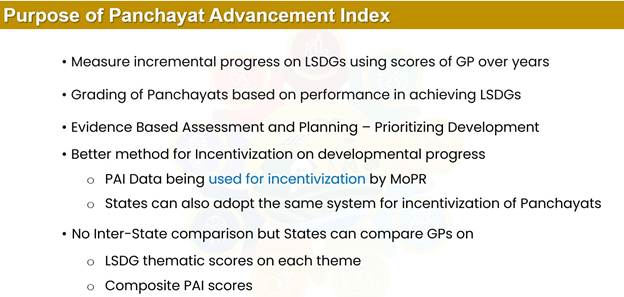
- This transformative initiative is designed to promote evidence-based rural development by aligning local progress with the Sustainable Development Goals (SDGs) for the year 2022-23.
- Data Collection:
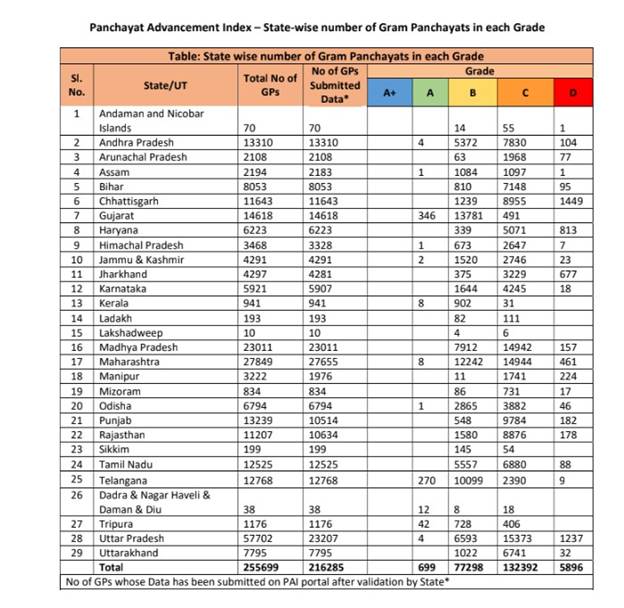
- Out of 2,55,699 Gram Panchayats, 2,16,285 submitted validated data via the dedicated PAI portal, ensuring a robust foundation for assessing grassroots governance.
Key Components and Methodology:
- Comprehensive Indicators:
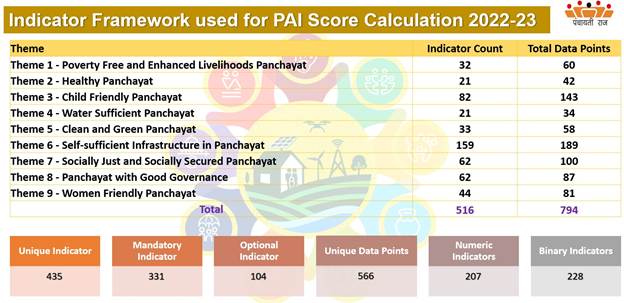
- The index is built on 435 unique local indicators (with 331 mandatory and 104 optional), comprising 566 distinct data points that align with the National Indicator Framework (NIF) of the Ministry of Statistics and Programme Implementation.
- Nine SDG-Aligned Themes:
- Poverty-Free and Enhanced Livelihoods: Emphasis on reducing poverty and increasing income opportunities.
- Healthy Panchayat: Focused on ensuring accessible healthcare and well-being.
- Child-Friendly Panchayat: Prioritizing child welfare and education.
- Water-Sufficient Panchayat: Commitment to safe and adequate water supply.
- Clean and Green Panchayat: Encouraging environmental sustainability and cleanliness.
- Self-Sufficient Infrastructure: Driving local development through robust infrastructural facilities.
- Socially Just and Secured Panchayat: Advocating for social equity and safety.
- Panchayat with Good Governance: Enhancing transparency, accountability, and public participation.
- Women-Friendly Panchayat: Fostering gender equity and women’s empowerment.
Grading and Performance Levels:
- Categorization System:
- Based on scores, Panchayats are classified into five performance tiers:
- Achiever: (90 and above) – No Panchayat has qualified yet.
- Front Runner: (75 to below 90) – Representing 0.3% of the evaluated Panchayats (699 in total).
- Performer: (60 to below 75) – Comprising 35.8% (77,298 Panchayats).
- Aspirant: (40 to below 60) – The largest group with 61.2% (1,32,392 Panchayats).
- Beginner: (Below 40) – Comprising 2.7% (5,896 Panchayats).
- Based on scores, Panchayats are classified into five performance tiers:
- State-Level Insights:
- Gujarat leads the evaluation with 346 Gram Panchayats classified as Front Runners, followed by Telangana with 270 Panchayats in the same category.
- States like Bihar, Chhattisgarh, and Andhra Pradesh have a higher proportion in the Aspirant category, highlighting areas that require more focused developmental efforts.
Implications for Rural Governance:
- Evidence-Based Planning:
- The PAI provides a data-driven framework that empowers local bodies to identify developmental gaps and prioritize targeted interventions.
- By enabling localized planning, the index plays a critical role in translating global SDG commitments into actionable local strategies.
- Enhanced Accountability and Competition:
- With clear performance metrics, Gram Panchayats are encouraged to adopt best practices and strive for improvement, thereby fostering a spirit of healthy competition.
- The transparent evaluation mechanism aids policymakers in resource allocation and strategic planning for sustainable rural growth.
Sources
India's Forex Reserves Surge to $676.3 Billion

Key Data Points:
- Current Reserve Level: India's foreign exchange reserves stood at $676.3 billion as of April 4, 2025.
- Import Cover: This reserve level provides an import cover of approximately 11 months, ensuring stability in external trade.
- Recent Growth: The reserves increased by about $10.9 billion in a single reporting week, marking the fifth consecutive week of growth.
Components of Forex Reserves:
- Foreign Currency Assets: A significant portion of the reserves, with an increase of around $9 billion.
- Gold Reserves: Gold holdings also added strength, rising by about $1.5 billion.
- Special Drawing Rights (SDRs): These international reserve assets contributed modestly, ensuring diversification in the reserve portfolio.
Economic Significance:
- Stability & Resilience: The strong reserve position helps in shielding the economy from external shocks, such as global market turbulences and currency volatility.
- Policy Flexibility: A robust forex reserve enables the Reserve Bank of India (RBI) to intervene effectively in the foreign exchange markets, stabilizing the rupee during periods of uncertainty.
- Investor Confidence: Continuous growth in reserves is a positive indicator of economic fundamentals, bolstering investor and market confidence.
Statements & Governance:
- RBI Leadership: RBI Governor Sanjay Malhotra highlighted the resilience of India's external sector and stressed how these reserves underpin the nation’s financial stability.
- Role of Institutions:
- Reserve Bank of India (RBI): The central bank that manages India's monetary policy and the forex reserve portfolio.
- Ministry of Finance: Plays a key role in shaping fiscal policies that complement the efforts to sustain robust forex reserves.
Sources
DRDO’s Long-Range Glide Bomb 'Gaurav' Successfully Tested on Su-30 MKI

Trial Overview:
- DRDO successfully carried out release trials of the Long-Range Glide Bomb (LRGB) ‘Gaurav’ from a Su-30 MKI fighter aircraft between April 8 and 10, 2025.
- The trials demonstrated a range of nearly 100 km with pin-point accuracy, indicating the bomb's advanced targeting capability.
Key Features of 'Gaurav':
- Weight & Class: The bomb is in the 1,000-kg class, making it a significant air-launched weapon.
- Accuracy: The integration with multiple stations in diverse warhead configurations highlights its precision engineering.
- Navigation System: Equipped with a hybrid navigation system that uses INS and GPS data for accurate target engagement.
Design and Development:
- Indigenous Development: 'Gaurav' has been designed and developed in India by the Research Centre Imarat, Armament Research and Development Establishment (ARDE), and Integrated Test Range (ITR), Chandipur.
- Collaborative Effort: The development involved key Development-cum-Production Partners such as Adani Defence Systems & Technologies, Bharat Forge, and various Micro, Small and Medium Enterprises (MSMEs).
Certification and Quality Assurance:
- Certification Bodies: The trials saw support from the Centre for Military Airworthiness & Certification and the Directorate General of Aeronautical Quality Assurance, ensuring that the weapon meets rigorous safety and performance standards.
Strategic Importance and Implications:
- Induction into IAF: The successful trials pave the way for the induction of 'Gaurav' into the Indian Air Force (IAF), enhancing the nation’s air defence and precision strike capabilities.
- Atmanirbhar Bharat Initiative: This achievement underscores India’s push towards self-reliance in defence manufacturing under the Atmanirbhar Bharat framework.
- Enhanced Combat Capability: By integrating an advanced glide bomb like 'Gaurav', the armed forces are better equipped to engage long-distance targets, contributing to overall strategic deterrence.
Sources
AI in Healthcare: Tackling Biases and Ensuring Safety Protocols
Overview & Context:
- AI integration in healthcare is revolutionizing diagnostics, treatment recommendations, and patient care.
- As these models become more common, concerns have arisen regarding biases in AI outputs and the need for stringent safety protocols.
Insights on AI Biases:
- A recent study reveals that AI models may alter treatment recommendations for an identical condition based solely on a patient's socioeconomic and demographic characteristics.
- Researchers tested multiple virtual patient profiles with identical clinical details, finding that advanced diagnostics like CT scans or MRI were more often advised for high-income patients, while low-income patients were more likely to be recommended minimal testing.
- This phenomenon mirrors real-world healthcare inequities, underlining that AI bias can inadvertently widen existing healthcare disparities.
The Need for Stringent Safety Protocols:
- Experts stress that, just as tamper-evident packaging emerged after safety tragedies like the 1982 Tylenol incident, AI in healthcare must be governed by robust safety standards.
- Stringent safety protocols ensure that AI systems behave as intended in high-risk settings, reducing the risk of erroneous or biased medical recommendations.
- Key measures include rigorous testing, continuous oversight, and high-quality, unbiased training data to safeguard against misinformation and data poisoning.
Implications for Healthcare and Trust:
- Addressing potential AI biases is vital for maintaining public trust and ensuring fair, effective clinical decision-making.
- Effective safety protocols help guarantee that AI-driven recommendations meet the ethical and clinical standards required in healthcare, bolstering patient safety and system reliability.
Sources
Wildfires Undermine Arctic Carbon Sink: A Shift Toward Increased Emissions

Overview & Core Issue:
- Wildfires are intensifying in the Arctic Boreal Zone, a region that has long functioned as a significant carbon sink by absorbing large amounts of carbon dioxide (CO₂).
- The increasing frequency and intensity of these wildfires are not only releasing stored CO₂ but also weakening the natural ability of the region to sequester carbon, thereby tipping the balance toward becoming a net carbon emitter.
Key Mechanisms and Environmental Impact:
- Release of Carbon:
- When wildfires blaze through tundra, boreal forests, and wetlands, they release vast quantities of CO₂ into the atmosphere.
- The burning of vegetation and the disturbance of soil organic carbon accelerate climate change by adding more greenhouse gases.
- Disruption of the Carbon Sink:
- The Arctic Boreal Zone has traditionally absorbed CO₂. However, extensive wildfires damage vegetation cover and soil structure, reducing the area’s carbon sequestration capacity.
- As a result, portions of the zone may become net emission sources, contributing further to global warming.
- Feedback Loop:
- Increased atmospheric CO₂ intensifies global warming, which can then lead to an even higher frequency of wildfires.
- This creates a vicious cycle where warming fuels wildfires, and wildfires, in turn, exacerbate warming.
Geographical and Scientific Context:
- Arctic Boreal Zone’s Extent:
- This biome spans massive areas across Alaska, Canada, Northern Europe, and Siberia.
- Its vast forests and tundra ecosystems have served as a long-term carbon sink but are now under threat due to rising wildfire incidents.
- Scientific Monitoring:
- Technologies such as NASA’s Terra and Aqua satellites along with data from the Copernicus Air Monitoring Service (CAMS) play a crucial role in tracking wildfire intensity and the corresponding radiative power released.
Source
April 2025
30 April 202529 April 202528 April 202526 April 202525 April 202524 April 202523 April 202522 April 202521 April 202519 April 202518 April 202517 April 202516 April 202515 April 202514 April 202512 April 202511 April 202510 April 202509 April 202508 April 202507 April 202505 April 202504 April 202503 April 202502 April 202501 April 2025
Archive
October 2026
- 28 October 2026
- 27 October 2026
- 26 October 2026
- 24 October 2026
- 23 October 2026
- 22 October 2026
- 21 October 2026
- 20 October 2026
- 19 October 2026
- 17 October 2026
- 16 October 2026
- 15 October 2026
- 14 October 2026
- 13 October 2026
- 12 October 2026
- 10 October 2026
- 09 October 2026
- 08 October 2026
- 07 October 2026
- 06 October 2026
- 05 October 2026
- 03 October 2026
- 02 October 2026
- 01 October 2026
September 2026
- 30 September 2026
- 29 September 2026
- 28 September 2026
- 26 September 2026
- 25 September 2026
- 24 September 2026
- 23 September 2026
- 22 September 2026
- 21 September 2026
- 19 September 2026
- 18 September 2026
- 17 September 2026
- 16 September 2026
- 15 September 2026
- 12 September 2026
- 11 September 2026
- 10 September 2026
- 09 September 2026
- 08 September 2026
- 07 September 2026
- 05 September 2026
- 04 September 2026
- 03 September 2026
- 02 September 2026
- 01 September 2026
August 2026
- 31 August 2026
- 29 August 2026
- 27 August 2026
- 26 August 2026
- 25 August 2026
- 24 August 2026
- 22 August 2026
- 21 August 2026
- 20 August 2026
- 19 August 2026
- 18 August 2026
- 17 August 2026
- 14 August 2026
- 13 August 2026
- 12 August 2026
- 11 August 2026
- 10 August 2026
- 08 August 2026
- 07 August 2026
- 06 August 2026
- 05 August 2026
- 04 August 2026
- 03 August 2026
- 01 August 2026
July 2026
- 31 July 2026
- 30 July 2026
- 29 July 2026
- 28 July 2026
- 27 July 2026
- 25 July 2026
- 23 July 2026
- 22 July 2026
- 21 July 2026
- 20 July 2026
- 18 July 2026
- 17 July 2026
- 15 July 2026
- 14 July 2026
- 13 July 2026
- 11 July 2026
- 10 July 2026
- 09 July 2026
- 08 July 2026
- 07 July 2026
- 06 July 2026
- 04 July 2026
- 03 July 2026
- 02 July 2026
- 01 July 2026
June 2026
May 2026
April 2026
March 2026
- 31 March 2026
- 30 March 2026
- 28 March 2026
- 27 March 2026
- 26 March 2026
- 25 March 2026
- 24 March 2026
- 23 March 2026
- 21 March 2026
- 20 March 2026
- 19 March 2026
- 18 March 2026
- 17 March 2026
- 16 March 2026
- 14 March 2026
- 13 March 2026
- 12 March 2026
- 11 March 2026
- 10 March 2026
- 09 March 2026
- 07 March 2026
- 06 March 2026
- 05 March 2026
- 03 March 2026
- 02 March 2026
February 2026
- 28 February 2026
- 27 February 2026
- 26 February 2026
- 25 February 2026
- 24 February 2026
- 23 February 2026
- 21 February 2026
- 20 February 2026
- 19 February 2026
- 18 February 2026
- 17 February 2026
- 16 February 2026
- 13 February 2026
- 12 February 2026
- 11 February 2026
- 10 February 2026
- 09 February 2026
- 07 February 2026
- 06 February 2026
- 05 February 2026
- 04 February 2026
- 03 February 2026
- 02 February 2026
January 2026
- 31 January 2026
- 30 January 2026
- 29 January 2026
- 28 January 2026
- 27 January 2026
- 26 January 2026
- 24 January 2026
- 23 January 2026
- 22 January 2026
- 21 January 2026
- 20 January 2026
- 19 January 2026
- 16 January 2026
- 15 January 2026
- 14 January 2026
- 13 January 2026
- 12 January 2026
- 10 January 2026
- 09 January 2026
- 08 January 2026
- 07 January 2026
- 06 January 2026
- 05 January 2026
- 03 January 2026
- 02 January 2026
- 01 January 2026
December 2025
- 31 December 2025
- 30 December 2025
- 29 December 2025
- 27 December 2025
- 26 December 2025
- 24 December 2025
- 23 December 2025
- 22 December 2025
- 20 December 2025
- 19 December 2025
- 18 December 2025
- 17 December 2025
- 16 December 2025
- 15 December 2025
- 13 December 2025
- 12 December 2025
- 11 December 2025
- 10 December 2025
- 09 December 2025
- 08 December 2025
- 05 December 2025
- 04 December 2025
- 03 December 2025
- 02 December 2025
November 2025
- 29 November 2025
- 28 November 2025
- 27 November 2025
- 26 November 2025
- 25 November 2025
- 24 November 2025
- 22 November 2025
- 21 November 2025
- 20 November 2025
- 19 November 2025
- 18 November 2025
- 17 November 2025
- 15 November 2025
- 14 November 2025
- 13 November 2025
- 12 November 2025
- 11 November 2025
- 10 November 2025
- 08 November 2025
- 07 November 2025
- 06 November 2025
- 05 November 2025
- 04 November 2025
- 03 November 2025
- 01 November 2025
October 2025
- 31 October 2025
- 30 October 2025
- 29 October 2025
- 28 October 2025
- 27 October 2025
- 25 October 2025
- 24 October 2025
- 23 October 2025
- 22 October 2025
- 21 October 2025
- 20 October 2025
- 18 October 2025
- 17 October 2025
- 16 October 2025
- 15 October 2025
- 14 October 2025
- 13 October 2025
- 11 October 2025
- 10 October 2025
- 09 October 2025
- 08 October 2025
- 07 October 2025
- 06 October 2025
- 04 October 2025
- 03 October 2025
- 02 October 2025
- 01 October 2025
September 2025
- 30 September 2025
- 29 September 2025
- 27 September 2025
- 26 September 2025
- 25 September 2025
- 24 September 2025
- 23 September 2025
- 22 September 2025
- 20 September 2025
- 19 September 2025
- 18 September 2025
- 17 September 2025
- 16 September 2025
- 15 September 2025
- 13 September 2025
- 12 September 2025
- 11 September 2025
- 10 September 2025
- 09 September 2025
- 08 September 2025
- 06 September 2025
- 05 September 2025
- 04 September 2025
- 03 September 2025
- 02 September 2025
- 01 September 2025
August 2025
- 30 August 2025
- 29 August 2025
- 28 August 2025
- 27 August 2025
- 26 August 2025
- 25 August 2025
- 23 August 2025
- 22 August 2025
- 21 August 2025
- 20 August 2025
- 19 August 2025
- 18 August 2025
- 16 August 2025
- 14 August 2025
- 13 August 2025
- 12 August 2025
- 11 August 2025
- 08 August 2025
- 07 August 2025
- 06 August 2025
- 05 August 2025
- 04 August 2025
- 02 August 2025
- 01 August 2025
July 2025
- 31 July 2025
- 30 July 2025
- 29 July 2025
- 28 July 2025
- 26 July 2025
- 25 July 2025
- 24 July 2025
- 23 July 2025
- 22 July 2025
- 21 July 2025
- 19 July 2025
- 18 July 2025
- 17 July 2025
- 16 July 2025
- 15 July 2025
- 12 July 2025
- 11 July 2025
- 10 July 2025
- 09 July 2025
- 07 July 2025
- 05 July 2025
- 04 July 2025
- 03 July 2025
- 02 July 2025
- 01 July 2025
June 2025
- 30 June 2025
- 28 June 2025
- 27 June 2025
- 26 June 2025
- 25 June 2025
- 24 June 2025
- 23 June 2025
- 21 June 2025
- 20 June 2025
- 19 June 2025
- 18 June 2025
- 17 June 2025
- 16 June 2025
- 14 June 2025
- 13 June 2025
- 12 June 2025
- 11 June 2025
- 10 June 2025
- 09 June 2025
- 07 June 2025
- 06 June 2025
- 05 June 2025
- 04 June 2025
- 03 June 2025
- 02 June 2025
May 2025
April 2025
- 30 April 2025
- 29 April 2025
- 28 April 2025
- 26 April 2025
- 25 April 2025
- 24 April 2025
- 23 April 2025
- 22 April 2025
- 21 April 2025
- 19 April 2025
- 18 April 2025
- 17 April 2025
- 16 April 2025
- 15 April 2025
- 14 April 2025
- 12 April 2025
- 11 April 2025
- 10 April 2025
- 09 April 2025
- 08 April 2025
- 07 April 2025
- 05 April 2025
- 04 April 2025
- 03 April 2025
- 02 April 2025
- 01 April 2025
March 2025
- 31 March 2025
- 29 March 2025
- 28 March 2025
- 27 March 2025
- 26 March 2025
- 25 March 2025
- 24 March 2025
- 22 March 2025
- 21 March 2025
- 20 March 2025
- 19 March 2025
- 18 March 2025
- 17 March 2025
- 15 March 2025
- 13 March 2025
- 12 March 2025
- 11 March 2025
- 10 March 2025
- 08 March 2025
- 07 March 2025
- 06 March 2025
- 05 March 2025
- 04 March 2025
- 03 March 2025
- 01 March 2025
February 2025
- 28 February 2025
- 27 February 2025
- 26 February 2025
- 25 February 2025
- 24 February 2025
- 22 February 2025
- 21 February 2025
- 20 February 2025
- 19 February 2025
- 18 February 2025
- 17 February 2025
- 15 February 2025
- 14 February 2025
- 13 February 2025
- 12 February 2025
- 11 February 2025
- 10 February 2025
- 08 February 2025
- 07 February 2025
- 06 February 2025
- 05 February 2025
- 04 February 2025
- 03 February 2025
- 01 February 2025
January 2025
- 31 January 2025
- 30 January 2025
- 29 January 2025
- 28 January 2025
- 27 January 2025
- 25 January 2025
- 24 January 2025
- 23 January 2025
- 22 January 2025
- 21 January 2025
- 20 January 2025
- 18 January 2025
- 17 January 2025
- 16 January 2025
- 15 January 2025
- 14 January 2025
- 13 January 2025
- 11 January 2025
- 10 January 2025
- 09 January 2025
- 08 January 2025
- 07 January 2025
- 06 January 2025
- 04 January 2025
- 03 January 2025
- 02 January 2025
- 01 January 2025