
Current Affairs
Stay updated with the latest national and international events.
10 September 2026
India’s Nuclear Arsenal Estimated at 190 Warheads

What’s the News?
- The Federation of American Scientists (FAS) has estimated that India may have assembled around 190 nuclear warheads.
- More than 160 warheads are estimated to be associated with operational delivery systems, while around 30 additional warheads are linked to newer missile systems under production.
- The estimate is based on open-source information, official/state-originating data and commercial satellite imagery; India does not publicly disclose the size of its nuclear arsenal.
- The SIPRI Yearbook 2026 separately estimated India’s nuclear inventory at 190 warheads, compared with about 170 for Pakistan.
Nuclear Arsenal Estimate
- FAS estimates that India has produced approximately 730 kg ±170 kg of weapon-grade plutonium.
- Assuming roughly 4 kg of plutonium per warhead, this could theoretically support about 140–225 nuclear warheads.
- However, this is a theoretical range because:
- The amount of plutonium actually converted into weapons is unknown.
- Some fissile material may be maintained as a reserve.
- Different warhead designs require different quantities of fissile material.
- FAS expects the stockpile to potentially increase as India develops additional nuclear-capable delivery systems.
Nuclear Force Modernisation
India is modernising all three components of its nuclear triad:
- Air-based: Nuclear-capable combat aircraft.
- Land-based: Ballistic missile systems, particularly the Agni series.
- Sea-based: Nuclear-powered ballistic missile submarines (SSBNs) carrying submarine-launched ballistic missiles.
The expansion of sea-based capabilities strengthens second-strike capability—the ability to retaliate with nuclear weapons even after absorbing a nuclear first strike.
India’s Nuclear Doctrine
India continues to officially follow:
- Credible Minimum Deterrence: Maintaining nuclear forces sufficient to deter nuclear aggression rather than pursuing numerical parity with other nuclear powers.
- No First Use (NFU): Nuclear weapons are intended primarily for retaliation against a nuclear attack.
- India has maintained the NFU posture following the development of its declared nuclear-weapons capability after the Pokhran-II tests of 1998.
Global Nuclear Forces
According to SIPRI’s 2026 estimates:
| Country | Estimated Nuclear Warheads |
|---|---|
| Russia | 5,420 |
| United States | 5,042 |
| China | 620 |
| France | 370 |
| United Kingdom | 225 |
| India | 190 |
| Pakistan | 170 |
| Israel | 90 |
| North Korea | 60 |
Globally, about 12,187 nuclear warheads were estimated to exist, of which around 9,745 were held in military stockpiles for potential use.
Additional Info
- Federation of American Scientists (FAS)
- US-based non-profit organisation.
- Its Nuclear Information Project tracks nuclear arsenals, delivery systems and arms-control developments.
- The India assessment forms part of the Nuclear Notebook research series.
- Stockholm International Peace Research Institute (SIPRI)
- Independent international institute based in Stockholm, Sweden.
- Research areas include armaments, arms control, disarmament, conflict and international security.
- Publishes the annual SIPRI Yearbook.
- Nuclear Triad
- Refers to nuclear weapons deliverable through aircraft, land-based missiles and submarine-based missiles.
- A survivable sea-based component is especially important for maintaining a credible second-strike capability.
- Fissile Material
- Nuclear weapons principally use highly enriched uranium (HEU) or separated plutonium.
- Estimates of fissile-material stocks help assess a state's potential nuclear-warhead production capacity, but they do not directly indicate the number of assembled weapons.
Sources
UIDAI Launches Aadhaar Face Authentication SDK and Sandbox

What’s the News?
- The Unique Identification Authority of India (UIDAI) has launched the Aadhaar Face Authentication Software Development Kit (SDK) and Aadhaar Face Authentication Sandbox.
- The SDK enables banks, fintech firms, insurers, brokers, government departments and other entities to integrate Aadhaar face authentication directly into their Android and iOS applications.
- Users can authenticate themselves within a single application, reducing dependence on the separate Aadhaar FaceRD app.
- The initiative is particularly relevant to the Banking, Financial Services and Insurance (BFSI) sector for digital onboarding and multi-factor authentication.
Aadhaar Face Authentication SDK
- SDK (Software Development Kit): A package of software tools that enables developers to incorporate a particular functionality into their applications.
- Key features include:
- AI/ML-based liveness detection to confirm that a live person is being authenticated.
- Anti-spoofing mechanisms to detect attempts using photographs, videos or other fraudulent representations.
- Secure handling and encryption of authentication data.
- Compatibility with standard consumer smartphones.
- Earlier, Aadhaar face authentication generally required the FaceRD application to operate in the background. The new SDK embeds the capability within the service provider's own application.
Aadhaar Face Authentication Sandbox
- It is a secure and controlled testing environment for organisations integrating Aadhaar Face Authentication.
- Developers and quality-assurance teams can test the complete authentication workflow before live deployment, including:
- User provisioning and consent
- Face capture
- Liveness detection
- Authentication
- Error handling
- Response validation
- It does not require external biometric hardware for testing.
- It can simulate failure scenarios such as:
- Invalid digital signatures
- Network interruptions
- Timeouts
- Spoofing attempts.
Scale of Face Authentication
- UIDAI's indigenous AI/ML-based Face Authentication system was introduced in 2021.
- It has processed over 500 crore transactions.
- Nearly 200 entities have adopted the technology, including government departments, banks, NBFCs, telecom operators and brokerage firms.
- Aadhaar authentication overall is handling around 10 crore transactions per day, while UIDAI is preparing infrastructure for approximately 25–30 crore daily authentications.
- More than 600 entities use the wider Aadhaar authentication platform.
Major Uses
Aadhaar Face Authentication is being used for:
- Jeevan Pramaan — submission of Digital Life Certificates by pensioners.
- Ayushman Bharat — beneficiary onboarding.
- Direct Benefit Transfer (DBT) schemes.
- Aadhaar-enabled payments.
- SIM activation through e-KYC.
- Beneficiary authentication under schemes such as:
- PM-KISAN
- PM Awas Yojana
- PM E-DRIVE.
Playbook on Ease of Onboarding
- UIDAI also released a “Playbook on Ease of Onboarding”.
- It provides guidance to BFSI entities for joining the UIDAI authentication ecosystem.
- It covers Aadhaar-based identity verification for:
- Customers
- Employees
- Other business partners.
Additional Info
- UIDAI
- Statutory authority under the Aadhaar (Targeted Delivery of Financial and Other Subsidies, Benefits and Services) Act, 2016.
- Functions under the Ministry of Electronics and Information Technology (MeitY).
- Responsible for Aadhaar enrolment, authentication and management of the Aadhaar identity ecosystem.
- Aadhaar
- A 12-digit unique identification number issued to residents of India.
- Authentication can use demographic or biometric information.
- Biometric modes include fingerprint, iris and facial authentication.
- Face Authentication vs Face Recognition
- Face Authentication: Generally verifies whether a person is who they claim to be — a 1:1 identity verification process.
- Face Recognition: Commonly searches for an individual's face against a larger database — a 1:N matching process.
Sources
9th Rashtriya Poshan Maah 2026 Focuses on Anganwadis and Dietary Diversity
What’s the News?
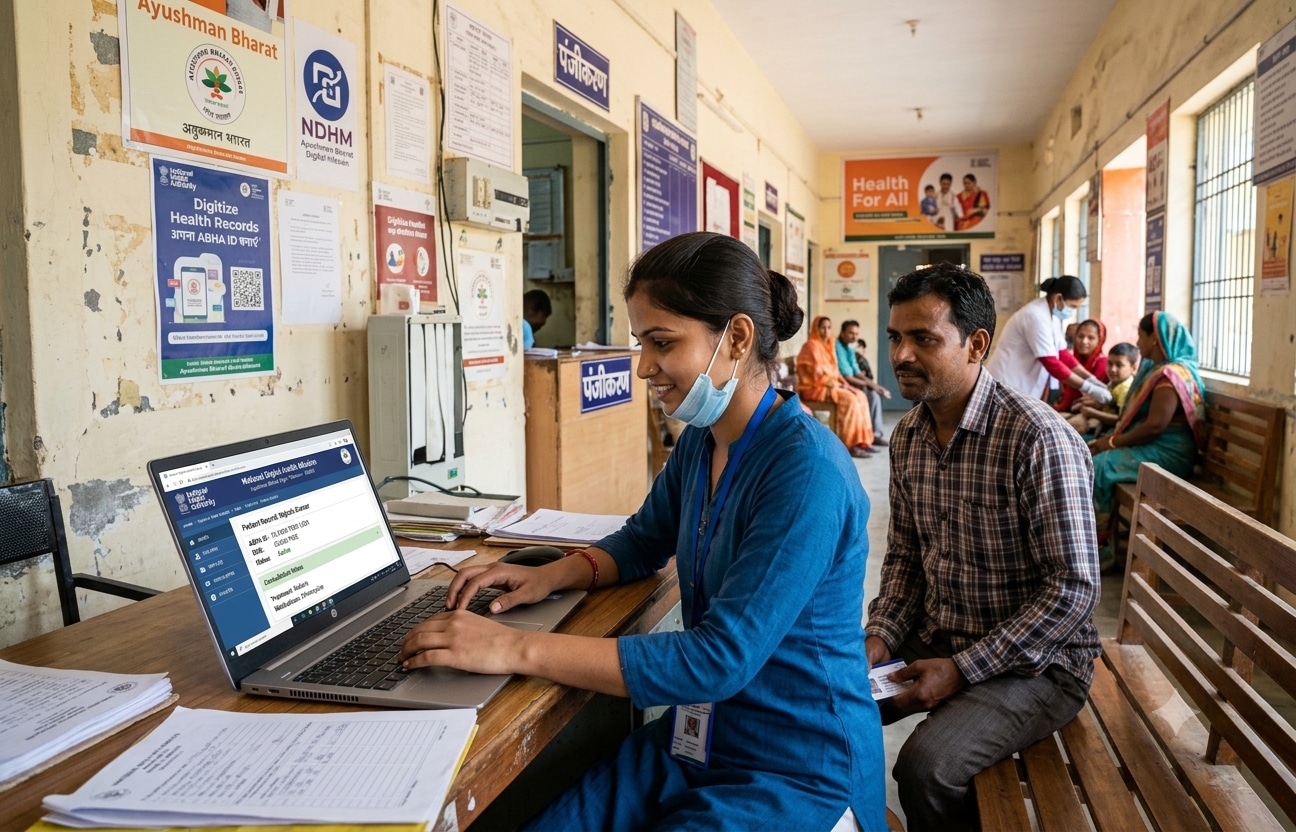
- The Ministry of Women and Child Development (MWCD) has launched the 9th Rashtriya Poshan Maah 2026 in Varanasi, Uttar Pradesh.
- The month-long nationwide nutrition campaign is being held under the theme “Hamari Anganwadi, Hamari Jimmedari”.
- It seeks to strengthen community ownership of Anganwadi Centres and improve maternal and child nutrition through dietary diversity, adequate protein intake, fresh hot-cooked meals and early childhood development.
- Union Minister for Women and Child Development Annpurna Devi and Uttar Pradesh Chief Minister Yogi Adityanath participated in the launch.
Key Focus Areas
Rashtriya Poshan Maah 2026 focuses on:
- Dietary diversity and adequate protein intake
- Fresh hot-cooked meals at Anganwadi Centres
- Community ownership through Anganwadi Management Committees
- Display of Supplementary Nutrition Programme (SNP) Menu Boards
- Nutrition and early stimulation for childhood development
- Commemoration of 10 years of Pradhan Mantri Matru Vandana Yojana (PMMVY)
The campaign aims to make nutrition a Jan Andolan, involving families, Panchayati Raj Institutions, Self-Help Groups and frontline workers.
Anganwadi Network
- India has over 14 lakh Anganwadi Centres.
- They currently provide nutrition, health and early childhood-care services to:
- More than 7.5 crore children
- Around 1.10 crore pregnant and lactating women
- Nearly 16 lakh adolescent girls
- The government is upgrading 2 lakh Anganwadi Centres into Saksham Anganwadis with improved infrastructure and service-delivery facilities.
Dietary Diversity & Supplementary Nutrition
- Dietary diversity seeks to ensure that beneficiaries receive nutrients from different food groups rather than relying mainly on cereals.
- Foods promoted include millets, pulses, seeds, milk and other protein-rich foods.
- Anganwadi Centres provide:
- Hot Cooked Meals (HCM)
- Take Home Ration (THR)
- Nutrition counselling and growth-related services.
- SNP Menu Boards are intended to improve transparency by displaying meal provisions and beneficiary entitlements.
POSHAN Abhiyaan
- POSHAN Abhiyaan (Prime Minister’s Overarching Scheme for Holistic Nutrition) was launched in 2018 to improve nutritional outcomes among children, pregnant women and lactating mothers.
- It adopts a convergence approach, bringing together nutrition, health, sanitation, drinking water and related interventions.
- POSHAN Abhiyaan has subsequently been brought under the umbrella of Mission Saksham Anganwadi and Poshan 2.0.
- More than 150 crore Jan Andolan activities have been conducted through Poshan Maah, Poshan Pakhwada and related community programmes since its launch.
Mission Saksham Anganwadi and Poshan 2.0
- It is a Centrally Sponsored Scheme administered by the Ministry of Women and Child Development.
- It subsumes:
- Anganwadi Services
- POSHAN Abhiyaan
- Scheme for Adolescent Girls
- Its strategy emphasises:
- Reduction of malnutrition
- Improved health, wellness and immunity
- Dietary diversity and locally available nutritious foods
- Community participation and behavioural change
- Strengthening and modernisation of Anganwadi Centres.
Pradhan Mantri Matru Vandana Yojana
- PMMVY is a maternity-benefit scheme administered by the Ministry of Women and Child Development.
- It provides cash incentives through Direct Benefit Transfer (DBT) to eligible pregnant and lactating women to support maternal and child health.
- The scheme has completed 10 years.
- More than ₹21,000 crore has been transferred to over 4.65 crore mothers across the country.
Additional Info
- Anganwadi Centres
- Grassroots institutions for nutrition, health and early childhood development.
- Originated under the Integrated Child Development Services (ICDS) programme.
- Major services include supplementary nutrition, pre-school non-formal education, nutrition and health education, health check-ups and referral support.
- First 1,000 Days
- Period from conception to a child's second birthday.
- Considered critical for physical growth, brain development and long-term nutritional outcomes.
- Rashtriya Poshan Maah interventions give particular importance to nutrition during this period.
- POSHAN Vatikas
- Nutrition gardens developed at or around Anganwadi Centres to encourage consumption of fresh, locally available and diverse foods.
Sources
ISRO Tests CE20 Cryogenic Engine at Uprated 220 kN Thrust
What’s the News?
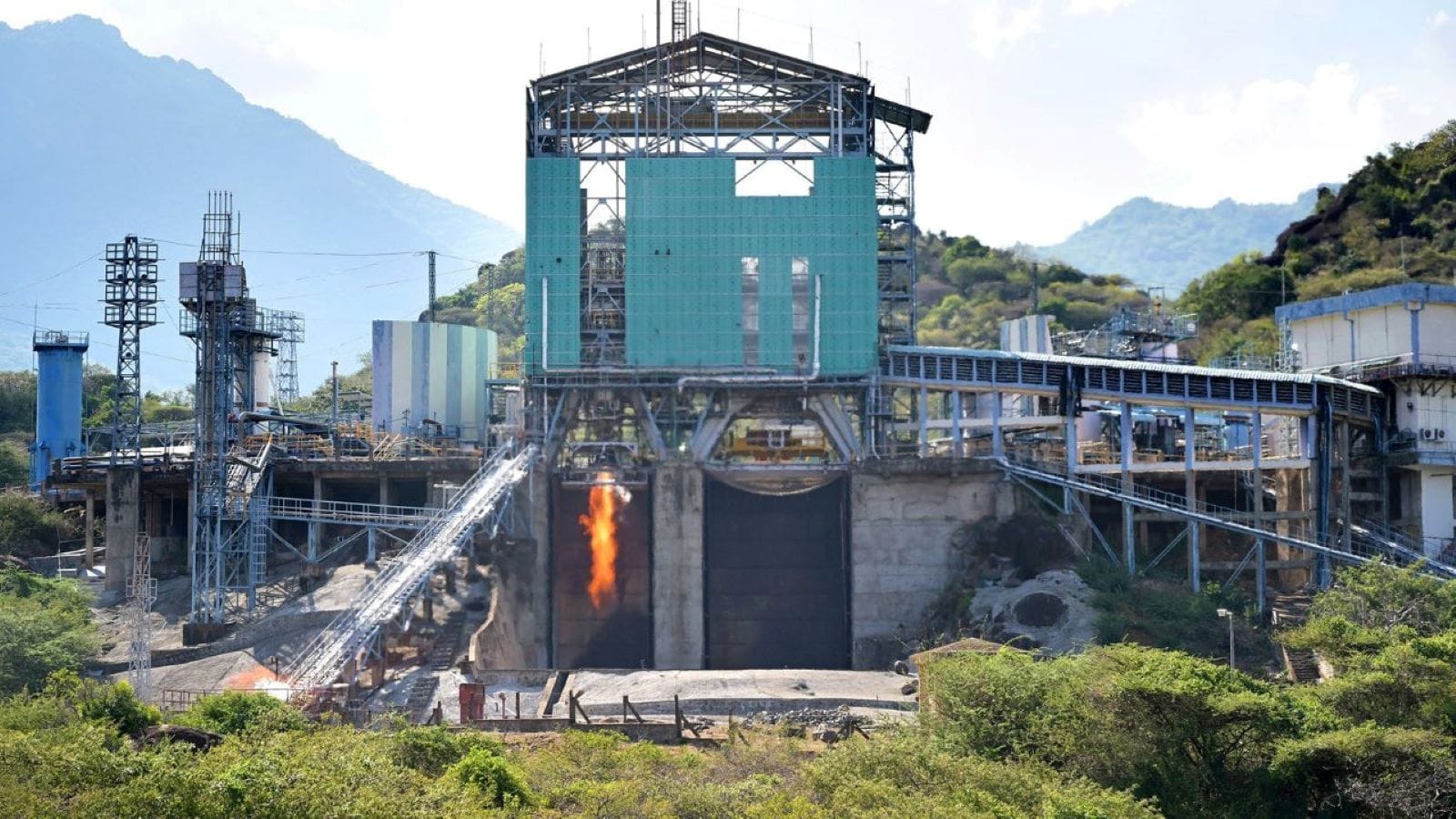
- ISRO successfully conducted a flight-acceptance hot test of the indigenous CE20 cryogenic engine at an uprated thrust of about 220 kN (22 tonnes).
- The engine is earmarked for the C32 cryogenic upper stage of the upcoming LVM3-M7, the seventh operational mission of LVM3.
- The test was conducted at the Main Engine & Stage Test (MET) facility, ISRO Propulsion Complex (IPRC), Mahendragiri, Tamil Nadu.
- Operating CE20 at the higher thrust level is part of ISRO's programme to increase LVM3's payload capability.
CE20 Cryogenic Engine
- CE20 is India's indigenously developed high-thrust cryogenic engine, developed by the Liquid Propulsion Systems Centre (LPSC).
- It powers the cryogenic upper stage of LVM3.
- Propellants:
- Liquid Hydrogen (LH₂): Fuel
- Liquid Oxygen (LOX): Oxidiser
- It operates on a gas-generator cycle.
- CE20 has been qualified to operate between 19 and 22 tonnes of thrust and has also completed human-rating qualification requirements for Gaganyaan.
C32 Upper Stage
- ISRO is upgrading LVM3's cryogenic upper stage from the C25 configuration to C32.
- The upgrade combines:
- Increased cryogenic propellant capacity.
- CE20 operation at the higher 22-tonne thrust level.
- The objective is to increase the amount of payload that LVM3 can carry to orbit.
- The CE20 engine tested will be refurbished and integrated with the C32 flight stage for LVM3-M7.
LOX Tank Pressurisation Module
- The test also successfully demonstrated the LOX Tank Pressurisation Module (LTPM).
- It is intended for the C32 stages associated with Gaganyaan missions.
- A tank-pressurisation system maintains the required pressure inside the propellant tank to ensure reliable propellant supply to the engine during operation.
Nozzle Protection System
- CE20's nozzle is designed for high-altitude operation, while engine acceptance tests are conducted under sea-level conditions.
- ISRO developed a Nozzle Protection System (NPS) to enable such testing while reproducing conditions relevant to operation in near-vacuum.
- NPS reduces the time and resources required for conventional High Altitude Test (HAT) arrangements and facilitates longer-duration ground testing.
LVM3
- LVM3 (Launch Vehicle Mark-3) is ISRO's heavy-lift launch vehicle.
- It is a three-stage launch vehicle, comprising:
- Two S200 solid strap-on boosters
- L110 liquid core stage
- C25/C32 cryogenic upper stage
- Standard LVM3 specifications include:
- Height: about 43.5 m
- Lift-off mass: about 640 tonnes
- Payload capability: around 4-tonne class to GTO, with later missions demonstrating enhanced capability.
- LVM3 has been used for missions including Chandrayaan-2, Chandrayaan-3 and commercial satellite launches.
Additional Info
- Cryogenic Propulsion
- Uses propellants maintained at extremely low temperatures.
- Hydrogen remains liquid at approximately −253°C, while oxygen is stored as a liquid at approximately −183°C to −195°C, depending on operating conditions.
- LOX-LH₂ engines provide high specific impulse, making them particularly useful for upper stages.
- Flight-Acceptance Hot Test
- A ground firing conducted on a flight engine before integration with a launch vehicle.
- It verifies hardware integrity and confirms that engine systems meet mission-performance requirements.
- ISRO Propulsion Complex (IPRC)
- Located at Mahendragiri, Tamil Nadu.
- Major ISRO centre for assembly, integration and testing of liquid, cryogenic and related propulsion systems.
- LVM3-M7
- Will be the seventh operational mission of LVM3.
- ISRO has scheduled the mission for the fourth quarter of 2026.
Sources
22nd India–US Exercise Yudh Abhyas Begins in Two-Theatre Format
What’s the News?
- The 22nd edition of Exercise Yudh Abhyas, the annual bilateral military exercise between the Indian Army and the US Army, has begun in India.
- For the first time, the exercise is being conducted in a two-theatre format, covering:
- Mahajan Field Firing Ranges near Bikaner, Rajasthan — desert warfare.
- Auli, Uttarakhand — high-altitude and mountain warfare.
- Around 700 personnel, approximately 350 troops from each country, are participating.
- Training covers long-range precision fires, high-altitude operations, air mobility, command-and-control and counter-drone warfare.
Two-Theatre Format
The 2026 edition shifts troops between two sharply different operational environments:
- Rajasthan Phase
- Focus on desert warfare.
- Long-range and precision fires.
- Integrated artillery and aviation operations.
- Command-post and field-training exercises.
- Uttarakhand Phase
- Conducted at Auli, located at about 2,500 metres altitude.
- Focus on high-altitude warfare, infantry manoeuvres and mountain logistics.
- Includes air mobility and deployment of lightweight artillery in difficult terrain.
The exercise culminates in a combined live-fire demonstration involving integrated Indian and US weapon systems.
Weapons and Systems
Indian Army
- Pinaka Multi-Barrel Rocket Launcher
- K9 Vajra 155-mm tracked self-propelled howitzer
- M777 155-mm Ultra-Light Howitzer
- Chinook heavy-lift helicopters for transporting equipment in mountainous terrain
US Army
- HIMARS — High Mobility Artillery Rocket System
- AH-64E Apache attack helicopters
- Advanced long-range precision-fire and command-and-control systems
The participation of Apache attack helicopters is a notable addition to Yudh Abhyas.
Counter-Drone Training
- Counter-Unmanned Aircraft System (Counter-UAS) operations form an important part of the exercise.
- Training includes:
- Detection and tracking of drones
- Electronic jamming
- Spoofing
- Interception and neutralisation
- The US MLIDS counter-drone system is also being deployed in India during the exercise.
US Army Participation
- The US contingent includes personnel from the 11th Airborne Division, which is based in Alaska and specialises in Arctic and cold-weather operations.
- The 3rd Multi-Domain Task Force (3MDTF) is also participating.
- It specialises in integrating capabilities such as:
- Long-range precision fires
- Intelligence and surveillance
- Electronic warfare
- Integrated command-and-control
- It specialises in integrating capabilities such as:
Exercise Yudh Abhyas
- Type: Bilateral Army exercise
- Countries: India and United States
- Started: 2004
- Frequency: Annual
- Objective: Improve interoperability, tactical coordination and joint operational capabilities between the Indian Army and US Army.
- The exercise is generally hosted alternately by India and the United States.
- The 21st edition was conducted in Alaska, USA, with training in sub-Arctic conditions.
Additional Info
- Major India–US Military Exercises
- Yudh Abhyas: Indian Army–US Army.
- Vajra Prahar: Special Forces exercise.
- Cope India: Air exercise involving the Indian Air Force and US Air Force.
- Tiger Triumph: India–US tri-services exercise.
- Malabar: Naval exercise involving India, US, Japan and Australia.
- Mahajan Field Firing Ranges
- Located in Rajasthan.
- Major Indian Army training area suited to large-scale mechanised and desert warfare exercises.
- Auli
- Located in Uttarakhand.
- Provides terrain suitable for high-altitude and mountain warfare training.
- Its location allows troops to practise logistics, mobility and artillery deployment under difficult mountainous conditions.
TRISHNA: India–France Joint Earth Observation Mission
What’s the News?
- ISRO and France’s CNES (Centre National d'Études Spatiales) are jointly developing TRISHNA, an advanced Earth-observation satellite for high-resolution monitoring of land and coastal surface temperatures.
- TRISHNA stands for Thermal infraRed Imaging Satellite for High-resolution Natural resource Assessment.
- The mission will combine thermal-infrared and optical observations to study water stress, agriculture, urban heat, glaciers, coastal waters and climate-related processes.
- The mission is currently under development and is targeted for launch aboard India’s PSLV in 2027. CNES lists delivery of its thermal-infrared instrument to India during 2026.
TRISHNA Mission
| Feature | Details |
|---|---|
| Partners | ISRO, India & CNES, France |
| Mission Type | Earth Observation |
| Planned Launch | 2027 |
| Launch Vehicle | PSLV |
| Orbit | Sun-Synchronous Orbit (SSO) |
| Altitude | 761 km |
| Mission Life | 5 years |
| Equatorial Revisit | About 3 days |
| Product Resolution | About 60 metres |
The satellite is designed to combine high spatial resolution with frequent revisit, allowing environmental changes to be tracked at relatively fine scales several times a week.
Payloads
TRISHNA carries two major observation systems:
- Thermal Infrared (TIR) Payload — CNES
- Developed under the French contribution.
- Contains 4 long-wave thermal-infrared bands.
- Measures:
- Land and water surface temperature
- Surface emissivity
- Thermal variations
- VNIR-SWIR Payload — ISRO
- VNIR: Visible and Near Infrared
- SWIR: Short-Wave Infrared
- Contains 7 spectral bands.
- Measures surface reflectance and generates information on:
- Vegetation
- Biophysical characteristics
- Radiation balance
- Land-surface conditions.
Major Objectives
- Water Stress: Assess water stress in crops and natural vegetation.
- Evapotranspiration: Estimate water lost through evaporation from soil and transpiration from plants.
- Agriculture: Support irrigation planning and efficient water use.
- Urban Heat Islands: Map unusually high temperatures in built-up urban areas.
- Cryosphere: Monitor glaciers, snowmelt and related hydrological processes.
- Coastal & Inland Waters: Study water temperature, quality and dynamics.
- Geological Applications: Identify thermal anomalies associated with volcanic and geothermal activity.
- Climate Studies: Improve understanding of Earth's surface energy and water budgets.
Why Thermal Infrared Observation Matters?
- Objects on Earth's surface emit thermal radiation according to their temperature.
- Thermal infrared sensors can measure this emitted radiation and estimate land or water surface temperatures.
- When thermal data are combined with vegetation and surface-reflectance information, scientists can estimate the surface energy balance and evapotranspiration.
- Such information is particularly useful for:
- Drought assessment
- Irrigation management
- Crop-water requirement estimation
- Heat-wave and urban-heat studies
- Glacier monitoring
Sun-Synchronous Orbit
- TRISHNA will operate in a Sun-Synchronous Orbit (SSO) at about 761 km altitude.
- In an SSO, a satellite generally passes over a given location at nearly the same local solar time.
- This provides comparable illumination and observation conditions, making SSO particularly useful for Earth-observation and environmental-monitoring satellites.
- TRISHNA's planned local equatorial crossing time is around 12:30 PM.
India–France Space Cooperation
- India and France have one of India's oldest international space partnerships.
- ISRO is responsible for:
- Satellite platform
- VNIR-SWIR instrument
- Overall satellite integration
- Indian launch through PSLV
- CNES is responsible for the TIR instrument, developed with French industry.
- Mission data processing will be undertaken through facilities in India and France.
Other Major India–France Space Cooperation
- Megha-Tropiques: Study of tropical atmosphere and climate.
- SARAL: Satellite with ARGOS and ALTIKA for oceanographic studies.
- TRISHNA: High-resolution thermal Earth observation.
- Cooperation also covers areas such as maritime-domain awareness, climate monitoring and space situational activities.
Additional Info
- CNES
- Full name: Centre National d'Études Spatiales
- National space agency of France.
- Headquarters: Paris.
- PSLV
- Full form: Polar Satellite Launch Vehicle.
- Developed by ISRO.
- Widely used to place Earth-observation satellites into polar and Sun-synchronous orbits.
- Current Status
- ISRO's 2025–26 Annual Report states that TRISHNA satellite realisation is progressing, with the Preliminary Design Review (PDR) completed for satellite-bus elements and the VNIR/SWIR payloads.
- Earlier material referred to a 2026 launch, but the current CNES mission schedule lists launch in 2027.
Sources
September 2026
Archive
October 2026
- 27 October 2026
- 26 October 2026
- 24 October 2026
- 23 October 2026
- 22 October 2026
- 21 October 2026
- 20 October 2026
- 19 October 2026
- 17 October 2026
- 16 October 2026
- 15 October 2026
- 14 October 2026
- 13 October 2026
- 12 October 2026
- 10 October 2026
- 09 October 2026
- 08 October 2026
- 07 October 2026
- 06 October 2026
- 05 October 2026
- 03 October 2026
- 02 October 2026
- 01 October 2026
September 2026
- 30 September 2026
- 29 September 2026
- 28 September 2026
- 26 September 2026
- 25 September 2026
- 24 September 2026
- 23 September 2026
- 22 September 2026
- 21 September 2026
- 19 September 2026
- 18 September 2026
- 17 September 2026
- 16 September 2026
- 15 September 2026
- 12 September 2026
- 11 September 2026
- 10 September 2026
- 09 September 2026
- 08 September 2026
- 07 September 2026
- 05 September 2026
- 04 September 2026
- 03 September 2026
- 02 September 2026
- 01 September 2026
August 2026
- 31 August 2026
- 29 August 2026
- 27 August 2026
- 26 August 2026
- 25 August 2026
- 24 August 2026
- 22 August 2026
- 21 August 2026
- 20 August 2026
- 19 August 2026
- 18 August 2026
- 17 August 2026
- 14 August 2026
- 13 August 2026
- 12 August 2026
- 11 August 2026
- 10 August 2026
- 08 August 2026
- 07 August 2026
- 06 August 2026
- 05 August 2026
- 04 August 2026
- 03 August 2026
- 01 August 2026
July 2026
- 31 July 2026
- 30 July 2026
- 29 July 2026
- 28 July 2026
- 27 July 2026
- 25 July 2026
- 23 July 2026
- 22 July 2026
- 21 July 2026
- 20 July 2026
- 18 July 2026
- 17 July 2026
- 15 July 2026
- 14 July 2026
- 13 July 2026
- 11 July 2026
- 10 July 2026
- 09 July 2026
- 08 July 2026
- 07 July 2026
- 06 July 2026
- 04 July 2026
- 03 July 2026
- 02 July 2026
- 01 July 2026
June 2026
May 2026
April 2026
March 2026
- 31 March 2026
- 30 March 2026
- 28 March 2026
- 27 March 2026
- 26 March 2026
- 25 March 2026
- 24 March 2026
- 23 March 2026
- 21 March 2026
- 20 March 2026
- 19 March 2026
- 18 March 2026
- 17 March 2026
- 16 March 2026
- 14 March 2026
- 13 March 2026
- 12 March 2026
- 11 March 2026
- 10 March 2026
- 09 March 2026
- 07 March 2026
- 06 March 2026
- 05 March 2026
- 03 March 2026
- 02 March 2026
February 2026
- 28 February 2026
- 27 February 2026
- 26 February 2026
- 25 February 2026
- 24 February 2026
- 23 February 2026
- 21 February 2026
- 20 February 2026
- 19 February 2026
- 18 February 2026
- 17 February 2026
- 16 February 2026
- 13 February 2026
- 12 February 2026
- 11 February 2026
- 10 February 2026
- 09 February 2026
- 07 February 2026
- 06 February 2026
- 05 February 2026
- 04 February 2026
- 03 February 2026
- 02 February 2026
January 2026
- 31 January 2026
- 30 January 2026
- 29 January 2026
- 28 January 2026
- 27 January 2026
- 26 January 2026
- 24 January 2026
- 23 January 2026
- 22 January 2026
- 21 January 2026
- 20 January 2026
- 19 January 2026
- 16 January 2026
- 15 January 2026
- 14 January 2026
- 13 January 2026
- 12 January 2026
- 10 January 2026
- 09 January 2026
- 08 January 2026
- 07 January 2026
- 06 January 2026
- 05 January 2026
- 03 January 2026
- 02 January 2026
- 01 January 2026
December 2025
- 31 December 2025
- 30 December 2025
- 29 December 2025
- 27 December 2025
- 26 December 2025
- 24 December 2025
- 23 December 2025
- 22 December 2025
- 20 December 2025
- 19 December 2025
- 18 December 2025
- 17 December 2025
- 16 December 2025
- 15 December 2025
- 13 December 2025
- 12 December 2025
- 11 December 2025
- 10 December 2025
- 09 December 2025
- 08 December 2025
- 05 December 2025
- 04 December 2025
- 03 December 2025
- 02 December 2025
November 2025
- 29 November 2025
- 28 November 2025
- 27 November 2025
- 26 November 2025
- 25 November 2025
- 24 November 2025
- 22 November 2025
- 21 November 2025
- 20 November 2025
- 19 November 2025
- 18 November 2025
- 17 November 2025
- 15 November 2025
- 14 November 2025
- 13 November 2025
- 12 November 2025
- 11 November 2025
- 10 November 2025
- 08 November 2025
- 07 November 2025
- 06 November 2025
- 05 November 2025
- 04 November 2025
- 03 November 2025
- 01 November 2025
October 2025
- 31 October 2025
- 30 October 2025
- 29 October 2025
- 28 October 2025
- 27 October 2025
- 25 October 2025
- 24 October 2025
- 23 October 2025
- 22 October 2025
- 21 October 2025
- 20 October 2025
- 18 October 2025
- 17 October 2025
- 16 October 2025
- 15 October 2025
- 14 October 2025
- 13 October 2025
- 11 October 2025
- 10 October 2025
- 09 October 2025
- 08 October 2025
- 07 October 2025
- 06 October 2025
- 04 October 2025
- 03 October 2025
- 02 October 2025
- 01 October 2025
September 2025
- 30 September 2025
- 29 September 2025
- 27 September 2025
- 26 September 2025
- 25 September 2025
- 24 September 2025
- 23 September 2025
- 22 September 2025
- 20 September 2025
- 19 September 2025
- 18 September 2025
- 17 September 2025
- 16 September 2025
- 15 September 2025
- 13 September 2025
- 12 September 2025
- 11 September 2025
- 10 September 2025
- 09 September 2025
- 08 September 2025
- 06 September 2025
- 05 September 2025
- 04 September 2025
- 03 September 2025
- 02 September 2025
- 01 September 2025
August 2025
- 30 August 2025
- 29 August 2025
- 28 August 2025
- 27 August 2025
- 26 August 2025
- 25 August 2025
- 23 August 2025
- 22 August 2025
- 21 August 2025
- 20 August 2025
- 19 August 2025
- 18 August 2025
- 16 August 2025
- 14 August 2025
- 13 August 2025
- 12 August 2025
- 11 August 2025
- 08 August 2025
- 07 August 2025
- 06 August 2025
- 05 August 2025
- 04 August 2025
- 02 August 2025
- 01 August 2025
July 2025
- 31 July 2025
- 30 July 2025
- 29 July 2025
- 28 July 2025
- 26 July 2025
- 25 July 2025
- 24 July 2025
- 23 July 2025
- 22 July 2025
- 21 July 2025
- 19 July 2025
- 18 July 2025
- 17 July 2025
- 16 July 2025
- 15 July 2025
- 12 July 2025
- 11 July 2025
- 10 July 2025
- 09 July 2025
- 07 July 2025
- 05 July 2025
- 04 July 2025
- 03 July 2025
- 02 July 2025
- 01 July 2025
June 2025
- 30 June 2025
- 28 June 2025
- 27 June 2025
- 26 June 2025
- 25 June 2025
- 24 June 2025
- 23 June 2025
- 21 June 2025
- 20 June 2025
- 19 June 2025
- 18 June 2025
- 17 June 2025
- 16 June 2025
- 14 June 2025
- 13 June 2025
- 12 June 2025
- 11 June 2025
- 10 June 2025
- 09 June 2025
- 07 June 2025
- 06 June 2025
- 05 June 2025
- 04 June 2025
- 03 June 2025
- 02 June 2025
May 2025
April 2025
- 30 April 2025
- 29 April 2025
- 28 April 2025
- 26 April 2025
- 25 April 2025
- 24 April 2025
- 23 April 2025
- 22 April 2025
- 21 April 2025
- 19 April 2025
- 18 April 2025
- 17 April 2025
- 16 April 2025
- 15 April 2025
- 14 April 2025
- 12 April 2025
- 11 April 2025
- 10 April 2025
- 09 April 2025
- 08 April 2025
- 07 April 2025
- 05 April 2025
- 04 April 2025
- 03 April 2025
- 02 April 2025
- 01 April 2025
March 2025
- 31 March 2025
- 29 March 2025
- 28 March 2025
- 27 March 2025
- 26 March 2025
- 25 March 2025
- 24 March 2025
- 22 March 2025
- 21 March 2025
- 20 March 2025
- 19 March 2025
- 18 March 2025
- 17 March 2025
- 15 March 2025
- 13 March 2025
- 12 March 2025
- 11 March 2025
- 10 March 2025
- 08 March 2025
- 07 March 2025
- 06 March 2025
- 05 March 2025
- 04 March 2025
- 03 March 2025
- 01 March 2025
February 2025
- 28 February 2025
- 27 February 2025
- 26 February 2025
- 25 February 2025
- 24 February 2025
- 22 February 2025
- 21 February 2025
- 20 February 2025
- 19 February 2025
- 18 February 2025
- 17 February 2025
- 15 February 2025
- 14 February 2025
- 13 February 2025
- 12 February 2025
- 11 February 2025
- 10 February 2025
- 08 February 2025
- 07 February 2025
- 06 February 2025
- 05 February 2025
- 04 February 2025
- 03 February 2025
- 01 February 2025
January 2025
- 31 January 2025
- 30 January 2025
- 29 January 2025
- 28 January 2025
- 27 January 2025
- 25 January 2025
- 24 January 2025
- 23 January 2025
- 22 January 2025
- 21 January 2025
- 20 January 2025
- 18 January 2025
- 17 January 2025
- 16 January 2025
- 15 January 2025
- 14 January 2025
- 13 January 2025
- 11 January 2025
- 10 January 2025
- 09 January 2025
- 08 January 2025
- 07 January 2025
- 06 January 2025
- 04 January 2025
- 03 January 2025
- 02 January 2025
- 01 January 2025