
Current Affairs
Stay updated with the latest national and international events.
10 October 2026
RBI Raises Daily CRR Maintenance Requirement from 90% to 99%

What’s the News?
The Reserve Bank of India (RBI) has raised scheduled banks’ minimum daily Cash Reserve Ratio (CRR) maintenance requirement from 90% to 99% of the prescribed requirement.
- The revised rule applies from the reporting fortnight beginning 16 October 2026.
- It follows a review of prevailing liquidity conditions and reduces banks’ flexibility to run lower reserve balances on individual days.
- The overall CRR rate remains unchanged at 3% of Net Demand and Time Liabilities (NDTL).
What Changes for Banks?
| Requirement | Earlier rule | Revised rule |
|---|---|---|
| Minimum daily balance | 90% of required CRR | 99% of required CRR |
| Average balance over the reporting fortnight | At least the full prescribed CRR | Unchanged |
| Overall CRR rate | 3% of NDTL | Unchanged |
- Illustration: If a bank’s required CRR balance is ₹100 crore, its daily minimum rises from ₹90 crore to ₹99 crore. Its average balance over the fortnight must still be at least ₹100 crore.
- Banks can no longer rely as heavily on lower balances on some days and higher balances later in the fortnight to meet the average requirement.
- The direction covers scheduled banks and was issued through Circular RBI/2026-27/290 under Section 42(1) of the RBI Act, 1934.
Why Tighten Daily Reserve Maintenance?
- Liquidity context: The latest banking-system liquidity surplus cited in the report was about ₹3.92 lakh crore. The average daily surplus under the Liquidity Adjustment Facility since the preceding monetary-policy meeting was ₹5.9 lakh crore.
- RBI has used Variable Rate Reverse Repo (VRRR) auctions and Open Market Operation (OMO) bond sales to absorb surplus funds.
- A higher daily floor keeps reserve balances closer to the prescribed level throughout the reporting period.
- Banks with temporary cash shortfalls may need to arrange additional short-term funding.
- The effect on each bank depends on its existing reserves and liquidity management.
- The notification does not raise the fortnightly reserve requirement, so it should not be read as a corresponding permanent withdrawal of funds through a higher CRR rate.
CRR and Related Banking Terms
- Cash Reserve Ratio: The share of a scheduled bank’s NDTL maintained as cash balances with RBI. These mandatory balances do not earn interest.
- Net Demand and Time Liabilities: The statutory liability base used to calculate reserve requirements, after prescribed adjustments.
- Demand liabilities: Payable on demand, such as current-account deposits.
- Time liabilities: Payable after an agreed period, such as fixed deposits.
- Statutory Liquidity Ratio (SLR): Requires banks to hold specified liquid assets, including cash, gold and eligible government securities, under Section 24 of the Banking Regulation Act, 1949.
- CRR is maintained as cash with RBI; SLR concerns eligible liquid assets held by the bank.
Sources
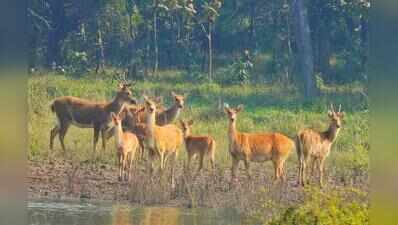
Satpura Tiger Reserve’s Barasingha Population Crosses 300
What’s the News?
The reintroduced hard-ground barasingha population in Madhya Pradesh’s Satpura Tiger Reserve has reached approximately 303, including successive generations born in the reserve.
- The Madhya Pradesh Forest Department began the reintroduction programme in 2015, bringing animals from Kanha Tiger Reserve.
- Three population units are now established across the landscape.
- The next phase proposes corridors linking at least six grasslands to support movement, feeding and breeding.
How Did the Population Recover?
- Approximately 135 barasingha were translocated from Kanha between 2015 and 2026.
- Animals were initially placed in a predator-protected enclosure in the Bori landscape to acclimatise and breed before release.
- The present population includes both translocated animals and their locally born descendants. The count of 303 is the estimated population, rather than the number moved from Kanha.
- The three units are associated with:
- Bori enclosure.
- Bori grasslands.
- Malini grasslands in the Churna range.
- Habitat restoration has included grasslands on land made available through voluntary village relocation, alongside management of native grasses, invasive weeds and water sources.
Why Are Grassland Corridors Needed?
As the herd expands, conservation depends on sufficient connected habitat as well as protection of individual animals.
- Seasonal access: Corridors can connect forage, water and breeding areas.
- Population exchange: Safe dispersal can allow animals from different units to mix and breed.
- Reduced pressure: Access to several grasslands can ease pressure on individual habitat patches.
- Implementation: The corridor network remains proposed. Its development requires suitable routes, management of intervening habitat and monitoring of animal movement.
Hard-Ground Barasingha
- Scientific name: Rucervus duvaucelii branderi, the central Indian hard-ground form of the barasingha or swamp deer.
- Habitat: Adapted to firm grasslands, unlike populations associated more closely with swampy terrain.
- Conservation context: Barasingha (Rucervus duvaucelii) is listed as Vulnerable on the IUCN Red List and in CITES Appendix I.
- Historical decline: Habitat loss and hunting eliminated the hard-ground form from the Satpura landscape. Kanha became its principal natural stronghold.
- Creating a geographically separate breeding population reduces the risk of relying on a single landscape. Continued habitat protection remains necessary despite the recovery.
Additional Info
- Satpura Tiger Reserve: Located in Narmadapuram district, Madhya Pradesh, and brought under Project Tiger in 2000.
- Area: 2,133.30 sq. km, comprising 1,339.26 sq. km of core habitat and 794.04 sq. km of buffer.
- Protected areas: Satpura National Park, Bori Wildlife Sanctuary and Pachmarhi Wildlife Sanctuary.
- Reintroduction: Returning a species to part of its former range where it has disappeared. It involves habitat preparation and monitoring after release, as well as moving animals.
Sources
Gujarat’s Ambaji Mohanthal Prasad Receives GI Tag
What’s the News?
Ambaji Mohanthal, the traditional sweet offered as prasad at Gujarat’s Ambaji Temple, has received a Geographical Indication (GI) tag.
- The registered applicant is the Shree Arasuri Ambaji Mata Devsthan Trust.
- The recognition links the product’s reputation and traditional preparation to its geographical origin.
- A formal certificate presentation is scheduled for the first day of Navratri. Registration has already been granted; the presentation is a separate ceremony.
Registration Details
| Particular | Detail |
|---|---|
| Registered name | Ambaji Mohanthal |
| Application number | 1228 |
| Certificate number | 835 |
| Applicant | Shree Arasuri Ambaji Mata Devsthan Trust |
| Goods classification | Class 30 — Food Stuffs |
| Geographical area | Gujarat |
| Application year | 2024 |
| Certificate year | 2026 |
| Current registration validity | Until 2034 |
What is Ambaji Mohanthal?
- Temple association: Ambaji Temple is dedicated to Goddess Amba and is a revered Shakti Peetha in Gujarat’s Arasuri Hills.
- Location: Ambaji, Danta taluka, Banaskantha district, Gujarat.
- Preparation: Mohanthal is a traditional sweet prepared principally with gram flour, ghee and sugar.
- Cultural role: Its distribution as temple prasad connects the food with pilgrimage, devotional practice and the region’s culinary heritage.
What Does GI Recognition Protect?
A Geographical Indication identifies goods whose quality, reputation or another characteristic is attributable to their place of origin.
- Protection of the name: Registration supports action against unauthorised or misleading commercial use of the registered indication.
- Authenticity: Producers using the GI must satisfy the applicable geographical and production requirements.
- Heritage and livelihoods: Recognition can improve visibility for an established regional product and support associated producers and institutions.
- A GI protects the geographical identity of the registered product. It should not be interpreted as ownership of every sweet made using a similar recipe.
Additional Info
- Indian law: The Geographical Indications of Goods (Registration and Protection) Act, 1999, in force since 2003.
- Validity: GI registration lasts 10 years from the application date, with renewal available for successive 10-year periods. This explains why the registration filed in 2024 is currently valid until 2034.
- Administration: The Geographical Indications Registry functions under the Controller General of Patents, Designs and Trade Marks (CGPDTM).
- International framework: Articles 22–24 of the WTO TRIPS Agreement address geographical indications.
- Other GI-tagged temple offerings:
- Tirupati Laddu: Tirumala Venkateswara Temple, Andhra Pradesh.
- Palani Panchamirtham: Palani Murugan Temple, Tamil Nadu.
World Development Report 2026: The Promise of Artificial Intelligence

What’s the News?
Union Electronics and Information Technology Minister Ashwini Vaishnaw launched the World Bank Group’s World Development Report 2026: The Promise of Artificial Intelligence at an event in New Delhi.
- The India launch was organised by the IndiaAI Mission, Ministry of Electronics and Information Technology (MeitY), in collaboration with the World Bank Group.
- The report examines how AI can expand access to expertise and improve productivity and services in developing economies, while managing employment, inequality and dependency risks.
Adopt, Adapt and Advance
The report sets out three approaches with progressively greater requirements for investment, skills and infrastructure:
| Approach | Meaning |
|---|---|
| Adopt | Use available AI tools for tasks such as medical screening, farming advice and business operations |
| Adapt | Customise tools for local languages, data, institutions and users’ needs |
| Advance | Build frontier AI models and the advanced infrastructure needed to develop them |
- Adaptation is central: An imported tool may perform poorly when local conditions differ from its training environment.
- “Small AI”: Affordable, focused applications can deliver advice through text messages, voice calls and basic phones, reaching people with limited connectivity or digital literacy.
- Building frontier models is the costliest approach and is beyond the immediate capacity of many developing countries.
Employment: Automation and Productivity
The report distinguishes jobs at risk of automation from jobs whose productivity could improve with AI assistance.
| Estimated impact of generative AI | Low- and middle-income countries | High-income countries |
|---|---|---|
| Existing jobs at risk of automation | 4.5% | 14.2% |
| Jobs with potential for a meaningful productivity boost | 16.2% | 18.7% |
- These are estimates of potential exposure and benefits, rather than counts of jobs already lost or gains already realised.
- AI can help workers access expertise, analyse information and improve decisions where trained professionals are scarce.
- The development opportunity includes improving healthcare, education, agricultural extension, tax administration and disaster response.
Three Factors Shaping AI’s Development Impact
- Capabilities: AI can perform or assist cognitive tasks that normally require specialist skills.
- Concentration: Advanced models, chips and data centres are controlled by a small number of firms and economies, creating dependence on external suppliers.
- Complements: Reliable electricity, internet access, education, institutions and suitable data are necessary for AI to produce broad benefits.
Owning domestic data centres alone cannot guarantee technological independence when advanced chips, cloud systems and other inputs still depend on global supply chains.
What Should Governments Do?
- Enable adoption: Improve power, connectivity, affordable computing, local-language data and workforce skills.
- Use AI effectively: Test tools, evaluate results and procure successful applications for wider delivery of public services.
- Regulate risks: Begin with voluntary standards and apply existing laws where needed to address unsafe systems, privacy violations and other harms.
- Build regulatory capacity as the technology develops.
- Cooperate internationally to reduce fragmentation of rules.
- Spend carefully: Assess the benefits and fiscal costs of subsidies and incentives for AI infrastructure.
- Protect inclusion and trust: Address bias, unequal access and market concentration alongside the expansion of AI use.
India’s AI Context
- IndiaAI Mission: Approved in 2024, with an outlay of ₹10,371.92 crore over five years.
- Its seven pillars cover:
- Compute capacity.
- Innovation Centre for indigenous foundation models.
- Datasets Platform, including AIKosh.
- Application development.
- FutureSkills.
- Startup financing.
- Safe and Trusted AI.
- At the launch, the minister highlighted a Baramati agricultural initiative, reporting 40% higher sugarcane yields with 30% less water and fertiliser, and a 35% increase in TB detection through AI applications. These were examples presented at the event, rather than nationwide outcome estimates.
Sources
World Mental Health Day 2026: Theme and India’s Mental Healthcare Initiatives

What’s the News?
World Mental Health Day was observed on 10 October 2026 with the theme “Lived experiences heard: real voices, real change.”
- The World Health Organization (WHO) calls for people with lived experience of mental health conditions to help shape policies, services and decisions affecting their lives.
- India’s Ministry of Health and Family Welfare highlighted Tele-MANAS, community awareness and the expansion of mental healthcare through district and primary-care services.
- The observance was initiated in 1992 by the World Federation for Mental Health (WFMH).
What Does the Theme Mean?
Lived experience is knowledge gained by personally experiencing mental health conditions and seeking, receiving or being unable to access care.
- Participation in decisions: People who use mental health services should contribute to planning, delivery and evaluation, beyond sharing personal stories.
- Peer support: Their experience can help identify barriers to care and make services more relevant to users’ needs.
- Rights and dignity: The campaign promotes person-centred care, choice and freedom from stigma and discrimination.
- Community-based care: WHO supports a planned shift from long-stay institutions towards services and practical support that enable people to live in their communities.
The WHO Mental Health Atlas 2024 illustrates gaps in participation and service reform:
- 37% of responding countries involved people with lived experience in mental health training for primary-care workers.
- 45% reported ongoing collaboration with people with lived experience and family or caregiver advocacy groups in mental health activities.
- Only 9% had fully transitioned from institution-based to community-based mental healthcare.
Tele-MANAS: Telephone-Based Mental Health Support
- Full form: Tele Mental Health Assistance and Networking Across States.
- Launch: 10 October 2022.
- National toll-free number: 14416, available 24×7.
- Services: Free, confidential and multilingual counselling, psychological support and professional guidance.
- Trained counsellors provide initial support.
- Referrals and links with specialised professionals and public healthcare facilities support further care when required.
- Progress reported in October 2026:
- 47,75,644 calls received since launch, or more than 47.75 lakh.
- 53 operational Tele-MANAS cells across all 36 States and Union Territories.
- Women comprised 43.78% of 13,35,275 recorded caller profiles.
- People aged 18–45 years accounted for 73.2% of recorded profiles.
Total calls and recorded caller profiles are different measures; the demographic percentages refer to the profile dataset.
Community and Local Healthcare Initiatives
- MANN Jaagriti: A community awareness and engagement initiative to improve mental health literacy, reduce stigma and encourage early help-seeking.
- Uses schools, colleges, workplaces, health facilities and community platforms.
- Involves professionals, educators, youth, families, caregivers, civil society and people with lived experience.
- National Mental Health Programme (NMHP): Launched in 1982 to improve the availability and accessibility of mental healthcare.
- District Mental Health Programme (DMHP): Introduced in 1996 and sanctioned for implementation in 767 districts.
- Supports outpatient care, counselling, medicines, psychosocial interventions, follow-up, outreach and referrals.
- Ayushman Arogya Mandirs: Mental health services are integrated into comprehensive primary healthcare at over 1.83 lakh facilities.
- Primary-care teams support screening, early identification, psychosocial care, follow-up and referral.
Additional Info
- Mental Healthcare Act, 2017 — Section 18: Recognises the right to access mental healthcare and treatment from services run or funded by the appropriate government.
- Services must be affordable, of good quality, geographically accessible and provided without discrimination.
- The Act requires integration of mental health services into general healthcare and support for people to live with their families and communities.
- Continuing barriers: Stigma, limited mental health literacy and unequal access to trained professionals can delay care, especially in rural and underserved areas.
Sources
October 2026
Archive
October 2026
- 27 October 2026
- 26 October 2026
- 24 October 2026
- 23 October 2026
- 22 October 2026
- 21 October 2026
- 20 October 2026
- 19 October 2026
- 17 October 2026
- 16 October 2026
- 15 October 2026
- 14 October 2026
- 13 October 2026
- 12 October 2026
- 10 October 2026
- 09 October 2026
- 08 October 2026
- 07 October 2026
- 06 October 2026
- 05 October 2026
- 03 October 2026
- 02 October 2026
- 01 October 2026
September 2026
- 30 September 2026
- 29 September 2026
- 28 September 2026
- 26 September 2026
- 25 September 2026
- 24 September 2026
- 23 September 2026
- 22 September 2026
- 21 September 2026
- 19 September 2026
- 18 September 2026
- 17 September 2026
- 16 September 2026
- 15 September 2026
- 12 September 2026
- 11 September 2026
- 10 September 2026
- 09 September 2026
- 08 September 2026
- 07 September 2026
- 05 September 2026
- 04 September 2026
- 03 September 2026
- 02 September 2026
- 01 September 2026
August 2026
- 31 August 2026
- 29 August 2026
- 27 August 2026
- 26 August 2026
- 25 August 2026
- 24 August 2026
- 22 August 2026
- 21 August 2026
- 20 August 2026
- 19 August 2026
- 18 August 2026
- 17 August 2026
- 14 August 2026
- 13 August 2026
- 12 August 2026
- 11 August 2026
- 10 August 2026
- 08 August 2026
- 07 August 2026
- 06 August 2026
- 05 August 2026
- 04 August 2026
- 03 August 2026
- 01 August 2026
July 2026
- 31 July 2026
- 30 July 2026
- 29 July 2026
- 28 July 2026
- 27 July 2026
- 25 July 2026
- 23 July 2026
- 22 July 2026
- 21 July 2026
- 20 July 2026
- 18 July 2026
- 17 July 2026
- 15 July 2026
- 14 July 2026
- 13 July 2026
- 11 July 2026
- 10 July 2026
- 09 July 2026
- 08 July 2026
- 07 July 2026
- 06 July 2026
- 04 July 2026
- 03 July 2026
- 02 July 2026
- 01 July 2026
June 2026
May 2026
April 2026
March 2026
- 31 March 2026
- 30 March 2026
- 28 March 2026
- 27 March 2026
- 26 March 2026
- 25 March 2026
- 24 March 2026
- 23 March 2026
- 21 March 2026
- 20 March 2026
- 19 March 2026
- 18 March 2026
- 17 March 2026
- 16 March 2026
- 14 March 2026
- 13 March 2026
- 12 March 2026
- 11 March 2026
- 10 March 2026
- 09 March 2026
- 07 March 2026
- 06 March 2026
- 05 March 2026
- 03 March 2026
- 02 March 2026
February 2026
- 28 February 2026
- 27 February 2026
- 26 February 2026
- 25 February 2026
- 24 February 2026
- 23 February 2026
- 21 February 2026
- 20 February 2026
- 19 February 2026
- 18 February 2026
- 17 February 2026
- 16 February 2026
- 13 February 2026
- 12 February 2026
- 11 February 2026
- 10 February 2026
- 09 February 2026
- 07 February 2026
- 06 February 2026
- 05 February 2026
- 04 February 2026
- 03 February 2026
- 02 February 2026
January 2026
- 31 January 2026
- 30 January 2026
- 29 January 2026
- 28 January 2026
- 27 January 2026
- 26 January 2026
- 24 January 2026
- 23 January 2026
- 22 January 2026
- 21 January 2026
- 20 January 2026
- 19 January 2026
- 16 January 2026
- 15 January 2026
- 14 January 2026
- 13 January 2026
- 12 January 2026
- 10 January 2026
- 09 January 2026
- 08 January 2026
- 07 January 2026
- 06 January 2026
- 05 January 2026
- 03 January 2026
- 02 January 2026
- 01 January 2026
December 2025
- 31 December 2025
- 30 December 2025
- 29 December 2025
- 27 December 2025
- 26 December 2025
- 24 December 2025
- 23 December 2025
- 22 December 2025
- 20 December 2025
- 19 December 2025
- 18 December 2025
- 17 December 2025
- 16 December 2025
- 15 December 2025
- 13 December 2025
- 12 December 2025
- 11 December 2025
- 10 December 2025
- 09 December 2025
- 08 December 2025
- 05 December 2025
- 04 December 2025
- 03 December 2025
- 02 December 2025
November 2025
- 29 November 2025
- 28 November 2025
- 27 November 2025
- 26 November 2025
- 25 November 2025
- 24 November 2025
- 22 November 2025
- 21 November 2025
- 20 November 2025
- 19 November 2025
- 18 November 2025
- 17 November 2025
- 15 November 2025
- 14 November 2025
- 13 November 2025
- 12 November 2025
- 11 November 2025
- 10 November 2025
- 08 November 2025
- 07 November 2025
- 06 November 2025
- 05 November 2025
- 04 November 2025
- 03 November 2025
- 01 November 2025
October 2025
- 31 October 2025
- 30 October 2025
- 29 October 2025
- 28 October 2025
- 27 October 2025
- 25 October 2025
- 24 October 2025
- 23 October 2025
- 22 October 2025
- 21 October 2025
- 20 October 2025
- 18 October 2025
- 17 October 2025
- 16 October 2025
- 15 October 2025
- 14 October 2025
- 13 October 2025
- 11 October 2025
- 10 October 2025
- 09 October 2025
- 08 October 2025
- 07 October 2025
- 06 October 2025
- 04 October 2025
- 03 October 2025
- 02 October 2025
- 01 October 2025
September 2025
- 30 September 2025
- 29 September 2025
- 27 September 2025
- 26 September 2025
- 25 September 2025
- 24 September 2025
- 23 September 2025
- 22 September 2025
- 20 September 2025
- 19 September 2025
- 18 September 2025
- 17 September 2025
- 16 September 2025
- 15 September 2025
- 13 September 2025
- 12 September 2025
- 11 September 2025
- 10 September 2025
- 09 September 2025
- 08 September 2025
- 06 September 2025
- 05 September 2025
- 04 September 2025
- 03 September 2025
- 02 September 2025
- 01 September 2025
August 2025
- 30 August 2025
- 29 August 2025
- 28 August 2025
- 27 August 2025
- 26 August 2025
- 25 August 2025
- 23 August 2025
- 22 August 2025
- 21 August 2025
- 20 August 2025
- 19 August 2025
- 18 August 2025
- 16 August 2025
- 14 August 2025
- 13 August 2025
- 12 August 2025
- 11 August 2025
- 08 August 2025
- 07 August 2025
- 06 August 2025
- 05 August 2025
- 04 August 2025
- 02 August 2025
- 01 August 2025
July 2025
- 31 July 2025
- 30 July 2025
- 29 July 2025
- 28 July 2025
- 26 July 2025
- 25 July 2025
- 24 July 2025
- 23 July 2025
- 22 July 2025
- 21 July 2025
- 19 July 2025
- 18 July 2025
- 17 July 2025
- 16 July 2025
- 15 July 2025
- 12 July 2025
- 11 July 2025
- 10 July 2025
- 09 July 2025
- 07 July 2025
- 05 July 2025
- 04 July 2025
- 03 July 2025
- 02 July 2025
- 01 July 2025
June 2025
- 30 June 2025
- 28 June 2025
- 27 June 2025
- 26 June 2025
- 25 June 2025
- 24 June 2025
- 23 June 2025
- 21 June 2025
- 20 June 2025
- 19 June 2025
- 18 June 2025
- 17 June 2025
- 16 June 2025
- 14 June 2025
- 13 June 2025
- 12 June 2025
- 11 June 2025
- 10 June 2025
- 09 June 2025
- 07 June 2025
- 06 June 2025
- 05 June 2025
- 04 June 2025
- 03 June 2025
- 02 June 2025
May 2025
April 2025
- 30 April 2025
- 29 April 2025
- 28 April 2025
- 26 April 2025
- 25 April 2025
- 24 April 2025
- 23 April 2025
- 22 April 2025
- 21 April 2025
- 19 April 2025
- 18 April 2025
- 17 April 2025
- 16 April 2025
- 15 April 2025
- 14 April 2025
- 12 April 2025
- 11 April 2025
- 10 April 2025
- 09 April 2025
- 08 April 2025
- 07 April 2025
- 05 April 2025
- 04 April 2025
- 03 April 2025
- 02 April 2025
- 01 April 2025
March 2025
- 31 March 2025
- 29 March 2025
- 28 March 2025
- 27 March 2025
- 26 March 2025
- 25 March 2025
- 24 March 2025
- 22 March 2025
- 21 March 2025
- 20 March 2025
- 19 March 2025
- 18 March 2025
- 17 March 2025
- 15 March 2025
- 13 March 2025
- 12 March 2025
- 11 March 2025
- 10 March 2025
- 08 March 2025
- 07 March 2025
- 06 March 2025
- 05 March 2025
- 04 March 2025
- 03 March 2025
- 01 March 2025
February 2025
- 28 February 2025
- 27 February 2025
- 26 February 2025
- 25 February 2025
- 24 February 2025
- 22 February 2025
- 21 February 2025
- 20 February 2025
- 19 February 2025
- 18 February 2025
- 17 February 2025
- 15 February 2025
- 14 February 2025
- 13 February 2025
- 12 February 2025
- 11 February 2025
- 10 February 2025
- 08 February 2025
- 07 February 2025
- 06 February 2025
- 05 February 2025
- 04 February 2025
- 03 February 2025
- 01 February 2025
January 2025
- 31 January 2025
- 30 January 2025
- 29 January 2025
- 28 January 2025
- 27 January 2025
- 25 January 2025
- 24 January 2025
- 23 January 2025
- 22 January 2025
- 21 January 2025
- 20 January 2025
- 18 January 2025
- 17 January 2025
- 16 January 2025
- 15 January 2025
- 14 January 2025
- 13 January 2025
- 11 January 2025
- 10 January 2025
- 09 January 2025
- 08 January 2025
- 07 January 2025
- 06 January 2025
- 04 January 2025
- 03 January 2025
- 02 January 2025
- 01 January 2025