
Current Affairs
Stay updated with the latest national and international events.
10 January 2026
Digitalizing India’s Dairy Sector: Enhancing Productivity and Traceability
What’s the News?
- The National Dairy Development Board (NDDB) is leading a comprehensive digital transformation of the Indian dairy sector to boost transparency, efficiency, and farmer inclusion.
- India currently accounts for 25% of global milk production, making it the world's largest producer.
- The shift, often termed the "Second White Revolution," utilizes digital tools like Pashu Aadhaar and Automatic Milk Collection Systems to create a traceable and data-driven ecosystem.
National Digital Livestock Mission (NDLM)
- Bharat Pashudhan: A unified digital platform under NDLM that records all livestock-related activities, including breeding, health services, and vaccinations.
- Pashu Aadhaar: Every animal is assigned a unique 12-digit barcoded ear tag. By November 2025, more than 35.68 crore Pashu Aadhaars were generated.
- Transaction Logging: The system has recorded over 84 crore transactions, allowing veterinarians and farmers to track animal health history in real-time.
- 1962 Helpline: Farmers can access doorstep veterinary services via Mobile Veterinary Units by using the toll-free number 1962 or the corresponding mobile app.
Digital Procurement & Management Tools
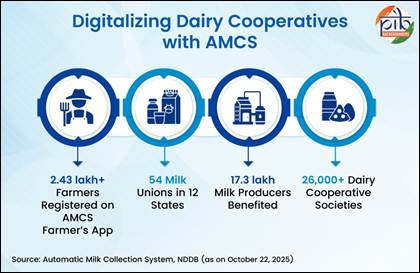
- Automatic Milk Collection System (AMCS):
- Operational in 12 states and Union Territories, benefiting approximately 17.3 lakh milk producers.
- Digitally records milk quality, quantity, and fat content at the collection point, ensuring instant payments to farmers' bank accounts.
- Provides real-time SMS updates to farmers regarding their daily sales and payment status.
- NDDB Dairy ERP (NDERP):
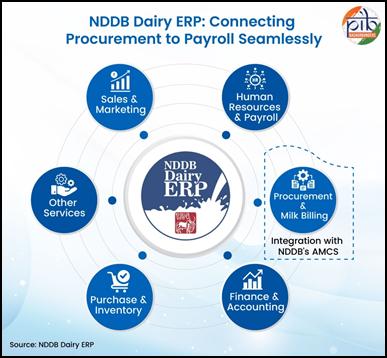
- An open-source Enterprise Resource Planning system (built on ERPNext) designed specifically for the dairy and edible oil industries.
- It integrates the entire value chain from "cow to consumer," including finance, inventory, and distribution, without recurring licensing fees.
- Internet-based Dairy Information System (i-DIS):
- A national dashboard used by 198 milk unions and 15 federations for data-driven decision-making and policy planning.
Breeding & Logistics Innovations
- Semen Station Management System (SSMS):
- Digitizes the production and quality control of Frozen Semen Doses (FSD) across 38 graded semen stations.
- Ensures adherence to Minimum Standard Protocols (MSP) and provides nationwide traceability of genetic material.
- GIS Route Optimisation:
- Cooperatives use satellite mapping to plan the most efficient milk procurement routes, significantly reducing fuel costs and transportation time.
Sources
India’s PV Manufacturing Landscape: Strategic Inflection Points (TERI Report 2026)
What’s the News?
- The Energy and Resources Institute (TERI) released a landmark report titled "India’s PV Manufacturing & Its Strategic Inflection Points" during the Bharat Climate Forum (BCF) 2026 in New Delhi.
- The report provides a strategic assessment of India’s solar photovoltaic (PV) value chain and identifies interventions needed to transition from a downstream-heavy industry to a globally competitive, self-reliant ecosystem.
- India's solar potential is now reassessed at over 10,800 GW, emphasizing that the challenge is no longer just deployment but capturing domestic value through manufacturing and technology.
Current Landscape & Projections
- Capacity Realities:
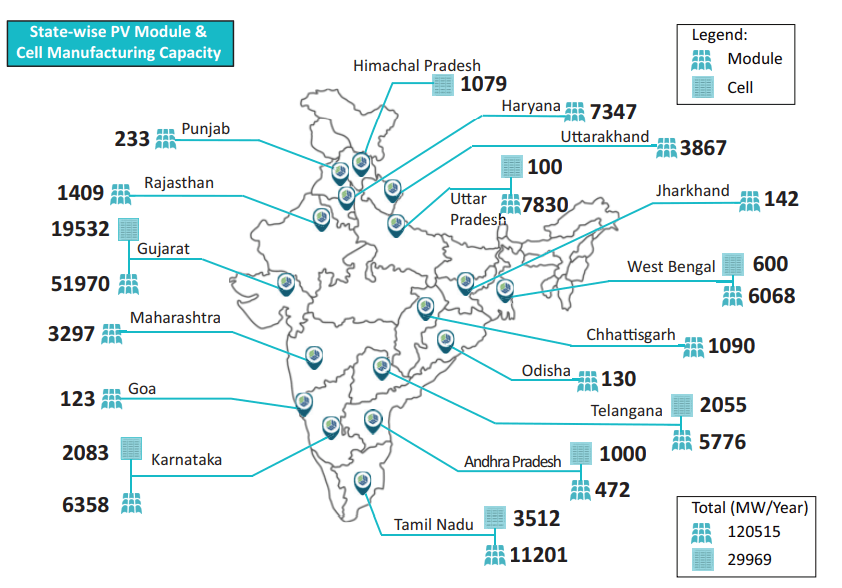
- By late 2025, India's module manufacturing capacity reached approximately 144 GW/year, far exceeding the domestic demand of ~54 GW.
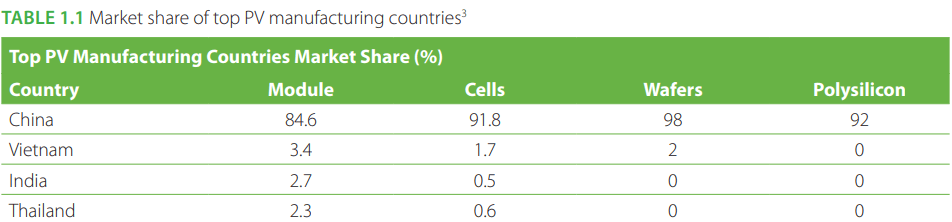
- However, significant gaps exist upstream: India still imports 98% of its wafers and 100% of its polysilicon.
- Projected Growth (by 2030):
- Module capacity is expected to exceed 280 GW/year.
- Cell capacity is projected to rise from ~30 GW to 171 GW/year.
- Policy Drivers: The growth has been largely fueled by the Production-Linked Incentive (PLI) scheme, high import tariffs on finished panels, and the Approved List of Models and Manufacturers (ALMM).
Key Challenges & Vulnerabilities
- Upstream Dependencies: The near-monopoly of China in upstream segments (~98% for wafers and ~92% for polysilicon) exposes India to geopolitical risks and supply chain disruptions.
- Equipment Bottlenecks: Over 90% of vital manufacturing tools (e.g., ingot furnaces, deposition tools) are imported, creating foreign exchange (FX) risks and technological dependence.
- Financing Constraints: High costs of capital and risk perception for large-scale upstream "fabs" (fabrication facilities) hinder investments in capital-intensive stages.
- Sustainability Gaps: Lack of structured recycling infrastructure for PV waste and non-compliance with emerging global ESG (Environmental, Social, and Governance) standards could impact future exports.
Sources
National Improvised Explosive Device Data Management System (NIDMS)

What’s the News?
- Union Home Minister Amit Shah launched the National Improvised Explosive Device Data Management System (NIDMS) to enhance India's counter-terror capabilities.
- Developed and managed by the National Security Guard (NSG), the platform serves as a centralized database for all IED-related incidents, blast data, and forensic signatures across the country.
National IED Data Management System (NIDMS)?
- Objective: Create a “One Nation, One IED Data Repository” to standardize, store, and analyze IED incident data nationwide.
- Coverage: Archives data on explosive materials, initiation mechanisms, locations, forensic findings, and modus operandi from over two decades.
- AI & Analytics:
- Uses AI/ML algorithms to detect patterns, link incidents by device type, circuit design, or explosive used.
- Enables predictive threat mapping and rapid formulation of countermeasures.
- Interoperability: Designed to integrate with key national systems including:
- CCTNS (Crime and Criminal Tracking Network & Systems)
- ICJS-2 (Interoperable Criminal Justice System)
- NAFIS (National Automated Fingerprint Identification System)
- e-Prosecution, e-Prisons, and forensic databases.
Key Stakeholders & Implementation
- Lead Agency: National Security Guard (NSG), through its National Bomb Data Centre (NBDC).
- Development Partners:
- Rashtriya Raksha University (RRU) – research, training, and academic inputs
- IIT Delhi, MHA, NIA, and Cyber Security Coordination Centre
- User Agencies:
- State Police Forces
- Central Armed Police Forces (CAPFs)
- National Investigation Agency (NIA)
- Anti-Terrorism Squads (ATS)
Additional Info
- National Security Guard (NSG):
- Established in 1984 following Operation Blue Star as a "Federal Contingency World Class Zero Error Force".
- Functions under the Ministry of Home Affairs (MHA) and is modeled after the SAS (UK) and GSG-9 (Germany).
- National Bomb Data Centre (NBDC): The nodal agency within the NSG responsible for the analysis of all bomb-related incidents in India.
- Constitutional Context:
- Article 355: It is the duty of the Union to protect states against internal disturbance and external aggression.
- Entry 1 of the Union List: Pertains to the "Defence of India," providing the legal basis for the Centre to manage national security databases.
- Linkage: NIDMS is expected to be integrated with the Crime and Criminal Tracking Network & Systems (CCTNS) and the Inter-operable Criminal Justice System (ICJS) for seamless information flow.
Sources
Vehicle-to-Vehicle (V2V) Communication: India’s "Talking Cars" Initiative for Road Safety

What’s the News?
- The Ministry of Road Transport and Highways (MoRTH) announced the nationwide rollout of Vehicle-to-Vehicle (V2V) communication technology, targeted for implementation by the end of 2026.
- Union Minister Nitin Gadkari stated that the technology will be mandated for all new passenger vehicles to enable real-time safety data exchange.
- The initiative aims to significantly reduce road fatalities—currently at approximately 1.8 lakh deaths annually—by providing drivers with early warnings of potential hazards.
How V2V Technology Works?
- Network Independence: Unlike standard connected-car features, V2V does not rely on cellular networks or the internet; it uses direct, short-range wireless signals.
- On-Board Units (OBU): Vehicles will be equipped with a hardware module, similar in size to a SIM card, that continuously broadcasts and receives data.
- Data Exchange: Every equipped vehicle shares real-time parameters, including location, speed, direction, and braking status with surrounding automobiles.
- 360-Degree Awareness: The system provides a "bird's-eye view" of traffic, detecting vehicles in blind spots or those approaching from the rear and sides, even when out of the driver's line of sight.
Significance & Benefits?
- Fog & Low-Visibility Safety: In dense winter fog (common in North India), the system alerts drivers to stationary or slow-moving vehicles ahead that are not yet visible, preventing massive pile-ups.
- Sudden Braking Alerts: If a vehicle several cars ahead applies sudden brakes, following drivers receive an instant warning, providing crucial extra seconds to react.
- Integration with ADAS: For cars with Advanced Driver Assistance Systems (ADAS), the V2V data can trigger automatic emergency braking or speed adjustments to mitigate collisions.
- Efficiency: Beyond safety, better coordination between vehicles can lead to smoother traffic flow and improved fuel economy by reducing abrupt stop-and-go movements.
Additional Info
- Spectrum Allocation: The Department of Telecommunications (DoT) has given in-principle approval for the use of 30 MHz of spectrum in the 5.875–5.905 GHz band specifically for V2V purposes.
- Target 2030: This technology is a core component of the government's broader goal to reduce road accident fatalities in India by 50% by 2030.
- Cost Estimate: Initial estimates suggest the cost for installing the V2V on-board units will be approximately ₹5,000 to ₹7,000 per vehicle.
- Zero-Fatality Districts: The ministry is coordinating this rollout alongside the Zero-Fatality Districts programme, targeting the top 100 districts with the highest road mortality rates.
- Bus Safety Reforms: Alongside V2V, the government is mandating that sleeper coach buses be built only by authorized manufacturers, with existing fleets retrofitted with fire detection and drowsiness indicators.
Sources
The Weimar Triangle: India’s Strategic Engagement with Europe

What’s the News?
- In a significant diplomatic shift, India participated in discussions within the Weimar Triangle format, marking a deepening of ties with Europe's core powers.
- During the engagement, Poland, a key member of the group, expressed strong support for India amidst global trade tensions and tariff threats related to energy imports.
What is the Weimar Triangle?
- Origin: Established in August 1991 in Weimar, Germany, as a consultative forum between Germany, France, and Poland.
- Initial Purpose: Originally created to assist Poland’s transition from communism and facilitate its integration into the European Union (EU) and NATO.
- Evolution: Today, it serves as a high-level platform for the three nations to coordinate European policy, strengthen security cooperation, and act as a "locomotive" for EU initiatives.
- Strategic Weight: Together, these three nations represent nearly 40% of the EU’s population and a significant portion of its economic and military power.
Significance of India’s Participation
- Diversified Diplomacy: India’s engagement with this sub-regional group allows it to bypass broader EU-wide bureaucratic hurdles and engage directly with Europe's most influential decision-makers.
- Poland’s Support: Poland has emerged as a vocal backer of India, specifically regarding India's continued import of Russian oil, arguing that India’s energy security is vital for global stability.
- Security & Defence: The format provides a venue to discuss the Russia-Ukraine conflict, maritime security in the Indo-Pacific, and collaborative defense manufacturing under the Make in India initiative.
- Countering Tariff Threats: Amidst threats of universal tariffs from the U.S. administration, India and the Weimar powers are exploring ways to safeguard bilateral trade and supply chain resilience.
Additional Info
- Key Personalities: The recent momentum is driven by leaders like Polish Foreign Minister Radosław Sikorski, who has advocated for a more "India-centric" European foreign policy.
- Indo-Pacific Alignment: The Weimar Triangle members are increasingly aligning their "Indo-Pacific Strategies" with India's vision of a free, open, and inclusive region.
- Economic Linkages:
- Germany remains India's largest trading partner in the EU.
- France is a primary strategic and defense partner.
- Poland is becoming a key hub for Indian investments in Central and Eastern Europe.
- Global Governance: These nations often find common ground on reforming multilateral institutions like the UN Security Council, where France and Germany have historically supported India’s permanent membership bid.
Sources
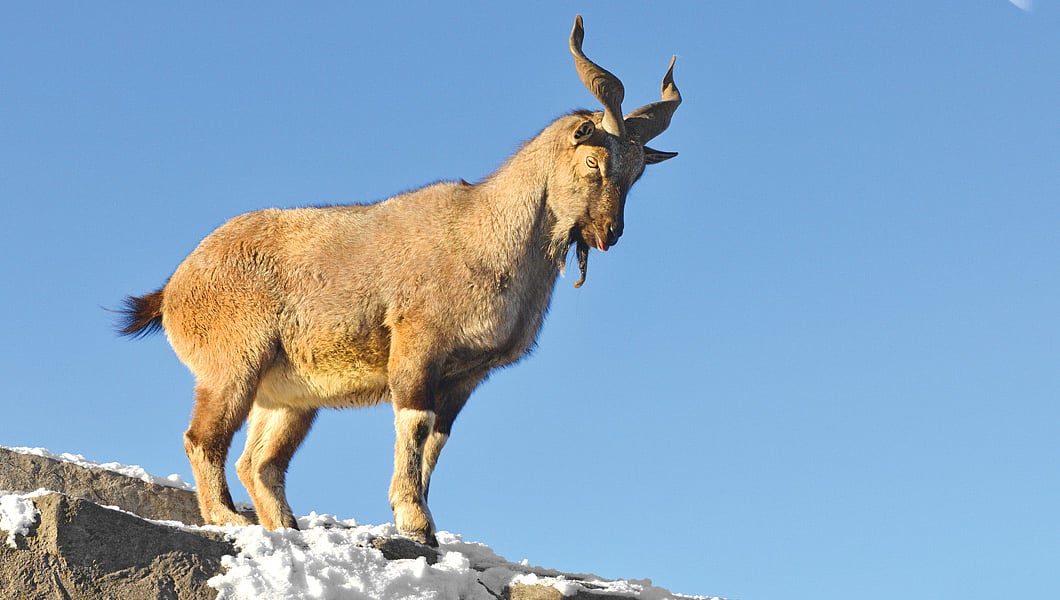
Kashmir Markhor: India’s Rarest Wild Goat Faces Local Extinction Risk
What’s the News?
- A recent state-wide survey by the Wildlife Trust of India (WTI) has revealed that the Kashmir Markhor (Capra falconeri cashmeriensis), India's rarest wild goat, is on the brink of local extinction.
- The population has plummeted to an estimated 200–300 individuals in India, primarily restricted to fragmented pockets in Jammu & Kashmir.
- The Kazinag range in the Baramulla district remains the species' last significant stronghold, while smaller populations in the Pir Panjal range are teetering on the edge of disappearance.
Understanding the "Snake-Killer" Goat
- Distinctive Features: Known for its majestic spiral corkscrew horns (reaching up to 160 cm in males) and a long, flowing ruff on the chin and neck.
- Physical Prowess: A large mountain ungulate weighing up to 100 kg, it possesses extraordinary agility, capable of navigating nearly vertical 90-degree cliffs to escape predators.
- Name Origin: The word "Markhor" is derived from Persian, meaning "snake-killer", based on local folklore.
- Ecological Role: As a flagship species, it acts as a key prey for snow leopards, common leopards, and wolves, while its grazing habits help maintain soil health and prevent vegetation overgrowth.
Critical Threats to Survival
- Livestock Competition: Heavy grazing by domestic sheep and goats (especially from migratory Bakarwal communities) leads to severe dietary overlap and habitat degradation.
- Infrastructure Development: The construction of the Mughal Road and high-tension power transmission lines has fragmented habitats and disrupted natural migration corridors.
- Poaching: Despite legal bans, illegal hunting for meat and its prized horns—often used in traditional Chinese medicine—remains a persistent threat in remote areas.
- Climate Change: Rising temperatures are shifting vegetation to higher altitudes, pushing the Markhor into sub-optimal habitats with scarce food resources.
Conservation Status and Efforts
- Legal Protection: Classified as "Near Threatened" on the IUCN Red List and protected under Schedule I of India’s Wildlife (Protection) Act, 1972.
- Markhor Recovery Project: Launched in 2004 by WTI and the J&K Wildlife Department, this project focuses on tracking habitat usage, fencing sensitive areas, and establishing anti-grazing camps.
- Protected Areas: Key sanctuaries dedicated to its protection include Kazinag National Park, Hirpora Wildlife Sanctuary, and Tattakuti Wildlife Sanctuary.
- Community Engagement: Conservationists are working with local herders to promote rotatory grazing and reduce human disturbance during the sensitive birthing season in May and June.
- Legal Status:
- Listed under Schedule I of the Wildlife (Protection) Act, 1972 (highest protection).
- IUCN Status: Near Threatened globally; critically endangered within India.
- Recognized internationally: 24 May declared International Day of the Markhor by UNGA (since 2024).
- International Recognition: The United Nations General Assembly designated May 24 as the International Day of the Markhor to promote global conservation.
Sources
January 2026
31 January 202630 January 202629 January 202628 January 202627 January 202626 January 202624 January 202623 January 202622 January 202621 January 202620 January 202619 January 202616 January 202615 January 202614 January 202613 January 202612 January 202610 January 202609 January 202608 January 202607 January 202606 January 202605 January 202603 January 202602 January 202601 January 2026
Archive
October 2026
- 27 October 2026
- 26 October 2026
- 24 October 2026
- 23 October 2026
- 22 October 2026
- 21 October 2026
- 20 October 2026
- 19 October 2026
- 17 October 2026
- 16 October 2026
- 15 October 2026
- 14 October 2026
- 13 October 2026
- 12 October 2026
- 10 October 2026
- 09 October 2026
- 08 October 2026
- 07 October 2026
- 06 October 2026
- 05 October 2026
- 03 October 2026
- 02 October 2026
- 01 October 2026
September 2026
- 30 September 2026
- 29 September 2026
- 28 September 2026
- 26 September 2026
- 25 September 2026
- 24 September 2026
- 23 September 2026
- 22 September 2026
- 21 September 2026
- 19 September 2026
- 18 September 2026
- 17 September 2026
- 16 September 2026
- 15 September 2026
- 12 September 2026
- 11 September 2026
- 10 September 2026
- 09 September 2026
- 08 September 2026
- 07 September 2026
- 05 September 2026
- 04 September 2026
- 03 September 2026
- 02 September 2026
- 01 September 2026
August 2026
- 31 August 2026
- 29 August 2026
- 27 August 2026
- 26 August 2026
- 25 August 2026
- 24 August 2026
- 22 August 2026
- 21 August 2026
- 20 August 2026
- 19 August 2026
- 18 August 2026
- 17 August 2026
- 14 August 2026
- 13 August 2026
- 12 August 2026
- 11 August 2026
- 10 August 2026
- 08 August 2026
- 07 August 2026
- 06 August 2026
- 05 August 2026
- 04 August 2026
- 03 August 2026
- 01 August 2026
July 2026
- 31 July 2026
- 30 July 2026
- 29 July 2026
- 28 July 2026
- 27 July 2026
- 25 July 2026
- 23 July 2026
- 22 July 2026
- 21 July 2026
- 20 July 2026
- 18 July 2026
- 17 July 2026
- 15 July 2026
- 14 July 2026
- 13 July 2026
- 11 July 2026
- 10 July 2026
- 09 July 2026
- 08 July 2026
- 07 July 2026
- 06 July 2026
- 04 July 2026
- 03 July 2026
- 02 July 2026
- 01 July 2026
June 2026
May 2026
April 2026
March 2026
- 31 March 2026
- 30 March 2026
- 28 March 2026
- 27 March 2026
- 26 March 2026
- 25 March 2026
- 24 March 2026
- 23 March 2026
- 21 March 2026
- 20 March 2026
- 19 March 2026
- 18 March 2026
- 17 March 2026
- 16 March 2026
- 14 March 2026
- 13 March 2026
- 12 March 2026
- 11 March 2026
- 10 March 2026
- 09 March 2026
- 07 March 2026
- 06 March 2026
- 05 March 2026
- 03 March 2026
- 02 March 2026
February 2026
- 28 February 2026
- 27 February 2026
- 26 February 2026
- 25 February 2026
- 24 February 2026
- 23 February 2026
- 21 February 2026
- 20 February 2026
- 19 February 2026
- 18 February 2026
- 17 February 2026
- 16 February 2026
- 13 February 2026
- 12 February 2026
- 11 February 2026
- 10 February 2026
- 09 February 2026
- 07 February 2026
- 06 February 2026
- 05 February 2026
- 04 February 2026
- 03 February 2026
- 02 February 2026
January 2026
- 31 January 2026
- 30 January 2026
- 29 January 2026
- 28 January 2026
- 27 January 2026
- 26 January 2026
- 24 January 2026
- 23 January 2026
- 22 January 2026
- 21 January 2026
- 20 January 2026
- 19 January 2026
- 16 January 2026
- 15 January 2026
- 14 January 2026
- 13 January 2026
- 12 January 2026
- 10 January 2026
- 09 January 2026
- 08 January 2026
- 07 January 2026
- 06 January 2026
- 05 January 2026
- 03 January 2026
- 02 January 2026
- 01 January 2026
December 2025
- 31 December 2025
- 30 December 2025
- 29 December 2025
- 27 December 2025
- 26 December 2025
- 24 December 2025
- 23 December 2025
- 22 December 2025
- 20 December 2025
- 19 December 2025
- 18 December 2025
- 17 December 2025
- 16 December 2025
- 15 December 2025
- 13 December 2025
- 12 December 2025
- 11 December 2025
- 10 December 2025
- 09 December 2025
- 08 December 2025
- 05 December 2025
- 04 December 2025
- 03 December 2025
- 02 December 2025
November 2025
- 29 November 2025
- 28 November 2025
- 27 November 2025
- 26 November 2025
- 25 November 2025
- 24 November 2025
- 22 November 2025
- 21 November 2025
- 20 November 2025
- 19 November 2025
- 18 November 2025
- 17 November 2025
- 15 November 2025
- 14 November 2025
- 13 November 2025
- 12 November 2025
- 11 November 2025
- 10 November 2025
- 08 November 2025
- 07 November 2025
- 06 November 2025
- 05 November 2025
- 04 November 2025
- 03 November 2025
- 01 November 2025
October 2025
- 31 October 2025
- 30 October 2025
- 29 October 2025
- 28 October 2025
- 27 October 2025
- 25 October 2025
- 24 October 2025
- 23 October 2025
- 22 October 2025
- 21 October 2025
- 20 October 2025
- 18 October 2025
- 17 October 2025
- 16 October 2025
- 15 October 2025
- 14 October 2025
- 13 October 2025
- 11 October 2025
- 10 October 2025
- 09 October 2025
- 08 October 2025
- 07 October 2025
- 06 October 2025
- 04 October 2025
- 03 October 2025
- 02 October 2025
- 01 October 2025
September 2025
- 30 September 2025
- 29 September 2025
- 27 September 2025
- 26 September 2025
- 25 September 2025
- 24 September 2025
- 23 September 2025
- 22 September 2025
- 20 September 2025
- 19 September 2025
- 18 September 2025
- 17 September 2025
- 16 September 2025
- 15 September 2025
- 13 September 2025
- 12 September 2025
- 11 September 2025
- 10 September 2025
- 09 September 2025
- 08 September 2025
- 06 September 2025
- 05 September 2025
- 04 September 2025
- 03 September 2025
- 02 September 2025
- 01 September 2025
August 2025
- 30 August 2025
- 29 August 2025
- 28 August 2025
- 27 August 2025
- 26 August 2025
- 25 August 2025
- 23 August 2025
- 22 August 2025
- 21 August 2025
- 20 August 2025
- 19 August 2025
- 18 August 2025
- 16 August 2025
- 14 August 2025
- 13 August 2025
- 12 August 2025
- 11 August 2025
- 08 August 2025
- 07 August 2025
- 06 August 2025
- 05 August 2025
- 04 August 2025
- 02 August 2025
- 01 August 2025
July 2025
- 31 July 2025
- 30 July 2025
- 29 July 2025
- 28 July 2025
- 26 July 2025
- 25 July 2025
- 24 July 2025
- 23 July 2025
- 22 July 2025
- 21 July 2025
- 19 July 2025
- 18 July 2025
- 17 July 2025
- 16 July 2025
- 15 July 2025
- 12 July 2025
- 11 July 2025
- 10 July 2025
- 09 July 2025
- 07 July 2025
- 05 July 2025
- 04 July 2025
- 03 July 2025
- 02 July 2025
- 01 July 2025
June 2025
- 30 June 2025
- 28 June 2025
- 27 June 2025
- 26 June 2025
- 25 June 2025
- 24 June 2025
- 23 June 2025
- 21 June 2025
- 20 June 2025
- 19 June 2025
- 18 June 2025
- 17 June 2025
- 16 June 2025
- 14 June 2025
- 13 June 2025
- 12 June 2025
- 11 June 2025
- 10 June 2025
- 09 June 2025
- 07 June 2025
- 06 June 2025
- 05 June 2025
- 04 June 2025
- 03 June 2025
- 02 June 2025
May 2025
April 2025
- 30 April 2025
- 29 April 2025
- 28 April 2025
- 26 April 2025
- 25 April 2025
- 24 April 2025
- 23 April 2025
- 22 April 2025
- 21 April 2025
- 19 April 2025
- 18 April 2025
- 17 April 2025
- 16 April 2025
- 15 April 2025
- 14 April 2025
- 12 April 2025
- 11 April 2025
- 10 April 2025
- 09 April 2025
- 08 April 2025
- 07 April 2025
- 05 April 2025
- 04 April 2025
- 03 April 2025
- 02 April 2025
- 01 April 2025
March 2025
- 31 March 2025
- 29 March 2025
- 28 March 2025
- 27 March 2025
- 26 March 2025
- 25 March 2025
- 24 March 2025
- 22 March 2025
- 21 March 2025
- 20 March 2025
- 19 March 2025
- 18 March 2025
- 17 March 2025
- 15 March 2025
- 13 March 2025
- 12 March 2025
- 11 March 2025
- 10 March 2025
- 08 March 2025
- 07 March 2025
- 06 March 2025
- 05 March 2025
- 04 March 2025
- 03 March 2025
- 01 March 2025
February 2025
- 28 February 2025
- 27 February 2025
- 26 February 2025
- 25 February 2025
- 24 February 2025
- 22 February 2025
- 21 February 2025
- 20 February 2025
- 19 February 2025
- 18 February 2025
- 17 February 2025
- 15 February 2025
- 14 February 2025
- 13 February 2025
- 12 February 2025
- 11 February 2025
- 10 February 2025
- 08 February 2025
- 07 February 2025
- 06 February 2025
- 05 February 2025
- 04 February 2025
- 03 February 2025
- 01 February 2025
January 2025
- 31 January 2025
- 30 January 2025
- 29 January 2025
- 28 January 2025
- 27 January 2025
- 25 January 2025
- 24 January 2025
- 23 January 2025
- 22 January 2025
- 21 January 2025
- 20 January 2025
- 18 January 2025
- 17 January 2025
- 16 January 2025
- 15 January 2025
- 14 January 2025
- 13 January 2025
- 11 January 2025
- 10 January 2025
- 09 January 2025
- 08 January 2025
- 07 January 2025
- 06 January 2025
- 04 January 2025
- 03 January 2025
- 02 January 2025
- 01 January 2025