
Current Affairs
Stay updated with the latest national and international events.
09 September 2025
CP Radhakrishnan Elected India’s 15th Vice-President

What’s the News?
- C. P. Radhakrishnan, the Governor of Maharashtra and veteran BJP–RSS leader, has been elected as India’s 15th Vice-President, succeeding Jagdeep Dhankhar who resigned earlier in the year due to health concerns.
- The election, held via secret ballot in Parliament, resulted in Radhakrishnan securing 452 votes, while his opponent, former Supreme Court judge B. Sudershan Reddy, received 300 votes. The margin of 152 votes exceeded expectations.
- Voter turnout was extremely high—approximately 98%, with 767 MPs casting votes out of 781 electors; 15 ballots were declared invalid.
Election Dynamics
- Electoral Process:
- The Vice President is elected by an electoral college consisting of members of both houses of Parliament (Lok Sabha and Rajya Sabha), including nominated members.
- Voting is conducted via secret ballot, allowing for cross-voting, which played a role in this election.
- Results Analysis:
- Radhakrishnan secured 452 votes (60.1% of valid votes), while Reddy received 300 votes (39.9%). Fifteen votes were declared invalid.
- The opposition’s claim of unity was questioned due to the 15-vote shortfall from their expected tally of 315, indicating possible cross-voting or invalid votes.
Additional Info
- Constitutional Provisions:
- Article 63: States that there shall be a Vice President of India.
- Article 64: The Vice President shall be the ex-officio Chairman of the Council of States (Rajya Sabha).
- Article 66: Outlines the election process for the Vice President. The election is conducted by an electoral college.
- Article 67: Specifies the term of office for the Vice President, which is five years from the date of assuming office.
- Historical Context:
- C. P. Radhakrishnan is the third person from Tamil Nadu to hold the office of Vice President, after R. Venkataraman and S. Radhakrishnan.
- He began his political career with the Rashtriya Swayamsevak Sangh (RSS) and the Bharatiya Jana Sangh.
- He was a two-time Member of Parliament (MP) from the Coimbatore constituency in Tamil Nadu.
- His past roles include serving as the state president of the Bharatiya Janata Party (BJP) in Tamil Nadu and as Chairman of the Coir Board.
Sources
India Establishes Nine Global Records in Space Missions
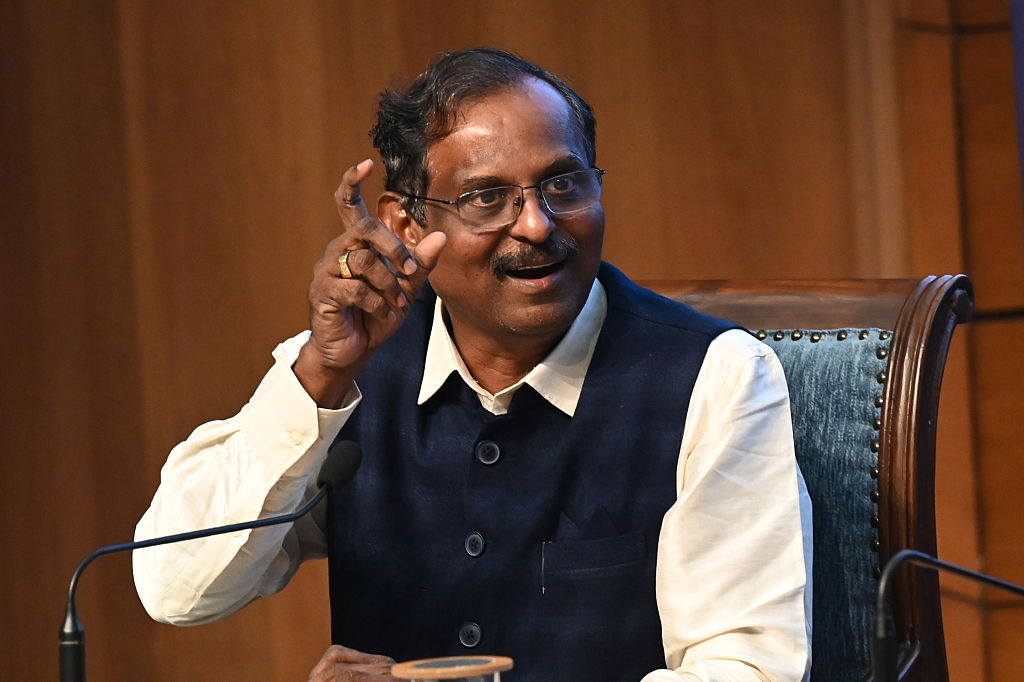
What's the News?
- India has achieved nine major world records in space exploration, spanning missions such as the Chandrayaan series (1, 2, 3), Mars Orbiter Mission, and cryogenic engine technology, dating back to 2008.
- According to ISRO Chairman V. Narayanan, the agency plans to add 8–10 more world records in the coming years.
Key Space Records
- Chandrayaan-1 (2008): First mission to discover water molecules on the lunar surface, sub-surface, and exosphere, later confirmed by NASA.
- Mars Orbiter Mission (2014): First country to reach Mars on its maiden attempt, achieving orbit insertion successfully.
- PSLV-C37 (2017): Launched 104 satellites in a single mission, setting a global record for the most satellites deployed simultaneously.
- Chandrayaan-2 (2019): Deployed the highest-resolution orbiter camera around the Moon, enhancing lunar mapping capabilities.
- Chandrayaan-3 (2023): First country to soft-land near the lunar South Pole and conduct in-situ measurements of the lunar surface environment.
- Cryogenic Technology (2014-2017): Achieved three records in cryogenic stage development, including the fastest maiden flight of LVM3 (28 months vs. 37-108 months globally) and the shortest hot-stage test duration (34 days vs. 64 days–10 months).
Additional Info
- Future ISRO Missions:
- Gaganyaan (2026): India's first human spaceflight mission, which will send astronauts into Low Earth Orbit. A precursor uncrewed mission with a humanoid robot is also planned.
- Chandrayaan-4 (2027): A lunar sample-return mission to collect and bring back samples of lunar soil and rock.
- Bharatiya Antariksha Station (2028-2035): India's planned space station.
- Venus Orbiter Mission (2028): A mission to study the atmosphere of Venus.
- Mars Lander Mission (Mangalyaan-2): India's second mission to Mars, which will include a lander, rover, and a helicopter.
Sources
Financial Aid for Flood-Affected States: Punjab and Himachal Pradesh
What’s the News?
- Prime Minister Narendra Modi has announced a ₹1,600 crore relief package for Punjab, supplementing the ₹12,000 crore already available under disaster funds. The gesture followed an aerial survey and damage review.
- Simultaneously, Himachal Pradesh received an immediate assistance of ₹1,500 crore.
Relief Components & Recovery Plan
- Punjab:
- Includes advance release of the second instalment under the State Disaster Response Fund (SDRF) and support via PM-Kisan Samman Nidhi.
- Ex-gratia payments: ₹2 lakh for next-of-kin of deceased; ₹50,000 for seriously injured.
- Focus on rebuilding:
- Houses via PM Awas Yojana – Gramin
- Restoring roads, schools, borewells
- Livestock mini-kits, conversion of bore pumps from diesel to solar power
- Micro-irrigation following “Per Drop More Crop”
- Relief via PM National Relief Fund (PMNRF)
- Himachal Pradesh:
- Advance release of SDRF and PM-Kisan Samman Nidhi.
- Ex-gratia: ₹2 lakh to family of deceased; ₹50,000 to injured.
- Multi-pronged restoration:
- Rebuilding under PM Awas Yojana
- Repairing national highways and schools
- Relief via PMNRF
- Mini-kits for livestock; assistance to farmers without power access
Additional Info
- Disaster Management Framework in India:
- State Disaster Response Fund (SDRF):
- The primary fund available with state governments for disaster response, constituted under Section 48(1)(a) of the Disaster Management Act, 2005.
- The Central government contributes 75% of the SDRF allocation for general category states and 90% for special category states (North-Eastern and Himalayan states).
- It is used for meeting immediate relief expenditures.
- National Disaster Response Fund (NDRF):
- Constituted under Section 46 of the Disaster Management Act, 2005.
- It supplements the SDRF in the case of a "disaster of severe nature" when the SDRF is insufficient.
- The entire contribution to this fund comes from the Central government.
- An Inter-Ministerial Central Team (IMCT) is sent to assess the damage before additional funds are released from the NDRF.
- State Disaster Response Fund (SDRF):
- Relevant Government Initiatives:
- National Disaster Management Authority (NDMA): The apex body for disaster management in India, headed by the Prime Minister.
- Pradhan Mantri Awas Yojana (PMAY): A scheme to provide affordable housing to all eligible urban and rural households by a certain date.
- PM CARES for Children Scheme: Provides comprehensive support to children who have lost both parents, a surviving parent, or legal guardian/adoptive parents due to the floods.
Sources
Swachh Vayu Sarvekshan 2025: Funds Mobilized for Clean Air

What’s the News?
- The Union Environment Minister, Bhupender Yadav, presented the Swachh Vayu Sarvekshan Awards 2025, recognising the top-performing cities under the National Clean Air Programme (NCAP)—130 cities evaluated for air quality improvement.
- At the ceremony, ₹1.55 lakh crore was reported as mobilised for clean air and green infrastructure initiatives across these cities.
- Indore topped in the Category-1 group (population over 10 lakh) with a perfect score of 200/200, followed by Jabalpur (199), and Agra and Surat tied at third (196). Smaller cities like Amravati, Jhansi, Moradabad, and Alwar, among others, were also recognised.
NCAP Awards and Key Achievements
- Category-1 (Population >10 lakh):
- Indore: Planted 16 lakh trees (Guinness World Record), operates 270 green public transport buses (120 electric + 150 CNG).
- Jabalpur: Established 11 MW waste-to-energy plant and expanded greenery.
- Agra & Surat: Agra remediated legacy waste dump sites; Surat implemented EV policy incentives and maintains 38% green cover.
- Category-2 (Population 3-10 lakh):
- Amravati: Improved 340 km road infrastructure, greened 53 gardens, and converted 19 acres of barren land into forest.
- Jhansi & Moradabad: Focused on urban greening and construction waste management.
- Category-3 (Population <3 lakh):
- Dewas: Shifted industries to cleaner fuels.
- Parwanoo & Angul: Enhanced road infrastructure and public outreach.
- Performance Metrics:
- 64 cities achieved ≥20% reduction in PM10 levels (2017-18 baseline).
- 25 cities achieved ≥40% reduction ahead of NCAP’s 2026 target.
Strategic Significance & Key Details
- Demonstrates central and local governments’ scale of investment in urban air quality and green infrastructure.
- Funds sourced via convergence of schemes: Smart Cities Mission, Swachh Bharat Mission (Urban), AMRUT, SATAT, FAME-II, Nagar Van Yojana, alongside NCAP-specific grants.
- Since 2019:
- ₹20,130 crore – direct NCAP implementation
- ₹13,237 crore – performance-linked grants
- ₹73,350 crore – convergence share
- ₹82,000 crore – contributions from states and local bodies
- Total: ₹1.55 lakh crore mobilised.
- Since 2019:
- Launched “Ward-Level Swachh Vayu Sarvekshan Guidelines” and a Compendium of Best Practices to deepen citizen engagement and knowledge sharing at sub-city level.
Additional Info
- National Clean Air Programme (NCAP):
- Launched in 2019 by the MoEFCC.
- A long-term, time-bound national strategy to tackle air pollution.
- Aims to reduce particulate matter (PM10 and PM2.5) concentrations by up to 40% by 2026, with 2017 as the base year.
- It covers 131 "non-attainment cities" that do not meet the National Ambient Air Quality Standards (NAAQS).
- Funding for NCAP:
- Funding for cities under NCAP comes from two main sources:
- MoEFCC: For 82 non-attainment cities.
- 15th Finance Commission: For 49 million-plus cities.
- Funding for cities under NCAP comes from two main sources:
- International Cooperation:
- India is a member of the Climate and Clean Air Coalition (CCAC), a global partnership to reduce short-lived climate pollutants (SLCPs) like black carbon, methane, and HFCs.
- India's membership in the CCAC facilitates the exchange of best practices and technology, strengthening its domestic clean air efforts.
- International Day of Clean Air for Blue Skies:
- Observed annually on September 7.
- The day promotes awareness and international cooperation for improving air quality.
- The theme for this year's observation was "Together for Clean Air".
Sources
iDEX-DIO & EdCIL Unite to Advance Dual-Use Technology Under ASPIRE

What’s the News?
- iDEX-DIO, the innovation arm of the Ministry of Defence, and EdCIL (India) Limited, a Mini-Ratna CPSE under the Ministry of Education, have signed an MoU.
- The collaboration is part of the new ASPIRE (Accelerating Strategic Progress in Research and Education) program, aimed at bridging defence expertise with emerging ed-tech solutions to address critical civilian challenges.
- The MoU was signed on September 9, 2025, by Amit Satija (Joint Secretary, Defence Production) and Govind Jaiswal (CMD, EdCIL), marking a strategic step towards leveraging India’s start-up ecosystem for scalable innovations.
ASPIRE Program Objectives
- Dual-Use Technology Development: Focus on technologies that serve both defence and civilian sectors, such as AI-based learning tools, simulation platforms, and secure communication systems.
- Start-Up Ecosystem Integration: iDEX’s existing network of 650+ start-ups and MSMEs will be leveraged to develop solutions for education and defence, enhancing indigenous capabilities.
- Cross-Sectoral Expertise: EdCIL’s ed-tech experience (e.g., digital classrooms, teacher training) will combine with iDEX’s defence innovation model to create impactful solutions.
- Economic Growth: Aims to boost India’s self-reliance (Aatmanirbhar Bharat) by reducing import dependency and fostering homegrown technologies.
Additional Info
- Innovations for Defence Excellence (iDEX):
- Launched by the Prime Minister in 2018.
- Aims to foster innovation and technology development in the defence and aerospace sectors by engaging industries, startups, individual innovators, and academia.
- It provides grants and funding to support research and development of new technologies.
- The initiative is managed by the Defence Innovation Organisation (DIO), a not-for-profit company.
- So far, iDEX has engaged with over 650 startups and MSMEs and has facilitated procurement orders worth ₹1,652 crore for products developed under its framework
- EdCIL (India) Limited:
- A Public Sector Undertaking under the Ministry of Education.
- Offers project management, consultancy, and ed-tech services in India and abroad.
- The company has registered a Compounded Annual Growth Rate of about 24% over the last decade.
- Dual-Use Technology:
- Refers to technologies, goods, and software that can be used for both civilian and military applications.
- Examples include GPS, drones, and advanced communication systems, which were originally developed for military use but now have widespread commercial applications.
- The development of dual-use technology is crucial for strengthening a nation's defence capabilities while also driving economic growth and innovation in the private sector.
Sources
UPI-UPU Integration Launched at Universal Postal Congress in Dubai

What’s the News?
- Communications Minister Jyotiraditya Scindia unveiled the UPI-UPU Integration Project at the 28th Universal Postal Congress in Dubai, merging India’s Unified Payments Interface (UPI) with the Universal Postal Union’s Interconnection Platform (UPU-IP).
- The integration enables faster, safer, and more affordable cross-border remittances by leveraging the postal network’s global reach and UPI’s real-time digital infrastructure.
- India committed USD 10 million to support digital payment innovation under this initiative.
Project Overview & Significance
- Developed by: Department of Posts (DoP), NPCI International Payments Limited (NIPL), and UPU.
- Key Benefits:
- Reduced Costs: Aims to lower cross-border remittance costs to <3% (aligned with UN SDGs), benefiting millions of migrants and families.
- Speed & Security: Enables instant, secure transfers using postal networks and UPI’s real-time infrastructure (UPI processed 185 billion transactions worth USD 2.83 trillion in 2024–25).
- Financial Inclusion: Expands affordable digital financial services to remote areas via post offices, strengthening India’s Digital Public Infrastructure (DPI) model.
- India’s Four-Pillar Vision:
- Connect: Data-driven logistics for seamless global commerce.
- Include: Affordable services for migrants and small enterprises.
- Modernize: Adoption of AI, DigiPIN, and machine learning.
- Cooperate: South-South partnerships via UPU technical cell.
Additional Info
- Universal Postal Union (UPU):
- Established in 1874, it is a specialized agency of the United Nations (UN).
- Headquartered in Bern, Switzerland, it coordinates postal policies among its 192 member countries to facilitate a universal postal system.
- India is a founding member of the UPU, having joined in 1876.
- The Universal Postal Congress is the supreme decision-making body of the UPU, held every four years to set the organization's strategic direction.
- Unified Payments Interface (UPI):
- An instant real-time payment system developed by the National Payments Corporation of India (NPCI) in 2016.
- It allows users to link multiple bank accounts into a single mobile application for seamless fund transfers and merchant payments.
- UPI has become a cornerstone of India's digital economy, with a high transaction volume, and is increasingly being adopted in other countries.
- National Payments Corporation of India (NPCI):
- An umbrella organization for operating retail payments and settlement systems in India.
- It is an initiative of the Reserve Bank of India (RBI) and the Indian Banks' Association (IBA) under the provisions of the Payment and Settlement Systems Act, 2007.
- Remittances:
- Remittances are transfers of money from foreign workers to their home country.
- India is the world's largest recipient of remittances, making the cost and efficiency of these transfers a critical economic issue.
Sources
Nepal PM Oli Resigns Amid Gen Z-Led Anti-Corruption Protests

What’s the News?
- Nepal’s Prime Minister K. P. Sharma Oli resigned amid violent, youth-driven protests against political corruption and a controversial social media ban. Demonstrators, especially from Generation Z, mobilized via platforms like TikTok and Viber after Facebook and others were blocked, leading to at least 19 fatalities.
- Protests escalated rapidly, resulting in arson attacks on buildings including the parliament, Supreme Court, and homes of top leaders; the army took control of security, and the airport was shut down.
The 'Gen Z' Protests and Political Instability
- The protests, dubbed the "Gen Z protests," highlight a deep-seated frustration among Nepali youth with the political elite.
- Demonstrators defied curfews and torched government buildings, including the Parliament, and the private residences of several high-ranking politicians, including Oli's.
- The protests were fueled by a perception of widespread corruption and the luxurious lifestyles of politicians' families in a nation where a large portion of the population lives in poverty.
- The political crisis has left Nepal's future uncertain, with calls for the dissolution of the Parliament and the formation of a new government.
- The situation marks the most significant political upheaval in Nepal since the end of its monarchy in 2008.
Additional Info
- Political Context:
- Nepal is a federal democratic republic located in the Himalayas.
- It adopted a new constitution in 2015, which established a federal system of government.
- The country has a history of political instability and frequent changes in government.
- Oli, a leader of the Communist Party of Nepal (Unified Marxist-Leninist), was serving his fourth term as Prime Minister.
- Socio-Economic Factors:
- Remittances from a large Nepali diaspora working abroad account for a significant portion of the country's economy.
- The protests underscore public dissatisfaction with high unemployment, particularly among the youth, and persistent corruption.
- Regional Implications:
- Both India and China are closely monitoring the situation in Nepal.
- India has a close cultural and historical relationship with Nepal, with an open border and significant trade ties.
- China has also increased its influence in Nepal in recent years through investments and infrastructure projects.
Sources
September 2025
30 September 202529 September 202527 September 202526 September 202525 September 202524 September 202523 September 202522 September 202520 September 202519 September 202518 September 202517 September 202516 September 202515 September 202513 September 202512 September 202511 September 202510 September 202509 September 202508 September 202506 September 202505 September 202504 September 202503 September 202502 September 202501 September 2025
Archive
October 2026
- 28 October 2026
- 27 October 2026
- 26 October 2026
- 24 October 2026
- 23 October 2026
- 22 October 2026
- 21 October 2026
- 20 October 2026
- 19 October 2026
- 17 October 2026
- 16 October 2026
- 15 October 2026
- 14 October 2026
- 13 October 2026
- 12 October 2026
- 10 October 2026
- 09 October 2026
- 08 October 2026
- 07 October 2026
- 06 October 2026
- 05 October 2026
- 03 October 2026
- 02 October 2026
- 01 October 2026
September 2026
- 30 September 2026
- 29 September 2026
- 28 September 2026
- 26 September 2026
- 25 September 2026
- 24 September 2026
- 23 September 2026
- 22 September 2026
- 21 September 2026
- 19 September 2026
- 18 September 2026
- 17 September 2026
- 16 September 2026
- 15 September 2026
- 12 September 2026
- 11 September 2026
- 10 September 2026
- 09 September 2026
- 08 September 2026
- 07 September 2026
- 05 September 2026
- 04 September 2026
- 03 September 2026
- 02 September 2026
- 01 September 2026
August 2026
- 31 August 2026
- 29 August 2026
- 27 August 2026
- 26 August 2026
- 25 August 2026
- 24 August 2026
- 22 August 2026
- 21 August 2026
- 20 August 2026
- 19 August 2026
- 18 August 2026
- 17 August 2026
- 14 August 2026
- 13 August 2026
- 12 August 2026
- 11 August 2026
- 10 August 2026
- 08 August 2026
- 07 August 2026
- 06 August 2026
- 05 August 2026
- 04 August 2026
- 03 August 2026
- 01 August 2026
July 2026
- 31 July 2026
- 30 July 2026
- 29 July 2026
- 28 July 2026
- 27 July 2026
- 25 July 2026
- 23 July 2026
- 22 July 2026
- 21 July 2026
- 20 July 2026
- 18 July 2026
- 17 July 2026
- 15 July 2026
- 14 July 2026
- 13 July 2026
- 11 July 2026
- 10 July 2026
- 09 July 2026
- 08 July 2026
- 07 July 2026
- 06 July 2026
- 04 July 2026
- 03 July 2026
- 02 July 2026
- 01 July 2026
June 2026
May 2026
April 2026
March 2026
- 31 March 2026
- 30 March 2026
- 28 March 2026
- 27 March 2026
- 26 March 2026
- 25 March 2026
- 24 March 2026
- 23 March 2026
- 21 March 2026
- 20 March 2026
- 19 March 2026
- 18 March 2026
- 17 March 2026
- 16 March 2026
- 14 March 2026
- 13 March 2026
- 12 March 2026
- 11 March 2026
- 10 March 2026
- 09 March 2026
- 07 March 2026
- 06 March 2026
- 05 March 2026
- 03 March 2026
- 02 March 2026
February 2026
- 28 February 2026
- 27 February 2026
- 26 February 2026
- 25 February 2026
- 24 February 2026
- 23 February 2026
- 21 February 2026
- 20 February 2026
- 19 February 2026
- 18 February 2026
- 17 February 2026
- 16 February 2026
- 13 February 2026
- 12 February 2026
- 11 February 2026
- 10 February 2026
- 09 February 2026
- 07 February 2026
- 06 February 2026
- 05 February 2026
- 04 February 2026
- 03 February 2026
- 02 February 2026
January 2026
- 31 January 2026
- 30 January 2026
- 29 January 2026
- 28 January 2026
- 27 January 2026
- 26 January 2026
- 24 January 2026
- 23 January 2026
- 22 January 2026
- 21 January 2026
- 20 January 2026
- 19 January 2026
- 16 January 2026
- 15 January 2026
- 14 January 2026
- 13 January 2026
- 12 January 2026
- 10 January 2026
- 09 January 2026
- 08 January 2026
- 07 January 2026
- 06 January 2026
- 05 January 2026
- 03 January 2026
- 02 January 2026
- 01 January 2026
December 2025
- 31 December 2025
- 30 December 2025
- 29 December 2025
- 27 December 2025
- 26 December 2025
- 24 December 2025
- 23 December 2025
- 22 December 2025
- 20 December 2025
- 19 December 2025
- 18 December 2025
- 17 December 2025
- 16 December 2025
- 15 December 2025
- 13 December 2025
- 12 December 2025
- 11 December 2025
- 10 December 2025
- 09 December 2025
- 08 December 2025
- 05 December 2025
- 04 December 2025
- 03 December 2025
- 02 December 2025
November 2025
- 29 November 2025
- 28 November 2025
- 27 November 2025
- 26 November 2025
- 25 November 2025
- 24 November 2025
- 22 November 2025
- 21 November 2025
- 20 November 2025
- 19 November 2025
- 18 November 2025
- 17 November 2025
- 15 November 2025
- 14 November 2025
- 13 November 2025
- 12 November 2025
- 11 November 2025
- 10 November 2025
- 08 November 2025
- 07 November 2025
- 06 November 2025
- 05 November 2025
- 04 November 2025
- 03 November 2025
- 01 November 2025
October 2025
- 31 October 2025
- 30 October 2025
- 29 October 2025
- 28 October 2025
- 27 October 2025
- 25 October 2025
- 24 October 2025
- 23 October 2025
- 22 October 2025
- 21 October 2025
- 20 October 2025
- 18 October 2025
- 17 October 2025
- 16 October 2025
- 15 October 2025
- 14 October 2025
- 13 October 2025
- 11 October 2025
- 10 October 2025
- 09 October 2025
- 08 October 2025
- 07 October 2025
- 06 October 2025
- 04 October 2025
- 03 October 2025
- 02 October 2025
- 01 October 2025
September 2025
- 30 September 2025
- 29 September 2025
- 27 September 2025
- 26 September 2025
- 25 September 2025
- 24 September 2025
- 23 September 2025
- 22 September 2025
- 20 September 2025
- 19 September 2025
- 18 September 2025
- 17 September 2025
- 16 September 2025
- 15 September 2025
- 13 September 2025
- 12 September 2025
- 11 September 2025
- 10 September 2025
- 09 September 2025
- 08 September 2025
- 06 September 2025
- 05 September 2025
- 04 September 2025
- 03 September 2025
- 02 September 2025
- 01 September 2025
August 2025
- 30 August 2025
- 29 August 2025
- 28 August 2025
- 27 August 2025
- 26 August 2025
- 25 August 2025
- 23 August 2025
- 22 August 2025
- 21 August 2025
- 20 August 2025
- 19 August 2025
- 18 August 2025
- 16 August 2025
- 14 August 2025
- 13 August 2025
- 12 August 2025
- 11 August 2025
- 08 August 2025
- 07 August 2025
- 06 August 2025
- 05 August 2025
- 04 August 2025
- 02 August 2025
- 01 August 2025
July 2025
- 31 July 2025
- 30 July 2025
- 29 July 2025
- 28 July 2025
- 26 July 2025
- 25 July 2025
- 24 July 2025
- 23 July 2025
- 22 July 2025
- 21 July 2025
- 19 July 2025
- 18 July 2025
- 17 July 2025
- 16 July 2025
- 15 July 2025
- 12 July 2025
- 11 July 2025
- 10 July 2025
- 09 July 2025
- 07 July 2025
- 05 July 2025
- 04 July 2025
- 03 July 2025
- 02 July 2025
- 01 July 2025
June 2025
- 30 June 2025
- 28 June 2025
- 27 June 2025
- 26 June 2025
- 25 June 2025
- 24 June 2025
- 23 June 2025
- 21 June 2025
- 20 June 2025
- 19 June 2025
- 18 June 2025
- 17 June 2025
- 16 June 2025
- 14 June 2025
- 13 June 2025
- 12 June 2025
- 11 June 2025
- 10 June 2025
- 09 June 2025
- 07 June 2025
- 06 June 2025
- 05 June 2025
- 04 June 2025
- 03 June 2025
- 02 June 2025
May 2025
April 2025
- 30 April 2025
- 29 April 2025
- 28 April 2025
- 26 April 2025
- 25 April 2025
- 24 April 2025
- 23 April 2025
- 22 April 2025
- 21 April 2025
- 19 April 2025
- 18 April 2025
- 17 April 2025
- 16 April 2025
- 15 April 2025
- 14 April 2025
- 12 April 2025
- 11 April 2025
- 10 April 2025
- 09 April 2025
- 08 April 2025
- 07 April 2025
- 05 April 2025
- 04 April 2025
- 03 April 2025
- 02 April 2025
- 01 April 2025
March 2025
- 31 March 2025
- 29 March 2025
- 28 March 2025
- 27 March 2025
- 26 March 2025
- 25 March 2025
- 24 March 2025
- 22 March 2025
- 21 March 2025
- 20 March 2025
- 19 March 2025
- 18 March 2025
- 17 March 2025
- 15 March 2025
- 13 March 2025
- 12 March 2025
- 11 March 2025
- 10 March 2025
- 08 March 2025
- 07 March 2025
- 06 March 2025
- 05 March 2025
- 04 March 2025
- 03 March 2025
- 01 March 2025
February 2025
- 28 February 2025
- 27 February 2025
- 26 February 2025
- 25 February 2025
- 24 February 2025
- 22 February 2025
- 21 February 2025
- 20 February 2025
- 19 February 2025
- 18 February 2025
- 17 February 2025
- 15 February 2025
- 14 February 2025
- 13 February 2025
- 12 February 2025
- 11 February 2025
- 10 February 2025
- 08 February 2025
- 07 February 2025
- 06 February 2025
- 05 February 2025
- 04 February 2025
- 03 February 2025
- 01 February 2025
January 2025
- 31 January 2025
- 30 January 2025
- 29 January 2025
- 28 January 2025
- 27 January 2025
- 25 January 2025
- 24 January 2025
- 23 January 2025
- 22 January 2025
- 21 January 2025
- 20 January 2025
- 18 January 2025
- 17 January 2025
- 16 January 2025
- 15 January 2025
- 14 January 2025
- 13 January 2025
- 11 January 2025
- 10 January 2025
- 09 January 2025
- 08 January 2025
- 07 January 2025
- 06 January 2025
- 04 January 2025
- 03 January 2025
- 02 January 2025
- 01 January 2025