
Current Affairs
Stay updated with the latest national and international events.
09 March 2026
India Ranks 4th Globally in Land Investment Destinations
What’s the News?
- India has emerged as the fourth-largest global destination for land investments, marking a significant rise in its appeal to international investors.
- The Asia-Pacific (APAC) region witnessed a substantial surge in real estate investment flows, totaling $71.9 billion during the recent assessment period.
- The ranking underscores India's strengthening position as a preferred market for capital deployment in land and property development.
APAC Real Estate Landscape?
- Total Investment: USD 71.9 billion across nine major APAC markets in H1 2025
- Year-on-Year Change: 6% decline attributed to global trade volatility and economic headwinds
- Coverage: Australia, Mainland China, Hong Kong, India, Japan, Singapore, South Korea, New Zealand, and Taiwan
- Recovery Outlook: Expected momentum in H2 2025 due to stabilizing interest rates and strengthening domestic capital
- Regional Dominance: Seven of the top ten global destinations for land investments are in APAC
India's Investment Profile?
- Global Ranking: 4th in cross-border capital flows for land and development sites
- Total Real Estate Investment: USD 3 billion in H1 2025 (15% YoY decline)
- Foreign Investment: USD 1.6 billion (52% of institutional inflows)
- APAC investors contributed over one-third of foreign inflows
- Domestic Investment: 53% YoY growth, contributing 48% of total capital
- Key Segments:
- Residential + Office: Accounted for more than half of total investments
- Residential alone: USD 0.8 billion
- Mixed-use + Retail: Over 30% of investments (vs. 7% in H1 2024)
Emerging Trends & Alternative Assets?
- Integrated Developments: Rising popularity of mixed-use projects combining residential, retail, and entertainment in urban areas
- Alternative Segments gaining traction:
- Data centres
- Senior living
- Life sciences facilities
- Policy Support: GST simplification and favourable yield spreads boosting investor confidence
- Future Outlook: Strong finish expected for 2025, supported by festive season consumption demand
Policy & Regulatory Framework
- Real Estate (Regulation and Development) Act, 2016 (RERA):
- Ensures transparency in real estate transactions
- Protects homebuyer interests through mandatory project registration
- Establishes state-level regulatory authorities
- Foreign Direct Investment (FDI) Policy:
- Allows 100% FDI under automatic route in completed projects
- Minimum capitalization norms apply for development projects
- Lock-in period provisions ensure long-term commitment
- Infrastructure Investment Trusts (InvITs):
- Enables institutional investment in income-generating real estate assets
- Provides tax-efficient investment structure
- Enhances liquidity in the real estate sector
Sources
Government Launches ‘Say No To Proxy Sarpanch’ Campaign
What’s the News?
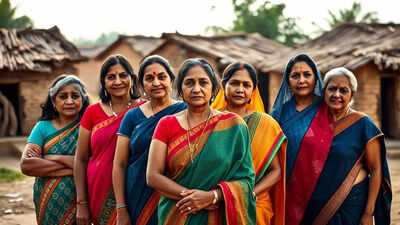
- The Ministry of Panchayati Raj (MoPR) has initiated a nationwide social media campaign titled “Say No To Proxy Sarpanch” to combat the deeply rooted “Sarpanch Pati” culture.
- The campaign aims to empower elected women representatives by ensuring they exercise their constitutional authority independently, rather than being sidelined by male relatives.
- Launched in observance of International Women's Day, the initiative seeks to spark a national discourse on genuine grassroots leadership and encourage a behavioral shift in rural governance.
Sarpanch Pati Practice?
- Definition: The phenomenon where husbands or male relatives (referred to as "Sarpanch Pati", "Mukhiya Pati", or "Pradhan Pati") take decisions and perform official duties on behalf of elected women representatives.
- Impact: Undermines the democratic mandate given to women through constitutional reservations in local self-government institutions.
- Prevalence: Widespread across rural India despite legal provisions for women's participation.
Campaign Objectives?
- Raise Awareness: Generate nationwide discourse against proxy representation in Panchayati Raj institutions.
- Celebrate Authentic Leadership: Highlight and promote genuine women sarpanches and their contributions.
- Behavioural Change: Encourage communities to respect the democratic authority of elected women representatives.
- Public Participation: Engage citizens to share perspectives on proxy culture and support women leaders.
- Implementation: Collaboration with state panchayati raj departments and grassroots functionaries.
Constitutional & Legal Framework
73rd Constitutional Amendment Act, 1992
- Article 243D: Provides for reservation of seats for women in Panchayats.
- One-Third Reservation: Mandates not less than 33% reservation for women in PRIs.
- State Discretion: States can increase reservation percentage beyond the constitutional minimum.
- Rotational Reservation: Seats reserved for women rotate across different constituencies.
Related Provisions
- Article 243G: Empowers Panchayats to prepare plans for economic development and social justice.
- Article 243A: Establishes Gram Sabha as the foundation of Panchayati Raj system.
- State Election Commission: Conducts free and fair elections to Panchayati Raj Institutions.
Women Representation in PRIs
- Total Women Representatives: Over 14 lakh women serve as elected representatives in PRIs across India.
- Reservation Enhancement: Several states have increased women's reservation to 50% in local bodies.
- Leadership Positions: Women hold significant positions as Sarpanches, Ward Members, and Panchayat Samiti members.
Sources
70th Session of the UN Commission on the Status of Women (CSW70)

What’s the News?
- The 70th Session of the Commission on the Status of Women (CSW70) convened at the United Nations Headquarters in New York in March 2026.
- The session brought together representatives of Member States, UN entities, and non-governmental organizations (NGOs) to address global gender equality and the empowerment of women.
- A high-level Indian delegation, led by the Minister of State for Women and Child Development, participated to highlight India’s progress in Women-Led Development and access to justice.
The Commission on the Status of Women?
- Establishment: It is a functional commission of the United Nations Economic and Social Council (ECOSOC), established in 1946.
- Mandate: It serves as the principal global intergovernmental body exclusively dedicated to the promotion of gender equality and the rights of women.
- Membership: It consists of 45 Member States elected by ECOSOC for four-year terms based on equitable geographical distribution.
- Function: It monitors the implementation of the Beijing Declaration and Platform for Action and the 2030 Agenda for Sustainable Development.
CSW70 (2026) – Priority Theme
Access to Justice for Women and Girls
- Theme Focus: "Ensuring and strengthening access to justice for all women and girls".
- Objectives:
- Eliminate legal barriers preventing women from accessing justice systems.
- Strengthen judicial mechanisms for gender-based violence cases.
- Promote legal literacy among women in rural and marginalized communities.
- Ensure affordable and timely justice delivery.
Constitutional & Legal Framework in India
Constitutional Provisions
- Article 14: Guarantees equality before law and equal protection of laws.
- Article 15: Prohibits discrimination on grounds of sex.
- Article 15(3): Enables special provisions for women and children.
- Article 39(a): Directs state to ensure equal means of livelihood for men and women.
- Article 42: Provides for just and humane conditions of work and maternity relief.
- Article 51A(e): Fundamental duty to renounce practices derogatory to women's dignity.
Related Legislation
- Protection of Women from Domestic Violence Act, 2005:
- Provides civil remedies for domestic violence survivors.
- Establishes Protection Officers and Service Providers.
- Criminal Law (Amendment) Act, 2013:
- Strengthened laws against sexual offences.
- Introduced stricter punishments for crimes against women.
- Posh Act, 2013:
- Prevents sexual harassment at workplace.
- Mandates Internal Complaints Committees.
- National Commission for Women Act, 1990:
- Establishes statutory body for women's rights protection.
- Reviews safeguards provided under Constitution and laws.
Additional Information
India's Women Empowerment Initiatives
- Beti Bachao Beti Padhao (BBBP):
- Launched in 2015 to address declining child sex ratio
- Focuses on education and empowerment of girl child
- Mahila Shakti Kendra:
- Community-level support for rural women
- Provides skill development and employment opportunities
- One Stop Centre (OSC) Scheme:
- Integrated support for women affected by violence
- Provides medical, legal, and psychological assistance
- Ujjawala Scheme:
- Prevention of trafficking and rescue of victims
- Rehabilitation and reintegration support
- Working Women Hostel:
- Provides safe accommodation for working women
- Supports women's economic participation
International Commitments
- Beijing Platform for Action (1995):
- 12 critical areas of concern for women's empowerment
- Reviewed every 5 years at CSW sessions
- CEDAW (1979):
- Convention on Elimination of All Forms of Discrimination Against Women
- India ratified in 1993 with some reservations
- SDG 5 Targets:
- End all forms of discrimination against women
- Eliminate violence and harmful practices
- Ensure full participation in leadership and decision-making
- Universal access to reproductive health and rights
Statistics on Women in India
| Indicator | Status |
|---|---|
| Women in Lok Sabha (17th) | ~14.6% |
| Women in Rajya Sabha | ~24.5% |
| Women Panchayat Representatives | Over 14 lakh |
| Female Labour Force Participation | ~37% (2023-24) |
| Sex Ratio (2011 Census) | 943 females per 1000 males |
| Maternal Mortality Ratio | 97 per 100,000 live births (2018-20) |
Sources
Alleged 'Blue Book' Protocol Breach During Presidential Visit to West Bengal

What’s the News?
- A major political row erupted following allegations of protocol breaches during President Droupadi Murmu’s recent visit to West Bengal.
- The President expressed displeasure over the absence of the Chief Minister and other state ministers at her reception at Bagdogra Airport.
- The Ministry of Home Affairs (MHA) sought an urgent report from the West Bengal government regarding violations of the "Blue Book" guidelines, including last-minute venue changes and logistical lapses.
The Blue Book?
- Definition: A confidential manual issued by the Ministry of Home Affairs (MHA) that outlines the detailed security, logistical, and protocol framework for visits by high constitutional dignitaries.
- Scope: It strictly governs the protection and reception of the President, Vice-President, and Prime Minister of India.
- Custody: Numbered copies are maintained at the district level by the District Magistrate (DM) and the Superintendent of Police (SP) to ensure uniform administrative coordination.
- Key Components:
- Advanced Security Liaison (ASL): Mandates multi-agency coordination (Police, Intelligence Bureau, and State Administration) before the visit.
- Logistical Standards: Specifies standards for transport (bulletproof vehicles), venue safety, and emergency medical preparedness.
Presidential Reception Protocol?
- Table of Precedence: The President of India holds Rank 1, the highest position in the constitutional hierarchy.
- Official Reception: By convention, the Governor and the Chief Minister must receive the President upon arrival in the state and see them off at departure.
- Delegation: If the Chief Minister is unavailable, a senior minister must be officially nominated and approved by the President's Secretariat to represent the state government.
- Pre-Approved Lists: The list of all individuals allowed to meet or receive the dignitary must be vetted and approved in advance; any deviation is technically classified as a protocol breach.
West Bengal Incident: Key Details
| Issue | Allegation | State Government Response |
|---|---|---|
| Airport Reception | CM did not receive President at Bagdogra | CM not in approved lineup |
| Venue Change | Event venue shifted without approval | Administrative necessity cited |
| Dais Arrangement | Protocol hierarchy not followed | No breach occurred |
| Security Coordination | Inadequate advance planning | Full cooperation provided |
- President's Arrival: Siliguri Mayor Gautam Deb received President Murmu at Bagdogra airport on March 7, 2026 .
- CM's Absence: Mamata Banerjee stated she was not part of the approved lineup or dais plan for the event .
- Venue Shift: President Murmu flagged concerns about venue changes during her Darjeeling district visit .
- Political Row: BJP demanded CM's resignation over alleged protocol breach, escalating Centre-State tensions .
- Report Submission: West Bengal government submitted its report to the Centre on the matter .
Constitutional & Legal Framework
President's Position in India
- Article 52: Establishes the President of India as the Head of State.
- Article 60: President takes oath to preserve, protect and defend the Constitution.
- Article 62: Governs the election and term of the President.
- Executive Authority: All executive actions of Government of India are taken in President's name (Article 77).
Federal Relations
- Article 256: States must exercise executive power in compliance with Union directions.
- Article 257: States must not impede Union's executive powers.
- Article 355: Union duty to protect states against external aggression and internal disturbance.
- Article 356: President's Rule provisions (relevant to Centre-State relations).
Additional Information
Related Protocol Documents
- Yellow Book:
- Governs security protocols for Union Ministers.
- Issued by Ministry of Home Affairs.
- Less stringent than Blue Book provisions.
- Red Book:
- Covers protocol for foreign dignitaries visiting India.
- Managed by Ministry of External Affairs.
- Includes state visit guidelines.
- Green Book:
- Pertains to VIP movement and traffic management.
- Coordinated with local police authorities.
- Ensures smooth transit for constitutional functionaries.
Previous Protocol Controversies
- 2019 Maharashtra: Dispute over Governor's oath-taking ceremony arrangements
- 2020 Delhi: Security coordination issues during President's Republic Day preparations
- 2022 Kerala: CM's absence from airport reception sparked debate
- 2024 Tamil Nadu: Flag hoisting ceremony precedence disagreement
Sources
India Clinches Third ICC Men’s T20 World Cup Title

What’s the News?
- India defeated New Zealand in the final of the ICC Men’s T20 World Cup 2026 to secure its third global championship in the T20 format.
- The tournament was co-hosted by India and Sri Lanka, concluding with a decisive victory that solidified India’s dominance in international cricket.
- The national leadership, including the President, Vice-President, and Prime Minister, extended congratulations to the team for their historic achievement.
Historic Achievement?
- Third Global Title: India has become the first nation to win three ICC Men's T20 World Cup trophies, with previous victories in 2007 and 2024.
- Consecutive Victories: With this win, India is the first team to achieve back-to-back titles in the history of the tournament (winning the 2024 and 2026 editions).
- Unbeaten Streak: The Indian team remained undefeated throughout the 2026 campaign, winning all their group stage and knockout matches.
- Performance Metrics: The victory was characterized by a strong defensive bowling performance in the final, successfully protecting a competitive target against the New Zealand batting lineup.
Tournament Overview?
- Hosting: The 10th edition of the biennial event was organized jointly by the Board of Control for Cricket in India (BCCI) and Sri Lanka Cricket (SLC).
- Participation: The event featured 20 teams from across the globe, maintaining the expanded format introduced in the previous edition to increase the game's global footprint.
- Economic Impact: The 2026 World Cup saw record-breaking stadium attendance and digital viewership, marking it as one of the most commercially successful events organized by the International Cricket Council (ICC).
Additional Info
- Evolution of T20 World Cup:
- The inaugural tournament was held in 2007 in South Africa, which India won.
- It is a biennial international championship governed by the ICC.
- Statistical Context:
- India now leads the tally of T20 World Cup wins (3), followed by the West Indies (2) and England (2).
- The 2026 edition utilized India’s world-class infrastructure, including venues like the Narendra Modi Stadium and R. Premadasa Stadium.
- Administrative Bodies:
- ICC: Headquartered in Dubai, UAE; responsible for global cricket governance.
- BCCI: The richest cricket board globally, playing a pivotal role in the sport's administration and financial ecosystem.
Sources
International Women's Day 2026: Focus on Justice and Equality

What’s the News?
- International Women's Day (IWD) was observed globally on March 8, 2026, to celebrate women's achievements and advocate for gender parity.
- The United Nations (UN) established the official 2026 theme as "Rights. Justice. Action. For ALL Women and Girls."
- Parallel to the UN theme, the global campaign theme “Give to Gain” was promoted to emphasize the power of reciprocity, mentorship, and collective support in empowering women.
- The observance highlighted the persistent "justice gap," noting that women globally still hold only 64% of the legal rights enjoyed by men.
Theme and Strategic Focus?
- Legal Justice: The 2026 theme specifically targets the dismantling of structural barriers such as discriminatory laws and weak legal protections.
- Accountability: It calls on governments to move beyond symbolic celebrations toward measurable actions and enforcement of existing rights.
- Economic Empowerment: The “Give to Gain” campaign highlights that investing in women’s leadership and entrepreneurship leads to shared prosperity for entire communities.
- Urgency: UN reports warned that at the current rate of progress, it could take 286 years to achieve full legal equality and close the gender gap in bodily autonomy.
Historical Context?
- Labor Roots: The movement began in the early 20th century, notably with a 1908 march of 15,000 women in New York City demanding shorter hours, better pay, and voting rights.
- International Proposal: In 1910, activist Clara Zetkin proposed an annual International Women's Day during the International Conference of Working Women in Copenhagen.
- The March 8 Connection: The date is linked to the 1917 "Bread and Peace" strike by Russian women, which began on February 23 (Julian calendar), corresponding to March 8 in the Gregorian calendar.
- UN Recognition: The United Nations officially celebrated IWD for the first time in 1975 and formally adopted the resolution in 1977.
India’s Developmental Shift?
- Women-Led Development: India showcased its transition from "Development for Women" to "Women-Led Development," focusing on women as drivers of socio-economic progress.
- Legislative Milestones: The Nari Shakti Vandan Adhiniyam (Women’s Reservation Act) was highlighted as a transformative step for political representation.
- Education & Skill Stats:
- Female GER: India’s Female Gross Enrolment Ratio in higher education rose to 30.2 (2022-23).
- Aviation: India leads globally with over 15% women pilots, significantly higher than the 5% global average.
- Flagship Schemes: Continued impact of programs like Beti Bachao Beti Padhao, Mission Shakti, and the Ujjwala Yojana in improving health, safety, and financial inclusion.
Additional Info
- Sustainable Development Goals (SDGs): IWD 2026 is a key milestone for SDG 5, which aims for gender equality by 2030.
- Beijing+30: The 2026 discussions also served as a precursor to the 30th anniversary of the Beijing Declaration and Platform for Action (1995).
- CSW70: The IWD commemorations were closely aligned with the opening of the 70th Session of the Commission on the Status of Women in New York.
Sources
Two New Fruit Fly Species Discovered in Himalayan Foothills
What's the News?
- Entomologists have discovered two previously unknown species of fruit flies in the Himalayan foothills of Himachal Pradesh .
- The new species have been named Acidoxantha paratotoflava and Hemilea suneriae .
- The discovery was made in the Solan region of Himachal Pradesh during extensive biodiversity research .
- Researchers also documented an insect group never before recorded in India .
- The findings were published in a peer-reviewed scientific journal after rigorous taxonomic verification .
About the New Species
| Species Name | Characteristics | Discovery Location |
|---|---|---|
| Acidoxantha paratotoflava | Medium-sized, greenish-yellow fly | Solan, Himachal Pradesh |
| Hemilea suneriae | Distinctive morphological features | Solan, Himachal Pradesh |
| Family | Tephritidae (True Fruit Flies) | Himalayan Foothills |
- Taxonomic Classification: Both species belong to the family Tephritidae, commonly known as true fruit flies .
- Distinguishing Features: Each species has unique morphological characteristics that differentiate them from known relatives .
- Research Method: Discovery made using innovative traps and traditional nets during field surveys .
- Scientific Naming: Species names follow international taxonomic conventions for new species identification .
Research Team & Institution
- Lead Researcher: Entomologist Manish Pal Singh from the College of Horticulture and Forestry, Hamirpur .
- Research Collaboration: Multi-institutional team involving taxonomic experts and biodiversity specialists .
- Study Duration: Extended field surveys conducted over multiple seasons for comprehensive data collection .
- Publication: Findings published in international peer-reviewed entomology journal .
Significance of the Discovery
Biodiversity Documentation
- First Record in India: This marks the first documentation of this insect group in Indian territory .
- Species Richness: Adds to the known fruit fly diversity in the Himalayan ecosystem .
- Biogeographical Importance: Himalayan foothills recognized as biodiversity hotspot for insect fauna .
- Taxonomic Contribution: Enhances global understanding of Tephritidae family distribution .
Ecological Importance
| Aspect | Significance |
|---|---|
| Pollination | Fruit flies contribute to plant pollination services |
| Food Chain | Serve as prey for birds, spiders, and other insects |
| Ecosystem Health | Indicator species for environmental quality assessment |
| Agricultural Impact | Some species are pests; others are benign |
- Ecosystem Indicators: Fruit fly diversity reflects overall ecosystem health in the region .
- Agricultural Relevance: Understanding fruit fly species helps in pest management strategies .
- Conservation Value: New species documentation supports biodiversity conservation efforts .
Additional Information
Fruit Flies in India
- Known Species: Approximately 200 species of fruit flies are documented in India .
- Pest Species: Only 35-40 species are considered agricultural pests .
- Major Pest: Bactrocera zonata (Peach fruit fly) is a significant polyphagous pest .
- Regional Distribution: Different species found across various agro-climatic zones .
Taxonomic Classification
- Order: Diptera (True Flies)
- Family: Tephritidae (Fruit Flies)
- Subfamily: Trypetinae
- Genus: Acidoxantha and Hemilea
Related Discoveries in India
| Discovery | Location | Year |
|---|---|---|
| Raft Spider | Western Ghats | 2025 |
| Snail Species (7 new) | Blue Mountains | 2026 |
| Fruit Fly (Siruvani) | Western Ghats, Tamil Nadu | 2021 |
| Fruit Fly Species | Meghalaya | 2022 |
March 2026
31 March 202630 March 202628 March 202627 March 202626 March 202625 March 202624 March 202623 March 202621 March 202620 March 202619 March 202618 March 202617 March 202616 March 202614 March 202613 March 202612 March 202611 March 202610 March 202609 March 202607 March 202606 March 202605 March 202603 March 202602 March 2026
Archive
October 2026
- 27 October 2026
- 26 October 2026
- 24 October 2026
- 23 October 2026
- 22 October 2026
- 21 October 2026
- 20 October 2026
- 19 October 2026
- 17 October 2026
- 16 October 2026
- 15 October 2026
- 14 October 2026
- 13 October 2026
- 12 October 2026
- 10 October 2026
- 09 October 2026
- 08 October 2026
- 07 October 2026
- 06 October 2026
- 05 October 2026
- 03 October 2026
- 02 October 2026
- 01 October 2026
September 2026
- 30 September 2026
- 29 September 2026
- 28 September 2026
- 26 September 2026
- 25 September 2026
- 24 September 2026
- 23 September 2026
- 22 September 2026
- 21 September 2026
- 19 September 2026
- 18 September 2026
- 17 September 2026
- 16 September 2026
- 15 September 2026
- 12 September 2026
- 11 September 2026
- 10 September 2026
- 09 September 2026
- 08 September 2026
- 07 September 2026
- 05 September 2026
- 04 September 2026
- 03 September 2026
- 02 September 2026
- 01 September 2026
August 2026
- 31 August 2026
- 29 August 2026
- 27 August 2026
- 26 August 2026
- 25 August 2026
- 24 August 2026
- 22 August 2026
- 21 August 2026
- 20 August 2026
- 19 August 2026
- 18 August 2026
- 17 August 2026
- 14 August 2026
- 13 August 2026
- 12 August 2026
- 11 August 2026
- 10 August 2026
- 08 August 2026
- 07 August 2026
- 06 August 2026
- 05 August 2026
- 04 August 2026
- 03 August 2026
- 01 August 2026
July 2026
- 31 July 2026
- 30 July 2026
- 29 July 2026
- 28 July 2026
- 27 July 2026
- 25 July 2026
- 23 July 2026
- 22 July 2026
- 21 July 2026
- 20 July 2026
- 18 July 2026
- 17 July 2026
- 15 July 2026
- 14 July 2026
- 13 July 2026
- 11 July 2026
- 10 July 2026
- 09 July 2026
- 08 July 2026
- 07 July 2026
- 06 July 2026
- 04 July 2026
- 03 July 2026
- 02 July 2026
- 01 July 2026
June 2026
May 2026
April 2026
March 2026
- 31 March 2026
- 30 March 2026
- 28 March 2026
- 27 March 2026
- 26 March 2026
- 25 March 2026
- 24 March 2026
- 23 March 2026
- 21 March 2026
- 20 March 2026
- 19 March 2026
- 18 March 2026
- 17 March 2026
- 16 March 2026
- 14 March 2026
- 13 March 2026
- 12 March 2026
- 11 March 2026
- 10 March 2026
- 09 March 2026
- 07 March 2026
- 06 March 2026
- 05 March 2026
- 03 March 2026
- 02 March 2026
February 2026
- 28 February 2026
- 27 February 2026
- 26 February 2026
- 25 February 2026
- 24 February 2026
- 23 February 2026
- 21 February 2026
- 20 February 2026
- 19 February 2026
- 18 February 2026
- 17 February 2026
- 16 February 2026
- 13 February 2026
- 12 February 2026
- 11 February 2026
- 10 February 2026
- 09 February 2026
- 07 February 2026
- 06 February 2026
- 05 February 2026
- 04 February 2026
- 03 February 2026
- 02 February 2026
January 2026
- 31 January 2026
- 30 January 2026
- 29 January 2026
- 28 January 2026
- 27 January 2026
- 26 January 2026
- 24 January 2026
- 23 January 2026
- 22 January 2026
- 21 January 2026
- 20 January 2026
- 19 January 2026
- 16 January 2026
- 15 January 2026
- 14 January 2026
- 13 January 2026
- 12 January 2026
- 10 January 2026
- 09 January 2026
- 08 January 2026
- 07 January 2026
- 06 January 2026
- 05 January 2026
- 03 January 2026
- 02 January 2026
- 01 January 2026
December 2025
- 31 December 2025
- 30 December 2025
- 29 December 2025
- 27 December 2025
- 26 December 2025
- 24 December 2025
- 23 December 2025
- 22 December 2025
- 20 December 2025
- 19 December 2025
- 18 December 2025
- 17 December 2025
- 16 December 2025
- 15 December 2025
- 13 December 2025
- 12 December 2025
- 11 December 2025
- 10 December 2025
- 09 December 2025
- 08 December 2025
- 05 December 2025
- 04 December 2025
- 03 December 2025
- 02 December 2025
November 2025
- 29 November 2025
- 28 November 2025
- 27 November 2025
- 26 November 2025
- 25 November 2025
- 24 November 2025
- 22 November 2025
- 21 November 2025
- 20 November 2025
- 19 November 2025
- 18 November 2025
- 17 November 2025
- 15 November 2025
- 14 November 2025
- 13 November 2025
- 12 November 2025
- 11 November 2025
- 10 November 2025
- 08 November 2025
- 07 November 2025
- 06 November 2025
- 05 November 2025
- 04 November 2025
- 03 November 2025
- 01 November 2025
October 2025
- 31 October 2025
- 30 October 2025
- 29 October 2025
- 28 October 2025
- 27 October 2025
- 25 October 2025
- 24 October 2025
- 23 October 2025
- 22 October 2025
- 21 October 2025
- 20 October 2025
- 18 October 2025
- 17 October 2025
- 16 October 2025
- 15 October 2025
- 14 October 2025
- 13 October 2025
- 11 October 2025
- 10 October 2025
- 09 October 2025
- 08 October 2025
- 07 October 2025
- 06 October 2025
- 04 October 2025
- 03 October 2025
- 02 October 2025
- 01 October 2025
September 2025
- 30 September 2025
- 29 September 2025
- 27 September 2025
- 26 September 2025
- 25 September 2025
- 24 September 2025
- 23 September 2025
- 22 September 2025
- 20 September 2025
- 19 September 2025
- 18 September 2025
- 17 September 2025
- 16 September 2025
- 15 September 2025
- 13 September 2025
- 12 September 2025
- 11 September 2025
- 10 September 2025
- 09 September 2025
- 08 September 2025
- 06 September 2025
- 05 September 2025
- 04 September 2025
- 03 September 2025
- 02 September 2025
- 01 September 2025
August 2025
- 30 August 2025
- 29 August 2025
- 28 August 2025
- 27 August 2025
- 26 August 2025
- 25 August 2025
- 23 August 2025
- 22 August 2025
- 21 August 2025
- 20 August 2025
- 19 August 2025
- 18 August 2025
- 16 August 2025
- 14 August 2025
- 13 August 2025
- 12 August 2025
- 11 August 2025
- 08 August 2025
- 07 August 2025
- 06 August 2025
- 05 August 2025
- 04 August 2025
- 02 August 2025
- 01 August 2025
July 2025
- 31 July 2025
- 30 July 2025
- 29 July 2025
- 28 July 2025
- 26 July 2025
- 25 July 2025
- 24 July 2025
- 23 July 2025
- 22 July 2025
- 21 July 2025
- 19 July 2025
- 18 July 2025
- 17 July 2025
- 16 July 2025
- 15 July 2025
- 12 July 2025
- 11 July 2025
- 10 July 2025
- 09 July 2025
- 07 July 2025
- 05 July 2025
- 04 July 2025
- 03 July 2025
- 02 July 2025
- 01 July 2025
June 2025
- 30 June 2025
- 28 June 2025
- 27 June 2025
- 26 June 2025
- 25 June 2025
- 24 June 2025
- 23 June 2025
- 21 June 2025
- 20 June 2025
- 19 June 2025
- 18 June 2025
- 17 June 2025
- 16 June 2025
- 14 June 2025
- 13 June 2025
- 12 June 2025
- 11 June 2025
- 10 June 2025
- 09 June 2025
- 07 June 2025
- 06 June 2025
- 05 June 2025
- 04 June 2025
- 03 June 2025
- 02 June 2025
May 2025
April 2025
- 30 April 2025
- 29 April 2025
- 28 April 2025
- 26 April 2025
- 25 April 2025
- 24 April 2025
- 23 April 2025
- 22 April 2025
- 21 April 2025
- 19 April 2025
- 18 April 2025
- 17 April 2025
- 16 April 2025
- 15 April 2025
- 14 April 2025
- 12 April 2025
- 11 April 2025
- 10 April 2025
- 09 April 2025
- 08 April 2025
- 07 April 2025
- 05 April 2025
- 04 April 2025
- 03 April 2025
- 02 April 2025
- 01 April 2025
March 2025
- 31 March 2025
- 29 March 2025
- 28 March 2025
- 27 March 2025
- 26 March 2025
- 25 March 2025
- 24 March 2025
- 22 March 2025
- 21 March 2025
- 20 March 2025
- 19 March 2025
- 18 March 2025
- 17 March 2025
- 15 March 2025
- 13 March 2025
- 12 March 2025
- 11 March 2025
- 10 March 2025
- 08 March 2025
- 07 March 2025
- 06 March 2025
- 05 March 2025
- 04 March 2025
- 03 March 2025
- 01 March 2025
February 2025
- 28 February 2025
- 27 February 2025
- 26 February 2025
- 25 February 2025
- 24 February 2025
- 22 February 2025
- 21 February 2025
- 20 February 2025
- 19 February 2025
- 18 February 2025
- 17 February 2025
- 15 February 2025
- 14 February 2025
- 13 February 2025
- 12 February 2025
- 11 February 2025
- 10 February 2025
- 08 February 2025
- 07 February 2025
- 06 February 2025
- 05 February 2025
- 04 February 2025
- 03 February 2025
- 01 February 2025
January 2025
- 31 January 2025
- 30 January 2025
- 29 January 2025
- 28 January 2025
- 27 January 2025
- 25 January 2025
- 24 January 2025
- 23 January 2025
- 22 January 2025
- 21 January 2025
- 20 January 2025
- 18 January 2025
- 17 January 2025
- 16 January 2025
- 15 January 2025
- 14 January 2025
- 13 January 2025
- 11 January 2025
- 10 January 2025
- 09 January 2025
- 08 January 2025
- 07 January 2025
- 06 January 2025
- 04 January 2025
- 03 January 2025
- 02 January 2025
- 01 January 2025