
Current Affairs
Stay updated with the latest national and international events.
09 July 2025
ICC Issues Arrest Warrants for Taliban Leaders Over Gender Persecution

What’s New?
- The International Criminal Court (ICC)’s Pre-Trial Chamber II issued arrest warrants for two senior Taliban figures:
- Haibatullah Akhundzada, Supreme Leader
- Abdul Hakim Haqqani, Chief Justice
They are charged with crimes against humanity for orchestrating systematic persecution of women and girls, alongside targeting LGBTQI+ individuals and those supporting gender rights in Afghanistan since the Taliban took power in August 2021.
Charges & Context
- The ICC asserts there is mounting evidence that under Taliban rule, women and girls were deprived of basic rights—education, employment, freedom of movement, voice, and even privacy—through edicts and decrees enforcing gender apartheid.
- Charges include murder, torture, rape, enforced disappearance, and specific persecution of gender-diverse persons and “allies of women”.
Taliban Response & Legal Implications
- The Taliban swiftly rejected the ICC’s jurisdiction, claiming adherence to Islamic Sharia, dismissing the warrants as “nonsense”.
- Although ICC lacks its own enforcement mechanism, member states are obliged to arrest if these leaders enter their territory. However, past incidents (e.g., Netanyahu, Putin) suggest limited enforcement likelihood.
Why It Matters
- This is the first time the ICC has recognised gender-based persecution, including targeting LGBTQI+ individuals, as a crime against humanity, setting a powerful legal precedent.
- It sends a global message that systemic oppression of women and gender minorities warrants formal legal accountability—even without travel overseas.
- The warrants echo sustained global condemnation, including via UN resolutions, and reinforce international legal mechanisms against human rights abuses.
Simplified Summary
- Date: July 8, 2025
- Who: Haibatullah Akhundzada (Supreme Leader), Abdul Hakim Haqqani (Chief Justice)
- Charges: Gender-based crimes—persecution, torture, rape, enforced disappearance—classified as crimes against humanity
- Significance: Marks a pioneering international stance against extremist gender oppression and broadens ICC’s reach to non-traveling perpetrators.
Exam Focus Points
- ICC Jurisdiction & Rome Statute: Pursuit of crimes against humanity under Article 7(1)(h).
- Gender Persecution as Legal Ground: A landmark for legal recognition of systematic gender crimes and LGBTQI+ targeting.
- Implementation Challenges: No domestic enforcement; NATO-like non-cooperation by Taliban; reliance on ICC member states → enforcement dilemma.
- Global Gender Justice: This serves as a precedent for prosecuting gender-based human rights abuses globally.
- Taliban’s Rebuttal: Draws attention to violations of universalism versus cultural relativism and Sharia claims.
NBFC Education Loans to Grow 25% in FY26 Despite US Policy Headwinds
What’s New?
- Crisil Ratings reports that NBFCs’ education‑loan AUM is projected to grow by 25% in FY26, slowing from ~50% the previous fiscal due to stricter visa/immigration policies in the US and Canada.
- Despite the slowdown, the total AUM is expected to rise from approximately ₹64,000 crore (FY25) to ₹80,000 crore in FY26.
Causes of Slowdown
- Tighter US visa appointments and changes to the Optional Practical Training (OPT) program have resulted in a 30% drop in disbursements for US-bound students. Canada faces similar constraints.
- In Gujarat, FY25 education-loan growth dipped to single digits—a 2.7% rise in the number of loans and 6.5% increase in disbursals (~₹2,078 crore)—attributed to these tighter immigration norms.
How NBFCs Are Adapting
- Firms are diversifying into other destinations—UK, Germany, Ireland—and boosting domestic lending.
- Asset quality remains stable, with ~85% of AUM still under moratorium, and the non‑performing assets (NPAs) under watch.
Sector Outlook & Macro Environment
- While overall NBFC loan growth moderated to ~17% in FY25 from ~21% in FY24, large NBFCs expect recovery in FY26–27 with growth sustained between 18–25%.
- The finance ministry and RBI are working on easing financing conditions, which may support NBFC credit.
Simplified Summary
- Education‑loan AUM for NBFCs will grow ~ 25% in FY26 (~ ₹80,000 cr), down from ~ 50% earlier.
- Drivers: Tighter visa rules in US/Canada causing decline in overseas education demand.
- Adaptation: Pivot to other geographies & domestic lending; stable asset quality.
- Sector health: Overall NBFC credit growth moderates, but support from regulators expected.
Exam Focus Points
- Crisil prediction: FY26 education‑loan AUM growth of ~25% due to US/Canada policy hurdles.
- Quantitative outlook: AUM rising from ₹64,000 cr to ₹80,000 cr; AUM crossed ₹60,000 cr during peak growth in FY24.
- Causes: Impact of visa restrictions, OPT policy changes—about 30% drop in US-related disbursals.
- Adaptive strategy: Diversification into UK, Germany, Ireland; domestic education lending boosted.
- NBFC credit trends: Overall sector growth at ~17% in FY25, rebounding to 18–25% FY26–27; supported by regulatory easing.
- Policy context: RM on visa norms affecting ed‑loan demand; RBI regulatory support for NBFC lending conditions.
INS Nistar Inducted: India’s First Indigenous Diving Support Vessel

What’s New?
- Hindustan Shipyard Limited (HSL) officially delivered INS Nistar, India’s first fully indigenous Diving Support Vessel (DSV), to the Indian Navy during a ceremony at Visakhapatnam. The delivery vaulted HSL from building smaller vessels to complex naval platforms.
About INS Nistar (Nistar‑class DSV)
- Specifications:
- Displacement: ~9,350 t, Length: 118 m, Beam: 22.8 m.
- DPII Dynamic Positioning System enables station-keeping during deep-sea operations.
- Equipped with submersible decompression chamber, diving bell, 15 t crane, Remotely Operated Vehicles (OROVs), and helipad.
- Serves as mother ship for Deep-Submergence Rescue Vehicle (DSRV), capable of rescue operations up to 650 m deep.
Strategic Roles
- Submarine rescue: Supports distressed subs and crew evacuation via DSRVs.
- Deep-sea diving: Enables missions like underwater repairs, salvage, and patrols.
- Search & Rescue (SAR) and Non-Combatant Evacuation Operations (NEO): Enhances HADR capabilities.
- Scientific & survey missions: Sustained deployments bolster Indo-Pacific presence.
Indigenous Manufacturing & ‘Make in India’ Impact
- Approximately 75–80% indigenisation achieved, involving over 120 MSME vendors.
- Marks HSL’s newfound ability to build complex, strategic naval vessels, underlining the success of Aatmanirbhar Bharat.
Operational Milestones
- Sea trials (May 2024): Tested air/mix-gas diving systems and OROVs; March 2025: diving bell and saturation diving trials at 75 m depth.
- Delivered: 08 July 2025 to Indian Navy.
Simplified Summary
- INS Nistar is India’s first indigenous deep-sea rescue vessel, equipped with advanced diving systems, cranes, OROVs, and DSRVs.
- It strengthens the Navy’s submarine safety, rescue capabilities, and maritime reach, marking a key step in domestic naval manufacturing under Atmanirbhar Bharat.
Exam Focus Points
- Delivery & significance: 08 July 2025, first indigenously designed and built DSV.
- Technical highlights: 9,350 t displacement, DPII positioning, diving systems, OROVs, and helipad capabilities.
- Strategic roles: Submarine rescue (using DSRV), deep-sea diving, SAR, NEO, and research missions.
- Manufacturing excellence: 75–80% indigenous content; participation of 120+ MSMEs; key victory for Make in India.
- Policy context: Enhances naval readiness in Indo-Pacific; part of India’s push for naval self-reliance.
Draft Petroleum & Natural Gas Rules 2025: Revamping India’s Upstream Sector
What’s New?
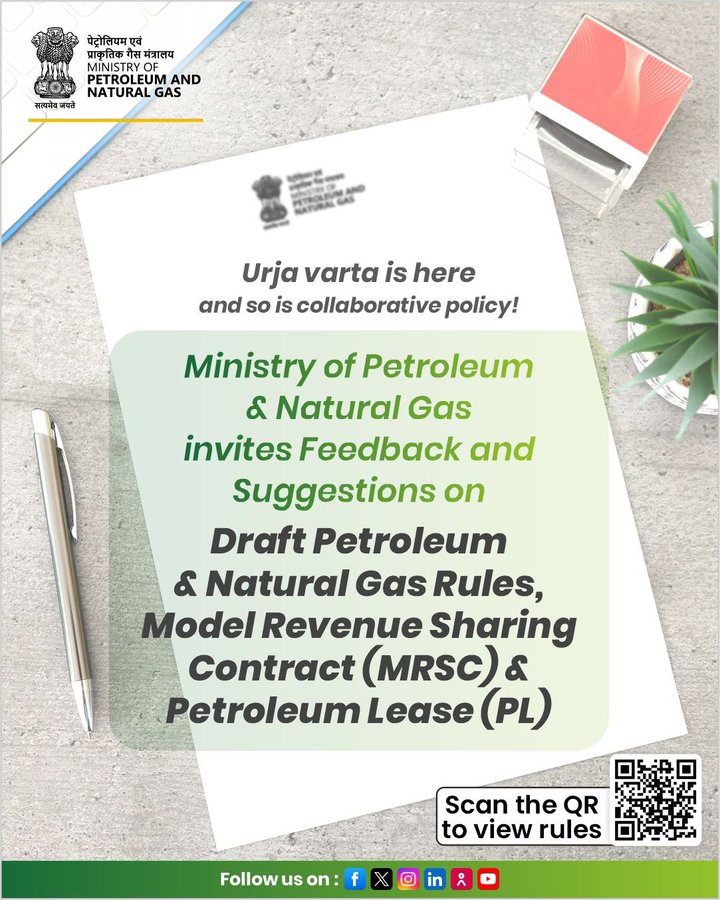
- The Ministry of Petroleum & Natural Gas released the Draft Petroleum & Natural Gas Rules, 2025, replacing the colonial-era Oilfields Regulation Act (1948) and 1959 Rules.
- Released July 9, 2025, with public comments invited by July 17, and discussion slated for Urja Varta 2025.
Why It Matters
- Aims to boost ease of doing business in exploration & production (E&P), reduce import dependency, and attract both domestic and foreign investments.
- Modernizes regulatory framework, aligning with climate goals and including provisions for renewables and decarbonization.
Key Features
1. Investor Security & Fiscal Stability
- Introduces stabilization clauses: in case of future fiscal/legal changes, companies will be eligible for compensation or deductions.
2. Modern Licensing Structure
- Replaces mining-centric “mining leases” with Petroleum Leases, delinks petroleum from mining, and simplifies licensing.
- Clarifies that mineral oils now include unconventional hydrocarbons—shale gas, tight oil, coal-bed methane—but exclude coal, lignite, and helium.
3. Revenue Sharing & Lease Extensions
- Revised Model Revenue Sharing Contract (MRSC) promotes area extension, unitisation, and shared infrastructure.
- Leases valid from 4–30 years with possible extensions to field’s economic life.
4. Government Pre-emption Rights
- In a national emergency, the government can invoke pre-emption rights over oil & gas with fair market compensation.
5. Environmental & Emission Controls
- Mandates quarterly reporting on GHG emissions and gas flaring, requiring operators to adopt emission-reduction measures.
- Empowers authorities to approve GHG sequestration/storage plans.
6. Dispute Resolution Mechanisms
- Establishment of a Petroleum Adjudicating Authority, and provisions for international arbitration, replacing outdated legal frameworks.
Policy & Strategic Context
- India currently imports ~90% of its crude; these rules aim to lower import dependency by encouraging domestic E&P.
- Complements the Oilfields (Regulation & Development) Amendment Act 2025, aimed at making the E&P regime more globally competitive.
Simplified Summary
- Ground-up reform of the upstream regulatory framework, replacing archaic British-era laws.
- Provides legal certainty, fiscal stability, environmental oversight, and investor protection.
- Designed to accelerate domestic oil & gas output and support India’s energy security.
Exam Focus Points
- Draft Rules 2025: Replace Oilfields Regulation Act 1948 and Petroleum Rules 1959; consultation deadline July 17, 2025.
- Stabilization Clause: Ensures fiscal stability for investors against future policy changes.
- Petroleum Lease vs Mining Lease: Structural delinking and inclusion of unconventional hydrocarbons.
- Pre-emption right: Govt can claim oil/gas in emergencies with compensation.
- Environmental norms: Quarterly GHG/flaring data obligations; emission mitigation plans required.
- Dispute redressal: Petroleum Adjudicating Authority and arbitration included.
- Strategic rationale: Enhances domestic exploration, aligns with energy transition goals, stimulates investor participation under HELP policy.
X Corp vs Government: Karnataka HC Examines IT Act's Content‑Blocking Powers
What’s New?
- X Corp (formerly Twitter) has challenged the government's use of Section 79(3)(b) of the IT Act before the Karnataka High Court, arguing that it creates a parallel, opaque content-blocking regime—devoid of safeguards required under Section 69A.
- The petition contests the Sahyog portal, claiming thousands of officials—including police, railway, and GST officers—can now block content based on subjective morality, bypassing institutional review or judicial oversight.
X Corp’s Key Arguments
- Arbitrariness: Section 79 allows individual officers to issue takedown orders without committee review, violating Article 14 (equality before law).
- Legal overreach: The company says Section 79(3)(b) lacks independent blocking authority and must be read alongside Section 69A, which includes procedural safeguards like written reasons, pre-decisional hearings, and a review mechanism.
- Sahyog portal concerns: X alleges the portal is a "censorship portal," forcing platforms to onboard nodal officers without legal basis.
Government’s Position
- Safe harbour defense: The government claims Section 79(3)(b) merely strips immunity from intermediaries if they ignore unlawful content notices—not a direct censorship tool.
- Portal legitimacy: Authorities argue the Sahyog portal facilitates compliance and coordination, not censorship, and that blocking orders come through designated executive channels.
Broader Legal Context
- Shreya Singhal (2015) precedent: Supreme Court upheld Section 69A's constitutionality due to its structured safeguards and struck down overly broad provisions. X contends Section 79(3)(b) circumvents this decision.
- Constitutional rights: The case touches upon Articles 14 and 19—equal access to law and freedom of speech/expression—applying legal scrutiny even to intermediaries.
Why It Matters
- Digital governance: Sets precedent on the limits of government powers to regulate online content under executive discretion.
- Platform liability: A ruling could redefine the boundaries of safe harbour protections for tech intermediaries.
- Freedom of expression: Balances the need for unlawful content moderation with protecting civil liberties in India's evolving digital ecosystem.
Simplified Summary
| Issue | Position of X Corp | Government Stance |
|---|---|---|
| Authority | Section 79(3)(b) isn’t a standalone blocking tool; lacks safeguards | Section 79 notice removes immunity, not directs censorship |
| Procedural Safeguards | Only Section 69A provides due process | Safeguards unnecessary under Section 79 |
| Portal | Sahyog portal imposes censorship without legal backing | Portal ensures compliance and transparency |
Exam Focus Points
- Section 79(3)(b): Strips intermediaries’ safe harbour if content isn't removed after government notice—not a censorship provision.
- Section 69A: Requires committee review, written reasons, and judicial control—Shreya Singhal confirms its legitimacy for content blocking.
- Constitutional rights: Case highlights limits of executive power under Article 14 and Article 19, and the importance of procedural fairness.
- Digital polity: Reflects evolving norms in digital governance, platform regulation, and the interplay between freedom of expression and government control.
India’s Maize Ambition: Doubling Output & Boosting Farmer Prosperity
What’s New?
- Union Agriculture Minister Shivraj Singh Chouhan inaugurated the 11th India Maize Summit in New Delhi, organized by FICCI in partnership with the Indian Institute of Maize Research (IIMR). The summit unveiled a bold roadmap to nearly double maize production to 86 million tonnes by 2047, up from 42.3 Mt currently.
- A multi-pronged strategy was introduced, including lab-to-land campaigns, farmer education, improved seed systems, and digital technologies.
India’s Maize Journey
- Production growth: From ~10 Mt in the 1990s to 42.3 Mt today, reflecting a massive expansion in area and output.
- Productivity concern: Current yields are 3.7 t/ha, well below global standards. Key states like Bihar and West Bengal are outperforming the average.
Government Initiatives & State-Level Impact
- Viksit Krishi Sankalp Abhiyan: ~11,000 agricultural scientists deployed to 7,000–8,000 villages to expedite application of lab research in farmers’ fields.
- UP’s Accelerated Maize Program: Cultivation soared to 540,000 ha across 24 districts, yielding ~34 q/ha (with expectations to reach 40 q/ha). The state now hosts 15 maize-processing firms exploring value-added sectors like bioplastic fibers. MSP-supported procurement and quality seed access are key measures.
Strategic Drivers
- Seed & R&D push: ICAR-IIMR has developed 265 maize varieties (77 hybrids, 35 bio-fortified). Target productivity: 10–11 t/ha (rabi-spring) & 7–8 t/ha (kharif) hybrids with high fermentable starch (64–65%) to support E30 ethanol blending.
- Market outlook: Maize is now India’s fastest-growing cereal—with acreage rising 31% to 12 M ha and production up 75% to over 40 Mt in a decade. Its consumption is rising at 6.7% annually, outpacing 5.8% production growth. The poultry (51%) and ethanol (18%) sectors are primary consumers.
- Sustainable practices: Emphasis on climate-smart agriculture, resisting soil overuse, enhancing cost efficiency, and ensuring environment-friendly growth.
Additional Info
- Stakeholder collaboration: Minister urged “One Nation, One Agriculture, One Team”—bringing together farmers, scientists, industry, and government to co-create solutions.
- Technological emphasis: Calls for adopting digital agriculture, site-specific mechanization, and advanced seed systems to boost yields and farmer incomes.
Simplified Summary
- Objective: Double maize output to 86 Mt by 2047, enhance farmer incomes, and ensure sustainable productivity.
- Key pillars: Research-to-field deployment, seed improvement, state-level initiatives, digital and mechanized farming.
- Sector dynamics: Rising demand driven by feed and fuel; strategic importance of maize in food-energy nexus.
Exam Focus Points
- Summit & Venue: 11th India Maize Summit, July 7, 2025, New Delhi by FICCI + IIMR.
- Production target: Increase from 42.3 Mt (2024) to 86 Mt by 2047; productivity bridge from 3.7 t/ha to global-standard levels.
- Lab-to-land outreach: 11,000 scientists covering 7k–8k villages; Indian government intervention to scale knowledge.
- State performance: UP’s maize area 5.4 L ha across 24 districts; yields ~34–40 q/ha; 15 processing units.
- Seed strategy: 265 maize varieties; focus on starch-rich hybrids (64–65% starch content); mechanization for increased output.
- Demand landscape: Key consumers poultry (51%) and ethanol (18%); consumption growth at 6.7% vs production at 5.8%.
- Policy synergy: Supports food security, ethanol blending (E30), climate-smart agriculture, and sustainable rural growth.
India: Beacon of Growth Amid Global Volatility
What’s New?
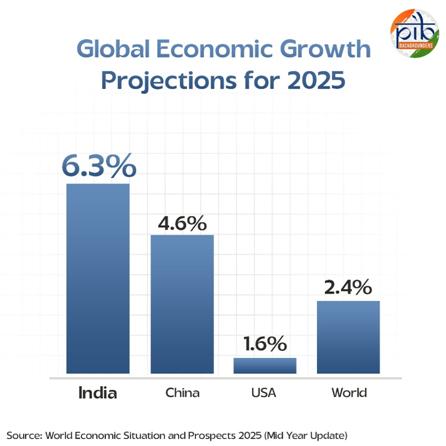
- Real GDP growth reached 6.5% in FY 2024–25, making India the fastest-growing major economy, a pace the RBI expects to continue into 2025–26.
- RBI Governor Sanjay Malhotra reaffirmed that India remains a key global growth engine, bolstered by strong domestic fundamentals even as global turbulence persists.
- The UN, IMF, and World Bank forecast growth between 6.2–6.5% through 2026, contrasting starkly with global averages of ~3%—solidifying India’s exceptional performance.
Why It Matters
- Economic resilience: Amid global slowdown, trade tensions, and financial volatility, India’s growth stands out as a rare bright spot.
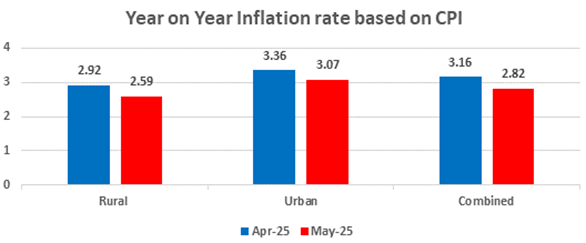
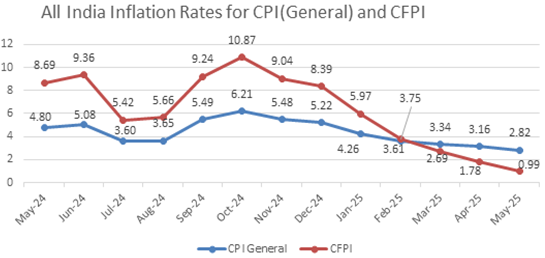
- Macro‑balanced expansion: Growth is fuelled by robust rural consumption (70% of GDP), capex, and city spending, aided by tame CPI inflation (2.82% in May) and soft food prices (0.99%).
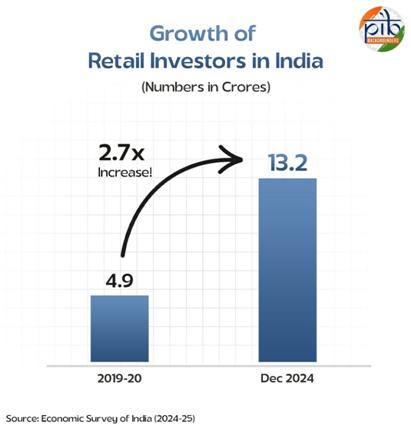
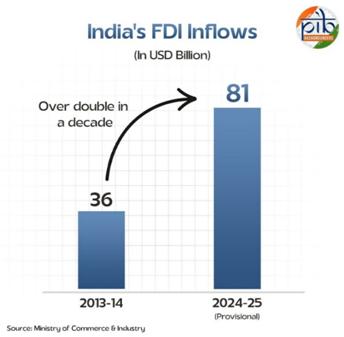
- Strengthened confidence: High FDI, record foreign exchange reserves (US$702.8 billion), and a controlled current account deficit (0.6% of GDP) reflect investor trust.
Strategic Drivers
- Domestic Demand-Led Model: India's internal market, fueled by rural and urban consumption, acts as a shock absorber in global downturns.
- Financial Stability & Reforms: Proactive RBI stance—including a major rate cut—and structural reforms under Aatmanirbhar Bharat and infrastructure push ensure sustainable growth.
- Global Diversification: India is expanding trade with new partners while maintaining global investor confidence amid crises.
- Emerging as a Global Player: With the 4th-largest nominal GDP and surge in capital markets and services, India is cementing its global economic stature.

Simplified Summary
- 6.5% GDP Growth in FY25—India leads global majors.
- Sustained momentum projected into FY26.
- Low inflation, strong reserves and FDI inflows support macro stability.
- Domestic-driven model makes India a global "safe haven."
Exam Focus Points
- Growth Rate: 6.5% real GDP (FY 24–25), projected 6.2–6.5% in coming years.
- Inflation Control: CPI at 2.82% (May 2025) — lowest since Feb 2019; food inflation at 0.99%.
- Macro Indicators: US$702.8 billion forex reserves; CAD at 0.6% of GDP; rising FDI inflows.
- Global Rankings: India is 4th-largest economy; fastest-growing major economy; outperforming China, US, EU, even as they cool down.
- Policy Imperatives: RBI rate cut signals growth orientation; structural reforms and infrastructure investment critical; government diversifying trade.
- Economic Model: Domestic consumption (70% of GDP) plus investment underpin resilience; global institutions recognize India as “bright spot”.
July 2025
31 July 202530 July 202529 July 202528 July 202526 July 202525 July 202524 July 202523 July 202522 July 202521 July 202519 July 202518 July 202517 July 202516 July 202515 July 202512 July 202511 July 202510 July 202509 July 202507 July 202505 July 202504 July 202503 July 202502 July 202501 July 2025
Archive
October 2026
- 28 October 2026
- 27 October 2026
- 26 October 2026
- 24 October 2026
- 23 October 2026
- 22 October 2026
- 21 October 2026
- 20 October 2026
- 19 October 2026
- 17 October 2026
- 16 October 2026
- 15 October 2026
- 14 October 2026
- 13 October 2026
- 12 October 2026
- 10 October 2026
- 09 October 2026
- 08 October 2026
- 07 October 2026
- 06 October 2026
- 05 October 2026
- 03 October 2026
- 02 October 2026
- 01 October 2026
September 2026
- 30 September 2026
- 29 September 2026
- 28 September 2026
- 26 September 2026
- 25 September 2026
- 24 September 2026
- 23 September 2026
- 22 September 2026
- 21 September 2026
- 19 September 2026
- 18 September 2026
- 17 September 2026
- 16 September 2026
- 15 September 2026
- 12 September 2026
- 11 September 2026
- 10 September 2026
- 09 September 2026
- 08 September 2026
- 07 September 2026
- 05 September 2026
- 04 September 2026
- 03 September 2026
- 02 September 2026
- 01 September 2026
August 2026
- 31 August 2026
- 29 August 2026
- 27 August 2026
- 26 August 2026
- 25 August 2026
- 24 August 2026
- 22 August 2026
- 21 August 2026
- 20 August 2026
- 19 August 2026
- 18 August 2026
- 17 August 2026
- 14 August 2026
- 13 August 2026
- 12 August 2026
- 11 August 2026
- 10 August 2026
- 08 August 2026
- 07 August 2026
- 06 August 2026
- 05 August 2026
- 04 August 2026
- 03 August 2026
- 01 August 2026
July 2026
- 31 July 2026
- 30 July 2026
- 29 July 2026
- 28 July 2026
- 27 July 2026
- 25 July 2026
- 23 July 2026
- 22 July 2026
- 21 July 2026
- 20 July 2026
- 18 July 2026
- 17 July 2026
- 15 July 2026
- 14 July 2026
- 13 July 2026
- 11 July 2026
- 10 July 2026
- 09 July 2026
- 08 July 2026
- 07 July 2026
- 06 July 2026
- 04 July 2026
- 03 July 2026
- 02 July 2026
- 01 July 2026
June 2026
May 2026
April 2026
March 2026
- 31 March 2026
- 30 March 2026
- 28 March 2026
- 27 March 2026
- 26 March 2026
- 25 March 2026
- 24 March 2026
- 23 March 2026
- 21 March 2026
- 20 March 2026
- 19 March 2026
- 18 March 2026
- 17 March 2026
- 16 March 2026
- 14 March 2026
- 13 March 2026
- 12 March 2026
- 11 March 2026
- 10 March 2026
- 09 March 2026
- 07 March 2026
- 06 March 2026
- 05 March 2026
- 03 March 2026
- 02 March 2026
February 2026
- 28 February 2026
- 27 February 2026
- 26 February 2026
- 25 February 2026
- 24 February 2026
- 23 February 2026
- 21 February 2026
- 20 February 2026
- 19 February 2026
- 18 February 2026
- 17 February 2026
- 16 February 2026
- 13 February 2026
- 12 February 2026
- 11 February 2026
- 10 February 2026
- 09 February 2026
- 07 February 2026
- 06 February 2026
- 05 February 2026
- 04 February 2026
- 03 February 2026
- 02 February 2026
January 2026
- 31 January 2026
- 30 January 2026
- 29 January 2026
- 28 January 2026
- 27 January 2026
- 26 January 2026
- 24 January 2026
- 23 January 2026
- 22 January 2026
- 21 January 2026
- 20 January 2026
- 19 January 2026
- 16 January 2026
- 15 January 2026
- 14 January 2026
- 13 January 2026
- 12 January 2026
- 10 January 2026
- 09 January 2026
- 08 January 2026
- 07 January 2026
- 06 January 2026
- 05 January 2026
- 03 January 2026
- 02 January 2026
- 01 January 2026
December 2025
- 31 December 2025
- 30 December 2025
- 29 December 2025
- 27 December 2025
- 26 December 2025
- 24 December 2025
- 23 December 2025
- 22 December 2025
- 20 December 2025
- 19 December 2025
- 18 December 2025
- 17 December 2025
- 16 December 2025
- 15 December 2025
- 13 December 2025
- 12 December 2025
- 11 December 2025
- 10 December 2025
- 09 December 2025
- 08 December 2025
- 05 December 2025
- 04 December 2025
- 03 December 2025
- 02 December 2025
November 2025
- 29 November 2025
- 28 November 2025
- 27 November 2025
- 26 November 2025
- 25 November 2025
- 24 November 2025
- 22 November 2025
- 21 November 2025
- 20 November 2025
- 19 November 2025
- 18 November 2025
- 17 November 2025
- 15 November 2025
- 14 November 2025
- 13 November 2025
- 12 November 2025
- 11 November 2025
- 10 November 2025
- 08 November 2025
- 07 November 2025
- 06 November 2025
- 05 November 2025
- 04 November 2025
- 03 November 2025
- 01 November 2025
October 2025
- 31 October 2025
- 30 October 2025
- 29 October 2025
- 28 October 2025
- 27 October 2025
- 25 October 2025
- 24 October 2025
- 23 October 2025
- 22 October 2025
- 21 October 2025
- 20 October 2025
- 18 October 2025
- 17 October 2025
- 16 October 2025
- 15 October 2025
- 14 October 2025
- 13 October 2025
- 11 October 2025
- 10 October 2025
- 09 October 2025
- 08 October 2025
- 07 October 2025
- 06 October 2025
- 04 October 2025
- 03 October 2025
- 02 October 2025
- 01 October 2025
September 2025
- 30 September 2025
- 29 September 2025
- 27 September 2025
- 26 September 2025
- 25 September 2025
- 24 September 2025
- 23 September 2025
- 22 September 2025
- 20 September 2025
- 19 September 2025
- 18 September 2025
- 17 September 2025
- 16 September 2025
- 15 September 2025
- 13 September 2025
- 12 September 2025
- 11 September 2025
- 10 September 2025
- 09 September 2025
- 08 September 2025
- 06 September 2025
- 05 September 2025
- 04 September 2025
- 03 September 2025
- 02 September 2025
- 01 September 2025
August 2025
- 30 August 2025
- 29 August 2025
- 28 August 2025
- 27 August 2025
- 26 August 2025
- 25 August 2025
- 23 August 2025
- 22 August 2025
- 21 August 2025
- 20 August 2025
- 19 August 2025
- 18 August 2025
- 16 August 2025
- 14 August 2025
- 13 August 2025
- 12 August 2025
- 11 August 2025
- 08 August 2025
- 07 August 2025
- 06 August 2025
- 05 August 2025
- 04 August 2025
- 02 August 2025
- 01 August 2025
July 2025
- 31 July 2025
- 30 July 2025
- 29 July 2025
- 28 July 2025
- 26 July 2025
- 25 July 2025
- 24 July 2025
- 23 July 2025
- 22 July 2025
- 21 July 2025
- 19 July 2025
- 18 July 2025
- 17 July 2025
- 16 July 2025
- 15 July 2025
- 12 July 2025
- 11 July 2025
- 10 July 2025
- 09 July 2025
- 07 July 2025
- 05 July 2025
- 04 July 2025
- 03 July 2025
- 02 July 2025
- 01 July 2025
June 2025
- 30 June 2025
- 28 June 2025
- 27 June 2025
- 26 June 2025
- 25 June 2025
- 24 June 2025
- 23 June 2025
- 21 June 2025
- 20 June 2025
- 19 June 2025
- 18 June 2025
- 17 June 2025
- 16 June 2025
- 14 June 2025
- 13 June 2025
- 12 June 2025
- 11 June 2025
- 10 June 2025
- 09 June 2025
- 07 June 2025
- 06 June 2025
- 05 June 2025
- 04 June 2025
- 03 June 2025
- 02 June 2025
May 2025
April 2025
- 30 April 2025
- 29 April 2025
- 28 April 2025
- 26 April 2025
- 25 April 2025
- 24 April 2025
- 23 April 2025
- 22 April 2025
- 21 April 2025
- 19 April 2025
- 18 April 2025
- 17 April 2025
- 16 April 2025
- 15 April 2025
- 14 April 2025
- 12 April 2025
- 11 April 2025
- 10 April 2025
- 09 April 2025
- 08 April 2025
- 07 April 2025
- 05 April 2025
- 04 April 2025
- 03 April 2025
- 02 April 2025
- 01 April 2025
March 2025
- 31 March 2025
- 29 March 2025
- 28 March 2025
- 27 March 2025
- 26 March 2025
- 25 March 2025
- 24 March 2025
- 22 March 2025
- 21 March 2025
- 20 March 2025
- 19 March 2025
- 18 March 2025
- 17 March 2025
- 15 March 2025
- 13 March 2025
- 12 March 2025
- 11 March 2025
- 10 March 2025
- 08 March 2025
- 07 March 2025
- 06 March 2025
- 05 March 2025
- 04 March 2025
- 03 March 2025
- 01 March 2025
February 2025
- 28 February 2025
- 27 February 2025
- 26 February 2025
- 25 February 2025
- 24 February 2025
- 22 February 2025
- 21 February 2025
- 20 February 2025
- 19 February 2025
- 18 February 2025
- 17 February 2025
- 15 February 2025
- 14 February 2025
- 13 February 2025
- 12 February 2025
- 11 February 2025
- 10 February 2025
- 08 February 2025
- 07 February 2025
- 06 February 2025
- 05 February 2025
- 04 February 2025
- 03 February 2025
- 01 February 2025
January 2025
- 31 January 2025
- 30 January 2025
- 29 January 2025
- 28 January 2025
- 27 January 2025
- 25 January 2025
- 24 January 2025
- 23 January 2025
- 22 January 2025
- 21 January 2025
- 20 January 2025
- 18 January 2025
- 17 January 2025
- 16 January 2025
- 15 January 2025
- 14 January 2025
- 13 January 2025
- 11 January 2025
- 10 January 2025
- 09 January 2025
- 08 January 2025
- 07 January 2025
- 06 January 2025
- 04 January 2025
- 03 January 2025
- 02 January 2025
- 01 January 2025