
Current Affairs
Stay updated with the latest national and international events.
09 February 2026
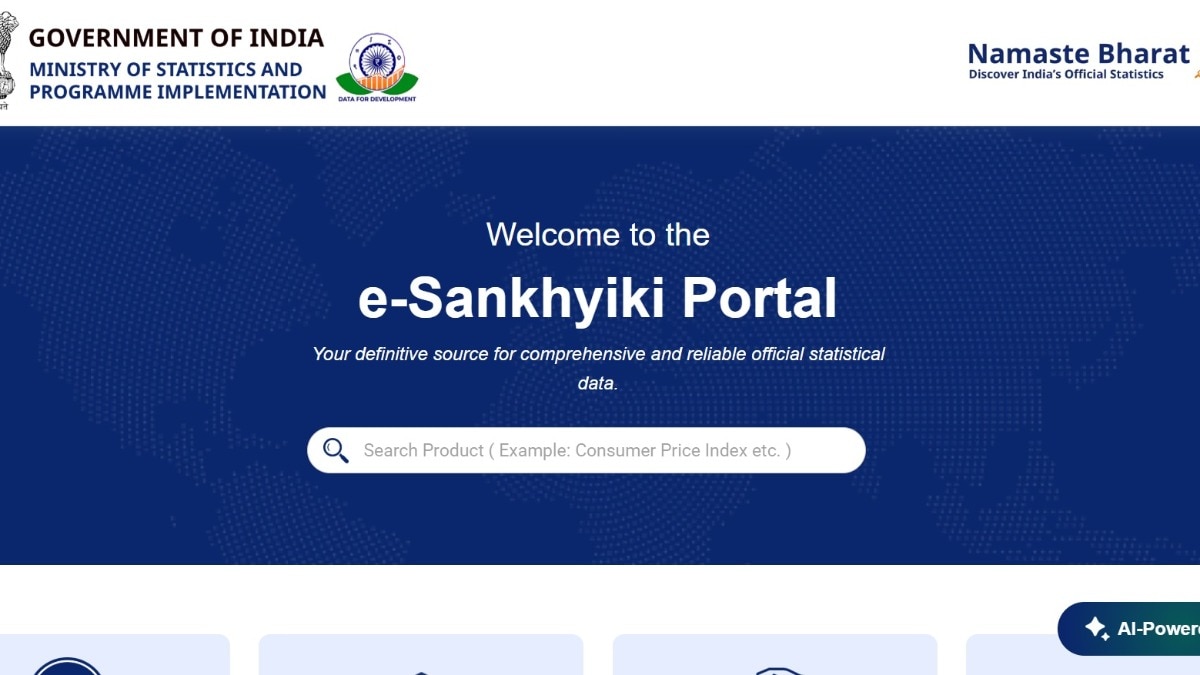
NSO Launches MCP Server to Democratise Official Statistics
What’s the News?
- The National Statistics Office (NSO) under the Ministry of Statistics and Programme Implementation (MoSPI) launched the beta version of a Model Context Protocol (MCP) server integrated with the eSankhyiki portal, India's national repository for official statistics.
- This initiative enables direct, machine-readable access to government datasets through AI tools and analytics platforms, eliminating the need for manual downloads of large data files.
- The launch aligns with the Viksit Bharat vision and precedes the India–AI Impact Summit 2026, demonstrating the government's push toward data-driven governance and AI integration in public administration.
Model Context Protocol (MCP) Server?
- Technology Overview: MCP is an open protocol that allows AI assistants to connect directly with data sources through a standardized interface.
- Key Capabilities:
- Real-time querying of datasets without downloading files
- Automated report generation using current statistics
- Single connection access to multiple datasets
- Integration with custom AI applications and analytical tools
- User Benefits: Reduces time spent on data access and processing, enabling researchers, businesses, and policymakers to focus on analysis and decision-making.
Datasets Available (Beta Release)
- Seven major statistical products currently onboarded:
- Periodic Labour Force Survey (PLFS)
- Consumer Price Index (CPI)
- Annual Survey of Industries (ASI)
- Index of Industrial Production (IIP)
- National Accounts Statistics
- Wholesale Price Index (WPI)
- Environmental Statistics
- Expansion Plan: Additional datasets from eSankhyiki will be added progressively based on user feedback and technical readiness.
National Statistical Office (NSO):
- The NSO was created by merging the Central Statistics Office (CSO) and the National Sample Survey Office (NSSO) to streamline data collection and dissemination.
- It is the nodal agency for conducting large-scale surveys and publishing critical economic indicators such as GDP, Consumer Price Index (CPI), and the Index of Industrial Production (IIP).
Sources
Government Forms Expert Groups to Upgrade 50-Year-Old Project Tiger
What’s the News?
- The Union Ministry of Environment, Forest and Climate Change (MoEFCC) has constituted four zone-wise expert working groups to review and modernise Project Tiger as the programme completes its 50th anniversary.
- The groups will assess 28 policy decisions taken by the National Tiger Conservation Authority (NTCA) over five decades, evaluate their current relevance, and recommend future-ready policies for the next 25 years.
- Union Minister Bhupendra Yadav announced the initiative during a conference with Chief Wildlife Wardens of Tiger Range States and Field Directors of Tiger Reserves in Alwar.
Project Tiger: Overview & Achievements
- Launch: 1973 - one of the world's first large-scale species conservation programmes.
- Current Network: Expanded from 9 reserves (1973) to 51 tiger reserves across 18 tiger-range states, covering approximately 2.23% of India's geographical area.
- Conservation Success: India hosts over 70% of the world's wild tiger population, with numbers rising from 1,411 (2006) to 3,682 (2022).
- Governance Structure:
- Nodal Ministry: MoEFCC
- Implementing Agency: National Tiger Conservation Authority (NTCA) - statutory body under the Wildlife Protection Act, 1972
Core-Buffer Strategy
- Core Areas: Inviolate zones with legal status of National Park or Sanctuary where human activity is restricted to protect critical tiger habitats.
- Buffer Zones: Multiple-use peripheral areas promoting human-wildlife coexistence, sustainable livelihoods for local communities, and eco-development activities.
Future Roadmap & Institutional Synergy
- Long-term Planning: The working groups are expected to submit their reports before the 29th NTCA meeting, outlining recommendations for the next quarter-century.
- Institutional Coordination: The initiative seeks to enhance coordination between the NTCA and premier scientific bodies, including:
- Wildlife Institute of India (WII)
- Botanical Survey of India (BSI)
- Zoological Survey of India (ZSI)
- Indian Council for Forestry Research and Education (ICFRE).
- Technological Integration: The upgrade aims to adapt conservation measures to modern challenges using updated scientific data and monitoring tools.
National Tiger Conservation Authority (NTCA):
- A statutory body established in 2006 following the amendment of the Wildlife Protection Act, 1972.
- It provides statutory backing to Project Tiger and oversees the management of tiger reserves through periodic All-India Tiger Estimation (conducted every 4 years).
Sources
Odisha Hosts Black Swan Summit India 2026 Under BharatNetra Initiative
What’s the News?
- The Government of Odisha launched the Black Swan Summit India 2026 in Bhubaneswar, inaugurated by President Droupadi Murmu, as a flagship event under the BharatNetra initiative.
- The summit is organised in partnership with the Global Finance & Technology Network (GFTN) and aims to position Odisha as a global hub for digital finance, AI, and future-ready workforce development.
- Over 1,700 participants from 24 countries and nearly 100 speakers from 11 countries participated, making it a significant global convening on FinTech, InsurTech, and artificial intelligence.
BharatNetra Framework?
- Strategic Vision: An integrated framework launched following an MoU signed during the visit of Singapore's President Tharman Shanmugaratnam to Odisha in January 2025.
- Four Pillars:
- Global Learning: Job-linked skilling programmes, including a five-month hybrid FinTech & InsurTech certificate with National University of Singapore's Asian Institute of Digital Finance (NUS-AIDF).
- Global Mindshare: High-level policy dialogues and investment forums (exemplified by Black Swan Summit).
- Global Innovation: Centre of Excellence and startup ecosystem in FinTech/InsurTech under IT Policy 2025 and upcoming FinTech Policy.
- Global Capability: GCC Promotion Policy 2025 to attract Global Capability Centres in advanced digital finance.
- Target: Train 7,000 students over five years and create pathways for global employment.
Key Outcomes & MoUs
- Corporate Partnerships: MoUs with firms including Advanze Tech, Spice Money, Surfin, Symbo Insurtech, Universal Pensions and others for internships, apprenticeships, capstone projects, and startup mentorship.
- Women's Entrepreneurship: Partnership with Ant International to enable e-commerce for Self-Help Groups (SHGs); covering 75 lakh women in 7.5 lakh SHGs.
- Startup Global Access: MoU between Startup Policy Forum India and GFTN to connect Indian startups with international mentors, forums, and investors.
- Skilling-to-Employment Pipeline: First cohort of 385 participants in the NUS-AIDF programme; 195 graduated with industry interviews and job fair opportunities. Top performers selected for MUFG Young Innovators initiative (Japan) and Singapore FinTech Festival.
Odisha's Digital Governance Foundation
- OSWAS Platform: Odisha Secretariat Workflow Automation System — operational since 2008, serving 50,000 users across 5,000 offices with 40 lakh files and 3 crore documents processed.
- AI Integration: AI Champions designated in each department; "Suśāsan Sahayak" chatbot launched for government employees to navigate Odisha General Financial Rules and procurement norms.
- Paperless Target: Full transition to paperless governance by March 2027 with seamless internet-based file access.
Significance for State-Led Digital Transformation
- Fiscal Credibility: Odisha ranks number one on NITI Aayog's Fiscal Health Index, with debt-to-GSDP ratio of 13.5% (well below 25% FRBM threshold) and revenue surplus of ₹31,000 crore.
- Execution Hub: Positions Odisha as a testbed for scalable AI and FinTech models that can inform national frameworks, moving beyond policy articulation to large-scale implementation.
- Demographic Dividend: Nearly 69% of population is of working age; skilling focus aligns with "Skilled in Odisha, Skilled for the World" vision.
Sources
Delhi Hosts 1st South Asian Agroforestry Congress: Focus on Nature-based Solutions
What’s the News?
- The inaugural South Asian Agroforestry and Trees Outside Forests (AF-TOF) Congress, titled TREESCAPES 2026, recently concluded in New Delhi.
- Organized by the Indian Council of Agricultural Research (ICAR) and the Centre for International Forestry Research–World Agroforestry (CIFOR-ICRAF), the event focused on mainstreaming tree-based agriculture to build climate resilience across South Asia.
- The congress brought together high-level policymakers from India, Nepal, and the Maldives to address landscape restoration, farmer livelihoods, and the scaling of Nature-based Solutions (NbS).
- Key discussions highlighted the economic contradiction of India importing over $7 billion worth of wood products annually despite having immense domestic agroforestry potential.
Agroforestry & Trees Outside Forests (AF-TOF)
- Carbon Sequestration: Tree-based systems currently account for approximately 19.3% of India's national carbon stocks.
- Climate Targets: Scaling these systems could help India abate over 2 billion tonnes of CO2 equivalent by 2030, contributing significantly to the Net Zero 2070 goal.
- Farmer Livelihoods: With 86% of Indian farmers classified as marginal, agroforestry is positioned as a "core rural infrastructure" to diversify income and future-proof economies.
- Industry Growth: The sector aims to unlock potential in four key industries: plywood, paper and pulp, wooden furniture, and food processing extracts (e.g., amla, custard apple).
Nature-based Solutions (NbS)
- Definition: As defined by the IUCN, NbS are actions to protect, sustainably manage, and restore ecosystems to effectively address societal challenges like climate change and food security.
- Mitigation Potential: NbS can provide up to 37% of the cost-effective CO2 mitigation needed globally by 2030 to keep warming below 2°C.
- IUCN Global Standard: A framework consisting of 8 criteria designed to ensure NbS projects are effective, avoid "greenwashing," and provide measurable benefits for both biodiversity and human well-being.
- Economic Value: Healthy ecosystems like mangroves avert over $57 billion in annual flooding damages globally; in India, the MISHTI initiative is a prime example of such a solution.
Additional Info
- National Policy Context:
- National Forest Policy (1988): Aims to bring 33% of India's geographical area under forest and tree cover.
- India’s NDC: Under the Paris Agreement, India committed to creating an additional carbon sink of 2.5 to 3 billion tonnes of CO2 equivalent through additional forest and tree cover by 2030.
- Key Indian Initiatives:
- Ek Ped Maa Ke Naam: A massive reforestation drive that led to the planting of over 262 crore saplings.
- MISHTI Scheme: Focuses on mangrove restoration along India’s coastline for shoreline protection and tangible incomes.
- Jal Jeevan Mission: Increasingly integrates wetland restoration to ensure long-term water security.
- Global Finance Gap:
- The UNEP State of Finance for Nature 2026 report indicates that global investment in NbS must triple to $571 billion annually by 2030 to meet climate targets.
- Current spending is heavily skewed, with $30 spent on nature-negative activities for every $1 invested in nature protection.
Sources
India-Malaysia Strengthen Ties with IMPACT Framework and 11 Key Agreements

What’s the News?
- Prime Minister Narendra Modi visited Malaysia for a bilateral summit, reaffirming the Comprehensive Strategic Partnership (CSP) established in August 2024.
- The visit marked the operationalisation of the IMPACT framework (India–Malaysia Partnership for Advancing Collective Transformation) aimed at deepening cooperation in economic growth, digital integration, cultural ties, and people-centric development.
- Both nations exchanged 11 bilateral agreements covering semiconductors, digital payments, security, disaster management, and vocational training.
IMPACT Framework?
- Vision: To accelerate the pace and scale of bilateral cooperation, deliver tangible benefits for citizens, and position India–Malaysia ties as a driver of Asia's collective growth.
- Core Pillars:
- Economic & Technology Cooperation: Over 100 Indian IT companies operate in Malaysia, generating employment and strengthening digital ecosystems.
- Digital Connectivity: Launch of UPI in Malaysia through collaboration between NPCI International Payments Ltd (NIPL) and Malaysia's PayNet, enabling seamless QR-based cross-border payments.
- People-to-People Linkages: Strong Indian-origin community (second-largest globally, ~2.9 million people); expansion of OCI eligibility up to 6th generation; Thiruvalluvar Scholarships for Malaysian nationals.
- Civilisational Bonds: Shared maritime heritage, Tamil-Malay linguistic links, and historical connections including INA legacy.
Agreements Signed
- Semiconductor Cooperation: Joint research, workforce development, and technology transfer combining Malaysia's 13-15% global back-end semiconductor value chain expertise with India's design capabilities.
- Digital Payment Integration: UPI-DuitNow linkage for low-cost remittances and tourism payments.
- Local Currency Settlement: RBI and Bank Negara Malaysia facilitating trade in INR-MYR to reduce dollar dependency.
- Security Cooperation: MoU between CBI and Malaysian Anti-Corruption Commission; Exchange of Notes between National Security Councils on counter-terrorism, cybercrime, and maritime piracy.
- Vocational Education (TVET): Standardising training certifications and skilled worker mobility for semiconductor and digital sectors.
- Disaster Management & UN Peacekeeping: Enhanced cooperation in humanitarian assistance and global peace operations.
Additional Info
- Act East Policy: Malaysia is a cornerstone of India’s Act East Policy and a vital partner in the ASEAN region, situated strategically along the Strait of Malacca.
- BRICS & Global South:
- India expressed support for Malaysia’s bid for full membership in BRICS.
- Malaysia welcomed India’s 2026 BRICS Chairmanship.
- Diaspora - The Living Bridge:
- Malaysia hosts the second-largest Indian-origin community globally, numbering nearly 2.9 million.
- To deepen this link, India announced the opening of a new Consulate in Sabah (Borneo Island).
- Environment: India invited Malaysia to join the International Big Cat Alliance (IBCA) and the Global Biofuel Alliance.
- Bilateral Trade Profile:
- India is Malaysia's third-largest trading partner in ASEAN.
- Major Indian exports: Petroleum products, meat, aluminum, and machinery.
- Major Indian imports: Palm oil, electronics, and crude oil.
Sources
February 2026
28 February 202627 February 202626 February 202625 February 202624 February 202623 February 202621 February 202620 February 202619 February 202618 February 202617 February 202616 February 202613 February 202612 February 202611 February 202610 February 202609 February 202607 February 202606 February 202605 February 202604 February 202603 February 202602 February 2026
Archive
October 2026
- 27 October 2026
- 26 October 2026
- 24 October 2026
- 23 October 2026
- 22 October 2026
- 21 October 2026
- 20 October 2026
- 19 October 2026
- 17 October 2026
- 16 October 2026
- 15 October 2026
- 14 October 2026
- 13 October 2026
- 12 October 2026
- 10 October 2026
- 09 October 2026
- 08 October 2026
- 07 October 2026
- 06 October 2026
- 05 October 2026
- 03 October 2026
- 02 October 2026
- 01 October 2026
September 2026
- 30 September 2026
- 29 September 2026
- 28 September 2026
- 26 September 2026
- 25 September 2026
- 24 September 2026
- 23 September 2026
- 22 September 2026
- 21 September 2026
- 19 September 2026
- 18 September 2026
- 17 September 2026
- 16 September 2026
- 15 September 2026
- 12 September 2026
- 11 September 2026
- 10 September 2026
- 09 September 2026
- 08 September 2026
- 07 September 2026
- 05 September 2026
- 04 September 2026
- 03 September 2026
- 02 September 2026
- 01 September 2026
August 2026
- 31 August 2026
- 29 August 2026
- 27 August 2026
- 26 August 2026
- 25 August 2026
- 24 August 2026
- 22 August 2026
- 21 August 2026
- 20 August 2026
- 19 August 2026
- 18 August 2026
- 17 August 2026
- 14 August 2026
- 13 August 2026
- 12 August 2026
- 11 August 2026
- 10 August 2026
- 08 August 2026
- 07 August 2026
- 06 August 2026
- 05 August 2026
- 04 August 2026
- 03 August 2026
- 01 August 2026
July 2026
- 31 July 2026
- 30 July 2026
- 29 July 2026
- 28 July 2026
- 27 July 2026
- 25 July 2026
- 23 July 2026
- 22 July 2026
- 21 July 2026
- 20 July 2026
- 18 July 2026
- 17 July 2026
- 15 July 2026
- 14 July 2026
- 13 July 2026
- 11 July 2026
- 10 July 2026
- 09 July 2026
- 08 July 2026
- 07 July 2026
- 06 July 2026
- 04 July 2026
- 03 July 2026
- 02 July 2026
- 01 July 2026
June 2026
May 2026
April 2026
March 2026
- 31 March 2026
- 30 March 2026
- 28 March 2026
- 27 March 2026
- 26 March 2026
- 25 March 2026
- 24 March 2026
- 23 March 2026
- 21 March 2026
- 20 March 2026
- 19 March 2026
- 18 March 2026
- 17 March 2026
- 16 March 2026
- 14 March 2026
- 13 March 2026
- 12 March 2026
- 11 March 2026
- 10 March 2026
- 09 March 2026
- 07 March 2026
- 06 March 2026
- 05 March 2026
- 03 March 2026
- 02 March 2026
February 2026
- 28 February 2026
- 27 February 2026
- 26 February 2026
- 25 February 2026
- 24 February 2026
- 23 February 2026
- 21 February 2026
- 20 February 2026
- 19 February 2026
- 18 February 2026
- 17 February 2026
- 16 February 2026
- 13 February 2026
- 12 February 2026
- 11 February 2026
- 10 February 2026
- 09 February 2026
- 07 February 2026
- 06 February 2026
- 05 February 2026
- 04 February 2026
- 03 February 2026
- 02 February 2026
January 2026
- 31 January 2026
- 30 January 2026
- 29 January 2026
- 28 January 2026
- 27 January 2026
- 26 January 2026
- 24 January 2026
- 23 January 2026
- 22 January 2026
- 21 January 2026
- 20 January 2026
- 19 January 2026
- 16 January 2026
- 15 January 2026
- 14 January 2026
- 13 January 2026
- 12 January 2026
- 10 January 2026
- 09 January 2026
- 08 January 2026
- 07 January 2026
- 06 January 2026
- 05 January 2026
- 03 January 2026
- 02 January 2026
- 01 January 2026
December 2025
- 31 December 2025
- 30 December 2025
- 29 December 2025
- 27 December 2025
- 26 December 2025
- 24 December 2025
- 23 December 2025
- 22 December 2025
- 20 December 2025
- 19 December 2025
- 18 December 2025
- 17 December 2025
- 16 December 2025
- 15 December 2025
- 13 December 2025
- 12 December 2025
- 11 December 2025
- 10 December 2025
- 09 December 2025
- 08 December 2025
- 05 December 2025
- 04 December 2025
- 03 December 2025
- 02 December 2025
November 2025
- 29 November 2025
- 28 November 2025
- 27 November 2025
- 26 November 2025
- 25 November 2025
- 24 November 2025
- 22 November 2025
- 21 November 2025
- 20 November 2025
- 19 November 2025
- 18 November 2025
- 17 November 2025
- 15 November 2025
- 14 November 2025
- 13 November 2025
- 12 November 2025
- 11 November 2025
- 10 November 2025
- 08 November 2025
- 07 November 2025
- 06 November 2025
- 05 November 2025
- 04 November 2025
- 03 November 2025
- 01 November 2025
October 2025
- 31 October 2025
- 30 October 2025
- 29 October 2025
- 28 October 2025
- 27 October 2025
- 25 October 2025
- 24 October 2025
- 23 October 2025
- 22 October 2025
- 21 October 2025
- 20 October 2025
- 18 October 2025
- 17 October 2025
- 16 October 2025
- 15 October 2025
- 14 October 2025
- 13 October 2025
- 11 October 2025
- 10 October 2025
- 09 October 2025
- 08 October 2025
- 07 October 2025
- 06 October 2025
- 04 October 2025
- 03 October 2025
- 02 October 2025
- 01 October 2025
September 2025
- 30 September 2025
- 29 September 2025
- 27 September 2025
- 26 September 2025
- 25 September 2025
- 24 September 2025
- 23 September 2025
- 22 September 2025
- 20 September 2025
- 19 September 2025
- 18 September 2025
- 17 September 2025
- 16 September 2025
- 15 September 2025
- 13 September 2025
- 12 September 2025
- 11 September 2025
- 10 September 2025
- 09 September 2025
- 08 September 2025
- 06 September 2025
- 05 September 2025
- 04 September 2025
- 03 September 2025
- 02 September 2025
- 01 September 2025
August 2025
- 30 August 2025
- 29 August 2025
- 28 August 2025
- 27 August 2025
- 26 August 2025
- 25 August 2025
- 23 August 2025
- 22 August 2025
- 21 August 2025
- 20 August 2025
- 19 August 2025
- 18 August 2025
- 16 August 2025
- 14 August 2025
- 13 August 2025
- 12 August 2025
- 11 August 2025
- 08 August 2025
- 07 August 2025
- 06 August 2025
- 05 August 2025
- 04 August 2025
- 02 August 2025
- 01 August 2025
July 2025
- 31 July 2025
- 30 July 2025
- 29 July 2025
- 28 July 2025
- 26 July 2025
- 25 July 2025
- 24 July 2025
- 23 July 2025
- 22 July 2025
- 21 July 2025
- 19 July 2025
- 18 July 2025
- 17 July 2025
- 16 July 2025
- 15 July 2025
- 12 July 2025
- 11 July 2025
- 10 July 2025
- 09 July 2025
- 07 July 2025
- 05 July 2025
- 04 July 2025
- 03 July 2025
- 02 July 2025
- 01 July 2025
June 2025
- 30 June 2025
- 28 June 2025
- 27 June 2025
- 26 June 2025
- 25 June 2025
- 24 June 2025
- 23 June 2025
- 21 June 2025
- 20 June 2025
- 19 June 2025
- 18 June 2025
- 17 June 2025
- 16 June 2025
- 14 June 2025
- 13 June 2025
- 12 June 2025
- 11 June 2025
- 10 June 2025
- 09 June 2025
- 07 June 2025
- 06 June 2025
- 05 June 2025
- 04 June 2025
- 03 June 2025
- 02 June 2025
May 2025
April 2025
- 30 April 2025
- 29 April 2025
- 28 April 2025
- 26 April 2025
- 25 April 2025
- 24 April 2025
- 23 April 2025
- 22 April 2025
- 21 April 2025
- 19 April 2025
- 18 April 2025
- 17 April 2025
- 16 April 2025
- 15 April 2025
- 14 April 2025
- 12 April 2025
- 11 April 2025
- 10 April 2025
- 09 April 2025
- 08 April 2025
- 07 April 2025
- 05 April 2025
- 04 April 2025
- 03 April 2025
- 02 April 2025
- 01 April 2025
March 2025
- 31 March 2025
- 29 March 2025
- 28 March 2025
- 27 March 2025
- 26 March 2025
- 25 March 2025
- 24 March 2025
- 22 March 2025
- 21 March 2025
- 20 March 2025
- 19 March 2025
- 18 March 2025
- 17 March 2025
- 15 March 2025
- 13 March 2025
- 12 March 2025
- 11 March 2025
- 10 March 2025
- 08 March 2025
- 07 March 2025
- 06 March 2025
- 05 March 2025
- 04 March 2025
- 03 March 2025
- 01 March 2025
February 2025
- 28 February 2025
- 27 February 2025
- 26 February 2025
- 25 February 2025
- 24 February 2025
- 22 February 2025
- 21 February 2025
- 20 February 2025
- 19 February 2025
- 18 February 2025
- 17 February 2025
- 15 February 2025
- 14 February 2025
- 13 February 2025
- 12 February 2025
- 11 February 2025
- 10 February 2025
- 08 February 2025
- 07 February 2025
- 06 February 2025
- 05 February 2025
- 04 February 2025
- 03 February 2025
- 01 February 2025
January 2025
- 31 January 2025
- 30 January 2025
- 29 January 2025
- 28 January 2025
- 27 January 2025
- 25 January 2025
- 24 January 2025
- 23 January 2025
- 22 January 2025
- 21 January 2025
- 20 January 2025
- 18 January 2025
- 17 January 2025
- 16 January 2025
- 15 January 2025
- 14 January 2025
- 13 January 2025
- 11 January 2025
- 10 January 2025
- 09 January 2025
- 08 January 2025
- 07 January 2025
- 06 January 2025
- 04 January 2025
- 03 January 2025
- 02 January 2025
- 01 January 2025