
Current Affairs
Stay updated with the latest national and international events.
08 September 2026
India Joins Global 6G Leadership and Security Initiative
What’s the News?
- India has joined the US-led “Call to Action for 6G Leadership and Security”, taking the participating group to 26 governments.
- The initiative seeks cooperation in shaping future 6G networks around security, interoperability, resilience, competitiveness and innovation.
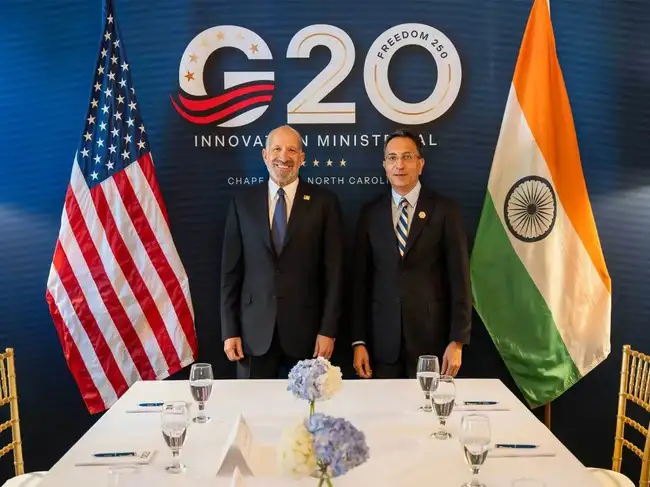
- India’s participation was announced following discussions between Union Minister of State for Commerce and Industry Jitin Prasada and US Commerce Secretary Howard Lutnick on the sidelines of the G20 Innovation Ministerial.
- The two countries also discussed cooperation in semiconductors, Artificial Intelligence (AI) and data centres, including potential US investment in India Semiconductor Mission 2.0 (ISM 2.0).
Call to Action for 6G Leadership and Security
- It is an international policy framework led by the US Department of Commerce’s National Telecommunications and Information Administration (NTIA).
- India was not among the original 25 governments; its inclusion expanded participation to 26 governments.
- Major participating countries include the US, UK, Japan, South Korea, Australia, Canada, France, Germany, Finland and Sweden.
- Participating governments have committed to strengthen cooperation on 6G over the next 12 months and beyond.
Focus Areas
- Network Security: Building secure next-generation telecom infrastructure.
- Interoperability: Ensuring networks and technologies developed in different countries can work together.
- Resilience: Improving resistance to cyberattacks, disruptions and supply-chain risks.
- Trusted AI: Promoting reliable AI systems for the development and operation of 6G infrastructure.
- Competitiveness & Innovation: Encouraging diversified technology ecosystems and innovation in advanced wireless communications.
What is 6G?
- 6G is the proposed sixth generation of mobile communication technology, succeeding 5G.
- It is expected to provide:
- Significantly higher data speeds.
- Ultra-low latency.
- Greater machine-to-machine connectivity.
- More extensive integration of AI into communication networks.
- International work is currently focused on research, standards, spectrum requirements and technological architecture before commercial deployment.
Bharat 6G Mission & Bharat 6G Alliance
- India is simultaneously pursuing its domestic 6G strategy through the Bharat 6G Mission and Bharat 6G Alliance.
- The broader objective is to position India as a global supplier of:
- Intellectual Property (IP),
- Telecom products and technologies, and
- Affordable next-generation communication solutions.
- The Bharat 6G Alliance targets deployment of 6G technologies in India by 2030.
- Formal international technical specifications for 6G are expected to begin taking shape from 2027.
Additional Info
- Nature of the initiative
- It is presently an early-stage policy coordination framework, rather than a commercial 6G deployment programme.
- India's entry does not presently involve a specific funding commitment, spectrum allocation, commercial project or India-specific deployment timeline.
- G20 Innovation Ministerial
- Hosted by the US Department of Commerce and the White House Office of Science and Technology Policy (OSTP).
- The Indian delegation included officials from:
- Ministry of Electronics and Information Technology (MeitY),
- Department of Science and Technology (DST),
- Department for Promotion of Industry and Internal Trade (DPIIT), and
- Embassy of India in the US.
- The ministerial statement highlighted the potential of emerging technologies to improve productivity, economic prosperity and opportunities.
Sources
PM-SETU Approves ₹735.70 Crore for ITI Clusters in Three States

What’s the News?
- The National Steering Committee (NSC) under the Pradhan Mantri Skilling and Employability Transformation through Upgraded ITIs (PM-SETU) scheme has approved Strategic Investment Plans (SIPs) worth ₹735.70 crore for ITI clusters in Rajasthan, Telangana and Uttar Pradesh.
- With these approvals, the cumulative sanctioned investment under PM-SETU has reached ₹2,171 crore across nine ITI clusters.
- The projects focus on modernising ITI infrastructure, upgrading existing trades, introducing new long- and short-term courses, and aligning vocational training with industry requirements.
- The meeting was chaired by Debashree Mukherjee, Secretary, Ministry of Skill Development and Entrepreneurship (MSDE).
Approved ITI Clusters
- Rajasthan – Bhiwadi Cluster: ₹241 crore
- Strategic Investment Plan submitted by H.G. Infra Engineering Ltd.
- Covers five ITIs, with Government ITI Bhiwadi as the Hub ITI.
- Telangana – Medchal Cluster: ₹254.30 crore
- Strategic Investment Plan submitted by ZEN Technologies Ltd.
- Covers five ITIs, with Government ITI Medchal as the Hub ITI.
- Uttar Pradesh – Meerut Cluster: ₹240.40 crore
- Strategic Investment Plan submitted by the National Skill Development Corporation (NSDC).
- Covers five ITIs, with Government ITI Saket, Meerut as the Hub ITI.
PM-SETU Scheme
- PM-SETU stands for Pradhan Mantri Skilling and Employability Transformation through Upgraded ITIs.
- It is a Centrally Sponsored Scheme under the Ministry of Skill Development and Entrepreneurship (MSDE) aimed at improving the quality and industry relevance of vocational training.
- Total outlay: ₹60,000 crore
- Central Government: ₹30,000 crore
- State Governments: ₹20,000 crore
- Industry: ₹10,000 crore
- It aims to upgrade 1,000 Government ITIs through a Hub-and-Spoke model:
- 200 Hub ITIs
- 800 Spoke ITIs
- Upgradation includes smart classrooms, modern laboratories, digital content and industry-aligned courses.
Hub-and-Spoke & Industry-Led Model
- A Hub ITI acts as the principal institution of a cluster and is linked with nearby Spoke ITIs.
- Industry partners participate in:
- Curriculum and course design.
- Infrastructure and equipment modernisation.
- Training aligned with emerging technologies.
- Apprenticeships and employment linkages.
- Special Purpose Vehicles (SPVs) involving government and Anchor Industry Partners are used for management and implementation of ITI clusters.
- The model seeks to make vocational training demand-driven and responsive to local industrial requirements, rather than relying only on standardised courses.
Additional Info
- Rajasthan becomes first state to execute an SHA
- A Shareholders’ Agreement (SHA) was signed among H.G. Infra Engineering Ltd., Government of Rajasthan and MSDE for the Bhiwadi cluster.
- Rajasthan became the first state to execute an SHA under PM-SETU, formally initiating implementation of the cluster.
- Second component of PM-SETU
- The scheme also provides for capacity augmentation of five National Skill Training Institutes (NSTIs) located at:
- Bhubaneswar
- Chennai
- Hyderabad
- Kanpur
- Ludhiana
- These institutes are to develop sector-specific National Centres of Excellence for skilling, with emphasis on advanced Training of Trainers and global partnerships.
- The scheme also provides for capacity augmentation of five National Skill Training Institutes (NSTIs) located at:
- National Steering Committee
- Chaired by the Secretary, MSDE.
- Functions as the apex body for overall policy direction, operational guidelines, monitoring and course correction under PM-SETU.
- State/UT-level implementation is overseen through State Steering Committees.
Sources
India to Host Expanded 11-Nation BRICS Summit
What’s the News?
- India is set to host the 18th BRICS Leaders’ Summit at Bharat Mandapam, New Delhi, under its 2026 BRICS Chairship.
- The summit will bring together leaders of the expanded 11-member BRICS, along with Partner Countries and Outreach Invitees.
- India’s chairship is guided by the theme “Building for Resilience, Innovation, Cooperation and Sustainability”, reflecting a people-centric “Humanity First” approach.
- Key discussions are expected to cover global governance reforms, trade, resilient supply chains, cross-border payments, Artificial Intelligence (AI), energy security, climate resilience and development finance.
Expanded BRICS
BRICS currently has 11 full members:
- Brazil
- Russia
- India
- China
- South Africa
- Egypt
- Ethiopia
- Iran
- United Arab Emirates
- Saudi Arabia
- Indonesia
The grouping expanded significantly beyond the original five members, increasing its representation across Asia, Africa, West Asia and Latin America.
BRICS countries collectively account for approximately:
- 49.5% of the global population
- Around 40% of global GDP
India’s BRICS Chairship 2026
- India assumed the BRICS Chairship for the fourth time, having previously chaired the grouping in:
- 2012
- 2016
- 2021
- 2026
- More than 350 BRICS meetings and high-level engagements have been organised across over 25 Indian cities during the current chairship.
- BRICS cooperation operates through three broad pillars:
- Political and Security
- Economic and Financial
- Cultural and People-to-People Cooperation
Major Priorities
- Resilience
- Resilient supply chains
- Energy and food security
- Climate resilience
- Innovation
- Artificial Intelligence
- Digital technologies
- Technology-led development
- Cooperation
- Cross-border payment systems
- Greater use of national currencies in trade
- MSME cooperation
- Trade and investment facilitation
- Sustainability
- Sustainable development
- Climate action
- Development finance
- Energy transition
BRICS Partner Countries
BRICS also has a separate Partner Country category, distinct from full membership.
The 10 Partner Countries are:
- Belarus
- Bolivia
- Cuba
- Kazakhstan
- Malaysia
- Nigeria
- Thailand
- Uganda
- Uzbekistan
- Vietnam
Partner countries can participate in selected BRICS meetings and summits but do not have the same status as full members.
Global Governance Reform
A major focus of BRICS is reform of international institutions to provide greater representation to emerging economies and developing countries.
Priority areas include reforms in:
- United Nations and UN Security Council
- International Monetary Fund (IMF)
- World Bank
- Other multilateral financial and political institutions
India views BRICS as an important platform for amplifying the concerns and development priorities of the Global South.
Additional Info
- Evolution of BRICS
- Cooperation among Brazil, Russia, India and China (BRIC) formally began in 2006.
- The first BRIC Leaders’ Summit was held in 2009.
- South Africa subsequently joined, converting BRIC into BRICS.
- The grouping later expanded to include countries from Africa, West Asia and Southeast Asia.
- New Development Bank (NDB)
- Established by BRICS countries in 2014.
- Headquarters: Shanghai, China.
- Provides financing for infrastructure and sustainable development projects in emerging economies and developing countries.
- Decision-making
- BRICS operates primarily on the principle of consensus rather than a formal voting arrangement.
- The enlarged membership therefore requires greater diplomatic coordination among countries with diverse geopolitical and economic interests.
Sources
NITI Aayog Launches PACT to Accelerate Zero-Emission Freight
What’s the News?
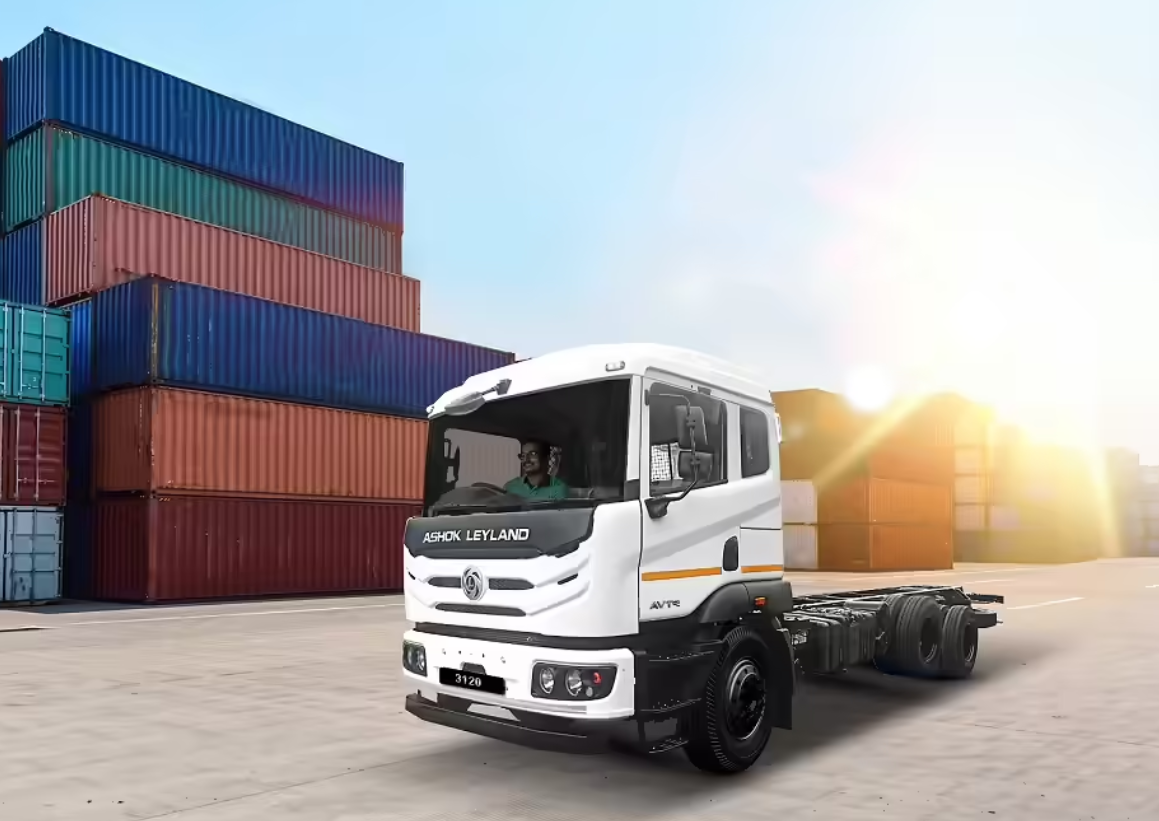
- NITI Aayog has launched the Platform for Aggregating Clean Transport (PACT) at the 5th e-FAST India Summit in New Delhi.
- PACT aims to accelerate the deployment of zero-emission trucks (ZETs) by aggregating freight demand and converting it into commercially viable deployment opportunities along identified freight corridors.
- The summit also introduced the Zero Emission Truck (ZET) Marketplace, connecting manufacturers, logistics firms, charging operators, financiers and technology providers.
- The initiatives seek to address major barriers to electric trucking, including high financing costs, fragmented freight demand and inadequate corridor-based charging infrastructure.
What is PACT?
PACT – Platform for Aggregating Clean Transport is a flagship initiative under the e-FAST India platform.
Its major functions include:
- Aggregating freight demand from shippers and Logistics Service Providers (LSPs).
- Identifying high-potential freight corridors for zero-emission truck deployment.
- Improving demand visibility for manufacturers and investors.
- Supporting planning of charging infrastructure along freight corridors.
- Bringing together:
- Shippers
- LSPs
- Vehicle manufacturers
- Financiers
- Charge Point Operators (CPOs)
- Strengthening the commercial case for electric medium- and heavy-duty vehicles (e-MHDVs).
ZET Marketplace
- The Zero Emission Truck Marketplace is an interactive business-engagement platform for the electric freight ecosystem.
- It connects:
- Electric-truck manufacturers
- Logistics service providers
- Charge Point Operators
- Financial institutions
- Technology companies
- It enables stakeholders to showcase products, identify business opportunities and develop financing, charging and deployment partnerships.
- It complements PACT by helping convert aggregated freight demand into actual commercial projects.
Why Freight Electrification Matters?
- Around 70% of India’s freight moves by road.
- Heavy-duty trucks constitute only about 3–4% of India’s vehicle fleet, but contribute more than one-third of transport-sector carbon emissions.
- Electric freight deployment increased from 201 vehicles in FY25 to 826 in FY26, a more than four-fold increase.
- More than 3,000 electric medium- and heavy-duty trucks are currently operating in India.
e-FAST India
- e-FAST India stands for Electric Freight Accelerator for Sustainable Transport – India.
- It is a NITI Aayog-led platform aimed at accelerating the transition towards zero-emission freight transport, particularly medium- and heavy-duty vehicles.
- It brings together government and private-sector stakeholders such as:
- Original Equipment Manufacturers (OEMs)
- Logistics companies
- Shippers
- Financiers
- Charging infrastructure providers
- Its focus is shifting from individual pilot projects towards large-scale, commercially viable electric freight deployment.
Additional Info
- Major barriers to electric trucks
- High upfront vehicle cost.
- Higher cost of financing.
- Fragmented logistics operations.
- Lack of coordinated charging infrastructure along major freight corridors.
- Uncertainty regarding utilisation, battery performance and resale value.
- Proposed solutions
- Demand aggregation to create predictable volumes.
- Blended finance to reduce investment risks.
- Leasing models to lower upfront costs.
- Better vehicle and battery data to reduce lending risks.
- Corridor-based charging infrastructure for high-utilisation freight routes.
- Related Government Initiatives
- PM E-DRIVE Scheme – supports faster adoption of electric mobility and development of EV charging infrastructure.
- PLI Scheme for Automobile and Auto Components – promotes domestic manufacturing of advanced automotive technologies.
- PLI Scheme for Advanced Chemistry Cell (ACC) Battery Storage – promotes domestic battery manufacturing.
- FAME India Scheme – earlier demand-support framework for electric and hybrid vehicles.
- PM e-Bus Sewa – supports deployment of electric buses in Indian cities.
Sources
5th Swachh Vayu Sarvekshan Awards Recognise Top Cities and Wards
What’s the News?
- The Ministry of Environment, Forest and Climate Change (MoEFCC) conferred the 5th Swachh Vayu Sarvekshan Awards under the National Clean Air Programme (NCAP).
- The awards recognised best-performing cities and municipal wards for measures undertaken to reduce air pollution.
- Lucknow, Rourkela and Kalinga Nagar emerged as the top-ranked cities in their respective population categories.
- The 2026 edition introduced ward-level assessment, extending clean-air evaluation to the local level.
- A Compendium of Best Management Practices under NCAP was also released to facilitate replication of successful pollution-control measures.
Swachh Vayu Sarvekshan
- It is an annual assessment of cities covered under NCAP, launched in 2022-23 by MoEFCC.
- It promotes competition among cities on implementation of City Clean Air Action Plans.
- In 2026, all 130 NCAP cities were assessed in three population groups:
- Category I: Above 10 lakh population
- Category II: 3–10 lakh population
- Category III: Below 3 lakh population
- Assessment covers measures related to:
- Road-dust control
- Solid Waste Management (SWM)
- Vehicular emissions
- Industrial pollution
- Construction & Demolition (C&D) waste
- Emissions from DG sets and commercial establishments
- Information, Education and Communication (IEC) activities
- Evaluation involves city self-assessment → State-Level Monitoring Committee approval → CPCB evaluation → field verification by independent committees.
Important: Swachh Vayu Sarvekshan primarily evaluates a city's air-pollution control actions and their implementation; it should not be interpreted simply as a ranking of cities by absolute air quality.
2026 City Rankings
| Population Category | 1st | 2nd | 3rd |
|---|---|---|---|
| Above 10 lakh | Lucknow – 198 | Indore – 197 | Jabalpur – 195 |
| 3–10 lakh | Rourkela – 198.5 | Firozabad & Guntur – 195 | Amravati – 194 |
| Below 3 lakh | Kalinga Nagar – 198.5 | Angul – 196.5 | Talcher – 193.5 |
Lucknow received a ₹1.5 crore cash award for topping the million-plus population category.
Ward-Level Swachh Vayu Sarvekshan
- Ward-level assessment was introduced to promote a bottom-up approach to air-quality management.
- More than 7,400 wards participated.
- 10 wards received national awards across three categories, while 69 wards from 23 States/UTs were recognised at the State/UT level.
National Category Leaders
- Above 30,000 population: Ward 70, Lucknow
- 10,000–30,000: Ward 36 and Ward 30, Bhubaneswar – joint first
- Below 10,000: Ward 13, Rourkela
National Clean Air Programme (NCAP)
- Launched: 2019
- Nodal Ministry: Ministry of Environment, Forest and Climate Change
- Coverage: 130 cities across 24 States/UTs
- It adopts a multi-sectoral approach involving the Central and State governments, Urban Local Bodies and other stakeholders through city-specific clean-air action plans.
- PRANA – Portal for Regulation of Air-Pollution in Non-Attainment Cities tracks the physical and financial progress of NCAP action plans.
Progress under NCAP
Using FY 2017-18 as the baseline, performance in FY 2025-26 showed:
- 108 of 130 cities recorded improvement in annual PM10 levels.
- 72 cities achieved more than 20% reduction.
- 26 cities achieved more than 40% reduction.
- 14 cities met the National Ambient Air Quality Standards (NAAQS).
- Around ₹16,425 crore in performance-linked grants has been provided to NCAP cities for pollution-mitigation measures.
Additional Info
- Swachh Vayu Diwas / International Day of Clean Air for Blue Skies
- Observed on 7 September every year.
- The UN General Assembly designated the day in 2019, with the first observance held in 2020.
- India observes the occasion as Swachh Vayu Diwas.
- Central Pollution Control Board (CPCB)
- Statutory organisation constituted under the Water (Prevention and Control of Pollution) Act, 1974.
- Also exercises powers and functions under the Air (Prevention and Control of Pollution) Act, 1981.
- Functions under MoEFCC.
- PM10
- Particulate matter having an aerodynamic diameter of 10 micrometres or less.
- Reduction in particulate pollution is a major focus of NCAP.
UK Recognises India’s Carbon Credit Trading Scheme under CBAM

What’s the News?
- The United Kingdom (UK) has recognised India’s Carbon Credit Trading Scheme (CCTS) as a qualifying carbon pricing scheme under its Carbon Border Adjustment Mechanism (CBAM).
- This allows UK importers of eligible Indian products to claim carbon price relief for the effective carbon price already borne in India under CCTS.
- The move can reduce the effective UK CBAM liability on Indian exports and helps prevent double carbon taxation.
- The recognition followed technical engagement between India and the UK on the design and implementation of India’s carbon market.
How Will Recognition Benefit India?
Under UK CBAM, an importer can receive relief when emissions embedded in imported products have already faced an eligible carbon price in the country of origin.
Thus: Carbon price payable under UK CBAM − Eligible carbon price already paid in India = Effective CBAM liability
- Relief will depend on the actual effective carbon price borne on the embedded emissions.
- It is not an automatic exemption from UK CBAM.
- Importers must meet prescribed evidence and independent verification requirements.
- The measure can improve the competitiveness of carbon-intensive Indian exports to the UK by avoiding duplication of carbon costs.
UK Carbon Border Adjustment Mechanism (CBAM)
- CBAM is a border carbon-pricing mechanism designed to ensure that carbon-intensive imports face a carbon cost comparable to that borne by UK producers.
- It is intended to address carbon leakage—the relocation of production to countries with less stringent carbon constraints.
- The UK CBAM will become operational from 2027.
Sectors Covered
It initially covers specified goods from five sectors:
- Aluminium
- Cement
- Fertiliser
- Hydrogen
- Iron and Steel
Businesses importing covered goods worth £50,000 or more over a 12-month period may come within the registration framework.
India’s Carbon Credit Trading Scheme (CCTS)
- CCTS provides the framework for developing the Indian Carbon Market (ICM).
- It derives its statutory basis from the Energy Conservation Act, 2001, as amended by the Energy Conservation (Amendment) Act, 2022.
- The scheme seeks to reduce, remove or avoid Greenhouse Gas (GHG) emissions by assigning a market value to emission reductions.
- One Carbon Credit Certificate (CCC) represents one tonne of carbon dioxide equivalent (tCO₂e).
Two Mechanisms under CCTS
- Compliance Mechanism
- Applies to designated energy-intensive industries.
- Government-prescribed GHG Emission Intensity (GEI) targets must be achieved.
- Entities performing better than their targets can receive Carbon Credit Certificates.
- Entities failing to meet targets must purchase/surrender the required certificates.
- Offset Mechanism
- Voluntary and project-based.
- Non-obligated entities can register projects that reduce, remove or avoid GHG emissions and earn Carbon Credit Certificates.
Institutional Framework of Indian Carbon Market
- Bureau of Energy Efficiency (BEE) → Administrator of CCTS.
- Grid Controller of India (Grid-India) → Registry for the Indian Carbon Market.
- National Steering Committee for Indian Carbon Market (NSCICM) → Oversees the functioning and development of the market.
- Chairperson: Secretary, Ministry of Power
- Co-Chairperson: Secretary, Ministry of Environment, Forest and Climate Change
- Accredited Carbon Verification Agencies (ACVAs) → Undertake validation and verification of emissions-related claims.
Additional Info
- International Recognition
- The UK currently recognises 16 overseas carbon pricing schemes as qualifying schemes.
- These include India’s CCTS as well as the:
- EU Emissions Trading System
- China National ETS
- Korea ETS
- Japan GX-ETS
- Australia Safeguard Mechanism, among others.
- India-UK Cooperation
- Cooperation on carbon-market design and implementation is expected to continue through the UK-India Energy Memorandum of Understanding and the Partnership for Market Implementation.
Sources
Astrogate Labs Develops India’s First Indigenous OISL Terminal
What’s the News?
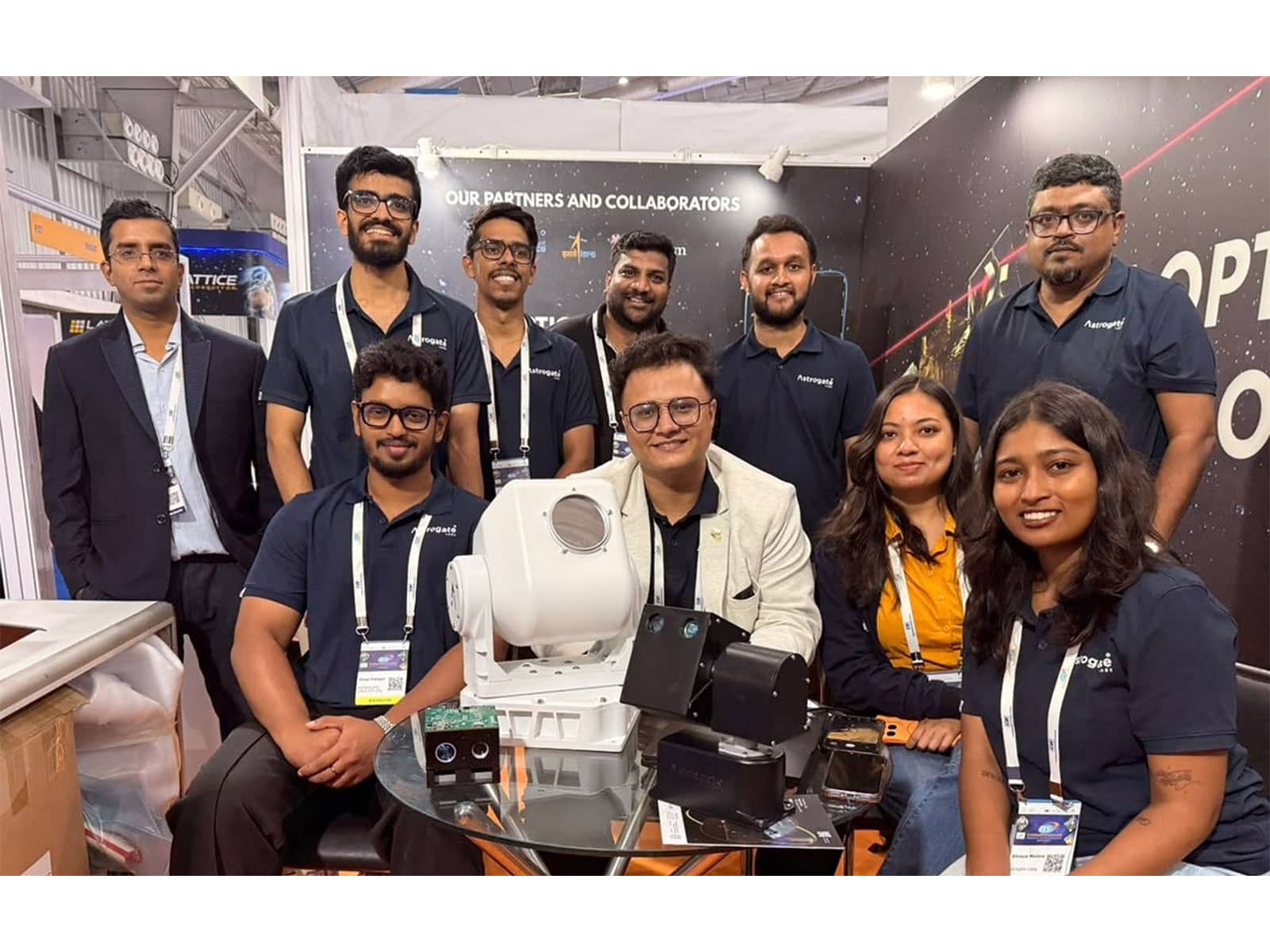
- Bengaluru-based deep-tech company Astrogate Labs has announced the development of what it describes as India’s first indigenous Optical Inter-Satellite Link (OISL) terminal.
- The OISL terminal will enable direct satellite-to-satellite communication using laser beams, reducing dependence on ground stations for transferring data across satellite constellations.
- The company is targeting flight readiness by 2027.
- At the 9th Bengaluru Space Expo (BSX 2026), Astrogate also demonstrated AstroLink Micro, its separate 10 Gbps space-to-ground laser communication terminal.
- Astrogate has previously supplied an indigenous satellite-to-ground laser communication terminal to ISRO.
What is an Optical Inter-Satellite Link (OISL)?
- An OISL establishes a direct optical communication link between satellites using laser beams instead of conventional radio-frequency (RF) signals.
- Satellites can relay data between themselves before transmitting it to an appropriate ground station.
- OISLs are particularly useful for large Low Earth Orbit (LEO) satellite constellations, where satellites continuously move relative to Earth and one another.
- They can enable:
- High-bandwidth data transmission
- Low-latency communication
- Reduced dependence on terrestrial ground stations
- More efficient routing of data across satellite constellations
- Highly directional communication links with lower interference and interception exposure than broad RF transmissions.
Key Technologies
Astrogate’s OISL system builds on components developed for its earlier space-to-ground optical communication terminals.
Major components include:
- Pointing, Acquisition and Tracking (PAT) System
- Detects and precisely tracks another satellite.
- Essential because laser beams are extremely narrow and satellites move at high relative velocities.
- Optical Modem
- Converts digital information into optical signals for laser-based transmission and receives incoming optical data.
- Stabilised Coarse-Tracking Gimbals
- Orient the optical terminal towards the target satellite despite spacecraft movement.
- System-Level Integration
- Integrates tracking, optics, communication electronics and spacecraft interfaces into a functional terminal.
AstroLink Micro
- AstroLink Micro is Astrogate Labs’ 10 Gbps space-to-ground laser communication terminal.
- It was demonstrated at Bengaluru Space Expo 2026.
- It should be distinguished from the new OISL terminal:
- AstroLink Micro: Satellite ↔ Ground communication
- OISL Terminal: Satellite ↔ Satellite communication
- Astrogate’s existing space-to-ground optical terminals have achieved Technology Readiness Level 8 (TRL 8), indicating that the system has been completed and qualified for flight.
Why Optical Communication?
Traditional satellite communication primarily relies on the radio-frequency spectrum. However, rapidly growing satellite constellations and increasing volumes of Earth-observation and communication data are placing pressure on available bandwidth.
Free Space Optical Communication (FSOC) addresses this by transmitting information through light propagating through free space.
Advantages
- Much higher potential data capacity
- Narrow and highly directional beams
- Lower susceptibility to RF interference
- Reduced pressure on increasingly congested RF spectrum
- Suitable for high-volume satellite data transmission
- Enables creation of optical mesh networks in space
For example, large LEO constellations can use inter-satellite laser links to route data across multiple satellites before sending it to a ground station located closer to its final destination.
Strategic Significance for India
- Space Technology Self-Reliance
- Indigenous development reduces dependence on imported high-end optical communication systems.
- Future Satellite Constellations
- OISLs can become a critical communication backbone for future Indian LEO constellations.
- Defence Applications
- Astrogate is targeting sovereign defence constellations as one of the potential markets for the technology.
- Satellite Backhaul
- Satellites can relay large volumes of data through an orbital network before transmitting it to Earth.
- Orbital Computing
- High-speed inter-satellite links could connect future computing and data-processing infrastructure deployed in orbit.
- Private Space Ecosystem
- The development reflects the growing role of Indian private companies and start-ups in strategically important space technologies beyond launch vehicles and satellite manufacturing.
Additional Info
- Technology Readiness Level (TRL)
- TRL is a framework used to assess the maturity of a technology.
- It ranges broadly from early-stage scientific concepts to fully operational systems.
- TRL 8 indicates that the actual system has been completed and qualified for its intended operational environment.
- International Interoperability
- Astrogate has completed cross-compatibility testing of its space-to-ground technology with the University of Western Australia’s TeraNet mobile optical ground station.
- The testing demonstrated interoperability with international optical ground infrastructure.
- Astrogate Labs
- Headquarters: Bengaluru, Karnataka
- Works on Free Space Optical Communication systems for space and defence applications.
- Its technologies include proprietary PAT systems, optical modems and associated optical communication subsystems.
- It also has an office in Durham, England.
- Low Earth Orbit (LEO)
- Generally extends from about 160 km to 2,000 km above Earth.
- Frequently used for Earth observation and increasingly for large broadband satellite constellations because of relatively low communication latency.
Sources
Seoul Hosts 27th World Knowledge Forum on AI and Co-Intelligence

What’s the News?
- Seoul, South Korea, is hosting the 27th World Knowledge Forum (WKF) at Jangchung Arena and The Shilla Seoul.
- The forum brings together political leaders, scientists, technology experts, academics and business executives to discuss the impact of Artificial Intelligence (AI) on economies, governance, geopolitics and society.
- The theme is “The Promethean Moment: Architecting the Co-Intelligence Order.”
- Former UK Prime Minister David Cameron delivered the opening special address, while Cho Jeong-sik, Speaker of South Korea’s National Assembly, highlighted the need to ensure that AI enhances human potential rather than replacing it.
Theme: The Promethean Moment
- The theme draws from Prometheus in Greek mythology, who gave fire to humanity.
- AI is compared to the “fire of the 21st century” because it can transform civilisation while creating significant risks if poorly governed.
- The forum examines how humans and AI can develop a Co-Intelligence Order, in which:
- Humans use AI to enhance reasoning and capabilities.
- AI operates within ethical and social norms established by humans.
- Technological advancement remains aligned with human dignity and coexistence.
Five Knowledge Pillars
Discussions at the forum are structured around five major pillars:
- Power – AI's implications for geopolitics, national security and global influence.
- Capital – Transformation of industries, investment and economic systems.
- Intelligence – Human-AI collaboration, innovation and emerging technologies.
- Planet – Application of technology to environmental and sustainability challenges.
- Humanity – Employment, inequality, ethics, dignity and social consequences of AI.
Issues Discussed
- AI and Employment
- Rapid AI adoption may cause job displacement and widen economic inequality.
- Policymakers emphasised using AI to augment human capabilities rather than merely replacing workers.
- AI Diffusion
- Chang Dae-whan, Chairman of Maekyung Media Group, argued that the strategic advantage from AI will depend not merely on invention but on its widespread adoption across society.
- He advocated an “AI Native Korea”, where AI becomes widely accessible and routinely used by citizens.
- Geopolitics and Economic Security
- David Cameron highlighted the linkage between national security and economic security.
- Discussions addressed geopolitical instability, political polarisation, economic disruption and the need for resilient international partnerships.
- Emerging Technologies
- Sessions also cover areas such as quantum computing, cybersecurity, personal AI and augmented-reality technologies.
World Knowledge Forum
- The World Knowledge Forum is a major international knowledge-sharing platform based in South Korea.
- It was established in 2000, following the Asian Financial Crisis, with the objective of promoting a knowledge-driven economy and reducing global knowledge gaps.
- The inaugural forum was held under the theme “Shaping the New Millennium with Knowledge.”
- Since its inception, approximately:
- 6,303 global speakers and
- 69,509 participants have participated in the forum.
- Previous speakers have included Bill Gates, George W. Bush, Nicolas Sarkozy, Paul Krugman, Michael Porter and former World Bank President Jim Yong Kim.
Additional Info
- Co-Intelligence
- Refers to a framework of human-AI collaboration, rather than competition between human and machine intelligence.
- Humans retain normative and ethical control while AI expands analytical and productive capabilities.
- AI Governance
- Major policy concerns associated with rapid AI adoption include:
- Employment disruption
- Algorithmic bias
- Privacy and data protection
- Cybersecurity
- Concentration of technological power
- National-security risks
- Accountability for automated decisions
- Major policy concerns associated with rapid AI adoption include:
Sources
International Literacy Day 2026: Literacy for People, Planet and Prosperity

What’s the News?
- International Literacy Day (ILD) is observed annually on 8 September.
- The 2026 observance marks the 60th anniversary of International Literacy Day.
- The 2026 theme is “Literacy for people, the planet and prosperity.”
- UNESCO organised the global celebration in Chiapas, Mexico, in collaboration with the Government of Mexico, bringing together education ministers, educators, learners, international organisations and civil society.
- The event also included the presentation of the 2026 UNESCO International Literacy Prizes.
2026 Theme
“Literacy for people, the planet and prosperity” links literacy with three dimensions:
- People
- Promotes inclusion, equality and participation.
- Enables individuals to access information, exercise rights and participate effectively in society.
- Planet
- Improves understanding of climate change, environmental risks and sustainable practices.
- Helps communities make informed decisions concerning natural resources and environmental protection.
- Prosperity
- Improves access to education, employment and skills.
- Supports productivity, livelihoods and inclusive economic development.
Global Literacy Challenge
Despite substantial progress, major literacy gaps persist:
- Around 739 million youth and adults worldwide lack basic literacy skills.
- 63% of them are women.
- More than 77% of non-literate youth and adults live in:
- Southern Asia: about 347 million
- Sub-Saharan Africa: about 225 million
- Around 4 in 10 students do not achieve minimum reading proficiency by the end of primary education.
- About 273 million children and youth remain out of school globally.
UNESCO International Literacy Prizes 2026
Six initiatives received UNESCO's two international literacy awards.
UNESCO King Sejong Literacy Prize
Supported by the Republic of Korea, it promotes mother-tongue and multilingual literacy.
2026 awardees:
- Escuelas LEO Programme – Colombia
- Language Friendly School – Kingdom of the Netherlands
- Project PAL (Primary Accelerated Literacy) – Nigeria
UNESCO Confucius Prize for Literacy
Supported by China, it focuses on functional literacy, particularly for rural adults and out-of-school youth, including the use of technology.
2026 awardees:
- Accelerated Education for Out-of-school Displaced Youth – Lebanon
- Chiapas Puede State Literacy Programme – Mexico
- Language for Life – Thailand
Each laureate receives US$30,000, a medal and a diploma. UNESCO's international literacy prizes have recognised more than 600 individuals, institutions and organisations since 1967.
Literacy Initiatives in India
ULLAS – Nav Bharat Saaksharta Karyakram
- ULLAS: Understanding of Lifelong Learning for All in Society.
- Also known as the New India Literacy Programme (NILP).
- It is a Centrally Sponsored Scheme implemented from FY 2022-23 to 2026-27.
- Target group: Non-literate persons aged 15 years and above who missed formal schooling.
- Total outlay: ₹1,037.90 crore
- Central share: ₹700 crore
- State share: ₹337.90 crore
- Aligned with National Education Policy (NEP) 2020.
- Operates largely through volunteerism and community participation and uses both online and offline learning.
Five Components of ULLAS
- Foundational Literacy and Numeracy
- Critical Life Skills
- Basic Education
- Vocational Skills
- Continuing Education
India's literacy rate increased from about 74% in Census 2011 to 80.9% in 2023-24. The Government's literacy strategy increasingly includes digital literacy, financial literacy and lifelong learning, rather than limiting literacy to basic reading and writing.
Additional Info
- History of International Literacy Day
- UNESCO proclaimed International Literacy Day at its 14th General Conference in 1966.
- It was first observed in 1967.
- The observance highlights literacy as a fundamental human right and a foundation for lifelong learning and sustainable development.
- Sustainable Development Goal
- Literacy is directly linked with SDG 4 – Quality Education.
- SDG Target 4.6: Ensure that all youth and a substantial proportion of adults, both men and women, achieve literacy and numeracy.
- UNESCO
- Full form: United Nations Educational, Scientific and Cultural Organization.
- It is a specialised agency of the United Nations dealing with education, science, culture and communication.
- Headquarters: Paris, France.
Sources
September 2026
Archive
October 2026
- 28 October 2026
- 27 October 2026
- 26 October 2026
- 24 October 2026
- 23 October 2026
- 22 October 2026
- 21 October 2026
- 20 October 2026
- 19 October 2026
- 17 October 2026
- 16 October 2026
- 15 October 2026
- 14 October 2026
- 13 October 2026
- 12 October 2026
- 10 October 2026
- 09 October 2026
- 08 October 2026
- 07 October 2026
- 06 October 2026
- 05 October 2026
- 03 October 2026
- 02 October 2026
- 01 October 2026
September 2026
- 30 September 2026
- 29 September 2026
- 28 September 2026
- 26 September 2026
- 25 September 2026
- 24 September 2026
- 23 September 2026
- 22 September 2026
- 21 September 2026
- 19 September 2026
- 18 September 2026
- 17 September 2026
- 16 September 2026
- 15 September 2026
- 12 September 2026
- 11 September 2026
- 10 September 2026
- 09 September 2026
- 08 September 2026
- 07 September 2026
- 05 September 2026
- 04 September 2026
- 03 September 2026
- 02 September 2026
- 01 September 2026
August 2026
- 31 August 2026
- 29 August 2026
- 27 August 2026
- 26 August 2026
- 25 August 2026
- 24 August 2026
- 22 August 2026
- 21 August 2026
- 20 August 2026
- 19 August 2026
- 18 August 2026
- 17 August 2026
- 14 August 2026
- 13 August 2026
- 12 August 2026
- 11 August 2026
- 10 August 2026
- 08 August 2026
- 07 August 2026
- 06 August 2026
- 05 August 2026
- 04 August 2026
- 03 August 2026
- 01 August 2026
July 2026
- 31 July 2026
- 30 July 2026
- 29 July 2026
- 28 July 2026
- 27 July 2026
- 25 July 2026
- 23 July 2026
- 22 July 2026
- 21 July 2026
- 20 July 2026
- 18 July 2026
- 17 July 2026
- 15 July 2026
- 14 July 2026
- 13 July 2026
- 11 July 2026
- 10 July 2026
- 09 July 2026
- 08 July 2026
- 07 July 2026
- 06 July 2026
- 04 July 2026
- 03 July 2026
- 02 July 2026
- 01 July 2026
June 2026
May 2026
April 2026
March 2026
- 31 March 2026
- 30 March 2026
- 28 March 2026
- 27 March 2026
- 26 March 2026
- 25 March 2026
- 24 March 2026
- 23 March 2026
- 21 March 2026
- 20 March 2026
- 19 March 2026
- 18 March 2026
- 17 March 2026
- 16 March 2026
- 14 March 2026
- 13 March 2026
- 12 March 2026
- 11 March 2026
- 10 March 2026
- 09 March 2026
- 07 March 2026
- 06 March 2026
- 05 March 2026
- 03 March 2026
- 02 March 2026
February 2026
- 28 February 2026
- 27 February 2026
- 26 February 2026
- 25 February 2026
- 24 February 2026
- 23 February 2026
- 21 February 2026
- 20 February 2026
- 19 February 2026
- 18 February 2026
- 17 February 2026
- 16 February 2026
- 13 February 2026
- 12 February 2026
- 11 February 2026
- 10 February 2026
- 09 February 2026
- 07 February 2026
- 06 February 2026
- 05 February 2026
- 04 February 2026
- 03 February 2026
- 02 February 2026
January 2026
- 31 January 2026
- 30 January 2026
- 29 January 2026
- 28 January 2026
- 27 January 2026
- 26 January 2026
- 24 January 2026
- 23 January 2026
- 22 January 2026
- 21 January 2026
- 20 January 2026
- 19 January 2026
- 16 January 2026
- 15 January 2026
- 14 January 2026
- 13 January 2026
- 12 January 2026
- 10 January 2026
- 09 January 2026
- 08 January 2026
- 07 January 2026
- 06 January 2026
- 05 January 2026
- 03 January 2026
- 02 January 2026
- 01 January 2026
December 2025
- 31 December 2025
- 30 December 2025
- 29 December 2025
- 27 December 2025
- 26 December 2025
- 24 December 2025
- 23 December 2025
- 22 December 2025
- 20 December 2025
- 19 December 2025
- 18 December 2025
- 17 December 2025
- 16 December 2025
- 15 December 2025
- 13 December 2025
- 12 December 2025
- 11 December 2025
- 10 December 2025
- 09 December 2025
- 08 December 2025
- 05 December 2025
- 04 December 2025
- 03 December 2025
- 02 December 2025
November 2025
- 29 November 2025
- 28 November 2025
- 27 November 2025
- 26 November 2025
- 25 November 2025
- 24 November 2025
- 22 November 2025
- 21 November 2025
- 20 November 2025
- 19 November 2025
- 18 November 2025
- 17 November 2025
- 15 November 2025
- 14 November 2025
- 13 November 2025
- 12 November 2025
- 11 November 2025
- 10 November 2025
- 08 November 2025
- 07 November 2025
- 06 November 2025
- 05 November 2025
- 04 November 2025
- 03 November 2025
- 01 November 2025
October 2025
- 31 October 2025
- 30 October 2025
- 29 October 2025
- 28 October 2025
- 27 October 2025
- 25 October 2025
- 24 October 2025
- 23 October 2025
- 22 October 2025
- 21 October 2025
- 20 October 2025
- 18 October 2025
- 17 October 2025
- 16 October 2025
- 15 October 2025
- 14 October 2025
- 13 October 2025
- 11 October 2025
- 10 October 2025
- 09 October 2025
- 08 October 2025
- 07 October 2025
- 06 October 2025
- 04 October 2025
- 03 October 2025
- 02 October 2025
- 01 October 2025
September 2025
- 30 September 2025
- 29 September 2025
- 27 September 2025
- 26 September 2025
- 25 September 2025
- 24 September 2025
- 23 September 2025
- 22 September 2025
- 20 September 2025
- 19 September 2025
- 18 September 2025
- 17 September 2025
- 16 September 2025
- 15 September 2025
- 13 September 2025
- 12 September 2025
- 11 September 2025
- 10 September 2025
- 09 September 2025
- 08 September 2025
- 06 September 2025
- 05 September 2025
- 04 September 2025
- 03 September 2025
- 02 September 2025
- 01 September 2025
August 2025
- 30 August 2025
- 29 August 2025
- 28 August 2025
- 27 August 2025
- 26 August 2025
- 25 August 2025
- 23 August 2025
- 22 August 2025
- 21 August 2025
- 20 August 2025
- 19 August 2025
- 18 August 2025
- 16 August 2025
- 14 August 2025
- 13 August 2025
- 12 August 2025
- 11 August 2025
- 08 August 2025
- 07 August 2025
- 06 August 2025
- 05 August 2025
- 04 August 2025
- 02 August 2025
- 01 August 2025
July 2025
- 31 July 2025
- 30 July 2025
- 29 July 2025
- 28 July 2025
- 26 July 2025
- 25 July 2025
- 24 July 2025
- 23 July 2025
- 22 July 2025
- 21 July 2025
- 19 July 2025
- 18 July 2025
- 17 July 2025
- 16 July 2025
- 15 July 2025
- 12 July 2025
- 11 July 2025
- 10 July 2025
- 09 July 2025
- 07 July 2025
- 05 July 2025
- 04 July 2025
- 03 July 2025
- 02 July 2025
- 01 July 2025
June 2025
- 30 June 2025
- 28 June 2025
- 27 June 2025
- 26 June 2025
- 25 June 2025
- 24 June 2025
- 23 June 2025
- 21 June 2025
- 20 June 2025
- 19 June 2025
- 18 June 2025
- 17 June 2025
- 16 June 2025
- 14 June 2025
- 13 June 2025
- 12 June 2025
- 11 June 2025
- 10 June 2025
- 09 June 2025
- 07 June 2025
- 06 June 2025
- 05 June 2025
- 04 June 2025
- 03 June 2025
- 02 June 2025
May 2025
April 2025
- 30 April 2025
- 29 April 2025
- 28 April 2025
- 26 April 2025
- 25 April 2025
- 24 April 2025
- 23 April 2025
- 22 April 2025
- 21 April 2025
- 19 April 2025
- 18 April 2025
- 17 April 2025
- 16 April 2025
- 15 April 2025
- 14 April 2025
- 12 April 2025
- 11 April 2025
- 10 April 2025
- 09 April 2025
- 08 April 2025
- 07 April 2025
- 05 April 2025
- 04 April 2025
- 03 April 2025
- 02 April 2025
- 01 April 2025
March 2025
- 31 March 2025
- 29 March 2025
- 28 March 2025
- 27 March 2025
- 26 March 2025
- 25 March 2025
- 24 March 2025
- 22 March 2025
- 21 March 2025
- 20 March 2025
- 19 March 2025
- 18 March 2025
- 17 March 2025
- 15 March 2025
- 13 March 2025
- 12 March 2025
- 11 March 2025
- 10 March 2025
- 08 March 2025
- 07 March 2025
- 06 March 2025
- 05 March 2025
- 04 March 2025
- 03 March 2025
- 01 March 2025
February 2025
- 28 February 2025
- 27 February 2025
- 26 February 2025
- 25 February 2025
- 24 February 2025
- 22 February 2025
- 21 February 2025
- 20 February 2025
- 19 February 2025
- 18 February 2025
- 17 February 2025
- 15 February 2025
- 14 February 2025
- 13 February 2025
- 12 February 2025
- 11 February 2025
- 10 February 2025
- 08 February 2025
- 07 February 2025
- 06 February 2025
- 05 February 2025
- 04 February 2025
- 03 February 2025
- 01 February 2025
January 2025
- 31 January 2025
- 30 January 2025
- 29 January 2025
- 28 January 2025
- 27 January 2025
- 25 January 2025
- 24 January 2025
- 23 January 2025
- 22 January 2025
- 21 January 2025
- 20 January 2025
- 18 January 2025
- 17 January 2025
- 16 January 2025
- 15 January 2025
- 14 January 2025
- 13 January 2025
- 11 January 2025
- 10 January 2025
- 09 January 2025
- 08 January 2025
- 07 January 2025
- 06 January 2025
- 04 January 2025
- 03 January 2025
- 02 January 2025
- 01 January 2025