
Current Affairs
Stay updated with the latest national and international events.
08 May 2026
NITI Aayog Releases Comprehensive Report on School Education System in India
What’s the News?
- NITI Aayog has released a policy report titled “School Education System in India: Temporal Analysis and Policy Roadmap for Quality Enhancement”.
- The report presents a decade-long analysis (2014-15 to 2024-25) of India’s school education, using data from UDISE+, PARAKH, NAS, and ASER.
- It provides a strategic roadmap to improve quality and equity, aligning with the Viksit Bharat @2047 vision.
- The report highlights near-universal primary enrolment but warns of sharp dropouts at secondary level, weak learning outcomes, and structural inefficiencies.
Findings of the Report
- Scale: India has the world’s largest school system with 14.71 lakh schools and 24.69 crore students, supported by 1.01 crore teachers.
- Enrolment & Dropout Trends:
- Gross Enrolment Ratio (GER) is 90.9% at primary and 90.3% at upper primary level, but drops to 78.7% at secondary and 58.4% at higher secondary.
- Secondary dropout rate is 11.5% nationally, significantly higher than the primary rate of 0.3%.
- Infrastructure Gains:
- Functional electricity in schools improved from 55.96% (2014-15) to 91.9% (2024-25).
- Internet connectivity surged from 8.05% to 63.5% in the same period.
- Learning Crisis:
- Nearly 50% of Grade 5 children in rural India cannot read a Grade-2 level text (ASER 2024).
- Many teachers struggle with subject knowledge; only 10-15% of CTET/TET candidates score above 60% qualifying threshold.
- Privatization Shift: Government school enrolment has fallen from 71% (2005) to 49.24% (2024-25), while private unaided schools now enroll 38.8% of students.
- Fragmented Structure: Only ~5% of schools offer continuous schooling from Grades 1 to 12.
- Small & Single-Teacher Schools:
- Over one-third of schools have fewer than 50 students.
- 1.04 lakh schools (7% of total) operate with just one teacher.
- Teacher Vacancies: Bihar alone reports over 2.08 lakh elementary-level teacher vacancies.
Challenges Identified
- Fragmented Schooling Structure: The pyramidal distribution of schools (7.3 lakh primary vs. only 1.64 lakh higher secondary) forces students to change schools frequently, leading to dropouts.
- High Secondary Dropout Rate: Financial constraints, early workforce entry, and social pressures impede progression after Grade 10.
- Weak Learning Outcomes: Rote-based pedagogy prioritizes textbook completion over conceptual understanding.
- Inequitable Digital Access: While Chandigarh has functional smart classrooms in >95% of schools, Meghalaya has <5%.
- Teacher Quality & Non-Academic Burden: Teachers lose ~14% of planned teaching days to non-academic work like election duties and surveys.
- Low-Fee Private School Underperformance: 35% of Class 5 students in such schools cannot read a Class 2 textbook; 60% cannot solve a basic division problem.
Recommendations of NITI Aayog
- Structural Reform: Move towards Composite Schools (Grades 1-12) and evidence-based rationalization of small schools.
- Governance Enhancement: Establish independent State School Standards Authorities (SSSAs) to monitor safety, infrastructure, and learning quality.
- Teacher Development: Create structured career pathways (Senior → Master → Mentor Teacher) and free teachers from non-teaching duties.
- Pedagogical Transformation: Shift from textbook completion to competency-based assessments and Teaching at the Right Level (TaRL).
- Inclusive & Digital Learning: Expand digital and broadcast-based education, support children with special needs and migrant populations.
- AI Integration: Introduce AI literacy from upper primary onwards, with safeguards against overuse.
- Implementation Framework: The report proposes 33 implementation pathways across short, medium, and long-term timelines, tracked by 125+ measurable indicators.
- Overarching Vision: Calls for a “Sushikshit Bharat Abhiyaan” — a system-wide transformation rather than piecemeal reforms.
Additional Info
- Historical Context:
- Ancient Gurukul system evolved into a colonial model focused on clerical and English-medium proficiency.
- Post-independence milestones: Mudaliar Commission (1952) and Kothari Commission (1964-66) laid the constitutional foundation for free and universal education.
- Sarva Shiksha Abhiyan (2001) and Right to Education (RTE) Act 2009 made elementary education a justiciable right.
- Samagra Shiksha (2018) integrated pre-primary, elementary, and secondary education into a single framework.
- National Education Policy (NEP) 2020 introduced the 5+3+3+4 curricular structure aligned with developmental stages.
- Constitutional Provisions:
- Article 21A: Right to free and compulsory education for children aged 6-14 years (inserted by 86th Amendment, 2002).
- Article 45: Provision for early childhood care and education to children below the age of six years.
- Article 46: Promotion of educational and economic interests of SCs, STs, and other weaker sections.
- Related Initiatives:
- NIPUN Bharat Mission: Aimed at achieving foundational literacy and numeracy by 2026-27.
- PARAKH (Performance Assessment, Review, and Analysis of Knowledge for Holistic Development): A national assessment regulator under NEP 2020.
- SATH-E (Sustainable Action for Transforming Human Capital-Education): A NITI Aayog program supporting states in school education transformation.
Sources
Centre Launches Free Annual Health Check-Up Scheme for Workers Above 40

What’s the News?
- The Union Labour Ministry launched a free annual health check-up scheme for all workers aged 40 and above, to be conducted through the Employees’ State Insurance Corporation (ESIC) network.
- The initiative is a key component of the new Labour Codes, specifically the Code on Social Security, 2020.
- The launch event was presided over by Union Labour Minister Mansukh Mandaviya at the ESIC Medical College & Hospital, Basaidarapur, Delhi, with simultaneous rollouts at 11 other ESIC hospitals nationwide.
Scheme Framework & Coverage
- Eligibility: All insured workers aged 40 and above, as well as workers in hazardous occupations (chemical handling, toxic substance exposure, heavy machinery operations) irrespective of their age, who will undergo mandatory check-ups.
- Implementing Body: The scheme operates through ESIC hospitals and affiliated facilities as part of the social security framework under the Code on Social Security, 2020.
- Services Provided: Annual health screenings will focus on early detection and treatment of Non-Communicable Diseases (NCDs). Tests include diabetes screening, blood pressure measurement, cholesterol testing, anaemia testing, ECG, and chest X-ray.
- Follow-up Care: Any treatment and medicines required based on the screening results will be provided free of cost through ESIC facilities.
Social Security Context
- Expanded Coverage: Under the present government, social security coverage in India has expanded from approximately 30 crore beneficiaries a decade ago to 94 crore today. ESIC coverage alone has grown from 7 crore to nearly 15 crore beneficiaries in the same period.
- Labour Code Reforms: This scheme is aligned with the Shramev Jayate framework. The new Labour Codes also introduce progressive measures such as:
- Equal wages for men and women workers.
- Increased maternity leave (from 12 weeks to 26 weeks) and work-from-home provisions for women.
- Extension of ESIC benefits to gig workers and employees in establishments with fewer than 10 workers.
Additional Info
- The Code on Social Security, 2020: One of the four major Labour Codes in India, it subsumes nine existing central labour laws to universalize social security. The other three codes are the Code on Wages, the Industrial Relations Code, and the Occupational Safety, Health and Working Conditions Code.
- Employees’ State Insurance Corporation (ESIC): A statutory body under the Ministry of Labour and Employment that provides socio-economic protection to workers and their dependents against sickness, maternity, disablement, and death due to employment injury.
- Shramev Jayate: A broad government framework aimed at labour welfare, including initiatives like the 'Shram Suvidha' portal, universal account numbers for Provident Fund, and various skill development schemes.
Sources
DRDO and IAF Successfully Conduct Maiden Flight Trial of TARA Glide Weapon

What’s the News?
- The Defence Research and Development Organisation (DRDO) and the Indian Air Force (IAF) successfully conducted the maiden flight trial of the Tactical Advanced Range Augmentation (TARA) weapon system.
- The trial took place off the coast of Odisha, deploying the weapon from a Jaguar combat aircraft.
- TARA is India’s first indigenous glide weapon system, marking a milestone towards indigenization under the Atmanirbhar Bharat initiative.
TARA Weapon System
- What is TARA?
- It is a modular range extension kit designed to be fitted onto existing unguided warheads, transforming them into advanced precision-guided munitions.
- As a glide weapon, it uses aerodynamic lift to extend its range significantly after being released from an aircraft, allowing it to function as a stand-off weapon.
- Developed By:
- Research Centre Imarat (RCI), Hyderabad, in collaboration with other DRDO laboratories and Indian industry partners under the Development cum Production Partners (DcPP) model.
- Primary Objectives:
- To provide a low-cost solution for enhancing the lethality and accuracy of existing unguided munitions against ground-based targets.
- To enable precise strikes while reducing collateral damage and improving mission success rates.
- Features:
- Indigenous Glide System: The first weapon system of its kind developed entirely within India.
- Modular Design: The kit can be easily integrated with a variety of unguided warheads.
- Precision Guidance: Utilizes state-of-the-art guidance, navigation, and control architecture for accurate target acquisition after release.
- Cost-Effectiveness: Built using low-cost systems to enable the deployment of advanced precision capabilities at scale without prohibitive expenses.
- Trial Validations:
- Successfully validated the aerodynamic performance of the winged glide configuration.
- Confirmed the weapon's navigation, guidance, and control architecture during the flight.
- Production activities for the system have already commenced.
Additional Info
- Defence Research and Development Organisation (DRDO):
- Established in 1958, headquartered in New Delhi.
- Functions under the Ministry of Defence.
- Mandated to design and develop leading-edge defence technology and systems for the Indian Armed Forces.
- Related Organisations & Platforms:
- Research Centre Imarat (RCI), Hyderabad: A premier DRDO laboratory involved in the development of advanced missile systems, avionics, and navigation technologies.
- Development cum Production Partners (DcPP): A DRDO model where development partners are selected early to engage in the production process, facilitating a seamless transition from design to manufacturing.
- Jaguar Aircraft: A twin-engine, ground-attack aircraft used by the IAF, originally of Anglo-French origin, and now a mainstay for deep penetration strike missions.
Sources
India Successfully Conducts Maiden Test of Nuclear-Capable Intercontinental Ballistic Missile (ICBM)
What’s the News?
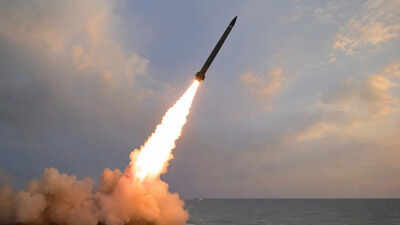
- India successfully conducted the maiden flight test of a nuclear-capable Intercontinental Ballistic Missile (ICBM).
- The test was carried out by the Defence Research and Development Organisation (DRDO).
- The launch took place from Abdul Kalam Island, a missile test facility off the coast of Odisha.
- This test marks a pivotal advancement in India's strategic defense capabilities, potentially positioning it among an elite group of nations with long-range strike abilities.
Intercontinental Ballistic Missile (ICBM)
- Definition: An ICBM is a long-range ballistic missile with a minimum range exceeding 5,500 km, designed primarily to deliver nuclear warheads over intercontinental distances.
- Technology: ICBM technology represents the pinnacle of missile engineering, demonstrating a nation's mastery over complex rocket propulsion, advanced guidance systems, and reliable re-entry vehicle technology to deliver a payload precisely from space to its terrestrial target.
- Classification: Ballistic missiles are classified by their range:
- Short-Range Ballistic Missile (SRBM)
- Medium-Range Ballistic Missile (MRBM)
- Intermediate-Range Ballistic Missile (IRBM)
- Intercontinental Ballistic Missile (ICBM): Range > 5,500 km.
Details of the Test
- Location & Date: The missile was launched from Abdul Kalam Island (formerly Wheeler Island) on the Odisha coast.
- Test Corridor: The launch involved a notified danger corridor spanning approximately 3,560 km over the Bay of Bengal.
- Safety Measures: A Notice to Airmen (NOTAM) was issued for the Bay of Bengal region prior to the launch, restricting airspace temporarily to ensure safety.
- Missile Identity: While the missile tested is confirmed to be in the ICBM class, DRDO has not officially named the specific system. Sources indicate the configuration tested is distinct from the much-discussed Agni-6 missile, though it belongs to the same strategic category.
India's Indigenous Missile Programme
- Agni Missile Series: India's strategic missile program is built around the Agni series of ballistic missiles, developed indigenously by DRDO.
- Agni-I: SRBM, range ~700 km.
- Agni-II: MRBM, range ~2,000 km.
- Agni-III: IRBM, range ~3,500 km.
- Agni-IV: IRBM, range ~4,000 km.
- Agni-V: ICBM, range ~5,500 km.
- Agni-6: Under development, expected range >10,000 km, expected to feature Multiple Independently Targetable Re-entry Vehicle (MIRV) technology.
- DRDO's Readiness: DRDO Chairman Samir V Kamath previously stated that all technical preparations for an Agni-6 class missile are complete, and the organization is ready to proceed as soon as government approval is given.
Additional Info
- Agni-6 Anticipated Capabilities: The Agni-6 is expected to be a next-generation ICBM with a strike range of over 10,000 km and the capability to carry MIRV warheads, allowing a single missile to engage multiple targets independently.
- Nuclear Command Authority (NCA): India's nuclear arsenal is governed by the NCA, which comprises a Political Council and an Executive Council. It is the sole body responsible for authorizing a nuclear strike.
- Integrated Test Range (ITR): Abdul Kalam Island serves as the primary test facility for India's missile launches, managed by DRDO.
- Related Development: The ICBM test closely follows another significant DRDO achievement—the maiden flight trial of the Tactical Advanced Range Augmentation (TARA) glide weapon system, successfully tested on the day prior, highlighting a sustained push for indigenous defense innovation.
Sources
Odisha Emerges as Top Performer in PMAY-U 2.0 Housing Completions Nationwide

What’s the News?
- Odisha has emerged as the top-performing state in India for house completions under the Pradhan Mantri Awas Yojana-Urban (PMAY-U) 2.0.
- The state consistently held the first rank in house completion performance from March 2025 to March 2026.
- Housing and Urban Development Minister Krushna Chandra Mahapatra has directed officials to further expedite construction while adhering to quality standards for timely beneficiary delivery.
PMAY-U 2.0: Scheme Overview
- PMAY-U 2.0, the urban housing phase, was launched in September 2024 as a Central Sector Scheme.
- Objective: To provide pucca houses to eligible urban poor and middle-income families, aligned with the vision of "Housing for All".
- Technology-Driven Monitoring: The scheme leverages geo-tagging to record construction site locations, foundation tracking, and completion monitoring for field-level implementation.
- Implementing Agencies: The Housing and Urban Development Department and Urban Local Bodies (ULBs) are the primary agencies executing urban housing projects.
Odisha’s Performance
- Total Houses Sanctioned: 24,625 units under PMAY-U 2.0 in Odisha.
- Geo-tagged Sites: 23,464 proposed sites geo-tagged as of May 2026, ensuring transparent beneficiary and location tracking.
- Foundation Work Initiated: 3,134 houses had foundation work started by May 5, 2026.
- Houses Completed: 2,008 houses were fully completed by the same date, with remaining units at various construction stages.
- The state's performance is attributed to effective coordination between the Housing and Urban Development Department and urban local bodies, coupled with rigorous field-level implementation monitoring.
Additional Info
- Pradhan Mantri Awas Yojana (PMAY):
- PMAY-Urban (PMAY-U): Launched in 2015, the original scheme aimed to construct over 1 crore houses. PMAY-U 2.0 continues this mission with enhanced mechanisms.
- PMAY-Gramin (PMAY-G): The rural counterpart aimed at replacing kutcha houses with pucca dwellings.
- Central Sector Scheme vs. Centrally Sponsored Scheme:
- A Central Sector Scheme is 100% funded by the Union Government, while a Centrally Sponsored Scheme involves a cost-sharing formula between the Centre and States.
- Technology in Governance:
- Geo-tagging is widely used in government schemes (e.g., MGNREGA, PMAY-G) to verify asset creation, ensure transparency, and prevent leakages.
- Urban Local Bodies (ULBs):
- Function as the grassroots implementing agencies for urban schemes under the 74th Constitutional Amendment Act, 1992, which provides for the constitution of Municipalities.
Sources
UNCTAD Report Flags Rising Cost of Non-Tariff Barriers, Outweighing Tariffs for 88% of Countries

What’s the News?
- The United Nations Conference on Trade and Development (UNCTAD) released its May 2026 Global Trade Update, titled “Invisible Barriers: The Costs of Non-Tariff Measures”.
- The report finds that non-tariff measures (NTMs) now impose higher trade costs than tariffs for 88% of countries globally.
- It highlights that developing economies face a “double burden” of rising tariffs and disproportionately high compliance costs of complex regulations.
- The report was released amidst rising trade fragmentation following the COVID-19 pandemic, the Russia-Ukraine conflict, and recent tariff increases initiated by the United States in 2025.
Findings of the Report
- Dominance of NTMs over Tariffs:
- NTMs impose greater export costs than traditional customs duties for nearly 9 out of 10 countries.
- This trend continues despite a sharp rise in global tariffs, which increased by 10% for developed countries, 16% for developing countries, and 18% for Least Developed Countries (LDCs) in 2025.
- Asymmetric Impact on Developing Countries:
- LDCs lose approximately 10% of their exports to G20 markets specifically because they are unable to meet regulatory requirements.
- Exporters in smaller economies face steep costs for product certification, testing, and inspections, often because accredited laboratories or certification agencies are not available domestically, forcing them to send products abroad for approval.
Defining Non-Tariff Measures (NTMs)
- Definition: NTMs are policy measures, other than ordinary customs tariffs, that can potentially have an economic effect on international trade in goods. They include regulatory or procedural requirements that can act as barriers to trade.
- Common Types of NTMs:
- Technical Barriers to Trade (TBT): Regulations and standards for product quality, safety, size, labeling, and packaging.
- Sanitary and Phytosanitary (SPS) Measures: Rules to protect human, animal, and plant life from diseases, pests, or contaminants. These are often a significant hurdle for agricultural exporters.
- Import Licensing & Quotas: Administrative processes for obtaining permission to import goods, which can be burdensome and unclear.
- Conformity Assessments: Requirements for testing, verification, and inspection to prove that a product complies with specified standards.
Policy Solutions
- The Transparency Dividend:
- UNCTAD estimates that improving transparency in NTM regulations alone could reduce related trade costs by approximately 19%.
- The lack of information on regulations acts as a hidden barrier; UNCTAD quantifies that non-notified measures can equate to a 28% tariff on affected goods.
- Regulatory Cooperation:
- Convergence of differing national regulations can cut NTM-related trade costs by 15% to 30%.
- In Africa, even limited regulatory cooperation under agreements like the African Continental Free Trade Area (AfCFTA) could reduce compliance costs by 30% to 40% in key sectors such as agriculture and manufacturing.
Additional Info
- India’s Context:
- As India lowers tariff barriers through Free Trade Agreements (FTAs) with partners like the UK, Oman, and the European Union, its exporters, particularly from the MSME sector, increasingly face stringent sanitary, phytosanitary, and technical standards in these markets.
- The Global Trade Research Initiative (GTRI) has emphasized that tariffs alone will not deliver export gains unless accompanied by deeper regulatory cooperation and mutual recognition of standards.
- About UNCTAD:
- Established: In 1964 as a permanent intergovernmental body of the United Nations.
- Objective: To integrate developing countries into the global economy through trade, investment, finance, and technology.
- Headquarters: Geneva, Switzerland.
- Trade Abbreviations:
- LDCs: Least Developed Countries, a UN-designated group of low-income countries confronting severe structural impediments to sustainable development.
- TRAINS (Trade Analysis and Information System): A UNCTAD-maintained comprehensive database on NTMs, used as a source for the report.
- AfCFTA (African Continental Free Trade Area): The world's largest free trade area by participating countries, aimed at boosting intra-African trade.
Sources
US CDC Classifies Hantavirus Outbreak as Level 3 Emergency Response

What’s the News?
- The United States Centers for Disease Control and Prevention (CDC) has classified a hantavirus outbreak as a Level 3 emergency response.
- Level 3 is the lowest tier in the CDC’s emergency activation framework, signifying a need for active monitoring and coordination, but indicating a low risk to the general public.
- The outbreak is linked to the MV Hondius, a Dutch-flagged cruise ship, and involves the rare Andes strain of the virus, which has a limited potential for human-to-human transmission.
- The World Health Organization (WHO) reported 5 confirmed cases, 3 suspected cases, and 3 deaths among passengers connected to the voyage, with over two dozen people from at least 12 countries being traced.
Hantavirus and the Andes Strain
- What is Hantavirus?
- A family of viruses primarily spread through contact with the droppings, urine, or saliva of infected rodents.
- Human infection typically occurs by inhaling contaminated airborne particles in enclosed spaces.
- The Unique Andes Strain:
- Most hantaviruses are not transmissible between humans. The Andes strain is an exception, with rare documented cases of person-to-person spread after prolonged close contact.
- This characteristic elevated international concern, as multiple passengers and crew members across several countries required isolation and testing.
- Symptoms and Severity:
- Early symptoms often mimic the flu: fever, fatigue, muscle aches, and headaches.
- In severe cases, it can lead to Hantavirus Pulmonary Syndrome (HPS), a potentially fatal respiratory illness with rapid progression to respiratory failure. Early supportive treatment significantly improves survival chances.
CDC Emergency Response Levels
- The CDC uses a tiered system to manage public health emergencies.
- Level 3: The lowest activation level. Used for active monitoring and limited deployment of emergency support staff when public risk is low.
- Level 2: Indicates a moderate-level emergency requiring a more substantial operational response.
- Level 1: The highest level, requiring maximum staff working 24/7. This has only been activated three times in CDC history: for Hurricane Katrina (2005), the H1N1 influenza outbreak (2009), and the Ebola outbreak (2014).
- A Level 3 activation for this hantavirus outbreak means the CDC has assembled a dedicated response team to coordinate international case monitoring, laboratory testing, and transmission tracking.
Outbreak Details and Global Response
- The MV Hondius: The cruise ship is owned by Oceanwide Expeditions and was carrying approximately 150 passengers from 23 nationalities.
- Current Situation: Roughly 140 people remain on the ship, which is expected to dock in Spain’s Canary Islands for medical assessments. No remaining passengers have been reported as ill.
- International Tracing: Health authorities in at least 5 U.S. states and 11 other countries are monitoring individuals who disembarked before cases were confirmed, following WHO and CDC coordination.
- Public Health Assessment: The WHO has stated that the outbreak is not expected to trigger a large epidemic comparable to COVID-19, given the virus's typical transmission patterns. Infectious disease experts emphasize that hantavirus does not spread easily through casual community interaction like coronavirus or influenza.
Additional Info
- Indian Context:
- Sporadic hantavirus cases have been reported in India, though outbreaks are rare. The country maintains surveillance for emerging infectious diseases under the Integrated Disease Surveillance Programme (IDSP).
- This global event is relevant for India's International Health Regulations (IHR) 2005 compliance, which requires reporting and managing public health events of international concern.
- Organisations:
- CDC: The national public health agency of the United States, headquartered in Atlanta, Georgia.
- WHO: A specialized agency of the United Nations responsible for international public health, headquartered in Geneva.
- Related Terms:
- Hantavirus Pulmonary Syndrome (HPS): A severe respiratory disease caused by hantavirus infection, first recognized in the U.S. in 1993.
- Zoonotic Disease: An infectious disease that can spread from animals to humans. Hantavirus is a classic example of a zoonotic pathogen.
Sources
Pentagon Releases Initial Batch of Declassified UFO Files

What’s the News?
- The United States Pentagon released an initial batch of declassified files related to Unidentified Anomalous Phenomena (UAP), more commonly known as UFOs.
- The documents were published on the new "Pursuing Unidentified Anomalous Records Under Systematic Exploitation" (PURSUE) website, a government portal designed to host declassified UAP material.
- The release includes approximately 160 documents, containing military videos, infrared imagery, FBI memos, NASA transcripts, and eyewitness accounts dating from the 1940s through 2026.
- The files range from reports of in-flight military encounters to astronaut testimonies and historical FBI dossiers, offering the public a first-hand look at decades of government investigations into these phenomena.
Driving Factors Behind the Release
- Presidential Directive: The release follows a directive from former President Donald Trump, who called for all government files related to UFOs and extraterrestrial topics to be identified and made public. Defense Secretary Pete Hegseth stated the files have “long fueled justified speculation” and that the department is acting to provide “unprecedented transparency”.
- Congressional Pressure: Lawmakers, notably a task force led by Representative Anna Paulina Luna, have been actively pushing for the release of government UAP records. This includes requests for 46 specific videos of encounters from defence authorities, signaling that more visual evidence may be released in the coming months.
- Broader Transparency Goal: The Pentagon framed the effort as a historic move to let the American public “make up their own minds about the information contained in these files,” rather than keeping the documents hidden behind government classifications.
Contents & Notable Sightings
- Military Encounters: The files contain internal military memos documenting recent observations by U.S. troops in conflict zones. This includes a report of “one possible small UAP” in Iraq in 2022, and observations of “multiple glares or light from an unknown origin” in Syria in 2024.
- Civilian & Federal Sightings: Reports include sightings of "orbs launching orbs" by federal employees in the western United States in 2023, and a "misshapen and uneven ball of white light" reported by military personnel in Syria.
- Apollo Mission Reports: The files contain UAP accounts from astronaut crews:
- During the Apollo 12 mission (1969), astronaut Alan L. Bean reported seeing “flashes of light” sailing off into space.
- During the Apollo 17 mission (1972), crew members reported observing a light flash on the lunar surface and “very bright” particles of light. One astronaut described the scene as "like the Fourth of July out there!".
- FBI Dossier (1947-1968): A substantial file containing hundreds of pages of "eyewitness testimonies and public reports" about UFOs from the late 1940s to 1968 was released. This version has fewer redactions than copies previously released by the FBI.
Official Assessment & Expert Reactions
- No Evidence of Extraterrestrial Origin: The U.S. government has never claimed to have verified evidence linking UAP sightings to alien technology. A 2024 Pentagon report found no proof of extraterrestrial activity, attributing most resolved cases to ordinary objects like weather balloons, spy planes, satellites, and other natural or man-made phenomena.
- Ambiguity Remains: The Pentagon website includes a disclaimer that the descriptive language in military memos reflects the “subjective interpretation” of the reporting officer and should “not be interpreted as a conclusive indication” of what occurred.
- Sceptical View: Some UAP analysts have described the initial batch as containing "genuine UFO cases, but not particularly interesting" ones.
- Public Reaction: Public response has been mixed, with some viewing the release as a meaningful step toward openness, while scientists and sceptics note that many of the images and reports remain ambiguous or lack clear explanation.
Rollout Process & Future Disclosures
- Phased Release: The files are being published on a "rolling basis," with new documents added as they are processed and approved for public access. The Pentagon stated that tranches will be posted "every few weeks".
- Unresolved Cases: The initial release deliberately includes cases that remain unresolved, meaning authorities have not reached a final conclusion about what was observed. The release does not aim to provide conclusive answers but rather to offer a clearer view of how such cases are investigated.
- Potential for More Visual Evidence: The congressional task force's request for 46 additional UAP videos suggests that more visual evidence and records could be released in the coming months, depending on the ongoing review and declassification process.
Sources
May 2026
Archive
October 2026
- 28 October 2026
- 27 October 2026
- 26 October 2026
- 24 October 2026
- 23 October 2026
- 22 October 2026
- 21 October 2026
- 20 October 2026
- 19 October 2026
- 17 October 2026
- 16 October 2026
- 15 October 2026
- 14 October 2026
- 13 October 2026
- 12 October 2026
- 10 October 2026
- 09 October 2026
- 08 October 2026
- 07 October 2026
- 06 October 2026
- 05 October 2026
- 03 October 2026
- 02 October 2026
- 01 October 2026
September 2026
- 30 September 2026
- 29 September 2026
- 28 September 2026
- 26 September 2026
- 25 September 2026
- 24 September 2026
- 23 September 2026
- 22 September 2026
- 21 September 2026
- 19 September 2026
- 18 September 2026
- 17 September 2026
- 16 September 2026
- 15 September 2026
- 12 September 2026
- 11 September 2026
- 10 September 2026
- 09 September 2026
- 08 September 2026
- 07 September 2026
- 05 September 2026
- 04 September 2026
- 03 September 2026
- 02 September 2026
- 01 September 2026
August 2026
- 31 August 2026
- 29 August 2026
- 27 August 2026
- 26 August 2026
- 25 August 2026
- 24 August 2026
- 22 August 2026
- 21 August 2026
- 20 August 2026
- 19 August 2026
- 18 August 2026
- 17 August 2026
- 14 August 2026
- 13 August 2026
- 12 August 2026
- 11 August 2026
- 10 August 2026
- 08 August 2026
- 07 August 2026
- 06 August 2026
- 05 August 2026
- 04 August 2026
- 03 August 2026
- 01 August 2026
July 2026
- 31 July 2026
- 30 July 2026
- 29 July 2026
- 28 July 2026
- 27 July 2026
- 25 July 2026
- 23 July 2026
- 22 July 2026
- 21 July 2026
- 20 July 2026
- 18 July 2026
- 17 July 2026
- 15 July 2026
- 14 July 2026
- 13 July 2026
- 11 July 2026
- 10 July 2026
- 09 July 2026
- 08 July 2026
- 07 July 2026
- 06 July 2026
- 04 July 2026
- 03 July 2026
- 02 July 2026
- 01 July 2026
June 2026
May 2026
April 2026
March 2026
- 31 March 2026
- 30 March 2026
- 28 March 2026
- 27 March 2026
- 26 March 2026
- 25 March 2026
- 24 March 2026
- 23 March 2026
- 21 March 2026
- 20 March 2026
- 19 March 2026
- 18 March 2026
- 17 March 2026
- 16 March 2026
- 14 March 2026
- 13 March 2026
- 12 March 2026
- 11 March 2026
- 10 March 2026
- 09 March 2026
- 07 March 2026
- 06 March 2026
- 05 March 2026
- 03 March 2026
- 02 March 2026
February 2026
- 28 February 2026
- 27 February 2026
- 26 February 2026
- 25 February 2026
- 24 February 2026
- 23 February 2026
- 21 February 2026
- 20 February 2026
- 19 February 2026
- 18 February 2026
- 17 February 2026
- 16 February 2026
- 13 February 2026
- 12 February 2026
- 11 February 2026
- 10 February 2026
- 09 February 2026
- 07 February 2026
- 06 February 2026
- 05 February 2026
- 04 February 2026
- 03 February 2026
- 02 February 2026
January 2026
- 31 January 2026
- 30 January 2026
- 29 January 2026
- 28 January 2026
- 27 January 2026
- 26 January 2026
- 24 January 2026
- 23 January 2026
- 22 January 2026
- 21 January 2026
- 20 January 2026
- 19 January 2026
- 16 January 2026
- 15 January 2026
- 14 January 2026
- 13 January 2026
- 12 January 2026
- 10 January 2026
- 09 January 2026
- 08 January 2026
- 07 January 2026
- 06 January 2026
- 05 January 2026
- 03 January 2026
- 02 January 2026
- 01 January 2026
December 2025
- 31 December 2025
- 30 December 2025
- 29 December 2025
- 27 December 2025
- 26 December 2025
- 24 December 2025
- 23 December 2025
- 22 December 2025
- 20 December 2025
- 19 December 2025
- 18 December 2025
- 17 December 2025
- 16 December 2025
- 15 December 2025
- 13 December 2025
- 12 December 2025
- 11 December 2025
- 10 December 2025
- 09 December 2025
- 08 December 2025
- 05 December 2025
- 04 December 2025
- 03 December 2025
- 02 December 2025
November 2025
- 29 November 2025
- 28 November 2025
- 27 November 2025
- 26 November 2025
- 25 November 2025
- 24 November 2025
- 22 November 2025
- 21 November 2025
- 20 November 2025
- 19 November 2025
- 18 November 2025
- 17 November 2025
- 15 November 2025
- 14 November 2025
- 13 November 2025
- 12 November 2025
- 11 November 2025
- 10 November 2025
- 08 November 2025
- 07 November 2025
- 06 November 2025
- 05 November 2025
- 04 November 2025
- 03 November 2025
- 01 November 2025
October 2025
- 31 October 2025
- 30 October 2025
- 29 October 2025
- 28 October 2025
- 27 October 2025
- 25 October 2025
- 24 October 2025
- 23 October 2025
- 22 October 2025
- 21 October 2025
- 20 October 2025
- 18 October 2025
- 17 October 2025
- 16 October 2025
- 15 October 2025
- 14 October 2025
- 13 October 2025
- 11 October 2025
- 10 October 2025
- 09 October 2025
- 08 October 2025
- 07 October 2025
- 06 October 2025
- 04 October 2025
- 03 October 2025
- 02 October 2025
- 01 October 2025
September 2025
- 30 September 2025
- 29 September 2025
- 27 September 2025
- 26 September 2025
- 25 September 2025
- 24 September 2025
- 23 September 2025
- 22 September 2025
- 20 September 2025
- 19 September 2025
- 18 September 2025
- 17 September 2025
- 16 September 2025
- 15 September 2025
- 13 September 2025
- 12 September 2025
- 11 September 2025
- 10 September 2025
- 09 September 2025
- 08 September 2025
- 06 September 2025
- 05 September 2025
- 04 September 2025
- 03 September 2025
- 02 September 2025
- 01 September 2025
August 2025
- 30 August 2025
- 29 August 2025
- 28 August 2025
- 27 August 2025
- 26 August 2025
- 25 August 2025
- 23 August 2025
- 22 August 2025
- 21 August 2025
- 20 August 2025
- 19 August 2025
- 18 August 2025
- 16 August 2025
- 14 August 2025
- 13 August 2025
- 12 August 2025
- 11 August 2025
- 08 August 2025
- 07 August 2025
- 06 August 2025
- 05 August 2025
- 04 August 2025
- 02 August 2025
- 01 August 2025
July 2025
- 31 July 2025
- 30 July 2025
- 29 July 2025
- 28 July 2025
- 26 July 2025
- 25 July 2025
- 24 July 2025
- 23 July 2025
- 22 July 2025
- 21 July 2025
- 19 July 2025
- 18 July 2025
- 17 July 2025
- 16 July 2025
- 15 July 2025
- 12 July 2025
- 11 July 2025
- 10 July 2025
- 09 July 2025
- 07 July 2025
- 05 July 2025
- 04 July 2025
- 03 July 2025
- 02 July 2025
- 01 July 2025
June 2025
- 30 June 2025
- 28 June 2025
- 27 June 2025
- 26 June 2025
- 25 June 2025
- 24 June 2025
- 23 June 2025
- 21 June 2025
- 20 June 2025
- 19 June 2025
- 18 June 2025
- 17 June 2025
- 16 June 2025
- 14 June 2025
- 13 June 2025
- 12 June 2025
- 11 June 2025
- 10 June 2025
- 09 June 2025
- 07 June 2025
- 06 June 2025
- 05 June 2025
- 04 June 2025
- 03 June 2025
- 02 June 2025
May 2025
April 2025
- 30 April 2025
- 29 April 2025
- 28 April 2025
- 26 April 2025
- 25 April 2025
- 24 April 2025
- 23 April 2025
- 22 April 2025
- 21 April 2025
- 19 April 2025
- 18 April 2025
- 17 April 2025
- 16 April 2025
- 15 April 2025
- 14 April 2025
- 12 April 2025
- 11 April 2025
- 10 April 2025
- 09 April 2025
- 08 April 2025
- 07 April 2025
- 05 April 2025
- 04 April 2025
- 03 April 2025
- 02 April 2025
- 01 April 2025
March 2025
- 31 March 2025
- 29 March 2025
- 28 March 2025
- 27 March 2025
- 26 March 2025
- 25 March 2025
- 24 March 2025
- 22 March 2025
- 21 March 2025
- 20 March 2025
- 19 March 2025
- 18 March 2025
- 17 March 2025
- 15 March 2025
- 13 March 2025
- 12 March 2025
- 11 March 2025
- 10 March 2025
- 08 March 2025
- 07 March 2025
- 06 March 2025
- 05 March 2025
- 04 March 2025
- 03 March 2025
- 01 March 2025
February 2025
- 28 February 2025
- 27 February 2025
- 26 February 2025
- 25 February 2025
- 24 February 2025
- 22 February 2025
- 21 February 2025
- 20 February 2025
- 19 February 2025
- 18 February 2025
- 17 February 2025
- 15 February 2025
- 14 February 2025
- 13 February 2025
- 12 February 2025
- 11 February 2025
- 10 February 2025
- 08 February 2025
- 07 February 2025
- 06 February 2025
- 05 February 2025
- 04 February 2025
- 03 February 2025
- 01 February 2025
January 2025
- 31 January 2025
- 30 January 2025
- 29 January 2025
- 28 January 2025
- 27 January 2025
- 25 January 2025
- 24 January 2025
- 23 January 2025
- 22 January 2025
- 21 January 2025
- 20 January 2025
- 18 January 2025
- 17 January 2025
- 16 January 2025
- 15 January 2025
- 14 January 2025
- 13 January 2025
- 11 January 2025
- 10 January 2025
- 09 January 2025
- 08 January 2025
- 07 January 2025
- 06 January 2025
- 04 January 2025
- 03 January 2025
- 02 January 2025
- 01 January 2025