
Current Affairs
Stay updated with the latest national and international events.
08 December 2025
Seventh UN Environment Assembly (UNEA-7) Kicks Off in Nairobi

What’s the News?
- The Seventh Session of the United Nations Environment Assembly (UNEA-7) has commenced at the UN Environment Programme (UNEP) headquarters in Nairobi, Kenya.
- Running from December 8–12, 2025, the assembly brings together representatives from 193 Member States under the theme "Advancing sustainable solutions for a resilient planet".
- The session aims to address the "Triple Planetary Crisis" - climate change, nature/biodiversity loss, and pollution; through collective global action and new policy frameworks.
UNEA-7: Mandate & Significance
- Highest global decision-making body on the environment, established after Rio+20 (2012) to elevate environmental governance to parity with peace and development forums.
- Since 2014, previous six sessions have adopted 105 resolutions, including landmark ones on plastic pollution and illegal wildlife trade.
- 2025 Theme: “Strengthening environmental action for a resilient, peaceful, and sustainable planet” - aiming to align global efforts with climate, biodiversity, and pollution goals.
Draft Resolutions Under Consideration
- Safe, Responsible, and Sustainable Use of Artificial Intelligence: Focus on assessing AI’s environmental footprint and integrating sustainability in its life-cycle.
- Glacier Conservation & Cryosphere Protection: Addressing accelerated melting and water security risks.
- Sargassum Seaweed Management: Tackling unprecedented blooms affecting coasts of West Africa and the Caribbean.
- Coral Reef Resilience: Promoting ecosystem-based adaptation and restoration.
- Strengthening UNEP’s Nairobi Headquarters: Enhancing its role as the global environmental hub.
UNEP Medium-Term Strategy (2026–2030)
The MTS outlines six priority areas:
- Climate stability
- Thriving biodiversity
- Zero pollution
- Resilient land and ecosystems
- Sustainable resource use and circular consumption
- Strengthened environmental governance
Adoption remains contentious due to geopolitical divides and funding shortfalls.
Additional Info
- The "Triple Planetary Crisis":
- A framework used by the UN to describe the three interlinked issues humanity faces:
- Climate Change: Increasing global temperatures.
- Biodiversity Loss: Extinction of species and degradation of ecosystems.
- Pollution & Waste: Air, land, and water contamination (including plastics).
- A framework used by the UN to describe the three interlinked issues humanity faces:
- Constitutional Context (India):
- Article 48A (DPSP): Mandates the State to protect and improve the environment and safeguard forests and wildlife.
- Article 51A(g) (Fundamental Duties): Makes it a duty of every citizen to protect and improve the natural environment, including forests, lakes, rivers, and wildlife.
- Key Organization:
- UNEP (United Nations Environment Programme): Headquartered in Nairobi, Kenya, it acts as the secretariat for UNEA and is the leading global environmental authority.
Sources
Defence Minister Dedicates 125 BRO Infrastructure Projects to the Nation

What’s the News?
- Defence Minister Rajnath Singh dedicated 125 infrastructure projects constructed by the Border Roads Organisation (BRO) to the nation.
- The projects, valued at approximately ₹5,000 crore, were inaugurated from Leh, Ladakh, marking the highest number of projects launched by the BRO in a single day.
- The inauguration also included the virtual unveiling of the Galwan War Memorial in Eastern Ladakh to honor the soldiers who sacrificed their lives in the 2020 clashes.
Infrastructure & Projects
- Project Composition: The 125 projects comprise 28 roads, 93 bridges, and 4 miscellaneous strategic works.
- Geographical Spread: These projects span seven states and two Union Territories:
- States: Arunachal Pradesh, Sikkim, Himachal Pradesh, Uttarakhand, Rajasthan, West Bengal, and Mizoram.
- UTs: Ladakh and Jammu & Kashmir.
- Shyok Tunnel (Key Highlight):
- A 920-meter-long cut-and-cover tunnel on the strategic Darbuk-Shyok-Daulat Beg Oldie (DS-DBO) road in Ladakh.
- Significance: Provides all-weather connectivity to the critical Sub-Sector North (SSN), ensuring rapid troop deployment and logistics even during harsh winters.
- Connectivity in North East:
- In Arunachal Pradesh, key bridges were inaugurated in the Siang Valley and Shi-Yomi districts (under Project Brahmank) to boost defence logistics and local tourism.
- Mizoram received critical bridges (like Tuichanglui) under Project Pushpak to connect remote areas along the Indo-Myanmar border.
Additional Info
- Border Roads Organisation (BRO):
- Operates under the Ministry of Defence.
- Mission: Develops and maintains road networks in India's border areas and friendly neighboring countries.
- Key Projects: Project Himank (Ladakh), Project Vartak (Arunachal), Project Pushpak (Mizoram).
- Related Government Initiatives:
- Viksit Bharat: The infrastructure push is framed as a step towards a developed India by 2047, ensuring that border areas are not "buffer zones" but fully integrated parts of the nation.
- Aatmanirbhar Bharat: Usage of indigenous technologies like Class-70 modular bridges in these projects.
Sources
Rupee Breaches Historic 90-Mark Against US Dollar

What’s the News?
- The Indian Rupee (INR) has breached the psychological mark of 90 against the US Dollar (USD) for the first time, hitting an all-time intraday low of 90.30 in early December 2025.
- The currency has depreciated by over 5% in the calendar year 2025, making it one of the worst-performing Asian currencies year-to-date.
- Despite the slide, Chief Economic Advisor (CEA) V. Anantha Nageswaran stated the government is "not losing sleep" over the depreciation, noting it has not yet impacted inflation or exports significantly.
Primary Drivers of the Depreciation
- FPI Outflows: Foreign Portfolio Investors (FPIs) have been relentless sellers, offloading approximately ₹1.5 lakh crore in Indian equities so far in 2025. This capital flight has reduced dollar supply in the market.
- Trade Deal Uncertainty: The prolonged delay in finalizing the India-US trade deal has created nervousness in the market, amplifying demand for hedging against the dollar.
- Widening Trade Deficit:
- Gold Imports: A surge in gold imports (tripled to $14.7 billion in October) due to festive demand has severely pressured the trade balance.
- Merchandise Exports: Exports contracted by 11.8% in October, further widening the gap between dollars earned and dollars spent.
- Global Dollar Strength: Sustained demand for the US Dollar as a safe haven amid global geopolitical uncertainties and higher US interest rates.
Macroeconomic Implications
- Current Account & Reserves
- CAD narrowed to 1.3% of GDP in Q2 FY26 (from 2.2% in Q2 FY25) , but October’s record trade gap suggests renewed pressure.
- Forex reserves fell $12.1 billion between end-September and mid-November 2025, to $688.1 billion.
- Inflation & Growth Trade-off:
- While CPI is benign (<1% in Nov 2025) , depreciation risks imported inflation via oil, fertilizers, electronics, and edible oils.
- Corporate balance sheets face stress from higher debt-servicing costs on dollar-denominated loans.
- Export Competitiveness Limited: A 5% depreciation cannot offset a 50% US tariff, per IDFC First Bank’s chief economist.
Policy Response & Tools
- RBI Stance: The central bank has adopted a “soft-touch” approach, allowing gradual depreciation to support exporters but intervening only to curb volatility; not to defend any level.
- Monetary Policy: In December 2025, the MPC cut the repo rate by 25 bps to 5.25%, maintaining an accommodative stance.
- Proposed Remedies:
- Incentivise forex inflows: NRI deposits, dollar-denominated bonds, interest rebates for early repatriation.
- Promote local currency trade settlements (e.g., rupee–dirham, rupee–ruble).
- Boost export capacity & productivity; the sustainable path beyond currency adjustment.
Additional Info
- Exchange Rate System:
- India follows a Managed Floating Rate System, where the exchange rate is determined by market forces (demand and supply), but the central bank (RBI) intervenes to prevent "disorderly market conditions."
- REER vs. NEER:
- NEER (Nominal Effective Exchange Rate): The weighted average value of INR against a basket of currencies.
- REER (Real Effective Exchange Rate): NEER adjusted for inflation differentials. Experts note that a 2-3% annual depreciation is often consistent with maintaining REER parity to keep exports competitive.
- Current Account Deficit (CAD):
- A measurement of a country's trade where the value of goods and services it imports exceeds the value of products it exports. The widening CAD is a fundamental pressure point for the Rupee.
Sources
RBI Announces ₹1 Lakh Crore OMO to Inject Liquidity
What’s the News?
- The Reserve Bank of India (RBI) has announced it will conduct Open Market Operations (OMO) to purchase Government Securities (G-Secs) worth ₹1 lakh crore to inject durable liquidity into the banking system.
- Alongside OMOs, the central bank will also conduct USD/INR Buy/Sell Swap auctions to further ease the liquidity deficit.
- These measures aim to address the persistent liquidity tightness observed in the banking system due to seasonal currency demand and government balance fluctuations.
RBI’s December 2025 Policy Measures
- Monetary Policy Shift:
- Repo rate reduced to 5.25% (from 5.50%) ; unanimous MPC decision.
- SDF lowered to 5.00%; MSF and Bank Rate adjusted to 5.50%.
- Policy stance remains growth-supportive but neutral, guided by benign inflation (<1% in Nov 2025) and strong GDP growth (8.2% in Q2 FY26).
- Liquidity Enhancement Tools:
- OMO Purchase: ₹50,000 crore on December 11, balance later in the month.
- USD/INR Buy–Sell Swap:
- First leg: RBI buys $5 bn from banks, injecting rupee liquidity.
- Second leg: RBI sells back $5 bn after 3 years at pre-agreed forward rate.
- Clarified as a liquidity - not forex defence - measure to avoid reserve depletion.
OMO Purchases
- Objective: To infuse durable liquidity (long-term money) into the system.
- Mechanism: The RBI will buy government bonds from the market, releasing funds to banks in exchange.
- Impact: This increases the money supply, helping banks meet lending requirements and stabilize short-term interest rates.
Forex Swaps (Buy/Sell)
- Objective: To manage frictional liquidity (short-term) and stabilize the Rupee.
- Mechanism: The RBI will buy US Dollars from banks immediately (injecting Rupees) and agree to sell them back at a future date.
- Context: This move is crucial as recent RBI interventions to support the Rupee (selling Dollars) had sucked out Rupee liquidity from the market.
Why is Liquidity Tight?
- Tax Outflows: Significant funds leave the banking system towards the government account due to Advance Tax and GST payments.
- Currency Demand: Increased demand for cash during the festive and wedding seasons reduces the funds available with banks.
- Forex Intervention: The RBI has been selling dollars to prevent excessive depreciation of the Rupee, which consequently reduces the Rupee supply in the market.
Additional Info
- Open Market Operations (OMO):
- A quantitative monetary policy tool where the central bank buys or sells government securities (G-Secs) in the open market.
- OMO Purchase: RBI buys bonds → Money flows into the market → Injects Liquidity.
- OMO Sale: RBI sells bonds → Money flows out of the market → Absorbs Liquidity.
- Liquidity Adjustment Facility (LAF):
- The primary tool for managing day-to-day liquidity, consisting of Repo Rate (injecting cash) and Standing Deposit Facility/Reverse Repo (absorbing cash).
- When the system is in "deficit," banks borrow more from RBI under Repo; OMOs are used when the deficit becomes structural or long-term.
- Government Securities (G-Secs):
- Tradable instruments issued by the Central or State Government acknowledging a debt obligation.
- They are considered risk-free or gilt-edged instruments.
Sources
'Right to Disconnect' Bill Introduced in Lok Sabha to Curb After-Hours Work Calls

What’s the News?
- NCP (SP) Member of Parliament Supriya Sule has introduced a Private Member’s Bill titled the Right to Disconnect Bill in the Lok Sabha.
- The proposed legislation seeks to grant employees the legal right to refuse work-related calls and emails after their designated working hours without facing disciplinary action.
- The Bill aims to address the blurring lines between professional and personal life, exacerbated by digital technology and remote work cultures.
Provisions of the Bill
- Right to Refuse Communication: Employees may ignore work-related digital communication post-office hours without facing disciplinary action.
- Employees’ Welfare Authority: A new statutory body to:
- Conduct baseline studies on digital tool usage outside work hours.
- Mandate negotiations between employers and workers (or unions) for out-of-hours work terms, including overtime compensation at normal wage rates.
- Oversee compliance and grievance redress.
- Counselling & Detox Support:
- Government to facilitate counselling services and establish digital detox centres to combat “telepressure” and “info-obesity”.
- Penal Clause:
- Non-compliant entities to pay a penalty of 1% of total employee remuneration.
Need for the Bill
- Work-Life Balance: The primary objective is to reduce stress and improve the personal lives of professionals who often face "digital leash" pressure.
- Mental Health: Constant connectivity is linked to burnout, anxiety, and sleep deprivation; the Bill aims to mitigate these health risks.
- Unpaid Labour: Responding to emails and calls after hours is often treated as "invisible work"; this legislation seeks to formalize or eliminate it.
Additional Info
- Private Member’s Bill:
- A bill introduced by a Member of Parliament (MP) who is not a Minister.
- Such bills can only be discussed on Fridays.
- They rarely become law; only 14 Private Member's Bills have been passed by Parliament since 1952.
- Global Precedents:
- France (2017): The first country to legally enact a "right to disconnect".
- Australia (2024): Recently passed similar "right to disconnect" laws allowing workers to ignore unreasonable after-hours contact.
- Other countries with similar regulations include Spain, Belgium, Italy, and Portugal.
- Previous Attempts: Supriya Sule had introduced a similar bill in 2019, but it did not pass.
Sources
Indian Astronomers Discover 'Alaknanda': A Milky Way-like Spiral Galaxy in the Early Universe
What’s the News?
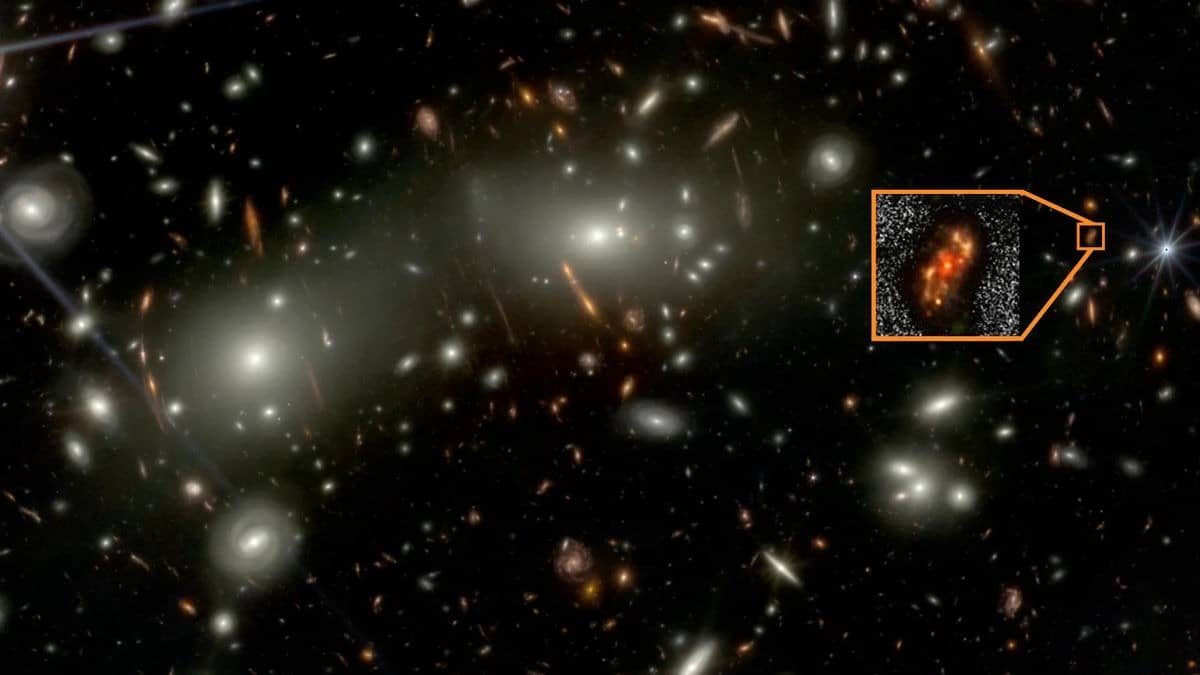
- Indian astronomers from the National Centre for Radio Astrophysics (NCRA), Pune, have discovered a massive, well-structured spiral galaxy existing in the very early universe, named 'Alaknanda'.
- The galaxy was observed using data from the NASA/ESA/CSA James Webb Space Telescope (JWST).
- Alaknanda challenges current theoretical models of galaxy formation, which predict that galaxies in the early universe should be chaotic and irregular, not highly organised spirals.
- The findings were published in the European journal Astronomy and Astrophysics.
Alaknanda Galaxy
- Time of Existence: Alaknanda is observed as it existed when the universe was only 1.5 billion years old (approximately one-tenth of its current age of 13.8 billion years).
- Structure: It is a "grand-design spiral galaxy", featuring two well-defined, sweeping spiral arms wrapped around a bright central bulge, strikingly similar to our own Milky Way.
- Location: It lies approximately 12 billion light-years away from Earth.
- Size and Mass:
- Spans roughly 30,000 light-years in diameter (about one-third the size of the Milky Way).
- Contains a stellar mass of approximately 10 billion solar masses.
- Star Formation Rate: The galaxy is an intense powerhouse, forming new stars at a rate estimated to be 20-30 times faster than the Milky Way today.
Challenge to Current Theories
- The Paradox: Standard cosmological models suggest that galaxies forming just 1.5 billion years after the Big Bang should be turbulent, clumpy, and unstable due to frequent mergers and rapid gas inflow.
- The Implication: Alaknanda’s mature, stable, and highly organized spiral structure suggests that the physical processes driving galaxy formation (like gas accretion and disk settling) operated far more efficiently and rapidly than previously understood.
- Rapid Maturity: The galaxy assembled its large stellar mass and formed its stable disk structure in just a few hundred million years, which is extraordinarily fast by cosmic standards.
Additional Info
- Naming: The galaxy was named Alaknanda after the Himalayan river, which is considered a sister stream to the Mandakini (which is also the Hindi name for the Milky Way galaxy).
- Observation Technique: The detection and detailed imaging were possible partly due to Gravitational Lensing.
- Alaknanda lies behind the massive Abell 2744 galaxy cluster (Pandora’s Cluster).
- The cluster's gravity magnified the light from the distant galaxy, making its intricate structure visible to the JWST.
- James Webb Space Telescope (JWST):
- Launched in December 2021, it is the successor to the Hubble Space Telescope.
- It is optimized for infrared astronomy, allowing it to detect the redshifted light from the earliest and most distant galaxies.
Sources
India Achieves Record Renewable Energy Addition; Odisha to Receive 1.5 Lakh Rooftop Solar Units
What’s the News?
- India has recorded its highest-ever annual renewable energy (RE) capacity addition, led by strong growth in solar and wind segments.
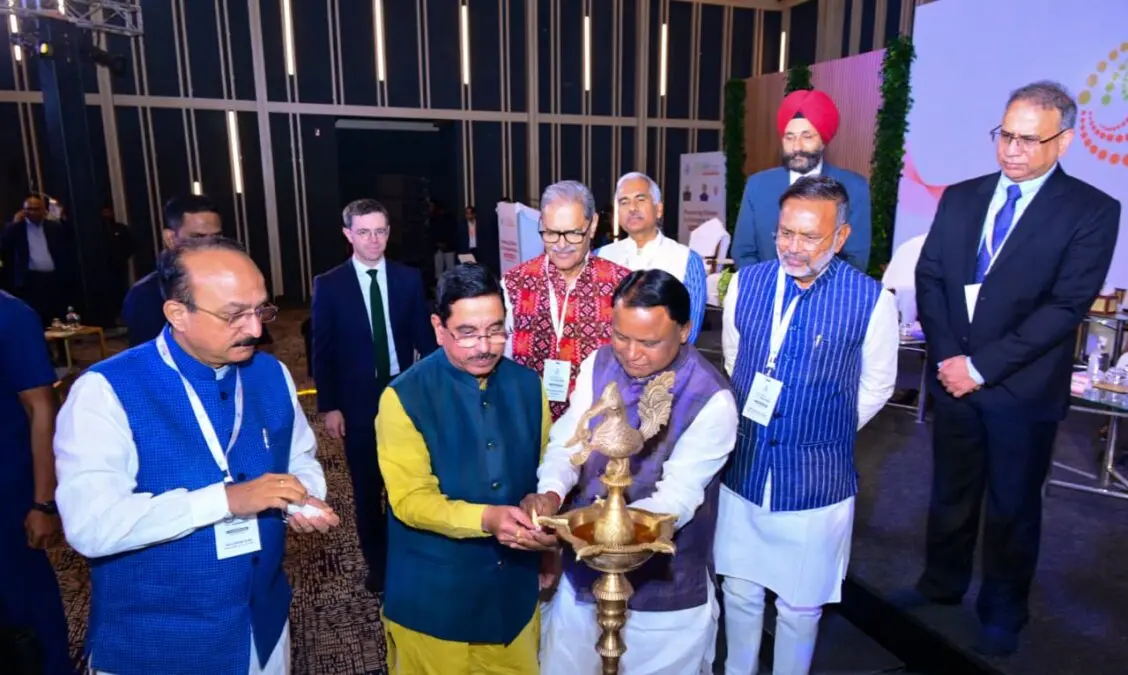
- The Union Government announced that Odisha will receive 1.5 lakh rooftop solar units under a new Urban Local Area (ULA) model, aimed at fast-tracking decentralised clean energy access.
- The initiative aligns with national goals to enhance energy security, reduce fossil fuel dependence, and support net-zero commitments.
Record Renewable Energy Addition
- India’s RE sector has achieved significant expansion across:
- Solar installations
- Wind power capacity
- Bioenergy and small hydro additions
- The surge supports national targets under:
- Nationally Determined Contributions (NDCs)
- Renewable Energy Mission
- Key factors:
- Increased private-sector participation
- Lower cost of solar modules
- Faster grid-integration approvals
Odisha’s 1.5 Lakh Rooftop Solar Units
- Implemented through a new ULA model, focusing on:
- Urban local body participation
- Efficient rooftop mapping, aggregation, and installation
- Expected Outcomes:
- Reduce household electricity bills through net metering
- Provide reliable, clean power to urban households
- Support Odisha’s renewable energy targets
- Part of the broader push under the Rooftop Solar Programme, promoting consumer-level clean energy adoption.
What is the ULA Model?
- A decentralised rooftop solar deployment mechanism involving:
- Urban Local Bodies (ULBs) as nodal facilitators
- Streamlined vendor onboarding and quality monitoring
- Single-window application for citizens
- Benefits:
- Higher trust and transparency
- Faster approvals
- Better utilisation of urban roof spaces
Additional Info
- Policy Enablers:
- PM Surya Ghar Yojana: Central financial assistance (CFA) of up to ₹78,000 per 3 kW system for residential consumers.
- Green Energy Open Access Rules, 2024: Mandates DISCOMs to approve open access within 15 days, promoting industrial rooftop solar adoption.
- Constitutional & Institutional Context:
- Entry 38, Concurrent List: Electricity (including generation, distribution, and non-conventional energy).
- MNRE operates under Ministry of Power, with key implementation agencies: SECI, NTPC, ISA, and state DISCOMs.
Sources**
International Civil Aviation Day

What’s the News?
- International Civil Aviation Day is observed globally on 7 December to highlight the importance of international civil aviation in global connectivity, economic development and cooperation.
- The day recognizes the role of International Civil Aviation Organization (ICAO) in establishing and guiding international civil aviation standards, safety, security, and sustainability.
- The theme for 2025 continues as “Safe Skies and a Sustainable Future for All”, emphasizing safe, inclusive, sustainable and accessible air transport worldwide.
ICAO Council: Structure & India’s Role
- Composition: 36-member governing body of the International Civil Aviation Organization (ICAO), elected triennially by the ICAO Assembly (193 member states).
- Part II Seats: Reserved for “States of major importance in air transport”; India, Germany, Brazil, Japan, and others fall in this category.
- India’s Contributions:
- Founding signatory of the 1944 Chicago Convention that established ICAO.
- Strong advocate for No Country Left Behind (NCLB) initiative, supporting capacity-building in developing nations.
- Promoting green aviation technologies, drone regulation frameworks, and regional air connectivity (e.g., UDAN as a model for inclusive access).
Historical & Institutional Context
- Chicago Convention (1944): Signed by 54 nations on December 7, laying the foundation for rules of airspace, aircraft registration, safety, and sovereignty; ratified by India in 1947.
- UN Recognition: December 7 formally declared International Civil Aviation Day by UNGA Resolution A/RES/51/33 in 1996, proposed by Canada and backed by ICAO.
Sources
December 2025
31 December 202530 December 202529 December 202527 December 202526 December 202524 December 202523 December 202522 December 202520 December 202519 December 202518 December 202517 December 202516 December 202515 December 202513 December 202512 December 202511 December 202510 December 202509 December 202508 December 202505 December 202504 December 202503 December 202502 December 2025
Archive
October 2026
- 27 October 2026
- 26 October 2026
- 24 October 2026
- 23 October 2026
- 22 October 2026
- 21 October 2026
- 20 October 2026
- 19 October 2026
- 17 October 2026
- 16 October 2026
- 15 October 2026
- 14 October 2026
- 13 October 2026
- 12 October 2026
- 10 October 2026
- 09 October 2026
- 08 October 2026
- 07 October 2026
- 06 October 2026
- 05 October 2026
- 03 October 2026
- 02 October 2026
- 01 October 2026
September 2026
- 30 September 2026
- 29 September 2026
- 28 September 2026
- 26 September 2026
- 25 September 2026
- 24 September 2026
- 23 September 2026
- 22 September 2026
- 21 September 2026
- 19 September 2026
- 18 September 2026
- 17 September 2026
- 16 September 2026
- 15 September 2026
- 12 September 2026
- 11 September 2026
- 10 September 2026
- 09 September 2026
- 08 September 2026
- 07 September 2026
- 05 September 2026
- 04 September 2026
- 03 September 2026
- 02 September 2026
- 01 September 2026
August 2026
- 31 August 2026
- 29 August 2026
- 27 August 2026
- 26 August 2026
- 25 August 2026
- 24 August 2026
- 22 August 2026
- 21 August 2026
- 20 August 2026
- 19 August 2026
- 18 August 2026
- 17 August 2026
- 14 August 2026
- 13 August 2026
- 12 August 2026
- 11 August 2026
- 10 August 2026
- 08 August 2026
- 07 August 2026
- 06 August 2026
- 05 August 2026
- 04 August 2026
- 03 August 2026
- 01 August 2026
July 2026
- 31 July 2026
- 30 July 2026
- 29 July 2026
- 28 July 2026
- 27 July 2026
- 25 July 2026
- 23 July 2026
- 22 July 2026
- 21 July 2026
- 20 July 2026
- 18 July 2026
- 17 July 2026
- 15 July 2026
- 14 July 2026
- 13 July 2026
- 11 July 2026
- 10 July 2026
- 09 July 2026
- 08 July 2026
- 07 July 2026
- 06 July 2026
- 04 July 2026
- 03 July 2026
- 02 July 2026
- 01 July 2026
June 2026
May 2026
April 2026
March 2026
- 31 March 2026
- 30 March 2026
- 28 March 2026
- 27 March 2026
- 26 March 2026
- 25 March 2026
- 24 March 2026
- 23 March 2026
- 21 March 2026
- 20 March 2026
- 19 March 2026
- 18 March 2026
- 17 March 2026
- 16 March 2026
- 14 March 2026
- 13 March 2026
- 12 March 2026
- 11 March 2026
- 10 March 2026
- 09 March 2026
- 07 March 2026
- 06 March 2026
- 05 March 2026
- 03 March 2026
- 02 March 2026
February 2026
- 28 February 2026
- 27 February 2026
- 26 February 2026
- 25 February 2026
- 24 February 2026
- 23 February 2026
- 21 February 2026
- 20 February 2026
- 19 February 2026
- 18 February 2026
- 17 February 2026
- 16 February 2026
- 13 February 2026
- 12 February 2026
- 11 February 2026
- 10 February 2026
- 09 February 2026
- 07 February 2026
- 06 February 2026
- 05 February 2026
- 04 February 2026
- 03 February 2026
- 02 February 2026
January 2026
- 31 January 2026
- 30 January 2026
- 29 January 2026
- 28 January 2026
- 27 January 2026
- 26 January 2026
- 24 January 2026
- 23 January 2026
- 22 January 2026
- 21 January 2026
- 20 January 2026
- 19 January 2026
- 16 January 2026
- 15 January 2026
- 14 January 2026
- 13 January 2026
- 12 January 2026
- 10 January 2026
- 09 January 2026
- 08 January 2026
- 07 January 2026
- 06 January 2026
- 05 January 2026
- 03 January 2026
- 02 January 2026
- 01 January 2026
December 2025
- 31 December 2025
- 30 December 2025
- 29 December 2025
- 27 December 2025
- 26 December 2025
- 24 December 2025
- 23 December 2025
- 22 December 2025
- 20 December 2025
- 19 December 2025
- 18 December 2025
- 17 December 2025
- 16 December 2025
- 15 December 2025
- 13 December 2025
- 12 December 2025
- 11 December 2025
- 10 December 2025
- 09 December 2025
- 08 December 2025
- 05 December 2025
- 04 December 2025
- 03 December 2025
- 02 December 2025
November 2025
- 29 November 2025
- 28 November 2025
- 27 November 2025
- 26 November 2025
- 25 November 2025
- 24 November 2025
- 22 November 2025
- 21 November 2025
- 20 November 2025
- 19 November 2025
- 18 November 2025
- 17 November 2025
- 15 November 2025
- 14 November 2025
- 13 November 2025
- 12 November 2025
- 11 November 2025
- 10 November 2025
- 08 November 2025
- 07 November 2025
- 06 November 2025
- 05 November 2025
- 04 November 2025
- 03 November 2025
- 01 November 2025
October 2025
- 31 October 2025
- 30 October 2025
- 29 October 2025
- 28 October 2025
- 27 October 2025
- 25 October 2025
- 24 October 2025
- 23 October 2025
- 22 October 2025
- 21 October 2025
- 20 October 2025
- 18 October 2025
- 17 October 2025
- 16 October 2025
- 15 October 2025
- 14 October 2025
- 13 October 2025
- 11 October 2025
- 10 October 2025
- 09 October 2025
- 08 October 2025
- 07 October 2025
- 06 October 2025
- 04 October 2025
- 03 October 2025
- 02 October 2025
- 01 October 2025
September 2025
- 30 September 2025
- 29 September 2025
- 27 September 2025
- 26 September 2025
- 25 September 2025
- 24 September 2025
- 23 September 2025
- 22 September 2025
- 20 September 2025
- 19 September 2025
- 18 September 2025
- 17 September 2025
- 16 September 2025
- 15 September 2025
- 13 September 2025
- 12 September 2025
- 11 September 2025
- 10 September 2025
- 09 September 2025
- 08 September 2025
- 06 September 2025
- 05 September 2025
- 04 September 2025
- 03 September 2025
- 02 September 2025
- 01 September 2025
August 2025
- 30 August 2025
- 29 August 2025
- 28 August 2025
- 27 August 2025
- 26 August 2025
- 25 August 2025
- 23 August 2025
- 22 August 2025
- 21 August 2025
- 20 August 2025
- 19 August 2025
- 18 August 2025
- 16 August 2025
- 14 August 2025
- 13 August 2025
- 12 August 2025
- 11 August 2025
- 08 August 2025
- 07 August 2025
- 06 August 2025
- 05 August 2025
- 04 August 2025
- 02 August 2025
- 01 August 2025
July 2025
- 31 July 2025
- 30 July 2025
- 29 July 2025
- 28 July 2025
- 26 July 2025
- 25 July 2025
- 24 July 2025
- 23 July 2025
- 22 July 2025
- 21 July 2025
- 19 July 2025
- 18 July 2025
- 17 July 2025
- 16 July 2025
- 15 July 2025
- 12 July 2025
- 11 July 2025
- 10 July 2025
- 09 July 2025
- 07 July 2025
- 05 July 2025
- 04 July 2025
- 03 July 2025
- 02 July 2025
- 01 July 2025
June 2025
- 30 June 2025
- 28 June 2025
- 27 June 2025
- 26 June 2025
- 25 June 2025
- 24 June 2025
- 23 June 2025
- 21 June 2025
- 20 June 2025
- 19 June 2025
- 18 June 2025
- 17 June 2025
- 16 June 2025
- 14 June 2025
- 13 June 2025
- 12 June 2025
- 11 June 2025
- 10 June 2025
- 09 June 2025
- 07 June 2025
- 06 June 2025
- 05 June 2025
- 04 June 2025
- 03 June 2025
- 02 June 2025
May 2025
April 2025
- 30 April 2025
- 29 April 2025
- 28 April 2025
- 26 April 2025
- 25 April 2025
- 24 April 2025
- 23 April 2025
- 22 April 2025
- 21 April 2025
- 19 April 2025
- 18 April 2025
- 17 April 2025
- 16 April 2025
- 15 April 2025
- 14 April 2025
- 12 April 2025
- 11 April 2025
- 10 April 2025
- 09 April 2025
- 08 April 2025
- 07 April 2025
- 05 April 2025
- 04 April 2025
- 03 April 2025
- 02 April 2025
- 01 April 2025
March 2025
- 31 March 2025
- 29 March 2025
- 28 March 2025
- 27 March 2025
- 26 March 2025
- 25 March 2025
- 24 March 2025
- 22 March 2025
- 21 March 2025
- 20 March 2025
- 19 March 2025
- 18 March 2025
- 17 March 2025
- 15 March 2025
- 13 March 2025
- 12 March 2025
- 11 March 2025
- 10 March 2025
- 08 March 2025
- 07 March 2025
- 06 March 2025
- 05 March 2025
- 04 March 2025
- 03 March 2025
- 01 March 2025
February 2025
- 28 February 2025
- 27 February 2025
- 26 February 2025
- 25 February 2025
- 24 February 2025
- 22 February 2025
- 21 February 2025
- 20 February 2025
- 19 February 2025
- 18 February 2025
- 17 February 2025
- 15 February 2025
- 14 February 2025
- 13 February 2025
- 12 February 2025
- 11 February 2025
- 10 February 2025
- 08 February 2025
- 07 February 2025
- 06 February 2025
- 05 February 2025
- 04 February 2025
- 03 February 2025
- 01 February 2025
January 2025
- 31 January 2025
- 30 January 2025
- 29 January 2025
- 28 January 2025
- 27 January 2025
- 25 January 2025
- 24 January 2025
- 23 January 2025
- 22 January 2025
- 21 January 2025
- 20 January 2025
- 18 January 2025
- 17 January 2025
- 16 January 2025
- 15 January 2025
- 14 January 2025
- 13 January 2025
- 11 January 2025
- 10 January 2025
- 09 January 2025
- 08 January 2025
- 07 January 2025
- 06 January 2025
- 04 January 2025
- 03 January 2025
- 02 January 2025
- 01 January 2025