
Current Affairs
Stay updated with the latest national and international events.
07 October 2026
Union Health Ministry to Launch JOSH Teams for TB Elimination
What’s the News?
The Union Ministry of Health and Family Welfare (MoHFW) is set to launch JOSH (Joint Squad for Health) Teams at Bharat Mandapam, New Delhi, under the leadership of Union Health Minister J.P. Nadda.
- The initiative aims to strengthen youth-led community participation in India's tuberculosis (TB) elimination efforts.
- First phase: Implementation across 55 districts in 11 states, focusing on grassroots awareness and community mobilisation.
- The launch will also involve Union Minister for Youth Affairs and Sports Dr. Mansukh Mandaviya.
What are JOSH Teams?
JOSH Teams are a structured, youth-driven initiative designed to promote community engagement under the TB Mukt Bharat Abhiyaan.
- Implementing Ministries:
- Ministry of Health and Family Welfare
- Ministry of Youth Affairs and Sports
- Ministry of Defence
- Team Composition:
- Class-I officers
- MY Bharat (Mera Yuva Bharat) volunteers
- National Cadet Corps (NCC) cadets
- Key Objectives:
- Spread awareness about TB symptoms, prevention and timely diagnosis.
- Encourage treatment completion and reduce TB-related stigma.
- Strengthen community participation at block, ward and village levels.
- Promote Jan Bhagidari (people's participation) in TB elimination.
TB Mukt Bharat Initiatives
- Khushi Avatar: An AI-powered chatbot proposed for launch to promote TB awareness.
- IEC Materials: New Information, Education and Communication materials for the TB Mukt Bharat Abhiyaan.
- TB Mukt Panchayats: In 2025, 67,933 Panchayats across 697 districts were recognised as TB-free, reflecting community-led efforts.
Additional Info
- National Tuberculosis Elimination Programme (NTEP)
- Formerly known as the Revised National Tuberculosis Control Programme (RNTCP).
- Renamed NTEP in 2020 to emphasise India's TB elimination objective.
- India's national target was to eliminate TB by 2025, ahead of the global End TB Strategy's 2035 target.
- Tuberculosis (TB)
- Causative organism: Mycobacterium tuberculosis (bacterium).
- Transmission: Airborne, primarily through infectious respiratory particles released by people with pulmonary TB.
- Vaccine: Bacille Calmette–Guérin (BCG), primarily protecting children against severe forms of TB.
- Related Initiatives
- Pradhan Mantri TB Mukt Bharat Abhiyaan: Promotes community participation and nutritional support for TB patients through the Ni-kshay Mitra initiative.
- Ni-kshay Portal: Digital platform for TB patient notification, monitoring and treatment management.
- MY Bharat: An autonomous body under the Ministry of Youth Affairs and Sports, providing a platform for youth participation in nation-building activities.
Sources
Sagarmanthan 2026 Brings Maritime Leaders from Nearly 75 Countries to New Delhi
What’s the News?
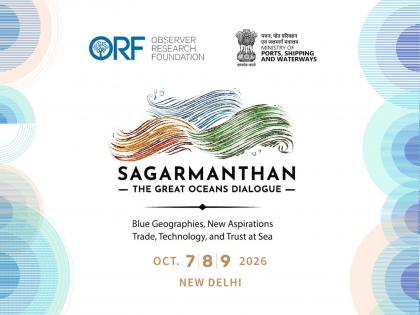
The 3rd edition of Sagarmanthan: The Great Oceans Dialogue 2026 is being held in New Delhi, bringing together over 1,200 delegates, speakers and participants from nearly 75 countries.
- Organisers: Ministry of Ports, Shipping and Waterways (MoPSW) and Observer Research Foundation (ORF).
- Theme: “Blue Geographies, New Aspirations: Trade, Technology, and Trust at Sea.”
- The three-day dialogue focuses on maritime trade, sustainable shipping, technological innovation, ocean governance and international cooperation.
- Union Minister Sarbananda Sonowal is representing India, while Prime Minister Narendra Modi has called for a free, open, secure and rules-based maritime order.
What is Sagarmanthan?
- Sagarmanthan: The Great Oceans Dialogue is an annual international maritime forum launched in New Delhi in 2024.
- The second edition was organised in Mumbai in 2025, as part of India Maritime Week.
- It brings together policymakers, maritime industry leaders, scholars and multilateral organisations.
- Objective: Strengthen global cooperation in maritime connectivity, the blue economy, sustainable development and ocean governance.
Focus Areas of Sagarmanthan 2026
The dialogue is structured around five thematic pillars:
- Steady Straits: Safeguarding maritime trade flows amid geopolitical tensions.
- Blue Breakthroughs: Promoting green shipping and sustainable shipbuilding.
- Complex Seas: Addressing trade, connectivity and maritime disruptions.
- Ocean Societies: Protecting coastal communities, cultures and livelihoods.
- The Heart of the Deal: Improving connectivity between ports, harbour cities and inland regions.
International Participation
- Key representatives include:
- Annick De Ridder: Flemish Minister of Mobility, Public Works, Ports and Sport, Belgium.
- Apostolos Tzitzikostas: European Commissioner for Sustainable Transport and Tourism.
- Arvin Boolell: Minister responsible for Blue Economy and Fisheries, Mauritius.
- Chandra Bahadur Gurung: Minister of Infrastructure and Transport, Bhutan.
- Former Australian Prime Minister Kevin Rudd and former Maldives President Mohamed Nasheed are also among the participants.
Additional Info
- Maritime Amrit Kaal Vision 2047
- India's long-term maritime development framework focuses on modernising ports, strengthening shipping infrastructure, expanding maritime connectivity and promoting green shipping.
- It aims to enhance India's position in global maritime trade.
- Blue Economy
- Refers to the sustainable use of ocean resources for economic growth, improved livelihoods and employment while preserving marine ecosystems.
- Major sectors include fisheries, shipping, coastal tourism, offshore renewable energy and marine biotechnology.
- Observer Research Foundation (ORF)
- An independent Indian public policy think tank established in 1990, headquartered in New Delhi.
- Conducts research on international relations, security, economic development and public policy.
Sources
Uttarakhand Becomes India’s 6th Fully Literate State Under ULLAS

What’s the News?
Uttarakhand has become India’s 6th fully literate state under the National Education Policy (NEP) 2020 and the ULLAS – New India Literacy Programme, achieving a literacy rate of over 98%.
- Governor: Lt Gen Gurmit Singh (Retd) approved the proposal to declare Uttarakhand a fully literate state.
- Chief Minister: Pushkar Singh Dhami.
- The state met the adult literacy benchmarks prescribed by the Department of School Education and Literacy, Ministry of Education.
- The achievement resulted from coordinated efforts by teachers, volunteers, district administrations, local bodies and communities.
Fully Literate States in India
- Benchmark: A state or Union Territory achieving 95% or higher literacy is considered fully literate under the prescribed national standard.
- Uttarakhand: Over 98% literacy.
- Other five fully literate states:
- Mizoram
- Goa
- Tripura
- Himachal Pradesh
- Sikkim
- Ladakh: First Union Territory to achieve full functional literacy under ULLAS.
What is ULLAS?
- Full Form: Understanding of Lifelong Learning for All in Society.
- Official Name: ULLAS – Nav Bharat Saaksharta Karyakram (New India Literacy Programme).
- Ministry: Ministry of Education.
- Type: Centrally Sponsored Scheme aligned with NEP 2020.
- Implementation Period: FY 2022–23 to FY 2026–27.
- Target: Provide literacy to 5 crore non-literate persons aged 15 years and above.
- Financial Outlay: ₹1,037.90 crore.
- Central Share: ₹700 crore.
- State Share: ₹337.90 crore.
Five Components of ULLAS
- Foundational Literacy and Numeracy: Reading, writing and arithmetic skills.
- Critical Life Skills: Digital literacy, financial literacy, healthcare awareness and related skills.
- Basic Education: Educational equivalency at preparatory, middle and secondary levels.
- Vocational Skills: Employment-oriented skill development.
- Continuing Education: Lifelong learning through various educational programmes.
Additional Info
- ULLAS Implementation
- Operates through volunteerism and community participation (Jan Bhagidari).
- Uses the ULLAS mobile application and DIKSHA platform for digital learning resources.
- Promotes the vision of Jan Jan Saakshar (Literacy for All).
- Constitutional Provisions
- Article 21A: Free and compulsory education for children aged 6–14 years.
- Article 41: Directs the State to make effective provisions for the right to education, subject to its economic capacity and development.
Sources
Mahesh Kakde Wins Ramanujan Prize 2026 for Algebraic Number Theory

What’s the News?
Professor Mahesh Kakde of the Indian Institute of Science (IISc), Bengaluru, has been awarded the 2026 Ramanujan Prize for Young Mathematicians from Developing Countries for his outstanding contributions to algebraic number theory.
- The award was announced by the International Centre for Theoretical Physics (ICTP) and the International Mathematical Union (IMU).
- His research focuses on noncommutative Iwasawa theory and the Gross-Stark and Brumer-Stark conjectures.
- His findings have implications for Hilbert’s 12th Problem, one of 23 mathematical problems proposed by David Hilbert in 1900.
What is the Ramanujan Prize?
- Official Name: Ramanujan Prize for Young Mathematicians from Developing Countries.
- Established: 2005.
- Administered By:
- International Centre for Theoretical Physics (ICTP).
- International Mathematical Union (IMU).
- Cash Prize: US$10,000.
- Eligibility:
- Mathematicians from developing countries aged below 45 years as of 31 December of the award year.
- Recognises outstanding mathematical research conducted in developing countries, particularly under challenging conditions.
- Selection: A committee of eminent mathematicians appointed in consultation with ICTP and IMU.
About Mahesh Kakde
- Current Position: Professor, Department of Mathematics, IISc Bengaluru, since 2019.
- Education:
- Bachelor's degree in Mathematics from the Indian Statistical Institute (ISI), Bengaluru.
- Master's degree and PhD in Pure Mathematics from the University of Cambridge, UK.
- Completed his PhD in 2008.
- Previous Institutions: Princeton University, University College London and King's College London.
- Other Recognitions:
- Infosys Prize in Mathematical Sciences (2022).
- Featured in the Asian Scientist 100 list (2023).
Additional Info
- Algebraic Number Theory
- A branch of mathematics that applies algebraic structures, including fields and groups, to study integers and their generalisations.
- Kakde's contributions include:
- Noncommutative Iwasawa Theory: Studies arithmetic properties of number fields through advanced algebraic methods.
- Gross-Stark and Brumer-Stark Conjectures: Concern relationships between special values of mathematical functions and algebraic properties of number fields.
- Srinivasa Ramanujan
- Indian mathematician (1887–1920) known for contributions to number theory, infinite series, continued fractions and mathematical analysis.
- National Mathematics Day: Observed in India on 22 December, commemorating his birth anniversary.
Sources
Indian Air Force Celebrates 94th Air Force Day 2026
What’s the News?
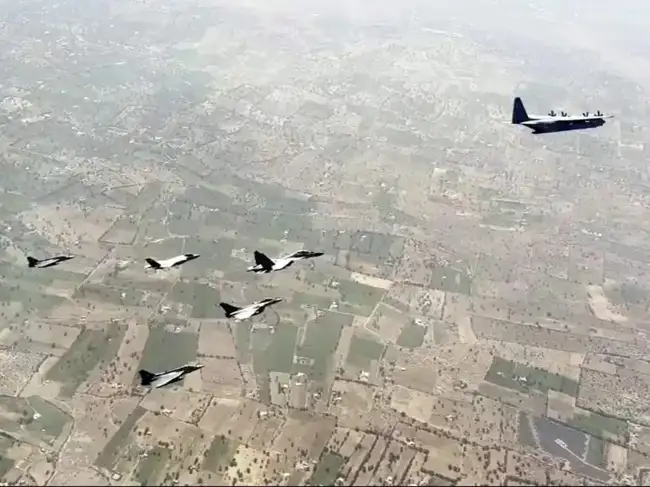
The Indian Air Force (IAF) is celebrating its 94th Air Force Day on 8 October 2026, commemorating its establishment in 1932 and recognising the contributions of its personnel to national security.
- Theme: “Indian Air Force – Infallible, Impervious and Precise.”
- Chief of the Air Staff: Air Chief Marshal Amar Preet Singh.
- Celebrations include ceremonial parades, aerial displays, tributes to veterans and public outreach programmes.
- The anniversary coincides with Exercise Tarang Shakti 2026, a multinational air exercise hosted by India.
Air Force Day 2026 Celebrations
- Hindon Air Force Station, Ghaziabad: Ceremonial parade and flypast.
- Jodhpur Air Force Station, Rajasthan: Aerial display featuring the Suryakiran Aerobatic Team.
- Varanasi, Uttar Pradesh: The Central Air Command will organise public aerial displays on 22, 24 and 25 October, with a VIP viewing area at Namo Ghat.
- Central Air Command: Also marks 60 years of its establishment at Prayagraj in 2026.
What is Exercise Tarang Shakti 2026?
-
A multinational air combat exercise hosted by the Indian Air Force.
-
Objectives:
- Improve interoperability among participating air forces.
- Strengthen operational coordination and joint combat readiness.
- Facilitate the exchange of advanced air warfare techniques and best practices.
-
The exercise features advanced fighter aircraft and joint flying operations involving India and partner countries.
-
Exercise Theme: “Power in Partnership.”
-
Participation: Seven foreign countries — Australia, USA, UAE, France, Germany, Sri Lanka and Bangladesh — along with other observer nations.
-
Major Aircraft: F-35 Lightning II, Rafale, F-16, A400M and C-130J.
-
Previous Edition: The inaugural Tarang Shakti exercise was conducted in 2024.
Additional Info
- Indian Air Force (IAF)
- Established: 8 October 1932.
- First Operational Squadron: No. 1 Squadron, formed in 1933.
- Headquarters: New Delhi.
- Motto: Nabha Sparsham Deeptam (Touch the Sky with Glory).
- Supreme Commander: President of India.
- Suryakiran Aerobatic Team (SKAT)
- The IAF's aerobatic demonstration team, established in 1996.
- Operates Hawk Mk-132 jet aircraft for precision formation flying and aerial displays.
Sources
World Space Week 2026 Celebrated with Theme “Rocket Revolution”

What’s the News?
World Space Week 2026 is being observed globally from 4–10 October 2026, under the theme “Rocket Revolution”, highlighting advancements in space launch technology and expanding access to space.
- The United Nations-recognised observance promotes awareness of space science, technology and their contributions to human welfare.
- The theme focuses on reusable rockets, affordable launch systems, commercial space activities and increased launch frequency.
- Celebrations include space exhibitions, educational workshops, science competitions and public outreach activities to encourage interest in STEM (Science, Technology, Engineering and Mathematics).
What is World Space Week?
- Observed: Annually from 4–10 October.
- Established: 1999, by the United Nations General Assembly through Resolution 54/68.
- Coordinating Organisation: World Space Week Association (WSWA), in cooperation with the United Nations Office for Outer Space Affairs (UNOOSA).
- Objective: Promote international cooperation, space education and awareness of the benefits of space science and technology.
- Previous Theme (2025): “Living in Space.”
Why 4–10 October?
The observance commemorates two important milestones in space exploration:
- 4 October 1957: The Soviet Union launched Sputnik 1, the world's first artificial Earth satellite, marking the beginning of the Space Age.
- 10 October 1967: The Outer Space Treaty entered into force, establishing fundamental principles for the peaceful exploration and use of outer space.
What is the Rocket Revolution?
The 2026 theme highlights the transformation of space launch technology through:
- Reusable Launch Vehicles: Rockets or components designed for multiple missions, helping reduce launch costs.
- Commercial Space Participation: Growing involvement of private companies, startups and universities.
- Advanced Launch Systems: Development of smaller, more efficient rockets and propulsion technologies.
- Space Accessibility: Expanding opportunities for satellite deployment, Earth observation, telecommunications and scientific exploration.
World Space Week 2026 in India
- The Indian Space Research Organisation (ISRO) is conducting educational and public outreach programmes.
- ISRO's VSSC, LPSC and IISU, along with the Indian Institute of Space Science and Technology (IIST), are jointly organising activities in Kerala.
- Programmes include school lectures, student competitions and a public outreach event in Thiruvananthapuram.
Additional Info
- Outer Space Treaty (1967)
- Provides the foundation of international space law.
- Prohibits national appropriation of outer space and celestial bodies.
- Prohibits placing nuclear weapons or other weapons of mass destruction in orbit.
- India's Space Sector Reforms
- Indian Space Policy 2023: Promotes private-sector participation in space activities.
- IN-SPACe: Indian National Space Promotion and Authorization Centre facilitates and authorises non-government space activities.
- ISRO: Developing reusable launch vehicle technologies to improve the affordability of space missions.
World Bank Ranks India Among Top 10 Emerging Markets in AI Readiness
What’s the News?
The World Bank has recognised India among the top 10 emerging-market performers in Artificial Intelligence (AI) readiness, in its report “India and Artificial Intelligence: Seizing the Development Opportunity”, released under the India Development Update (IDU).
- India's position is supported by its large technical workforce, globally integrated IT sector and Digital Public Infrastructure (DPI).
- Private AI investment increased more than threefold, from USD 1.2 billion in 2024 to USD 4.1 billion in 2025.
- The report highlights AI's potential to improve productivity, public service delivery and economic growth while acknowledging uncertainties regarding employment.
Findings of the World Bank Report
- AI Readiness: India ranks among the top 10 emerging-market performers, not necessarily the top 10 countries globally.
- Private AI Investment: Increased from USD 1.2 billion (2024) to USD 4.1 billion (2025).
- Global Capability Centres (GCCs): Employment increased from 1.9 million in 2024 to 2.36 million in 2025.
- AI Adoption:
- India: Approximately 23% of firms use some form of AI.
- United States: Approximately 43% of firms.
- Economic Growth: The World Bank raised India's GDP growth forecast for FY 2026–27 to 7.1%.
Major Recommendations
The report recommends measures to ensure inclusive AI-driven development:
- Strengthen Infrastructure: Expand computing capacity, digital connectivity and AI-enabling infrastructure.
- Skill Development: Improve workforce capabilities through education, reskilling and upskilling.
- Broaden AI Adoption: Encourage adoption among MSMEs and smaller firms beyond major urban centres.
- Improve Governance: Establish regulatory frameworks addressing data privacy, security and responsible AI use.
- Public Service Delivery: Promote locally adapted AI applications in agriculture, healthcare and other essential services.
The World Bank is also supporting AgriConnect, which promotes targeted, locally adapted small AI solutions for agriculture and broader development needs.
Additional Info
- IndiaAI Mission
- Approved: March 2024.
- Nodal Ministry: Ministry of Electronics and Information Technology (MeitY).
- Budget: ₹10,371.92 crore over five years.
- Objective: Strengthen India's AI ecosystem through computing infrastructure, indigenous AI models, innovation, skilling and responsible AI.
- Seven Pillars: Compute Capacity, Innovation Centre, Datasets Platform, Application Development, FutureSkills, Startup Financing and Safe & Trusted AI.
- Digital Public Infrastructure (DPI)
- Refers to foundational digital systems that enable identity verification, payments and public service delivery.
- Indian Examples: Aadhaar, Unified Payments Interface (UPI) and DigiLocker.
- World Bank
- Established: 1944, at the Bretton Woods Conference.
- Headquarters: Washington, D.C., USA.
- Major Institutions:
- International Bank for Reconstruction and Development (IBRD).
- International Development Association (IDA).
Sources
Henri B. Kagan and Kenso Soai Win Nobel Prize in Chemistry 2026
What’s the News?
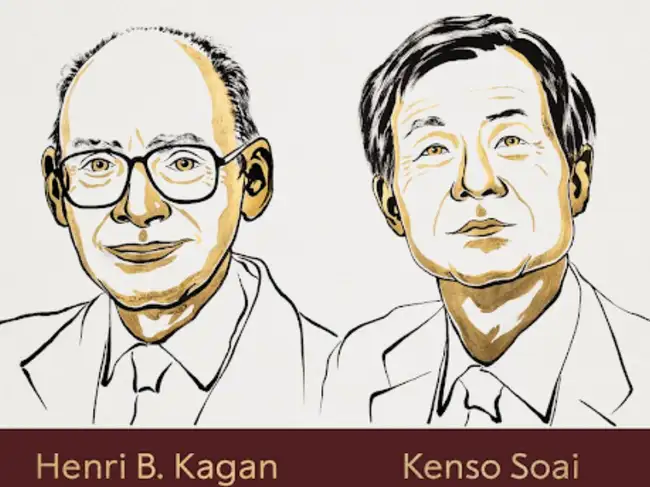
The 2026 Nobel Prize in Chemistry has been jointly awarded to Henri B. Kagan (France) and Kenso Soai (Japan) for their discovery of “non-linear effects and autocatalysis in asymmetric organic synthesis.”
- Awarding Body: Royal Swedish Academy of Sciences, Stockholm, Sweden.
- Prize Money: 12 million Swedish kronor (approximately USD 1.2 million).
- Their discoveries enable chemists to control the production of mirror-image molecules, improving precision in pharmaceutical manufacturing and chemical synthesis.
- The research also provides insights into homochirality, a fundamental property of molecules in living organisms.
About the Nobel Laureates
- Henri B. Kagan (France)
- Institution: Université Paris-Sud, Orsay, France.
- Contribution: Discovered non-linear effects in asymmetric synthesis, allowing chemists to produce a greater proportion of a desired molecular mirror-image form.
- His work is significant for manufacturing pharmaceuticals, fragrances, flavours and advanced materials.
- Kenso Soai (Japan)
- Institution: Tokyo University of Science, Japan.
- Contribution: Pioneered asymmetric autocatalysis through the Soai Reaction, demonstrating how a chemical product can catalyse the formation of more molecules with the same handedness.
- His research helps explain how homochirality can emerge through chemical reactions.
Scientific Concepts
- Chirality: A property in which molecules exist as two non-superimposable mirror-image forms, similar to human hands.
- Enantiomers: The two mirror-image forms of a chiral molecule, which can have different biological effects.
- Asymmetric Organic Synthesis: A process designed to produce one enantiomer preferentially over the other.
- Non-linear Effects: Occur when the composition of a chiral catalyst does not produce a proportional change in the enantiomeric composition of the product.
- Autocatalysis: A chemical process in which the reaction product acts as a catalyst for its own formation.
- Homochirality: The predominance of one molecular handedness in biological systems, such as L-amino acids in proteins.
Additional Info
- Nobel Prize in Chemistry
- Established: Under Alfred Nobel's will of 1895.
- First Awarded: 1901, to Jacobus Henricus van 't Hoff.
- Awarding Institution: Royal Swedish Academy of Sciences.
- Presentation: Annually on 10 December in Stockholm, Sweden, commemorating Alfred Nobel's death anniversary.
- Nobel Prize in Chemistry 2025
- Winners: Susumu Kitagawa, Richard Robson and Omar M. Yaghi.
- Contribution: Development of Metal–Organic Frameworks (MOFs), porous materials with applications in gas storage, carbon capture and water harvesting.
Sources
October 2026
Archive
October 2026
- 27 October 2026
- 26 October 2026
- 24 October 2026
- 23 October 2026
- 22 October 2026
- 21 October 2026
- 20 October 2026
- 19 October 2026
- 17 October 2026
- 16 October 2026
- 15 October 2026
- 14 October 2026
- 13 October 2026
- 12 October 2026
- 10 October 2026
- 09 October 2026
- 08 October 2026
- 07 October 2026
- 06 October 2026
- 05 October 2026
- 03 October 2026
- 02 October 2026
- 01 October 2026
September 2026
- 30 September 2026
- 29 September 2026
- 28 September 2026
- 26 September 2026
- 25 September 2026
- 24 September 2026
- 23 September 2026
- 22 September 2026
- 21 September 2026
- 19 September 2026
- 18 September 2026
- 17 September 2026
- 16 September 2026
- 15 September 2026
- 12 September 2026
- 11 September 2026
- 10 September 2026
- 09 September 2026
- 08 September 2026
- 07 September 2026
- 05 September 2026
- 04 September 2026
- 03 September 2026
- 02 September 2026
- 01 September 2026
August 2026
- 31 August 2026
- 29 August 2026
- 27 August 2026
- 26 August 2026
- 25 August 2026
- 24 August 2026
- 22 August 2026
- 21 August 2026
- 20 August 2026
- 19 August 2026
- 18 August 2026
- 17 August 2026
- 14 August 2026
- 13 August 2026
- 12 August 2026
- 11 August 2026
- 10 August 2026
- 08 August 2026
- 07 August 2026
- 06 August 2026
- 05 August 2026
- 04 August 2026
- 03 August 2026
- 01 August 2026
July 2026
- 31 July 2026
- 30 July 2026
- 29 July 2026
- 28 July 2026
- 27 July 2026
- 25 July 2026
- 23 July 2026
- 22 July 2026
- 21 July 2026
- 20 July 2026
- 18 July 2026
- 17 July 2026
- 15 July 2026
- 14 July 2026
- 13 July 2026
- 11 July 2026
- 10 July 2026
- 09 July 2026
- 08 July 2026
- 07 July 2026
- 06 July 2026
- 04 July 2026
- 03 July 2026
- 02 July 2026
- 01 July 2026
June 2026
May 2026
April 2026
March 2026
- 31 March 2026
- 30 March 2026
- 28 March 2026
- 27 March 2026
- 26 March 2026
- 25 March 2026
- 24 March 2026
- 23 March 2026
- 21 March 2026
- 20 March 2026
- 19 March 2026
- 18 March 2026
- 17 March 2026
- 16 March 2026
- 14 March 2026
- 13 March 2026
- 12 March 2026
- 11 March 2026
- 10 March 2026
- 09 March 2026
- 07 March 2026
- 06 March 2026
- 05 March 2026
- 03 March 2026
- 02 March 2026
February 2026
- 28 February 2026
- 27 February 2026
- 26 February 2026
- 25 February 2026
- 24 February 2026
- 23 February 2026
- 21 February 2026
- 20 February 2026
- 19 February 2026
- 18 February 2026
- 17 February 2026
- 16 February 2026
- 13 February 2026
- 12 February 2026
- 11 February 2026
- 10 February 2026
- 09 February 2026
- 07 February 2026
- 06 February 2026
- 05 February 2026
- 04 February 2026
- 03 February 2026
- 02 February 2026
January 2026
- 31 January 2026
- 30 January 2026
- 29 January 2026
- 28 January 2026
- 27 January 2026
- 26 January 2026
- 24 January 2026
- 23 January 2026
- 22 January 2026
- 21 January 2026
- 20 January 2026
- 19 January 2026
- 16 January 2026
- 15 January 2026
- 14 January 2026
- 13 January 2026
- 12 January 2026
- 10 January 2026
- 09 January 2026
- 08 January 2026
- 07 January 2026
- 06 January 2026
- 05 January 2026
- 03 January 2026
- 02 January 2026
- 01 January 2026
December 2025
- 31 December 2025
- 30 December 2025
- 29 December 2025
- 27 December 2025
- 26 December 2025
- 24 December 2025
- 23 December 2025
- 22 December 2025
- 20 December 2025
- 19 December 2025
- 18 December 2025
- 17 December 2025
- 16 December 2025
- 15 December 2025
- 13 December 2025
- 12 December 2025
- 11 December 2025
- 10 December 2025
- 09 December 2025
- 08 December 2025
- 05 December 2025
- 04 December 2025
- 03 December 2025
- 02 December 2025
November 2025
- 29 November 2025
- 28 November 2025
- 27 November 2025
- 26 November 2025
- 25 November 2025
- 24 November 2025
- 22 November 2025
- 21 November 2025
- 20 November 2025
- 19 November 2025
- 18 November 2025
- 17 November 2025
- 15 November 2025
- 14 November 2025
- 13 November 2025
- 12 November 2025
- 11 November 2025
- 10 November 2025
- 08 November 2025
- 07 November 2025
- 06 November 2025
- 05 November 2025
- 04 November 2025
- 03 November 2025
- 01 November 2025
October 2025
- 31 October 2025
- 30 October 2025
- 29 October 2025
- 28 October 2025
- 27 October 2025
- 25 October 2025
- 24 October 2025
- 23 October 2025
- 22 October 2025
- 21 October 2025
- 20 October 2025
- 18 October 2025
- 17 October 2025
- 16 October 2025
- 15 October 2025
- 14 October 2025
- 13 October 2025
- 11 October 2025
- 10 October 2025
- 09 October 2025
- 08 October 2025
- 07 October 2025
- 06 October 2025
- 04 October 2025
- 03 October 2025
- 02 October 2025
- 01 October 2025
September 2025
- 30 September 2025
- 29 September 2025
- 27 September 2025
- 26 September 2025
- 25 September 2025
- 24 September 2025
- 23 September 2025
- 22 September 2025
- 20 September 2025
- 19 September 2025
- 18 September 2025
- 17 September 2025
- 16 September 2025
- 15 September 2025
- 13 September 2025
- 12 September 2025
- 11 September 2025
- 10 September 2025
- 09 September 2025
- 08 September 2025
- 06 September 2025
- 05 September 2025
- 04 September 2025
- 03 September 2025
- 02 September 2025
- 01 September 2025
August 2025
- 30 August 2025
- 29 August 2025
- 28 August 2025
- 27 August 2025
- 26 August 2025
- 25 August 2025
- 23 August 2025
- 22 August 2025
- 21 August 2025
- 20 August 2025
- 19 August 2025
- 18 August 2025
- 16 August 2025
- 14 August 2025
- 13 August 2025
- 12 August 2025
- 11 August 2025
- 08 August 2025
- 07 August 2025
- 06 August 2025
- 05 August 2025
- 04 August 2025
- 02 August 2025
- 01 August 2025
July 2025
- 31 July 2025
- 30 July 2025
- 29 July 2025
- 28 July 2025
- 26 July 2025
- 25 July 2025
- 24 July 2025
- 23 July 2025
- 22 July 2025
- 21 July 2025
- 19 July 2025
- 18 July 2025
- 17 July 2025
- 16 July 2025
- 15 July 2025
- 12 July 2025
- 11 July 2025
- 10 July 2025
- 09 July 2025
- 07 July 2025
- 05 July 2025
- 04 July 2025
- 03 July 2025
- 02 July 2025
- 01 July 2025
June 2025
- 30 June 2025
- 28 June 2025
- 27 June 2025
- 26 June 2025
- 25 June 2025
- 24 June 2025
- 23 June 2025
- 21 June 2025
- 20 June 2025
- 19 June 2025
- 18 June 2025
- 17 June 2025
- 16 June 2025
- 14 June 2025
- 13 June 2025
- 12 June 2025
- 11 June 2025
- 10 June 2025
- 09 June 2025
- 07 June 2025
- 06 June 2025
- 05 June 2025
- 04 June 2025
- 03 June 2025
- 02 June 2025
May 2025
April 2025
- 30 April 2025
- 29 April 2025
- 28 April 2025
- 26 April 2025
- 25 April 2025
- 24 April 2025
- 23 April 2025
- 22 April 2025
- 21 April 2025
- 19 April 2025
- 18 April 2025
- 17 April 2025
- 16 April 2025
- 15 April 2025
- 14 April 2025
- 12 April 2025
- 11 April 2025
- 10 April 2025
- 09 April 2025
- 08 April 2025
- 07 April 2025
- 05 April 2025
- 04 April 2025
- 03 April 2025
- 02 April 2025
- 01 April 2025
March 2025
- 31 March 2025
- 29 March 2025
- 28 March 2025
- 27 March 2025
- 26 March 2025
- 25 March 2025
- 24 March 2025
- 22 March 2025
- 21 March 2025
- 20 March 2025
- 19 March 2025
- 18 March 2025
- 17 March 2025
- 15 March 2025
- 13 March 2025
- 12 March 2025
- 11 March 2025
- 10 March 2025
- 08 March 2025
- 07 March 2025
- 06 March 2025
- 05 March 2025
- 04 March 2025
- 03 March 2025
- 01 March 2025
February 2025
- 28 February 2025
- 27 February 2025
- 26 February 2025
- 25 February 2025
- 24 February 2025
- 22 February 2025
- 21 February 2025
- 20 February 2025
- 19 February 2025
- 18 February 2025
- 17 February 2025
- 15 February 2025
- 14 February 2025
- 13 February 2025
- 12 February 2025
- 11 February 2025
- 10 February 2025
- 08 February 2025
- 07 February 2025
- 06 February 2025
- 05 February 2025
- 04 February 2025
- 03 February 2025
- 01 February 2025
January 2025
- 31 January 2025
- 30 January 2025
- 29 January 2025
- 28 January 2025
- 27 January 2025
- 25 January 2025
- 24 January 2025
- 23 January 2025
- 22 January 2025
- 21 January 2025
- 20 January 2025
- 18 January 2025
- 17 January 2025
- 16 January 2025
- 15 January 2025
- 14 January 2025
- 13 January 2025
- 11 January 2025
- 10 January 2025
- 09 January 2025
- 08 January 2025
- 07 January 2025
- 06 January 2025
- 04 January 2025
- 03 January 2025
- 02 January 2025
- 01 January 2025