
Current Affairs
Stay updated with the latest national and international events.
06 October 2026
Odisha Launches India’s First MICE Incentive Portal

What’s the News?
- Odisha has launched India’s first dedicated MICE Incentive Portal to promote the state as a destination for business tourism and large-scale events.
- The portal was inaugurated by Deputy Chief Minister and Tourism Minister Pravati Parida during the Odisha Travel Bazaar 2026.
- It provides a dedicated digital mechanism to market Odisha’s MICE destinations and streamline applications for financial incentives by event organisers, tourism operators and other eligible stakeholders.
- The initiative also seeks to attract investment in corporate conventions, destination weddings, sports events and cultural/heritage-based events, while facilitating faster approvals.
What is MICE Tourism?
MICE stands for:
- M – Meetings
- I – Incentives
- C – Conferences
- E – Exhibitions
It is a specialised segment of business tourism involving organised group travel for professional, commercial and networking purposes, such as corporate meetings, incentive trips, trade exhibitions and conventions.
MICE Incentive Portal
- First-of-its-kind: Odisha is the first state in India to establish a dedicated digital mechanism for MICE incentives.
- Destination promotion: Markets Odisha for domestic and international corporate conventions and large events.
- Incentive processing: Enables eligible organisers and tourism stakeholders to apply for financial incentives digitally.
- Ease of doing business: Supports streamlined regulations, faster project clearances and reduction of administrative bottlenecks.
- Investment focus: Complements Odisha’s efforts to attract private investment into tourism infrastructure and experiential tourism.
MICE Incentives under Odisha Tourism Policy
The Odisha Tourism Policy, 2022, as amended in 2026, provides specific incentives for MICE activities:
- During the lean/off-season (1 April–30 September), eligible MICE events can receive ₹1,000 per room per day.
- Minimum booking: 100 rooms per day.
- Hotel category: 3-star or above.
- At least 50% of daily room bookings must be for participants from outside Odisha.
- The incentive applies only to rooms occupied by participants from outside the state.
- The policy also provides for single-window clearance to simplify event-related regulations and permits.
Destination Wedding Incentives
Odisha’s amended tourism policy separately incentivises destination weddings:
- ₹1,000 per room per day during the lean/off-season.
- Minimum requirement: 50 rooms per day in a 3-star or above hotel.
- Both the bride’s and bridegroom’s families must not be permanent/ordinary residents of Odisha.
- Incentives are limited to rooms occupied by participants from outside Odisha.
Additional Info
- Odisha Travel Bazaar 2026
- 7th edition of the tourism-focused event.
- Organised by the Odisha Tourism Department in collaboration with FICCI.
- Serves as a platform connecting the state with tourism operators, investors and hospitality-sector stakeholders.
- Odisha Tourism Policy Targets
- 5 crore domestic tourist arrivals annually by 2047.
- 7 lakh foreign tourist arrivals annually by 2047.
- Develop 15,000 star-category hotel rooms by 2036 and 25,000 by 2047.
- Create 25 lakh direct tourism-related jobs by 2047.
Sources
Cabinet Approves ₹10,000 Crore SME Growth Fund

What’s the News?
- The Union Cabinet, chaired by Prime Minister Narendra Modi, has approved a ₹10,000 crore Government of India commitment for establishing the SME Growth Fund (SGF).
- The Fund will provide long-term patient equity capital to high-potential Small and Medium Enterprises (SMEs) with demonstrated business viability and scalability.
- It aims to develop future Indian champion enterprises across manufacturing, services, technology, innovation-driven sectors and strategic value chains.
- The initiative was originally announced in the Union Budget 2026-27 as part of measures to improve equity, liquidity and professional support for the MSME ecosystem.
SME Growth Fund
- Government commitment: ₹10,000 crore.
- Nature: Direct equity investment, rather than conventional debt/loan financing.
- Structure: It will operate through an Alternative Investment Fund (AIF) established under the SGF framework.
- Target enterprises: Growth-stage Small and Medium Enterprises possessing viable and scalable business models.
- Sectoral coverage:
- Manufacturing
- Services
- Technology
- Innovation-driven sectors
- Strategic value chains
- Manufacturing focus: A majority of the Fund's allocation will be directed towards small and medium manufacturing enterprises.
- SMEs operating in industrial clusters in Tier-II and Tier-III cities will also be considered.
Why Was the Fund Needed?
Existing equity-support mechanisms largely cater to early-stage enterprises and micro enterprises, creating a financing gap for established SMEs seeking to scale.
The SGF seeks to provide long-term risk capital required for:
- Expansion of business and manufacturing capacity
- Adoption of advanced technology
- Productivity improvement and innovation
- Acquisitions and strategic investments
- Entry into international markets
- Integration into Global Value Chains (GVCs)
- Improvement in export competitiveness.
What is Patient Capital?
- Patient capital refers to long-term investment where investors are willing to wait for returns rather than seek quick profitability.
- For SMEs, such capital provides greater flexibility to undertake capacity expansion, technology upgradation and market diversification.
- Unlike a loan, equity capital does not generally create a regular interest repayment obligation, making it suitable for businesses undertaking long-term expansion.
SME Classification in India
Under the revised MSME classification criteria effective from April 2025, enterprises are classified on the basis of both investment in plant/machinery or equipment and annual turnover:
| Category | Investment | Annual Turnover |
|---|---|---|
| Small Enterprise | Up to ₹25 crore | Up to ₹100 crore |
| Medium Enterprise | Up to ₹125 crore | Up to ₹500 crore |
The SME Growth Fund specifically focuses on the Small and Medium segments rather than primarily targeting micro enterprises.
MSME Sector in India
According to official data cited in connection with the initiative:
- GDP contribution: 31.1%
- Manufacturing output: 35.4%
- Exports: 48.58%
- MSME registrations under Udyam Registration and Udyam Assist Platform: about 9.78 crore
- Employment opportunities reported by registered MSMEs: about 43.28 crore
- Female-owned enterprises: 37.6% of total registrations.
Additional Info
- MSME Development Act, 2006
- Provides the statutory framework for the promotion, development and competitiveness of Micro, Small and Medium Enterprises.
- MSME classification applies to both manufacturing and service enterprises.
- Alternative Investment Fund (AIF)
- A privately pooled investment vehicle established in India that collects funds from investors and invests them according to a defined investment policy.
- AIFs are regulated by the Securities and Exchange Board of India (SEBI).
- The Government's aggregate ₹10,000 crore commitment will be made to the AIF established under the SGF framework.
- Broader MSME Support Ecosystem
- CGTMSE: Credit guarantees for Micro and Small Enterprises.
- PMEGP: Employment generation through establishment of micro enterprises.
- PM Vishwakarma: End-to-end support for traditional artisans and craftspeople.
- RAMP: Raising and Accelerating MSME Performance.
- ZED Certification: Promotes Zero Defect Zero Effect manufacturing.
- MSME Sambandh: Supports monitoring of public procurement from MSEs.
Sources
India’s First National Household Travel Survey Reveals Mobility Patterns
What’s the News?
- The National Statistics Office (NSO) under the Ministry of Statistics and Programme Implementation (MoSPI) has released key findings of India’s first-ever National Household Travel Survey (NHTS).
- The survey provides a nationwide picture of how, why and by what mode Indians travel, covering education, employment, other daily travel and overnight journeys.
- It covered 4,92,023 households and 20,34,371 persons across 14,274 villages and 10,377 urban blocks.
- The findings are intended to support transport planning, infrastructure investment, accessibility assessment, route optimisation and evidence-based policymaking.
National Household Travel Survey
- Conducted by: National Statistics Office (NSO), MoSPI.
- Coverage: Rural and urban areas across all States and Union Territories.
- Survey period: 2025-26.
- It was undertaken as part of the 80th Round of the National Sample Survey (NSS).
- For the survey, a trip was defined as travel covering more than 1 km.
- Major information collected included:
- Purpose and frequency of travel
- Mode of transport
- Travel distance and duration
- Commuting expenditure
- Workplace and educational travel
- Overnight household journeys.
Student Mobility
- 66.4% of students aged 6 years and above travelled over 1 km to attend educational institutions.
- Rural: 65.6%
- Urban: 68.1%
- Among students aged 15-29 years, travel participation was 77%.
- Main modes of student travel:
- Walking: 37%
- Bus: 29.5%
- Bicycle: 15.8%
- Auto-rickshaw: 10.5%
- Two-wheeler: 6.7%
- Average travel time to an educational institution was about 23 minutes, while 87.6% reached within 30 minutes.
Workforce Mobility
- 57.6% of workers aged 15 years and above travelled over 1 km to fixed or non-fixed workplaces.
- Rural: 54.5%
- Urban: 64.1%
- A significant gender difference was recorded:
- Male workers undertaking such trips: 61.9%
- Female workers: 41.9%
- Two-wheelers were the largest mode of worker transport, accounting for 42.6% of commuting workers.
- Rural: 37.1%
- Urban: 52.3%
- Metro, suburban rail, monorail and tram together accounted for about 5% of urban worker commutes.
Travel Time and Cost
- Average journey time:
- Students: 23 minutes
- Workers travelling to fixed workplaces: 25 minutes
- 83.4% of workers reached fixed workplaces within 30 minutes.
- Average monthly expenditure:
- Student commute: ₹443
- Rural: ₹361
- Urban: ₹617
- Worker commute: ₹785
- Rural: ₹612
- Urban: ₹1,044
- Student commute: ₹443
- Male workers spent an average ₹835 per month, compared with ₹533 for female workers.
Overnight Travel
- Bus and rail together accounted for 73.5% of household overnight journeys:
- Bus: 55.8%
- Inter-city railway: 17.7%
- Other major modes:
- Car: 15.1%
- Two-wheeler: 8.8%
- About 70.2% of overnight journeys were linked to social, communication and religious purposes.
- Culture, leisure, sports and tourism accounted for 7.4% of overnight trips.
Why is NHTS Important?
The survey creates a national household-level database of actual passenger movement. Its findings can help governments:
- Identify underserved public-transport corridors.
- Optimise bus and rail routes, frequency and scheduling.
- Assess rural-urban differences in transport accessibility.
- Plan transport infrastructure based on travel demand rather than only vehicle registrations or traffic counts.
- Understand dependence on private two-wheelers and gaps in mass transit.
- Design safer and more accessible mobility systems for students, workers and women.
- Support long-term regional and multimodal transport planning.
Additional Info
- National Statistical Office (NSO)
- Functions under MoSPI.
- Conducts major socio-economic surveys through the National Sample Survey (NSS) system.
- NHTS represents India's first dedicated nationwide household travel survey.
- NHTS vs Domestic Tourism Expenditure Survey (DTES)
- NHTS: Focuses broadly on household mobility—including education, work and other journeys.
- DTES: Focuses on expenditure associated with domestic tourism and overnight tourism trips.
- Both surveys were undertaken during the 80th Round of NSS.
Sources
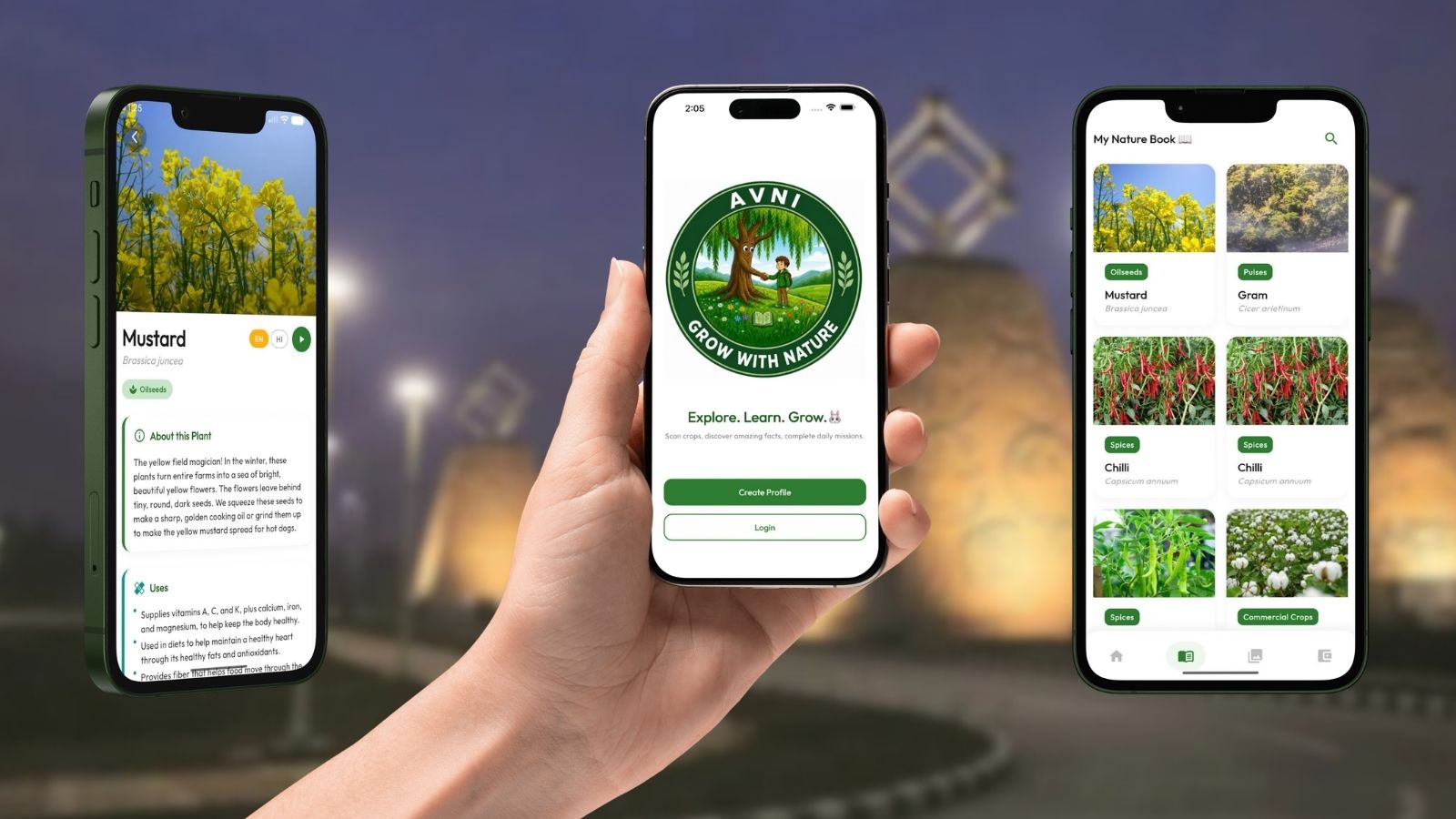
IIT Ropar Launches AVNI App for Agricultural Learning
What’s the News?
- IIT Ropar, through its Centre of Excellence in AI for Digital Agriculture ANNAM.AI, has launched AVNI – Grow with Nature, a digital learning platform for children.
- Available as a web and mobile application, AVNI uses Artificial Intelligence (AI) and experiential learning to introduce children to plants, crops, food and agriculture.
- The initiative seeks to build agricultural awareness before agriculture becomes part of formal classroom learning, by turning a child’s immediate surroundings into learning resources.
- AVNI was developed by Dr Mukesh Saini, Co-Project Director of ANNAM.AI.
AVNI – Grow with Nature
AVNI allows children to identify and learn about objects such as plants, crops, fruits, vegetables, spices, cereals and millets through AI-powered recognition.
Key features include:
- AI-powered plant and crop identification
- Daily Challenges for activity-based learning
- Nature Points for continued engagement
- Digital Nature Book to record observations
- Nature Gallery for exploring plants and crops
- Crop Compare to compare agricultural crops
- Hindi and English language support
- Audio content for younger children.
Learning Approach
- AVNI follows an observation-based and experiential learning model rather than relying only on textbook information.
- A plant in a school garden, a fruit at home or a crop in a nearby field can become a starting point for agricultural learning.
- It connects children's everyday surroundings with concepts such as:
- How food is grown
- Crop and plant diversity
- Agricultural ecosystems
- Relationship between nature, food and farming.
- The platform is free, ad-free and privacy-focused, with a child-centric design intended to provide an age-appropriate digital environment.
ANNAM.AI
- ANNAM.AI is IIT Ropar's Centre of Excellence in Artificial Intelligence for Digital Agriculture.
- It is supported by the Ministry of Education, Government of India.
- Its work covers areas such as:
- Precision farming
- Crop monitoring
- Computer vision
- Climate and weather intelligence
- Digital agriculture
- Multilingual AI
- Farmer advisory systems
- AI-based agricultural decision support.
- ANNAM.AI is also developing AI-powered Digital Public Infrastructure (DPI) for Indian agriculture, with AVNI extending its work into agricultural education.
AI Centres of Excellence
- The Government announced three Centres of Excellence in AI under the Union Budget 2023-24.
- They focus on:
- Agriculture – IIT Ropar
- Sustainable Cities – IIT Kanpur
- Healthcare – IISc Bengaluru
- The total approved outlay for these three AI Centres of Excellence is ₹990 crore.
- The initiative forms part of the broader vision of “Make AI in India and Make AI Work for India.”
- A separate AI Centre of Excellence for Education was subsequently established at IIT Madras with an outlay of ₹500 crore.
Additional Info
- IIT Ropar
- Located at Rupnagar (Ropar), Punjab.
- One of India's Institutes of Technology established to promote advanced technical education, research and innovation.
- Artificial Intelligence in Agriculture
- Major applications include:
- Crop and disease identification
- Precision agriculture
- Soil-health assessment
- Weather and climate intelligence
- Yield prediction
- Pest detection
- Optimisation of water and farm inputs
- Farmer advisory and decision-support systems.
- ANNAM.AI has also collaborated with ICAR-Indian Institute of Soil Science (IISS), Bhopal on AI-enabled soil-health mapping and a Digital Soil Twin framework.
- Major applications include:
Sources
India–UAE Exercise Mountain Guardian 2026 Begins in Uttarakhand

What’s the News?
- India and the United Arab Emirates (UAE) have commenced the joint military exercise MOUNTAIN GUARDIAN 2026 at the Foreign Training Node, Chaubatia, Uttarakhand.
- The exercise focuses on mountain warfare, interoperability and exchange of operational practices between the two armies.
- A total of 92 personnel are participating, with 46 personnel from each country.
- The Indian contingent comprises troops from a Bhairav Battalion, while the UAE contingent consists of personnel from a Mountain Infantry Battalion. Women officers and combatants from both armies are also participating in specialist roles.
Exercise Mountain Guardian 2026
- Participating countries: India and UAE
- Armed forces involved: Indian Army and UAE Army/Land Forces
- Venue: Foreign Training Node, Chaubatia, Uttarakhand
- Duration: Around two weeks
- Personnel: 92
- India: 46
- UAE: 46
- Primary focus: Operations in challenging mountainous terrain.
- Objectives:
- Enhance interoperability.
- Improve mutual understanding and cooperation.
- Exchange battlefield tactics, techniques and procedures (TTPs).
- Build proficiency in joint planning and coordinated military operations.
Training Components
Participating troops will undertake:
- Joint operational planning
- Tactical drills
- Firing practices
- Establishment of surveillance grids
- Drone operations
- Physical-endurance training
- Rock climbing
- Obstacle training
- Integrated field exercises
- Technology-enabled military operations.
The exercise provides both armies experience in integrating modern surveillance and unmanned systems with conventional mountain-warfare techniques.
Why Mountain Warfare?
Mountain warfare involves operations in terrain characterised by steep gradients, restricted mobility, difficult logistics, extreme weather and limited observation.
Training in such environments requires:
- High physical endurance
- Specialised mobility and climbing skills
- Effective surveillance
- Adapted logistics
- Small-unit tactical coordination
- Use of drones and sensors for reconnaissance.
For the UAE Army, Mountain Guardian provides exposure to a terrain and operational environment distinct from its predominantly desert setting.
India–UAE Defence Cooperation
- Mountain Guardian adds a mountain-warfare dimension to growing military cooperation between India and the UAE.
- The two countries also conduct Exercise DESERT CYCLONE, an Army exercise focused on operations in desert/semi-desert and urban environments.
- The first Desert Cyclone was held in India.
- Desert Cyclone-II was subsequently conducted in the UAE.
- India also participates in UAE-hosted multinational air exercises such as Exercise Desert Flag.
Additional Info
- Chaubatia
- Located in Uttarakhand.
- Hosts an Indian Army Foreign Training Node used for joint training with foreign militaries.
- Its mountainous terrain is suitable for specialised high-altitude and mountain-warfare exercises.
- India–UAE Relations
- India and the UAE maintain a Comprehensive Strategic Partnership.
- Defence engagement includes:
- Joint exercises
- Training exchanges
- Military delegation visits
- Army and Navy staff talks
- Maritime and air-force cooperation.
- Edition Clarification
- The official Ministry of Defence release does not specify an edition number for Mountain Guardian 2026.
- Secondary reports are inconsistent: some describe it as the inaugural edition, while others call it the third edition. Therefore, the edition number should be treated cautiously unless officially clarified.
Sources
IISc Maps 9,389 Reactions to Improve CO₂-to-Fuel Modelling

What’s the News?
- Researchers at the Indian Institute of Science (IISc), Bengaluru have developed a data-driven computational framework mapping 9,389 elementary reactions involved in converting carbon dioxide (CO₂) into fuels and chemicals over a copper catalyst.
- The framework combines quantum-mechanical calculations, machine learning, automated reaction enumeration and kinetic modelling.
- It revealed several reaction pathways overlooked by conventional models and produced predictions much closer to experimental observations.
- The research was published in Nature Communications.
CO₂ Hydrogenation
- CO₂ hydrogenation involves reacting carbon dioxide with hydrogen in the presence of a catalyst to produce useful chemicals and fuels.
- One important product is methanol (CH₃OH), which can be used as:
- Fuel and fuel-blending component
- Chemical feedstock
- Starting material for products such as formaldehyde and other chemicals.
- Copper-based catalysts are widely studied for catalytic conversion of CO₂ to methanol.
- The challenge is that thousands of elementary reactions can occur on the catalyst surface, making complete quantum-mechanical modelling computationally expensive.
New Computational Framework
The IISc researchers initially created a high-quality dataset of 152 elementary reactions using quantum-mechanical simulations.
They then:
- Trained machine-learning models to predict activation-energy barriers for additional reactions.
- Considered 105 surface species.
- Used automated tools to identify possible elementary reaction pathways.
- Expanded the reaction network from 152 to 9,389 elementary reactions.
- Incorporated the expanded network into a kinetic model to predict overall CO₂ conversion and product formation.
Major Findings
- The original 152-reaction network incorrectly predicted formic acid as the dominant product and underestimated CO₂ conversion.
- The expanded 9,389-reaction network correctly reproduced experimental trends showing methanol and carbon monoxide (CO) as major products.
- It predicted approximately 40 times higher CO₂ conversion compared with the smaller reaction network.
- This demonstrated that apparently minor or previously ignored reaction pathways can significantly alter the predicted performance of a catalytic system.
Molecular Hydrogen Pathway
A notable finding involved the mechanism of hydrogen transfer.
- Conventional catalytic models commonly assume that H₂ first dissociates into individual hydrogen atoms before participating in hydrogenation.
- The expanded network showed that molecular H₂ can directly transfer hydrogen to certain reaction intermediates without first completely splitting into individual atoms.
- Quantum-mechanical calculations confirmed that this pathway can be favourable, particularly for some oxygen-containing intermediates.
- The finding suggests that catalysts capable of interacting effectively with molecular hydrogen could potentially favour pathways leading to methanol production.
Why is the Study Important?
- Reduces human bias: Conventional models depend heavily on researchers deciding beforehand which reactions appear important.
- Better catalyst design: More complete reaction networks can identify previously overlooked pathways and help optimise catalysts.
- Improved process prediction: Better kinetic models can more accurately estimate conversion rates and product selectivity.
- Carbon utilisation: Efficient CO₂ conversion can transform captured carbon from a waste stream into useful fuels and chemicals.
- Wider applications: The framework could also be adapted for:
- CO₂ conversion using other catalysts
- Nitrogen reduction
- Water splitting
- Other complex heterogeneous catalytic processes.
Additional Info
- Research Institutions
- Lead institution: Indian Institute of Science (IISc), Bengaluru.
- Experimental validation also involved researchers associated with:
- Hindustan Petroleum Corporation Limited (HPCL) Green Research and Development Centre
- *Agency for Science, Technology and Research (ASTAR), Singapore**.
- Key Researchers
- Anand M. Verma – First author; conducted the work as a CV Raman Postdoctoral Fellow at IISc.
- Shivam Chaturvedi – Department of Chemical Engineering, IISc.
- Ananth Govind Rajan – Associate Professor, Department of Chemical Engineering, IISc; corresponding author.
- Carbon Capture and Utilisation (CCU)
- CCU involves capturing CO₂ and converting it into useful products rather than only storing it.
- Potential products include fuels, chemicals and industrial feedstocks.
- Its climate benefit depends substantially on factors such as the source of hydrogen and energy used in the conversion process; low-carbon hydrogen can substantially improve the overall emissions profile.
Sources
India Wins 4 Gold and 1 Silver at International Astronomy Olympiad 2026
What’s the News?
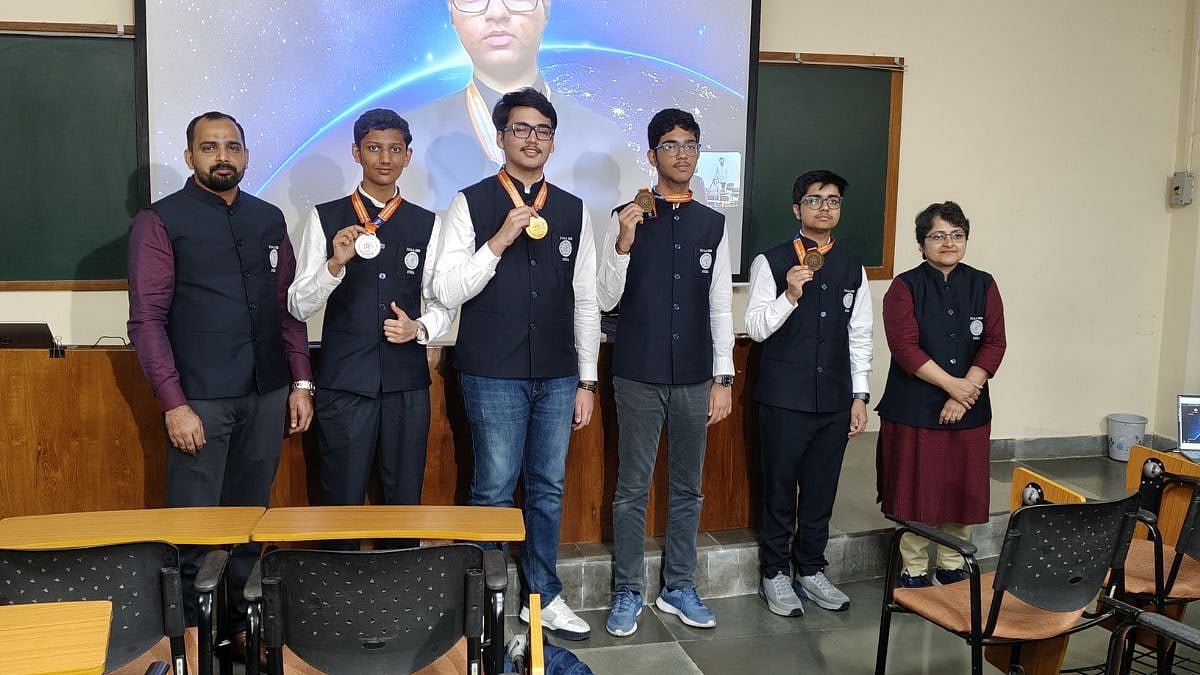
- India won four Gold medals and one Silver medal at the 19th International Olympiad on Astronomy and Astrophysics (IOAA) 2026, held in Hanoi, Vietnam.
- All five Indian participants won medals, giving India a 100% medal-winning performance.
- India finished joint third with Vietnam in the medal tally, behind Iran and South Korea, which won five Gold medals each.
- The 2026 edition was the largest IOAA so far, with 307 students from 64 countries.
Indian Medal Winners
| Student | City | Medal |
|---|---|---|
| Pranjal Dixit | Hyderabad, Telangana | Gold |
| Sumant Gupta | Delhi | Gold |
| Akshat Srivastava | Gurugram, Haryana | Gold |
| Arnav Sehrawat | Faridabad, Haryana | Gold |
| Harshil Amitkumar Patel | Vadodara, Gujarat | Silver |
The Indian team was led by Prof. Bhaswati Mookerjea, Tata Institute of Fundamental Research (TIFR), Mumbai, and Prof. Sanved Kolekar, Indian Institute of Astrophysics, Bengaluru.
International Olympiad on Astronomy and Astrophysics
- The IOAA is an international competition for secondary-school students in astronomy and astrophysics.
- The competition has three major components:
- Theory: 50% of total score
- Observation: 25%
- Data Analysis: 25%
- It also conducts a team competition involving mixed-nationality teams.
- India has participated in Astronomy Olympiads since 1999.
India’s Overall Olympiad Performance
The astronomy result completed a landmark year for India's participation in the five senior-level International Olympiads covering Mathematics, Physics, Chemistry, Biology and Astronomy.
- Total Indian participants: 24
- Gold medals: 16
- Silver medals: 8
- Every Indian participant won either Gold or Silver.
- This was the first time since India began participating in International Olympiads in 1989 that every Indian participant across these five disciplines won Gold or Silver in the same year.
Performance Across Five Olympiads
- Physics: 5 Gold
- Chemistry: 4 Gold
- Biology: 1 Gold + 3 Silver
- Mathematics: 2 Gold + 4 Silver
- Astronomy & Astrophysics: 4 Gold + 1 Silver.
Additional Info
- Homi Bhabha Centre for Science Education (HBCSE)
- A National Centre of the Tata Institute of Fundamental Research (TIFR).
- TIFR is an aided institution under the Department of Atomic Energy (DAE).
- HBCSE is the national nodal centre for India's Science and Mathematical Olympiad programmes.
- It undertakes student selection, orientation, training and mentoring for international Olympiads.
- India in Astronomy Olympiads since 1999
- 49% of Indian participants have won Gold medals.
- 35% have won Silver medals.
- 13% have won Bronze medals.
- During the last five years, every Indian Astronomy Olympiad participant has won either Gold or Silver.
- IOAA 2026 Medal Distribution
- Gold: 51
- Silver: 48
- Bronze: 60
- Participants: 307 students
- Countries: 64.
Sources
Francis Halzen Wins 2026 Nobel Prize in Physics for Cosmic Neutrino Discovery
What’s the News?
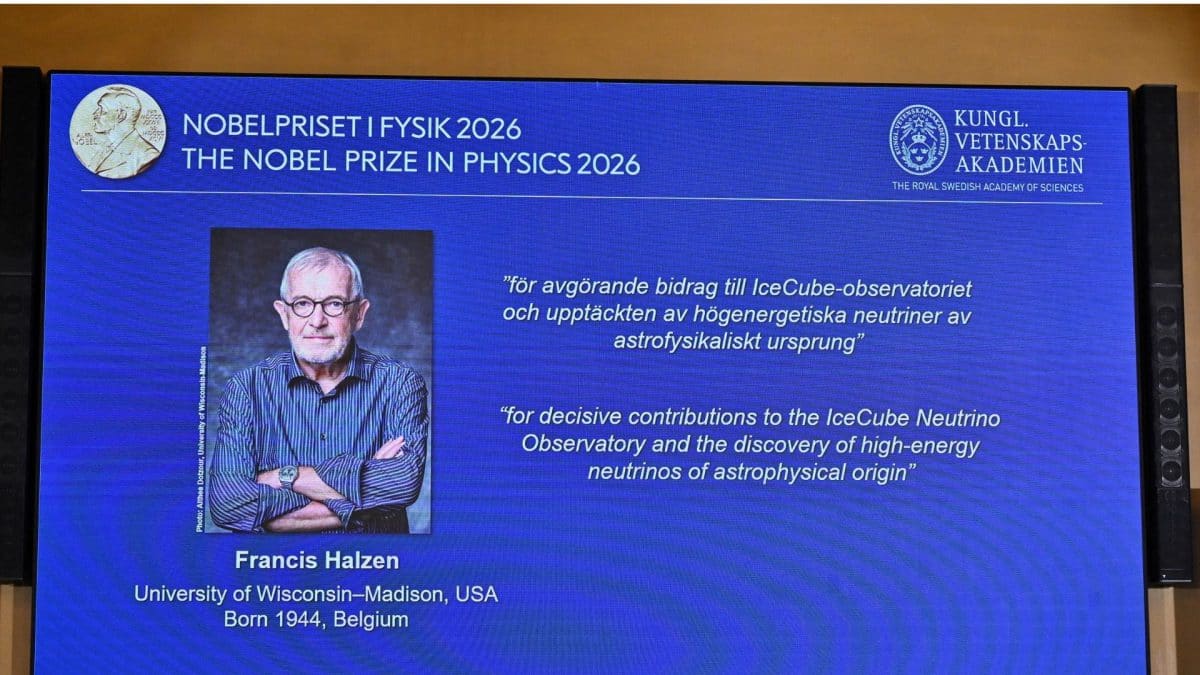
- Francis Halzen, a Belgian-American particle physicist, has been awarded the 2026 Nobel Prize in Physics.
- The Royal Swedish Academy of Sciences honoured him “for decisive contributions to the IceCube Neutrino Observatory and the discovery of high-energy neutrinos of astrophysical origin.”
- Halzen is a professor at the University of Wisconsin–Madison, USA, and the principal investigator of the IceCube Neutrino Observatory.
- He is the sole recipient of the 2026 Physics Nobel and receives the full prize amount of 12 million Swedish kronor.
What are Neutrinos?
- Neutrinos are electrically neutral, nearly massless elementary particles.
- They interact only very weakly with matter; enormous numbers can pass through Earth without interacting, earning them the nickname “ghost particles.”
- High-energy astrophysical neutrinos are produced in some of the Universe's most energetic environments.
- Unlike cosmic rays, which are electrically charged and deflected by magnetic fields, neutrinos travel almost directly from their sources.
- They can therefore help identify and study powerful cosmic accelerators such as active galaxies and supermassive black holes.
IceCube Neutrino Observatory
- Location: Geographic South Pole, Antarctica.
- Purpose: Detection of high-energy neutrinos originating from astrophysical sources.
- Detector volume: About 1 cubic kilometre of Antarctic ice.
- Digital Optical Modules: 5,160
- Vertical strings: 86
- The sensors are embedded roughly 1,450–2,450 metres below the ice surface.
How Does IceCube Detect Neutrinos?
- A neutrino occasionally interacts with matter in the Antarctic ice.
- The interaction creates secondary charged particles.
- These particles emit characteristic blue Cherenkov radiation while moving through the ice.
- IceCube's optical sensors detect this light, allowing scientists to reconstruct the energy and direction of the incoming neutrino.
Halzen’s Contribution
- Halzen proposed using the deep, transparent Antarctic ice as a gigantic neutrino detector.
- He oversaw the development of AMANDA, IceCube's predecessor, and subsequently the design and development of IceCube.
- IceCube established the existence of a population of high-energy neutrinos originating beyond the Solar System, opening a new observational window on the Universe.
- Subsequent observations have connected high-energy neutrinos with astrophysical sources, strengthening the field of neutrino astronomy.
Why is the Discovery Significant?
- New form of astronomy: Astronomers are no longer limited to electromagnetic radiation such as visible light, radio waves, X-rays and gamma rays.
- Tracing cosmic accelerators: Neutrinos preserve information about their direction of origin because they are electrically neutral.
- Extreme cosmic events: They provide information about energetic environments associated with black holes, active galaxies and other cosmic phenomena.
- Multi-messenger astronomy: Neutrino observations can be combined with electromagnetic radiation, cosmic rays and gravitational waves to study the same astronomical events through different signals.
Additional Info
- Nobel Prize in Physics
- One of the original Nobel Prizes established through the will of Alfred Nobel.
- Awarded by the Royal Swedish Academy of Sciences.
- 2026 prize amount: 12 million Swedish kronor.
- A Nobel Prize can be shared by multiple laureates; Francis Halzen is the sole Physics laureate for 2026.
- Francis Halzen
- Born in Tienen, Belgium.
- PhD from KU Leuven, Belgium.
- Professor at the University of Wisconsin–Madison, USA.
- Principal investigator of the NSF IceCube Neutrino Observatory.
- Key IceCube Milestone
- IceCube announced the first detection of a population of high-energy neutrinos from outside the Solar System in 2013.
- This helped establish high-energy neutrino astronomy as an observational field.
Sources
National Wildlife Week 2026: Connecting Habitats, Thriving Wildlife
What’s the News?
- India is observing National Wildlife Week from 2–8 October 2026 to promote awareness about wildlife conservation, biodiversity and protection of natural habitats.
- The 2026 theme is “Connecting Habitats, Thriving Wildlife.”
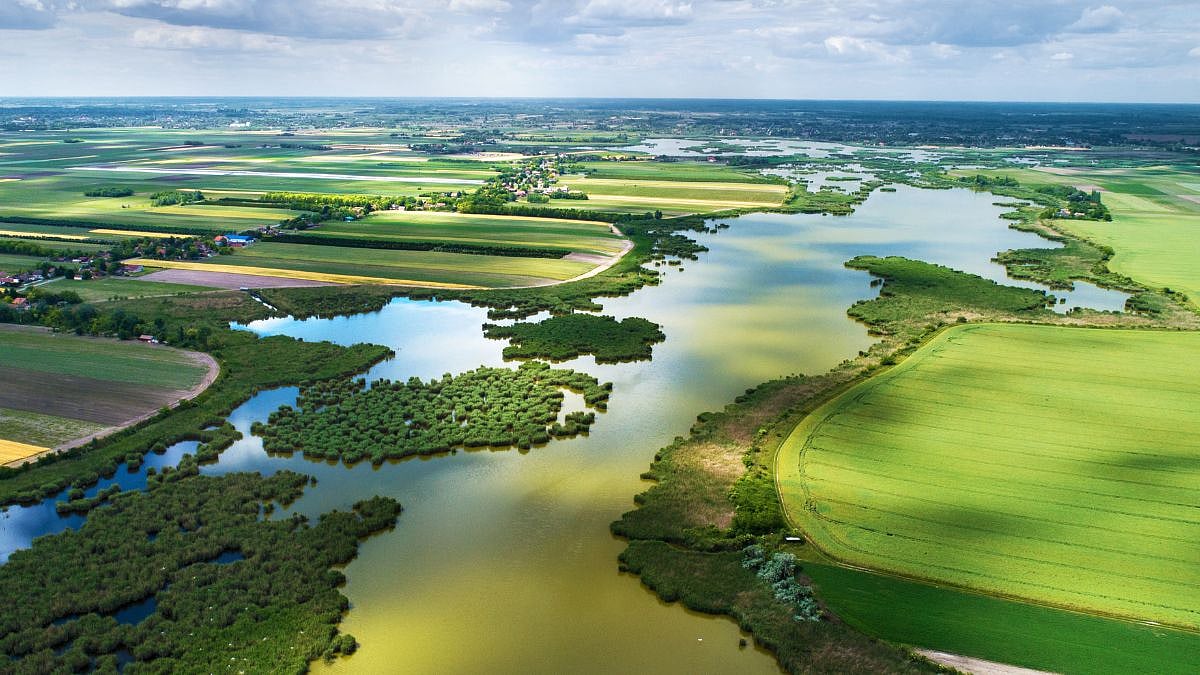
- The theme highlights the need to protect wildlife corridors and ecological connectivity, particularly where forests and other habitats have become fragmented by roads, settlements, agriculture and infrastructure.
- Activities across India include nature walks, biodiversity surveys, awareness programmes, competitions, habitat-restoration initiatives and community participation in conservation.
2026 Theme: Connecting Habitats, Thriving Wildlife
The theme focuses on maintaining or restoring connections between fragmented habitats so that wild animals can safely:
- Move between feeding, breeding and resting areas.
- Access water and other resources.
- Maintain genetic exchange between populations.
- Undertake seasonal migration and dispersal.
- Reduce forced movement into human settlements.
Wildlife corridors are stretches of suitable habitat that connect otherwise isolated wildlife populations or protected areas. Habitat connectivity can therefore help reduce population isolation and support long-term species survival.
National Wildlife Week
- The idea was conceptualised in 1952 by the Indian Board for Wildlife, the predecessor of the present National Board for Wildlife (NBWL).
- The observance developed into an annual nationwide programme for building public awareness and participation in wildlife conservation.
- It is observed in India during the first week of October, with the present observance running from 2–8 October.
- Its scope has expanded from species protection to include:
- Habitat conservation
- Biodiversity protection
- Ecological restoration
- Human-wildlife coexistence
- Community participation.
Why Habitat Connectivity Matters
Habitat fragmentation occurs when a large continuous natural habitat is divided into smaller, isolated patches due to activities such as roads, railways, agriculture, mining, urbanisation and other infrastructure.
Its major impacts include:
- Restricted movement and migration of wildlife.
- Reduced access to food, water and breeding areas.
- Isolation of populations and reduced genetic exchange.
- Greater risk of local extinction.
- Increased possibility of human-wildlife conflict when animals move through settlements and agricultural landscapes.
The 2026 theme therefore shifts attention beyond individual protected areas towards landscape-level conservation.
Wildlife Protection Framework in India
- Wild Life (Protection) Act, 1972
- Provides the principal legal framework for protection of wild animals, plants and their habitats.
- Provides for protected areas including National Parks, Wildlife Sanctuaries, Conservation Reserves and Community Reserves.
- The Wild Life (Protection) Amendment Act, 2022 also strengthened implementation of India's obligations under CITES.
- National Board for Wildlife (NBWL)
- Statutory body constituted under the Wild Life (Protection) Act, 1972.
- Prime Minister of India: Chairperson.
- Advises governments on wildlife conservation and promotes conservation and development of wildlife and forests.
Additional Info
- Constitutional Provisions
- Article 48A – Directive Principle of State Policy: The State shall endeavour to protect and improve the environment and safeguard the country's forests and wildlife.
- Article 51A(g) – Fundamental Duty: It is the duty of every citizen to protect and improve the natural environment, including forests, lakes, rivers and wildlife, and to have compassion for living creatures.
- Wildlife Corridors
- Connect fragmented habitats and protected areas.
- Particularly important for wide-ranging species such as elephants, tigers and other large mammals.
- Conservation Reserves and Community Reserves can help protect landscapes adjoining or linking established protected areas.
- Related Observance
- World Wildlife Day: Observed globally on 3 March.
- National Wildlife Week is an Indian annual observance and is distinct from World Wildlife Day.
Sources
World Cerebral Palsy Day 2026: “Unique and United”
What’s the News?
- World Cerebral Palsy Day was observed on 6 October 2026 to raise awareness about cerebral palsy (CP) and promote accessibility, inclusion, healthcare and equal opportunities for persons living with the condition.
- The 2026 theme is “Unique and United”, represented by the campaign hashtag #UniqueANDUnited.
- The campaign emphasises that experiences and support needs differ among persons with cerebral palsy, while collective advocacy can help remove barriers in education, employment, healthcare, technology and public spaces.
- More than 50 million people worldwide live with cerebral palsy.
World Cerebral Palsy Day
- Observed: 6 October every year.
- Started: 2012.
- Founding organisations:
- Cerebral Palsy Alliance, Australia
- United Cerebral Palsy, USA
- The inaugural campaign, “Change My World,” invited people with cerebral palsy to propose solutions that could improve their lives.
- The movement now brings together individuals and organisations from more than 100 countries.
2026 Theme: “Unique and United”
The theme recognises that every person with cerebral palsy has different experiences, priorities and aspirations while highlighting the value of collective action.
Major areas of focus include:
- Accessible public spaces and infrastructure
- Inclusive education
- Lifelong healthcare and rehabilitation
- Access to assistive technology
- Equal employment opportunities
- Greater representation and participation in decision-making.
What is Cerebral Palsy?
- Cerebral palsy is a group of lifelong neurological conditions primarily affecting movement, posture, muscle control and coordination.
- It results from abnormal development of, or damage to, the developing brain.
- The underlying brain injury is non-progressive, meaning it does not progressively worsen, although a person's functional needs can change over time.
- Depending on the individual, cerebral palsy may also affect speech, communication, vision, learning or daily activities.
- There is currently no cure, but early intervention, rehabilitation, assistive technology and appropriate healthcare can improve functioning and participation.
Disability Rights in India
Rights of Persons with Disabilities Act, 2016
- Cerebral palsy is covered within India's statutory framework for specified disabilities.
- The Act adopts a rights-based approach emphasising equality, non-discrimination, accessibility, education, employment and social participation.
- For persons with benchmark disabilities, the Act provides:
- Free education from 6–18 years.
- At least 5% reservation in seats in government and government-aided higher educational institutions.
- Reservation provisions in government employment subject to the categories and conditions prescribed under the Act.
National Trust Act, 1999
- The National Trust for the Welfare of Persons with Autism, Cerebral Palsy, Intellectual Disability and Multiple Disabilities is a statutory body under the Department of Empowerment of Persons with Disabilities, Ministry of Social Justice and Empowerment.
- Its functions include:
- Welfare and empowerment
- Legal guardianship through Local Level Committees
- Early intervention
- Day care and residential support
- Health insurance and rehabilitation services.
National Trust Schemes
- Disha: Early intervention and school-readiness support for children aged 0–10 years.
- Vikaas: Day-care programme aimed at developing interpersonal and vocational skills.
- Samarth: Residential/respite-care support for persons covered under the National Trust Act.
- Gharaunda: Group-home and lifelong residential support for adults with specified disabilities.
- Niramaya: Health-insurance scheme providing coverage of up to ₹1 lakh for eligible persons covered under the National Trust Act.
Additional Info
- UN Recognition
- World Cerebral Palsy Day is a major international civil-society observance, but 6 October is not yet formally recognised by the United Nations as an official UN international day.
- The World CP Day movement is campaigning for formal UN recognition to strengthen global attention to cerebral palsy.
- Key Institution in India
- Department of Empowerment of Persons with Disabilities (DEPwD)
- Ministry: Ministry of Social Justice and Empowerment
- Administers major disability-related laws including:
- Rights of Persons with Disabilities Act, 2016
- National Trust Act, 1999
- Rehabilitation Council of India Act, 1992.
Sources
October 2026
Archive
October 2026
- 27 October 2026
- 26 October 2026
- 24 October 2026
- 23 October 2026
- 22 October 2026
- 21 October 2026
- 20 October 2026
- 19 October 2026
- 17 October 2026
- 16 October 2026
- 15 October 2026
- 14 October 2026
- 13 October 2026
- 12 October 2026
- 10 October 2026
- 09 October 2026
- 08 October 2026
- 07 October 2026
- 06 October 2026
- 05 October 2026
- 03 October 2026
- 02 October 2026
- 01 October 2026
September 2026
- 30 September 2026
- 29 September 2026
- 28 September 2026
- 26 September 2026
- 25 September 2026
- 24 September 2026
- 23 September 2026
- 22 September 2026
- 21 September 2026
- 19 September 2026
- 18 September 2026
- 17 September 2026
- 16 September 2026
- 15 September 2026
- 12 September 2026
- 11 September 2026
- 10 September 2026
- 09 September 2026
- 08 September 2026
- 07 September 2026
- 05 September 2026
- 04 September 2026
- 03 September 2026
- 02 September 2026
- 01 September 2026
August 2026
- 31 August 2026
- 29 August 2026
- 27 August 2026
- 26 August 2026
- 25 August 2026
- 24 August 2026
- 22 August 2026
- 21 August 2026
- 20 August 2026
- 19 August 2026
- 18 August 2026
- 17 August 2026
- 14 August 2026
- 13 August 2026
- 12 August 2026
- 11 August 2026
- 10 August 2026
- 08 August 2026
- 07 August 2026
- 06 August 2026
- 05 August 2026
- 04 August 2026
- 03 August 2026
- 01 August 2026
July 2026
- 31 July 2026
- 30 July 2026
- 29 July 2026
- 28 July 2026
- 27 July 2026
- 25 July 2026
- 23 July 2026
- 22 July 2026
- 21 July 2026
- 20 July 2026
- 18 July 2026
- 17 July 2026
- 15 July 2026
- 14 July 2026
- 13 July 2026
- 11 July 2026
- 10 July 2026
- 09 July 2026
- 08 July 2026
- 07 July 2026
- 06 July 2026
- 04 July 2026
- 03 July 2026
- 02 July 2026
- 01 July 2026
June 2026
May 2026
April 2026
March 2026
- 31 March 2026
- 30 March 2026
- 28 March 2026
- 27 March 2026
- 26 March 2026
- 25 March 2026
- 24 March 2026
- 23 March 2026
- 21 March 2026
- 20 March 2026
- 19 March 2026
- 18 March 2026
- 17 March 2026
- 16 March 2026
- 14 March 2026
- 13 March 2026
- 12 March 2026
- 11 March 2026
- 10 March 2026
- 09 March 2026
- 07 March 2026
- 06 March 2026
- 05 March 2026
- 03 March 2026
- 02 March 2026
February 2026
- 28 February 2026
- 27 February 2026
- 26 February 2026
- 25 February 2026
- 24 February 2026
- 23 February 2026
- 21 February 2026
- 20 February 2026
- 19 February 2026
- 18 February 2026
- 17 February 2026
- 16 February 2026
- 13 February 2026
- 12 February 2026
- 11 February 2026
- 10 February 2026
- 09 February 2026
- 07 February 2026
- 06 February 2026
- 05 February 2026
- 04 February 2026
- 03 February 2026
- 02 February 2026
January 2026
- 31 January 2026
- 30 January 2026
- 29 January 2026
- 28 January 2026
- 27 January 2026
- 26 January 2026
- 24 January 2026
- 23 January 2026
- 22 January 2026
- 21 January 2026
- 20 January 2026
- 19 January 2026
- 16 January 2026
- 15 January 2026
- 14 January 2026
- 13 January 2026
- 12 January 2026
- 10 January 2026
- 09 January 2026
- 08 January 2026
- 07 January 2026
- 06 January 2026
- 05 January 2026
- 03 January 2026
- 02 January 2026
- 01 January 2026
December 2025
- 31 December 2025
- 30 December 2025
- 29 December 2025
- 27 December 2025
- 26 December 2025
- 24 December 2025
- 23 December 2025
- 22 December 2025
- 20 December 2025
- 19 December 2025
- 18 December 2025
- 17 December 2025
- 16 December 2025
- 15 December 2025
- 13 December 2025
- 12 December 2025
- 11 December 2025
- 10 December 2025
- 09 December 2025
- 08 December 2025
- 05 December 2025
- 04 December 2025
- 03 December 2025
- 02 December 2025
November 2025
- 29 November 2025
- 28 November 2025
- 27 November 2025
- 26 November 2025
- 25 November 2025
- 24 November 2025
- 22 November 2025
- 21 November 2025
- 20 November 2025
- 19 November 2025
- 18 November 2025
- 17 November 2025
- 15 November 2025
- 14 November 2025
- 13 November 2025
- 12 November 2025
- 11 November 2025
- 10 November 2025
- 08 November 2025
- 07 November 2025
- 06 November 2025
- 05 November 2025
- 04 November 2025
- 03 November 2025
- 01 November 2025
October 2025
- 31 October 2025
- 30 October 2025
- 29 October 2025
- 28 October 2025
- 27 October 2025
- 25 October 2025
- 24 October 2025
- 23 October 2025
- 22 October 2025
- 21 October 2025
- 20 October 2025
- 18 October 2025
- 17 October 2025
- 16 October 2025
- 15 October 2025
- 14 October 2025
- 13 October 2025
- 11 October 2025
- 10 October 2025
- 09 October 2025
- 08 October 2025
- 07 October 2025
- 06 October 2025
- 04 October 2025
- 03 October 2025
- 02 October 2025
- 01 October 2025
September 2025
- 30 September 2025
- 29 September 2025
- 27 September 2025
- 26 September 2025
- 25 September 2025
- 24 September 2025
- 23 September 2025
- 22 September 2025
- 20 September 2025
- 19 September 2025
- 18 September 2025
- 17 September 2025
- 16 September 2025
- 15 September 2025
- 13 September 2025
- 12 September 2025
- 11 September 2025
- 10 September 2025
- 09 September 2025
- 08 September 2025
- 06 September 2025
- 05 September 2025
- 04 September 2025
- 03 September 2025
- 02 September 2025
- 01 September 2025
August 2025
- 30 August 2025
- 29 August 2025
- 28 August 2025
- 27 August 2025
- 26 August 2025
- 25 August 2025
- 23 August 2025
- 22 August 2025
- 21 August 2025
- 20 August 2025
- 19 August 2025
- 18 August 2025
- 16 August 2025
- 14 August 2025
- 13 August 2025
- 12 August 2025
- 11 August 2025
- 08 August 2025
- 07 August 2025
- 06 August 2025
- 05 August 2025
- 04 August 2025
- 02 August 2025
- 01 August 2025
July 2025
- 31 July 2025
- 30 July 2025
- 29 July 2025
- 28 July 2025
- 26 July 2025
- 25 July 2025
- 24 July 2025
- 23 July 2025
- 22 July 2025
- 21 July 2025
- 19 July 2025
- 18 July 2025
- 17 July 2025
- 16 July 2025
- 15 July 2025
- 12 July 2025
- 11 July 2025
- 10 July 2025
- 09 July 2025
- 07 July 2025
- 05 July 2025
- 04 July 2025
- 03 July 2025
- 02 July 2025
- 01 July 2025
June 2025
- 30 June 2025
- 28 June 2025
- 27 June 2025
- 26 June 2025
- 25 June 2025
- 24 June 2025
- 23 June 2025
- 21 June 2025
- 20 June 2025
- 19 June 2025
- 18 June 2025
- 17 June 2025
- 16 June 2025
- 14 June 2025
- 13 June 2025
- 12 June 2025
- 11 June 2025
- 10 June 2025
- 09 June 2025
- 07 June 2025
- 06 June 2025
- 05 June 2025
- 04 June 2025
- 03 June 2025
- 02 June 2025
May 2025
April 2025
- 30 April 2025
- 29 April 2025
- 28 April 2025
- 26 April 2025
- 25 April 2025
- 24 April 2025
- 23 April 2025
- 22 April 2025
- 21 April 2025
- 19 April 2025
- 18 April 2025
- 17 April 2025
- 16 April 2025
- 15 April 2025
- 14 April 2025
- 12 April 2025
- 11 April 2025
- 10 April 2025
- 09 April 2025
- 08 April 2025
- 07 April 2025
- 05 April 2025
- 04 April 2025
- 03 April 2025
- 02 April 2025
- 01 April 2025
March 2025
- 31 March 2025
- 29 March 2025
- 28 March 2025
- 27 March 2025
- 26 March 2025
- 25 March 2025
- 24 March 2025
- 22 March 2025
- 21 March 2025
- 20 March 2025
- 19 March 2025
- 18 March 2025
- 17 March 2025
- 15 March 2025
- 13 March 2025
- 12 March 2025
- 11 March 2025
- 10 March 2025
- 08 March 2025
- 07 March 2025
- 06 March 2025
- 05 March 2025
- 04 March 2025
- 03 March 2025
- 01 March 2025
February 2025
- 28 February 2025
- 27 February 2025
- 26 February 2025
- 25 February 2025
- 24 February 2025
- 22 February 2025
- 21 February 2025
- 20 February 2025
- 19 February 2025
- 18 February 2025
- 17 February 2025
- 15 February 2025
- 14 February 2025
- 13 February 2025
- 12 February 2025
- 11 February 2025
- 10 February 2025
- 08 February 2025
- 07 February 2025
- 06 February 2025
- 05 February 2025
- 04 February 2025
- 03 February 2025
- 01 February 2025
January 2025
- 31 January 2025
- 30 January 2025
- 29 January 2025
- 28 January 2025
- 27 January 2025
- 25 January 2025
- 24 January 2025
- 23 January 2025
- 22 January 2025
- 21 January 2025
- 20 January 2025
- 18 January 2025
- 17 January 2025
- 16 January 2025
- 15 January 2025
- 14 January 2025
- 13 January 2025
- 11 January 2025
- 10 January 2025
- 09 January 2025
- 08 January 2025
- 07 January 2025
- 06 January 2025
- 04 January 2025
- 03 January 2025
- 02 January 2025
- 01 January 2025