
Current Affairs
Stay updated with the latest national and international events.
05 October 2026
Parliamentary Standing Committees Reconstituted for 2026–27
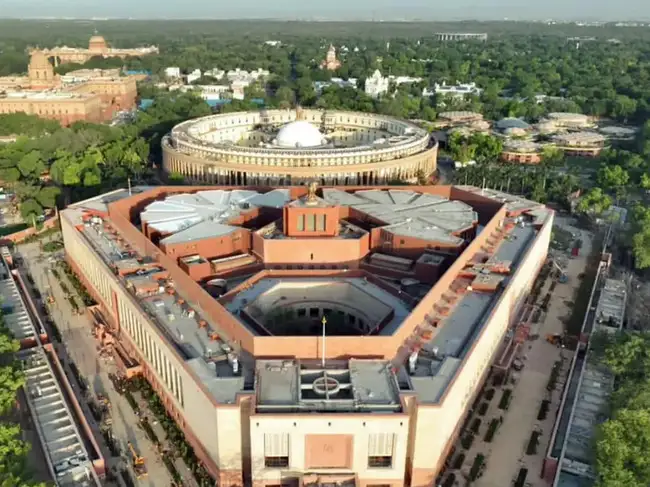
What’s the News?
- Parliament has reconstituted all 24 Department-related Parliamentary Standing Committees (DRSCs) for the 2026–27 term.
- Most committee chairpersons have continued, while important leadership changes have taken place in panels dealing with Commerce, Chemicals & Fertilizers, Education, Personnel & Law, Labour & Skill Development, and Railways.
- Shashi Tharoor continues to head the External Affairs Committee, while Bhartruhari Mahtab heads Finance and Radha Mohan Singh heads Defence.
- The reshuffle also resulted in the Trinamool Congress losing its chairmanship of the Commerce and Chemicals & Fertilizers panels.
Major Chairperson Changes
| Committee | Chairperson for 2026–27 | Previous Chairperson |
|---|---|---|
| Commerce | Sudhanshu Trivedi | Dola Sen |
| Chemicals & Fertilizers | Kakoli Ghosh Dastidar | Kirti Azad |
| Education, Women, Children, Youth & Sports | Mukul Wasnik | Digvijaya Singh |
| Personnel, Public Grievances, Law & Justice | Sujeet Kumar | Brij Lal |
| Labour, Textiles & Skill Development | Shashank Mani | Basavaraj Bommai |
| Railways | Sudheer Gupta | C. M. Ramesh |
The final reconstitution confirms these chairpersons, although some early reports on the reshuffle differed on the number of committees witnessing leadership changes.
Chairpersons of the 24 DRSCs
| Committee | Chairperson |
|---|---|
| Agriculture, Animal Husbandry & Food Processing | Charanjit Singh Channi |
| Chemicals & Fertilizers | Kakoli Ghosh Dastidar |
| Coal, Mines & Steel | Anurag Singh Thakur |
| Commerce | Sudhanshu Trivedi |
| Communications & Information Technology | Nishikant Dubey |
| Consumer Affairs, Food & Public Distribution | Kanimozhi Karunanidhi |
| Defence | Radha Mohan Singh |
| Education, Women, Children, Youth & Sports | Mukul Wasnik |
| Energy | Shrirang Appa Chandu Barne |
| External Affairs | Shashi Tharoor |
| Finance | Bhartruhari Mahtab |
| Health & Family Welfare | Ram Gopal Yadav |
| Home Affairs | Radha Mohan Das Agrawal |
| Housing & Urban Affairs | Magunta Sreenivasulu Reddy |
| Industry | Tiruchi Siva |
| Labour, Textiles & Skill Development | Shashank Mani |
| Personnel, Public Grievances, Law & Justice | Sujeet Kumar |
| Petroleum & Natural Gas | Tatkare Sunil Dattatrey |
| Railways | Sudheer Gupta |
| Rural Development & Panchayati Raj | Saptagiri Sankar Ulaka |
| Science & Technology, Environment, Forests & Climate Change | Medha Vishram Kulkarni |
| Social Justice & Empowerment | P. C. Mohan |
| Transport, Tourism & Culture | Sanjay Kumar Jha |
| Water Resources | Rajiv Pratap Rudy |
Department-related Parliamentary Standing Committees
- Total DRSCs: 24
- 16 function under the direction of the Speaker, Lok Sabha.
- 8 function under the direction of the Chairman, Rajya Sabha.
- Membership of each committee: Maximum 31 MPs
- 21 from Lok Sabha
- 10 from Rajya Sabha
- Members are nominated by the Speaker of Lok Sabha and Chairman of Rajya Sabha respectively.
- Tenure: Does not exceed one year.
- A Minister cannot be nominated as a member of a DRSC. If a committee member becomes a Minister, the member ceases to belong to the committee.
Functions of DRSCs
DRSCs strengthen parliamentary oversight over the Union Executive. They:
- Examine the Demands for Grants of the ministries/departments concerned.
- Examine Bills referred to them by the Speaker of Lok Sabha or Chairman of Rajya Sabha.
- Examine annual reports of ministries and departments.
- Consider national basic long-term policy documents referred to them.
- Scrutinise government performance and can obtain evidence from officials and experts.
They generally do not examine matters of day-to-day administration. Their recommendations are advisory/persuasive rather than legally binding, but ministries are expected to respond through Action Taken Reports.
Additional Info
- The DRSC system was formally established in 1993 with 17 committees to strengthen detailed parliamentary scrutiny of the Executive.
- The system was restructured in 2004, increasing the number of committees from 17 to 24 and reducing membership to the present 31-member structure.
- Article 118 of the Constitution empowers each House of Parliament to make rules regulating its procedure and conduct of business.
- DRSCs operate under the Rules of Procedure of Parliament.
- In the Lok Sabha Rules, provisions relating to DRSCs begin with Rule 331C.
Sources
Nobel Prize in Medicine 2026 Awarded for Optogenetics

What’s the News?
- The 2026 Nobel Prize in Physiology or Medicine has been awarded jointly to Karl Deisseroth, Peter Hegemann and Georg Nagel.
- They were honoured “for their discoveries concerning light-gated ion channels and optogenetics.”
- Their work enabled scientists to control the activity of specific cells, particularly neurons, using light and has transformed the study of brain circuits, behaviour and neurological disorders.
- The three laureates will equally share the prize money of 12 million Swedish kronor.
Who are the Laureates?
- Karl Deisseroth
- Associated with Stanford University and the Howard Hughes Medical Institute, USA.
- Demonstrated that light-sensitive proteins could be introduced into neurons and used to control their electrical activity with light.
- Peter Hegemann
- Associated with Humboldt University of Berlin, Germany.
- His research on light-sensitive microorganisms contributed to the identification and understanding of channelrhodopsins.
- Georg Nagel
- Associated with the University of Würzburg, Germany.
- Worked with Hegemann in establishing channelrhodopsins as light-gated ion channels.
What is Optogenetics?
- Optogenetics is a technique that combines genetics and optics (light) to control the activity of selected cells.
- It is particularly important in neuroscience, where researchers can selectively activate or inhibit particular neurons.
- Genes encoding light-sensitive proteins called opsins are introduced into selected cells.
- When exposed to light of an appropriate wavelength, these proteins change the movement of ions across the cell membrane, thereby altering the cell's electrical activity.
- This allows researchers to investigate which neural circuits are responsible for functions such as memory, emotion, movement and behaviour.
Channelrhodopsin?
- Channelrhodopsins are light-sensitive proteins originally identified through studies of single-celled green algae.
- They function as light-gated ion channels:
- Light activates the protein.
- The channel opens.
- Charged ions move across the cell membrane.
- The electrical activity of the cell changes.
- Hegemann and Nagel established the properties of channelrhodopsin, while Deisseroth adapted such proteins into a powerful method for controlling neurons.
Why is Optogenetics Important?
- It provides high spatial and temporal precision in controlling selected neurons.
- It has enabled scientists to map neural circuits involved in:
- Memory and learning
- Movement
- Emotions and behaviour
- Sensory processing
- It is widely used to investigate mechanisms underlying conditions such as Parkinson's disease, epilepsy, depression and other neurological or psychiatric disorders.
- Researchers are also exploring clinical applications, including using optogenetic approaches to restore visual function in some forms of blindness. Most such medical applications remain experimental rather than established treatments.
Additional Info
- Nobel Prize in Physiology or Medicine
- One of the original Nobel Prizes established through the will of Alfred Nobel.
- Awarded by the Nobel Assembly at Karolinska Institutet, Sweden.
- The first Nobel Prize in Physiology or Medicine was awarded in 1901 to Emil Adolf von Behring for work on serum therapy, particularly against diphtheria.
- The prize can be shared by a maximum of three laureates.
- Nobel Prizes
- Original fields established under Alfred Nobel's will:
- Physics
- Chemistry
- Physiology or Medicine
- Literature
- Peace
- The Prize in Economic Sciences was instituted later by Sveriges Riksbank, Sweden's central bank, in memory of Alfred Nobel.
- Original fields established under Alfred Nobel's will:
- Awarding institutions
- Physics & Chemistry — Royal Swedish Academy of Sciences
- Physiology or Medicine — Nobel Assembly at Karolinska Institutet
- Literature — Swedish Academy
- Peace — Norwegian Nobel Committee
- Economic Sciences — Royal Swedish Academy of Sciences
Sources
World Architecture Day 2026: Housing for All and Lessons from Indian Architecture
What’s the News?
- World Architecture Day 2026 was observed on 5 October, the first Monday of October, alongside the UN’s World Habitat Day.
- The International Union of Architects (UIA) highlighted “Housing for All”, while its official World Architecture Day call was “Housing is a Human Right. Build It.”
- The focus is on providing safe, adequate and affordable housing through inclusive planning, sustainable construction, renovation of existing buildings and climate-responsive design.
- The occasion also draws attention to traditional architectural solutions, including those found in India, that achieved cooling, ventilation and water management with relatively low dependence on mechanical systems.
World Architecture Day
- Established by: International Union of Architects (UIA) in 1985.
- Observed: First Monday of October every year.
- It coincides with World Habitat Day, linking architecture with urban development and human settlements.
- World Architecture Day 2026 theme: “Housing is a Human Right. Build It.”
- World Habitat Day 2026 theme: “Adequate Housing for All.”
- The UIA's 2026 activities were organised around the broader focus of “Housing for All.”
Global Housing Challenge
- More than 3 billion people worldwide lack access to adequate housing.
- Over 1.1 billion people live in informal settlements.
- Housing challenges are intensified by poverty, conflict, displacement, disasters and climate change.
- The 2026 architectural approach therefore emphasises:
- Building affordable housing.
- Reusing and adapting existing structures.
- Alternative and shared housing models.
- Climate-responsive construction.
- More efficient use of land and building materials.
Climate-Smart Features of Historic Indian Architecture
| Feature | Architectural Function |
|---|---|
| Jaalis | Perforated stone screens permit ventilation and diffused daylight while reducing direct solar heat. |
| Courtyards | Create shaded internal spaces and facilitate natural air circulation. |
| Chajjas | Projecting eaves shade walls and windows and provide protection from rain. |
| Stepwells/Baolis | Store water while deep subterranean levels provide comparatively cooler spaces. |
| Thick Walls | Stone, mud or brick walls provide thermal mass and slow the transfer of outdoor heat. |
| High Ceilings & Ventilation Openings | Allow warm air to rise and improve passive air circulation. |
| Water Channels & Pools | Support evaporative cooling in dry climates; widely incorporated into palace and garden architecture. |
| Orientation & Shaded Spaces | Buildings, verandahs and narrow streets were often designed to limit direct heat gain and exploit prevailing winds. |
Historic examples include Rani ki Vav, Adalaj Stepwell, Chand Baori, traditional havelis and pol houses, Rajput palaces and Indo-Islamic buildings with intricate jaali work.
Why Traditional Design Matters Today
- These methods represent passive architecture—maintaining thermal comfort through building form, orientation, materials, shading and ventilation rather than relying entirely on mechanical cooling.
- Such principles can help reduce:
- Building energy demand.
- Urban heat stress.
- Water consumption.
- Dependence on energy-intensive cooling.
- World Architecture Day 2026 therefore connects housing affordability with sustainability, rather than treating the housing challenge purely as a need to construct more buildings.
India’s Housing Linkage
- Pradhan Mantri Awas Yojana–Urban 2.0 (PMAY-U 2.0) aims to support 1 crore additional urban families in constructing, purchasing or renting affordable houses.
- Central assistance of up to ₹2.5 lakh per housing unit is available under applicable components.
- The programme covers poor and middle-class urban families and includes Affordable Rental Housing as a separate vertical.
- This aligns with the broader principle behind World Architecture Day 2026: housing should combine affordability, dignity, accessibility and sustainability.
Additional Info
- International Union of Architects (UIA)
- Global non-governmental federation of professional architects' organisations.
- Its network covers 124 countries and territories.
- Works on sustainable architecture, professional standards, architectural education and major challenges affecting human settlements.
- Right to Housing in India
- The Constitution does not expressly enumerate a separate fundamental Right to Housing.
- The Supreme Court has interpreted Article 21 — Right to Life and Personal Liberty to include elements of the right to shelter.
- Housing is also connected with the Directive Principles, particularly the State's responsibility for improving living conditions.
- Sustainable Development Goal 11
- SDG 11: Make cities and human settlements inclusive, safe, resilient and sustainable.
- Target 11.1: Access for all to adequate, safe and affordable housing and basic services and upgrading of slums.
World Habitat Day 2026: Adequate Housing for All

What’s the News?
- World Habitat Day 2026 was observed on 5 October 2026, the first Monday of October.
- Theme: “Adequate Housing for All.”
- The observance focuses on making access to adequate housing a reality through affordable housing, secure land tenure, basic services, inclusive neighbourhoods and climate-resilient settlements.
- The Global Observance was hosted in Muscat, Oman, bringing together governments, local authorities, communities and housing practitioners.
- The day also marks the beginning of Urban October, which concludes with World Cities Day on 31 October.
Global Housing Crisis
- More than 3 billion people worldwide lack access to adequate housing.
- More than 1.1 billion people live in slums or informal settlements.
- Housing insecurity is being intensified by:
- Poverty and inequality.
- Conflict and displacement.
- Natural disasters.
- Climate change.
- Rapid urbanisation.
- The 2026 theme promotes different housing models, including:
- Social and public housing.
- Affordable rental housing.
- Cooperative and community-led housing.
- Market-based affordable housing.
- Housing should also be environmentally sustainable, climate-resilient and culturally appropriate.
World Habitat Day
- Established by: United Nations General Assembly.
- UNGA Resolution: 40/202.
- Designated: 1985.
- First observed: 1986.
- First host city: Nairobi, Kenya.
- First theme: “Shelter is My Right.”
- Observed: First Monday of October every year.
- Coordinating UN body: UN-Habitat — United Nations Human Settlements Programme.
- Objective:
- Reflect on the condition of towns and cities.
- Promote the basic right of all to adequate shelter.
- Highlight collective responsibility for the future of human settlements.
Adequate Housing
Adequate housing extends beyond merely having a physical structure. Important elements include:
- Security of tenure.
- Availability of basic services and infrastructure.
- Affordability.
- Habitability.
- Accessibility.
- Suitable location.
- Cultural adequacy.
The right to adequate housing is recognised under international human-rights instruments and is closely linked with sustainable development.
SDG 11
- Sustainable Development Goal 11: Make cities and human settlements inclusive, safe, resilient and sustainable.
- Target 11.1: Ensure access for all to adequate, safe and affordable housing and basic services and upgrade slums by 2030.
- Housing is also central to implementation of the New Urban Agenda, adopted at the UN Conference on Housing and Sustainable Urban Development (Habitat III) in 2016.
Urban October
- World Habitat Day begins Urban October on the first Monday of October.
- World Cities Day, observed on 31 October, concludes it.
- Urban October promotes international discussion and action on:
- Sustainable urbanisation.
- Housing.
- Urban inequality.
- Climate resilience.
- Inclusive cities.
Additional Info
- UN-Habitat Scroll of Honour Award
- Launched in 1989.
- Recognises individuals and institutions making outstanding contributions to housing, sustainable urban development and improvement of urban living conditions.
- Awarded during the World Habitat Day global observance.
- India and Housing
- Pradhan Mantri Awas Yojana–Urban 2.0 (PMAY-U 2.0): Focuses on affordable urban housing for eligible families.
- Pradhan Mantri Awas Yojana–Gramin (PMAY-G): Supports pucca housing for eligible rural households.
- Housing and shelter are also associated with the broader judicial interpretation of the Right to Life under Article 21 of the Constitution.
Sources
World Teachers’ Day 2026: UNESCO Warns of Global Teacher Shortage

What’s the News?
- World Teachers’ Day 2026 was observed on 5 October.
- Theme: “Standing with teachers: 60 years of protecting the profession, advancing its status and shaping our futures.”
- The observance marked the 60th anniversary of the 1966 ILO/UNESCO Recommendation concerning the Status of Teachers.
- UNESCO’s latest data shows that the world needs about 50 million additional teachers by 2030 to achieve universal pre-primary, primary and secondary education—roughly one additional teacher for every two currently working.
World Teachers’ Day
- Observed: 5 October every year.
- First celebrated: 1994.
- It commemorates the adoption of the 1966 ILO/UNESCO Recommendation concerning the Status of Teachers.
- The Recommendation establishes international standards concerning:
- Teachers’ rights and responsibilities.
- Initial and continuing training.
- Recruitment and employment.
- Teaching and learning conditions.
- The 1997 UNESCO Recommendation concerning the Status of Higher-Education Teaching Personnel extended related principles to higher-education teachers and researchers.
Teacher Shortage Warning
New UNESCO data highlights significant pressure on the global teaching workforce:
- Current global teacher workforce: Around 107 million.
- Additional teachers required by 2030: About 50 million across pre-primary, primary and secondary education.
- Around 58% of the teachers required by 2030 will be needed to replace teachers leaving the profession, rather than to expand existing systems.
- Teacher attrition rates:
- Pre-primary: 7.2%
- Primary: 4.7%
- Secondary: 5.4%
- Teachers spend an average of about 19 hours per week in classrooms, but their total working time is around 60 hours per week, including preparation, assessment and administrative work.
- In 2 out of 5 of 68 countries analysed, teachers earn less than similarly qualified professionals across all education levels.
Why Teachers are Leaving?
Major challenges affecting the status and retention of teachers include:
- Inadequate salaries and incentives.
- Heavy workloads and administrative duties.
- Limited professional autonomy.
- Poor working conditions.
- Insufficient participation in education policymaking.
- Digital transformation of education.
- Climate-related disruptions.
- Migration and displacement.
- Difficulties in attracting teachers to remote and disadvantaged regions.
The 2026 theme therefore emphasises improving the professional, material and social status of teachers.
1966 ILO/UNESCO Recommendation
- Jointly developed by the International Labour Organization (ILO) and UNESCO.
- It remains a major international reference framework for the teaching profession.
- Covers issues such as:
- Teacher preparation and qualifications.
- Recruitment.
- Career advancement.
- Employment security.
- Salaries.
- Working conditions.
- Professional freedom.
- Teachers’ participation in educational decision-making.
- The Recommendation is undergoing revision to address contemporary challenges affecting the profession.
Additional Info
- World Teachers’ Day is jointly convened by:
- UNESCO
- International Labour Organization (ILO)
- UNICEF
- Education International (EI)
- SDG 4 – Quality Education
- Seeks to “ensure inclusive and equitable quality education and promote lifelong learning opportunities for all.”
- Target 4.c: Substantially increase the supply of qualified teachers, particularly through international cooperation for teacher training in developing countries.
- World Teachers’ Day vs Teachers’ Day in India
- World Teachers’ Day: 5 October.
- Teachers’ Day in India: 5 September.
- India observes Teachers’ Day on the birth anniversary of Dr Sarvepalli Radhakrishnan, philosopher, educationist and the second President of India.
- UNESCO-Hamdan Prize for Teacher Development
- Recognises initiatives that contribute to improving the performance and effectiveness of teachers.
- The global World Teachers’ Day 2026 programme at UNESCO Headquarters included the award ceremony for its 9th edition.
Sources
October 2026
Archive
October 2026
- 28 October 2026
- 27 October 2026
- 26 October 2026
- 24 October 2026
- 23 October 2026
- 22 October 2026
- 21 October 2026
- 20 October 2026
- 19 October 2026
- 17 October 2026
- 16 October 2026
- 15 October 2026
- 14 October 2026
- 13 October 2026
- 12 October 2026
- 10 October 2026
- 09 October 2026
- 08 October 2026
- 07 October 2026
- 06 October 2026
- 05 October 2026
- 03 October 2026
- 02 October 2026
- 01 October 2026
September 2026
- 30 September 2026
- 29 September 2026
- 28 September 2026
- 26 September 2026
- 25 September 2026
- 24 September 2026
- 23 September 2026
- 22 September 2026
- 21 September 2026
- 19 September 2026
- 18 September 2026
- 17 September 2026
- 16 September 2026
- 15 September 2026
- 12 September 2026
- 11 September 2026
- 10 September 2026
- 09 September 2026
- 08 September 2026
- 07 September 2026
- 05 September 2026
- 04 September 2026
- 03 September 2026
- 02 September 2026
- 01 September 2026
August 2026
- 31 August 2026
- 29 August 2026
- 27 August 2026
- 26 August 2026
- 25 August 2026
- 24 August 2026
- 22 August 2026
- 21 August 2026
- 20 August 2026
- 19 August 2026
- 18 August 2026
- 17 August 2026
- 14 August 2026
- 13 August 2026
- 12 August 2026
- 11 August 2026
- 10 August 2026
- 08 August 2026
- 07 August 2026
- 06 August 2026
- 05 August 2026
- 04 August 2026
- 03 August 2026
- 01 August 2026
July 2026
- 31 July 2026
- 30 July 2026
- 29 July 2026
- 28 July 2026
- 27 July 2026
- 25 July 2026
- 23 July 2026
- 22 July 2026
- 21 July 2026
- 20 July 2026
- 18 July 2026
- 17 July 2026
- 15 July 2026
- 14 July 2026
- 13 July 2026
- 11 July 2026
- 10 July 2026
- 09 July 2026
- 08 July 2026
- 07 July 2026
- 06 July 2026
- 04 July 2026
- 03 July 2026
- 02 July 2026
- 01 July 2026
June 2026
May 2026
April 2026
March 2026
- 31 March 2026
- 30 March 2026
- 28 March 2026
- 27 March 2026
- 26 March 2026
- 25 March 2026
- 24 March 2026
- 23 March 2026
- 21 March 2026
- 20 March 2026
- 19 March 2026
- 18 March 2026
- 17 March 2026
- 16 March 2026
- 14 March 2026
- 13 March 2026
- 12 March 2026
- 11 March 2026
- 10 March 2026
- 09 March 2026
- 07 March 2026
- 06 March 2026
- 05 March 2026
- 03 March 2026
- 02 March 2026
February 2026
- 28 February 2026
- 27 February 2026
- 26 February 2026
- 25 February 2026
- 24 February 2026
- 23 February 2026
- 21 February 2026
- 20 February 2026
- 19 February 2026
- 18 February 2026
- 17 February 2026
- 16 February 2026
- 13 February 2026
- 12 February 2026
- 11 February 2026
- 10 February 2026
- 09 February 2026
- 07 February 2026
- 06 February 2026
- 05 February 2026
- 04 February 2026
- 03 February 2026
- 02 February 2026
January 2026
- 31 January 2026
- 30 January 2026
- 29 January 2026
- 28 January 2026
- 27 January 2026
- 26 January 2026
- 24 January 2026
- 23 January 2026
- 22 January 2026
- 21 January 2026
- 20 January 2026
- 19 January 2026
- 16 January 2026
- 15 January 2026
- 14 January 2026
- 13 January 2026
- 12 January 2026
- 10 January 2026
- 09 January 2026
- 08 January 2026
- 07 January 2026
- 06 January 2026
- 05 January 2026
- 03 January 2026
- 02 January 2026
- 01 January 2026
December 2025
- 31 December 2025
- 30 December 2025
- 29 December 2025
- 27 December 2025
- 26 December 2025
- 24 December 2025
- 23 December 2025
- 22 December 2025
- 20 December 2025
- 19 December 2025
- 18 December 2025
- 17 December 2025
- 16 December 2025
- 15 December 2025
- 13 December 2025
- 12 December 2025
- 11 December 2025
- 10 December 2025
- 09 December 2025
- 08 December 2025
- 05 December 2025
- 04 December 2025
- 03 December 2025
- 02 December 2025
November 2025
- 29 November 2025
- 28 November 2025
- 27 November 2025
- 26 November 2025
- 25 November 2025
- 24 November 2025
- 22 November 2025
- 21 November 2025
- 20 November 2025
- 19 November 2025
- 18 November 2025
- 17 November 2025
- 15 November 2025
- 14 November 2025
- 13 November 2025
- 12 November 2025
- 11 November 2025
- 10 November 2025
- 08 November 2025
- 07 November 2025
- 06 November 2025
- 05 November 2025
- 04 November 2025
- 03 November 2025
- 01 November 2025
October 2025
- 31 October 2025
- 30 October 2025
- 29 October 2025
- 28 October 2025
- 27 October 2025
- 25 October 2025
- 24 October 2025
- 23 October 2025
- 22 October 2025
- 21 October 2025
- 20 October 2025
- 18 October 2025
- 17 October 2025
- 16 October 2025
- 15 October 2025
- 14 October 2025
- 13 October 2025
- 11 October 2025
- 10 October 2025
- 09 October 2025
- 08 October 2025
- 07 October 2025
- 06 October 2025
- 04 October 2025
- 03 October 2025
- 02 October 2025
- 01 October 2025
September 2025
- 30 September 2025
- 29 September 2025
- 27 September 2025
- 26 September 2025
- 25 September 2025
- 24 September 2025
- 23 September 2025
- 22 September 2025
- 20 September 2025
- 19 September 2025
- 18 September 2025
- 17 September 2025
- 16 September 2025
- 15 September 2025
- 13 September 2025
- 12 September 2025
- 11 September 2025
- 10 September 2025
- 09 September 2025
- 08 September 2025
- 06 September 2025
- 05 September 2025
- 04 September 2025
- 03 September 2025
- 02 September 2025
- 01 September 2025
August 2025
- 30 August 2025
- 29 August 2025
- 28 August 2025
- 27 August 2025
- 26 August 2025
- 25 August 2025
- 23 August 2025
- 22 August 2025
- 21 August 2025
- 20 August 2025
- 19 August 2025
- 18 August 2025
- 16 August 2025
- 14 August 2025
- 13 August 2025
- 12 August 2025
- 11 August 2025
- 08 August 2025
- 07 August 2025
- 06 August 2025
- 05 August 2025
- 04 August 2025
- 02 August 2025
- 01 August 2025
July 2025
- 31 July 2025
- 30 July 2025
- 29 July 2025
- 28 July 2025
- 26 July 2025
- 25 July 2025
- 24 July 2025
- 23 July 2025
- 22 July 2025
- 21 July 2025
- 19 July 2025
- 18 July 2025
- 17 July 2025
- 16 July 2025
- 15 July 2025
- 12 July 2025
- 11 July 2025
- 10 July 2025
- 09 July 2025
- 07 July 2025
- 05 July 2025
- 04 July 2025
- 03 July 2025
- 02 July 2025
- 01 July 2025
June 2025
- 30 June 2025
- 28 June 2025
- 27 June 2025
- 26 June 2025
- 25 June 2025
- 24 June 2025
- 23 June 2025
- 21 June 2025
- 20 June 2025
- 19 June 2025
- 18 June 2025
- 17 June 2025
- 16 June 2025
- 14 June 2025
- 13 June 2025
- 12 June 2025
- 11 June 2025
- 10 June 2025
- 09 June 2025
- 07 June 2025
- 06 June 2025
- 05 June 2025
- 04 June 2025
- 03 June 2025
- 02 June 2025
May 2025
April 2025
- 30 April 2025
- 29 April 2025
- 28 April 2025
- 26 April 2025
- 25 April 2025
- 24 April 2025
- 23 April 2025
- 22 April 2025
- 21 April 2025
- 19 April 2025
- 18 April 2025
- 17 April 2025
- 16 April 2025
- 15 April 2025
- 14 April 2025
- 12 April 2025
- 11 April 2025
- 10 April 2025
- 09 April 2025
- 08 April 2025
- 07 April 2025
- 05 April 2025
- 04 April 2025
- 03 April 2025
- 02 April 2025
- 01 April 2025
March 2025
- 31 March 2025
- 29 March 2025
- 28 March 2025
- 27 March 2025
- 26 March 2025
- 25 March 2025
- 24 March 2025
- 22 March 2025
- 21 March 2025
- 20 March 2025
- 19 March 2025
- 18 March 2025
- 17 March 2025
- 15 March 2025
- 13 March 2025
- 12 March 2025
- 11 March 2025
- 10 March 2025
- 08 March 2025
- 07 March 2025
- 06 March 2025
- 05 March 2025
- 04 March 2025
- 03 March 2025
- 01 March 2025
February 2025
- 28 February 2025
- 27 February 2025
- 26 February 2025
- 25 February 2025
- 24 February 2025
- 22 February 2025
- 21 February 2025
- 20 February 2025
- 19 February 2025
- 18 February 2025
- 17 February 2025
- 15 February 2025
- 14 February 2025
- 13 February 2025
- 12 February 2025
- 11 February 2025
- 10 February 2025
- 08 February 2025
- 07 February 2025
- 06 February 2025
- 05 February 2025
- 04 February 2025
- 03 February 2025
- 01 February 2025
January 2025
- 31 January 2025
- 30 January 2025
- 29 January 2025
- 28 January 2025
- 27 January 2025
- 25 January 2025
- 24 January 2025
- 23 January 2025
- 22 January 2025
- 21 January 2025
- 20 January 2025
- 18 January 2025
- 17 January 2025
- 16 January 2025
- 15 January 2025
- 14 January 2025
- 13 January 2025
- 11 January 2025
- 10 January 2025
- 09 January 2025
- 08 January 2025
- 07 January 2025
- 06 January 2025
- 04 January 2025
- 03 January 2025
- 02 January 2025
- 01 January 2025