
Current Affairs
Stay updated with the latest national and international events.
04 October 2025
Revised National Highways Fee Rules for Non-FASTag Vehicles

What’s the News?
- The Ministry of Road Transport and Highways has amended the National Highways Fee (Determination of Rates and Collection) Rules, 2008, introducing a differential penalty structure for vehicles without a valid or functional FASTag.
- Effective November 15, 2025, non-FASTag users will be charged double the applicable user fee if they pay in cash, but only 1.25 times the fee if they use Unified Payment Interface (UPI) at toll plazas.
- The move aims to promote digital payments, enhance transparency in toll collection, and reduce congestion at National Highway fee plazas.
Penalty Structure & Rationale
- Cash Payment: 2× the standard user fee
(e.g., ₹100 FASTag fee → ₹200 in cash) - UPI Payment: 1.25× the standard user fee
(e.g., ₹100 FASTag fee → ₹125 via UPI) - Objectives:
- Encourage FASTag adoption and digital transaction culture
- Reduce manual handling of cash and associated inefficiencies
- Improve traffic flow and user experience at toll plazas
- Strengthen auditability and revenue accountability in toll operations
Additional Info
- FASTag Programme:
- Launched by the National Highways Authority of India (NHAI) under the Ministry of Road Transport and Highways
- Operates on Radio Frequency Identification (RFID) technology for seamless toll deduction
- Made mandatory for all classes of vehicles on National Highways from February 15, 2021
- Unified Payment Interface (UPI):
- Developed by the National Payments Corporation of India (NPCI)
- A real-time payment system facilitating inter-bank transactions via mobile platforms
- Supports the government’s broader Digital India and less-cash economy vision
Sources
₹1,500 Crore Incentive Scheme Launched to Boost Critical Mineral Recycling

What’s the News?
- The Ministry of Mines has notified the Critical Mineral Recycling Incentive Scheme with a total outlay of ₹1,500 crore under the National Critical Minerals Mission (NCMM).
- The scheme aims to develop domestic capacity for recovering critical minerals—including lithium, cobalt, nickel, rare earth elements (REEs), and platinum group metals—from secondary sources such as e-waste, spent lithium-ion batteries, permanent magnets, catalytic converters, and alloy scraps.
- Guidelines were issued on September 8, 2025, and the application window will remain open for six months, until April 1, 2026.
Scheme Structure & Incentive Mechanism
- Beneficiary Categories:
- Group A: Large recyclers/startups with global revenue ≥ ₹200 crore, requiring minimum investment of ₹100 crore and 10,000 tonnes/year processing capacity.
- Group B: Smaller recyclers/startups with revenue < ₹200 crore, requiring ₹25 crore investment and 5,000 tonnes/year capacity.
- Fund Allocation:
- Total outlay: ₹1,485 crore (of the ₹1,500 crore)
- Lithium-ion battery recycling: ₹700 crore
- E-waste recycling: ₹650 crore
- Other waste streams: ₹135 crore
- Total outlay: ₹1,485 crore (of the ₹1,500 crore)
- Incentive Types:
- Capital Expenditure (Capex) Subsidy: 14–20%, depending on speed of commissioning post-environmental clearance.
- Operational Expenditure (Opex) Support: Linked to incremental sales:
- Group A: ₹60 crore (Year 2), ₹150 crore (Year 5)
- Group B: ₹30 crore (Year 2), ₹75 crore (Year 5)
- Incentive caps: ₹50 crore (Group A), ₹25 crore (Group B).
Additional Info
- National Critical Minerals Mission (NCMM):
- Launched to secure supply of 30 critical minerals vital for clean energy, electric vehicles, electronics, and defence.
- Aims to reduce import dependence and promote a circular economy for high-value materials.
- Strategic Importance:
- Over 70% of global critical mineral reserves are concentrated in a few countries (e.g., China, DRC), posing supply chain risks.
- Recycling can recover up to 95% of critical minerals from end-of-life products, enhancing resource security.
- Implementation Framework:
- Coordinated by Jawaharlal Nehru Aluminium Research Development and Design Centre (JNARDDC).
- Supported by private players like Attero, with 20+ e-waste collection centres planned nationwide.
Sources
World Animal Day 2025: Centenary Observance with Theme “Save Animals, Save the Planet”

What’s the News?
- World Animal Day is observed globally on October 4, and 2025 marks its 100th anniversary.
- The theme for 2025 is “Save Animals, Save the Planet”, highlighting the intrinsic link between animal welfare and planetary health, especially in the context of biodiversity loss, habitat degradation, and climate change.
- In India, the day is leveraged by the Animal Welfare Board of India (AWBI) and state authorities to sensitize the public, promote compassionate coexistence, and strengthen implementation of animal protection laws.
Significance & Global-India Linkage
- Historical Origin:
- First observed in 1925 in Berlin by German writer and activist Heinrich Zimmermann.
- The date was shifted to October 4 in 1929 to align with the feast day of St. Francis of Assisi, the patron saint of animals.
- 2025 Centenary Focus:
- Emphasis on 100 Acts of Kindness—global citizens are encouraged to pledge actions like litter-picking, plastic reduction, or supporting animal shelters.
- Special initiatives include illustrated commemorative stamps, mug design contests, and community events registered on a global map.
- India’s Observance:
- AWBI issues annual advisories for state-level celebrations, including school campaigns, veterinary camps, and awareness drives.
- Recent examples include the launch of an Animal Helpline Ambulance Service in Keonjhar, Odisha, on World Animal Day 2025.
- Aligns with India’s spiritual ethos—many temples conduct animal blessing ceremonies, reflecting cultural reverence for life.
Additional Info
- Legal & Institutional Framework in India:
- Prevention of Cruelty to Animals Act, 1960: Primary legislation governing animal welfare; administered by AWBI under the Ministry of Fisheries, Animal Husbandry and Dairying.
- Animal Welfare Board of India (AWBI):
- Statutory body established in 1962 under Section 4 of the PCA Act.
- Mandate includes advising governments, granting recognition to animal welfare organizations, and issuing guidelines on humane treatment.
- Constitutional Provisions:
- Article 48A (DPSP): Directs the State to protect and improve the environment and safeguard forests and wildlife.
- Article 51A(g) (Fundamental Duty): Imposes a duty on every citizen to “protect and improve the natural environment including forests, lakes, rivers and wildlife, and to have compassion for living creatures.”
- Global Relevance:
- Recognized by the United Nations Environment Programme (UNEP) as a key platform for One Health and sustainable development advocacy.
- Supports SDG 14 (Life Below Water) and SDG 15 (Life on Land) through conservation messaging.
Sources
PM Modi Launches ₹62,000 Crore Youth-Focused Skilling and Education Initiatives

What’s the News?
- Prime Minister Narendra Modi launched a suite of youth-centric initiatives worth over ₹62,000 crore on October 4, 2025, with a focus on skill development, employment, and higher education access.
- The flagship scheme, PM-SETU (Pradhan Mantri Skilling and Employability Transformation through Upgraded ITIs), entails an outlay of ₹60,000 crore to modernize 1,000 government Industrial Training Institutes (ITIs) across India under a hub-and-spoke model.
- Additional initiatives include the revamped Bihar Mukhyamantri Nishchay Svyam Sahayata Bhatta Yojana, Bharat Ratna Jan Nayak Karpoori Thakur Skill University, and 1,200 Vocational Skill Labs in Navodaya Vidyalayas and Eklavya Model Residential Schools.
PM-SETU: Structure & Strategic Impact
- Hub-and-Spoke Model:
- 200 Hub ITIs: Equipped with advanced infrastructure, industry-aligned trades, digital learning platforms, and incubation centres.
- 800 Spoke ITIs: Linked to hubs for resource sharing, curriculum standardization, and mentorship.
- Key Features:
- Introduction of modern machinery, AI-enabled learning, and industry partnerships.
- Focus on global employability by aligning curricula with international skill standards.
- Expected to benefit over 1 million trainees annually across sectors like manufacturing, IT, green energy, and healthcare.
- Complementary Measures:
- 46 All-India ITI Toppers felicitated at the 4th National Skill Convocation to promote dignity of skilled labour.
Additional Info
- Bihar-Specific Schemes:
- Mukhyamantri Nishchay Svyam Sahayata Bhatta Yojana: Provides ₹1,000/month for 24 months to 5 lakh graduate youth, along with free skill training.
- Bihar Student Credit Card Scheme: Offers interest-free education loans up to ₹4 lakh for higher studies.
- Institutional Developments:
- Inauguration of NIT Patna’s Bihta campus and foundation stones for academic facilities at four Bihar universities.
- Establishment of Bharat Ratna Jan Nayak Karpoori Thakur Skill University to promote vocational and industry-oriented education.
Sources
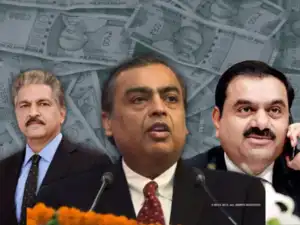
Hurun India Rich List 2025: Mukesh Ambani Tops with ₹9.55 Lakh Crore Net Worth
What’s the News?
- Mukesh Ambani & family have reclaimed the top position in the Hurun India Rich List 2025 with a net worth of ₹9.55 lakh crore, surpassing Gautam Adani & family, whose wealth stands at ₹8.14 lakh crore.
- Roshni Nadar Malhotra & family entered the top three for the first time with ₹2.84 lakh crore, becoming India’s richest woman.
- The list features over 350 billionaires, with combined wealth of ₹167 lakh crore—nearly half of India’s GDP—and highlights rising participation of women, young entrepreneurs, and self-made wealth creators.
Key Highlights & Trends
- Top 10 Richest Indians (2025):
- Mukesh Ambani & family – ₹9,55,410 crore (Reliance Industries)
- Gautam Adani & family – ₹8,14,720 crore (Adani Group)
- Roshni Nadar Malhotra & family – ₹2,84,120 crore (HCL)
- Cyrus S. Poonawalla & family – ₹2,46,460 crore (Serum Institute)
- Kumar Mangalam Birla & family – ₹2,32,850 crore (Aditya Birla Group)
- Niraj Bajaj & family – ₹2,32,680 crore (Bajaj Group)
- Dilip Shanghvi – ₹2,30,560 crore (Sun Pharma)
- Azim Premji & family – ₹2,21,250 crore (Wipro)
- Gopichand Hinduja & family – ₹1,85,310 crore (Hinduja Group)
- Radhakishan Damani & family – ₹1,82,980 crore (Avenue Supermarts)
- Notable Developments:
- Wealth Decline: Ambani’s wealth fell by 6%, while Adani’s dropped by 30% year-on-year.
- New Entrants: Shah Rukh Khan joined the billionaire club with ₹12,490 crore, becoming the richest Bollywood star.
- Youngest Billionaires: Aravind Srinivas (31, Perplexity AI) and Kaivalya Vohra (22, Zepto co-founder) represent India’s new-gen wealth creators.
- Gender Representation: 101 women featured, including 26 dollar billionaires.
Additional Info
- Hurun India Rich List:
- Published annually by Hurun Research Institute in collaboration with M3M India.
- Tracks individual and family wealth across sectors like pharma, industrial goods, chemicals, and IT.
- Sectoral Distribution:
- Pharmaceuticals: 137 billionaires
- Industrial Products: 132 billionaires
- Chemicals & Petrochemicals: 125 billionaires
- Geographical Concentration:
- Mumbai: 451 billionaires
- New Delhi: 223 billionaires
- Bengaluru: 116 billionaires
- Wealth Creation Pattern:
- 66% of billionaires are self-made
- 74% of new entrants built fortunes independently
October 2025
31 October 202530 October 202529 October 202528 October 202527 October 202525 October 202524 October 202523 October 202522 October 202521 October 202520 October 202518 October 202517 October 202516 October 202515 October 202514 October 202513 October 202511 October 202510 October 202509 October 202508 October 202507 October 202506 October 202504 October 202503 October 202502 October 202501 October 2025
Archive
October 2026
- 28 October 2026
- 27 October 2026
- 26 October 2026
- 24 October 2026
- 23 October 2026
- 22 October 2026
- 21 October 2026
- 20 October 2026
- 19 October 2026
- 17 October 2026
- 16 October 2026
- 15 October 2026
- 14 October 2026
- 13 October 2026
- 12 October 2026
- 10 October 2026
- 09 October 2026
- 08 October 2026
- 07 October 2026
- 06 October 2026
- 05 October 2026
- 03 October 2026
- 02 October 2026
- 01 October 2026
September 2026
- 30 September 2026
- 29 September 2026
- 28 September 2026
- 26 September 2026
- 25 September 2026
- 24 September 2026
- 23 September 2026
- 22 September 2026
- 21 September 2026
- 19 September 2026
- 18 September 2026
- 17 September 2026
- 16 September 2026
- 15 September 2026
- 12 September 2026
- 11 September 2026
- 10 September 2026
- 09 September 2026
- 08 September 2026
- 07 September 2026
- 05 September 2026
- 04 September 2026
- 03 September 2026
- 02 September 2026
- 01 September 2026
August 2026
- 31 August 2026
- 29 August 2026
- 27 August 2026
- 26 August 2026
- 25 August 2026
- 24 August 2026
- 22 August 2026
- 21 August 2026
- 20 August 2026
- 19 August 2026
- 18 August 2026
- 17 August 2026
- 14 August 2026
- 13 August 2026
- 12 August 2026
- 11 August 2026
- 10 August 2026
- 08 August 2026
- 07 August 2026
- 06 August 2026
- 05 August 2026
- 04 August 2026
- 03 August 2026
- 01 August 2026
July 2026
- 31 July 2026
- 30 July 2026
- 29 July 2026
- 28 July 2026
- 27 July 2026
- 25 July 2026
- 23 July 2026
- 22 July 2026
- 21 July 2026
- 20 July 2026
- 18 July 2026
- 17 July 2026
- 15 July 2026
- 14 July 2026
- 13 July 2026
- 11 July 2026
- 10 July 2026
- 09 July 2026
- 08 July 2026
- 07 July 2026
- 06 July 2026
- 04 July 2026
- 03 July 2026
- 02 July 2026
- 01 July 2026
June 2026
May 2026
April 2026
March 2026
- 31 March 2026
- 30 March 2026
- 28 March 2026
- 27 March 2026
- 26 March 2026
- 25 March 2026
- 24 March 2026
- 23 March 2026
- 21 March 2026
- 20 March 2026
- 19 March 2026
- 18 March 2026
- 17 March 2026
- 16 March 2026
- 14 March 2026
- 13 March 2026
- 12 March 2026
- 11 March 2026
- 10 March 2026
- 09 March 2026
- 07 March 2026
- 06 March 2026
- 05 March 2026
- 03 March 2026
- 02 March 2026
February 2026
- 28 February 2026
- 27 February 2026
- 26 February 2026
- 25 February 2026
- 24 February 2026
- 23 February 2026
- 21 February 2026
- 20 February 2026
- 19 February 2026
- 18 February 2026
- 17 February 2026
- 16 February 2026
- 13 February 2026
- 12 February 2026
- 11 February 2026
- 10 February 2026
- 09 February 2026
- 07 February 2026
- 06 February 2026
- 05 February 2026
- 04 February 2026
- 03 February 2026
- 02 February 2026
January 2026
- 31 January 2026
- 30 January 2026
- 29 January 2026
- 28 January 2026
- 27 January 2026
- 26 January 2026
- 24 January 2026
- 23 January 2026
- 22 January 2026
- 21 January 2026
- 20 January 2026
- 19 January 2026
- 16 January 2026
- 15 January 2026
- 14 January 2026
- 13 January 2026
- 12 January 2026
- 10 January 2026
- 09 January 2026
- 08 January 2026
- 07 January 2026
- 06 January 2026
- 05 January 2026
- 03 January 2026
- 02 January 2026
- 01 January 2026
December 2025
- 31 December 2025
- 30 December 2025
- 29 December 2025
- 27 December 2025
- 26 December 2025
- 24 December 2025
- 23 December 2025
- 22 December 2025
- 20 December 2025
- 19 December 2025
- 18 December 2025
- 17 December 2025
- 16 December 2025
- 15 December 2025
- 13 December 2025
- 12 December 2025
- 11 December 2025
- 10 December 2025
- 09 December 2025
- 08 December 2025
- 05 December 2025
- 04 December 2025
- 03 December 2025
- 02 December 2025
November 2025
- 29 November 2025
- 28 November 2025
- 27 November 2025
- 26 November 2025
- 25 November 2025
- 24 November 2025
- 22 November 2025
- 21 November 2025
- 20 November 2025
- 19 November 2025
- 18 November 2025
- 17 November 2025
- 15 November 2025
- 14 November 2025
- 13 November 2025
- 12 November 2025
- 11 November 2025
- 10 November 2025
- 08 November 2025
- 07 November 2025
- 06 November 2025
- 05 November 2025
- 04 November 2025
- 03 November 2025
- 01 November 2025
October 2025
- 31 October 2025
- 30 October 2025
- 29 October 2025
- 28 October 2025
- 27 October 2025
- 25 October 2025
- 24 October 2025
- 23 October 2025
- 22 October 2025
- 21 October 2025
- 20 October 2025
- 18 October 2025
- 17 October 2025
- 16 October 2025
- 15 October 2025
- 14 October 2025
- 13 October 2025
- 11 October 2025
- 10 October 2025
- 09 October 2025
- 08 October 2025
- 07 October 2025
- 06 October 2025
- 04 October 2025
- 03 October 2025
- 02 October 2025
- 01 October 2025
September 2025
- 30 September 2025
- 29 September 2025
- 27 September 2025
- 26 September 2025
- 25 September 2025
- 24 September 2025
- 23 September 2025
- 22 September 2025
- 20 September 2025
- 19 September 2025
- 18 September 2025
- 17 September 2025
- 16 September 2025
- 15 September 2025
- 13 September 2025
- 12 September 2025
- 11 September 2025
- 10 September 2025
- 09 September 2025
- 08 September 2025
- 06 September 2025
- 05 September 2025
- 04 September 2025
- 03 September 2025
- 02 September 2025
- 01 September 2025
August 2025
- 30 August 2025
- 29 August 2025
- 28 August 2025
- 27 August 2025
- 26 August 2025
- 25 August 2025
- 23 August 2025
- 22 August 2025
- 21 August 2025
- 20 August 2025
- 19 August 2025
- 18 August 2025
- 16 August 2025
- 14 August 2025
- 13 August 2025
- 12 August 2025
- 11 August 2025
- 08 August 2025
- 07 August 2025
- 06 August 2025
- 05 August 2025
- 04 August 2025
- 02 August 2025
- 01 August 2025
July 2025
- 31 July 2025
- 30 July 2025
- 29 July 2025
- 28 July 2025
- 26 July 2025
- 25 July 2025
- 24 July 2025
- 23 July 2025
- 22 July 2025
- 21 July 2025
- 19 July 2025
- 18 July 2025
- 17 July 2025
- 16 July 2025
- 15 July 2025
- 12 July 2025
- 11 July 2025
- 10 July 2025
- 09 July 2025
- 07 July 2025
- 05 July 2025
- 04 July 2025
- 03 July 2025
- 02 July 2025
- 01 July 2025
June 2025
- 30 June 2025
- 28 June 2025
- 27 June 2025
- 26 June 2025
- 25 June 2025
- 24 June 2025
- 23 June 2025
- 21 June 2025
- 20 June 2025
- 19 June 2025
- 18 June 2025
- 17 June 2025
- 16 June 2025
- 14 June 2025
- 13 June 2025
- 12 June 2025
- 11 June 2025
- 10 June 2025
- 09 June 2025
- 07 June 2025
- 06 June 2025
- 05 June 2025
- 04 June 2025
- 03 June 2025
- 02 June 2025
May 2025
April 2025
- 30 April 2025
- 29 April 2025
- 28 April 2025
- 26 April 2025
- 25 April 2025
- 24 April 2025
- 23 April 2025
- 22 April 2025
- 21 April 2025
- 19 April 2025
- 18 April 2025
- 17 April 2025
- 16 April 2025
- 15 April 2025
- 14 April 2025
- 12 April 2025
- 11 April 2025
- 10 April 2025
- 09 April 2025
- 08 April 2025
- 07 April 2025
- 05 April 2025
- 04 April 2025
- 03 April 2025
- 02 April 2025
- 01 April 2025
March 2025
- 31 March 2025
- 29 March 2025
- 28 March 2025
- 27 March 2025
- 26 March 2025
- 25 March 2025
- 24 March 2025
- 22 March 2025
- 21 March 2025
- 20 March 2025
- 19 March 2025
- 18 March 2025
- 17 March 2025
- 15 March 2025
- 13 March 2025
- 12 March 2025
- 11 March 2025
- 10 March 2025
- 08 March 2025
- 07 March 2025
- 06 March 2025
- 05 March 2025
- 04 March 2025
- 03 March 2025
- 01 March 2025
February 2025
- 28 February 2025
- 27 February 2025
- 26 February 2025
- 25 February 2025
- 24 February 2025
- 22 February 2025
- 21 February 2025
- 20 February 2025
- 19 February 2025
- 18 February 2025
- 17 February 2025
- 15 February 2025
- 14 February 2025
- 13 February 2025
- 12 February 2025
- 11 February 2025
- 10 February 2025
- 08 February 2025
- 07 February 2025
- 06 February 2025
- 05 February 2025
- 04 February 2025
- 03 February 2025
- 01 February 2025
January 2025
- 31 January 2025
- 30 January 2025
- 29 January 2025
- 28 January 2025
- 27 January 2025
- 25 January 2025
- 24 January 2025
- 23 January 2025
- 22 January 2025
- 21 January 2025
- 20 January 2025
- 18 January 2025
- 17 January 2025
- 16 January 2025
- 15 January 2025
- 14 January 2025
- 13 January 2025
- 11 January 2025
- 10 January 2025
- 09 January 2025
- 08 January 2025
- 07 January 2025
- 06 January 2025
- 04 January 2025
- 03 January 2025
- 02 January 2025
- 01 January 2025