
Current Affairs
Stay updated with the latest national and international events.
04 July 2026
India Designates 23 Pakistan-Based JeM and LeT Operatives as Terrorists under UAPA

What’s the News?
The Ministry of Home Affairs has designated 23 Pakistan-based operatives linked to Jaish-e-Mohammed, Lashkar-e-Taiba and associated terror networks as individual terrorists under the Unlawful Activities (Prevention) Act, 1967.
The action targets operatives allegedly involved in terror recruitment, cross-border infiltration, training of cadres, drone-based arms supply, terror financing, logistics support, online radicalisation and planning of attacks in Jammu & Kashmir.
With these additions, the number of individuals designated as terrorists under UAPA has increased to 80.
UAPA Designation
The designation has been made under Section 35 of the UAPA, which empowers the Central Government to notify an individual as a terrorist if it believes that the person is involved in terrorism.
Legal points
- Law: Unlawful Activities (Prevention) Act, 1967.
- Provision used: Section 35.
- Schedule involved: Fourth Schedule.
- Authority: Central Government / Ministry of Home Affairs.
- Nature of action: Individual terrorist designation.
- Result: The names of the 23 operatives are added to the Fourth Schedule of UAPA.
Why Fourth Schedule matters
- The First Schedule of UAPA lists terrorist organisations.
- The Fourth Schedule lists individual terrorists.
- Before the 2019 amendment, UAPA mainly enabled the listing of terrorist organisations.
- The 2019 amendment allowed the Central Government to designate individuals as terrorists.
Groups Involved
The 23 individuals are linked mainly to:
Jaish-e-Mohammed
- Pakistan-based terror organisation.
- Active in cross-border terrorism against India.
- Has been linked to attacks on Indian security forces in Jammu & Kashmir.
- Already listed as a terrorist organisation under UAPA.
Lashkar-e-Taiba
- Pakistan-based terror organisation.
- Linked to multiple attacks in India.
- Closely associated with Jamaat-ud-Dawa networks.
- Its founder Hafiz Muhammad Saeed has long been a key figure in India’s counter-terrorism concerns.
Associated modules
Some individuals are also alleged to have links with:
- The Resistance Front.
- Jamaat-ud-Dawa.
- Al-Qaeda-linked modules.
- ISIS-linked modules.
Alleged Activities
The designated individuals are accused of supporting terrorism through multiple channels:
Cross-border terrorism
- Facilitating infiltration from Pakistan and Pakistan-occupied Jammu & Kashmir.
- Acting as launching commanders for terrorists entering Jammu & Kashmir.
- Providing safe routes and local logistical backing.
Drone-based arms supply
- Sending arms, ammunition and other consignments across the border using drones.
- Supplying material support to terror modules in Jammu & Kashmir.
Recruitment and radicalisation
- Recruiting youth into JeM and LeT cadres.
- Using social media platforms for online radicalisation.
- Training cadres in encrypted communication and fake identities.
Financing and logistics
- Raising funds for terror activities.
- Collecting and routing money for terror networks.
- Providing weapons, technical support and safe passage.
Attack planning
- Alleged links to attacks on security forces in:
- Nagrota Army camp.
- Sunjwan Military Station.
- Other Jammu & Kashmir security installations.
Additional Info
UAPA, 1967
- India’s principal anti-terror legislation.
- Covers unlawful activities, terrorist acts, terrorist organisations and terror financing.
- Provides for investigation, prosecution, seizure and forfeiture of proceeds of terrorism.
Important UAPA provisions
- Section 15: Defines terrorist act.
- Section 35: Empowers Central Government to list terrorist organisations and individuals.
- Section 36: Provides for application to remove a name from the Schedule.
- First Schedule: Terrorist organisations.
- Fourth Schedule: Individual terrorists.
2019 UAPA Amendment
- Allowed designation of individuals as terrorists.
- Earlier, only organisations could be formally designated.
- Strengthened action against masterminds, handlers, financiers and recruiters who may operate without being formally part of a single organisation.
Sources
Chandannagar Jalbhara Sweet Gets GI Tag

What’s the News?
Chandannagar Jalbhara, also known as Jolbhora Sandesh, from Chandannagar in Hooghly district, West Bengal, has received the Geographical Indication tag.
The recognition protects the sweet’s regional identity, traditional preparation method and cultural legacy. It also formally links the sweet to Chandannagar, even though similar versions are made in other parts of Bengal.
The sweet has a legacy of more than 220 years and is one of Bengal’s well-known traditional confectionery items.
Jalbhara Sweet
Jalbhara is a traditional Bengali sweet known for its soft outer shell and liquid-filled centre.
Key features
-
Region: Chandannagar, Hooghly district, West Bengal.
-
Other name: Jolbhora Sandesh.
-
Main ingredient: Fresh chhena, or cottage cheese.
-
Outer layer: Soft sandesh-like chhena shell.
-
Filling:
- Nolen gur or date palm jaggery syrup.
- Rose syrup or sugar syrup in some versions.
-
Distinctive feature: The liquid filling bursts out when the sweet is bitten.
Why it is unique
- It looks like an ordinary sandesh from outside.
- Its identity comes from the hidden liquid filling.
- The name itself reflects this feature:
- Jol/Jal means water or liquid.
- Bhora/Bhara means filled.
Origin and Historical Link
The sweet is closely associated with Chandannagar’s confectionery tradition, especially the Telinipara/Telenipara area of Hooghly.
Local tradition
- The sweet is linked to confectioner Surjya Kumar Modak and his son Siddheshwar Modak.
- According to popular local accounts, it was created as a playful wedding sweet.
- The idea was to make a sweet that would surprise a new son-in-law when the syrup spilled out after the first bite.
- Over time, Jalbhara became strongly associated with Chandannagar’s food culture.
Cultural importance
- Chandannagar was a former French settlement.
- The sweet reflects the town’s long-standing Bengali confectionery tradition.
- It has become part of the region’s culinary identity and local heritage.
GI Tag
A Geographical Indication tag is given to products that have a specific geographical origin and possess qualities, reputation or characteristics linked to that place.
Legal points
- Law: Geographical Indications of Goods (Registration and Protection) Act, 1999.
- Registry: Geographical Indications Registry, Chennai.
- Product category: Food / traditional sweet.
- State: West Bengal.
- Protected identity: Chandannagar Jalbhara / Jolbhora Sandesh.
Why GI tag matters
- Protects the product name from misuse.
- Recognises Chandannagar as the place of origin.
- Helps traditional sweet makers preserve authenticity.
- Supports branding and market value.
- Promotes local food heritage and cultural tourism.
- Can help expand domestic and export opportunities.
Examples of GI-tagged products from West Bengal
- Darjeeling Tea
- Banglar Rasogolla
- Santiniketan Leather Goods
- Nakshi Kantha
- Baluchari Saree
- Fazli Mango
Sources
Eight Traditional Himachal Products Secure GI Tags
What’s the News?
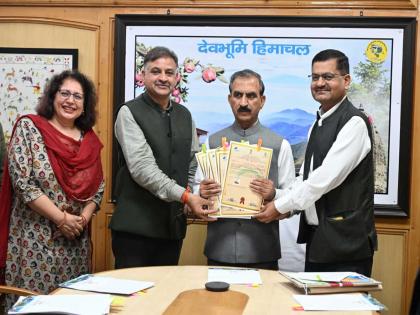
Eight traditional products from Himachal Pradesh have been registered as Geographical Indications.
The products represent the state’s agricultural, food, textile and craft traditions. With these additions, Himachal Pradesh now has 17 GI-registered traditional products.
The recognition is expected to protect the authenticity of these products, prevent imitation, improve market value and support farmers, artisans, weavers and rural entrepreneurs.
Newly GI-Tagged Products
The eight newly registered products come from different regions of Himachal Pradesh.
Region-wise list
- Spiti
- Spiti Seabuckthorn / Chharma
- Chamba
- Salooni Safed Makka or white maize.
- Chamba Metal Art
- Sirmaur
- Sirmauri Loiya, a traditional woollen gown.
- Kinnaur
- Kinnauri Topi
- Kinnauri Apple
- Kinnauri Jewellery
- Mandi
- Sepuvadi, a traditional lentil-based dish.
Role of HIMCOSTE
The registration process has been supported through the Himachal Pradesh State Council for Science, Technology and Environment, commonly known as HIMCOSTE.
Key role
- Promotes protection of local heritage products.
- Supports GI registration efforts in the state.
- Helps document traditional products and their regional identity.
- Works with relevant authorities for recognition and protection.
Earlier GI-tagged products from Himachal Pradesh
Before these eight additions, Himachal Pradesh had nine GI-tagged traditional products:
- Kullu Shawl
- Kangra Tea
- Chamba Rumal
- Kinnauri Shawl
- Kangra Painting
- Himachali Kalazeera
- Himachali Chulli Oil
- Chamba Chappal
- Lahauli Knitted Socks and Gloves
Sources
International Day of Cooperatives 2026 Observed with “Cooperatives for a Peaceful World” Theme
What’s the News?
The International Day of Cooperatives 2026 was observed on 4 July 2026 under the theme “Cooperatives for a Peaceful World.”
The day highlights the role of cooperatives in promoting inclusive development, democratic participation, social justice, sustainable livelihoods and peaceful communities.
The theme underlines that peace is not only the absence of conflict, but also the presence of trust, equality, participation and shared economic opportunity.
International Day of Cooperatives
The International Day of Cooperatives is an annual global observance dedicated to recognising the contribution of cooperative enterprises to social and economic development.
- Observed on: First Saturday of July every year.
- 2026 date: 4 July 2026.
- 2026 theme: Cooperatives for a Peaceful World.
- First celebrated by cooperative movement: 1923.
- UN recognition: 1995.
- 2026 marks:
- 104th International Cooperative Day.
- 32nd UN International Day of Cooperatives.
Cooperatives for a Peaceful World
The 2026 theme focuses on the link between cooperatives and peacebuilding.
Why cooperatives matter for peace
- They bring people together through collective ownership.
- They reduce social and economic inequalities.
- They promote democratic decision-making.
- They create livelihood opportunities at the local level.
- They strengthen trust among members and communities.
- They support vulnerable groups through shared resources and mutual support.
Wider significance
Cooperatives are considered people-centred institutions because they are based on participation, shared responsibility and community welfare rather than only profit maximisation.
They are especially relevant in areas affected by poverty, inequality, unemployment, conflict or social exclusion because they help people organise around common needs.
What are Cooperatives?
A cooperative is an autonomous association of people who voluntarily come together to meet common economic, social and cultural needs through a jointly owned and democratically controlled enterprise.
Main features
- Voluntary membership.
- Democratic control by members.
- One member, one vote principle.
- Shared ownership.
- Mutual benefit.
- Community-oriented functioning.
- Surplus used for members’ welfare or cooperative development.
Common types
- Agricultural cooperatives.
- Dairy cooperatives.
- Credit cooperatives.
- Housing cooperatives.
- Consumer cooperatives.
- Labour cooperatives.
- Marketing cooperatives.
- Fisheries cooperatives.
Cooperative Principles
Cooperatives follow globally recognised principles linked to democratic and community-based functioning.
Seven principles
- Voluntary and open membership.
- Democratic member control.
- Member economic participation.
- Autonomy and independence.
- Education, training and information.
- Cooperation among cooperatives.
- Concern for community.
These principles make cooperatives different from conventional private enterprises because they combine economic activity with social responsibility.
Cooperatives in India
India has one of the world’s largest cooperative networks. Cooperatives are important in sectors such as agriculture, dairy, credit, fertilisers, housing, handloom, fisheries and rural development.
Important examples
- AMUL
- Dairy cooperative model from Gujarat.
- Linked to India’s White Revolution.
- IFFCO
- Fertiliser cooperative.
- Plays a major role in agricultural input supply.
- Primary Agricultural Credit Societies
- Grassroots rural credit institutions.
- Provide short-term credit and allied services to farmers.
Importance for India
- Support small and marginal farmers.
- Improve rural credit access.
- Strengthen dairy and agricultural marketing.
- Reduce dependence on informal moneylenders.
- Promote women’s participation through self-help and cooperative models.
- Support inclusive and decentralised economic development.
Constitutional Provisions
Cooperative societies have constitutional recognition in India.
Important provisions
- Article 19(1)(c)
- Gives citizens the right to form associations, unions or cooperative societies.
- Article 43B
- Directs the State to promote voluntary formation, autonomous functioning, democratic control and professional management of cooperative societies.
- Part IXB
- Deals with cooperative societies.
- Contains Articles 243ZH to 243ZT.
97th Constitutional Amendment Act, 2011
- Gave constitutional status to cooperative societies.
- Added the words “cooperative societies” to Article 19(1)(c).
- Inserted Article 43B in the Directive Principles of State Policy.
- Added Part IXB to the Constitution.
Additional Info
Important organisations
- International Cooperative Alliance
- Global representative body of cooperatives.
- Established in 1895.
- Promotes cooperative values, principles and global cooperation.
- Committee for the Promotion and Advancement of Cooperatives
- Known as COPAC.
- Multi-stakeholder partnership that promotes cooperatives.
- Works with the UN system and cooperative movement.
Government initiatives in India
- Ministry of Cooperation
- Established in 2021.
- Created to strengthen the cooperative movement in India.
- Sahkar Se Samriddhi
- Vision to promote prosperity through cooperation.
- Computerisation of PACS
- Aims to modernise Primary Agricultural Credit Societies.
- Helps improve transparency, efficiency and service delivery.
- National Cooperative Database
- Developed to map cooperative societies across sectors and regions.
- Multi-State Cooperative Societies Amendment Act, 2023
- Strengthens governance, transparency and accountability in multi-state cooperatives.
July 2026
Archive
October 2026
- 28 October 2026
- 27 October 2026
- 26 October 2026
- 24 October 2026
- 23 October 2026
- 22 October 2026
- 21 October 2026
- 20 October 2026
- 19 October 2026
- 17 October 2026
- 16 October 2026
- 15 October 2026
- 14 October 2026
- 13 October 2026
- 12 October 2026
- 10 October 2026
- 09 October 2026
- 08 October 2026
- 07 October 2026
- 06 October 2026
- 05 October 2026
- 03 October 2026
- 02 October 2026
- 01 October 2026
September 2026
- 30 September 2026
- 29 September 2026
- 28 September 2026
- 26 September 2026
- 25 September 2026
- 24 September 2026
- 23 September 2026
- 22 September 2026
- 21 September 2026
- 19 September 2026
- 18 September 2026
- 17 September 2026
- 16 September 2026
- 15 September 2026
- 12 September 2026
- 11 September 2026
- 10 September 2026
- 09 September 2026
- 08 September 2026
- 07 September 2026
- 05 September 2026
- 04 September 2026
- 03 September 2026
- 02 September 2026
- 01 September 2026
August 2026
- 31 August 2026
- 29 August 2026
- 27 August 2026
- 26 August 2026
- 25 August 2026
- 24 August 2026
- 22 August 2026
- 21 August 2026
- 20 August 2026
- 19 August 2026
- 18 August 2026
- 17 August 2026
- 14 August 2026
- 13 August 2026
- 12 August 2026
- 11 August 2026
- 10 August 2026
- 08 August 2026
- 07 August 2026
- 06 August 2026
- 05 August 2026
- 04 August 2026
- 03 August 2026
- 01 August 2026
July 2026
- 31 July 2026
- 30 July 2026
- 29 July 2026
- 28 July 2026
- 27 July 2026
- 25 July 2026
- 23 July 2026
- 22 July 2026
- 21 July 2026
- 20 July 2026
- 18 July 2026
- 17 July 2026
- 15 July 2026
- 14 July 2026
- 13 July 2026
- 11 July 2026
- 10 July 2026
- 09 July 2026
- 08 July 2026
- 07 July 2026
- 06 July 2026
- 04 July 2026
- 03 July 2026
- 02 July 2026
- 01 July 2026
June 2026
May 2026
April 2026
March 2026
- 31 March 2026
- 30 March 2026
- 28 March 2026
- 27 March 2026
- 26 March 2026
- 25 March 2026
- 24 March 2026
- 23 March 2026
- 21 March 2026
- 20 March 2026
- 19 March 2026
- 18 March 2026
- 17 March 2026
- 16 March 2026
- 14 March 2026
- 13 March 2026
- 12 March 2026
- 11 March 2026
- 10 March 2026
- 09 March 2026
- 07 March 2026
- 06 March 2026
- 05 March 2026
- 03 March 2026
- 02 March 2026
February 2026
- 28 February 2026
- 27 February 2026
- 26 February 2026
- 25 February 2026
- 24 February 2026
- 23 February 2026
- 21 February 2026
- 20 February 2026
- 19 February 2026
- 18 February 2026
- 17 February 2026
- 16 February 2026
- 13 February 2026
- 12 February 2026
- 11 February 2026
- 10 February 2026
- 09 February 2026
- 07 February 2026
- 06 February 2026
- 05 February 2026
- 04 February 2026
- 03 February 2026
- 02 February 2026
January 2026
- 31 January 2026
- 30 January 2026
- 29 January 2026
- 28 January 2026
- 27 January 2026
- 26 January 2026
- 24 January 2026
- 23 January 2026
- 22 January 2026
- 21 January 2026
- 20 January 2026
- 19 January 2026
- 16 January 2026
- 15 January 2026
- 14 January 2026
- 13 January 2026
- 12 January 2026
- 10 January 2026
- 09 January 2026
- 08 January 2026
- 07 January 2026
- 06 January 2026
- 05 January 2026
- 03 January 2026
- 02 January 2026
- 01 January 2026
December 2025
- 31 December 2025
- 30 December 2025
- 29 December 2025
- 27 December 2025
- 26 December 2025
- 24 December 2025
- 23 December 2025
- 22 December 2025
- 20 December 2025
- 19 December 2025
- 18 December 2025
- 17 December 2025
- 16 December 2025
- 15 December 2025
- 13 December 2025
- 12 December 2025
- 11 December 2025
- 10 December 2025
- 09 December 2025
- 08 December 2025
- 05 December 2025
- 04 December 2025
- 03 December 2025
- 02 December 2025
November 2025
- 29 November 2025
- 28 November 2025
- 27 November 2025
- 26 November 2025
- 25 November 2025
- 24 November 2025
- 22 November 2025
- 21 November 2025
- 20 November 2025
- 19 November 2025
- 18 November 2025
- 17 November 2025
- 15 November 2025
- 14 November 2025
- 13 November 2025
- 12 November 2025
- 11 November 2025
- 10 November 2025
- 08 November 2025
- 07 November 2025
- 06 November 2025
- 05 November 2025
- 04 November 2025
- 03 November 2025
- 01 November 2025
October 2025
- 31 October 2025
- 30 October 2025
- 29 October 2025
- 28 October 2025
- 27 October 2025
- 25 October 2025
- 24 October 2025
- 23 October 2025
- 22 October 2025
- 21 October 2025
- 20 October 2025
- 18 October 2025
- 17 October 2025
- 16 October 2025
- 15 October 2025
- 14 October 2025
- 13 October 2025
- 11 October 2025
- 10 October 2025
- 09 October 2025
- 08 October 2025
- 07 October 2025
- 06 October 2025
- 04 October 2025
- 03 October 2025
- 02 October 2025
- 01 October 2025
September 2025
- 30 September 2025
- 29 September 2025
- 27 September 2025
- 26 September 2025
- 25 September 2025
- 24 September 2025
- 23 September 2025
- 22 September 2025
- 20 September 2025
- 19 September 2025
- 18 September 2025
- 17 September 2025
- 16 September 2025
- 15 September 2025
- 13 September 2025
- 12 September 2025
- 11 September 2025
- 10 September 2025
- 09 September 2025
- 08 September 2025
- 06 September 2025
- 05 September 2025
- 04 September 2025
- 03 September 2025
- 02 September 2025
- 01 September 2025
August 2025
- 30 August 2025
- 29 August 2025
- 28 August 2025
- 27 August 2025
- 26 August 2025
- 25 August 2025
- 23 August 2025
- 22 August 2025
- 21 August 2025
- 20 August 2025
- 19 August 2025
- 18 August 2025
- 16 August 2025
- 14 August 2025
- 13 August 2025
- 12 August 2025
- 11 August 2025
- 08 August 2025
- 07 August 2025
- 06 August 2025
- 05 August 2025
- 04 August 2025
- 02 August 2025
- 01 August 2025
July 2025
- 31 July 2025
- 30 July 2025
- 29 July 2025
- 28 July 2025
- 26 July 2025
- 25 July 2025
- 24 July 2025
- 23 July 2025
- 22 July 2025
- 21 July 2025
- 19 July 2025
- 18 July 2025
- 17 July 2025
- 16 July 2025
- 15 July 2025
- 12 July 2025
- 11 July 2025
- 10 July 2025
- 09 July 2025
- 07 July 2025
- 05 July 2025
- 04 July 2025
- 03 July 2025
- 02 July 2025
- 01 July 2025
June 2025
- 30 June 2025
- 28 June 2025
- 27 June 2025
- 26 June 2025
- 25 June 2025
- 24 June 2025
- 23 June 2025
- 21 June 2025
- 20 June 2025
- 19 June 2025
- 18 June 2025
- 17 June 2025
- 16 June 2025
- 14 June 2025
- 13 June 2025
- 12 June 2025
- 11 June 2025
- 10 June 2025
- 09 June 2025
- 07 June 2025
- 06 June 2025
- 05 June 2025
- 04 June 2025
- 03 June 2025
- 02 June 2025
May 2025
April 2025
- 30 April 2025
- 29 April 2025
- 28 April 2025
- 26 April 2025
- 25 April 2025
- 24 April 2025
- 23 April 2025
- 22 April 2025
- 21 April 2025
- 19 April 2025
- 18 April 2025
- 17 April 2025
- 16 April 2025
- 15 April 2025
- 14 April 2025
- 12 April 2025
- 11 April 2025
- 10 April 2025
- 09 April 2025
- 08 April 2025
- 07 April 2025
- 05 April 2025
- 04 April 2025
- 03 April 2025
- 02 April 2025
- 01 April 2025
March 2025
- 31 March 2025
- 29 March 2025
- 28 March 2025
- 27 March 2025
- 26 March 2025
- 25 March 2025
- 24 March 2025
- 22 March 2025
- 21 March 2025
- 20 March 2025
- 19 March 2025
- 18 March 2025
- 17 March 2025
- 15 March 2025
- 13 March 2025
- 12 March 2025
- 11 March 2025
- 10 March 2025
- 08 March 2025
- 07 March 2025
- 06 March 2025
- 05 March 2025
- 04 March 2025
- 03 March 2025
- 01 March 2025
February 2025
- 28 February 2025
- 27 February 2025
- 26 February 2025
- 25 February 2025
- 24 February 2025
- 22 February 2025
- 21 February 2025
- 20 February 2025
- 19 February 2025
- 18 February 2025
- 17 February 2025
- 15 February 2025
- 14 February 2025
- 13 February 2025
- 12 February 2025
- 11 February 2025
- 10 February 2025
- 08 February 2025
- 07 February 2025
- 06 February 2025
- 05 February 2025
- 04 February 2025
- 03 February 2025
- 01 February 2025
January 2025
- 31 January 2025
- 30 January 2025
- 29 January 2025
- 28 January 2025
- 27 January 2025
- 25 January 2025
- 24 January 2025
- 23 January 2025
- 22 January 2025
- 21 January 2025
- 20 January 2025
- 18 January 2025
- 17 January 2025
- 16 January 2025
- 15 January 2025
- 14 January 2025
- 13 January 2025
- 11 January 2025
- 10 January 2025
- 09 January 2025
- 08 January 2025
- 07 January 2025
- 06 January 2025
- 04 January 2025
- 03 January 2025
- 02 January 2025
- 01 January 2025