
Current Affairs
Stay updated with the latest national and international events.
03 September 2026
MoSPI Clarifies Negative Manufacturing Deflator in New GDP Series

What’s the News?
- The Ministry of Statistics and Programme Implementation (MoSPI) clarified concerns regarding the negative implicit GVA deflator of –1.5% for manufacturing in India’s latest GDP estimates.
- Under the revised GDP series with 2022–23 as the base year, India recorded real GDP growth of 7.8% in Q1 FY2026–27.
- Manufacturing recorded:
- Nominal GVA growth: 7.7%
- Real GVA growth: 9.2%
- Implicit GVA deflator: –1.5%
- MoSPI clarified that the negative deflator does not mean manufacturing or factory-gate prices declined. It resulted from input prices rising faster than output prices under the double-deflation methodology.
Why a Negative Manufacturing Deflator?
- Manufacturing GVA is estimated using the double-deflation approach.
- Under this method:
- Manufacturing output is separately adjusted for changes in output prices.
- Intermediate consumption, such as raw materials and other inputs, is separately adjusted for input-price changes.
- Real GVA = Real Output − Real Intermediate Consumption.
- When input prices increase faster than output prices, nominal value added may grow more slowly than real value added.
- Hence, the derived implicit GVA deflator can become negative even though the prices of both inputs and outputs are increasing.
- Sectors where input-price growth exceeded output-price growth included:
- Textiles and cotton ginning
- Basic metals
- Rubber and plastic products.
Implicit GVA Deflator
It broadly captures the difference between growth at current prices and growth at constant prices.
A negative implicit deflator therefore indicates that real GVA growth exceeds nominal GVA growth because of relative price movements; it should not automatically be interpreted as deflation in the conventional sense.
GDP Deflator vs CPI and WPI
- India’s overall implicit GDP deflator was around 2.5%.
- It need not correspond with either the Consumer Price Index (CPI) or Wholesale Price Index (WPI) because their coverage, weights and price concepts differ.
- CPI: Measures changes in retail prices of a specified basket of goods and services consumed by households.
- WPI: Primarily measures wholesale-level price movements of goods.
- GDP Deflator: Reflects price changes across the entire domestic output covered by GDP, including goods, services, investment and government activity.
- More than 300 individual price deflators are applied at different item/item-group levels while compiling GDP; the overall GDP deflator is a derived aggregate, rather than a single price index directly applied to GDP.
Why Were Earlier GDP Estimates Revised?
- Questions were also raised over the downward revision of the previous year's Q1 GDP estimate from about ₹86.05 lakh crore to ₹80.32 lakh crore.
- MoSPI stated that revisions resulted from:
- Shift to the 2022–23 base year.
- Incorporation of improved and updated data sources.
- Changes in estimation methodology.
- Updating of available economic indicators.
- MoSPI rejected the interpretation that the previous year's GDP was deliberately lowered to mechanically increase the current year's 7.8% growth rate.
- Quarterly GDP estimates follow a benchmark-indicator approach, where movements are based on relevant high-frequency indicators; therefore, a revision in the previous benchmark does not by itself imply an artificial increase in economic activity.
Additional Info
- GDP (Gross Domestic Product)
- Market value of final goods and services produced within the domestic territory of a country during a specified period.
- GDP at constant prices removes the effect of price changes and is used to measure real economic growth.
- GDP at current prices includes prevailing market-price effects.
- GVA (Gross Value Added)
- Measures the value generated by individual economic sectors.
- Broadly:
- GVA = Value of Output − Intermediate Consumption
- GDP is obtained from GVA after adjusting for product taxes and subsidies.
- Base Year
- Reference year used for constructing constant-price national-account estimates.
- India’s revised GDP series uses 2022–23 as the base year, replacing the earlier 2011–12 base year.
- Base-year revisions aim to capture changes in the structure of the economy, relative prices and availability of improved datasets.
- MoSPI
- Ministry: Ministry of Statistics and Programme Implementation.
- It is the Union government’s nodal ministry for major official statistics and national accounts, including GDP estimates.
- Its Statistics Wing includes the National Statistical Office (NSO).
- Statistical Discrepancy in GDP
- GDP can be estimated through different approaches, particularly the production and expenditure approaches.
- A statistical discrepancy arises because estimates generated from different datasets and approaches may not exactly coincide.
- It acts as a statistical balancing item and should not, by itself, be interpreted as evidence that GDP has been understated or overstated.
Sources
India Unveils ‘RAKSHA’ 10-Year Defence Diplomacy Roadmap
What’s the News?
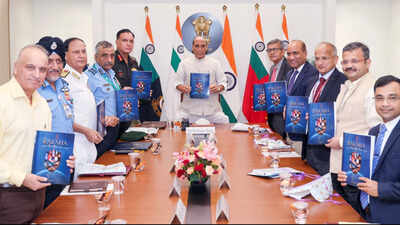
- Defence Minister Rajnath Singh unveiled ‘RAKSHA’, a comprehensive framework outlining India’s defence diplomacy strategy for the next 10 years.
- The roadmap seeks to align India’s national security objectives with proactive international cooperation and deepen defence engagement with friendly countries.
- It focuses on four major pillars: Strategic Partnerships, Capacity Building, Indigenous Exports and Maritime Security.
- The framework aims to strengthen India’s position as a reliable defence partner, defence manufacturing hub and security provider, particularly in the Indian Ocean Region (IOR).
RAKSHA Framework
RAKSHA provides an actionable framework for integrating defence cooperation with India’s broader foreign-policy and strategic objectives over the coming decade.
Four Key Pillars
- Strategic Partnerships
- Deepen bilateral and multilateral security cooperation with partner countries.
- Strengthen long-term military and strategic relationships.
- Capacity Building
- Expand:
- Joint military exercises
- Training programmes
- Professional exchanges
- Sharing of military best practices
- Builds interoperability and institutional links between India and friendly armed forces.
- Expand:
- Indigenous Defence Exports
- Promote Make-in-India defence platforms in overseas markets.
- Position India as a reliable global defence manufacturing and supply hub.
- Complements the broader Aatmanirbhar Bharat objective of strengthening indigenous defence production.
- Maritime Security
- Strengthen India’s role as a Net Security Provider and First Responder in the Indian Ocean Region.
- Supports maritime stability, disaster response and security of critical sea lanes.
Why is RAKSHA Significant?
- Institutionalises Defence Diplomacy: Provides a long-term framework instead of relying only on individual exercises, agreements or defence visits.
- Foreign Policy Tool: Defence diplomacy is increasingly being used to advance India's wider strategic and diplomatic interests.
- Defence Industrial Outreach: Links security partnerships with exports of Indian-made military equipment.
- Indian Ocean Focus: Reinforces India's strategic role in safeguarding a region containing major global maritime trade routes.
- Rules-Based Order: The roadmap envisages India as an anchor of peace, stability and a rules-based international order.
India’s Defence Manufacturing Push
RAKSHA's indigenous-exports pillar comes amid a sharp expansion of India's defence industrial base.
- Defence production in FY2025–26: ₹1.78 lakh crore
- Growth over FY2024–25: 15.6%
- Increase over FY2020–21: about 110%
- Defence exports in FY2025–26: Record ₹38,424 crore
- FY2024–25: ₹23,622 crore
- Annual increase: 62.66%
- Share in defence exports:
- DPSUs: 54.84%
- Private sector: 45.16% The export-oriented component of RAKSHA therefore connects defence diplomacy with India's emergence as a defence manufacturing and export hub.
Additional Info
- Defence Diplomacy
- Use of military and defence-related engagements to support a country's foreign and security policies.
- Major instruments include:
- Joint military exercises
- Training and military education
- Defence agreements and dialogues
- Military-to-military exchanges
- Port visits
- Defence exports and industrial cooperation
- Humanitarian Assistance and Disaster Relief (HADR)
- Net Security Provider
- Refers to a country capable of contributing to security and stability beyond its immediate territory.
- In India's context, it is particularly associated with the Indian Ocean Region through maritime surveillance, capacity building, anti-piracy cooperation and HADR.
- First Responder
- Reflects India's ability to provide rapid assistance to neighbouring and Indian Ocean countries during:
- Natural disasters
- Humanitarian emergencies
- Evacuations
- Maritime crises
- Reflects India's ability to provide rapid assistance to neighbouring and Indian Ocean countries during:
- Indian Ocean Region (IOR)
- Strategically important because major global energy and commercial shipping routes pass through it.
- India's central geographical position gives it significant maritime-security responsibilities and strategic leverage.
Sources
IAF Successfully Tests Indigenous Khagantak-243 Long-Range Glide Bomb
What’s the News?
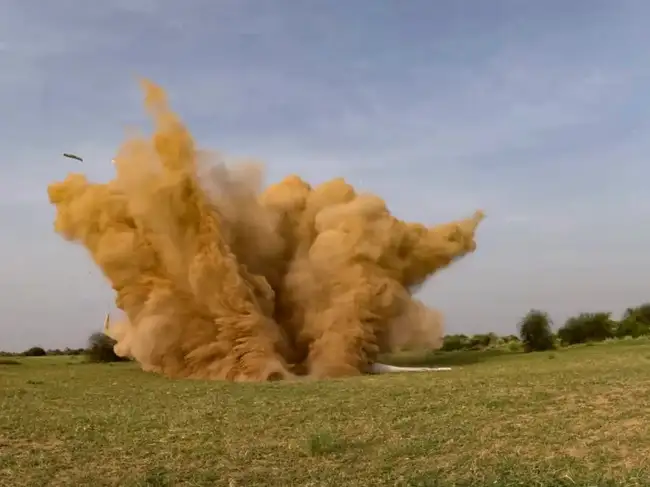
- The Indian Air Force (IAF) successfully conducted a drop trial of the indigenously designed and developed Khagantak-243 Long-Range Glide Bomb (LRGB).
- The trial met its stated objectives and strengthens India's indigenous stand-off precision-strike capability.
- Khagantak-243 is a 300-kg-class precision-guided munition with a reported range of over 140 km when released from high altitude.
- It has been developed jointly by JSR Dynamics and Bharat Electronics Limited (BEL) under India's defence-indigenisation push.
Khagantak-243?
- Type: Air-launched Long-Range Glide Bomb
- Category: Stand-off precision-guided munition
- Weight class: Around 300 kg
- Reported range: More than 140 km when released from around 12,000 metres altitude
- Warhead: Mk-81 general-purpose blast-fragmentation type
- Design:
- Cylindrical body
- Swivel-type mid-body glide wings
- Five aft control surfaces
- Initial integration platform: Su-30MKI fighter aircraft.
Guidance System
Khagantak-243 reportedly employs multiple guidance mechanisms to improve accuracy and survivability in contested environments.
- Mid-course guidance:
- Inertial Navigation System (INS)
- Jamming-resistant satellite-navigation inputs
- Depending on configuration, terminal guidance can incorporate:
- Electro-Optical/Infrared (EO/IR) seeker
- Passive-homing systems
- The wider Khagantak family follows a modular design, allowing different guidance and warhead configurations according to mission requirements.
How Does a Glide Bomb Work?
- A glide bomb is released from an aircraft but, unlike a conventional free-fall bomb, uses aerodynamic wings and control surfaces to travel a substantial horizontal distance towards its target.
- It generally does not require continuous propulsion like a cruise missile.
- Greater release altitude provides more potential glide range.
- Precision guidance enables the weapon to correct its flight path while approaching the designated target.
Stand-off Strike
A stand-off weapon allows an aircraft to attack a target from outside or near the edge of heavily defended airspace.
Advantage: The launching aircraft can engage high-value targets while reducing its exposure to enemy surface-to-air missiles and air-defence systems.
Development Partners
- JSR Dynamics
- Indian private-sector defence company based in Nagpur.
- Responsible for major elements of the weapon body and control systems.
- Bharat Electronics Limited (BEL)
- Defence Public Sector Undertaking under the Ministry of Defence.
- Provides electronics and guidance subsystems for Khagantak-243.
- The IAF had earlier placed an order with BEL for an undisclosed number of Khagantak-243 munitions.
Why is it Significant?
- Enhanced Precision Strike: Enables the IAF to strike targets from long distances with greater accuracy.
- Aircraft Survivability: Stand-off employment reduces the need for fighter aircraft to penetrate dense enemy air-defence zones.
- Lower Import Dependence: Adds an indigenous option to India's inventory of precision-guided air-to-ground weapons.
- Public-Private Collaboration: Combines capabilities of private-sector JSR Dynamics and public-sector BEL.
- Aatmanirbhar Bharat: Supports domestic development and production of sophisticated defence systems instead of dependence on imported munitions.
- Cost-effective Capability: Unpowered glide weapons can provide long-range precision-strike capability without the complex propulsion system required by cruise missiles.
Additional Info
- Su-30MKI
- Twin-engine, twin-seat multirole fighter operated by the Indian Air Force.
- Developed from Russia's Su-30 family and produced in India under licence by Hindustan Aeronautics Limited (HAL).
- It is also used as a platform for several major Indian stand-off weapons.
- INS — Inertial Navigation System
- Uses onboard motion sensors to calculate a weapon's position and movement.
- Does not require continuous external radio signals, making it useful when satellite-navigation signals are degraded or jammed.
- BEL
- Full form: Bharat Electronics Limited
- Administrative Ministry: Ministry of Defence
- Headquarters: Bengaluru
- Major Indian producer of defence electronics, including radars, communication systems and electronic-warfare equipment.
Sources
Ahuti Mk II Becomes India’s Fastest Multirotor UAV
What’s the News?
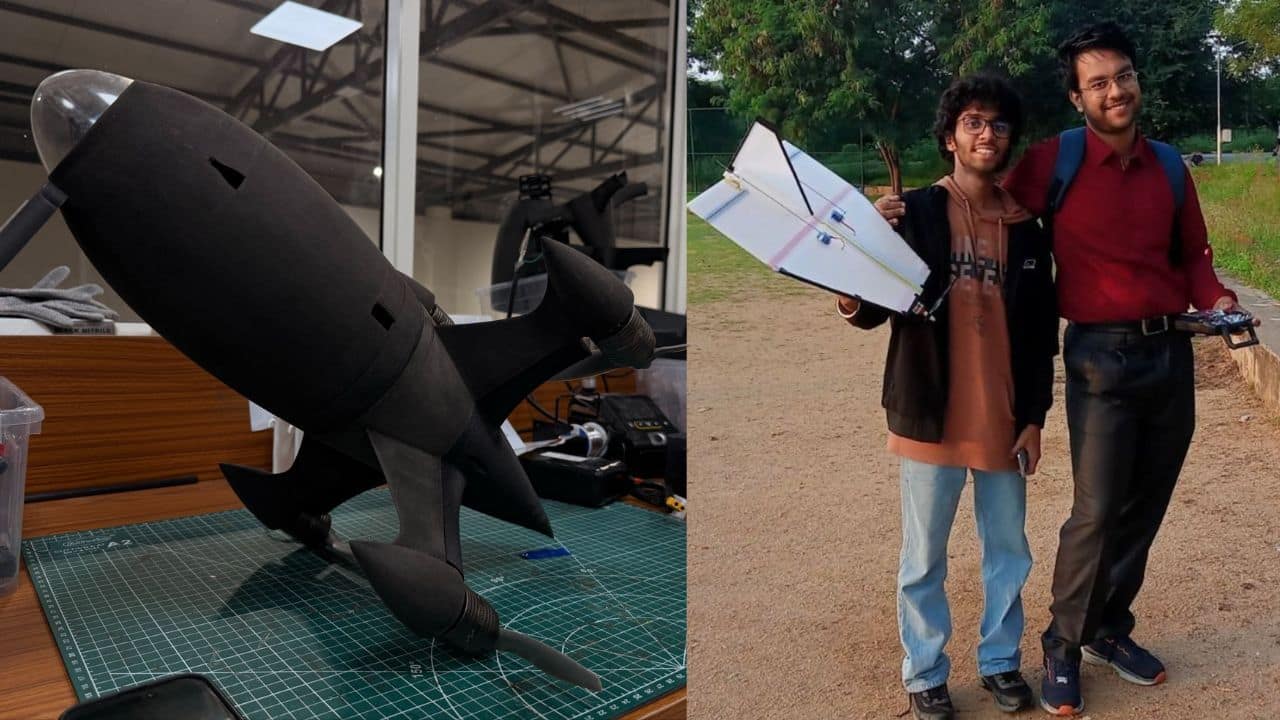
- Hyderabad-based defence-tech startup Apollyon Dynamics has developed Ahuti Mk II, an electric multirotor interceptor UAV that achieved a certified top speed of 498 kmph.
- The achievement was recognised by the India Book of Records as the maximum speed achieved by a multirotor UAV in India.
- It surpassed the previously cited Indian multirotor benchmark of about 325 kmph.
- Unlike conventional drones designed primarily for surveillance or payload delivery, Ahuti Mk II is intended to intercept hostile drones and loitering munitions.
Ahuti Mk II?
- Developer: Apollyon Dynamics
- Type: Electric multirotor interceptor UAV
- Top speed: 498 kmph
- Purpose: Counter-drone/interceptor operations
- Targets: Hostile UAVs and loitering munitions
- Incubated at: BITS Pilani, Hyderabad Campus
- The platform evolved from the original Ahuti, which achieved around 300 kmph in 2025.
- The Mk II's speed represents an improvement of about 66% over the original platform.
How Was the High Speed Achieved?
- Ahuti Mk II was substantially redesigned specifically for the high-speed interception role.
- Its:
- Airframe
- Propulsion system
- Motor configuration underwent around 10 design iterations.
- The electric propulsion system can reportedly draw a burst current of approximately 400 amperes, enabling rapid acceleration and high speed.
- The design prioritises speed, autonomy and cost efficiency rather than the hovering endurance typical of conventional multirotor UAVs.
Why is it Significant?
- Counter-Drone Capability: High speed enables the interceptor to rapidly close the distance with incoming hostile UAVs.
- Response to Loitering Munitions: Such systems are increasingly relevant because low-cost one-way attack drones can overwhelm conventional air-defence networks.
- Cost-Effective Defence: Interceptor drones can potentially provide a cheaper response to inexpensive aerial threats than using high-cost surface-to-air missiles for every target.
- Indigenous Defence Technology: Highlights the growing role of Indian defence startups in developing autonomous and unmanned military systems.
- Reduced Personnel Exposure: Unmanned interceptors can undertake high-risk engagements without directly exposing military personnel.
Multirotor UAV?
A multirotor UAV uses multiple rotors to generate lift, propulsion and directional control.
Common configurations include:
- Quadcopter: 4 rotors
- Hexacopter: 6 rotors
- Octocopter: 8 rotors
Advantages
- Vertical take-off and landing (VTOL)
- Ability to hover
- High manoeuvrability
- No conventional runway required
Limitations
- Generally lower endurance than fixed-wing UAVs
- High energy consumption
- Speed is normally sacrificed in favour of stability and hovering
Ahuti Mk II is unusual because its design emphasises extreme speed rather than prolonged hovering.
Interceptor Drone?
An interceptor drone is designed to detect, pursue and neutralise hostile aerial systems.
Possible counter-drone methods include:
- Physical interception
- Kinetic engagement
- Electronic warfare
- Radio-frequency/GNSS jamming
- Directed-energy systems
Ahuti Mk II focuses on rapid physical interception, making speed a critical operational parameter.
Additional Info
- Loitering Munition
- An unmanned weapon capable of remaining airborne over a target area before attacking a selected target.
- Combines characteristics of a UAV and guided munition.
- Often called a one-way attack drone or, informally, a kamikaze drone.
- Apollyon Dynamics
- Hyderabad-based defence technology startup.
- Founded by Jayant Khatri and Sourya Choudhary.
- Incubated at BITS Pilani, Hyderabad Campus.
- The company says it has already fielded some unmanned systems with Indian Army units.
- India Book of Records
- A record-keeping organisation documenting notable achievements in India.
- Its recognition of the 498-kmph performance establishes Ahuti Mk II's Indian multirotor speed record.
- Claims regarding it being the fastest multirotor in the wider South Asian region are company assessments based on publicly available data and should not be treated as an independently certified international record.
Sources
September 2026
Archive
October 2026
- 28 October 2026
- 27 October 2026
- 26 October 2026
- 24 October 2026
- 23 October 2026
- 22 October 2026
- 21 October 2026
- 20 October 2026
- 19 October 2026
- 17 October 2026
- 16 October 2026
- 15 October 2026
- 14 October 2026
- 13 October 2026
- 12 October 2026
- 10 October 2026
- 09 October 2026
- 08 October 2026
- 07 October 2026
- 06 October 2026
- 05 October 2026
- 03 October 2026
- 02 October 2026
- 01 October 2026
September 2026
- 30 September 2026
- 29 September 2026
- 28 September 2026
- 26 September 2026
- 25 September 2026
- 24 September 2026
- 23 September 2026
- 22 September 2026
- 21 September 2026
- 19 September 2026
- 18 September 2026
- 17 September 2026
- 16 September 2026
- 15 September 2026
- 12 September 2026
- 11 September 2026
- 10 September 2026
- 09 September 2026
- 08 September 2026
- 07 September 2026
- 05 September 2026
- 04 September 2026
- 03 September 2026
- 02 September 2026
- 01 September 2026
August 2026
- 31 August 2026
- 29 August 2026
- 27 August 2026
- 26 August 2026
- 25 August 2026
- 24 August 2026
- 22 August 2026
- 21 August 2026
- 20 August 2026
- 19 August 2026
- 18 August 2026
- 17 August 2026
- 14 August 2026
- 13 August 2026
- 12 August 2026
- 11 August 2026
- 10 August 2026
- 08 August 2026
- 07 August 2026
- 06 August 2026
- 05 August 2026
- 04 August 2026
- 03 August 2026
- 01 August 2026
July 2026
- 31 July 2026
- 30 July 2026
- 29 July 2026
- 28 July 2026
- 27 July 2026
- 25 July 2026
- 23 July 2026
- 22 July 2026
- 21 July 2026
- 20 July 2026
- 18 July 2026
- 17 July 2026
- 15 July 2026
- 14 July 2026
- 13 July 2026
- 11 July 2026
- 10 July 2026
- 09 July 2026
- 08 July 2026
- 07 July 2026
- 06 July 2026
- 04 July 2026
- 03 July 2026
- 02 July 2026
- 01 July 2026
June 2026
May 2026
April 2026
March 2026
- 31 March 2026
- 30 March 2026
- 28 March 2026
- 27 March 2026
- 26 March 2026
- 25 March 2026
- 24 March 2026
- 23 March 2026
- 21 March 2026
- 20 March 2026
- 19 March 2026
- 18 March 2026
- 17 March 2026
- 16 March 2026
- 14 March 2026
- 13 March 2026
- 12 March 2026
- 11 March 2026
- 10 March 2026
- 09 March 2026
- 07 March 2026
- 06 March 2026
- 05 March 2026
- 03 March 2026
- 02 March 2026
February 2026
- 28 February 2026
- 27 February 2026
- 26 February 2026
- 25 February 2026
- 24 February 2026
- 23 February 2026
- 21 February 2026
- 20 February 2026
- 19 February 2026
- 18 February 2026
- 17 February 2026
- 16 February 2026
- 13 February 2026
- 12 February 2026
- 11 February 2026
- 10 February 2026
- 09 February 2026
- 07 February 2026
- 06 February 2026
- 05 February 2026
- 04 February 2026
- 03 February 2026
- 02 February 2026
January 2026
- 31 January 2026
- 30 January 2026
- 29 January 2026
- 28 January 2026
- 27 January 2026
- 26 January 2026
- 24 January 2026
- 23 January 2026
- 22 January 2026
- 21 January 2026
- 20 January 2026
- 19 January 2026
- 16 January 2026
- 15 January 2026
- 14 January 2026
- 13 January 2026
- 12 January 2026
- 10 January 2026
- 09 January 2026
- 08 January 2026
- 07 January 2026
- 06 January 2026
- 05 January 2026
- 03 January 2026
- 02 January 2026
- 01 January 2026
December 2025
- 31 December 2025
- 30 December 2025
- 29 December 2025
- 27 December 2025
- 26 December 2025
- 24 December 2025
- 23 December 2025
- 22 December 2025
- 20 December 2025
- 19 December 2025
- 18 December 2025
- 17 December 2025
- 16 December 2025
- 15 December 2025
- 13 December 2025
- 12 December 2025
- 11 December 2025
- 10 December 2025
- 09 December 2025
- 08 December 2025
- 05 December 2025
- 04 December 2025
- 03 December 2025
- 02 December 2025
November 2025
- 29 November 2025
- 28 November 2025
- 27 November 2025
- 26 November 2025
- 25 November 2025
- 24 November 2025
- 22 November 2025
- 21 November 2025
- 20 November 2025
- 19 November 2025
- 18 November 2025
- 17 November 2025
- 15 November 2025
- 14 November 2025
- 13 November 2025
- 12 November 2025
- 11 November 2025
- 10 November 2025
- 08 November 2025
- 07 November 2025
- 06 November 2025
- 05 November 2025
- 04 November 2025
- 03 November 2025
- 01 November 2025
October 2025
- 31 October 2025
- 30 October 2025
- 29 October 2025
- 28 October 2025
- 27 October 2025
- 25 October 2025
- 24 October 2025
- 23 October 2025
- 22 October 2025
- 21 October 2025
- 20 October 2025
- 18 October 2025
- 17 October 2025
- 16 October 2025
- 15 October 2025
- 14 October 2025
- 13 October 2025
- 11 October 2025
- 10 October 2025
- 09 October 2025
- 08 October 2025
- 07 October 2025
- 06 October 2025
- 04 October 2025
- 03 October 2025
- 02 October 2025
- 01 October 2025
September 2025
- 30 September 2025
- 29 September 2025
- 27 September 2025
- 26 September 2025
- 25 September 2025
- 24 September 2025
- 23 September 2025
- 22 September 2025
- 20 September 2025
- 19 September 2025
- 18 September 2025
- 17 September 2025
- 16 September 2025
- 15 September 2025
- 13 September 2025
- 12 September 2025
- 11 September 2025
- 10 September 2025
- 09 September 2025
- 08 September 2025
- 06 September 2025
- 05 September 2025
- 04 September 2025
- 03 September 2025
- 02 September 2025
- 01 September 2025
August 2025
- 30 August 2025
- 29 August 2025
- 28 August 2025
- 27 August 2025
- 26 August 2025
- 25 August 2025
- 23 August 2025
- 22 August 2025
- 21 August 2025
- 20 August 2025
- 19 August 2025
- 18 August 2025
- 16 August 2025
- 14 August 2025
- 13 August 2025
- 12 August 2025
- 11 August 2025
- 08 August 2025
- 07 August 2025
- 06 August 2025
- 05 August 2025
- 04 August 2025
- 02 August 2025
- 01 August 2025
July 2025
- 31 July 2025
- 30 July 2025
- 29 July 2025
- 28 July 2025
- 26 July 2025
- 25 July 2025
- 24 July 2025
- 23 July 2025
- 22 July 2025
- 21 July 2025
- 19 July 2025
- 18 July 2025
- 17 July 2025
- 16 July 2025
- 15 July 2025
- 12 July 2025
- 11 July 2025
- 10 July 2025
- 09 July 2025
- 07 July 2025
- 05 July 2025
- 04 July 2025
- 03 July 2025
- 02 July 2025
- 01 July 2025
June 2025
- 30 June 2025
- 28 June 2025
- 27 June 2025
- 26 June 2025
- 25 June 2025
- 24 June 2025
- 23 June 2025
- 21 June 2025
- 20 June 2025
- 19 June 2025
- 18 June 2025
- 17 June 2025
- 16 June 2025
- 14 June 2025
- 13 June 2025
- 12 June 2025
- 11 June 2025
- 10 June 2025
- 09 June 2025
- 07 June 2025
- 06 June 2025
- 05 June 2025
- 04 June 2025
- 03 June 2025
- 02 June 2025
May 2025
April 2025
- 30 April 2025
- 29 April 2025
- 28 April 2025
- 26 April 2025
- 25 April 2025
- 24 April 2025
- 23 April 2025
- 22 April 2025
- 21 April 2025
- 19 April 2025
- 18 April 2025
- 17 April 2025
- 16 April 2025
- 15 April 2025
- 14 April 2025
- 12 April 2025
- 11 April 2025
- 10 April 2025
- 09 April 2025
- 08 April 2025
- 07 April 2025
- 05 April 2025
- 04 April 2025
- 03 April 2025
- 02 April 2025
- 01 April 2025
March 2025
- 31 March 2025
- 29 March 2025
- 28 March 2025
- 27 March 2025
- 26 March 2025
- 25 March 2025
- 24 March 2025
- 22 March 2025
- 21 March 2025
- 20 March 2025
- 19 March 2025
- 18 March 2025
- 17 March 2025
- 15 March 2025
- 13 March 2025
- 12 March 2025
- 11 March 2025
- 10 March 2025
- 08 March 2025
- 07 March 2025
- 06 March 2025
- 05 March 2025
- 04 March 2025
- 03 March 2025
- 01 March 2025
February 2025
- 28 February 2025
- 27 February 2025
- 26 February 2025
- 25 February 2025
- 24 February 2025
- 22 February 2025
- 21 February 2025
- 20 February 2025
- 19 February 2025
- 18 February 2025
- 17 February 2025
- 15 February 2025
- 14 February 2025
- 13 February 2025
- 12 February 2025
- 11 February 2025
- 10 February 2025
- 08 February 2025
- 07 February 2025
- 06 February 2025
- 05 February 2025
- 04 February 2025
- 03 February 2025
- 01 February 2025
January 2025
- 31 January 2025
- 30 January 2025
- 29 January 2025
- 28 January 2025
- 27 January 2025
- 25 January 2025
- 24 January 2025
- 23 January 2025
- 22 January 2025
- 21 January 2025
- 20 January 2025
- 18 January 2025
- 17 January 2025
- 16 January 2025
- 15 January 2025
- 14 January 2025
- 13 January 2025
- 11 January 2025
- 10 January 2025
- 09 January 2025
- 08 January 2025
- 07 January 2025
- 06 January 2025
- 04 January 2025
- 03 January 2025
- 02 January 2025
- 01 January 2025