
Current Affairs
Stay updated with the latest national and international events.
03 September 2025
UPSC to Establish Centre of Excellence

What’s the News?
- The Union Public Service Commission (UPSC) has proposed to establish a Centre of Excellence (CoE) as a repository of best practices from UPSC and State Public Service Commissions (PSCs).
- The initiative was announced by UPSC Chairman Dr. Ajay Kumar during a virtual meeting with chairpersons and members of 27 State PSCs, including UPSC Members Dr. Dinesh Dasa and Ms. Anuradha Prasad.
- The CoE aims to serve as a knowledge hub for Standard Operating Procedures (SOPs), innovations, and key takeaways from recruitment processes.
- This forms part of UPSC’s centenary celebrations (October 2025–October 2026), reflecting on past achievements and envisioning future reforms in public service recruitment.
Centre of Excellence Initiative
- Objectives:
- Act as a collaborative platform for documenting and sharing best practices, SOPs, and technological innovations in recruitment.
- Enhance transparency, efficiency, and inclusivity in recruitment processes across UPSC and State PSCs.
- Assist other national recruitment bodies in strengthening their examination and selection systems.
- Key Features:
- Knowledge Repository: Centralized database of recruitment SOPs, innovations (e.g., AI-based surveillance, facial recognition), and strategies to prevent malpractices.
- Inclusivity Focus: Address low participation from aspirational districts through awareness campaigns, mentoring, and outreach programs.
- Talent Utilization: Expand initiatives like Pratibha Setu, a portal connecting near-successful candidates with opportunities in semi-government, quasi-judicial, and private sectors.
- Collaboration: UPSC will lead the initiative, but State PSCs are crucial contributors to knowledge-sharing and implementation.
Additional Info
- History of UPSC:
- The first Public Service Commission was established on October 1, 1926, based on the recommendations of the Lee Commission (1924) and the Government of India Act, 1919.
- It was renamed the Federal Public Service Commission under the Government of India Act, 1935.
- After independence, it became the Union Public Service Commission (UPSC) on January 26, 1950, with the adoption of the Constitution.
- Constitutional Provisions for UPSC:
- Part XIV of the Constitution, titled 'Services Under the Union and the States', deals with Public Service Commissions.
- Article 315: Provides for the establishment of a Public Service Commission for the Union and a Public Service Commission for each State.
- Article 320: Lays down the functions of the Public Service Commissions, including conducting examinations for appointments to the services of the Union and advising on matters of recruitment, promotion, and disciplinary actions.
- Article 322: States that the expenses of the UPSC, including salaries and allowances, are charged to the Consolidated Fund of India.
- Article 323: Requires the UPSC to present an annual report on its work to the President of India.
- Related Initiatives:
- Pratibha Setu Portal: Highlighted by the UPSC Chairman as a successful initiative that provides employment opportunities to candidates who reach the interview stage of UPSC exams but do not make the final merit list.
Sources
APEDA Launches BHARATI Initiative to Boost Agri-Food Exports
What’s the News?
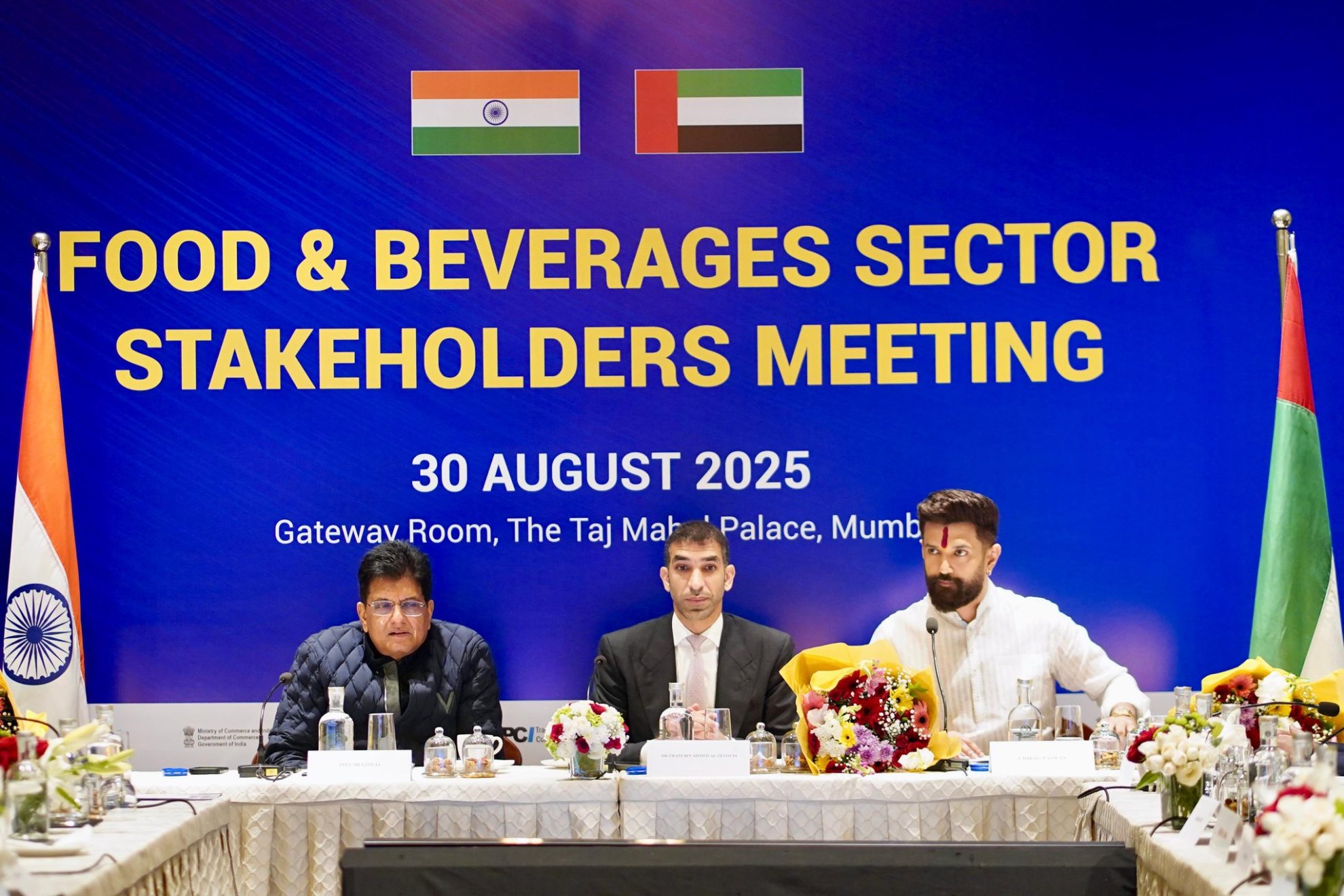
- APEDA has launched BHARATI — Bharat’s Hub for Agritech, Resilience, Advancement and Incubation for Export Enablement — to support 100 agri-food startups and accelerate export readiness.
- The initiative aims to raise India’s agri-food exports to $50 billion by 2030 and was announced with senior commerce and food-processing ministry representation.
Initiative Overview
BHARATI (Bharat’s Hub for Agritech, Resilience, Advancement, and Incubation for Export Enablement) is structured as a national startup-support and export-acceleration platform.
- Startup Cohort: Selection of 100 startups via APEDA’s website (from September 2025), focusing on high-value domains like GI-tagged products, organic foods, superfoods, livestock, and AYUSH products.
- Acceleration Programme: A 3-month training covering product development, export readiness, regulatory compliance (e.g., SPS-TBT standards), and market access.
- Technology Integration: Promotion of AI-based quality checks, blockchain traceability, IoT-enabled cold chains, and agri-fintech solutions to reduce wastage and enhance supply chain resilience.
- Collaborative Ecosystem: Partnerships with state agricultural boards, IITs, NITs, industry bodies, and existing accelerators to leverage expertise and resources.
Additional Info
- Agricultural and Processed Food Products Export Development Authority (APEDA):
- APEDA is a statutory body established under the APEDA Act, 1985.
- It functions under the Ministry of Commerce and Industry.
- Its primary role is the promotion and development of the export of scheduled agricultural and processed food products from India.
- APEDA also serves as the secretariat for the implementation of the National Programme for Organic Production (NPOP), which accredits certification bodies for organic exports.
- Related Government Schemes:
- Startup India: A flagship initiative of the Government of India launched in 2016 to build a strong ecosystem for nurturing innovation and startups, driving sustainable economic growth and generating large-scale employment opportunities.
- Atmanirbhar Bharat Abhiyan: A vision of a "New India" announced by the Prime Minister in 2020. It includes an economic package to make India self-reliant by supporting local manufacturing and supply chains.
- Production Linked Incentive (PLI) Scheme: A scheme to boost domestic manufacturing and reduce import bills. It offers incentives to companies for enhancing their production and is a key component of the Atmanirbhar Bharat vision.
Sources
GST Council Rationalizes Tax Slabs

What’s the News?
- The GST Council has approved a major rationalization of the GST structure, moving from a four-tiered system to a simplified two-rate structure of 5% and 18%.
- A special 40% rate has been introduced for a limited number of "sin" and luxury goods.
- This reform is expected to make many essential and consumer goods cheaper, boosting consumption and simplifying the tax regime. Experts believe states will remain net gainers due to increased revenue from higher consumption.
GST Rate Rationalization
The new structure aims to correct the inverted duty structure and streamline the tax burden. The key changes include:
- From 28% to 18%: Many white goods and consumer electronics like air conditioners, televisions (including all LEDs/LCDs), dishwashing machines, and small cars and motorcycles (up to 350cc) have been moved to the lower slab.
- From 12%/18% to 5%: A wide range of daily essentials and processed foods will now be taxed at 5%. This includes toiletries (e.g., soap, shampoo, hair oil), bicycles, tableware, and packaged foods like namkeens, bhujia, and some dairy products.
- Nil GST: Some items like UHT milk, pre-packaged paneer, and all Indian breads (roti, paratha) are now tax-exempt. Additionally, individual health and life insurance policies, as well as several life-saving medicines and medical devices, have been exempted from GST.
- 40% Special Rate: A new highest slab has been created for certain demerit and luxury goods such as carbonated sugary drinks and high-end cars.
Additional Info
- Goods and Services Tax (GST):
- GST is an indirect, consumption-based tax levied on the supply of goods and services.
- It was implemented in India on July 1, 2017, through the 101st Constitutional Amendment Act.
- The tax system subsumed various Central and State taxes, creating a unified national market.
- GST Council:
- The GST Council is a constitutional body established under Article 279A of the Constitution.
- It is a federal forum comprising the Union Finance Minister (Chairperson) and finance ministers from all states and Union Territories.
- The Council is the key decision-making body for all matters related to GST, including tax rates, rules, and exemptions.
- Decisions are made by a three-fourths majority of the weighted votes of the members present and voting. The Centre's vote has a weight of one-third, and the states' votes have a weight of two-thirds.
- Inverted Duty Structure:
- This refers to a situation where the tax on raw materials or inputs is higher than the tax on the finished product or output.
- The new reforms aim to correct this by reducing taxes on inputs, such as those used in the man-made textile and fertilizer sectors, to promote domestic manufacturing.
Sources
Cabinet Approves Incentive Scheme for Critical Mineral Recycling

What’s the News?
- Union Cabinet approved a ₹1,500 crore incentive scheme under the National Critical Mineral Mission (NCMM) to promote recycling of e-waste, lithium-ion battery (LIB) scrap and other secondary feedstocks for recovery of critical minerals.
- The scheme targets creation of large-scale domestic recycling capacity to reduce import dependence and strengthen supply-chain resilience for strategic minerals.
Scheme design & expected impact
- Duration & scope
- Six-year programme covering new units and expansion/modernisation of existing recyclers.
- Financial support
- 20% capital subsidy on plant, machinery and utilities for units meeting timelines.
- Operational subsidy linked to incremental sales, disbursed as 40% in year 2 and 60% in year 5, subject to targets.
- Per-entity caps: ₹50 crore (large) and ₹25 crore (small); operational subsidy ceilings ₹10 crore and ₹5 crore respectively.
- Inclusion
- Both established recyclers and smaller/start-ups eligible. One-third of outlay earmarked for small and new recyclers.
- Outcomes projected
- Build ~270 kilotonnes annual recycling capacity and produce ~40 kilotonnes of critical minerals annually.
- Mobilise ~₹8,000 crore investment and generate ~70,000 direct and indirect jobs.
Additional Info
- What are Critical Minerals?:
- Critical minerals are those essential for a country's economic and national security, with a high risk of supply disruption due to limited availability or concentration in a few countries.
- India has identified 30 critical minerals, including lithium, cobalt, nickel, rare earth elements, graphite, and vanadium, which are vital for clean energy technologies, electronics, and defense.
- India currently has a high import dependency for most of these minerals.
- Related Government Initiatives:
- National Critical Mineral Mission (NCMM): Launched to reinforce India's critical mineral value chain from exploration to processing and recycling.
- Mines and Minerals (Development and Regulation) Amendment Act, 2023: This amendment allows private sector participation in the exploration and mining of six critical minerals previously classified as atomic minerals.
- Khanij Bidesh India Limited (KABIL): A joint venture of three public sector undertakings (NALCO, HCL, MECL) to identify and acquire critical and strategic mineral assets abroad.
Sources
ISRO’s Vikram-32 Chip Presented to PM Modi at Semicon India 2025

What’s the News?
- At the Semicon India 2025 summit, Union IT Minister Ashwini Vaishnaw presented the first "Made-in-India" semiconductor chip, Vikram-32, to Prime Minister Narendra Modi.
- The Vikram-32 processor, developed by ISRO's Semiconductor Laboratory (SCL), is the country’s first fully indigenous 32-bit microprocessor.
- The presentation of the chip, along with test chips from four other approved projects, marks a significant milestone in India's journey towards semiconductor self-reliance.
Vikram-32 Processor
- The Vikram-32 is an advanced version of ISRO’s earlier 16-bit microprocessor and is specifically designed to withstand the extreme conditions of space launch vehicles and satellites.
- Key Features:
- Architecture: It is a 32-bit microprocessor, which is a major upgrade from the previous 16-bit version.
- Indigenous Development: It was designed and fabricated entirely in India at ISRO’s Semiconductor Laboratory (SCL) in Mohali, Punjab, using a 180nm CMOS technology.
- Space-Grade Qualification: The chip has been successfully validated in space during the PSLV-C60 mission, proving its reliability for use in harsh space environments.
- Design origin: Vikram Sarabhai Space Centre (VSSC); successor to earlier indigenous VIKRAM1601.
- Applications: satellites, launch vehicles, defence and other high-reliability systems.
Additional Info
- Semicon India Program:
- The Semicon India Program was launched in 2021 with a total outlay of ₹76,000 crore to create a robust semiconductor ecosystem in India.
- It operates under the India Semiconductor Mission (ISM), a nodal agency under the Ministry of Electronics and Information Technology (MeitY).
- The program aims to attract significant investments in semiconductor fabrication (fabs), display fabs, and Outsourced Semiconductor Assembly and Test (OSAT) facilities.
- Related Government Initiatives:
- Production Linked Incentive (PLI) Scheme: The semiconductor mission is a core component of the PLI scheme, offering financial incentives to companies setting up manufacturing units in India.
- Design Linked Incentive (DLI) Scheme: This scheme supports domestic companies, startups, and MSMEs in semiconductor design by providing financial and infrastructure support.
- Semicon India 2025 Summit: The fourth edition of the annual conference, themed “Building the Next Semiconductor Powerhouse”, was held in New Delhi. It brought together global industry leaders, policymakers, and academics to discuss and drive the future of semiconductors in India. During the summit, PM Modi stated that India is moving from being a "backend" hub to a "full-stack semiconductor nation."
Sources
DGCA Grants Historic Safety Clearance to Air India SATS

What’s the News?
- DGCA granted the first-ever safety clearance for ground-handling operations to Air India SATS (AISATS) under Civil Aviation Requirements (CAR) Section 4, Series X, Part II.
- The clearance recognises AISATS’ Safety Management System (SMS), training, risk controls and infrastructure after regulator inspections.
- The move aligns India with ICAO guidance and makes India the second country in the Asia-Pacific to formalise such a safety framework for ground handlers.
Safety Clearance — scope & implications
- Scope
- Covers core ground-handling tasks such as ramp operations, baggage handling, aircraft servicing, refuelling and passenger services.
- Regulatory basis
- Issued under CAR Section 4, Series X, Part II which mandates safety clearance and SMS for ground handlers.
- Operational implications
- Raises minimum safety and training benchmarks for handlers operating at major airports.
- Expected to shorten unsafe turnarounds, reduce incidents and improve auditability of ground operations.
Additional Info
- Air India SATS Airport Services (AISATS):
- It is a 50:50 joint venture between Air India Limited (a part of the Tata Group) and SATS Limited, a leading provider of gateway services and food solutions.
- AISATS provides ground handling and cargo services at several major Indian airports, including Delhi, Bengaluru, Hyderabad, Mangalore, Ranchi, and Thiruvananthapuram.
- Directorate General of Civil Aviation (DGCA):
- The DGCA is the statutory regulatory body for civil aviation in India.
- It functions under the Ministry of Civil Aviation and is primarily responsible for air safety, airworthiness standards, and the enforcement of civil air regulations.
- The DGCA also coordinates all regulatory functions with the International Civil Aviation Organization (ICAO), a specialized UN agency.
- Related Aviation Regulations:
- Civil Aviation Requirements (CAR): These are the rules and regulations issued by the DGCA to ensure the safety and efficiency of civil aviation in India. The new safety clearance for ground handlers is a new provision under this framework.
- ICAO Annexes: The DGCA’s move to mandate Safety Management Systems for ground handling is in line with the standards and recommended practices laid down in the annexes to the Chicago Convention, to which India is a signatory.
Sources
Indian Scientists Develop Credit Card-Sized Computer for Space Mission

What’s the News?
- Scientists at the Raman Research Institute (RRI) have developed a compact, credit card-sized digital receiver system for a proposed space payload called PRATUSH.
- PRATUSH (Probing ReionizATion of the Universe using Signal from Hydrogen) is a conceptual mission to study the "Cosmic Dawn", the period when the first stars and galaxies formed in the universe.
- The tiny computer will be the "master conductor" for a radiometer, designed to detect faint radio signals from hydrogen atoms from the early universe.
PRATUSH Mission and the Cosmic Dawn
- The PRATUSH mission aims to detect the 21-cm radio signal emitted by hydrogen atoms, which carries imprints of the universe's earliest moments.
- Why from the Moon?:
- On Earth, these faint signals are drowned out by strong radio noise and interference from sources like FM transmissions and ionospheric distortions.
- PRATUSH is designed to be a future lunar orbiter, specifically targeting the far side of the Moon, which is considered the most radio-quiet place in the inner solar system.
- Technology:
- The new system is built around a single-board computer (SBC) similar to a Raspberry Pi.
- This compact design reduces the payload's size, weight, and power consumption (SWaP), which are critical for space missions.
- The SBC will coordinate the antenna, receiver, and a powerful chip called a Field Programmable Gate Array (FPGA) that processes streams of cosmic data.
- Laboratory tests have shown the system's ability to reduce noise to extremely low levels, demonstrating its high sensitivity to detect the faint signals from the early universe.
Additional Info
- Raman Research Institute (RRI):
- An autonomous research institute located in Bengaluru, India.
- It was founded by Nobel Laureate Sir C.V. Raman in 1948 and is funded by the Department of Science and Technology (DST).
- RRI conducts research in various fields of science, including astronomy, astrophysics, condensed matter physics, and soft matter.
- ISRO (Indian Space Research Organisation):
- India's national space agency under the Department of Space.
- ISRO collaborates with various research institutions, including RRI, to develop and execute space science missions.
- The Cosmic Dawn:
- This is the period in the early universe, roughly 100 million years after the Big Bang, when the first stars and galaxies formed.
- These first light sources reionized the neutral hydrogen gas that filled the universe, fundamentally changing its evolution.
- Other related missions: The US-based Lunar Surface Electromagnetic Experiment (LuSEE) is a similar mission by NASA and the Berkeley Lab, designed to land on the far side of the moon to conduct radio astronomy.
Sources
September 2025
30 September 202529 September 202527 September 202526 September 202525 September 202524 September 202523 September 202522 September 202520 September 202519 September 202518 September 202517 September 202516 September 202515 September 202513 September 202512 September 202511 September 202510 September 202509 September 202508 September 202506 September 202505 September 202504 September 202503 September 202502 September 202501 September 2025
Archive
October 2026
- 28 October 2026
- 27 October 2026
- 26 October 2026
- 24 October 2026
- 23 October 2026
- 22 October 2026
- 21 October 2026
- 20 October 2026
- 19 October 2026
- 17 October 2026
- 16 October 2026
- 15 October 2026
- 14 October 2026
- 13 October 2026
- 12 October 2026
- 10 October 2026
- 09 October 2026
- 08 October 2026
- 07 October 2026
- 06 October 2026
- 05 October 2026
- 03 October 2026
- 02 October 2026
- 01 October 2026
September 2026
- 30 September 2026
- 29 September 2026
- 28 September 2026
- 26 September 2026
- 25 September 2026
- 24 September 2026
- 23 September 2026
- 22 September 2026
- 21 September 2026
- 19 September 2026
- 18 September 2026
- 17 September 2026
- 16 September 2026
- 15 September 2026
- 12 September 2026
- 11 September 2026
- 10 September 2026
- 09 September 2026
- 08 September 2026
- 07 September 2026
- 05 September 2026
- 04 September 2026
- 03 September 2026
- 02 September 2026
- 01 September 2026
August 2026
- 31 August 2026
- 29 August 2026
- 27 August 2026
- 26 August 2026
- 25 August 2026
- 24 August 2026
- 22 August 2026
- 21 August 2026
- 20 August 2026
- 19 August 2026
- 18 August 2026
- 17 August 2026
- 14 August 2026
- 13 August 2026
- 12 August 2026
- 11 August 2026
- 10 August 2026
- 08 August 2026
- 07 August 2026
- 06 August 2026
- 05 August 2026
- 04 August 2026
- 03 August 2026
- 01 August 2026
July 2026
- 31 July 2026
- 30 July 2026
- 29 July 2026
- 28 July 2026
- 27 July 2026
- 25 July 2026
- 23 July 2026
- 22 July 2026
- 21 July 2026
- 20 July 2026
- 18 July 2026
- 17 July 2026
- 15 July 2026
- 14 July 2026
- 13 July 2026
- 11 July 2026
- 10 July 2026
- 09 July 2026
- 08 July 2026
- 07 July 2026
- 06 July 2026
- 04 July 2026
- 03 July 2026
- 02 July 2026
- 01 July 2026
June 2026
May 2026
April 2026
March 2026
- 31 March 2026
- 30 March 2026
- 28 March 2026
- 27 March 2026
- 26 March 2026
- 25 March 2026
- 24 March 2026
- 23 March 2026
- 21 March 2026
- 20 March 2026
- 19 March 2026
- 18 March 2026
- 17 March 2026
- 16 March 2026
- 14 March 2026
- 13 March 2026
- 12 March 2026
- 11 March 2026
- 10 March 2026
- 09 March 2026
- 07 March 2026
- 06 March 2026
- 05 March 2026
- 03 March 2026
- 02 March 2026
February 2026
- 28 February 2026
- 27 February 2026
- 26 February 2026
- 25 February 2026
- 24 February 2026
- 23 February 2026
- 21 February 2026
- 20 February 2026
- 19 February 2026
- 18 February 2026
- 17 February 2026
- 16 February 2026
- 13 February 2026
- 12 February 2026
- 11 February 2026
- 10 February 2026
- 09 February 2026
- 07 February 2026
- 06 February 2026
- 05 February 2026
- 04 February 2026
- 03 February 2026
- 02 February 2026
January 2026
- 31 January 2026
- 30 January 2026
- 29 January 2026
- 28 January 2026
- 27 January 2026
- 26 January 2026
- 24 January 2026
- 23 January 2026
- 22 January 2026
- 21 January 2026
- 20 January 2026
- 19 January 2026
- 16 January 2026
- 15 January 2026
- 14 January 2026
- 13 January 2026
- 12 January 2026
- 10 January 2026
- 09 January 2026
- 08 January 2026
- 07 January 2026
- 06 January 2026
- 05 January 2026
- 03 January 2026
- 02 January 2026
- 01 January 2026
December 2025
- 31 December 2025
- 30 December 2025
- 29 December 2025
- 27 December 2025
- 26 December 2025
- 24 December 2025
- 23 December 2025
- 22 December 2025
- 20 December 2025
- 19 December 2025
- 18 December 2025
- 17 December 2025
- 16 December 2025
- 15 December 2025
- 13 December 2025
- 12 December 2025
- 11 December 2025
- 10 December 2025
- 09 December 2025
- 08 December 2025
- 05 December 2025
- 04 December 2025
- 03 December 2025
- 02 December 2025
November 2025
- 29 November 2025
- 28 November 2025
- 27 November 2025
- 26 November 2025
- 25 November 2025
- 24 November 2025
- 22 November 2025
- 21 November 2025
- 20 November 2025
- 19 November 2025
- 18 November 2025
- 17 November 2025
- 15 November 2025
- 14 November 2025
- 13 November 2025
- 12 November 2025
- 11 November 2025
- 10 November 2025
- 08 November 2025
- 07 November 2025
- 06 November 2025
- 05 November 2025
- 04 November 2025
- 03 November 2025
- 01 November 2025
October 2025
- 31 October 2025
- 30 October 2025
- 29 October 2025
- 28 October 2025
- 27 October 2025
- 25 October 2025
- 24 October 2025
- 23 October 2025
- 22 October 2025
- 21 October 2025
- 20 October 2025
- 18 October 2025
- 17 October 2025
- 16 October 2025
- 15 October 2025
- 14 October 2025
- 13 October 2025
- 11 October 2025
- 10 October 2025
- 09 October 2025
- 08 October 2025
- 07 October 2025
- 06 October 2025
- 04 October 2025
- 03 October 2025
- 02 October 2025
- 01 October 2025
September 2025
- 30 September 2025
- 29 September 2025
- 27 September 2025
- 26 September 2025
- 25 September 2025
- 24 September 2025
- 23 September 2025
- 22 September 2025
- 20 September 2025
- 19 September 2025
- 18 September 2025
- 17 September 2025
- 16 September 2025
- 15 September 2025
- 13 September 2025
- 12 September 2025
- 11 September 2025
- 10 September 2025
- 09 September 2025
- 08 September 2025
- 06 September 2025
- 05 September 2025
- 04 September 2025
- 03 September 2025
- 02 September 2025
- 01 September 2025
August 2025
- 30 August 2025
- 29 August 2025
- 28 August 2025
- 27 August 2025
- 26 August 2025
- 25 August 2025
- 23 August 2025
- 22 August 2025
- 21 August 2025
- 20 August 2025
- 19 August 2025
- 18 August 2025
- 16 August 2025
- 14 August 2025
- 13 August 2025
- 12 August 2025
- 11 August 2025
- 08 August 2025
- 07 August 2025
- 06 August 2025
- 05 August 2025
- 04 August 2025
- 02 August 2025
- 01 August 2025
July 2025
- 31 July 2025
- 30 July 2025
- 29 July 2025
- 28 July 2025
- 26 July 2025
- 25 July 2025
- 24 July 2025
- 23 July 2025
- 22 July 2025
- 21 July 2025
- 19 July 2025
- 18 July 2025
- 17 July 2025
- 16 July 2025
- 15 July 2025
- 12 July 2025
- 11 July 2025
- 10 July 2025
- 09 July 2025
- 07 July 2025
- 05 July 2025
- 04 July 2025
- 03 July 2025
- 02 July 2025
- 01 July 2025
June 2025
- 30 June 2025
- 28 June 2025
- 27 June 2025
- 26 June 2025
- 25 June 2025
- 24 June 2025
- 23 June 2025
- 21 June 2025
- 20 June 2025
- 19 June 2025
- 18 June 2025
- 17 June 2025
- 16 June 2025
- 14 June 2025
- 13 June 2025
- 12 June 2025
- 11 June 2025
- 10 June 2025
- 09 June 2025
- 07 June 2025
- 06 June 2025
- 05 June 2025
- 04 June 2025
- 03 June 2025
- 02 June 2025
May 2025
April 2025
- 30 April 2025
- 29 April 2025
- 28 April 2025
- 26 April 2025
- 25 April 2025
- 24 April 2025
- 23 April 2025
- 22 April 2025
- 21 April 2025
- 19 April 2025
- 18 April 2025
- 17 April 2025
- 16 April 2025
- 15 April 2025
- 14 April 2025
- 12 April 2025
- 11 April 2025
- 10 April 2025
- 09 April 2025
- 08 April 2025
- 07 April 2025
- 05 April 2025
- 04 April 2025
- 03 April 2025
- 02 April 2025
- 01 April 2025
March 2025
- 31 March 2025
- 29 March 2025
- 28 March 2025
- 27 March 2025
- 26 March 2025
- 25 March 2025
- 24 March 2025
- 22 March 2025
- 21 March 2025
- 20 March 2025
- 19 March 2025
- 18 March 2025
- 17 March 2025
- 15 March 2025
- 13 March 2025
- 12 March 2025
- 11 March 2025
- 10 March 2025
- 08 March 2025
- 07 March 2025
- 06 March 2025
- 05 March 2025
- 04 March 2025
- 03 March 2025
- 01 March 2025
February 2025
- 28 February 2025
- 27 February 2025
- 26 February 2025
- 25 February 2025
- 24 February 2025
- 22 February 2025
- 21 February 2025
- 20 February 2025
- 19 February 2025
- 18 February 2025
- 17 February 2025
- 15 February 2025
- 14 February 2025
- 13 February 2025
- 12 February 2025
- 11 February 2025
- 10 February 2025
- 08 February 2025
- 07 February 2025
- 06 February 2025
- 05 February 2025
- 04 February 2025
- 03 February 2025
- 01 February 2025
January 2025
- 31 January 2025
- 30 January 2025
- 29 January 2025
- 28 January 2025
- 27 January 2025
- 25 January 2025
- 24 January 2025
- 23 January 2025
- 22 January 2025
- 21 January 2025
- 20 January 2025
- 18 January 2025
- 17 January 2025
- 16 January 2025
- 15 January 2025
- 14 January 2025
- 13 January 2025
- 11 January 2025
- 10 January 2025
- 09 January 2025
- 08 January 2025
- 07 January 2025
- 06 January 2025
- 04 January 2025
- 03 January 2025
- 02 January 2025
- 01 January 2025