
Current Affairs
Stay updated with the latest national and international events.
02 October 2026
India Standardises 28 Geographical Features on Ladakh’s Official Map
What’s the News?
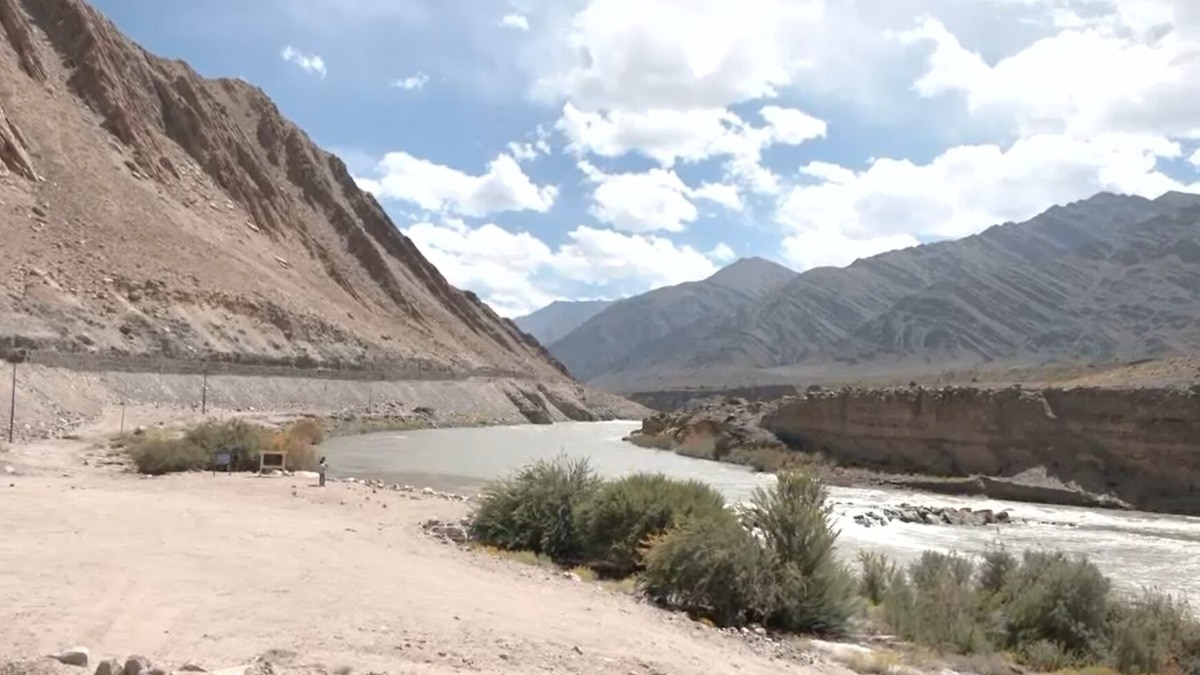
The Government of India, in consultation with the Union Territory of Ladakh, has formally identified and standardised the names of 28 places and geographical features on the official Survey of India (SoI) map of Ladakh. The stated objective is to enable accurate identification of these locations and improve public awareness.
The exercise covers peaks, mountains, passes, glaciers, valleys, land areas, a river, a lake and a water body. Some locations lie in strategically sensitive parts of Ladakh, including the India-China boundary region.
What Has Been Standardised?
The 28 features comprise:
- 10 Peaks: Atisha Giri, Kanishka Peak, Martand Giri, Zorawar Peak, Rinchen Zangpo, Sakyasri Giri, Marpa Lotsava Ri, Milarepa Kangri, Shiva Ri and Maheshvara Ri.
- 3 Mountains: Karun Pir, Drak Karpo and Jolmori.
- 7 Land Areas: Brangsa, Kuksel, Dehra Compass, Gogra, Kumarayana Point, Panglung and Shamal Lungpa.
- 2 Passes: Chapchingal Pass and Shachmirk Pass.
- 2 Glaciers: Parpik and Skamri Glacier.
- 1 Valley: Shkorga Valley.
- 1 River: Yangpa River.
- 1 Lake: Guru Rinpoche.
- 1 Water Body: Hot Spring.
Survey of India
- Survey of India (SoI) is India's national mapping agency.
- It functions under the Department of Science and Technology, Ministry of Science and Technology.
- It prepares topographical maps, geodetic information and official cartographic records used by government agencies.
- It is one of India's oldest scientific departments, tracing its origins to the 18th century.
Ladakh: Administrative Context
- Ladakh became a Union Territory following the reorganisation of the erstwhile State of Jammu and Kashmir under the Jammu and Kashmir Reorganisation Act, 2019.
- The UT formally came into existence in 2019.
- Ladakh is a Union Territory without a legislature.
- Under Article 239 of the Constitution, Union Territories are administered by the President through an administrator; Ladakh is administered through a Lieutenant Governor.
- It consists principally of Leh and Kargil districts.
India-China Boundary Context
- India and China do not have a mutually agreed, fully demarcated international boundary across all sectors; the Line of Actual Control (LAC) functions as the de facto boundary in disputed areas.
- Aksai Chin is administered by China but claimed by India as part of the Union Territory of Ladakh.
- Ladakh's location gives it strategic importance because the region interfaces with territories administered by China and Pakistan.
- Standardising geographical names on India's official maps records India's official cartographic references; it does not by itself constitute settlement of the international boundary dispute.
Sources
GOBARdhan Scheme Launched to Scale Up India’s Compressed Biogas Sector
What’s the News?
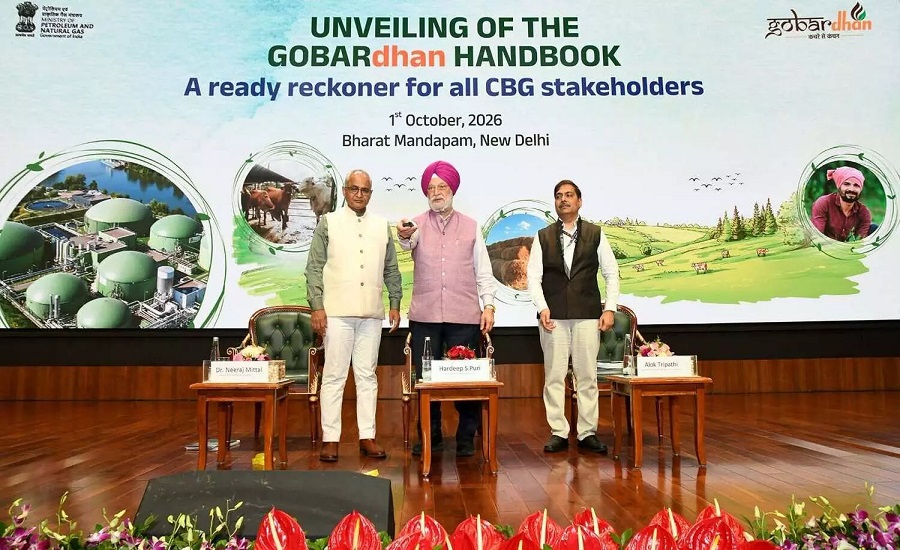
The Union Government has launched the GOBARdhan Central Sector Scheme, also referred to as the National Circular Bioenergy Scheme, to accelerate the development of India’s Compressed Biogas (CBG) sector.
The scheme has a total outlay of ₹23,731 crore and will operate for 10 years from FY 2026-27 to FY 2035-36. It seeks to increase domestic CBG production nearly ten-fold to about 5 MMSCMD by providing assured demand, stable pricing, capital assistance, pipeline connectivity and credit support.
The Ministry of Petroleum and Natural Gas (MoPNG) is the nodal ministry for the CBG-focused scheme.
GOBARdhan Scheme
GOBARdhan stands for Galvanizing Organic Bio-Agro Resources Dhan.
It promotes conversion of biodegradable resources such as:
- Cattle dung
- Agricultural residues
- Press mud
- Municipal organic waste
- Food and agro-industrial waste
- Other biomass
into biogas/CBG, organic manure and other value-added products.
The current scheme integrates major interventions required for commercial CBG production under a unified framework.
Six Key Components
- Assured CBG Offtake
- CBG plants will be linked with designated City Gas Distribution (CGD) geographical areas or CBG clusters.
- CGD entities will procure CBG for meeting mandatory blending requirements.
- Stable CBG Pricing
- Administered CBG price: ₹2,110 per MMBtu, equivalent to about ₹105 per kg.
- Designed to provide long-term revenue certainty to producers.
- Capital Assistance
- Eligible greenfield CBG projects can receive assistance of up to ₹2 crore per tonne per day (TPD) of installed CBG capacity.
- Support may cover plant machinery, feedstock aggregation and organic manure-processing infrastructure.
- Pipeline Infrastructure
- Up to 80% of eligible capital expenditure for pipelines connecting CBG clusters with trunk gas pipelines.
- Up to 50% for standalone CBG plants connecting with CGD networks.
- Credit Guarantee
- Eligible MSME-based projects can receive credit guarantee coverage of up to 85% of the outstanding amount at default.
- Maximum guarantee:
- ₹20 crore per project for general MSME projects.
- ₹25 crore per project for women-led MSME projects.
- CBG Ecosystem Challenge Fund
- Supports technology development, capacity building, feedstock assessment and aggregation, district-level ecosystem development and value addition of organic manure.
Compressed Biogas Obligation
The Compressed Biogas Obligation (CBO) creates mandatory demand for CBG within the CNG (Transport) and PNG (Domestic) segments.
- FY 2026-27: 3%
- FY 2027-28: 4%
- From FY 2028-29: 5%
The obligation rests primarily with City Gas Distribution entities.
What is Compressed Biogas?
CBG is produced by purification and compression of biogas generated through anaerobic digestion of organic material.
After purification:
- Methane concentration is substantially increased.
- Carbon dioxide, hydrogen sulphide, moisture and other impurities are removed.
- Its fuel characteristics become broadly comparable with Compressed Natural Gas (CNG).
CBG can consequently be used as:
- Transport fuel.
- Fuel for industrial and commercial applications.
- Gas supplied through compatible City Gas Distribution infrastructure.
The digestion process also generates Fermented Organic Manure (FOM) and Liquid Fermented Organic Manure (LFOM).
GOBARdhan: Background
- GOBARdhan was originally introduced in 2018 under the Swachh Bharat Mission (Grameen) as part of solid and liquid waste management.
- Its original emphasis was on converting cattle dung and other biodegradable rural waste into biogas and bio-slurry, while improving village sanitation.
- It subsequently developed into a broader whole-of-government waste-to-wealth initiative covering biogas, Bio-CNG and CBG programmes.
- The new National Circular Bioenergy Scheme provides a dedicated commercial framework for rapidly expanding the CBG sector under MoPNG.
Related Initiative: SATAT
SATAT — Sustainable Alternative Towards Affordable Transportation — was introduced by the Ministry of Petroleum and Natural Gas to promote CBG as an alternative transport fuel.
Its major objectives include:
- Developing CBG production capacity.
- Creating additional income from agricultural and organic waste.
- Reducing dependence on imported natural gas.
- Providing an alternative to crop-residue burning.
- Supporting India's transition towards cleaner transport fuels.
The new GOBARdhan framework strengthens these objectives through assured demand, pricing support, infrastructure and financing mechanisms.
Additional Info
- MMSCMD: Million Metric Standard Cubic Metres per Day.
- TPD: Tonnes Per Day.
- MMBtu: Million British Thermal Units; a unit used for measuring the energy content of fuels.
- CGD: City Gas Distribution network supplying CNG and Piped Natural Gas (PNG).
- Circular Bioeconomy: Economic use and reuse of renewable biological resources and organic waste to produce energy, materials, fertilisers and other products.
- CBG development links several policy objectives:
- Energy security
- Waste-to-wealth
- Circular economy
- Sustainable agriculture
- Reduction of crop-residue burning
- Rural employment
- Decarbonisation of the gas and transport sectors
Sources
International Day of Non-Violence 2026: Gandhi’s Legacy of Ahimsa
What’s the News?
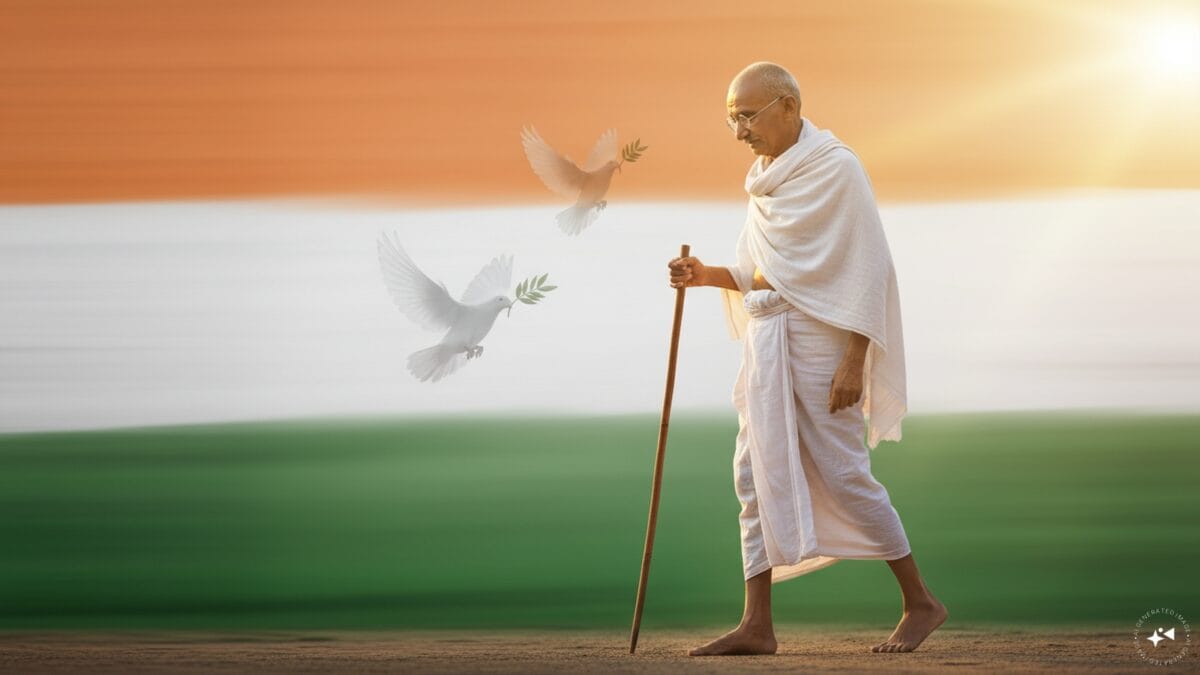
The International Day of Non-Violence was observed worldwide on 2 October 2026, coinciding with the birth anniversary of Mahatma Gandhi. The United Nations observance promotes non-violence through education and public awareness and highlights its role in building peace, tolerance and understanding.
The theme of the UN commemoration in 2026 was “Non Violence as a means to Peace and Development.”
International Day of Non-Violence
- Observed on: 2 October every year.
- Established by: United Nations General Assembly.
- Resolution: A/RES/61/271.
- Adopted: 15 June 2007.
- First observance: 2007.
- Purpose: To disseminate the message of non-violence, particularly through education and public awareness, and promote a culture of peace, tolerance and understanding.
The resolution was introduced at the UN General Assembly by India on behalf of 140 co-sponsors, reflecting the international recognition of Gandhi's philosophy of non-violence.
Why 2 October?
Mohandas Karamchand Gandhi was born on 2 October 1869 at Porbandar, Gujarat.
The UN chose his birth anniversary because Gandhi pioneered the philosophy and strategy of non-violent resistance during India's freedom struggle and influenced subsequent civil-rights and social-change movements worldwide.
In India, the day is also observed as Gandhi Jayanti.
Gandhi’s Ahimsa and Satyagraha
Ahimsa
Ahimsa means non-violence or avoidance of harm. For Gandhi, it was broader than merely refraining from physical violence; it involved pursuing change without hatred and through peaceful means.
Satyagraha
Satyagraha literally conveys “holding firmly to truth” or “truth-force”. Gandhi developed it as a method of resisting injustice through non-violent action rather than armed force.
Major Gandhian methods included:
- Peaceful protest and persuasion
- Civil disobedience
- Non-cooperation
- Boycott
- Fasts and marches
- Refusal to cooperate with unjust laws
The UN broadly classifies non-violent action into protest and persuasion, non-cooperation, and non-violent intervention.
Gandhi and Non-Violent Movements
Gandhi employed non-violent mass mobilisation during major phases of India's freedom struggle, including:
- Champaran Satyagraha (1917) – linked with grievances of indigo cultivators.
- Non-Cooperation Movement (1920–22) – withdrawal of cooperation from colonial institutions.
- Salt Satyagraha/Dandi March (1930) – civil disobedience against the colonial salt laws.
- Quit India Movement (1942) – mass movement demanding an end to British rule.
Gandhian methods subsequently influenced several civil-rights and social-justice movements internationally.
Additional Info
- UN Headquarters: New York, USA.
- UN General Assembly: Main deliberative, policymaking and representative organ of the United Nations; all UN Member States are represented in it.
- International Day of Peace: Observed separately on 21 September.
- Gandhi Jayanti: One of India's nationally observed public holidays and commemorates Mahatma Gandhi's birth anniversary.
- Non-Violence sculpture: The “Knotted Gun”, created by Swedish artist Carl Fredrik Reuterswärd, is displayed at the UN Headquarters and has become a widely recognised symbol of non-violence.
Sources
Two New Islands Emerge Near Indonesia’s Anak Krakatau Volcano

What’s the News?
Two new island-like landforms have emerged near Anak Krakatau volcano in Indonesia’s Sunda Strait following a major continuous eruption lasting about 25 hours. One formation lies about 760 metres northwest of Anak Krakatau and the other about 495 metres southeast.
The eruption produced lava flows, ash and other volcanic material, expanding Anak Krakatau’s area by about 32.8 hectares to approximately 341.5 hectares. The new formations were subsequently identified through field reports and Sentinel satellite imagery.
How Did the New Islands Form?
Indonesia’s Geological Agency has given a preliminary explanation that relatively fluid magma may have risen through an elongated northwest–southeast opening beneath the volcano.
- Volcanic material accumulated above sea level at two offshore locations.
- The two formations lie roughly along a line passing through Anak Krakatau’s crater.
- Their precise dimensions, height and composition have not yet been fully confirmed.
- Their permanence will depend on whether the newly deposited volcanic material can withstand waves, tides and erosion.
The formations are potentially the first new islands to appear within the Krakatau caldera since around 1930.
Anak Krakatau
Anak Krakatau, meaning “Child of Krakatau”, is an active volcanic island located in the Sunda Strait between Java and Sumatra.
- It developed inside the caldera created by the catastrophic 1883 Krakatau eruption.
- It first emerged above sea level in the late 1920s.
- Frequent eruptions subsequently built up the volcanic cone.
- Its size and shape have repeatedly changed because of eruptions, flank collapses and marine erosion.
Krakatau and the 1883 Eruption
The original Krakatau volcanic island underwent a catastrophic eruption in 1883, followed by caldera collapse.
- Much of the pre-existing volcanic island was destroyed.
- The eruption generated massive tsunamis along the coasts of Java and Sumatra.
- More than 36,000 people were killed, predominantly by the tsunamis.
- The collapse created the caldera within which Anak Krakatau subsequently developed.
In 2018, a major flank collapse of Anak Krakatau also generated a destructive tsunami in the Sunda Strait, demonstrating that volcanic islands can create tsunami hazards even without a major tectonic earthquake.
Tectonic Setting
Krakatau forms part of the Sunda volcanic arc, one of the world's major zones of active volcanism.
- Location: Sunda Strait, between Sumatra and Java, Indonesia.
- Tectonic process: The Indo-Australian Plate is subducting beneath the overriding Eurasian/Sunda region.
- Melting associated with subduction generates magma, supporting extensive volcanic activity along the Indonesian archipelago.
- The Sunda Strait also lies in a complex transition between the more oblique subduction regime off Sumatra and the more nearly perpendicular subduction regime off Java.
Volcanic Island Formation
A volcanic island forms when repeated submarine volcanic eruptions accumulate enough lava, ash and fragmented volcanic material for the edifice to rise above sea level.
New volcanic islands may be:
- Temporary: Loose ash and fragmented material are rapidly removed by wave erosion.
- Persistent: Continued eruptions, consolidated lava flows and resistant rock allow the island to survive and expand.
Therefore, whether the two new formations near Anak Krakatau become permanent islands will depend on their composition, future eruptive activity and erosion.
Additional Info
- Caldera: A large volcanic depression generally formed when the ground collapses after substantial withdrawal of magma during an eruption.
- Pyroclastic material: Fragmented volcanic material such as:
- Ash
- Lapilli
- Volcanic bombs
- Rock fragments
- Strombolian eruption: An eruption characterised by intermittent explosions that eject incandescent lava fragments and volcanic material.
- Pacific Ring of Fire: A broad circum-Pacific zone characterised by numerous active volcanoes and earthquakes. Indonesia forms part of this highly active tectonic region.
- Indonesia: An archipelagic country with more than 100 active volcanoes, reflecting its position along major convergent plate boundaries.
Sources
October 2026
Archive
October 2026
- 27 October 2026
- 26 October 2026
- 24 October 2026
- 23 October 2026
- 22 October 2026
- 21 October 2026
- 20 October 2026
- 19 October 2026
- 17 October 2026
- 16 October 2026
- 15 October 2026
- 14 October 2026
- 13 October 2026
- 12 October 2026
- 10 October 2026
- 09 October 2026
- 08 October 2026
- 07 October 2026
- 06 October 2026
- 05 October 2026
- 03 October 2026
- 02 October 2026
- 01 October 2026
September 2026
- 30 September 2026
- 29 September 2026
- 28 September 2026
- 26 September 2026
- 25 September 2026
- 24 September 2026
- 23 September 2026
- 22 September 2026
- 21 September 2026
- 19 September 2026
- 18 September 2026
- 17 September 2026
- 16 September 2026
- 15 September 2026
- 12 September 2026
- 11 September 2026
- 10 September 2026
- 09 September 2026
- 08 September 2026
- 07 September 2026
- 05 September 2026
- 04 September 2026
- 03 September 2026
- 02 September 2026
- 01 September 2026
August 2026
- 31 August 2026
- 29 August 2026
- 27 August 2026
- 26 August 2026
- 25 August 2026
- 24 August 2026
- 22 August 2026
- 21 August 2026
- 20 August 2026
- 19 August 2026
- 18 August 2026
- 17 August 2026
- 14 August 2026
- 13 August 2026
- 12 August 2026
- 11 August 2026
- 10 August 2026
- 08 August 2026
- 07 August 2026
- 06 August 2026
- 05 August 2026
- 04 August 2026
- 03 August 2026
- 01 August 2026
July 2026
- 31 July 2026
- 30 July 2026
- 29 July 2026
- 28 July 2026
- 27 July 2026
- 25 July 2026
- 23 July 2026
- 22 July 2026
- 21 July 2026
- 20 July 2026
- 18 July 2026
- 17 July 2026
- 15 July 2026
- 14 July 2026
- 13 July 2026
- 11 July 2026
- 10 July 2026
- 09 July 2026
- 08 July 2026
- 07 July 2026
- 06 July 2026
- 04 July 2026
- 03 July 2026
- 02 July 2026
- 01 July 2026
June 2026
May 2026
April 2026
March 2026
- 31 March 2026
- 30 March 2026
- 28 March 2026
- 27 March 2026
- 26 March 2026
- 25 March 2026
- 24 March 2026
- 23 March 2026
- 21 March 2026
- 20 March 2026
- 19 March 2026
- 18 March 2026
- 17 March 2026
- 16 March 2026
- 14 March 2026
- 13 March 2026
- 12 March 2026
- 11 March 2026
- 10 March 2026
- 09 March 2026
- 07 March 2026
- 06 March 2026
- 05 March 2026
- 03 March 2026
- 02 March 2026
February 2026
- 28 February 2026
- 27 February 2026
- 26 February 2026
- 25 February 2026
- 24 February 2026
- 23 February 2026
- 21 February 2026
- 20 February 2026
- 19 February 2026
- 18 February 2026
- 17 February 2026
- 16 February 2026
- 13 February 2026
- 12 February 2026
- 11 February 2026
- 10 February 2026
- 09 February 2026
- 07 February 2026
- 06 February 2026
- 05 February 2026
- 04 February 2026
- 03 February 2026
- 02 February 2026
January 2026
- 31 January 2026
- 30 January 2026
- 29 January 2026
- 28 January 2026
- 27 January 2026
- 26 January 2026
- 24 January 2026
- 23 January 2026
- 22 January 2026
- 21 January 2026
- 20 January 2026
- 19 January 2026
- 16 January 2026
- 15 January 2026
- 14 January 2026
- 13 January 2026
- 12 January 2026
- 10 January 2026
- 09 January 2026
- 08 January 2026
- 07 January 2026
- 06 January 2026
- 05 January 2026
- 03 January 2026
- 02 January 2026
- 01 January 2026
December 2025
- 31 December 2025
- 30 December 2025
- 29 December 2025
- 27 December 2025
- 26 December 2025
- 24 December 2025
- 23 December 2025
- 22 December 2025
- 20 December 2025
- 19 December 2025
- 18 December 2025
- 17 December 2025
- 16 December 2025
- 15 December 2025
- 13 December 2025
- 12 December 2025
- 11 December 2025
- 10 December 2025
- 09 December 2025
- 08 December 2025
- 05 December 2025
- 04 December 2025
- 03 December 2025
- 02 December 2025
November 2025
- 29 November 2025
- 28 November 2025
- 27 November 2025
- 26 November 2025
- 25 November 2025
- 24 November 2025
- 22 November 2025
- 21 November 2025
- 20 November 2025
- 19 November 2025
- 18 November 2025
- 17 November 2025
- 15 November 2025
- 14 November 2025
- 13 November 2025
- 12 November 2025
- 11 November 2025
- 10 November 2025
- 08 November 2025
- 07 November 2025
- 06 November 2025
- 05 November 2025
- 04 November 2025
- 03 November 2025
- 01 November 2025
October 2025
- 31 October 2025
- 30 October 2025
- 29 October 2025
- 28 October 2025
- 27 October 2025
- 25 October 2025
- 24 October 2025
- 23 October 2025
- 22 October 2025
- 21 October 2025
- 20 October 2025
- 18 October 2025
- 17 October 2025
- 16 October 2025
- 15 October 2025
- 14 October 2025
- 13 October 2025
- 11 October 2025
- 10 October 2025
- 09 October 2025
- 08 October 2025
- 07 October 2025
- 06 October 2025
- 04 October 2025
- 03 October 2025
- 02 October 2025
- 01 October 2025
September 2025
- 30 September 2025
- 29 September 2025
- 27 September 2025
- 26 September 2025
- 25 September 2025
- 24 September 2025
- 23 September 2025
- 22 September 2025
- 20 September 2025
- 19 September 2025
- 18 September 2025
- 17 September 2025
- 16 September 2025
- 15 September 2025
- 13 September 2025
- 12 September 2025
- 11 September 2025
- 10 September 2025
- 09 September 2025
- 08 September 2025
- 06 September 2025
- 05 September 2025
- 04 September 2025
- 03 September 2025
- 02 September 2025
- 01 September 2025
August 2025
- 30 August 2025
- 29 August 2025
- 28 August 2025
- 27 August 2025
- 26 August 2025
- 25 August 2025
- 23 August 2025
- 22 August 2025
- 21 August 2025
- 20 August 2025
- 19 August 2025
- 18 August 2025
- 16 August 2025
- 14 August 2025
- 13 August 2025
- 12 August 2025
- 11 August 2025
- 08 August 2025
- 07 August 2025
- 06 August 2025
- 05 August 2025
- 04 August 2025
- 02 August 2025
- 01 August 2025
July 2025
- 31 July 2025
- 30 July 2025
- 29 July 2025
- 28 July 2025
- 26 July 2025
- 25 July 2025
- 24 July 2025
- 23 July 2025
- 22 July 2025
- 21 July 2025
- 19 July 2025
- 18 July 2025
- 17 July 2025
- 16 July 2025
- 15 July 2025
- 12 July 2025
- 11 July 2025
- 10 July 2025
- 09 July 2025
- 07 July 2025
- 05 July 2025
- 04 July 2025
- 03 July 2025
- 02 July 2025
- 01 July 2025
June 2025
- 30 June 2025
- 28 June 2025
- 27 June 2025
- 26 June 2025
- 25 June 2025
- 24 June 2025
- 23 June 2025
- 21 June 2025
- 20 June 2025
- 19 June 2025
- 18 June 2025
- 17 June 2025
- 16 June 2025
- 14 June 2025
- 13 June 2025
- 12 June 2025
- 11 June 2025
- 10 June 2025
- 09 June 2025
- 07 June 2025
- 06 June 2025
- 05 June 2025
- 04 June 2025
- 03 June 2025
- 02 June 2025
May 2025
April 2025
- 30 April 2025
- 29 April 2025
- 28 April 2025
- 26 April 2025
- 25 April 2025
- 24 April 2025
- 23 April 2025
- 22 April 2025
- 21 April 2025
- 19 April 2025
- 18 April 2025
- 17 April 2025
- 16 April 2025
- 15 April 2025
- 14 April 2025
- 12 April 2025
- 11 April 2025
- 10 April 2025
- 09 April 2025
- 08 April 2025
- 07 April 2025
- 05 April 2025
- 04 April 2025
- 03 April 2025
- 02 April 2025
- 01 April 2025
March 2025
- 31 March 2025
- 29 March 2025
- 28 March 2025
- 27 March 2025
- 26 March 2025
- 25 March 2025
- 24 March 2025
- 22 March 2025
- 21 March 2025
- 20 March 2025
- 19 March 2025
- 18 March 2025
- 17 March 2025
- 15 March 2025
- 13 March 2025
- 12 March 2025
- 11 March 2025
- 10 March 2025
- 08 March 2025
- 07 March 2025
- 06 March 2025
- 05 March 2025
- 04 March 2025
- 03 March 2025
- 01 March 2025
February 2025
- 28 February 2025
- 27 February 2025
- 26 February 2025
- 25 February 2025
- 24 February 2025
- 22 February 2025
- 21 February 2025
- 20 February 2025
- 19 February 2025
- 18 February 2025
- 17 February 2025
- 15 February 2025
- 14 February 2025
- 13 February 2025
- 12 February 2025
- 11 February 2025
- 10 February 2025
- 08 February 2025
- 07 February 2025
- 06 February 2025
- 05 February 2025
- 04 February 2025
- 03 February 2025
- 01 February 2025
January 2025
- 31 January 2025
- 30 January 2025
- 29 January 2025
- 28 January 2025
- 27 January 2025
- 25 January 2025
- 24 January 2025
- 23 January 2025
- 22 January 2025
- 21 January 2025
- 20 January 2025
- 18 January 2025
- 17 January 2025
- 16 January 2025
- 15 January 2025
- 14 January 2025
- 13 January 2025
- 11 January 2025
- 10 January 2025
- 09 January 2025
- 08 January 2025
- 07 January 2025
- 06 January 2025
- 04 January 2025
- 03 January 2025
- 02 January 2025
- 01 January 2025