
Current Affairs
Stay updated with the latest national and international events.
01 November 2025
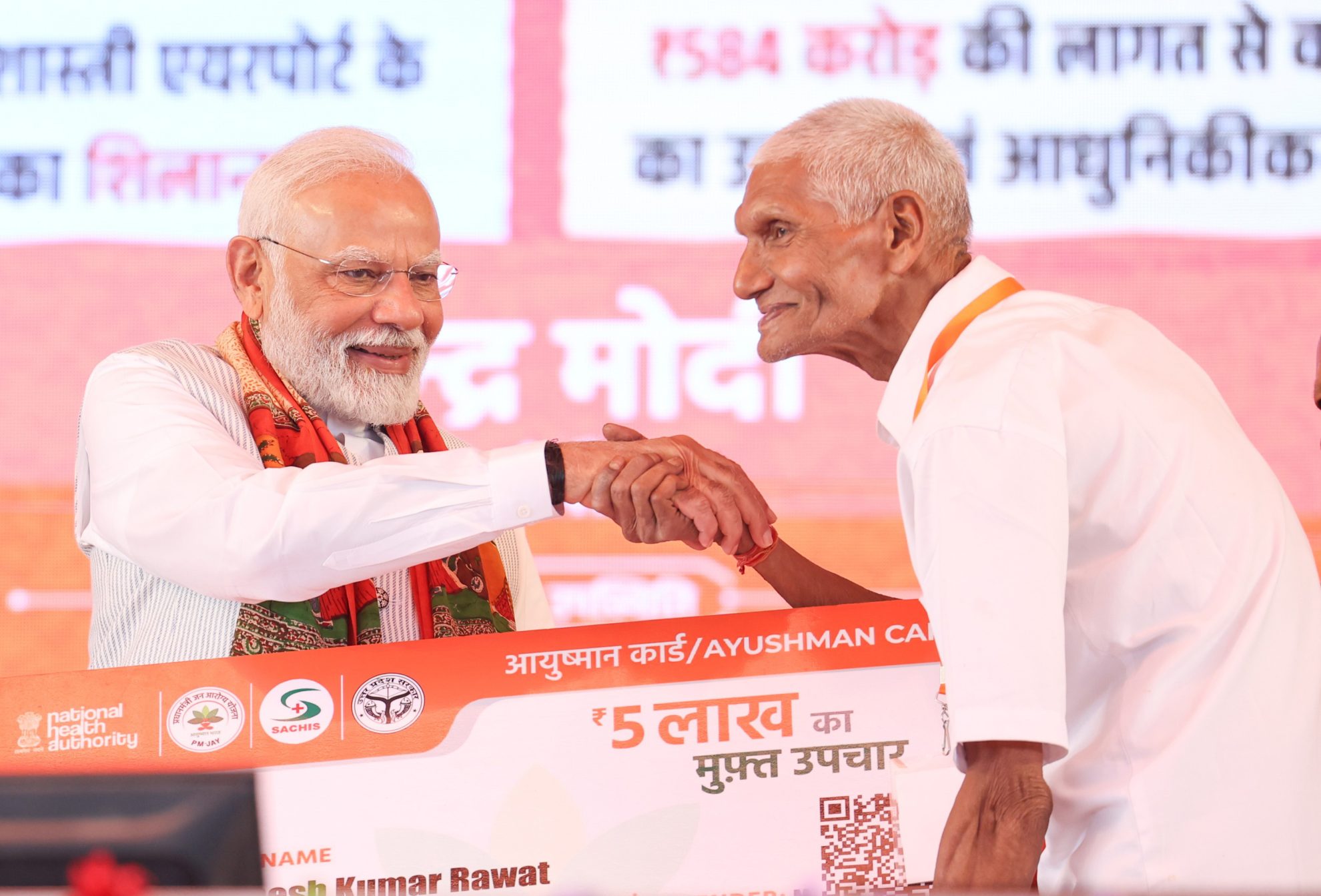
Ayushman Bharat Becomes World's Largest Public Healthcare Scheme
What’s the News?
- The Ayushman Bharat-Pradhan Mantri Jan Arogya Yojana (AB-PMJAY) has become the world's largest public healthcare scheme.
- The scheme provides a health insurance cover of up to ₹5 lakh per family per year.
- Over 42 crore Ayushman cards have been issued to beneficiaries.
- It has reportedly saved beneficiaries more than ₹1.52 lakh crore in out-of-pocket healthcare expenses.
About Pradhan Mantri Jan Arogya Yojana (PM-JAY)
- Objective: To provide health coverage for secondary and tertiary care hospitalization to poor and vulnerable families.
- Coverage: Provides ₹5 lakh per family per year on a family floater basis, meaning it can be used by one or all members of the family.
- Beneficiaries: The scheme targets over 12 crore vulnerable families, corresponding to approximately 55 crore beneficiaries.
- Eligibility: Beneficiary families are identified based on deprivation and occupational criteria from the Socio-Economic Caste Census (SECC) 2011.
- Recent Expansions:
- The scheme's coverage has been extended to all senior citizens aged 70 years and above, irrespective of their socio-economic status.
- It also now includes ASHA workers, Anganwadi Workers (AWWs), and Anganwadi Helpers (AWHs).
- Key Features:
- Provides cashless and paperless access to services at empaneled hospitals.
- Covers pre-existing diseases from day one.
- Includes costs for up to 3 days of pre-hospitalization and 15 days of post-hospitalization expenses, such as diagnostics and medicines.
- Benefits are portable across the country, allowing a beneficiary to visit any empaneled public or private hospital in India.
The Pillars of Ayushman Bharat
- Ayushman Bharat is a comprehensive initiative with two main components:
- 1. Ayushman Arogya Mandirs (AAMs):
- These are the rebranded Ayushman Bharat Health and Wellness Centres (AB-HWCs).
- The new tagline for these centers is ‘Arogyam Parmam Dhanam’.
- They serve as the foundation of the health system, delivering Comprehensive Primary Health Care (CPHC), including maternal and child health services, non-communicable disease screening, and free essential drugs and diagnostics.
- 2. Pradhan Mantri Jan Arogya Yojana (PM-JAY):
- This is the health insurance component detailed above, focusing on secondary and tertiary care for hospitalization.
- 1. Ayushman Arogya Mandirs (AAMs):
Sources
NFR Implements AI-Based System to Prevent Elephant-Train Collisions

What’s the News?
- The Northeast Frontier Railway (NFR) has successfully implemented an Intrusion Detection System (IDS) to prevent elephant deaths from train collisions.
- This advanced AI- and sensor-based surveillance mechanism detects the presence of elephants on railway tracks in real-time.
- The system sends instant alerts to loco pilots (train drivers) and railway control rooms, allowing them to take preventive action.
The Intrusion Detection System (IDS)
- Core Technology: The system uses Optical Fibre Cables (OFC), which are already laid along railway tracks for communication and signaling, as sensors.
- Working Principle:
- The OFC detects vibrations caused by the movement of elephants on or near the tracks.
- These vibrations create a unique "signature" in the optical signals.
- Role of AI:
- An Artificial Intelligence component analyzes these vibration signatures.
- The AI is trained to accurately differentiate the movement of elephants from other disturbances (like humans or other animals), thus preventing false alarms.
- Alert Mechanism:
- When an elephant is detected, the system generates an immediate audio-visual alert.
- Alerts are sent to the loco pilot's tablet device, the section station master, and the central control room.
- This enables the train driver to slow down or stop the train in time to avoid a collision.
Key Implementation Details
- Pilot sections completed:
- Madarihat–Nagrakata (Alipurduar Division)
- Habaipur–Lamsakhang–Patharkhola–Lumding (Lumding Division)
- Kamakhya–Azara–Mirza (Rangiya Division)
- Titabar–Mariani–Nakachari (Tinsukia Division)
- Current coverage: 64.03 km of elephant corridors within 141 km of block sections.
- Next phase: Expansion to cover an additional 146.4 km, bringing total protected corridor length to 210 km by April 2026.
Sources
India Launches First Fully Digitised National Marine Fisheries Census 2025

What’s the News?
- The Union Minister of State for Fisheries, Animal Husbandry and Dairying, George Kurian, has launched the National Marine Fisheries Census (MFC) 2025, marking India’s first fully digitised fisheries census.
- The 45-day nationwide enumeration—running from November 3 to December 18, 2025—will cover over 1.2 million fisher households across 4,000 marine fishing villages in nine coastal states and four Union Territories.
- The census is a prerequisite for accessing benefits under the Pradhan Mantri Matsya Kisan Samridhi Sah-Yojana (PM-MKSSY), with registration on the National Fisheries Digital Platform (NFDP) made mandatory for all beneficiaries.
What is the National Marine Fisheries Census 2025?
- A comprehensive digital enumeration of marine fisher households, workers, and vessels to create a centralised, verified database for policy and welfare delivery.
- Conducted by the ICAR–Central Marine Fisheries Research Institute (CMFRI) under the Ministry of Fisheries, Animal Husbandry and Dairying.
- Uses two custom-built mobile applications—VyAS Bharat and VyAS Sutra—for real-time data capture, geo-referencing, and instant verification.
- Data collected includes household demographics, livelihood sources, vessel types, gear used, and socio-economic indicators.
Key Features and Innovations
- First fully digital census in Indian fisheries history, replacing paper-based methods.
- Real-time monitoring: Live data feeds from field enumerators (e.g., from Maharashtra and Kerala) displayed during launch for transparency.
- Integration with welfare schemes: Only NFDP-registered fishers will be eligible for PM-MKSSY financial assistance.
- Accessibility: Registration facilitated through Common Service Centres (CSCs) in remote coastal areas.
- Complementary interventions: Government also distributing free transponders and turtle excluder devices (TEDs) to promote safety and sustainable fishing.
Additional Info
- Coverage:
- 9 Coastal States: Gujarat, Maharashtra, Goa, Karnataka, Kerala, Tamil Nadu, Andhra Pradesh, Odisha, West Bengal
- 4 UTs: Puducherry, Lakshadweep, Andaman & Nicobar Islands, Daman & Diu
- Related Schemes:
- PM-Matsya Sampada Yojana (PMMSY): ₹20,050 crore scheme (2020–2025) for sustainable fisheries development.
- PM-MKSSY: Focuses on income support, value chain infrastructure, and fishermen welfare.
- Institutional Framework:
- CMFRI (est. 1947): Premier research body under ICAR for marine fisheries data and policy inputs.
- NFDP: Central digital registry for all fishers and fish farmers, linked to Aadhaar and bank accounts for DBT.
Sources
Government Launches Employees’ Enrolment Campaign 2025

What’s the News?
- The Ministry of Labour and Employment has launched the Employees’ Enrolment Campaign (EEC) 2025.
- This initiative provides a special, one-time window for employers to voluntarily declare and enroll eligible employees who were previously left out of the Employees’ Provident Fund Organisation (EPFO) social security net.
- The campaign aims to promote voluntary compliance, formalize the workforce, and extend social security coverage to all eligible employees.
- The campaign is operational for six months.
Campaign Eligibility and Duration
- Campaign Window: The scheme is active from November 1, 2025, to April 30, 2026.
- Eligible Employees: It covers all employees who joined an establishment between July 1, 2017, and October 31, 2025, but were not enrolled in the EPF scheme for any reason.
- Condition: To be eligible, employees must be alive and currently employed by the establishment as of the date of declaration.
- Eligible Employers: All establishments, regardless of whether they are already covered by the EPF & MP Act, 1952, can participate. This includes establishments currently facing inquiries under Section 7A of the Act.
Key Provisions and Benefits
- Waiver of Employee Contribution:
- The employee’s share of the PF contribution for the past period (July 2017 to October 2025) will be waived entirely.
- This is conditional on the employer not having deducted this share from the employee's wages previously.
- Employer’s Liability:
- Employers are only required to pay their own share of PF contributions for the past period.
- They must also pay the applicable interest (under Section 7Q) on their share.
- Nominal Penalty:
- Employers will only be charged a nominal lump-sum penalty of ₹100 per establishment for the past non-compliance. This replaces the standard, much higher damages.
- Declaration Process:
- Employers must submit a single declaration for all eligible employees online via the EPFO portal.
- They must create a Face Authentication-based Universal Account Number (UAN) for each employee through the UMANG app.
- Linked Benefits: Employers who register under EEC 2025 may also be eligible for benefits under the Pradhan Mantri-Viksit Bharat Rojgar Yojana (PMVBRY), subject to its conditions.
Sources
India Saw 1.7 Million PM2.5-Related Deaths in 2022: Lancet Report

What’s the News?
- According to the 2025 Lancet Countdown on Health and Climate Change, 1.72 million people died in India in 2022 due to exposure to anthropogenic PM2.5 air pollution—a 38% increase since 2010.
- The report identifies fossil fuel combustion as the primary driver, responsible for 44% (752,000) of these deaths, with coal alone accounting for 394,000 fatalities. The economic cost of outdoor air pollution was estimated at USD 339.4 billion (₹30 lakh crore), equivalent to 9.5% of India’s GDP.
Key Findings from the Lancet Report
- PM2.5 pollution sources:
- Coal-fired power plants: ~298,000 deaths
- Petrol-based road transport: ~269,000 deaths
- Household air pollution:
- Caused 113 deaths per 100,000 people nationally in 2022
- Higher in rural areas (125 per 100,000) due to reliance on wood, dung, and crop residue for cooking (58% of rural energy use)
- Climate-linked health risks:
- 19.8 heatwave days per person in 2024; 6.6 days attributable to climate change
- 247 billion potential labour hours lost, mostly in agriculture (66%) and construction (20%)
- Dengue transmission potential nearly doubled since the 1950s
- 18 million Indians live within 1 metre of sea level, facing rising flood risks
Policy and Governance Implications
- Energy sector dominance:
- Coal supplies 72% of electricity and nearly half of total energy
- Fossil fuels power 96% of road transport; electric vehicles contribute only 0.3%
- Subsidy imbalance: India spent USD 48.5 billion on fossil fuel subsidies in 2023, exceeding carbon revenue
- Declining climate readiness: India’s preparedness for a low-carbon transition slipped by 2% in 2024
- Urban environmental degradation:
- 124 of 189 major cities have low or very low greenness
- 3.6% decline in urban vegetation since 2015
Additional Info
- PM2.5: Refers to Particulate Matter 2.5, fine inhalable particles with diameters generally 2.5 micrometres and smaller. They can penetrate deep into the lungs and enter the bloodstream, causing cardiovascular and respiratory diseases.
- The Lancet Countdown: An international, multidisciplinary collaboration that monitors the evolving health profile of climate change and provides an independent assessment of health and climate change indicators.
- Related Indian Initiatives:
- National Clean Air Programme (NCAP): A long-term, time-bound national strategy to tackle air pollution, aiming for a 20%-30% reduction in PM2.5 and PM10 concentrations by 2024 (baseline 2017).
- Panchamrit Goals: India's climate action commitments, including achieving 500 GW of non-fossil fuel energy capacity and 50% of energy requirements from renewables by 2030.
Sources
Controversy Erupts Over Yield Claims of India’s First Gene-Edited Rice Varieties
What’s the News?
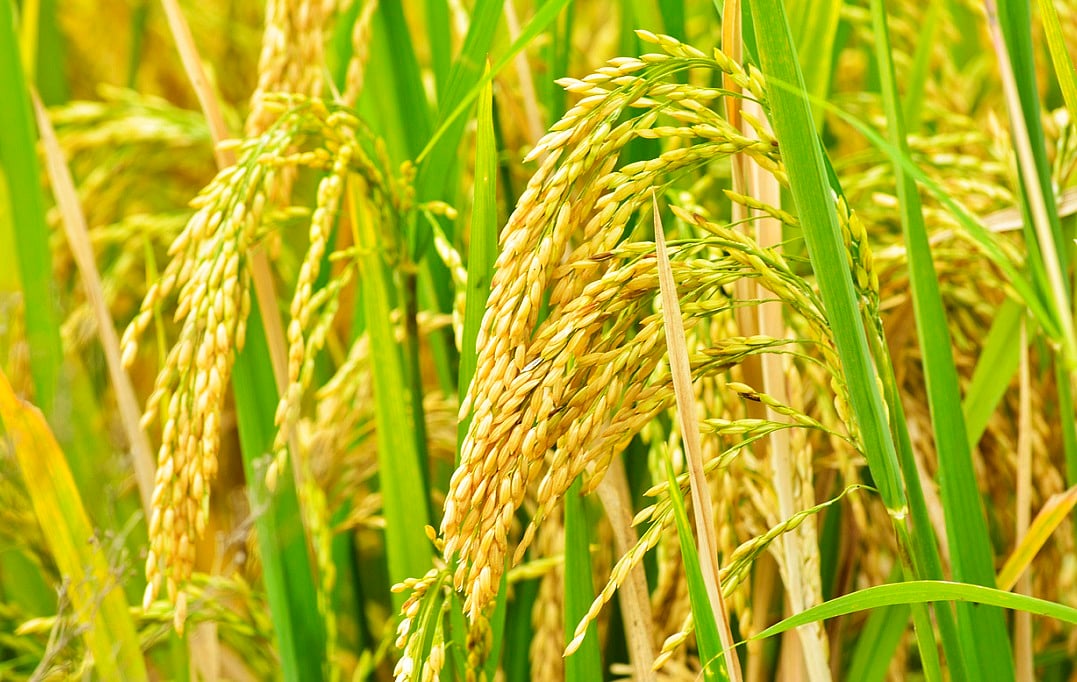
- A public dispute has emerged over the performance of India’s first two gene-edited rice varieties—Pusa DST-1 and DRR Dhan 100 (Kamala)—released by the Union Ministry of Agriculture in May 2025.
- The Coalition for a GM-Free India, comprising scientists, farmers, and civil society groups, alleges that the Indian Council of Agricultural Research (ICAR) manipulated or selectively reported trial data to exaggerate yield gains, stress tolerance, and early maturity.
- ICAR has categorically denied the claims, calling them “baseless” and “motivated,” and insists the varieties underwent rigorous, transparent testing across 24 locations.
What Are the Allegations?
- Pusa DST-1 (derived from MTU 1010):
- Claimed: 20–30% higher yield under saline/alkaline conditions.
- Reality (per Coalition analysis of ICAR’s 2023–24 reports):
- No yield advantage in coastal salinity trials (2024).
- Only 1.6% gain in alkaline soils.
- Underperformed in 12 of 20 trial sites (2023).
- DRR Dhan 100 (Kamala) (derived from Samba Mahsuri/BPT 5204):
- Claimed: 17% higher yield, 20-day earlier maturity, better nitrogen use.
- Reality:
- 4% lower mean yield than parent variety (2023).
- Flowered only 3 days earlier on average—in two zones, it matured 8–9 days later.
- No consistent improvement in grain quality or panicle density.
ICAR’s Defense
- Both varieties tested under the All India Coordinated Research Project on Rice (AICRPR), the official national platform for rice variety evaluation since 1965.
- Trials conducted at 24+ locations, with blind-coded entries among 500+ breeding lines to prevent bias.
- All data publicly accessible via aicrip-intranet.in.
- ICAR asserts the edits used CRISPR-Cas9 without foreign DNA, complying with India’s 2022 guidelines for genome-edited plants (exempt from GMO regulations if no transgenes are inserted).
Additional Info
- Genome Editing (SDN1/SDN2):
- The technology used modifies the plant's existing genes (in this case, using CRISPR-Cas9) and does not involve inserting foreign DNA, making it non-transgenic.
- These rice varieties fall under the Site-Directed Nuclease (SDN) 1 and 2 categories.
- Regulatory Context:
- In 2022, the Ministry of Environment, Forest and Climate Change (MoEFCC) exempted SDN1 and SDN2 genome-edited crops from the stringent biosafety regulations that apply to traditional Genetically Modified (GM) crops.
- This exemption means such varieties do not require clearance from the Genetic Engineering Appraisal Committee (GEAC), a decision that is being contested by activist groups.
- Key Organisations:
- ICAR (Indian Council of Agricultural Research): The apex body for co-ordinating, guiding, and managing agricultural research and education in India.
- IARI (Indian Agricultural Research Institute): A premier institute for agricultural research, education, and extension, also known as the Pusa Institute.
- GEAC (Genetic Engineering Appraisal Committee): The statutory body under the MoEFCC that regulates the use, manufacture, storage, import, and export of hazardous microorganisms or genetically engineered organisms.
Sources
China Pauses Rare Earth Export Controls in US Trade Truce
What’s the News?
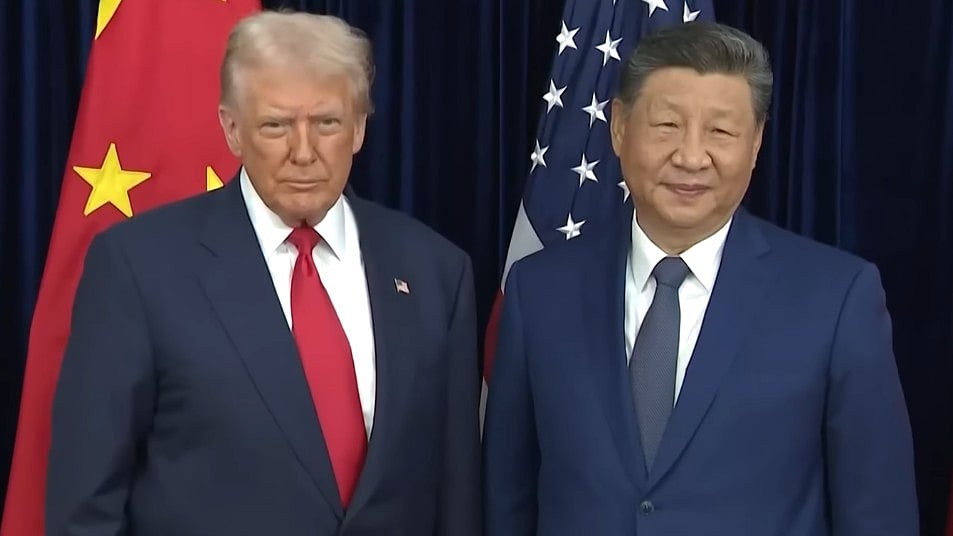
- China has agreed to a one-year pause on its export restrictions for rare earth elements (REEs) as part of a new trade truce with the United States.
- The agreement was reportedly reached following a meeting between US President Donald Trump and Chinese President Xi Jinping at the G20 summit.
- In return for China pausing the export curbs, the US has agreed to refrain from imposing new technology sanctions on Chinese companies for the 12-month period.
Details of the Truce
- The deal addresses significant trade tensions, particularly concerns that China would use its dominance in the rare earths market as leverage.
- China had previously considered export controls on these critical materials, which are vital to US high-tech and defense industries.
- The US commitment to pause new technology sanctions provides a temporary reprieve for Chinese tech firms that have faced increasing restrictions.
Significance of Rare Earths
- Strategic Materials: Rare earth elements are a group of 17 metals essential for manufacturing a wide range of modern technologies.
- Key Applications: They are critical components in smartphones, electric vehicles (EVs), wind turbines, and advanced military hardware, such as F-35 fighter jets.
- Global Supply Chain: China dominates the global rare earth market, controlling a vast majority of the world's mining and, more importantly, its processing and refining capacity.
- Economic Leverage: This dominance gives China significant geopolitical leverage, as restricting their export could severely disrupt global supply chains for the defense, electronics, and automotive sectors.
Additional Info
- Rare Earth Elements (REEs):
- Despite their name, rare earths are not all exceptionally rare in the earth's crust.
- Their "rarity" stems from the fact that they are typically dispersed and not found in economically exploitable concentrated deposits.
- The extraction and processing of REEs are complex and often environmentally hazardous.
- Geopolitical Context:
- The US and other Western nations have been actively seeking to diversify their rare earth supply chains to reduce their dependency on China.
- This includes efforts to revive domestic mining and processing and form partnerships with other REE-producing countries.
Sources
November 2025
29 November 202528 November 202527 November 202526 November 202525 November 202524 November 202522 November 202521 November 202520 November 202519 November 202518 November 202517 November 202515 November 202514 November 202513 November 202512 November 202511 November 202510 November 202508 November 202507 November 202506 November 202505 November 202504 November 202503 November 202501 November 2025
Archive
October 2026
- 27 October 2026
- 26 October 2026
- 24 October 2026
- 23 October 2026
- 22 October 2026
- 21 October 2026
- 20 October 2026
- 19 October 2026
- 17 October 2026
- 16 October 2026
- 15 October 2026
- 14 October 2026
- 13 October 2026
- 12 October 2026
- 10 October 2026
- 09 October 2026
- 08 October 2026
- 07 October 2026
- 06 October 2026
- 05 October 2026
- 03 October 2026
- 02 October 2026
- 01 October 2026
September 2026
- 30 September 2026
- 29 September 2026
- 28 September 2026
- 26 September 2026
- 25 September 2026
- 24 September 2026
- 23 September 2026
- 22 September 2026
- 21 September 2026
- 19 September 2026
- 18 September 2026
- 17 September 2026
- 16 September 2026
- 15 September 2026
- 12 September 2026
- 11 September 2026
- 10 September 2026
- 09 September 2026
- 08 September 2026
- 07 September 2026
- 05 September 2026
- 04 September 2026
- 03 September 2026
- 02 September 2026
- 01 September 2026
August 2026
- 31 August 2026
- 29 August 2026
- 27 August 2026
- 26 August 2026
- 25 August 2026
- 24 August 2026
- 22 August 2026
- 21 August 2026
- 20 August 2026
- 19 August 2026
- 18 August 2026
- 17 August 2026
- 14 August 2026
- 13 August 2026
- 12 August 2026
- 11 August 2026
- 10 August 2026
- 08 August 2026
- 07 August 2026
- 06 August 2026
- 05 August 2026
- 04 August 2026
- 03 August 2026
- 01 August 2026
July 2026
- 31 July 2026
- 30 July 2026
- 29 July 2026
- 28 July 2026
- 27 July 2026
- 25 July 2026
- 23 July 2026
- 22 July 2026
- 21 July 2026
- 20 July 2026
- 18 July 2026
- 17 July 2026
- 15 July 2026
- 14 July 2026
- 13 July 2026
- 11 July 2026
- 10 July 2026
- 09 July 2026
- 08 July 2026
- 07 July 2026
- 06 July 2026
- 04 July 2026
- 03 July 2026
- 02 July 2026
- 01 July 2026
June 2026
May 2026
April 2026
March 2026
- 31 March 2026
- 30 March 2026
- 28 March 2026
- 27 March 2026
- 26 March 2026
- 25 March 2026
- 24 March 2026
- 23 March 2026
- 21 March 2026
- 20 March 2026
- 19 March 2026
- 18 March 2026
- 17 March 2026
- 16 March 2026
- 14 March 2026
- 13 March 2026
- 12 March 2026
- 11 March 2026
- 10 March 2026
- 09 March 2026
- 07 March 2026
- 06 March 2026
- 05 March 2026
- 03 March 2026
- 02 March 2026
February 2026
- 28 February 2026
- 27 February 2026
- 26 February 2026
- 25 February 2026
- 24 February 2026
- 23 February 2026
- 21 February 2026
- 20 February 2026
- 19 February 2026
- 18 February 2026
- 17 February 2026
- 16 February 2026
- 13 February 2026
- 12 February 2026
- 11 February 2026
- 10 February 2026
- 09 February 2026
- 07 February 2026
- 06 February 2026
- 05 February 2026
- 04 February 2026
- 03 February 2026
- 02 February 2026
January 2026
- 31 January 2026
- 30 January 2026
- 29 January 2026
- 28 January 2026
- 27 January 2026
- 26 January 2026
- 24 January 2026
- 23 January 2026
- 22 January 2026
- 21 January 2026
- 20 January 2026
- 19 January 2026
- 16 January 2026
- 15 January 2026
- 14 January 2026
- 13 January 2026
- 12 January 2026
- 10 January 2026
- 09 January 2026
- 08 January 2026
- 07 January 2026
- 06 January 2026
- 05 January 2026
- 03 January 2026
- 02 January 2026
- 01 January 2026
December 2025
- 31 December 2025
- 30 December 2025
- 29 December 2025
- 27 December 2025
- 26 December 2025
- 24 December 2025
- 23 December 2025
- 22 December 2025
- 20 December 2025
- 19 December 2025
- 18 December 2025
- 17 December 2025
- 16 December 2025
- 15 December 2025
- 13 December 2025
- 12 December 2025
- 11 December 2025
- 10 December 2025
- 09 December 2025
- 08 December 2025
- 05 December 2025
- 04 December 2025
- 03 December 2025
- 02 December 2025
November 2025
- 29 November 2025
- 28 November 2025
- 27 November 2025
- 26 November 2025
- 25 November 2025
- 24 November 2025
- 22 November 2025
- 21 November 2025
- 20 November 2025
- 19 November 2025
- 18 November 2025
- 17 November 2025
- 15 November 2025
- 14 November 2025
- 13 November 2025
- 12 November 2025
- 11 November 2025
- 10 November 2025
- 08 November 2025
- 07 November 2025
- 06 November 2025
- 05 November 2025
- 04 November 2025
- 03 November 2025
- 01 November 2025
October 2025
- 31 October 2025
- 30 October 2025
- 29 October 2025
- 28 October 2025
- 27 October 2025
- 25 October 2025
- 24 October 2025
- 23 October 2025
- 22 October 2025
- 21 October 2025
- 20 October 2025
- 18 October 2025
- 17 October 2025
- 16 October 2025
- 15 October 2025
- 14 October 2025
- 13 October 2025
- 11 October 2025
- 10 October 2025
- 09 October 2025
- 08 October 2025
- 07 October 2025
- 06 October 2025
- 04 October 2025
- 03 October 2025
- 02 October 2025
- 01 October 2025
September 2025
- 30 September 2025
- 29 September 2025
- 27 September 2025
- 26 September 2025
- 25 September 2025
- 24 September 2025
- 23 September 2025
- 22 September 2025
- 20 September 2025
- 19 September 2025
- 18 September 2025
- 17 September 2025
- 16 September 2025
- 15 September 2025
- 13 September 2025
- 12 September 2025
- 11 September 2025
- 10 September 2025
- 09 September 2025
- 08 September 2025
- 06 September 2025
- 05 September 2025
- 04 September 2025
- 03 September 2025
- 02 September 2025
- 01 September 2025
August 2025
- 30 August 2025
- 29 August 2025
- 28 August 2025
- 27 August 2025
- 26 August 2025
- 25 August 2025
- 23 August 2025
- 22 August 2025
- 21 August 2025
- 20 August 2025
- 19 August 2025
- 18 August 2025
- 16 August 2025
- 14 August 2025
- 13 August 2025
- 12 August 2025
- 11 August 2025
- 08 August 2025
- 07 August 2025
- 06 August 2025
- 05 August 2025
- 04 August 2025
- 02 August 2025
- 01 August 2025
July 2025
- 31 July 2025
- 30 July 2025
- 29 July 2025
- 28 July 2025
- 26 July 2025
- 25 July 2025
- 24 July 2025
- 23 July 2025
- 22 July 2025
- 21 July 2025
- 19 July 2025
- 18 July 2025
- 17 July 2025
- 16 July 2025
- 15 July 2025
- 12 July 2025
- 11 July 2025
- 10 July 2025
- 09 July 2025
- 07 July 2025
- 05 July 2025
- 04 July 2025
- 03 July 2025
- 02 July 2025
- 01 July 2025
June 2025
- 30 June 2025
- 28 June 2025
- 27 June 2025
- 26 June 2025
- 25 June 2025
- 24 June 2025
- 23 June 2025
- 21 June 2025
- 20 June 2025
- 19 June 2025
- 18 June 2025
- 17 June 2025
- 16 June 2025
- 14 June 2025
- 13 June 2025
- 12 June 2025
- 11 June 2025
- 10 June 2025
- 09 June 2025
- 07 June 2025
- 06 June 2025
- 05 June 2025
- 04 June 2025
- 03 June 2025
- 02 June 2025
May 2025
April 2025
- 30 April 2025
- 29 April 2025
- 28 April 2025
- 26 April 2025
- 25 April 2025
- 24 April 2025
- 23 April 2025
- 22 April 2025
- 21 April 2025
- 19 April 2025
- 18 April 2025
- 17 April 2025
- 16 April 2025
- 15 April 2025
- 14 April 2025
- 12 April 2025
- 11 April 2025
- 10 April 2025
- 09 April 2025
- 08 April 2025
- 07 April 2025
- 05 April 2025
- 04 April 2025
- 03 April 2025
- 02 April 2025
- 01 April 2025
March 2025
- 31 March 2025
- 29 March 2025
- 28 March 2025
- 27 March 2025
- 26 March 2025
- 25 March 2025
- 24 March 2025
- 22 March 2025
- 21 March 2025
- 20 March 2025
- 19 March 2025
- 18 March 2025
- 17 March 2025
- 15 March 2025
- 13 March 2025
- 12 March 2025
- 11 March 2025
- 10 March 2025
- 08 March 2025
- 07 March 2025
- 06 March 2025
- 05 March 2025
- 04 March 2025
- 03 March 2025
- 01 March 2025
February 2025
- 28 February 2025
- 27 February 2025
- 26 February 2025
- 25 February 2025
- 24 February 2025
- 22 February 2025
- 21 February 2025
- 20 February 2025
- 19 February 2025
- 18 February 2025
- 17 February 2025
- 15 February 2025
- 14 February 2025
- 13 February 2025
- 12 February 2025
- 11 February 2025
- 10 February 2025
- 08 February 2025
- 07 February 2025
- 06 February 2025
- 05 February 2025
- 04 February 2025
- 03 February 2025
- 01 February 2025
January 2025
- 31 January 2025
- 30 January 2025
- 29 January 2025
- 28 January 2025
- 27 January 2025
- 25 January 2025
- 24 January 2025
- 23 January 2025
- 22 January 2025
- 21 January 2025
- 20 January 2025
- 18 January 2025
- 17 January 2025
- 16 January 2025
- 15 January 2025
- 14 January 2025
- 13 January 2025
- 11 January 2025
- 10 January 2025
- 09 January 2025
- 08 January 2025
- 07 January 2025
- 06 January 2025
- 04 January 2025
- 03 January 2025
- 02 January 2025
- 01 January 2025