
Study OAS ·
World Rhino Day
What’s the News?
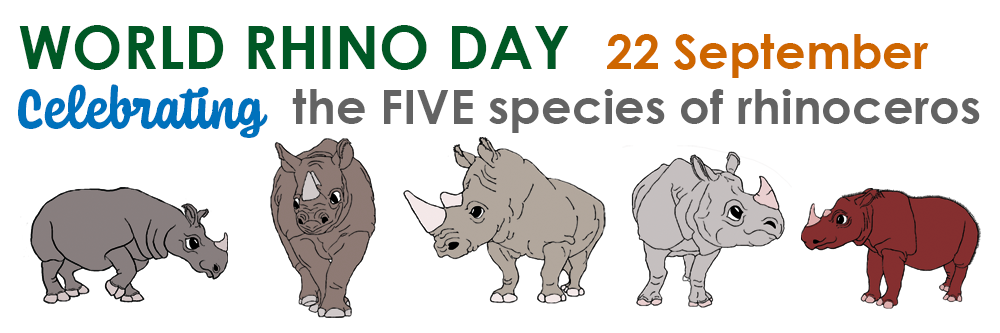
- World Rhino Day is observed annually on September 22 to raise awareness about the critical threats facing all five rhinoceros species and to celebrate conservation efforts.
- The day highlights the urgent need to protect rhinos from poaching, illegal wildlife trade, and habitat loss.
- India, home to the largest population of the Greater One-Horned Rhino (or Indian Rhino), plays a significant role in this global conservation movement, with notable success stories in parks like Kaziranga National Park.
The Five Rhino Species and India's Conservation Efforts
- The five rhino species are: Black Rhino, White Rhino, Greater One-Horned Rhino, Javan Rhino, and Sumatran Rhino.
- According to the IUCN Red List, the Javan, Sumatran, and Black rhinos are classified as Critically Endangered, while the Greater One-Horned Rhino is listed as Vulnerable, a significant conservation success.
- Kaziranga National Park in Assam is a global stronghold for the Greater One-Horned Rhino, hosting nearly two-thirds of the world's population.
- Global Status of Rhino Species
- Black Rhino: Population increasing but still threatened.
- White Rhino: Population declined from 16,772 (2022) to 15,752 (2024).
- Greater One-Horned Rhino: Approximately 4,075 individuals.
- Javan Rhino: Approximately 50 individuals.
- Sumatran Rhino: Between 34-47 individuals.
Additional Info
- Project Rhino (India):
- This is an umbrella term for various conservation programs in India, with key focus on the Greater One-Horned Rhino.
- It is closely associated with the Indian Rhino Vision 2020 (IRV 2020).
- Indian Rhino Vision 2020 (IRV 2020):
- Launch: Initiated in 2005 by the Assam Forest Department, in partnership with the International Rhino Foundation (IRF), WWF-India, and others.
- Objective: To achieve a population of at least 3,000 wild rhinos in seven of Assam’s protected areas by 2020.
- Strategy: The vision focused on a strategic "wild-to-wild translocation" to create new, healthy, and genetically diverse rhino populations. This involved moving rhinos from overcrowded areas like Kaziranga National Park and Pobitora Wildlife Sanctuary to other suitable habitats, notably Manas National Park.
- Achievement: The program was successfully concluded, with a total rhino population of over 3,600 individuals recorded by early 2022, exceeding the initial target and helping to restore Manas National Park's status as a UNESCO World Heritage Site.
- Conservation Status (India):
- Greater One-Horned Rhino: Listed in Schedule I of the Wildlife Protection Act, 1972.
- CITES: The species is listed in Appendix I of the Convention on International Trade in Endangered Species of Wild Fauna and Flora (CITES), which prohibits international trade in its specimens.
- Kaziranga National Park:
- A UNESCO World Heritage Site located in Assam.
- It has the world’s highest density of Greater One-Horned Rhinos.
- The park is also home to the "Big Five" of Kaziranga, which includes the Greater One-Horned Rhino, Royal Bengal Tiger, Asian Elephant, Wild Water Buffalo, and Swamp Deer.