
Study OAS ·
World Bee Day 2026
What's the News?
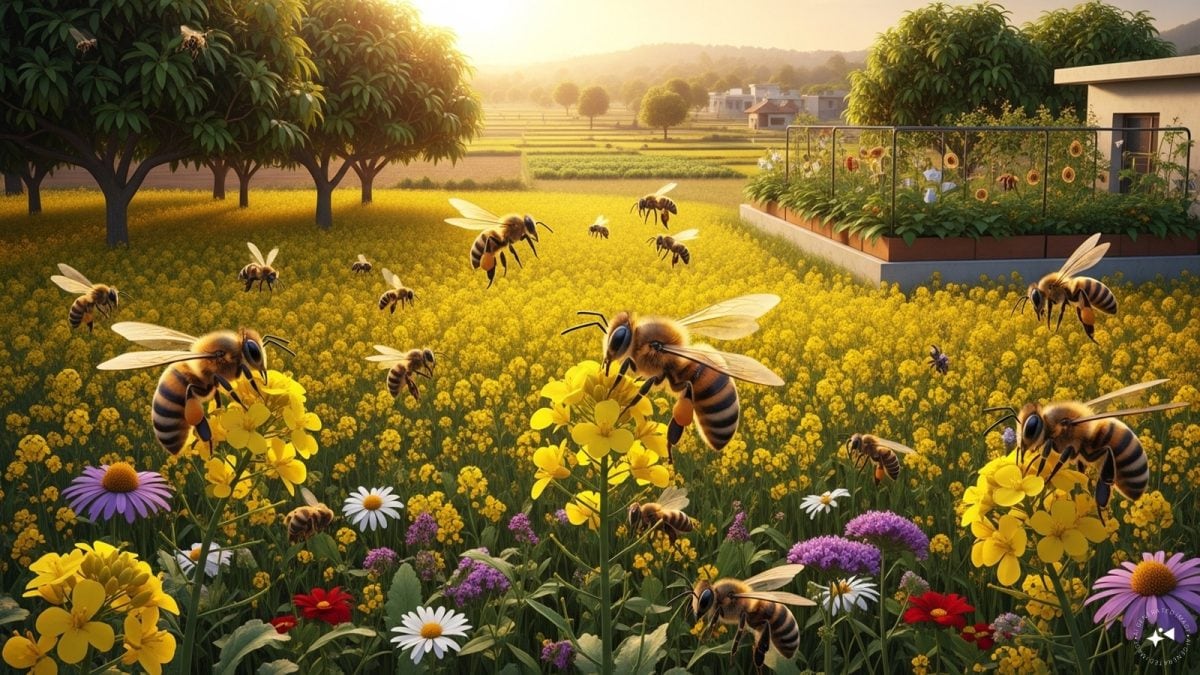
- World Bee Day is observed annually on 20 May to recognise the critical role of bees and other pollinators in agriculture, biodiversity, and ecosystem stability.
- The 2026 theme, "Bee Together for People and the Planet", emphasises collaborative action to protect pollinators as essential partners in food security and sustainable development.
- Verified global reports highlight accelerating bee decline due to habitat loss, pesticide exposure, climate stress, and disease, with US commercial beekeepers reporting a record 62% colony loss (2024–25).
- India has emerged as the world's second-largest honey exporter (up from ninth in five years), yet faces a paradox: rising exports alongside declining native pollinator populations.
India's Honey Economy: Growth vs. Ecological Sustainability
- Export Performance:
- India exported over 1 lakh metric tonnes of honey in the last fiscal year.
- Minimum Export Price (MEP): Anchored at US$ 1,400 per metric tonne to ensure fair returns.
- Annual Production Growth: ~5%, driven by the National Beekeeping & Honey Mission (NBHM) with ₹500 crore investment.
- Native vs. Commercial Species:
- Native Species: Apis dorsata (rock bee), Apis cerana indica (Indian honey bee), and stingless bees—critical for forest and crop pollination but lower-yielding.
- Commercial Species: Apis mellifera (European honey bee)—higher honey yield but less adapted to local ecosystems and less effective for native plant pollination.
- Domestic Price Disparity: Premium native honeys (e.g., Jamun, Himalayan White) retail at US$ 4,500–6,000/tonne domestically, far above the export MEP, indicating value retention challenges.
Threats to Pollinators: Policy and Environmental Challenges
- Pesticide Exposure:
- Neonicotinoids and systemic insecticides used in mustard, sunflower, and litchi belts impair bee navigation, foraging, and reproduction.
- Regulatory Gap: Unlike the EU's 2018 ban on three major neonicotinoids, India lacks mandatory restrictions on pesticide use during flowering seasons in key beekeeping zones.
- Climate Change Impacts:
- Erratic monsoons, shortened flowering windows, and extreme heat disrupt synchrony between bee activity and plant blooming cycles.
- Increased frequency of droughts and unseasonal rainfall reduces nectar availability and hive stability.
- Habitat Fragmentation:
- Urban expansion, monoculture farming, and loss of wild flowering patches reduce nesting sites and continuous forage for wild pollinators.
- Disease and Parasites:
- Varroa mite infestations and colony collapse disorders affect managed hives, especially under high-density beekeeping practices.
Additional Info
- Historical & Legal Context:
- World Bee Day: Established by UN General Assembly (2017); date aligns with birthday of Anton Janša, pioneer of modern beekeeping.
- Constitutional Linkages: Supports Article 48A (environment protection) and Article 51A(g) (fundamental duty to protect wildlife).
- International Commitments: Aligns with CBD (Convention on Biological Diversity), IPBES assessments, and SDG 2 (Zero Hunger), SDG 15 (Life on Land).
- Related Initiatives & Organisations:
- Krishi Vigyan Kendras (KVKs): Provide extension services on pollinator-friendly farming and pesticide management.
- Centre for Bee Development: NGO working with tribal communities on sustainable wild honey harvesting and conservation of Apis dorsata.
- Global Biofuels Alliance & IORA: Indirectly support pollinator health through sustainable land-use and agro-ecological practices.