
Study OAS ·
Union Cabinet Approves Census of India 2027
What’s the News?
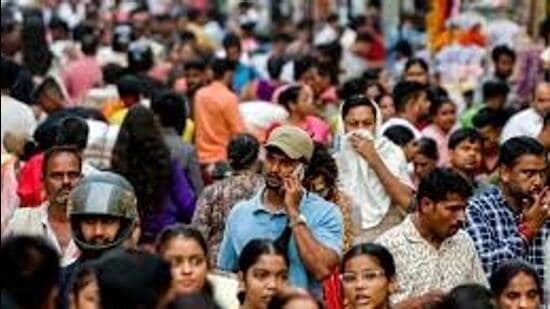
- The Union Cabinet has approved the conduct of the Census of India, 2027, India’s next decennial population census.
- The exercise will be conducted in two phases, with large-scale digital integration for data collection.
- The total approved financial outlay for the census operations is ₹11,718 crore, covering field operations, digital infrastructure, and manpower.
Census of India: Key Features
- Decennial Exercise:
- Conducted once every 10 years under the Census Act, 1948.
- Two-Phase Structure:
- House Listing & Housing Census (HLH):
- Collection of data on housing conditions, household assets, and amenities.
- Population Enumeration (PE):
- Collection of individual-level demographic, social, and economic data.
- House Listing & Housing Census (HLH):
- Digital-First Census:
- Use of mobile applications and digital devices by enumerators.
- Provision for self-enumeration by citizens.
- Improved Data Security:
- Enhanced protocols for data confidentiality and cyber security.
Why Census 2027 Is Significant
- First Census After a Long Gap:
- The previous census was conducted in 2011, making this a critical update for demographic data.
- Policy & Planning Backbone:
- Census data underpins:
- Welfare scheme targeting
- Fiscal devolution
- Infrastructure planning
- Health and education policy
- Census data underpins:
- Urbanisation & Migration Insights:
- Updated data on internal migration, urban growth, and household composition.
- Technology Integration:
- Marks a shift from paper-based enumeration to digitally driven governance.
Financial & Administrative Aspects
- Approved Outlay: ₹11,718 crore
- Covers training of enumerators, IT systems, field logistics, and data processing.
- Nodal Authority:
- Conducted by the Office of the Registrar General & Census Commissioner, India (ORGI) under the Ministry of Home Affairs.
- Manpower Deployment:
- Involves millions of enumerators and supervisors, largely drawn from state government staff.
Constitutional & Legal Context
- Census Act, 1948:
- Provides statutory backing for conducting the census and mandates public cooperation.
- Union List:
- Census is a Union subject, enabling uniform data collection across states.
- Delimitation & Representation:
- Census data forms the base for:
- Delimitation of constituencies
- Reservation of seats for SCs and STs.
- Census data forms the base for:
Additional Info
- Delimitation Linkage:
- Future delimitation of Lok Sabha and Assembly constituencies is contingent on updated census data.
- Data Usage:
- Census data is used by bodies such as:
- Finance Commission
- NITI Aayog
- Election Commission of India
- Census data is used by bodies such as:
- Global Practice:
- Census exercises align with UN-recommended population data standards for comparability.