
Study OAS ·
Swachhata Hi Seva 2025
What’s the News?
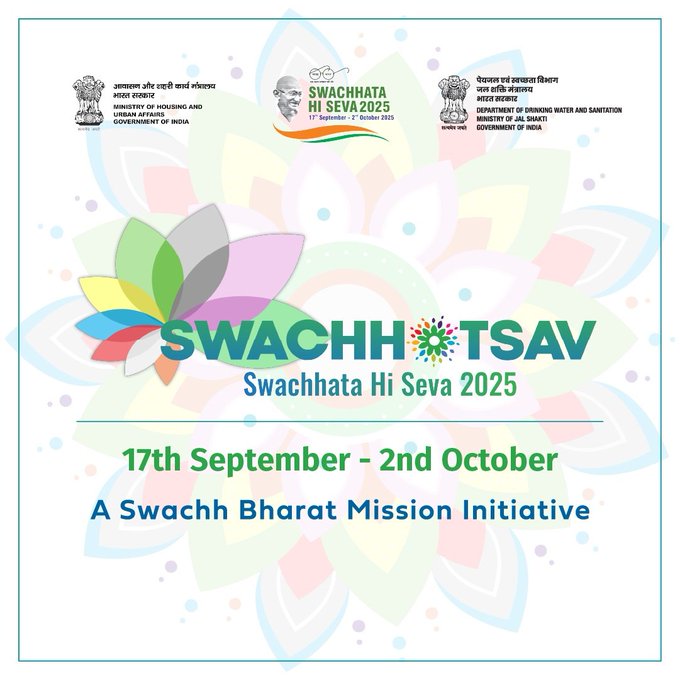
- The 9th edition of Swachhata Hi Seva (SHS) 2025 has begun nationwide, running from 17 September to 2 October, culminating on Gandhi Jayanti.
- It is being conducted jointly by the Ministry of Housing & Urban Affairs (MoHUA) and the Department of Drinking Water and Sanitation (DDWS), Ministry of Jal Shakti.
- The theme this year is “Swachhotsav”, aiming to merge the festive spirit with cleanliness, community participation and waste reduction.
Key Components & Details
- Five Key Pillars
- Transformation of Cleanliness Target Units (CTUs): Identify and clean up dark, dirty, neglected spots.
- Clean Public Spaces: Activities in high-footfall public areas like railway stations, tourist spots, drains etc.
- SafaiMitra Suraksha Shivir: Welfare camps for sanitation workers—health check-ups, PPE, etc.
- Clean Green Festivities: Encouraging zero-waste and eco-friendly celebrations during festivals.
- Advocacy for Swachhata: Community mobilisation, awareness, Gram Sabhas, use of Swachhata App, maintaining gains beyond the campaign.
- Special Event: “Ek Din, Ek Ghanta, Ek Saath”
- A nationwide voluntary cleanup event will be organized on 25 September, coinciding with Pandit Deendayal Upadhyay’s birth anniversary. Citizens, youth groups, NGOs and others will participate.
Additional Info
- SBM Phase I (2014-2019): This phase focused on eliminating open defecation. Through the construction of over 100 million individual household toilets, all villages in India were declared Open Defecation Free (ODF) by October 2, 2019. This massive behavioral change campaign was achieved through a multi-pronged approach involving government departments, non-governmental organizations, and citizens.
- SBM Phase II (2020-2025): The current phase, known as SBM-Grameen Phase II, shifts the focus to Sustaining ODF status and implementing Solid and Liquid Waste Management (SLWM) in rural areas. The goal is to transform villages into ODF Plus villages, which are defined by:
- ODF Sustainability: Ensuring the continued use of toilets.
- Solid Waste Management: Proper segregation, collection, and disposal of solid waste.
- Liquid Waste Management: Safe management of greywater and fecal sludge.
- Visual Cleanliness: Maintaining a high standard of overall cleanliness in public spaces.