
Study OAS ·
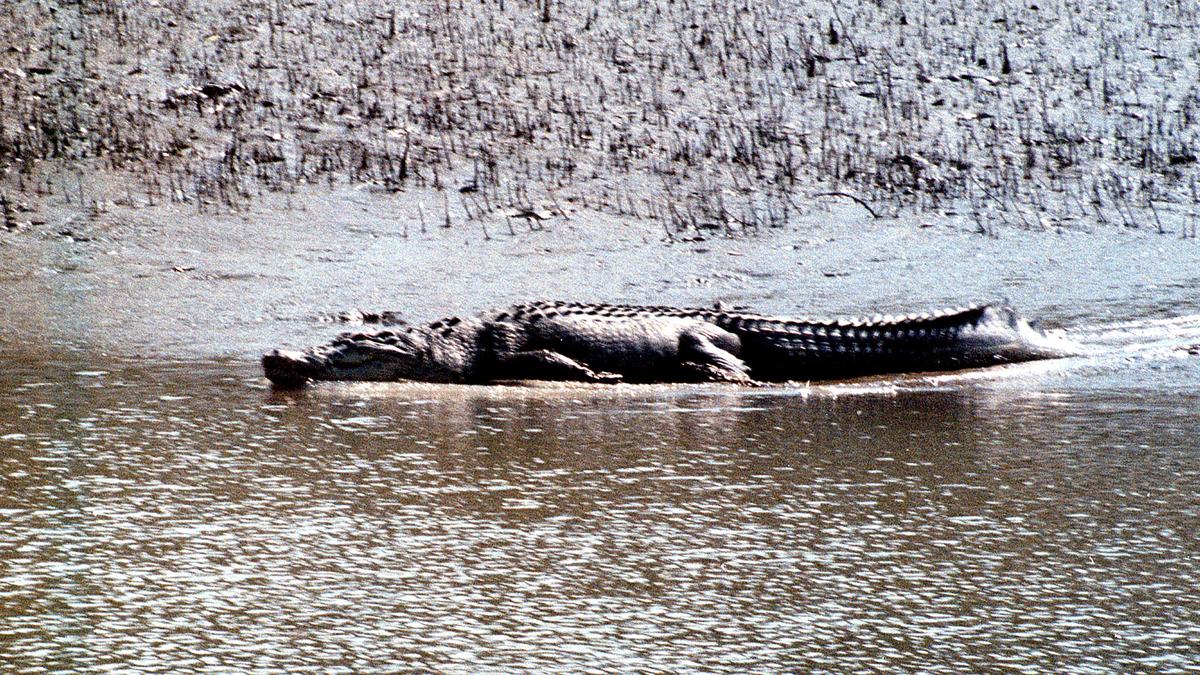
Saltwater Crocodiles Rise in the Sundarbans
What’s the News?
- Event: State forest survey reports an increase in saltwater crocodile (Crocodylus porosus) observations in the Sundarbans Biosphere Reserve.
- Key figures: 213 direct sightings recorded; population estimate updated to 220–242 individuals with 125 adults, 88 juveniles, and 23 hatchlings observed.
- Immediate implications: Indicates population recovery but also rising human–crocodile encounters due to habitat pressure and nesting-site loss.
Population & Habitat Trends
- Survey overview
- Transect effort expanded and produced higher encounter rates (about 1 crocodile per 5.5 km of creek).
- Age-structure improvement shown by increased hatchling counts, signaling recent successful nesting.
- Habitat signals
- Favoured conditions: creek widths, salinity range and temperature thresholds inform distribution and conservation planning.
- Threats: loss of nesting sites from erosion and sea-level/climate impacts is driving more crocodiles toward human-settled islands.
Additional Info
- Saltwater Crocodile (Crocodylus porosus)
- It is the largest living reptile and crocodilian known.
- Conservation Status:
- IUCN Red List: Least Concern.
- CITES: Appendix I (except for the populations of Australia, Indonesia, and Papua New Guinea, which are included in Appendix II).
- Wildlife (Protection) Act, 1972: Schedule I.
- It is found in coastal areas and river mouths across the Indian subcontinent, Southeast Asia, and northern Australia.
- Sundarbans
- A vast mangrove forest in the coastal region of the Bay of Bengal, spanning India and Bangladesh.
- It is a UNESCO World Heritage Site, a Ramsar Site, and a Biosphere Reserve.
- The region is famous for being the only mangrove forest in the world inhabited by tigers.
- Conservation Efforts
- The Bhagabatpur Crocodile Project, initiated in 1976, has been a key conservation and breeding program.
- The project successfully released 577 crocodiles into the wild until its conclusion.