Study OAS ·
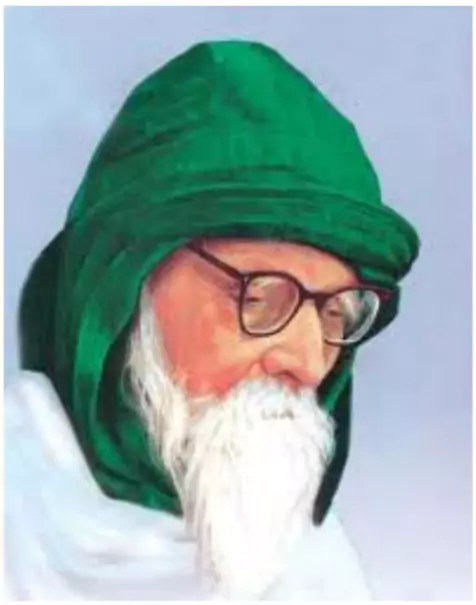
Remembering Acharya Vinoba Bhave
What’s the News?
- Prime Minister paid tribute to Acharya Vinoba Bhave on his birth anniversary, calling him a spiritual leader, freedom fighter, and social reformer.
- PM said Bhave’s life and thoughts—non-violence, empowerment of the marginalised—continue to inspire efforts toward a “Viksit Bharat”.
Bhoodan & Gandhian Social Reform
- Bhoodan Movement: Initiated by Bhave. A voluntary donation campaign in which landowners were asked to donate land to landless people. Aimed at reducing inequality in land ownership.
- Gandhian Ideals & Constructive Programmes: Bhave was deeply influenced by Mahatma Gandhi. He engaged in Khadi, sanitation, hygiene, Nai Talim, rural industries, etc.
Additional Info
- Acharya Vinoba Bhave (1895-1982):
- Born Vinayak Narahari Bhave, he was a philosopher, social reformer, and freedom fighter.
- He was the first person chosen by Mahatma Gandhi to offer Individual Satyagraha in 1940.
- He was also a prominent leader of the Sarvodaya Movement, which sought to establish a society based on the welfare of all.
- He translated the Bhagavad Gita into Marathi as Geetai (Mother Gita).
- He received the Ramon Magsaysay Award for Community Leadership in 1958 and was posthumously awarded the Bharat Ratna in 1983.
- Sarvodaya Philosophy:
- The term "Sarvodaya" (meaning "universal uplift" or "welfare of all") was coined by Mahatma Gandhi, inspired by John Ruskin's book Unto This Last.
- The philosophy is based on:
- The good of the individual is contained in the good of all.
- All work and occupations have the same value.
- A life of labor is the most worthy of all.
- Gram Swaraj:
- A core concept of Gandhian thought, Gram Swaraj envisions a self-governing, self-sufficient, and self-reliant village republic.
- This model emphasizes decentralized governance, where political and economic power is vested in the village community, promoting local self-rule and a stateless society.