
Study OAS ·
Medieval Gajapathi Inscription Discovered in Guntur Temple
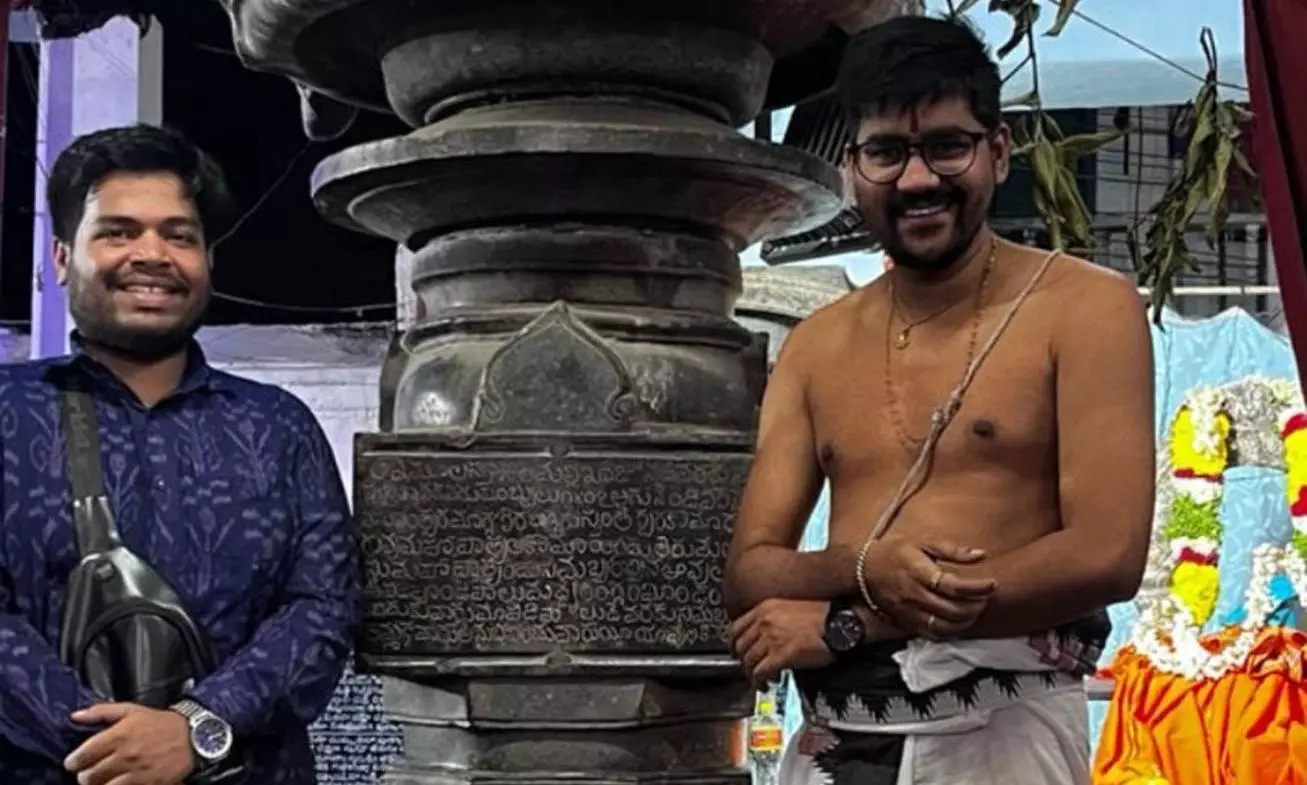
What's the News?
- Archaeologists discovered a 15th-century Gajapathi inscription on a stone pillar at the Lakshmi Narasimha Swamy Temple in Guntur district, Andhra Pradesh.
- The inscription is engraved on both sides of a stone pillar located inside the temple's mandapa (hall).
- Written in Telugu language with Sanskrit verses, the inscription dates to the reign of the Gajapathi dynasty of Odisha.
- The discovery reveals historical links between the Gajapathi Empire and the Andhra region during medieval times.
- Historians believe the inscription belongs to the period of Gajapathi King Purushottama Deva.
Gajapathi Inscription: Key Details
- Location: Found at Chintapallipadu village in Vatticherukuru mandal of Guntur district.
- Physical Features:
- Carved on a black granite stone pillar
- Engraved on both sides of the pillar
- Contains Sanskrit verses written in Telugu script.
- Content: The inscription mentions Kumaraguru Mahapatra, a steward officer of the Gajapathi administration.
- Historical Period: Dates to the 15th century during the Gajapathi Empire rule.
- Significance: Provides evidence of Gajapathi territorial expansion into southern Andhra Pradesh.
Gajapathi Empire: Historical Overview
- Origin: Medieval Hindu monarchy originating from the Odisha region.
- Time Period: Reigned from approximately 1434 to 1541 CE.
- Founding: Established by Kapilendra Deva, the founder of the Gajapathi Dynasty.
- Territorial Extent: At its peak, the empire stretched from:
- Ganges River in the north (near West Bengal)
- Kaveri River in the south (including parts of Andhra and Tamil Nadu).
- Notable Rulers:
- Kapilendra Deva: Expanded the empire from the Ganges in the north to the Kaveri in the south.
- Purushottama Deva: Noted for his military successes and the legendary Kanchi-Abhigana tradition.
- Prataparudra Deva: The last great ruler, during whose reign the empire faced challenges from the Vijayanagara Empire under Krishnadevaraya and the Golconda Sultanate.
- The Title: The term Gajapati literally translates to "Lord of the Elephants," signifying the empire's formidable elephant corps.