
Study OAS ·
Iranian Conundrum: Economic Collapse and Nationwide Protests
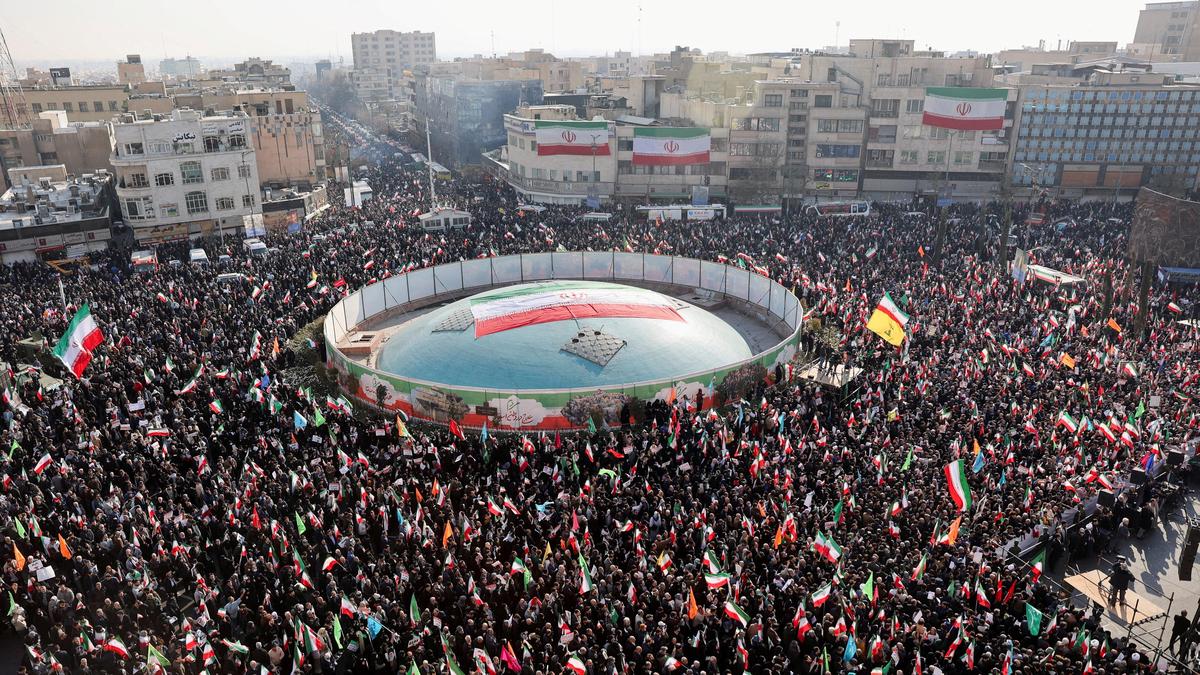
What’s the News?
- Iran is witnessing its most significant internal crisis since the 1979 Revolution, as nationwide anti-government protests spread across all 31 provinces.
- The unrest was triggered by a catastrophic economic collapse, marked by the sharp devaluation of the Iranian rial and soaring inflation.
- In response, the Iranian government has implemented a nationwide internet blackout and a violent security crackdown, leading to thousands of reported deaths and arrests.
The Economic Trigger & Social Break
- Currency Crisis: The Iranian rial lost nearly 45% of its value in 2025, falling to a record low of 1.45 million per dollar, making essential imports unaffordable.
- Bazaar Strikes: In a significant structural break, traders at the Tehran Grand Bazaar—traditionally a pillar of regime support—initiated strikes to protest worsening economic conditions.
- Cost of Living: Rapid inflation in food prices followed the government’s decision to end subsidized exchange rates for importers, further fueling public anger.
- Energy Shortages: Daily power outages and infrastructure stress have added to the "economic exhaustion" experienced by the populace.
State Response and Crackdown
- Communication Blackout: A total internet and telecommunications shutdown was imposed on January 8, 2026, to disrupt protest coordination and prevent the documentation of human rights violations.
- Security Escalation: Authorities have categorized protesters as "terrorists" and labeled participation in demonstrations after January 8 as an act of "internal war".
- Casualty Reports: Human rights organizations and international media estimate the death toll between 2,000 and 6,000, with over 10,000 individuals detained.
- Use of Technology: The state has intensified the search for Starlink satellite dishes to cut off the last remaining channels for sharing information with the outside world.
Geopolitical Implications
- U.S. Stance: U.S. President Donald Trump warned that the United States is "locked and loaded" to intervene if the killing of protesters continues, and he has threatened a 25% tariff on any country trading with Iran.
- Regional Vulnerability: The unrest follows a 12-day conflict with Israel in June 2025, which decimated Iran's air defenses and significantly damaged its nuclear infrastructure.
- Impact on India: Political instability in Iran threatens strategic connectivity projects like the Chabahar Port, which is vital for India's access to Afghanistan and Central Asia.
- Sanctions: New sanctions have been announced by the U.S., EU, and G7 nations to pressure the Iranian government over its suppression of the protests.
Additional Info
- Legal & International Framework:
- Article 2(4) of the UN Charter: Iran has invoked this article to the UN Security Council, arguing that U.S. threats of force constitute a violation of international law.
- Human Rights Violations: Amnesty International and the UN High Commissioner for Human Rights have condemned the crackdown as a violation of the freedom of expression and peaceful assembly.
- Historical Context:
- "Woman, Life, Freedom" (2022-23): The current protests are frequently compared to the 2022 movement triggered by the death of Mahsa Amini, though the 2026 unrest is more deeply rooted in economic grievances.
- The 1979 Revolution: Analysts suggest the scale of the 2026 protests represents the most serious challenge to the clerical establishment since its inception.
- Domestic Governance:
- President Masoud Pezeshkian: Despite signaling limited social relaxation previously, the administration has been largely paralyzed by the economic crisis and security imperatives.
- IRGC and Bonyads: The dominance of the Islamic Revolutionary Guard Corps and quasi-governmental trusts (Bonyads) in the economy is cited as a primary cause of private sector stagnation.