
Study OAS ·
India Launches Responsible Nations Index (RNI) 2026
What’s the News?
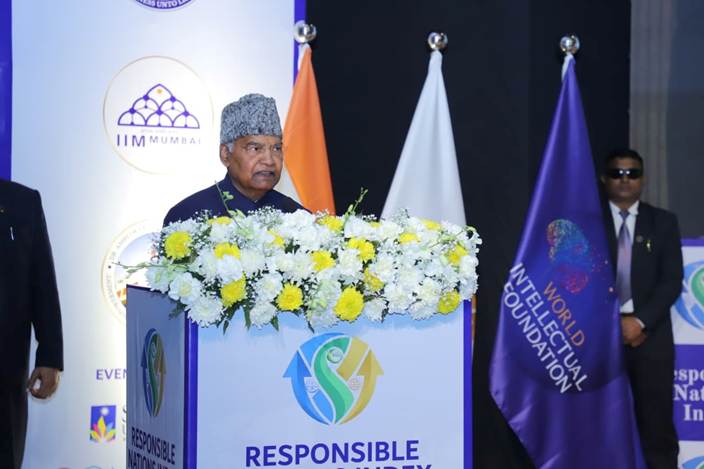
- Former President of India Ram Nath Kovind launched the inaugural Responsible Nations Index (RNI) 2026 at the Dr. Ambedkar International Centre in New Delhi.
- India has been ranked 16th out of 154 countries in this first-of-its-kind global framework.
- The index, developed by the World Intellectual Foundation (WIF), shifts the global assessment lens from raw economic or military power to ethical governance and social responsibility.
Rankings & Performance
- Top Performers: Singapore topped the global rankings with a score of 0.61945, followed by Switzerland (2nd) and Denmark (3rd).
- India's Standing: India secured the 16th spot with an overall score of 0.551513, outperforming major economies like the United States (66th) and China (68th).
- Regional Context: India is the top-ranked Asian nation in the index, highlighting its progress in people-centered governance and environmental policies.
- Bottom of the Index: The Central African Republic (154th), Syria (153rd), and South Sudan (152nd) were the lowest-ranked nations.
The Three Core Pillars
The RNI evaluates national success based on how responsibly a country exercises its power across three primary dimensions:
- Internal Responsibility: Focuses on a nation's obligations toward the dignity, well-being, and empowerment of its own citizens.
- Environmental Responsibility: Analyzes a country’s commitment to ecological protection, climate action, and sustainable resource management.
- External Responsibility: Measures how a nation behaves within the international system, focusing on its contribution to global peace, stability, and cooperation.
Assessment Framework & Methodology
- Structural Components: The index is operationalized through 7 dimensions, 15 aspects, and 58 specific indicators.
- Key Dimensions: These include quality of life, governance, social justice, economic performance, environmental stewardship, commitment to peace, and international economic relations.
- Academic Collaboration: The framework was developed over three years in partnership with Jawaharlal Nehru University (JNU) and received methodological validation from the Indian Institute of Management (IIM) Mumbai.
- Data Sources: It draws from globally recognized sources, including the World Bank, United Nations agencies (WHO, ILO, FAO), IMF, and the World Justice Project.