
Study OAS ·
Destabilization of Thwaites Glacier: The "Doomsday Glacier"
What’s the News?
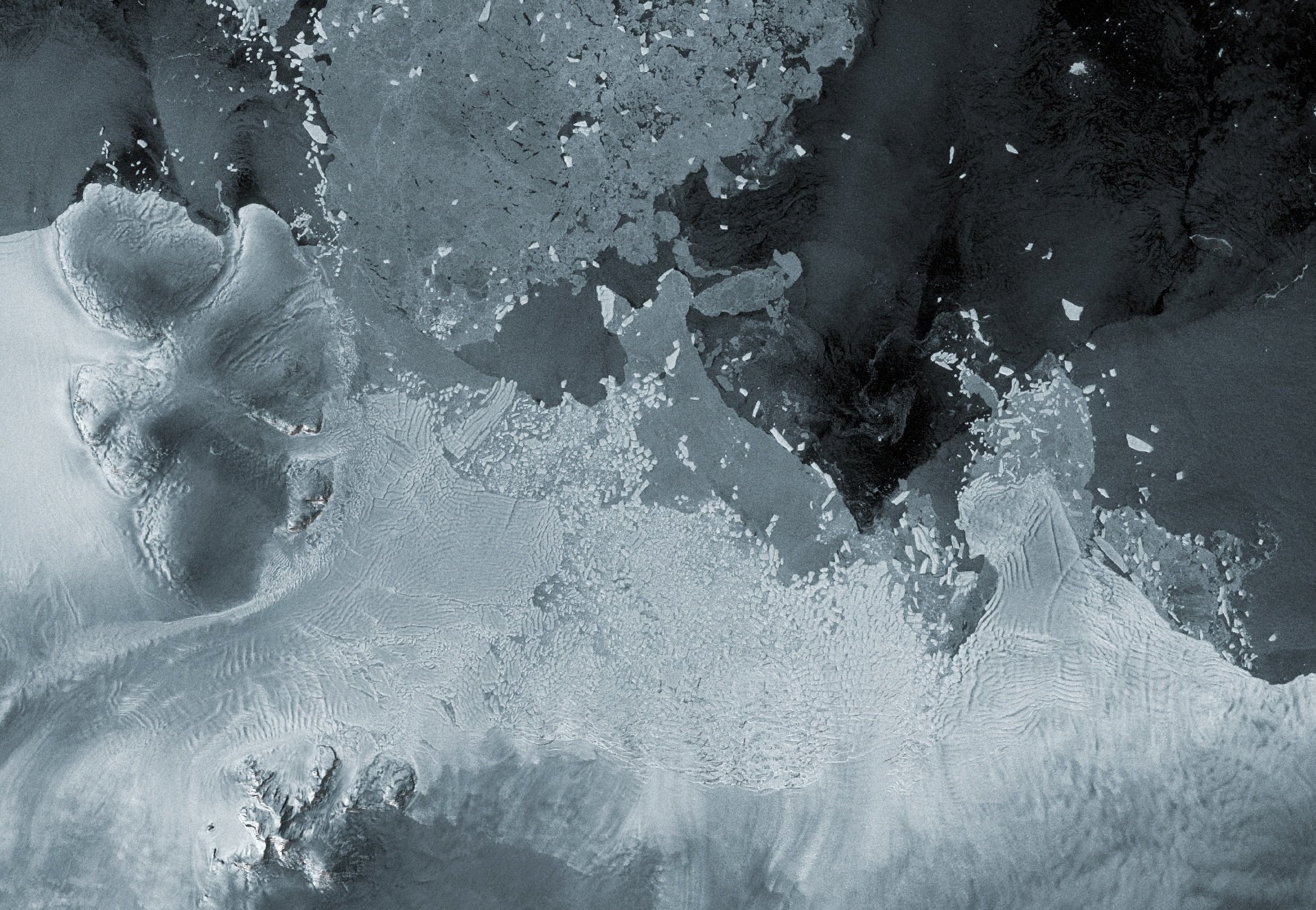
- Recent scientific studies and satellite observations have revealed that Antarctica's Thwaites Glacier, commonly known as the "Doomsday Glacier," is experiencing rapid destabilization and frequent "iceberg earthquakes."
- Researchers have detected hundreds of seismic events caused by the fracturing and movement of massive ice blocks, indicating that the glacier is thinning and retreating at an accelerating pace.
- The collapse of this glacier is a major concern for global climate security, as it acts as a "cork" holding back the vast West Antarctic Ice Sheet.
Understanding the "Doomsday Glacier"
- Location: Situated in West Antarctica, it is one of the widest glaciers in the world, spanning roughly 120 kilometers.
- Why "Doomsday"?: If Thwaites were to melt completely, it could raise global sea levels by approximately 65 centimeters (2 feet).
- The Domino Effect: Its collapse could further destabilize neighboring glaciers, potentially leading to an eventual sea-level rise of up to 3 meters, threatening coastal cities worldwide.
- Iceberg Earthquakes: Unlike tectonic earthquakes, these are seismic signals generated by the "calving" (breaking off) of ice and the scraping of the glacier against the seabed as it loses its grip.

Image Credit: Time.com
Key Scientific Findings
- Fracture dynamics: A four-stage structural decline identified in TEIS, featuring:
- Growth of long fractures aligned with ice flow, followed by cross-cutting short fractures.
- A positive feedback loop: fractures → faster ice flow → more fractures.
- Glacial earthquakes:
- 245 out of 362 detected events clustered near Thwaites’ marine terminus.
- Linked to iceberg capsize events, not seasonal air warming but possibly ocean-driven ice-tongue acceleration (notably during 2018–2020).
- Pinning point shift: Once a stabilising feature, it now contributes to shelf instability due to weakened shear zones.
Additional Info
- West Antarctic Ice Sheet (WAIS):
- A massive ice mass that sits on a basin below sea level.
- It is considered a "tipping point" in the global climate system because its melting is largely irreversible once a certain threshold is crossed.
- International Thwaites Glacier Collaboration (ITGC):
- A multi-year, multi-million dollar joint mission by the UK (British Antarctic Survey) and the USA (National Science Foundation).
- It is the largest scientific field program ever undertaken in Antarctica to understand how quickly the glacier is melting.
- Global Impacts:
- Sea Level Rise: Accelerated melting threatens low-lying island nations (e.g., Maldives, Kiribati) and Indian coastal hubs like Mumbai and Chennai.
- Albedo Effect: Loss of white ice surfaces reduces the Earth's ability to reflect sunlight, leading to further atmospheric warming.
- Scientific Tools Used:
- Icefin: An underwater robot used to swim under the ice shelf to measure temperature and salt levels.
- Seismometers: Instruments placed on the ice to record the "thumping" sounds of icequakes.