
Study OAS ·
Desert Moss Discovery Boosts Green Mars Prospects
What's the News?
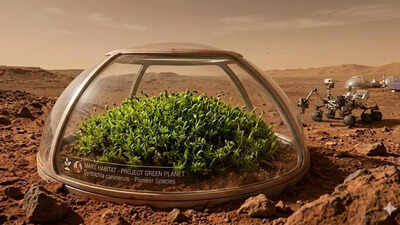
- Scientists have identified a resilient desert moss, Syntrichia caninervis, that could play a key role in future Mars colonisation .
- The research, conducted by Chinese scientists, tested the moss under Mars-like extreme conditions including drought, cold, and radiation .
- The study was published in the journal 'The Innovation', marking the first time researchers tested whole plants for surviving space-like extremes .
- This discovery opens possibilities for creating life-supporting soil on Mars through terraforming initiatives .
Syntrichia Caninervis: Key Characteristics
- Common Name: Also known as steppe screw moss .
- Natural Habitat: Found in Antarctica, Mojave Desert, and other extreme environments globally .
- Classification: An extremophile species capable of surviving harsh conditions lethal to most plants .
| Feature | Details |
|---|---|
| Desiccation Tolerance | Can survive after losing >98% of water content |
| Temperature Resistance | Withstands frigid temperatures similar to Mars |
| Radiation Tolerance | Survives high radiation levels |
| Drought Resistance | Thrives in extreme drought conditions |
| Recovery Ability | Regenerates after prolonged dry periods |
Research Findings & Significance
- Experimental Conditions: Moss was tested under Mars-like environments including low temperatures, high radiation, and drought .
- Survival Rate: Demonstrated extraordinary environmental resilience in simulated extraterrestrial conditions .
- Pioneer Plant Potential: Could serve as a pioneer species for establishing ecosystems on Mars .
- Soil Formation: May help create life-supporting soil for future agricultural activities .
Additional Information
- Extremophiles on Earth:
- Tardigrades: Microscopic animals surviving space vacuum
- Deinococcus radiodurans: Bacteria resistant to extreme radiation
- Antarctic Microbes: Survive sub-zero temperatures
- Deep-Sea Vent Organisms: Thrive in high-pressure, high-temperature conditions
- Challenges for Mars Colonisation:
- Atmospheric Conditions: Mars has thin CO₂-rich atmosphere (95% carbon dioxide)
- Temperature Extremes: Average temperature around -63°C
- Radiation Exposure: No magnetic field protection like Earth
- Water Availability: Limited water ice at poles and subsurface