
Study OAS ·
Days and Events Updates
Hemis Festival 2026
What's the News?
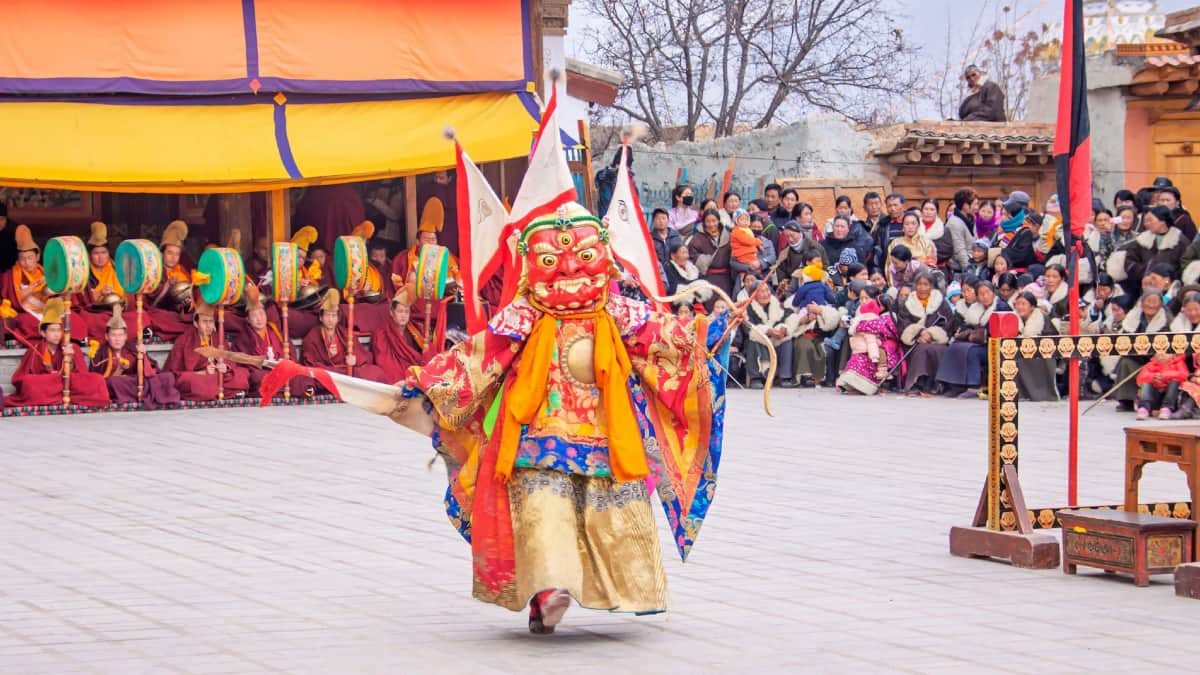
The Hemis Festival, the largest and most celebrated Buddhist festival of Ladakh, was observed at the Hemis Monastery to commemorate the birth anniversary of Guru Padmasambhava (Guru Rinpoche), revered as the founder of Tibetan Buddhism. The festival witnessed traditional Cham (masked) dances, Buddhist rituals, prayers, and cultural performances, attracting devotees and tourists from across the world.
About Hemis Festival
- Celebrated annually at the Hemis Monastery, located in Leh district, Ladakh.
- Organised according to the Tibetan lunar calendar.
- Commemorates Guru Padmasambhava, who is credited with spreading Vajrayana Buddhism across Tibet and the Himalayan region.
Major Attractions
- Cham Dance
- Sacred masked dance performed by Buddhist monks.
- Symbolises the victory of good over evil.
- Display of the Giant Thangka (every 12 years during the Year of the Monkey).
- Traditional music, prayers and Buddhist rituals.
- Exhibition of Ladakhi handicrafts and local cuisine.
United Nations International Day in Support of Victims of Torture

What's the News?
The United Nations International Day in Support of Victims of Torture is observed every year on 26 June to reaffirm the global commitment to eradicate torture, support survivors, and ensure accountability for perpetrators. It also commemorates the entry into force of the UN Convention against Torture (UNCAT).
History
- Proclaimed by: United Nations General Assembly.
- Resolution: 52/149 (1997).
- First Observed: 1998.
- Marks the entry into force of the Convention against Torture on 26 June 1987.
Objectives
- Support rehabilitation of torture victims.
- Promote justice and accountability.
- Eliminate torture and cruel, inhuman or degrading treatment.
- Raise awareness about human rights protections.
About UNCAT
Convention against Torture and Other Cruel, Inhuman or Degrading Treatment or Punishment (UNCAT)
- Adopted: 1984
- Entered into force: 26 June 1987
- Legally prohibits torture under all circumstances.
- Requires State Parties to criminalise and prevent torture.
International Day Against Drug Abuse and Illicit Trafficking
What's the News?
The International Day Against Drug Abuse and Illicit Trafficking is observed annually on 26 June to strengthen global action against drug abuse, illicit trafficking and organised crime. The observance promotes prevention, treatment, rehabilitation and international cooperation to achieve a drug-free society.
History
- Proclaimed by: United Nations General Assembly.
- Resolution: 42/112 (1987).
- First Observed: 1988.
- Coordinated by the United Nations Office on Drugs and Crime (UNODC).
Objectives
- Raise awareness about the harmful effects of drug abuse.
- Prevent substance abuse through education.
- Strengthen international cooperation against drug trafficking.
- Promote treatment, rehabilitation and social reintegration.
Concerns
- Synthetic drugs.
- Opioid abuse.
- Cocaine trafficking.
- Organised crime and money laundering.
- Public health and youth protection.
Additional Info
United Nations Office on Drugs and Crime (UNODC)
- Established: 1997.
- Headquarters: Vienna, Austria.
- Works to combat:
- Illicit drugs.
- Transnational organised crime.
- Corruption.
- Terrorism.
- Publishes the World Drug Report annually.
Guru Padmasambhava
- Also known as Guru Rinpoche ("Precious Master").
- Eighth-century Buddhist master.
- Instrumental in introducing Vajrayana Buddhism to Tibet.
- Revered as the "Second Buddha" in Tibetan Buddhism.