
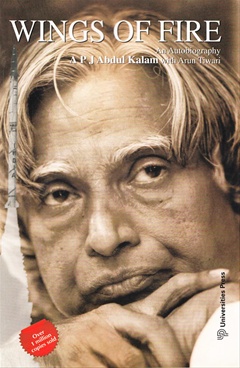
Wings of Fire – A. P. J. Abdul Kalam
Book Summary
Detailed Description of the Book
Wings of Fire is the autobiography of Dr. A. P. J. Abdul Kalam, tracing his journey from a humble childhood in Rameswaram to becoming one of India’s foremost scientists and later the President of India. More than a personal story, the book is a reflection on nation-building, scientific temper, leadership, integrity, teamwork, and ethical public service.
The narrative highlights how individual excellence is built through discipline, mentorship, perseverance, and values, and how institutions—not individuals alone—drive national progress. Kalam repeatedly stresses the importance of dreams with purpose, failure as a teacher, and technology guided by ethics. The book is deeply rooted in Indian ethos, combining spirituality with modern science, making it especially powerful for OPSC/UPSC Essays, GS-4 Ethics, GS-2 Governance, and GS-3 Science & Technology.
The following extracts may be used in OPSC answer writing:
“Dream, dream, dream. Dreams transform into thoughts and thoughts result in action.”→ Essay / GS-4 Ethics: Vision-driven leadership, goal orientation, youth motivation
“Excellence is a continuous process, not an accident.”→ GS-4 Ethics / Essay: Integrity, work ethic, character building in civil services
“To succeed in your mission, you must have single-minded devotion to your goal.”→ GS-4 / GS-2: Commitment in public service, administrative focus
“Great dreams of great dreamers are always transcended.”→ Essay: Nation-building, long-term vision, transformational leadership
“Failure will never overtake me if my determination to succeed is strong enough.”→ GS-4 Ethics / Essay: Resilience, perseverance, handling setbacks in administration
“Thinking is the capital, enterprise is the way, and hard work is the solution.”→ GS-3 / Essay: Economic development, entrepreneurship, productivity
“One of the very important characteristics of a student is to question.”→ GS-4 / GS-2: Scientific temper, critical thinking, informed citizenship
“If you want to shine like a sun, first burn like a sun.”→ Essay / GS-4: Sacrifice, discipline, leadership responsibility
“Teaching is a very noble profession that shapes the character, calibre, and future of an individual.”→ GS-2 / Essay: Role of education, teachers in nation-building
“We should not give up and we should not allow the problem to defeat us.”→ GS-4 Ethics: Crisis management, moral courage
“Science is a beautiful gift to humanity; we should not distort it.”→ GS-3 / GS-4: Ethical use of technology, responsible innovation
“Let us sacrifice our today so that our children can have a better tomorrow.”→ Essay / GS-4: Intergenerational justice, sustainable development
Book Summary PDF:
No PDF available
← Back to Book Summaries